Garden Blog - Top Tropicals

Date: 17 Sep 2021

Hibiscus: TopTropicals' first plant

- September 2001 @ TopTropicals -

Q: I wonder how you started your plant business and what was your first plant?

A: It was 20 years ago this month that we started Top Tropicals Project. No idea where it was going or how to even get "there", just started with the idea of sharing these wonderful creatures we call plants with anyone and everyone who felt the same way.

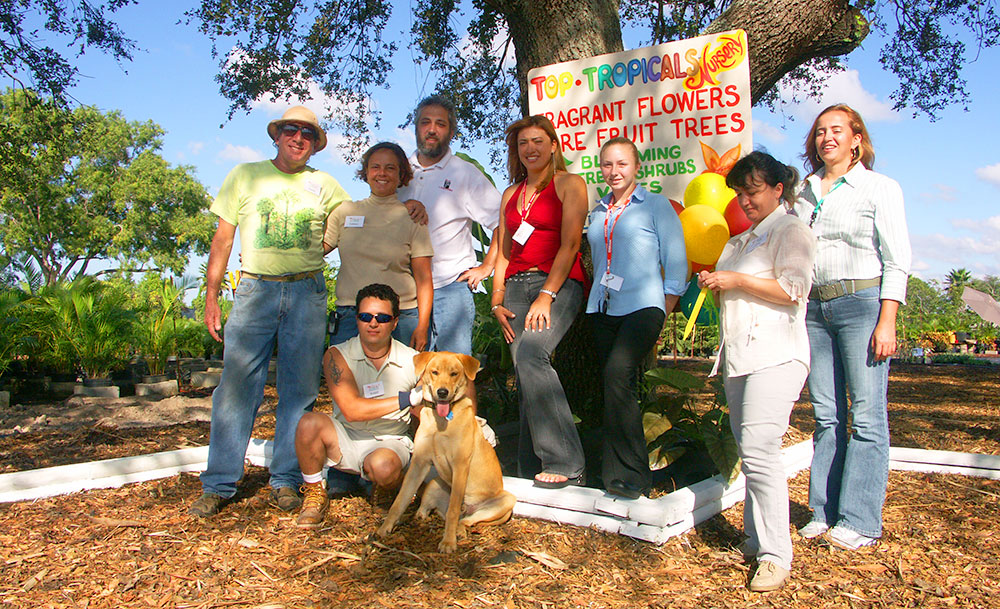
Believe it or not, the first plant at TopTropicals was a hibiscus. Right before we opened our plant nursery in Florida, we ran into a place called Winn Soldani's FANCY HIBISCUS. The variety of colors inspired us to start our own tropical plant business. We asked the owner Winn Soldani: what plants do you suggest us to grow in Florida? His answer was, "Your plant will find you". Very soon we discovered jasmines, then perfume trees and fruit trees - all those became our specialty. Then very quickly TopTropicals.com turned into a large Plant Mall where you can find every tropical plant you can think of!
But at TopTropicals we still grow hibiscus!
- September 2004 @ TopTropicals -

Hibiscus Plus

Hibiscus is a wonderful plant, considering there are thousands of hybrids with color palettes you can only imagine. Especially interesting are those rare and useful species, yet very easy to grow, such as:
- Salad Hibiscus - Hibiscus furcellatus - yes, used in salads
- Coral Hibiscus with crazy pendant flowers - Hibiscus schizopetalus
- African Cranberry hibiscus that is used for making teas and salads - Hibiscus acetocella
- Cotton Candy Hibiscus mutabilis - the flower changes color, opens as white and turns into bright pink within 3 days, like Yesterday-Today-Tomorrow
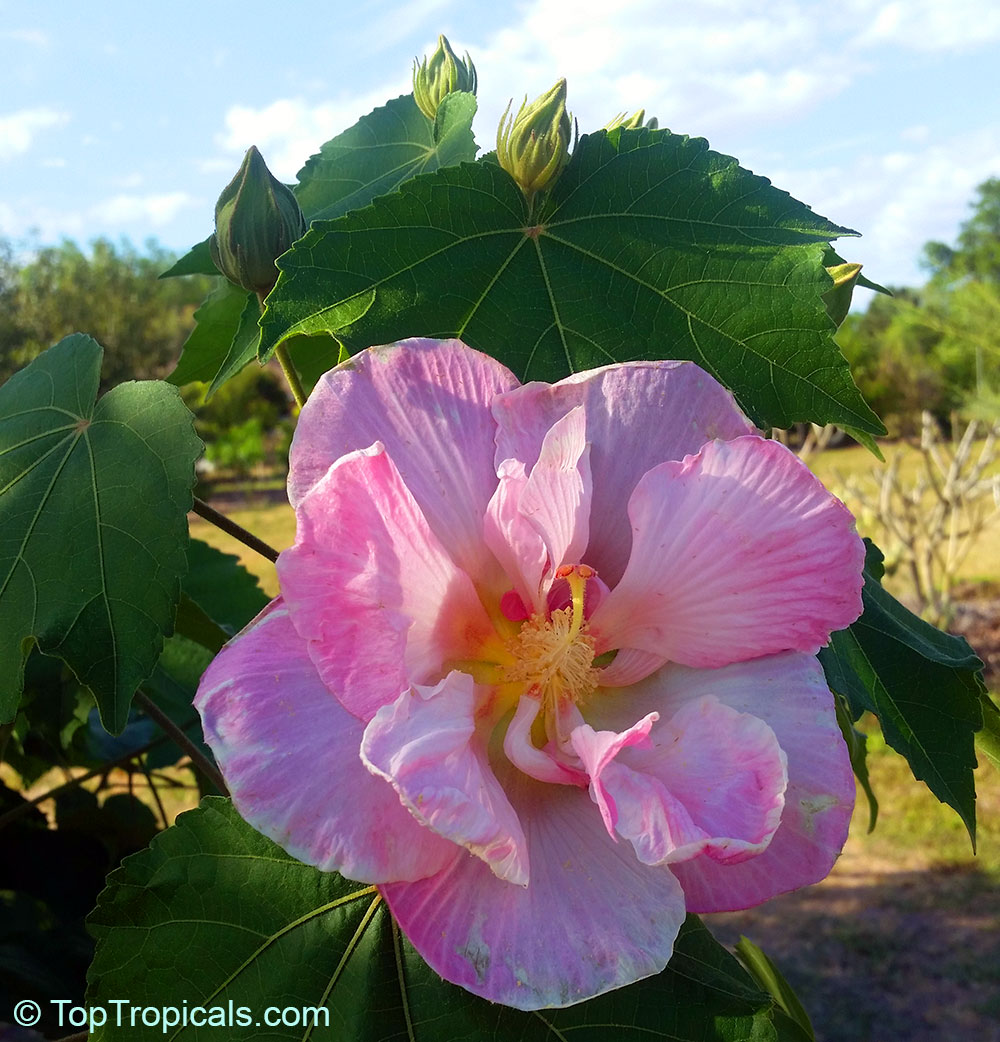
Photo above: Hibiscus mutabilis Cotton Candy

Care of Hibiscus and other flowering tropicals

"If your plant isn't flowering, feed it."
- Winn Soldani, Fancy Hibiscus -

Among gardeners, Hibiscus plants have a reputation to have couple maintenance issues:
1) they can get bugsy (because they must be so tasty!)
2) they can get leggy, especially fancy grafted cultivars, and after a while they don't look as perfect as when they came from a nursery.

4 tips for healthy and pretty hibiscus plant

1. Full sun. Essential for profuse flowering and keeps away diseases.
2. Pruning. Keep it pruned and it will get bushy and produce more blooms.
3. Well-drained soil. Hibiscus likes regular watering but hates wet feet.
4. Nutrition program. Hibiscus plants are heavy feeders. But keep in mind that if you just keep pushing granulated plant food, you can over-fertilize the plant. Excessive salts will accumulate in soil and you will end up with a sickly looking plant.

Keys to balanced plant food and bloom booster

1) Use liquid fertilizer, preferably amino acid based, it won't create nutrients lock up
2) Fertilize on regular basis, it's better dilute concentration and add food with every watering
3) Always add micro-elements - they are essential for plant health

If you do this part right, the result will be:
- healthy, green plants, like they just came from a nursery
- reliable blooming circle
- better cold tolerance and disease resistance. Remember that a strong plant will be less stressed and less "bugged" by bugs!

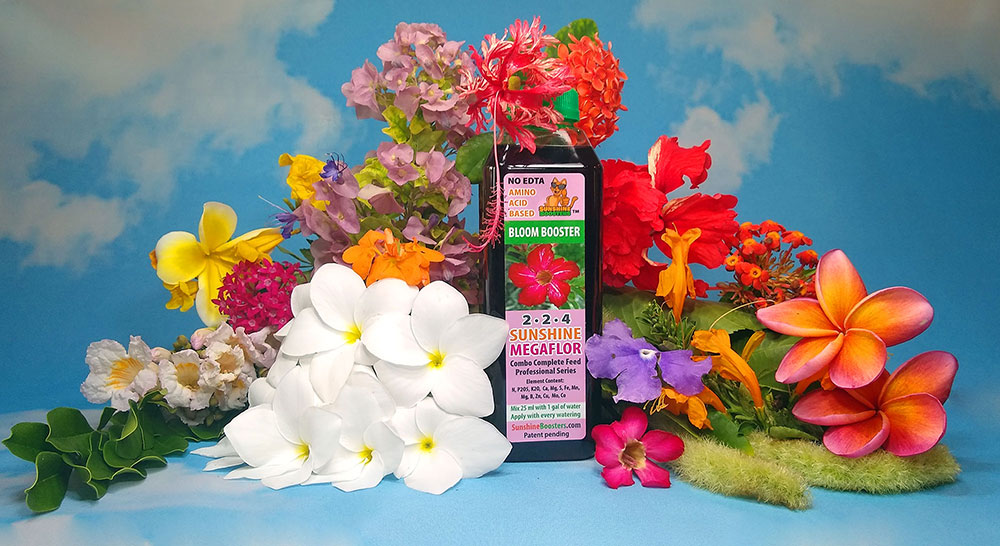
We always suggest Sunshine Boosters - scientifically balanced liquid fertilizers that are amino acid based = they are natural and organic, can be used for both flowers and edibles, and what's most important - year around. They are safe to use virtually with every watering.

This is all you need for healthy plants and lots of flowers!

Date: 20 Dec 2019

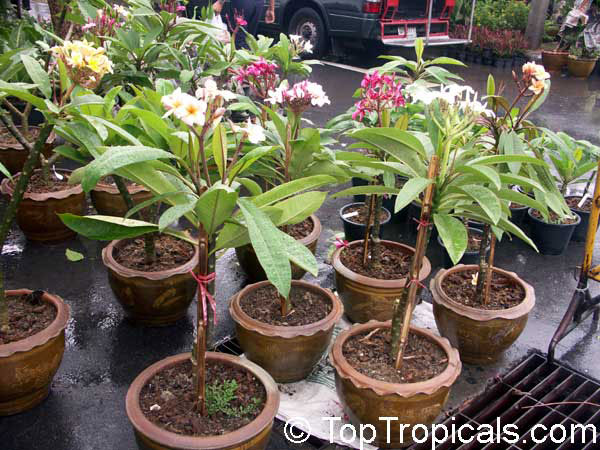
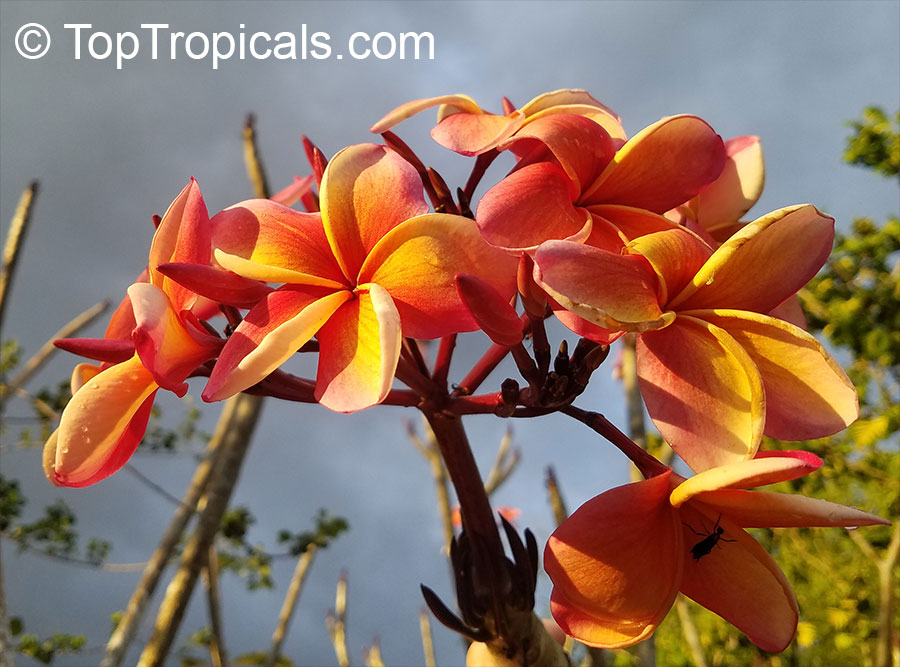
Plumeria cold protection

Q: We have a purple-flowering plumeria which resides on our sunny deck during the warm months and then Winter vacations on our back porch where we can close the plastic film windows and where it stays above 50 degrees (overnite) until it can get moved outside again. We live in zone 8+ in South Carolina and I would love to plant it outside. Do you think if we ghost-covered it when alerted that we would have an overnite freeze, that it would survive being planted in the ground and recover to flower when warm? I don't believe the soil in our yard has ever frozen below the top 1/2 inch or so, and never for more than a few hours at a time. What do you think?

A: Plumerias are tropical plants, which means, they need frost-free environment. Even if the ground is frozen only on "the top ½" or so"- this may be enough to kill the plant. From our experience, plumerias can withstand a few hours of windchill frost (not frozen soil), but even if they survive, they may get some branches damage, and recovery may take so long that the plant may not even bloom the next year. So I wouldn't take that risk even with a ghost-cover cold protection. We have customers who grow tropical plants in the ground in colder areas, but they have greenhouse protection: this means, the soil is warm and the air temperature is maintained above 45-50F. For example, this Greenhouse in Virginia.

We recommend to continue growing your rare plumeria in container and move it inside when temperatures drop below 50F (recommended) and for sure when they drop below freezing. Plumeria can take a cold night (a few hours of upper 30's) as long as it is followed by a nice warm sunny afternoon with at least upper 50s. Otherwise, keep it indoors. The good news is, since plumerias are deciduous and have no leaves in winter, low light level won't affect the plant.
Just make sure to minimize watering and keep the plant on a dry side until it starts growing new leaves in Spring. You may continue fertilizing once a week with half-doze of Sunshine boosters - Sunshine TotalFeed. This will maintain the plant healthy and prepare for the blooming season in Spring.

Date: 24 Dec 2018

Growing Nutmeg from seed: secrets of successful germination

TopTropicals.com

Q: I received a Nutmeg nut and I am wondering do I need to open a hard shell before planting it? Any other tips on growing nutmeg from seed? When will you have Nutmeg plants for sale?

A: We just received fresh nutmeg seeds from Sri Lanka and planted them right away, so we should have Nutmeg plants by Spring/Summer. These are some tips on how to make germination a success:
- nutmeg seeds are viable only for a few weeks after harvesting so plant them as soon as possible.
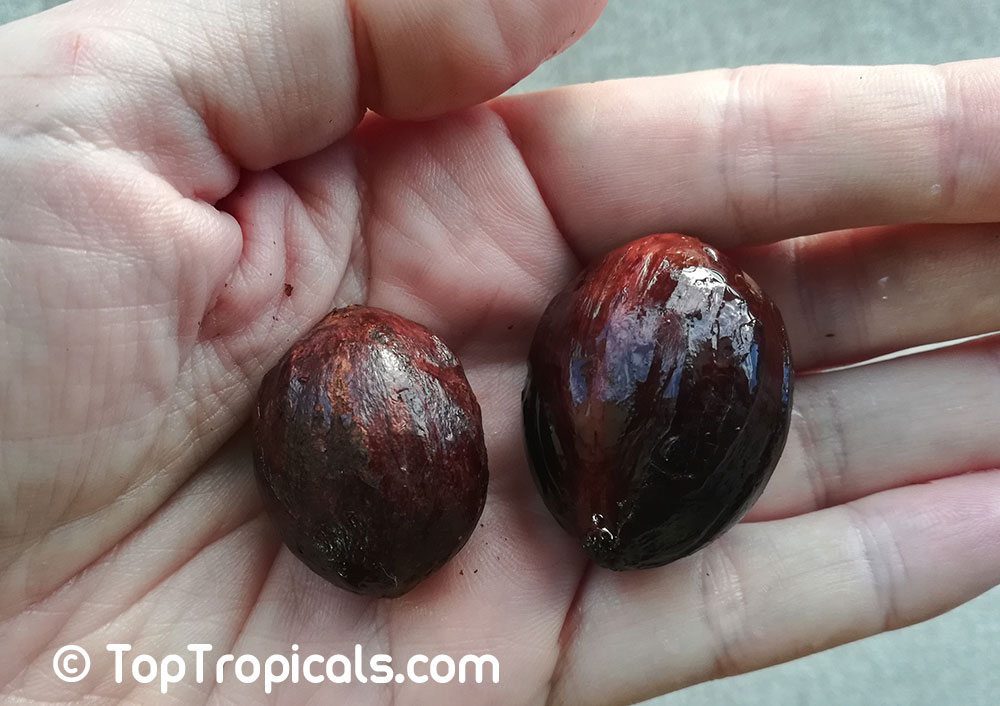
- wash the seed and soak it in warm (100F) water with a few drops of SUNSHINE-S booster that improves germination. Soak for up to 24 hours. You may use a thermos to keep it warm.
- there is no need for scarification. The outer shell of nutmeg is hard, however, it is not thick so the water will penetrate easily. On the photo above, you can see 2 seeds: the one on the right expanded twice in size after sozking.
- Plant in a porous soilless mix, preferably light seed germination mix, in 4-6"pot, and keep moist but not soggy. You may cover the pot with plastic to keep moisture in.
- Unless you are germinating the seed in hot tropical conditions, you should use bottom heat - 80-85F. A heating pad is the best solution (make sure it doesn't have a timer that automatically shuts it off). For safety, use GFI protected electric outlets since you will be watering the pot.
- Be patient and allow a few weeks for germination. Once the seed sprouted, keep it in bright filtered light and apply SUNSHINE Superfood to young seedling, along with a small dose of Slow Release Fertilizer, for kickstart.
- Move the seedling out in bright sun light once the temperature outside is above 70F.

We have a very long waiting list for Nutmeg plants (item 3878) and seeds (item 6203), so you may reserve one for yourself using our Wishlist form; this way you will be notified immediately when we have the plants in stock, as they won't last long. A few seeds are still available for sale, order now while they are fresh:

Top

Date: 2 Nov 2018

Happy Hobby: growing tropicals from seeds

TopTropicals.com

Q: What is the best time to start tropical plants from seeds? Should I wait till spring?

A: If you want to feel happier, get into gardening. If you want to feel God, start plants from seeds and watch New Life grow from a tiny grain. Fall is a perfect time to start tropicals from seed.
Traditionally, people prefer sowing seeds in Spring, especially temperate species for a vegetable garden: tomatoes, peppers, cucumbers... My grandmother up North started them in early Spring in paper cups on a windowsill, then once the temperatures went just above freezing, she planted them out in the garden beds, and that early start always helped her to have the best early crop in the neighborhood.
When we deal with tropical plants, "just above freezing" is not warm enough. Which means you have to grow small babies indoors for quite a while, providing additional heating when needed. Heating pads always work best. If you keep your living space around 75F (ideal for many species), this is a perfect temperature to get your seeds started. Tropical plants are not like annual tomatoes that try to grow through the season as fast as possible. They take time. So the sooner you start, the more chances to get small seedlings just in time when Spring air outside is "warm enough" for those tropicals - at least in 70's.
A great advantage of starting tropical seeds indoors is controlled temperature and moisture. In the plant world, environment extremes are not good for the germination process. Mild conditions of your home or a greenhouse create better chances for successful growth. Seeds won't get overheated in the hot Summer sun, and won't rot because of a sudden heavy rain. Just keep in mind that some species require light for good germination.
For the best seed germination:
- Use only well-drained mix - we recommend special Seed Germination Mix #3, professional grade. Put seeds not too deep (1/2 inch deep or less) to allow air circulation
- Soak large seeds for a few hours with Sunshine-S solution
- Keep warm (75-85F) and in bright light
- Keep soil slightly moist but not soggy
- Apply micro-element booster SuperFood to baby seedlings for vigorous growth

Date: 24 Jun 2018

Growing tropicals from seeds.

From Kristi the Wizard of Rose: I grow many plants from seeds, both for my personal collection, and for TopTropicals. I receive many questions from customers who want to grow tropical plants from seeds. Some of them live in colder climates and try to extend growing season of their tropical collections by starting new varieties early in the year from seeds. These are a few tips that may be helpful.

Q: What do I need to do to speed up germination process?

A: Many factors affect germination. Considering you get fresh seeds (for example from TopTropicals) and Mother Nature gives them a good kick start, there are a few things that may speed up germination:
1) Scarification. Large seeds with a hard outer shell can be slightly sanded down just enough for moisture to get inside to wake up the seed during the pre-soaking. Be careful not to damage the seed. See example of Lotus seed scarification.
2) Pre-soaking. We recommend pre-soaking most of the seeds for only a few hours (3-8 depending on species. Some seeds are very sensitive to moisture and may start rotting if stay wet without air circulation. Small seeds, especially tiny ones like dust, should not be soaked.
3) SUNSHINE-S treatment. Adding a few drops of SUNSHINE-S booster when pre-soaking seeds increases their germination rate 3-5 times.
4) Temperature. Warm temperatures help germination. If grown indoors, put seeds containers or trays in the warmest spot of your house; you may use heat pads. Outdoors, putting them in full sun helps a lot, just don't let soil to dry out.

Use only special porous seed germination mix to provide air circulation and prevent seeds from rotting.

Q: Should I keep seeds in refrigerator before planting?

A: Do not refrigerate tropical seeds. Stratification (treatment with cold) works only for temperate species, and some subtropical (like non-tropical Magnolias)

Q: How do you grow eucalyptus from seeds? I tried a few times with no success.

A: The secret of germinating tiny seeds like eucalyptus is - to sow them on top of the moist soil surface (soil must be very fine and soft), without covering. Keep container covered with clear plastic, in bright light. Use spray bottle to keep surface moist but not soggy. I have a customer who germinates eucalyptus seeds using an old fish tank, covered with a glass. Perfect environment - bright light and moist all the time.