Date: 4 Nov 2019
Hardy Plumeria Pudica
Q: I have ordered plumeria pudica from you in March and it is thriving really well here in Rancho Cordova, California. The current temperatures are ranging from 68 to 32 degrees Fahrenheit. My USDA zone is 9b. Does this plumeria pudica survive outside with temperatures dropping in coming winter in CA?
A: From our experience, Plumeria pudica is pretty cold hardy and takes some cold spells in
spite of being a tropical species.
Our trees (well-established) took a few hours of freeze with no
significant damage.
Potted plants are less hardy than in-ground plants. However, their
advantage is, they are easy to move indoors or inside warmer place like garage,
etc. If the temperature stays borderline around 32F for a few hours, the plant
should be safe as long as warm day temperatures follow a cold night. For
longer periods of cold, move the plant inside.
Make sure do not overwater and keep Plumeria on a dry side during
winter, since cold and wet is a bad combination and may cause root problems.
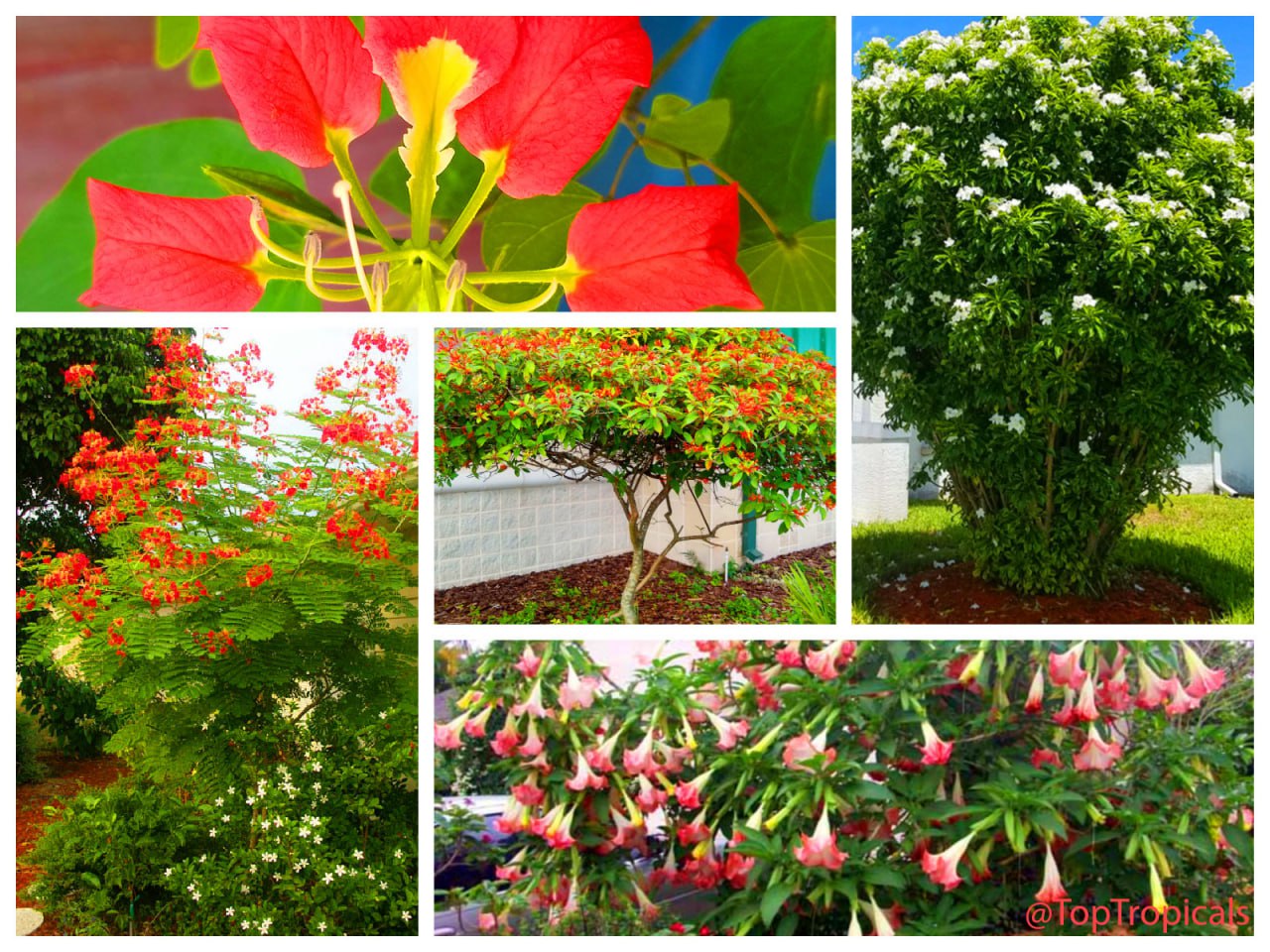
Above is the picture of Plumeria pudica tree growing in Cape Coral, FL
where low temperatures in winter sometimes go down to upper 20's for a few
hours.
To improve cold hardiness of Plumerias and other tropical plants, use SUNSHINE-Epi-T for plant thermal protection and immune system boost.
Make sure to fertilize plants on regular basis to keep them strong and
vigorous. The stronger and bigger the plant, the hardier it is!
RECOMMENDED FERTILIZERS:
Plumeria Top Dress - Smart-Release Booster
Pink N Good Daily Plant Food - Flower Booster
Tropical Allure - Smart-Release Booster
Date: 24 Sep 2019
How to fertilize a bamboo?
Q: When do you fertilize new bamboo trees and can you use the same fertilizer you use for mango trees?
A: Bamboo is a tropical to subtropical plant with growing season
year-round. You can start fertilizing it right away with the exception of colder
months when temperatures drop below 65F.
Mango fertilizer is formulated for fruit trees, so bamboo won't benefit
from it. Bamboo is not a fruiting plant and is not even cultivated for
flowers. Its beauty is in healthy green foliage and beautiful stems. So you will
need foliage-type of fertilizers for it.
We recommend the following fertilizers for bamboo plants:
Tropical Greenhouse Plus - Plant Booster
Tropical Allure - Smart-Release Booster
Remember to always use micro-elements that are essential for every green plant.
Date: 21 Sep 2019
Shaping a tree and regrowing branches
Q: I have been so worried about the beautiful ligustrum on my property since my husband decided to "prune" it 2 days ago. He removed about 20 branches from the tree and completely altered the look of the canopy which was so full and lovely ðŸ˜. Please advise me if there is anything I can do to help this tree. Will any of the branches grow back? Will the canopy return? It looks practically bare to me now.... so heartbroken. Any advice and reassuring would be greatly appreciated.
A: The good news is, the tree will regrow new leaves and will
branch out. The question is, how soon. Ligustrum is pretty slow-growing species
and it may take a while until it gets to the shape that is close to the
original.
On the other hand, pruning is beneficial almost for every plant, it
promotes new growth and bushy shape.
So do not panic, your beautiful tree has good chances to become even
prettier.
To speed up the process of re-leafing and promote healthy new growth,
we recommend the following:
1) Provide extra watering, assuming you have a sprinkler system that covers the yard. Water additionally 1-2 times a week using a garden house, for 1-2 minutes, saturating the soil around the tree and up to a drip line.
2) Apply the following fertilizers:
Tropical Greenhouse Plus - Foliage Booster
Tropical Allure - Smart-Release Booster
3) In addition to fertilizers, we recommend these 2 supplements that
will enhance effect of fertilizers and make re-grow process even faster:
SUNSHINEâ„¢ SuperFood
SUNSHINEâ„¢ HumiHum - a natural humate vitamin for plant
4) Mulch well around the tree, keeping it 2-3"away from the trunk
This should help to get your tree back in shape!
Date: 30 May 2019
Selecting the right jasmine
Q: Would you please help me select the right jasmine? I want to find a jasmine that smells like lily of the valley or honeysuckle or roses, not the one that smells like gardenia. I'm in Missouri, zone 6, so I want a jasmine for my deck for the summer, so I want it to bloom this season.
A: There are 3 major types of tropical flower fragrances - Sweet, Fresh, and Fruity (including Lemony). Below are the most interesting fragrant tropical flowers, excluding Gardenias (which are sweet type). These are all same-year bloomers, so you can enjoy the fragrance this year assuming proper care and bloom booster feeding.
* - The fastest growers that can be treated as annuals. Others can be grown in a pot and brought inside for winter, and be enjoyed every year.
Sweet
*
Aloysia virgata - Almond Bush
*
Cestrum diurnum - White Chocolate Jasmine, Day Blooming Jasmine
*
Cestrum nocturnum - Night blooming jasmine
*
Heliotropium peruviana - Turnsole, Cherry Pie
Portlandia Cubanola domingensis - Cubanola (Warm white Chocolate)
Portlandia grandiflora - Glorious Flower of Cuba (Warm white Chocolate)
Fresh
Beaumontia grandiflora - Easter Lily Vine
*
Brugmansia Jean Pasco - Yellow Angels Trumpet
*
Brugmansia Variegated Orange Angel Trumpet
*
Brunfelsia americana - Lady of the night
*
Brunfelsia lactea - Lady of the night
*
Brunfelsia nitida - Lady of the night
Crinum Queen Emma - Spider lily
*
Eucharis grandiflora - Amazon Lily
*
Hedychium coronarium - Butterfly Ginger
Hiptage benghalensis - Helicopter Flower
Hoya odorata - Fragrant Hoya
Ixora hybrid Sea Green
Ixora odorata - Fragrant Ixora
*
Jasminum azoricum - River Jasmine
*
Jasminum Molle - Indian Jui
Jasminum nitidum - Star Jasmine
*
Jasminum officinale Flore Pleno - French Perfume Jasmine
*
Jasminum polyanthum - Pink Winter Jasmine
*
Jasminum sambac Belle of India
*
Jasminum sambac Grand Duke
*
Jasminum sambac Maid of Orleans
*
Polianthes tuberosa - Tuberose
*Sclerochiton harveyanus - Blue Lips, Mazabuka (Lavender-violet-like)
Fruity
Aglaia odorata - Chinese Perfume Plant (Lemony)
Artabotrys siamensis - Climbing Ylang-Ylang (Lemony)
Cananga fruticosa - Dwarf Ylang-Ylang
Carissa grandiflora - Natal Plum
Cerbera x manghas hybrid - Enchanted Incense
*
Jasminum dichotomum - Rose Bud Jasmine
*
Lonicera japonica - Japanese Honeysuckle
Magnolia figo - Banana Magnolia (Banana-like)
Magnolia x Alba grafted (Bubble-gum-like)
*
Mirabilis jalapa - Four oclock plant
Oxyceros horridus, Randia siamensis
*
Quisqualis - Rangoon Creeper
*
Radermachera Kunming - Dwarf Tree Jasmine
*
Stephanotis floribunda - Bridal Bouquet
Strophanthus gratus - Climbing Oleander
Telosoma cordata - Pakalana vine (Lemony)
Fertilizers for profuse flowering:
Pink N Good Daily Plant Food - Flower Booster
Tropical Allure - Smart-Release Booster
SUNSHINE-Superfood micro-elements
Date: 28 Mar 2019
Hawaiian Dwarf is a True Star!
By Mark Hooten, the Garden Doc
Q: I live in Southern Ohio and love growing lots of tropical plants.
In the warm months, they all go outside under the protection of tall trees,
but in the cold months, they all come inside in a snug but very brightly lit
sun-room. For many years I have successfully kept a dwarf Meyer's lemon which
amazes my friends, and I am wondering if you could suggest some other dwarf
tropical fruit tree which I might be able to grow that would amaze them even
more?
A: Without hesitation, I would strongly suggest a particular variety of carambola (star-fruit) called Dwarf Hawaiian, as it is truly special as tropical fruit trees go. First and foremost, they begin fruiting at a very young age, often while only in a one-gallon pot, and even less than a couple of feet tall with a very little trimming. Better even is that they are perfectly happy living perpetually in a pot. I have one myself which is content in a 12 inch pot and which fruits freely throughout the year. Also, even though it should be too much to be expected, the fruits are of the highest quality and are as sweet as candy. I also like the fact that the fruits hang decoratively on the tiny tree for quite some time before finally ripening, rather like ornaments. One of these little trees in-fruit is an amazing sight and ought to make anyone take notice, especially in a sun-room in Ohio! They really are very easy to grow, and if you have a Meyer's lemon which does well, you'll certainly have no particular issues with a Dwarf Hawaiian carambola.
However, I have found that in order for them to remain extra dwarf and fruit especially precociously, this variety needs to be grafted and not cutting grown. Fortunately, Top Tropicals has recently obtained a number of these extra wonderful grafted trees which are of the highest quality I have seen in some time, all of which will likely begin fruiting very shortly. They simply are wonderful little trees! Check them out...