Garden Blog - Top Tropicals

Date: 28 Sep 2016

Helping plants to survive winter:
SUNSHINE BOOSTERS - FROM SUNSHINE STATE
A magic plant hormone so wanted by gardeners, is finally here! When people purchase plants and trees either on-line, or from their local nursery, expectation and anticipation for their new find is high. Many times, however, disappointment is encountered due to a variety of reasons. These reasons include changes in light, temperature, water, soil conditions and transportation; just to name a few. So how can the stress on newly transported and transplanted plants be mitigated? Easy! There are plant stimulators able to reduce the shock encountered.

One such plant stimulator, produced at TT Laboratories is SUNSHINE, a revolutionary, broad spectrum, plant stress reliever. Extracted initially from plant pollen, SUNSHINE can bring back and keep the vigor to stressed plants in both the home and garden. Sunshine is indeed a plant stimulator on the cutting edge of plant care technology. Reasonably priced, and easy to use, SUNSHINE will be your plants' best friend, next to yourself, of course.

SUNSHINE will help your plants:
- recover from stress
- dramatically increase growth rate
- get profuse flowering and fruiting
- improve disease resistance, cold hardiness, and heat resistance
- promote seed germination and root cuttings easily

Great for indoor plants and improving cold tolerance!

Line of products:
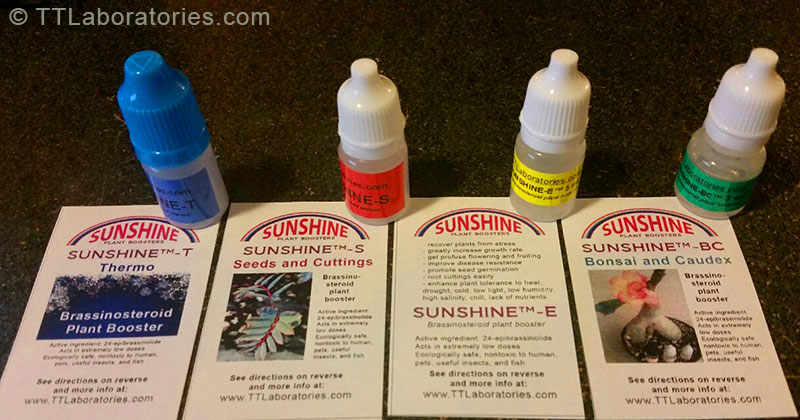
SUNSHINE-E - general plant booster, growth stimulator and immune booster
SUNSHINE-BC - Bonsai and Caudex developer
SUNSHINE-S - seeds and cuttings pre-treatment
SUNSHINE-T - Thermo-protection for overwintering tropical plants
SUNSHINE-Micro - ultimate micro-element mix from TT Laboratories

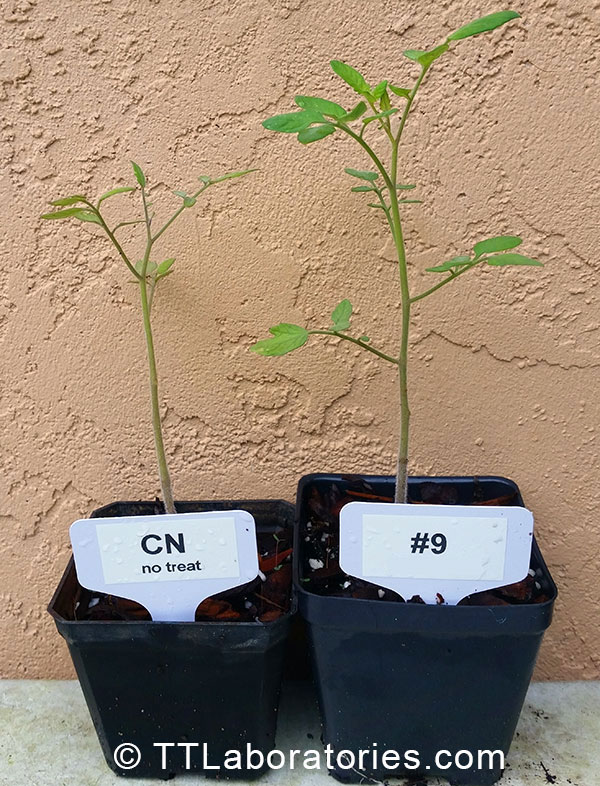
On the photo: Tomato seedlings, with and without Sunshine-E treatment; 1 week after treatment, 09-01-2016. Continue reading...

Order online

Date: 22 Sep 2025

Dragon Fruit Plant Care – Tips from the Garden Expert
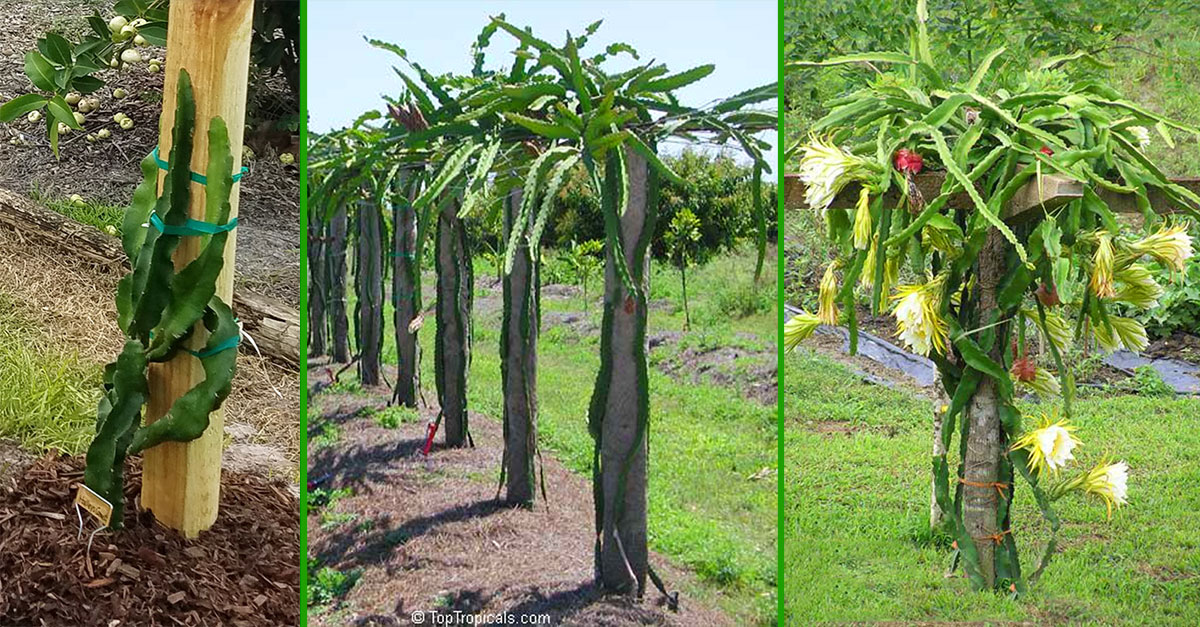
Stages  of  dragon  fruit  pitaya  plant  growth  and  trellis  support 
 system

Dragon fruit is one of those plants that look exotic but are surprisingly easy once you know the basics. Here is what works best in the garden:

  • Soil: They hate wet feet. A sandy, fast-draining soilless-mix is your friend. If water sits around the roots, rot comes fast.
  • Watering: Deep watering is better than frequent sips. Let the soil dry between waterings. In rainy season they cope well, but in pots you need to be careful.
  • Sunlight: Full sun is great, but in very hot places a touch of afternoon shade keeps them happy.
  • Support: They are natural climbers. A wooden post, concrete pole, or trellis will give them something to grab and makes harvest easier.
  • Fertilizer: Feed lightly but often. A gentle liquid like Sunshine C-Cibus liquid booster with every watering, or Green Magic controlled release fertilizer every 5-6 months. It encourages strong roots, lush growth, and lots of flowers.
  • Pruning: Trim off tangled or weak stems. This guides energy into strong branches that will flower and fruit.

Think of it as training a cactus vine into a small tree. Once it settles in, it almost takes care of itself — and pays back with fruit you can’t buy in stores.

🌱 Dragon Fruit Plant Care – Outdoors and Indoors

Outdoors: Dragon fruit thrives in USDA Zones 10–11 year-round. In warm regions like Florida, Texas, California, and Hawaii, you can grow it outside in the ground. Give it fast-draining soil, full sun with a little afternoon shade in the hottest months, and a sturdy trellis or post to climb. Deep watering with drying periods in between keeps roots healthy. A yearly pruning shapes the plant and boosts flowering.

Indoors or Patio Pots: Gardeners in cooler zones can still enjoy dragon fruit in containers. Use a large pot with sandy, well-draining mix or soilless-mix and a pole for support. Place the pot in the brightest spot — a greenhouse, sunroom, or patio that gets 6+ hours of light daily. Move pots inside when temperatures drop below 40F. Even indoors, a healthy plant can bloom and fruit if it has enough light and warmth.

❓ Dragon Fruit FAQ


How soon will a dragon fruit start producing?

Cuttings can flower and fruit in as little as 2–3 years. Seed-grown plants take longer, often 4–6 years. Large developed specimens can start flowering and fruiting within a year or even the same season.

Do I need more than one plant for pollination?

Some varieties are self-fertile, others need a second plant for cross-pollination. Even self-fertile types usually set more fruit with a partner nearby.

How big do they get?

In the ground, dragon fruit can climb 15–20 ft if you let it. With pruning and a trellis, you can keep it shaped like a small tree, 6–8 ft tall.

Can I grow it in a pot?

Yes. A large container with sandy mix or soilless-mix and a pole for climbing works well. Indoors it will need bright light or a grow lamp.

What does a dragon fruit taste like?

Sweet and juicy, like a blend of blackberry and raspberry. Varieties differ: flesh can be white, pink, deep red, or purple, wrapped in skins of red, pink, or yellow. White flesh is mild and refreshing, red flesh is sweeter, and yellow flesh is the sweetest with a honey-pineapple flavor.

What zones can I grow dragon fruit outside?

USDA Zones 10–11 are best for year-round outdoor planting. In cooler areas, grow it in containers and bring inside for winter.

How often should I water?

Deep water, then let the soil dry. Too much water causes root rot. Think “desert cactus with a taste for rain.”

Is dragon fruit easy to grow?

Yes. Pitayas grow like cactus trees on strong supports, but they are easy to care for — little water, sun or semi-shade, and they thrive.

How long do they live?

A healthy dragon fruit cactus can produce for 10 years or more with proper care.

What are the health benefits?

Dragon fruit is high in fiber, supports digestion, and is low in calories. It is rich in antioxidants and vitamin C, making it good for immunity and overall wellness. Many gardeners enjoy it as a healthy snack or in smoothies.

Explore Dragon Fruit varieties

Date: 25 Apr 2026

🎁 Mothers Day plant gift guide: something for every kind of mom

Skip the bouquet, give her something that grows

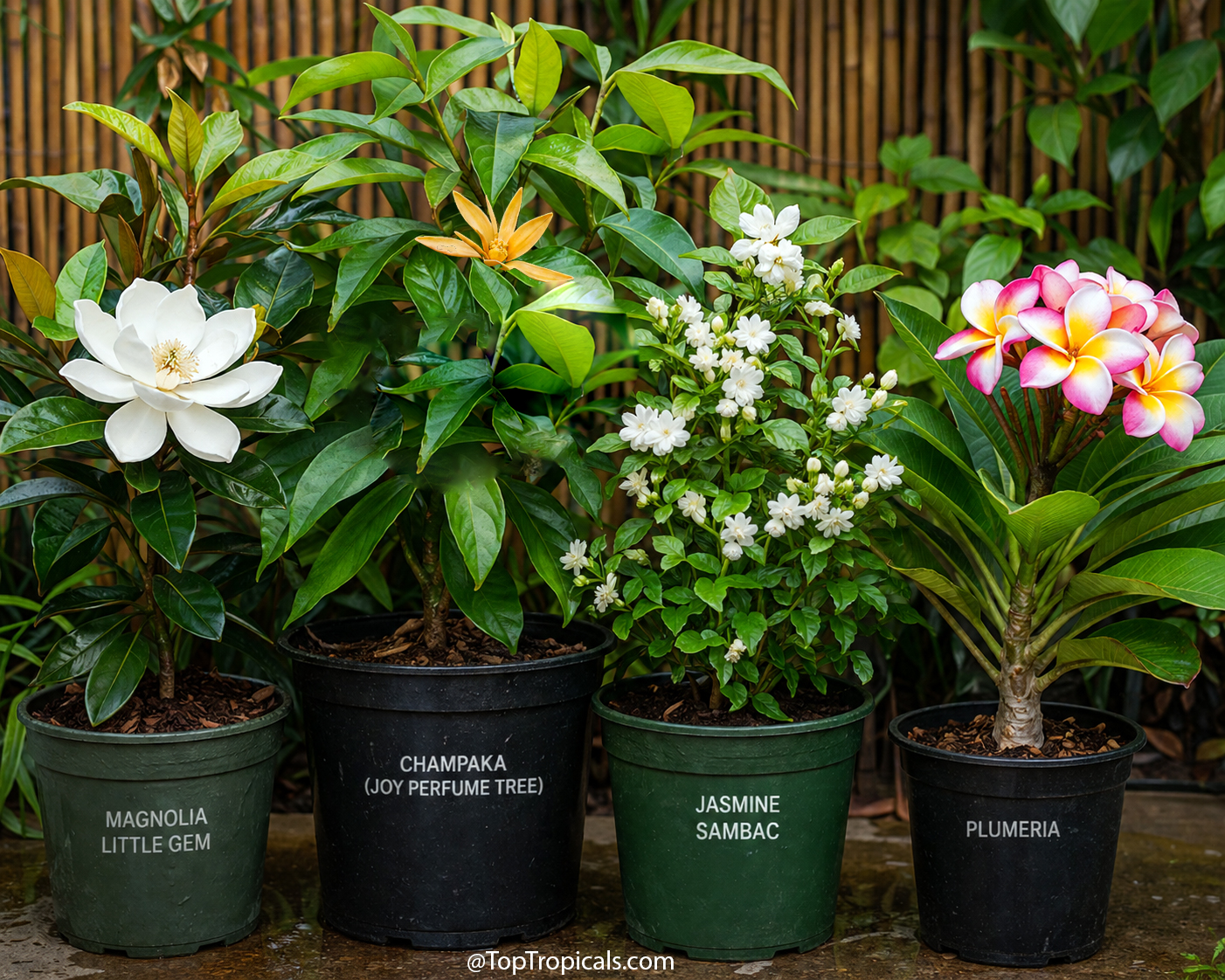
Four  potted  tropical  plants  in  bloom  -  Magnolia  Little  Gem,  Champaka, 
 Jasmine  Sambac,  and  Plumeria  -  arranged  on  gravel  in  a  garden  setting 
 against  a  light 
 fence.

Magnolia Little Gem, Champaka, Jasmine Sambac, and Plumeria

Some gifts last a few days. These don't. Right now, these plants are at their best in our nursery - full, established, and ready to impress the moment she sees them. This year, give her something that doesn’t fade. Pick a plant that will keep growing, blooming, and reminding her of you long after Mother's Day is over. Here are a few easy ways to choose the right one.

All of these grow well in containers and are beginner-friendly.

1. For moms who love fragrance - give her living perfume ✨

These are the plants people remember. Soft, rich scent that fills the garden, patio, or even a warm evening indoors.

  • Champaka Joy Perfume Tree - the legendary Joy perfume flower - rich, sweet, and unmistakably bubble gum-like.
  • Magnolia Little Gem - the classic Southern magnolia in a smaller form - big, creamy, fragrant blooms that never go out of style.
  • Wrightia religiosa - a sacred Buddhist tree - delicate white flowers with a soft jasmine fragrance that feels calm and refined.
  • href="https://toptropicals.com/store/findname/Jasminum-Sambac.htm?utm_source=mlist" >Jasmine Sambac - intensely fragrant and impossible to ignore - once you have it, you won’t want a garden without it
  • Plumeria - the iconic Aloha flower - bold color, rich perfume, and pure tropical feeling in bloom.
  • Parijat Tree Jasmine (Nyctanthes arbor-tristis) - blooms at night and fills the air with a gentle, unforgettable fragrance.

🛒 Shop Perfume plants

2. For easy care and everyday enjoyment - beautiful, low maintenance choices 🌸

  • Jatropha podagrica - Buddha Belly - a quirky caudex plant with a swollen trunk and bright red flowers that shows character without needing much care.
  • Dorstenia bahiensis - Mattress Button Plant - a strange, sculptural plant with flat, button-like blooms that always gets people curious.
  • Columnea - Flying Goldfish Plant - trailing stems covered in bright orange flowers that look just like little goldfish in motion.
  • Adeniums - collectible forms in many colors - bold caudex shapes and striking blooms, easy to grow and hard to stop collecting.

🛒 Shop Indoor Garden

3. For the plant collector - rare, unusual, unforgettable 🔮

For moms who already have a garden... and still want something different.

  • Rainbow Eucalyptus - a one-of-a-kind tree with peeling bark that reveals streaks of green, orange, red, and purple like living artwork.
  • Tacca Bat Head Lily - an unforgettable plant with dark, bat-shaped flowers and long whiskers that look almost unreal.
  • Dwarf Ceiba Princess - a rare, compact silk floss tree with a sculptural trunk and soft, showy blooms that feel truly special.

🛒 Shop Rare Plants

4. For the fruit lover - grow something she can enjoy and taste 🍒

A gift that turns into harvest. Fresh fruit, right from her own garden.

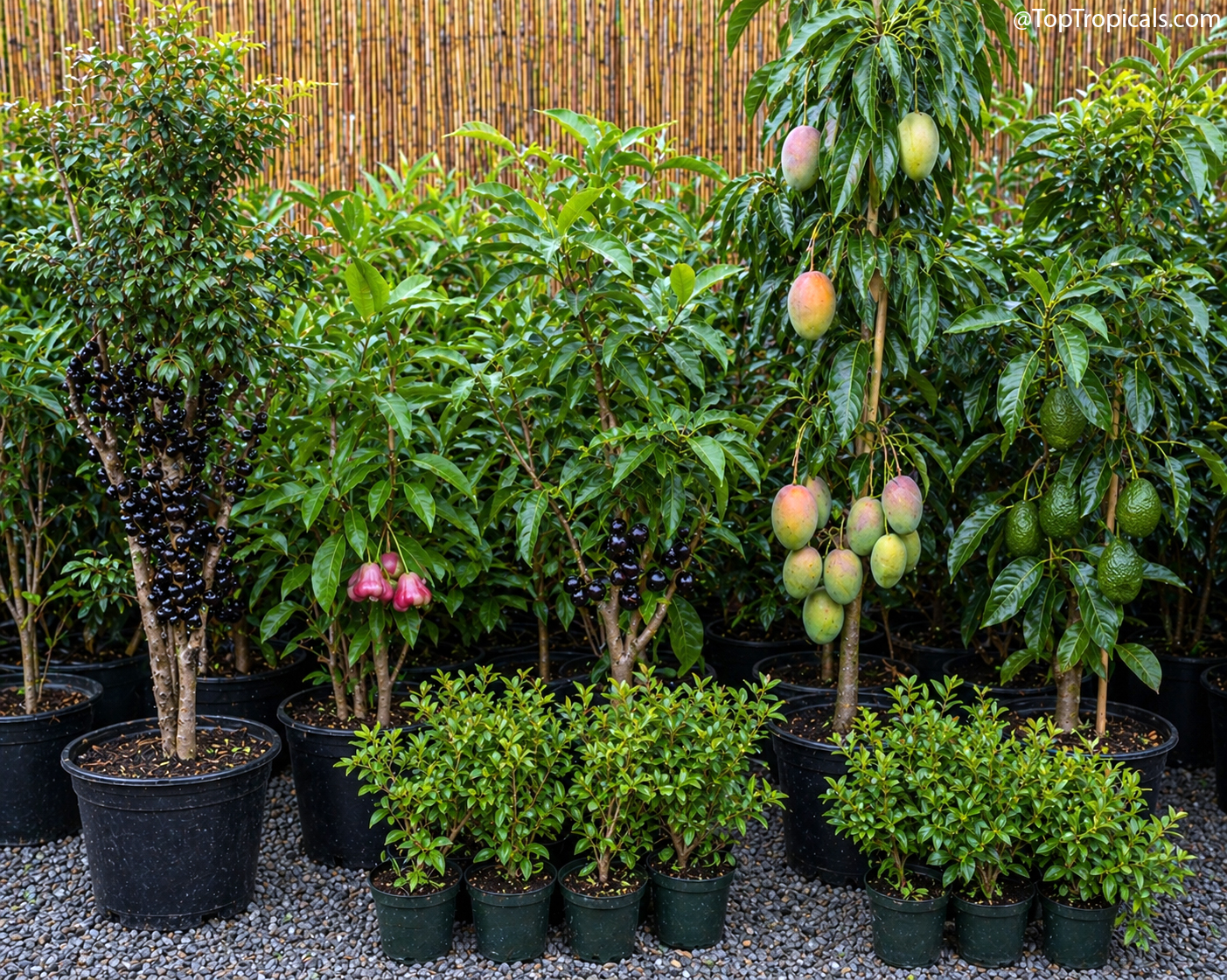
  • Jaboticaba - a truly unique fruit tree that produces sweet, grape-like fruit right on the trunk, turning it into a conversation piece.
  • Rose Apple - crisp, refreshing fruit with a light floral taste and a beautiful ornamental tree to match.
  • Java Plum (Jambolan) - deep purple fruit with a sweet-tart flavor, loved for both its taste and its shade tree presence.
  • Mango - the king of tropical fruit - rich, sweet, and incredibly rewarding to grow in your own garden.
  • Avocado - creamy, nutrient-rich fruit from a tree that becomes a long-term staple in the garden.
  • Eugenia cherries - Surinam Cherry, Rio Grande and Grumichama - compact trees with glossy foliage and delicious, dark cherries that are easy to grow and quick to fruit.

🛒 Shop Fruit trees and edibles

Potted  tropical  fruit  trees  including  jaboticaba,  Wax  jambu,  Java  plum,
   mango,  avocado,  and  Eugenia  cherries  arranged  in  a  nursery  setting  on 
 gravel.

Tropical fruit trees selection - from Jaboticaba fruiting on the trunk to Mango, Avocado, and rare Eugenia cherries - a great mix for building a productive food forest.

Mothers Day Gift Card 💌

Mother’s  Day  themed  Top  Tropicals  gift  certificate  with  a  pink 
 decorative  frame  filled  with  jasmine,  plumeria,  magnolia,  and  champaka 
 flowers,  tropical  fruits  across  the  center,  and  a  Happy  Mothers  Day  banner 
 at  the  top,  with  space  for  certificate  details  and 
 message.

Mother’s Day Top Tropicals gift certificate

Still not sure what to choose? A gift card keeps it simple. She can pick exactly what she wants, when she is ready for it. No guessing, no pressure - just something she will actually enjoy.

Get 15% extra value on gift certificates. Just mention Mother’s Day in the message field. For example, a $100 certificate becomes $115. A $50 certificate becomes $57.50.
Offer valid through 05/12/2026.
Bonus value applies to gift certificates only. Must include “Mother's Day” in the message field at checkout. Not valid on previous purchases and cannot be combined with other promotions or discounts. Offer subject to change without notice.

Date: 26 Mar 2026

🌈 Adeniums: More Than Just Plants

Smokey  and  Sunshine  in  a  luxury  greenhouse  admiring  sculptural  adenium 
 plants  with  thick  caudex  trunks  and  colorful  blooms.
Sunshine: What are they called? Adeniums? They’re not plants. They’re art. Look at those sculptured butts.

Smokey: Caudex. Water and nutrient storage for future use.

Sunshine: I need a caudex too. For coffee and my donuts

Smokey: You already have one. Have you looked in the mirror lately?.

Read more about Smokey & Sunshine

🌱 Shape, Color, and Why Each Adenium Feels Unique

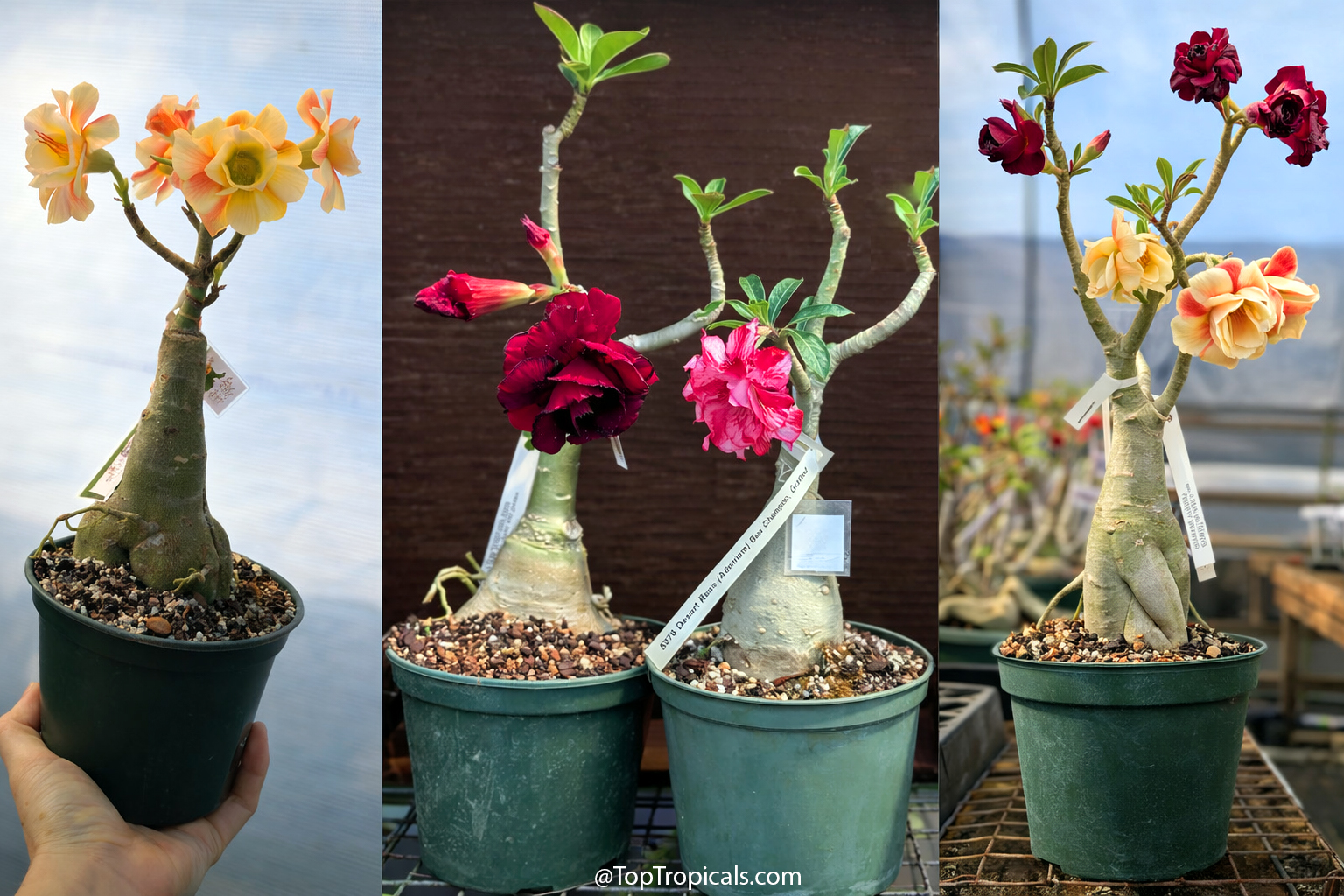
Adeniums can stop you in a strange way. It is not only the flowers, although they help. It is the whole plant. The swollen base, the curves, the way no two look quite the same. Some are thick and heavy, some more refined, almost like they were shaped on purpose. After a bit, you stop seeing them as regular plants and start treating them more like objects you want to keep and look at.

That is usually how a collection starts. One plant, then another that feels different, and then you want contrast. Light next to dark, soft next to bold, one with a wide base next to a taller form. It is not really about having many. It is about how they look together. And over time, each one changes a little, so the collection never stays the same.

Adenium  desert  rose  plants  in  pots  with  thick  sculptural  caudex  and 
 colorful  blooms  in  yellow,  orange,  red,  and  pink

Adeniums display a wide diversity of colors and forms, from red and pink to yellow and purple. Through multi-grafting, several varieties can even grow and bloom on a single plant.

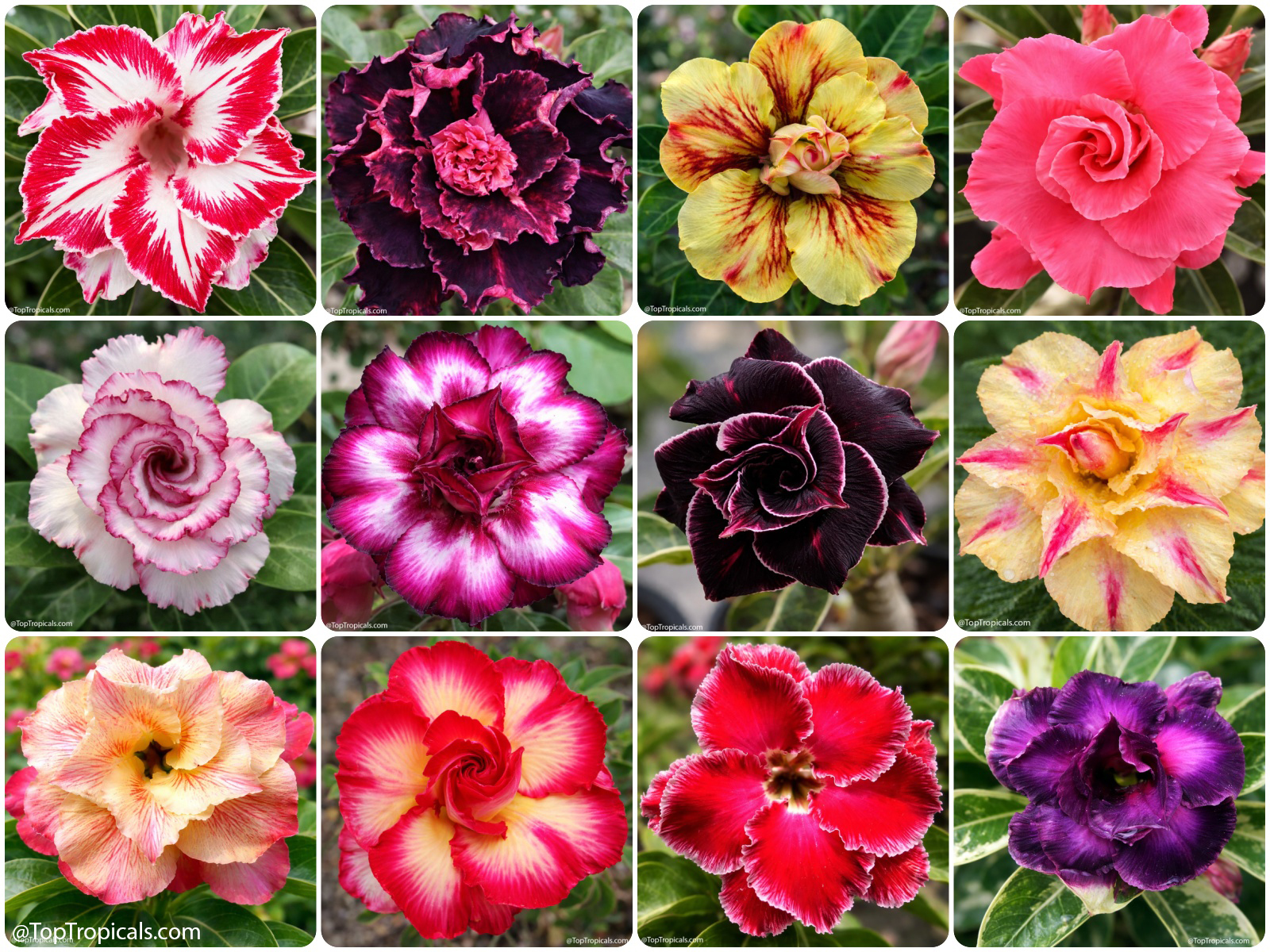
Collection  of  Adenium  desert  rose  flowers  in  many  colors  including  red,
    pink,  yellow,  white,  and  deep  burgundy  with  single  and  double 
 blooms

A world of colors in every bloom - how many can you resist? Warning: Highly collectible! No two are the same - and that’s exactly why one is never enough. Rare, unique, unforgettable - build your collection, one stunning bloom at a time.
Free Shipping on Adeniums
Add bold color and unique forms to your collection with no extra shipping cost.

🛒 Explore Exotic Adenium varieties

Date: 16 Jun 2023

10 tips how to care of tropical garden
during hot Summer

Cats  in  shade  of  tropical  plants

Q: Do you have any special recommendations how to take care of plants during hot season, to reduce heat strees?

A: Tropical plants prefer temperatures of 70-90F, except for heat-adapted desert plants. High temperatures above 90F can cause slowed metabolism and signs of stress like wilting, yellowing, and leaf drop. Hot and humid conditions attract pests and fungal diseases. To keep your plants stress-free and healthy, during Summer:

1. Monitor temperature and signs of stress.
2. Provide shade to regulate heat exposure: use shade cloth or simply a sheet of fabric as needed to protect lush foliage from burns.
3. Choose heat-tolerant plant varieties.
4. Plant in groups and levels, with trees protecting smaller shade loving plants (see companion planting).
5. Water deeply in the morning or evening to prevent evaporation.
6. Mulch to conserve moisture and regulate soil temperature.
7. Air: ensure good air circulation.
8. Trim damaged foliage and crowded branches.
9. Fertilize: use appropriate fertilization to improve plant heat tolerance. Remember, plants need lots of food during active growth period.
10. Remove weeds, pests, and diseases promptly.

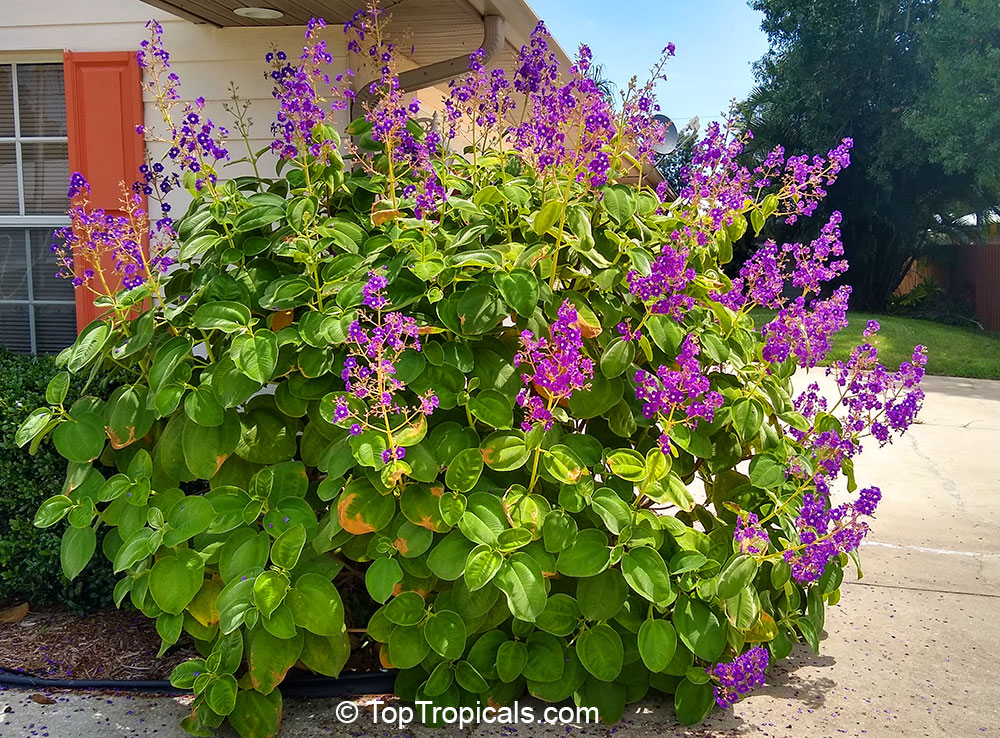
Tibouchina  multiflora  (grandifolia)  -  Glory  bush,  Quaresmeira

In the photo: Tibouchina multiflora (grandifolia) - Glory bush, Quaresmeira, one of the most impressive flowering plants for tropical gardens, with impressive, large velvet leaves and beautiful purple flowers. It blooms in both sun or shade!