Garden Blog - Top Tropicals

Date: 8 Nov 2024

Mark your calendars: December 14, 2024

December  14,  2024  -  SATURDAY  -  Holiday  Plant  Market

Holiday Plant Market
Saturday, December 14, 9 am - 4 pm

Save the date! Join us on December 14 for our Holiday Plant Market!

It's the perfect time to find unique holiday gifts in our Tropical Wonderland, where lush greenery and vibrant blooms replace snow. Discover a stunning variety of tropical plants, from fragrant flowering shrubs and rare vines to fruit trees and spice plants - ideal for holiday giving!

Enjoy amazing deals with plants starting at just $5 and $10, plus receive a free plant with every purchase. Our plants have grown big and beautiful over the summer. Bring friends and family to explore, and let our friendly PeopleCats help you find the perfect plants. Celebrate the season with us in full tropical style - we can't wait to see you there!

Highlights of the event:

30% OFF online prices, one day only! (excluding 15 gallon material and rare plants)
$5 and $10 plants
Raffle
Free plant with any purchase as a token of our appreciation

Event discounts valid at both locations:

Ft Myers Garden Center: 13890 Orange River, Ft Myers, FL
Sebring B-Farm: 9100 McRoy Rd, Sebring, FL

Plant  Market

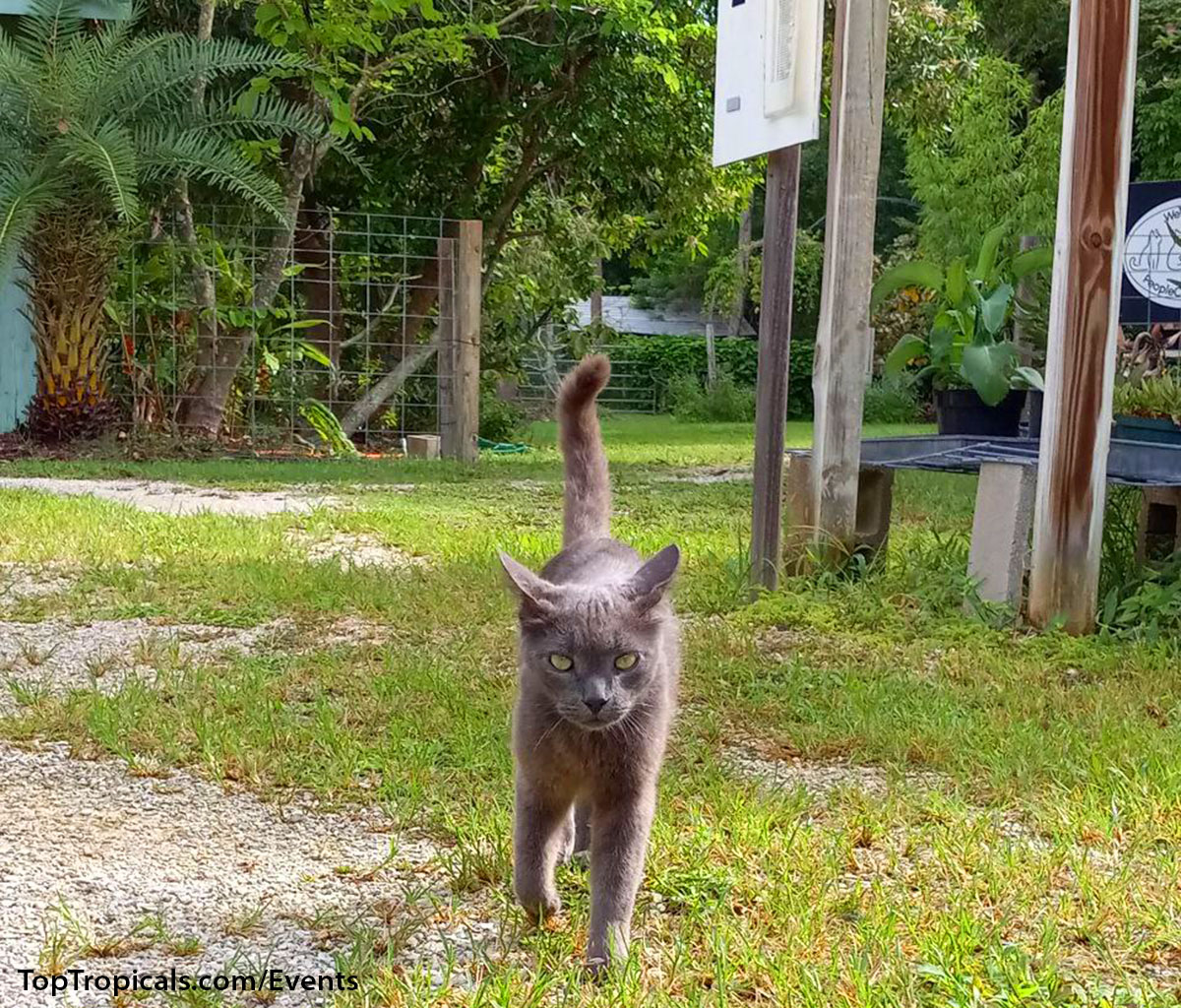
Holiday  Plant  Market  Cat

Plant  Market

Date: 5 Nov 2024

How much water is too much?

Cat  in  the  pool  with  umbrella

"Always over-water your plants: just improve their soil drainage!" - Murray Corman, horticulturist, rare tropical fruit tree expert.

Q: I always tend to overwater my plants. How often should I water container plants and how to determine if it's too much water?

A: One of the most common challenges in tropical plant care, including houseplants, is overwatering, particularly in container gardening. So, how much water is too much?

The rule of thumb: let the soil dry out a bit before watering again, and never water if the soil feels wet to the touch. For indoor plants with saucers underneath, ensure they don't sit in standing water by removing any excess from the saucer after watering. However, remember that the watering schedule alone isn't the only key to success!

Improve drainage. Surprisingly, water itself isn't harmful to plants, no matter how generous your watering is. The real issue is poor drainage, which leads to stagnation and bacterial buildup, ultimately causing root rot.

In the nature. If you've traveled to places like Hawaii or explored tropical jungles, you might have noticed plants thriving between rocks with minimal soil, receiving a near-constant fine mist of rain. Conversely, swamps support very few trees - only bog or water plants adapted to wet conditions can survive there. The lesson? It's not the water, it's the growing medium!

The Soil Solution: for potted plants, always use a high-quality potting mix with excellent drainage properties. This should include ample "soil conditioners" such as perlite, vermiculite, and pine bark. At our nursery, we use a professional soil mix called Abundance. Learn more about potting soil.

Pot size matters. And the last but not least: if you tend to overwater your potted plants, consider using the smallest container size that comfortably fits the root system. A pot that's too large can mean excess wet soil, increasing the risk of root rot. With proper fertilizer program, container plants don't need to much soil to thrive.

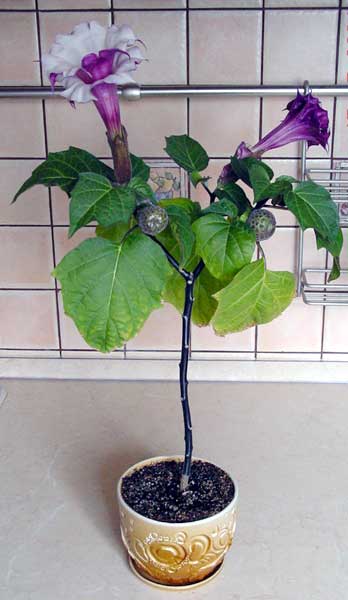
Datura  Metel  -  Horn-of-Plenty

Photo above: Datura Metel - Horn-of-Plenty - doesn't need a large container for happy blooming indoors!

Date: 5 Nov 2024

Plant of the month:
Lipstick Tree, Annatto

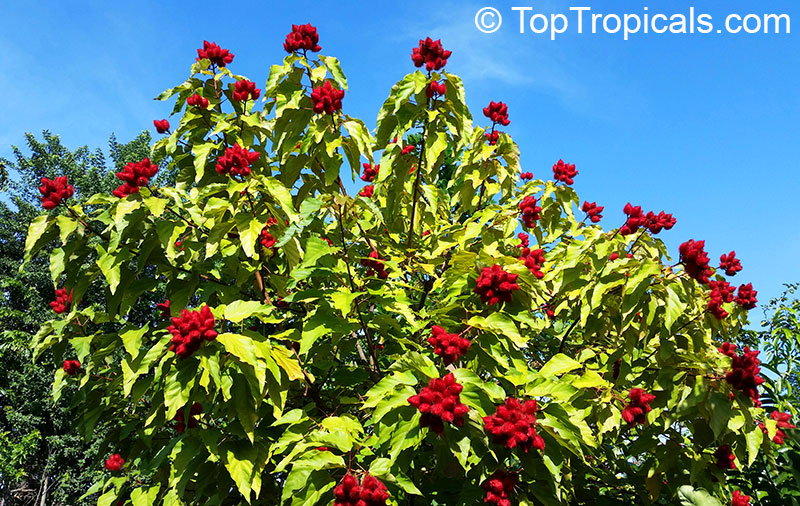
Bixa  orellana  -  Lipstick  Tree,  Annatto,  Achiote

Bixa orellana - Lipstick Tree, Annatto, Achiote... Meet the plant that lipstick is made of!

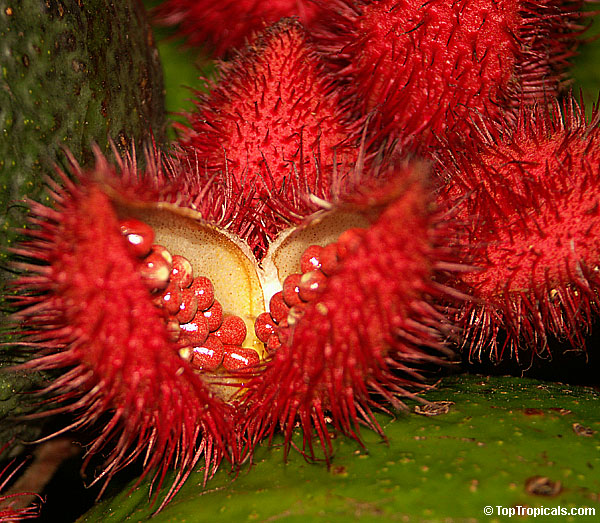
The enchanting Lipstick Tree brings a splash of South American magic to your garden with its bold, heart-shaped leaves and charming pink blooms. But the real showstopper? Its vibrant seed pods brimming with annatto - a natural pigment famed for painting dishes with rich golden hues and spicing up kitchens worldwide.

Annatto isn't just a culinary delight; it's a beauty secret too, adding natural, radiant color to lipsticks and cosmetics. Beyond its practical uses, Bixa makes a striking hedge or screen, adding both beauty and function. This tree is your garden's ticket to tropical flair and everyday usefulness!

Bixa  orellana  -  Lipstick  Tree,  Annatto,  Achiote,  fruit,  seeds

Date: 1 Nov 2024

Cat of the month: Persephone
The Queen of the Underworld

Cat  Persephone

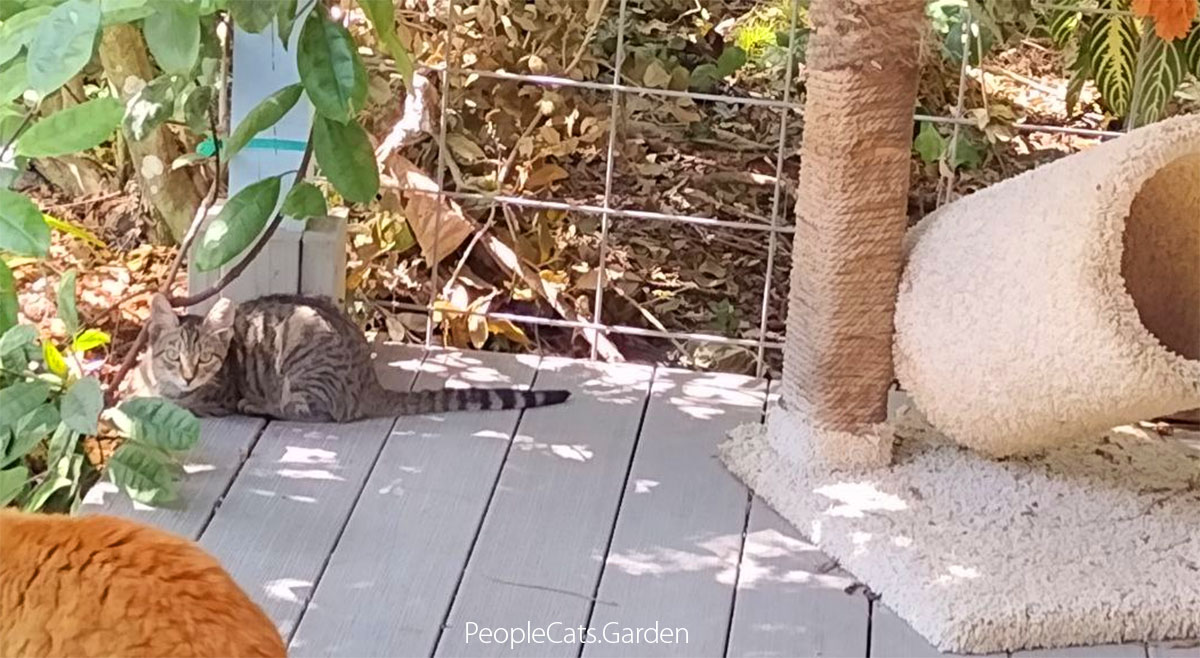
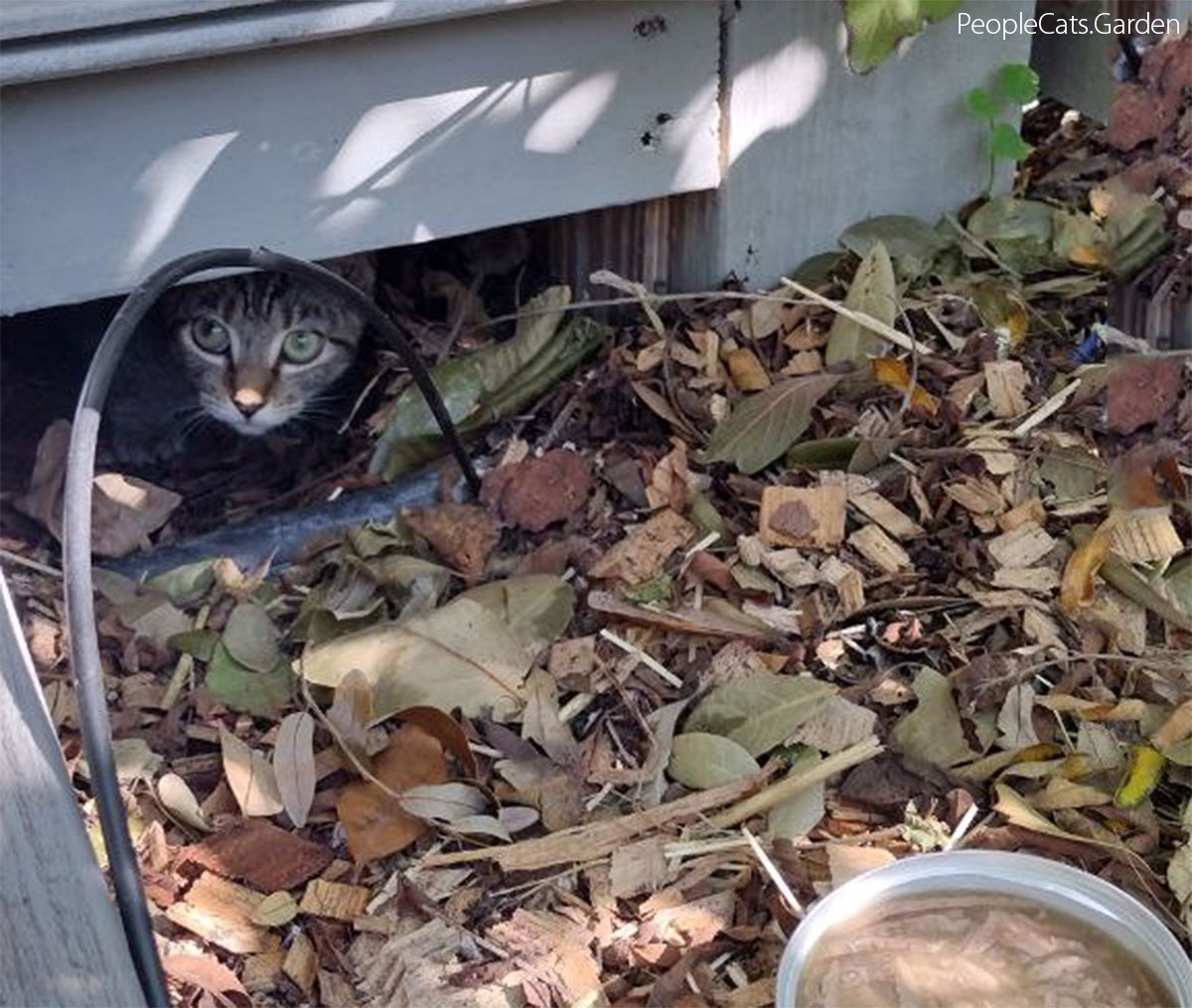
Well, well, well... it seems we have a new purrsonality around here! A few days ago, we discovered a mysterious little purrrson living under the TopTropicals office. Did a customer leave her behind? Or was she simply drawn to our PeopleCats paradise? Who can say! Either way, since she made her grand entrance from the underground, we decided to name her Persephone, after the Greek goddess and Queen of the Underworld.

Persephone has come a long way - she finally let us pet her, and now she's taken over the office desk! She even drools a little when she gets those precious head scratches. Persephone has officially joined our Nursery Team, adding her charm to Customer Service

Come and see our PeopleCats (including the Queen herself!) in purrrrson at our Garden Center in Ft Myers, Florida!

Cat  Persephone

Cat  Persephone

Date: 29 Oct 2024

How to overwinter tropical plants indoors

Mandevillas  indoors

10 key tips for successful overwintering

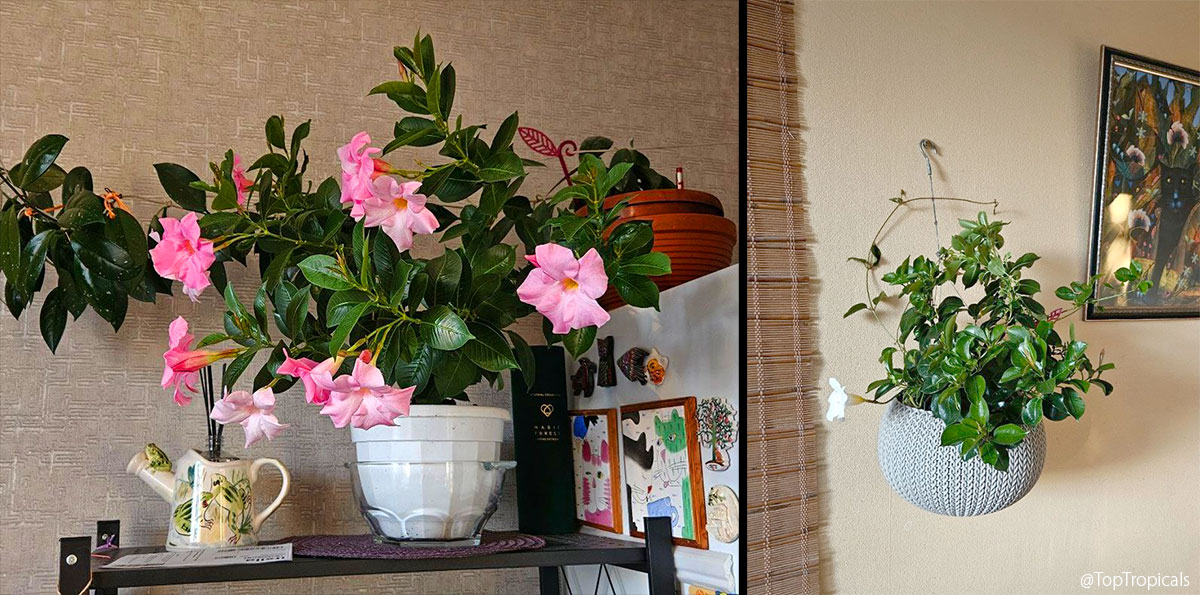
Q: I have two Mandevillas that thrived on my balcony all summer. Now that cold weather is approaching, I've moved them indoors to bright spots, but they're dropping and wilting leaves. How can I keep them healthy until spring? Should I fertilize them? Can Mandevillas grow indoors year-round?

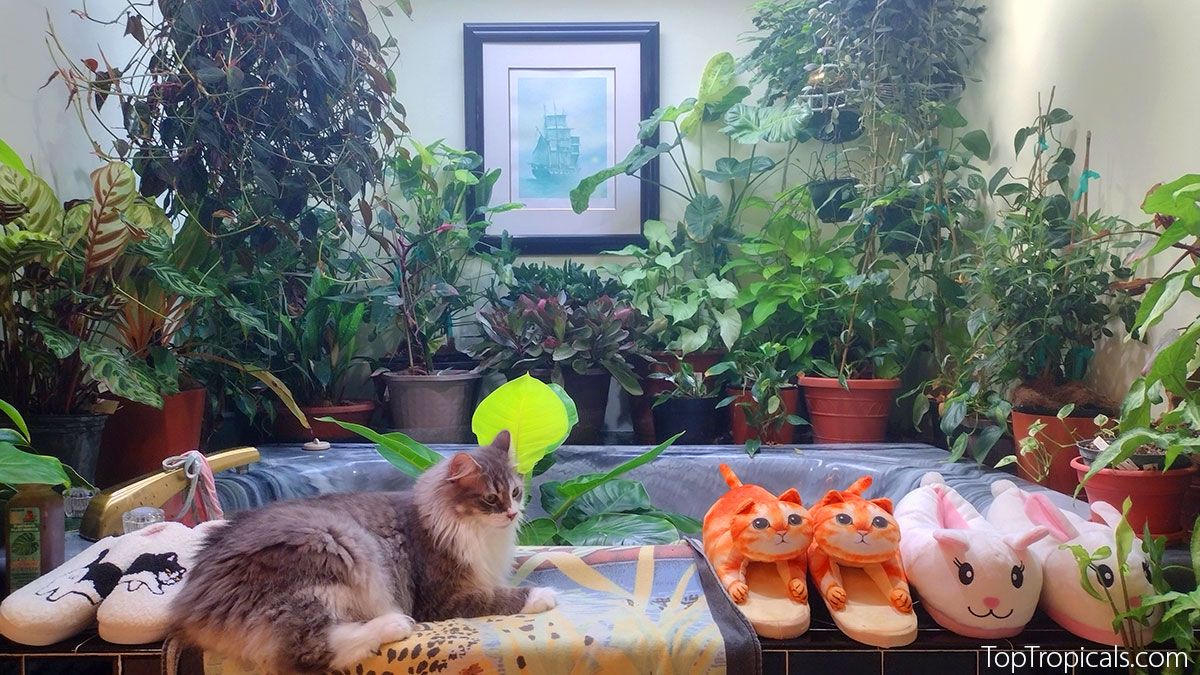
A: First, keep in mind that the plants we call "indoor plants" or "house plants" are all tropical. However, not all tropical plants are suitable for indoor living. Some, especially shade-loving ones, thrive in indoor conditions, which is why we refer to them as "house plants" (philodendrons, monsteras, calatheas, peperomias, and many others, including some succulents). Others are less adaptable to the lower light and humidity typical of indoor spaces, but with a little extra care, you can overwinter them inside and move them back outdoors in spring. Mandevillas are no exception! Even tropical trees, including fruit trees, can tolerate a few months indoors if given the right conditions for semi-dormancy. Below are the 10 key tips for successfully overwintering tropical plants indoors.

1. Maximize Light: The more light, the better. There's no such thing as too much indoor light. If windows aren't enough, use LED grow lights, which stay cool and won't dry the air. Rotate plants every few days to prevent uneven leaf loss.

2. Reduce Watering: Less light and cooler temperatures mean plants need less water. Allow the soil to dry between waterings, and avoid overwatering - combination of cold + wet is especially harmful.

3. Maintain Moderate Temperatures: Most tropicals are happy with daytime temperatures around 75F and nights at 50-60F. In sunrooms or greenhouses, some can handle 45F if watering is kept to a minimum.

4. Boost Humidity: Avoid placing plants near heaters or vents that dry the air. Misting daily helps, or place pots on trays filled with water and pebbles to raise humidity around them.

5. Monitor for Pests: Check leaves weekly to catch insect problems early, as pests can cause serious damage or even kill the plant indoors.

6. Fertilize Smart: Use ONLY liquid, amino-acid-based fertilizers like Sunshine Boosters throughout winter; they won't burn roots since their dosage adjusts with reduced watering. Avoid dry, granulated, and EDTA-based fertilizers during winter and dormancy.

7. Use Micro-Nutrients: Along with macro-elements (fertilizers), supplement with micro-elements like Sunshine Superfood and bio-stimulants such as Sunshine Epi to build strong plants with robust immune systems, better able to withstand unfavorable conditions and resist diseases.

8. Hold Off on Pruning: Leaf drop and leggy growth are normal responses to winter. Wait until spring to prune, when new growth starts, to encourage branching and healthy foliage.

9. Don't Repot Yet: During dormancy, roots slow their growth. Repotting too soon risks root rot. Wait until spring when new growth appears to transplant into a larger container. Typically, roots grow in proportion to the above-ground parts.

10. Let Them Rest: Winter is a natural resting period. Avoid forcing growth - your plants will reward your patience with vibrant leaves and flowers when spring returns.
Cat  Indoor  Garden