Q: What is the best way to germinate seeds in summer? Should I keep trays indoors or put them outside?
A: Summer is the best growing season for plants, and for their propagation. Seed germination process of tropical plants usually benefits from warm, and even hot temperatures, so keeping pots with seeds outside in full or partial sun can be the best way. However some seeds may be more sensitive than others, or require slightly cooler or higher temperature for germination. These are a few tips that may help:
- For seed germination, use only well drained mixes, containing either peat moss or coconut fiber to retain moisture. Some succulents may require adding sand to the germination mix. You may also try our Professional Formula Seed Germination Mix.
- Large tropical seeds, like palms, or seeds of Fabaceae (Bean) family, can be grown in full sun. Their germination will benefit from higher temperatures (up to 90-95F). Make sure to keep soil moist. Cover them well, with 3/4 to 1 inch of soil.
- Fruit seeds (large size) should be germinated either in individual cells or small pots (3-4"diameter).
- Small to medium size seeds can be grown in so-called community pots. Seedlings can be separated after they establish their first roots.
- Tiny seeds should be planted closer to the surface, covered with only 1/4-1/8 inch of soil; some seeds require bright light for germination, so full sun will be a plus. Some small seeds like Ficus for example, prefer to be broadcasted on the surface, uncovered. Put containers with such seeds in bright shade, as you don't want the surface of the soil to dry out.
- Once your seeds sprouted, move them in filtered light - bright to medium shade depending on tenderness of the species. (Gingers prefer shade, while succulent sprouts can stay in brighter light). Regardless of water/sun needs of the species, all young sprouts and first leaves are sensitive to hot sun and may get burned or even killed. Once a baby plant has a few leaves and well-branched root system, you may start moving trays into a brighter light.
- Do not overwater young seedlings, keep soil slightly moist but not soggy.
Botanical name: Adenium sp. Also known as: Adenium, Desert Rose, Impala Lily
USDA Zone: 9 - 10
Highligths
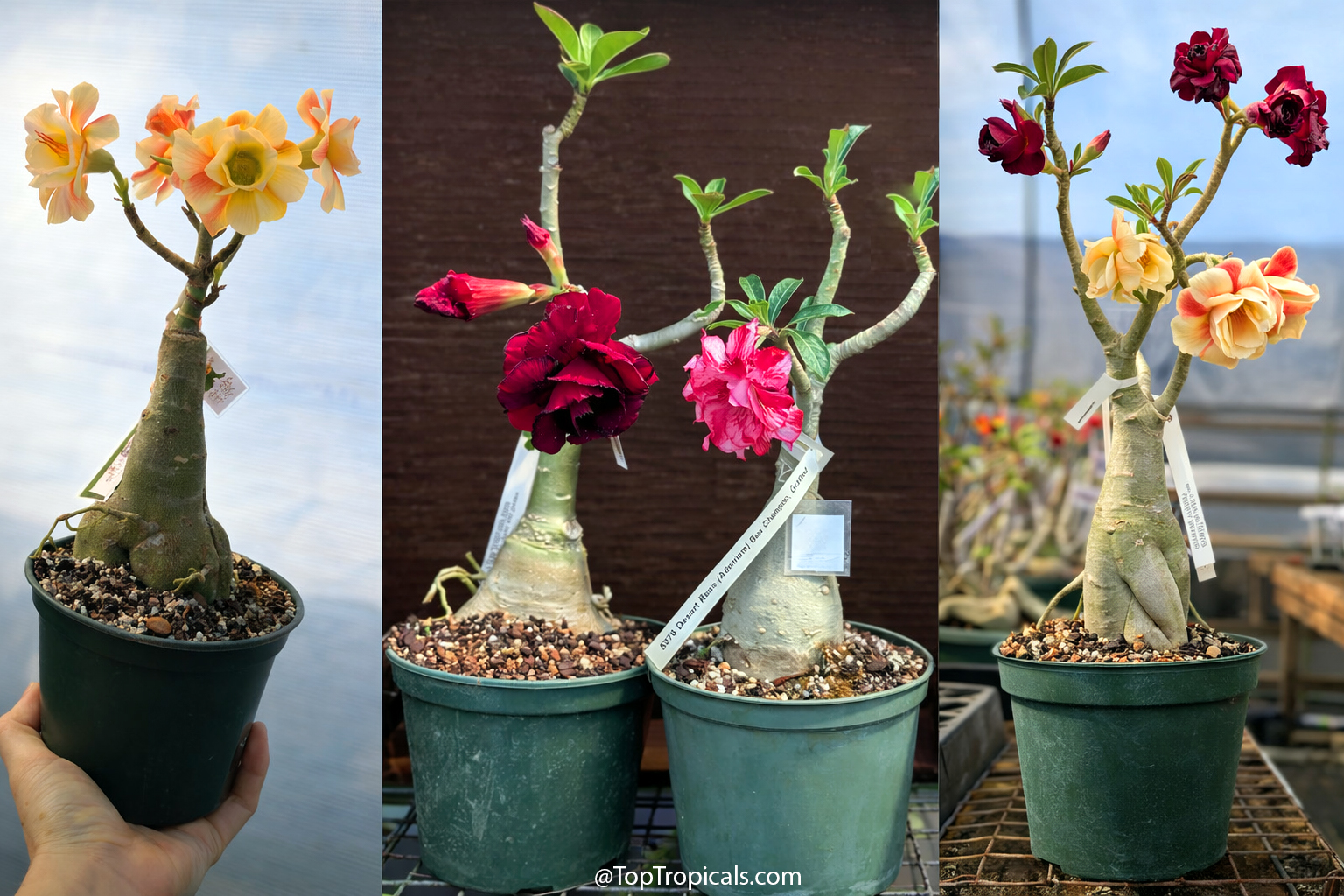
🌱 Shape, Color, and Why Each Adenium Feels Unique
Adeniums can stop you in a strange way. It is not only the flowers,
although they help. It is the whole plant. The
swollen base, the curves, the way no two look quite the same. Some are thick
and heavy, some more refined, almost like they were shaped on purpose.
After a bit, you stop seeing them as
regular plants and start treating them more like objects you want to keep
and look at.
That is usually how a collection starts. One plant, then another that
feels different, and then you want contrast. Light next to dark, soft next
to bold, one with a wide base next to a taller form. It is not really about
having many. It is about how they
look together. And over time, each one changes a little, so the collection
never stays the same.
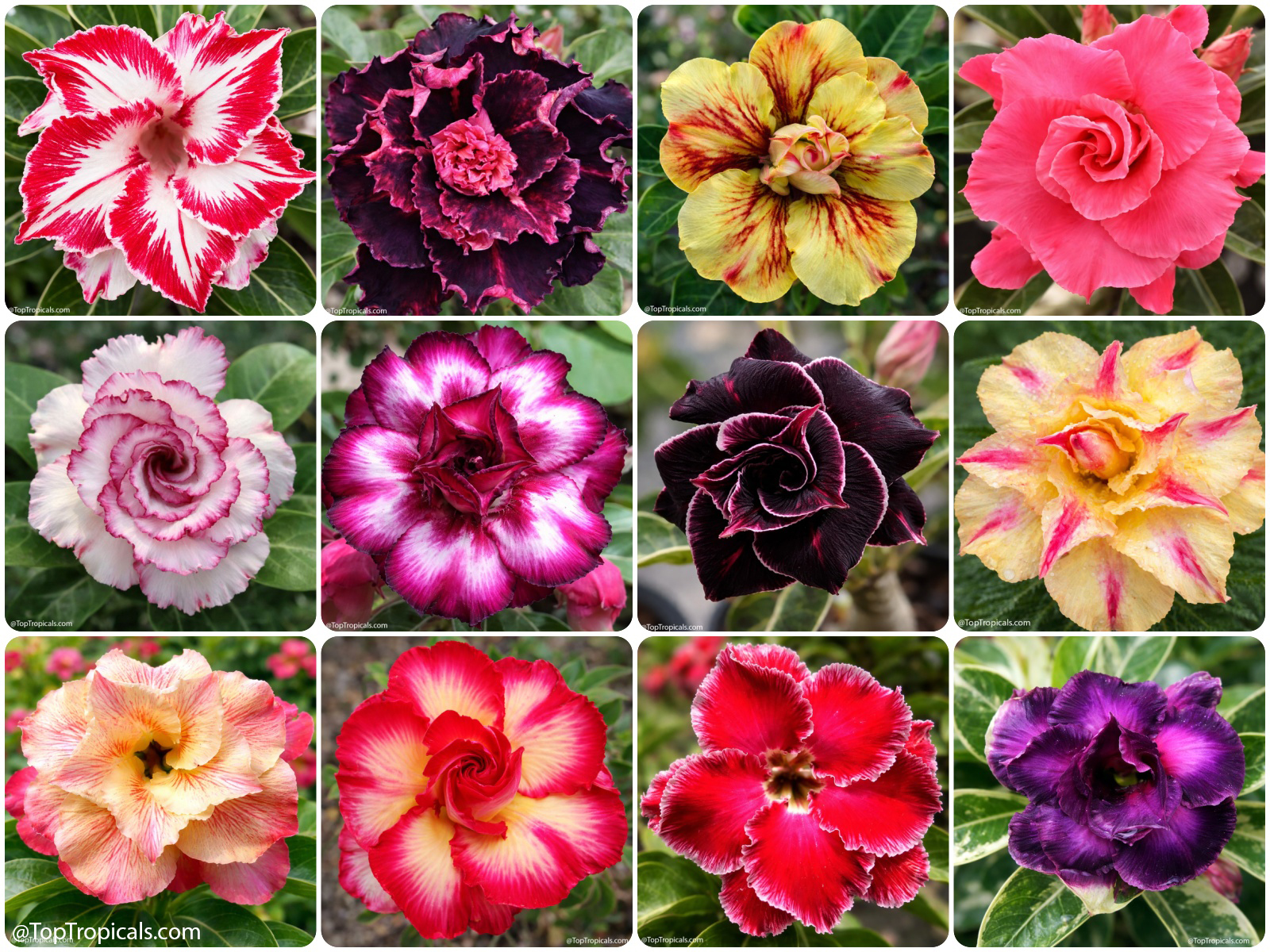
Adeniums display a wide diversity of colors and
forms, from red and pink to yellow and purple. Through multi-grafting,
several varieties can even grow and bloom on a single plant.
A world of colors in every bloom - how many can you
resist? Warning: Highly
collectible! No two are the same - and that’s exactly why one is never
enough. Rare, unique, unforgettable - build your collection, one stunning
bloom at a time.
Free Shipping on Adeniums
Add bold color and unique forms to your collection with no extra shipping
cost.
By Tatiana Anderson, Horticulture Expert at Top
Tropicals with
Smokey & Sunshine help
Sunshine Boosters for different types of plants
Here is why SUNSHINE Boosters are the smart choice for your garden this
spring:
Amino Acid Stability: Unlike traditional fertilizers that
use synthetic EDTA chelators, our formulas are amino-acid based. This means
100% of the nutrients are bioavailable and consumed by the plant, leaving
zero
toxic residues or salt build-up in your soil.
Safe for Every Watering: Because our concentrations are
scientifically balanced and mild, they are safe for daily use. This
eliminates the "feast or famine" cycle of dry fertilizers and prevents
accidental root burn.
Pure Taste for Edibles: Our delicate formulas do not
contain excess salts, urea, or ammonium salts that can ruin the flavor of
your harvest. Your fruit and vegetables will retain their pure, natural
taste.
Pollinator Friendly: Our boosters are designed to be safe
for honeybees and other beneficial insects, making them the responsible
choice for an organic-style garden.
🌿For Potted Plants: Breaking the "Foodless" Cycle
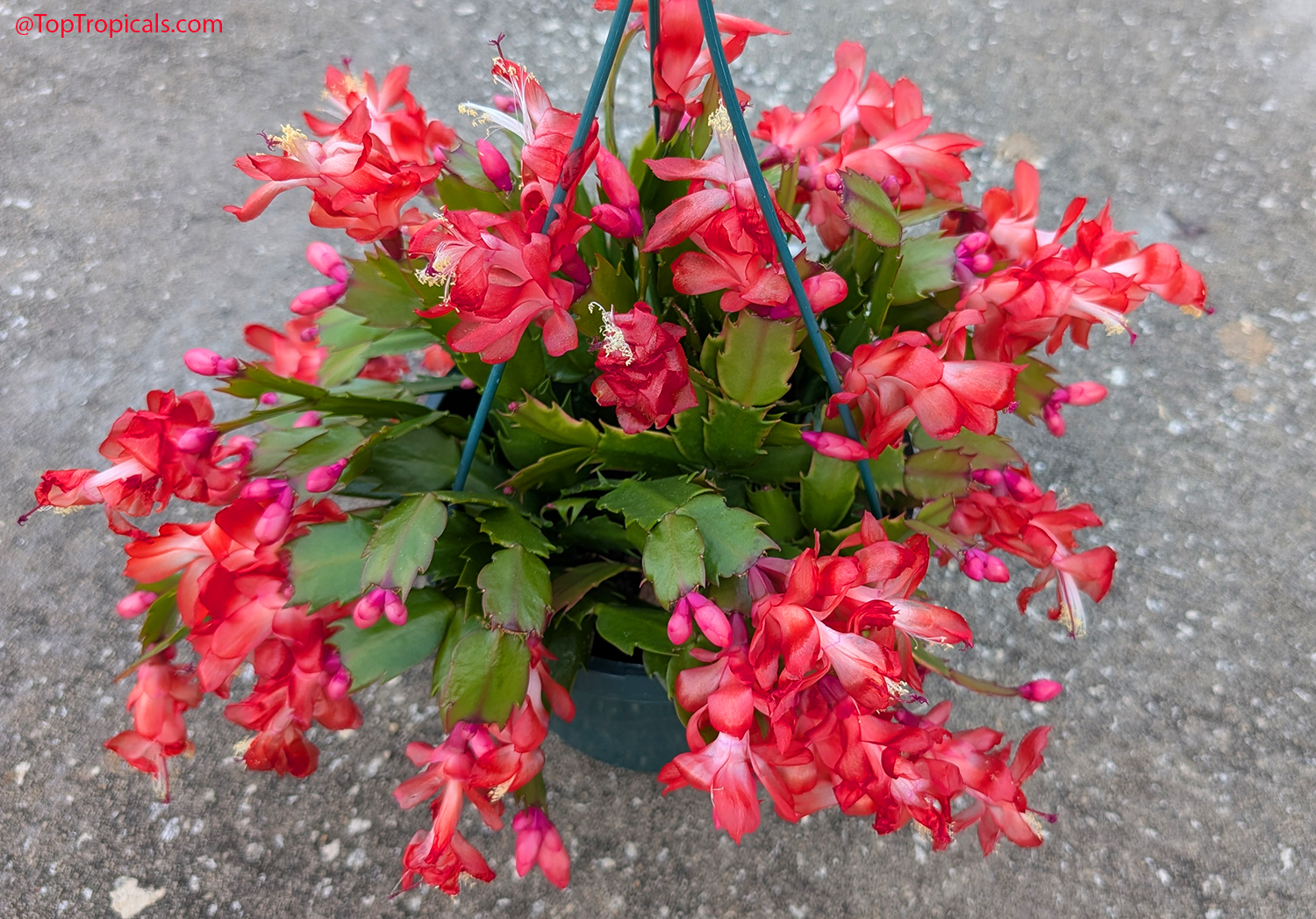
Schlumbergera - Christmas cactus - after boosting
flowers with Sunshine
Megaflor
Container-grown plants are trapped in soilless mixes (peat, bark,
perlite) that are structurally great but naturally nutrient-deficient.
Total Nutrition: Since pots lack the natural "buffet"
of the ground, SUNSHINE Boosters™ provide every
essential mineral the plant cannot find on its own.
No Salt Build-up: Our amino-acid based formulas are
consumed entirely by the plant, leaving zero toxic residue or root-burning
salts behind.
Daily Safety: Our mild concentrations eliminate the
"feast
or famine" cycle of dry fertilizers, making them safe for use with every
single watering.
Even in the ground, plants often struggle to absorb what they need
because soil compounds can "lock up" nutrients.
Enhanced Solubility: SUNSHINE Boosters create a
slightly acidic environment that helps dissolve stubborn salts in the soil,
making them accessible to roots again.
Precision Delivery: We provide mobile elements like
Nitrogen precisely when the plant needs to push new spring growth.
🌿The Foliar Advantage: Direct-to-Leaf Delivery
Did you know a plant leaf can absorb nutrients even more efficiently than
the roots? Foliar feeding is your "emergency button" for instant results.
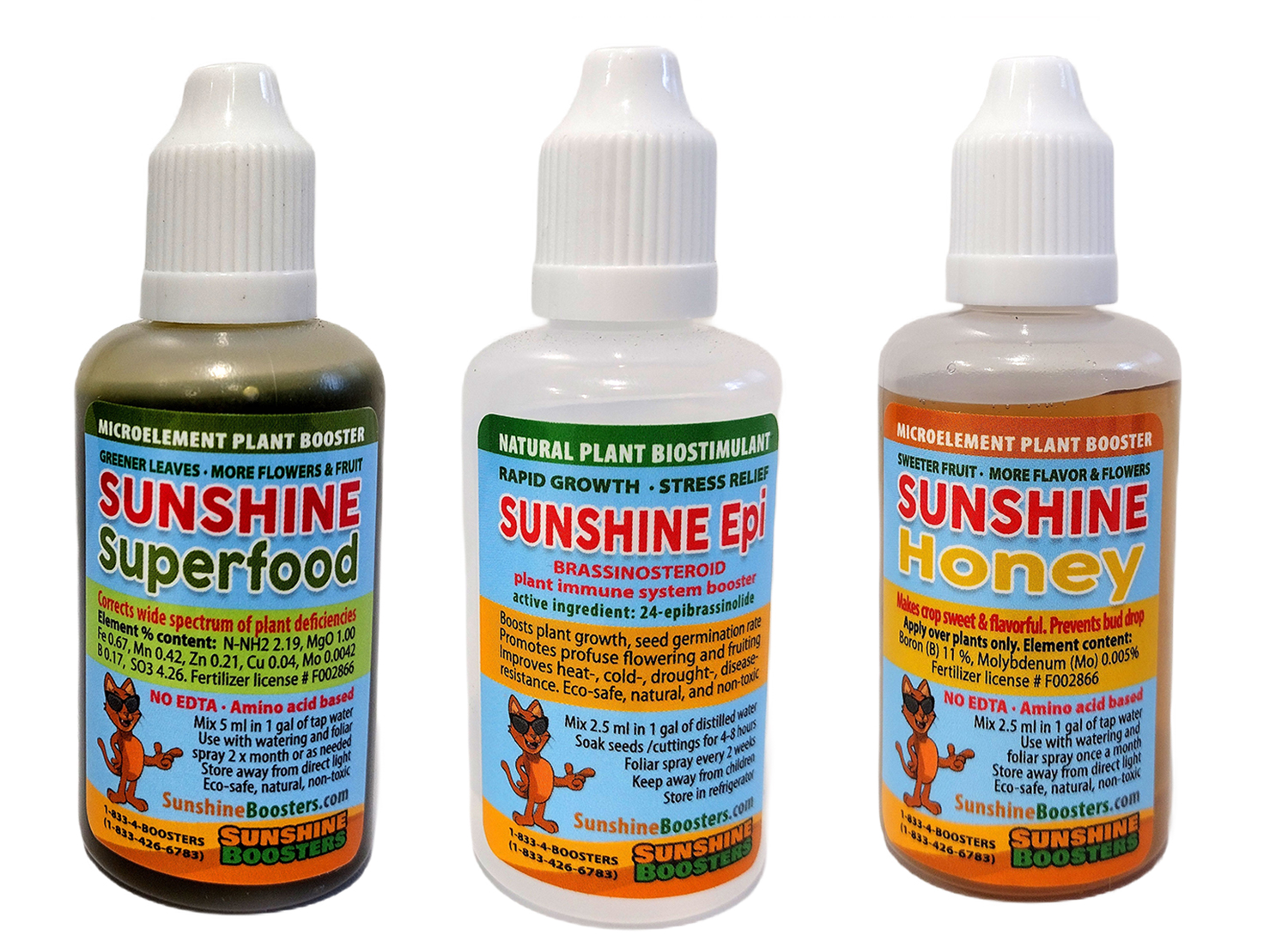
Quick Fix: Foliar applications with Sunshine
Superfood are the fastest way to correct yellowing leaves or visible
deficiencies.
Metabolism Boost: Sprays like SUNSHINE-Epi act
as a bio-regulator, helping plants recover from the stress of spring
temperature swings.
Better Fruit:SUNSHINE Honey is applied to
leaves to naturally move sugars to the fruit, increasing sweetness and
flavor.
🌿The Calcium Problem: Solved
As your plants wake up this Spring, they need structural strength. Think
of Calcium as the "cement" that holds plant cells
together. Without it, new spring growth is doomed to fail.
Signs Your Plant is Starving for Calcium:
Deformed Leaves: New growth looks twisted, hooked, or
curled.
Blackened Tips: The very edges of young leaves turn white,
then quickly blacken and die.
The Industry Secret: The "Missing" Mineral
Most fertilizers, both dry and liquid, completely skip Calcium. Why?
Because it’s a chemical nightmare to keep stable in a concentrated
solution. Most manufacturers rely on your irrigation water to deliver
Calcium, but tap water is inconsistent and often fails to provide what a
hungry, growing plant needs.
The SUNSHINE Boosters: Stable Calcium in Every Bottle
We have successfully stabilized Calcium directly into every single
Sunshine Booster formula.
Whether you are using Bombino, Robusta, or Megaflor, you are delivering a
precise, stable dose of Calcium with every watering. No lockout, no
sediment, and no relying on the "luck" of your tap water. Just strong,
healthy cell walls and perfect spring growth.
🌿SUNSHINE-Epi: The Year-Round Bio-Regulator
Whether it’s the transition of spring, the extreme heat of summer,
or the dry air of indoor wintering, SUNSHINE-Epi is your
plant’s primary defense. This natural Brassinosteroid acts as a
powerful immune booster, helping plants navigate stress wherever it comes
from.
Universal Stress Shield: Protects against temperature
swings (both heat and cold), drought, and transplant shock.
Vigorous Development: Dramatically improves root growth
and speeds up the metabolism of young seedlings and cuttings.
Eco-Safe: 100% non-toxic to humans, pets, and
pollinators.
Note: While Epi is highly effective, it is a
performance booster, not a substitute for proper care. It works best when
paired with the right light, water, and a consistent feeding program. It
won't bring a dead plant back to life, but it will help a struggling one
find its footing.
Don't
let your garden wake up to an empty nutrition plate.
Smokey: Save your gas money for donuts. We're
shipping the boosters for free. Sunshine: Agreed. My charm covers the delivery
cost.
No coupon code required: The free shipping is automatically applied
at checkout.
Complete Nutrition: Stock up on Robusta, Superfood, and Epi for the Spring
growth push.
Offer
valid through 03/14/2026. Free shipping offer is valid on
SUNSHINE Boosters liquid products only. Not valid on previous purchases and
cannot be combined with any other offers, coupons, or discounts. Offer
subject to change or cancellation without notice.
Sunshine Boosters micro
elements and supplements - Superfood micro-element complex, Sunshine Epi
biostimulant and Sunshine Honey supplement for better fruit
❓Frequently Asked Questions: SUNSHINE Boosters™
What water should I use for foliar spraying?
Tap water works perfectly for most. However, if your water is very "hard"
(leaving white mineral spots on leaves), switch to distilled water for a
cleaner finish and better absorption.
How long does a diluted solution last?
For maximum potency and to avoid nutrient degradation, try to use your
diluted mixture
within a few hours of preparation. Keep away from direct sun. Fresh is
always best!
Can I use SUNSHINE Boosters as a daily foliar spray?
Yes! You can mist your plants daily to maintain high vigor, but you must
reduce the dosage (use half the recommended strength) to avoid over-feeding.
Can I mix boosters with pesticides or fungicides?
It is best to apply them separately. Mixing fertilizers with chemical
pesticides in one tank can trigger reactions that "lock out" nutrients or
reduce the efficacy of the treatment.
Will the liquid stain my patio or hands?
No. Unlike traditional fertilizers with heavy blue or pink dyes, our
solutions are clear or very light-colored. If you spill it, simply rinse
with water—no stains, no mess.
Can I mix different SUNSHINE Boosters together in one sprayer?
Yes. All SUNSHINE Boosters are chemically compatible. You can combine a
"growth" booster like Robusta with a "micro-element" complex like Superfood
in the same water to save time.
Are these products safe to use around my pets?
Absolutely. Our formulas are 100% non-toxic and amino-acid based. Just ask
Smokey and Sunshine—they are perfectly safe for households with
curious cats, dogs, and children.
Can I use these boosters on indoor plants?
Yes. They are ideal for indoor use because they don't produce a "fertilizer
smell" and won't cause salt crusting on your decorative pots or furniture.
Is it safe to use on fruit and vegetables I plan to eat?
Yes. Because our formulas contain no urea, nitrates, or harsh salts, they
don't leave a "chemical" aftertaste. They actually help improve the natural
sugars and flavor profile
of your harvest.
What is the best temperature for foliar spraying?
Apply when temperatures are below 85°F. Early morning or late evening
is best; this allows the leaves to remain wet longer, giving the plant more
time to absorb the nutrients.
What Fertilizer to Use and How?
Green
Magic controlled release fertilizer keeps plants green during active
growth season - apply only once in 6 months.
Sunshine: Smokey, you saved my coffee tree. But what do I
do now so it stays happy?
Smokey: Simple. Spray Sunshine Robusta every five days
during active growth.
Sunshine: Five days? Smokey, I barely remember where I left
my coffee
mug five minutes ago.
Smokey: That is exactly why we use Green Magic.
Sunshine: Fertilizer for forgetful gardeners?
Smokey: Controlled release. Sprinkle once and it feeds the
plant for six months.
Sunshine: Six months? I can have a very good nap in that
time.
Smokey: Exactly. The plant keeps eating slowly while you
keep napping.
Sunshine: Perfect. Remember, I will bring the coffee. You
bring the donuts.
Smokey: And next week we will show you exactly how Green
Magic works and why plants love it. Stay tuned.
🔮 When the World Around Becomes Too
Gray: Plant a Tree. Eat a Donut. Keep going.
Sunshine: Smokey, what do we do when the world around
becomes too gray? Smokey: Plant a tree. Sunshine: And if that does not help? Smokey: Plant another one. Sunshine: And eat a donut. Smokey: Not strictly necessary, but statistically
beneficial.
If you have been feeling a little worn down lately, you are not
alone.
You already know about the headlines. We do not need to list them. You
have probably seen them today before breakfast.
We are not here to pretend that is not happening. It is happening. And
it is a lot.
But here is the thing we keep coming back to, the thing that has been true
for as long as people have had hands and a patch of ground: when the world
feels out of control, you can still plant something.
Gardening is not an escape. It is an answer. When you put a tree in the
ground, you are making a quiet statement. You are saying that you expect
there to be a future. That you intend to be in it. That shade and fruit and
flowers still matter, and you are going to make sure they exist in your
corner of
the world.
That is not naive. That is courageous in the most ordinary and
underrated way.
One tree, planted this season, might give you fruit in a few years. It
might give butterflies somewhere to stop. It might give a bird a place to
nest. It will almost certainly give you something to look at on a hard day
that
reminds you the world still contains beauty, and that you put some of it
there.
And if one tree does not quite do it? Plant another one.
Dostoevsky said beauty will save the world. We think a mango fruiting in
your backyard counts. So does a Magnolia opening on a quiet morning.
Do not skip the donut.
A donut is a small, simple, completely unnecessary thing. That is
exactly the point. It is not productive. It does not solve anything. It is
just
good, and sometimes that is the whole reason. In a world that constantly
demands
you be useful and informed and concerned, eating a donut is a quiet act of
being human. You are allowed to enjoy a small thing on a hard day. You do
not
have to earn it.
Rest a little. Then go put something in the ground. Anything that will
grow and flower and remind you that beautiful things are still happening
whether the headlines mention them or not.
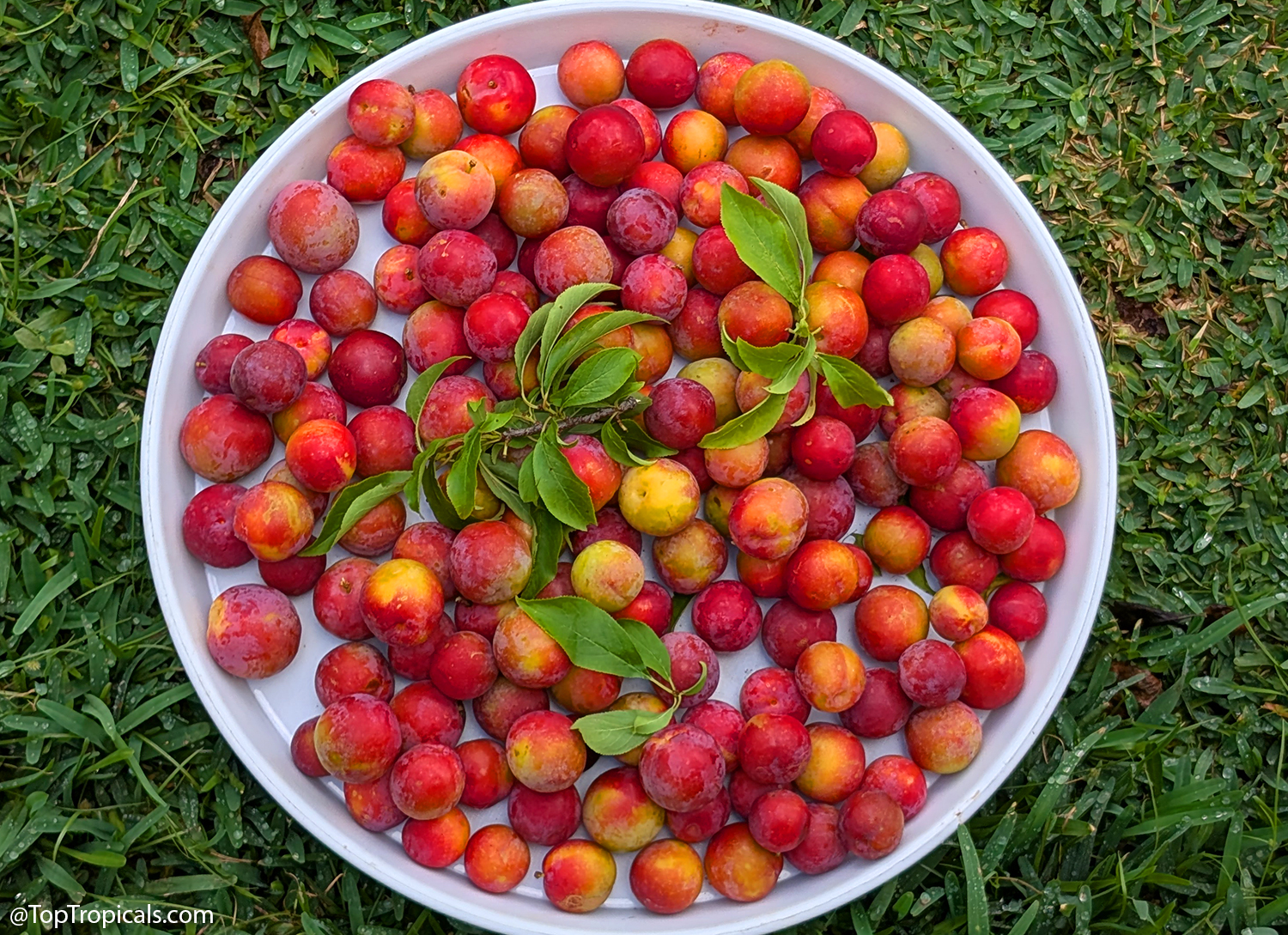
We just finished harvesting loquats
and mulberries,
and now another wave is coming in - low chill plums,
peaches, and nectarines fresh from the garden. This is one of
the most rewarding times of the year, when every season brings the fruit of
your labor and all that work finally turns into something sweet.
🍓The Strawberry Moon Rises: A Gardener's
Excuse to Go Outside
Sunshine: Look at my strawberry-glazed donut. Same as the
Strawberry Moon. I have been waiting for this all month. They say moon
gardening is useful. Let's go planting! Smokey: Science hasn't found much evidence for it. Sunshine: Then what's the point? Smokey: If the moon gets people into the garden, that's
good enough for me.
On the evening of Monday, June 29, 2026, the full Strawberry Moon will rise
low in the southeastern sky. Whether you follow a lunar calendar or not,
it's a good excuse to spend a little time outside on a summer evening.
🌛 What Is the Strawberry Moon, Exactly?
Many of the familiar full moon names come from Native American
traditions and reflect seasonal events in nature. June's full moon was named
for the
season when wild strawberries ripen across much of North America, not for
any
color in the sky. Despite the name, the moon won't glow pink or red. If it
looks warm or golden, that's simply because any full moon takes on an amber
tint when it hangs low near the horizon, the same atmospheric effect that
paints
sunsets orange. The "strawberry" is about the harvest, not the hue.
This year, the Strawberry Moon rises on the evening of June 29 and will
appear low in the southeastern sky, making it a particularly beautiful moon
to watch as dusk settles in.
🌓 Moon Gardening, an Old and Honest Tradition
For generations, gardeners across Europe and beyond timed their
planting, pruning, and harvesting to the phases of the moon. Plant root
crops during
a waning moon, some traditions say, and leafy crops during a waxing one.
Prune during certain phases to slow regrowth, harvest herbs at others for
better
potency. These calendars were passed down through generations of careful
observers who paid close attention to their land and their results, and many
still follow them today.
Modern science has found little evidence that lunar gravity or moonlight
significantly affects plant growth. Yet the tradition persists, and plenty
of growers still find real value in the rhythm it brings to the gardening
year.
💡What We Know For Sure
Here's the practical truth, and it's the same one Smokey arrived at
after thinking it over. Whether or not the moon influences your plants, the
act
of walking through your garden definitely does. A moon-phase calendar that
gets you outside to check on your plants, pull a few weeds, prune back
something
leggy, top off the mulch, or water a thirsty pot is helping your garden,
regardless of what's happening overhead.
The benefit isn't necessarily lunar. It's attention.
A garden rarely thrives because of a single grand effort. It thrives
because of dozens of small ones: a little pruning, a little watering, a few
weeds pulled before they become many.
Gardens reward the gardeners who show up, and if a full moon is your
reminder to show up, that's a perfectly good reason to keep watching the
sky.
📅 Beyond the Harvest
Not everything in a garden needs to produce a yield to be worthwhile.
Marking the seasons the way our ancestors did, a strawberry moon in June, a
harvest moon in fall, a snow moon in February, gives us small, recurring
reasons
to notice what's changing around us. It's a rhythm, not a requirement.
Think of the Strawberry Moon as a good excuse to take a walk through the
garden.
The Strawberry Moon doesn't have to improve anything to be worth
celebrating. It only needs to get you outside on a warm June evening, which,
honestly, isn't a high bar to clear.
A Strawberry Moon Collection, Just for
Fun
Sunshine immediately concluded that any moon named after strawberries
deserved a few strawberry-themed plants. We couldn't argue with that logic,
so
we pulled together a few Top Tropicals favorites that fit the theme.
🍓 Strawberry Tree
The Strawberry Tree (Muntingia calabura) often carries flowers and
fruit at the same time. Sweet red berries, delicate white blossoms, and lush
foliage make this fast-growing tropical tree both ornamental and productive
throughout much of the year.
A rare yellow-fruited
form of Muntingia calabura (Strawberry Tree), displaying
sweet golden berries, delicate white flowers, and immature green fruit all
at the same time. This unusual selection offers the same fast growth and
continuous fruiting as the red type, but with attractive yellow fruit that
is
seldom seen in cultivation.
Strawberry Tree (Muntingia calabura), also known as Jamaican
Cherry, grows quickly and produces dainty white flowers resembling
strawberry
flowers, followed by an abundance of small cotton-candy-sweet berries that
birds, wildlife, gardeners and their kids all appreciate.
Strawberry Guava (Psidium littorale) brings glossy foliage and
sweet, perfumed fruit that tastes something like its namesake crossed with a
guava.
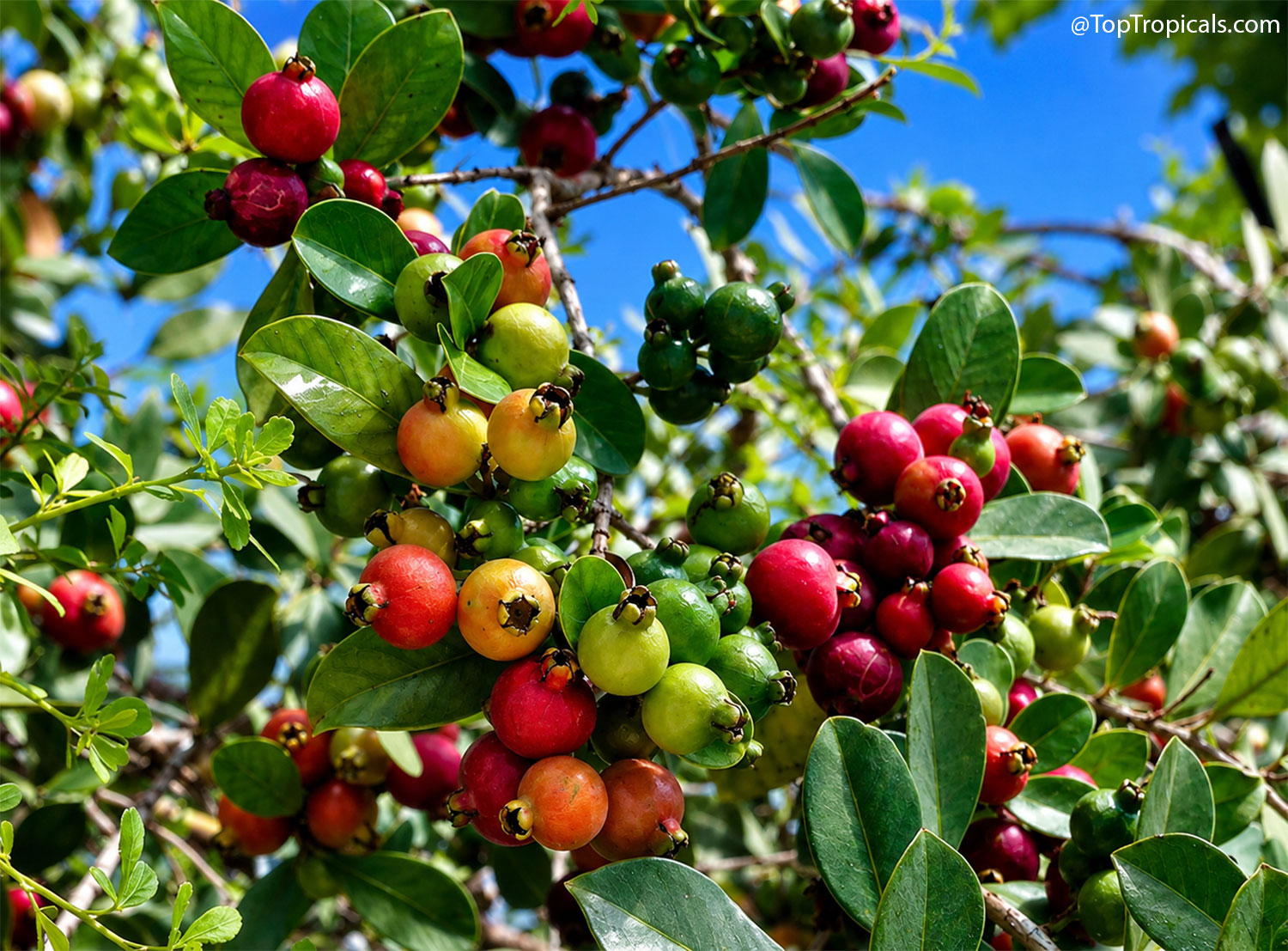
Strawberry Guava (Psidium littorale, or cattleianum) often
carries fruit in multiple stages of ripening at once, creating a colorful
display
of green, golden, and ruby-red berries. The sweet, aromatic fruit is prized
for fresh eating and attracts birds and wildlife to the garden.
🍓 Strawberry Dragon Fruit
Dragon Fruit Vietnamese Jaina Strawberry White (Hylocereus
undatus
) produces bright pink fruit with refreshing white flesh and a flavor often
described as a blend of strawberry, melon, and kiwi. Its enormous
night-blooming flowers are every bit as impressive as the fruit, turning
this vigorous
climbing cactus into a spectacular summer showpiece.
Vietnamese Jaina Strawberry White Dragon Fruit is prized for its
refreshing
white flesh and mild sweet flavor with hints of strawberry, melon, and kiwi.
The vivid pink skin and striking black-speckled interior make it as
beautiful
on the table as it is delicious to eat.
🍓 Strawberry Ginger
Coral Ginger Borneo Strawberry Pink (Riedelia coralina) is one of
the rarest gingers in cultivation, producing unusual strawberry-pink flower
spikes that seem almost too exotic to be real. The edible blooms have a
pleasant spicy fragrance and flavor, making this New Guinea treasure as
interesting
to taste as it is to admire.
Whether you came for the moon or the plants, we hope you discovered
something interesting.
They just happen to share a name with the moon overhead this June, and that
felt like reason enough to give them a little spotlight.
Riedelia coralina, known as Coral
Ginger or Borneo Strawberry Pink, produces one of the most
unusual flower displays in the ginger family. Its striking strawberry-pink
blooms
rise above lush foliage, creating a tropical focal point rarely seen outside
specialized collections.
🍓🌱 How to Grow Them
If you live in a frost-free climate (USDA Zones 10+), simply plant these
strawberry gems in the ground and enjoy. Strawberry Guava can tolerate
occasional frosts down to about 28F once established.
Not so lucky? Many gardeners successfully grow Strawberry Guava, Strawberry
Dragon Fruit, and Strawberry Tree in containers, moving them indoors or to a
protected location during winter. You don't need a tropical climate to enjoy
tropical fruit.
🏡 See You Outside
Whether you believe in moon gardening or not, June 29 is a good night to
step outside, find an open view of the southeastern sky, and watch the
Strawberry Moon rise. Bring a cup of tea, walk the garden beds while there's
still
light, pull a few weeds, and let the evening settle in around you.
And that may be the real lesson of the Strawberry Moon.
Sunshine: The Strawberry Moon is out. Time for
gardening. Smokey: What does the moon calendar recommend? Sunshine: I have no idea. I left it on the kitchen table.
Both hands are full. Smokey: Of course they are. Coffee and donuts. Let's start
with the weeds.







 A Strawberry Moon Collection, Just for
Fun
A Strawberry Moon Collection, Just for
Fun