Date: 16 Jun 2019
Repotting Artocarpus with a taproot in ground
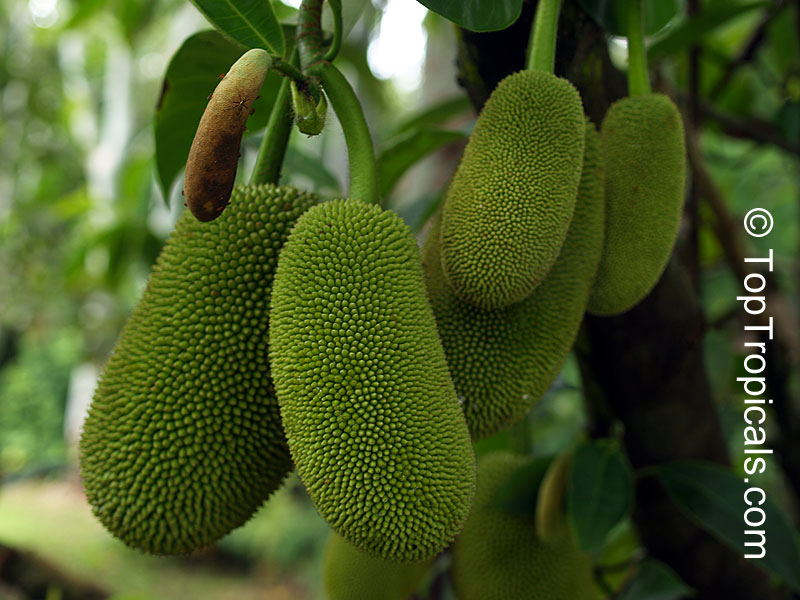
Q: The Chempedak I bought from you almost 3 years ago which I had repotted twice has a thick taproot growing in the ground, which I noticed this past winter. I was going to repot into the largest size pot almost half of a 55-g rain barrel. Can I try to dig/save as much of the taproot before repotting, will it die if I had to shorten/cut what I can't dig out completely? I hate to put it in the ground for fear it may not make it when we have severe cold/long hours of frost. I live in west Cocoa, Central Florida, 9b.
A: Yes, you can repot the tree and keep it in reasonable size container after trimming the roots. Most of the tropical trees (fruit trees not an exception) can be grown in containers even if in Nature they grow into vigorous large trees. The key is, trim the roots every time you transplant it. The process is similar to trimming branches and both don't hurt the plant as long as done right and moderately. You should trim the overgrown and spreading limbs at the same time. You may trim as much as 10% off root system at the time of repotting. This will cause the root system to branch out and become fuller, similar to branches, which is a good thing. If a tree grows a taproot like in your case, it is not necessary to try "saving" and digging out the whole root that may go down for a few feet. You may cut it off without major damage to the tree since the rest of its root system will continue to support the plant metabolism. Just keep in mind that the plant will be stressed for a while - so put it in bright shade and water regularly until signs of stress go away (wilted or dropping leaves may occur). This particular type of tree - Artocarpus - is pretty strong and vigorous so the stress should be minimal.

Date: 7 Jan 2019
Featured Plant. Mucuna nigricans - Black Jade Vine
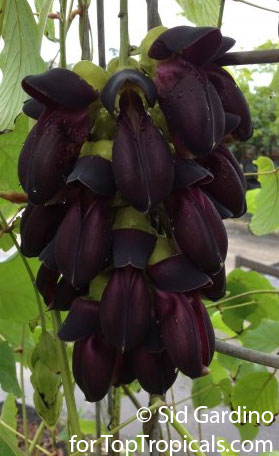
Mucuna nigricans - Black Jade Vine
Black Jade Vine is a real gem of a rare plant collection and a
conversation piece when in bloom. The flower color is beyond description, as most of
the Jade vines. This spectacular woody climber is closely related to red Jade
vine (Mucuna bennettii). Branches sparsely velvet-hairy, and blackish purple
flowers hanging in racemes. Drooping flower-cluster-stalks are up to 1 ft
long and 6"in diameter! The blooms appear closely pushed together in grape-like
clusters. Flowers are clustered in threes; each cluster supported by a
deciduous bract. It is a very vigorous woody tree creeper - during warmer weather
it can grow 2 feet or more a week. Cold hardy in Florida to at least zone 9b.
This plant is a must for every rare tropical plant collection. It is
easy to grow and doesn't require much care once established other than regular
watering. In colder climates with a hard freeze, this spectacular vine can be
grown in a large container providing a strong trellis support.

Date: 18 Dec 2018
Christmas Special - Lolita Cherry
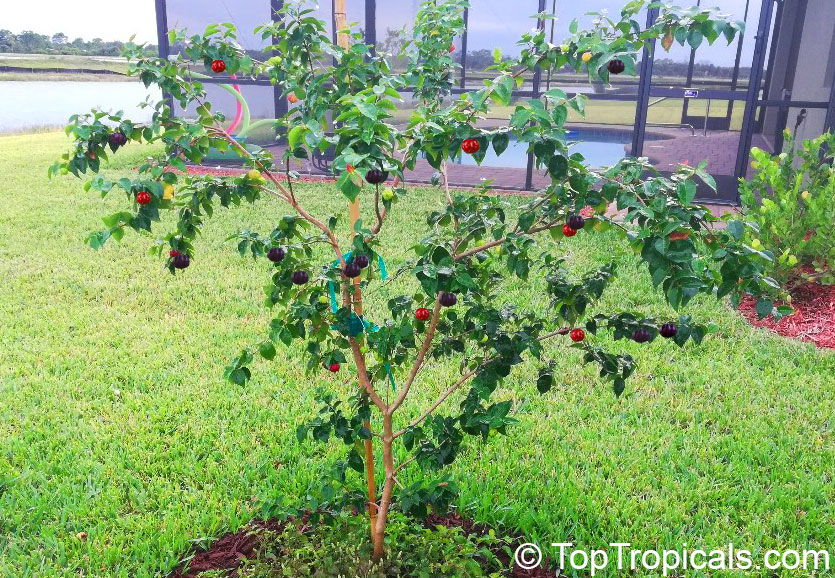
This amazing cherry is by far our favorite. Lolita is an exclusive
variety of Black fruited Surinam Cherry that starts as red and turns black as it
ripens. The fruit has exceptional flavor and has no aftertaste, unlike regular
Surinam cherries. It is large, 1-1.5"size, super sweet when fully ripe. The
tree is a dwarf statue, 5-6 ft or smaller if pruned. It is upright and
freely branching. Plants start flowering and fruiting in 1 gal container. The
plants we have in stock are ready to fruit in 2019.
These cherries are cold hardy and can take short periods of frost. Once
established, the plant can withstand upper 20's without damage.
Lolita is very hard-to-find, and we have limited quantities, hurry up!
To expedite your order for Christmas, request rush shipping in order notes, contact us
Date: 25 Jul 2018
Looking for the rarest plant? This is the one!
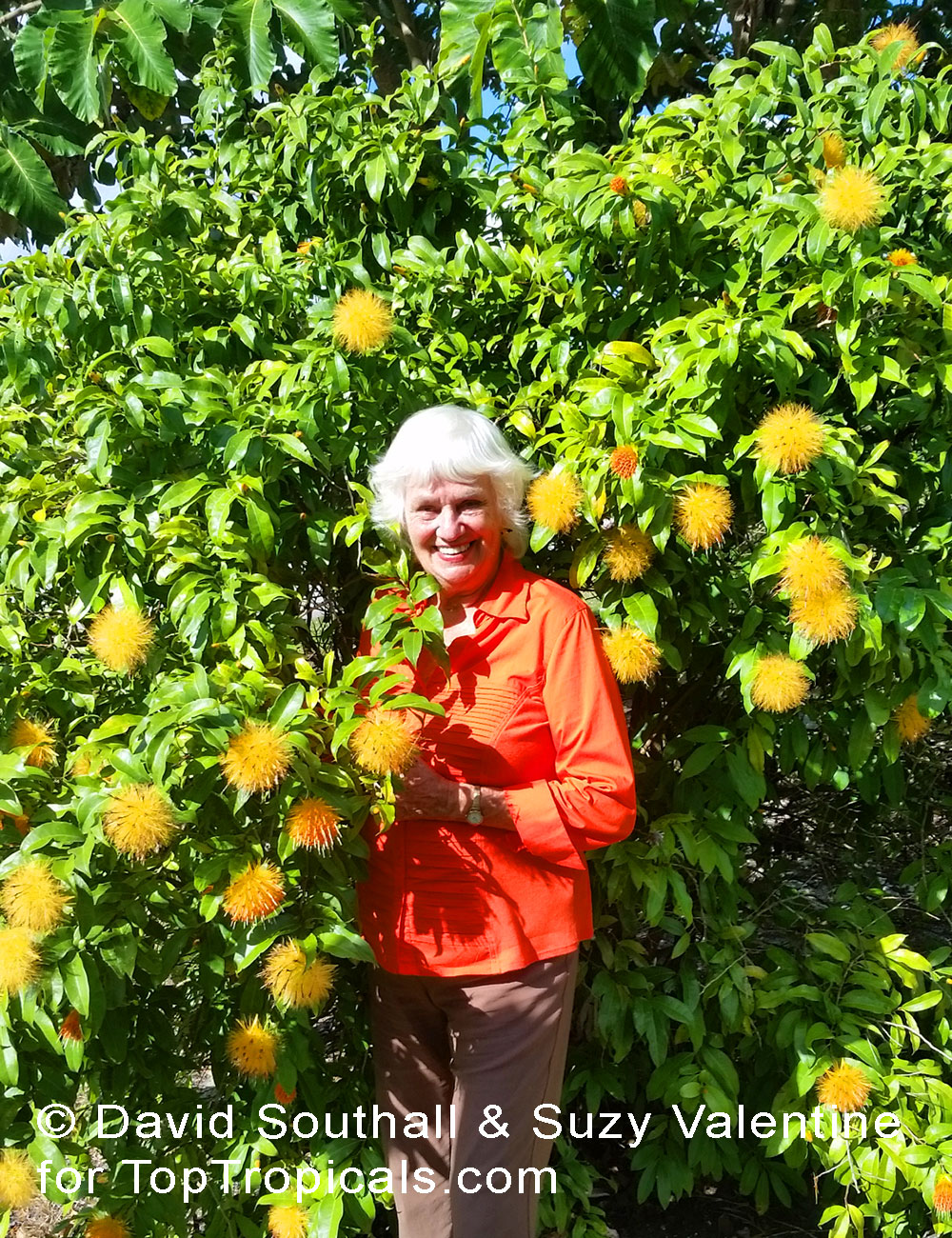
Stifftia chrysantha - Pompom, Rabo-de-Cutia
Looking for the rarest plant? This is the one!
Stifftia chrysantha is an exotic, rare flowering small tree with
spectacular flowers, endemic to the vast tropical savanna ecoregion of Brazil
called Cerrado. It grows into a bushy, attractive tree between 8 and 15 ft tall
and starts flowering within 1.5 - 2.5 years from seed. It is a very rewarding
plant that blooms 9 months out of the year, starting in Winter with great
intensity during July-September, with each flower staying on the plant for
several weeks. Seeds ripen from September through November.
The tree belongs to Aster family (Compositae) and has nothing to do
with Powderpuffs which are from Bean (Fabaceae) family. The flower has 30 to 40
green, imbricated scales with short hairs, and actinomorphic corollas are
orange below and darker above. After flowering, the inflorescence blows apart,
which would scatter seeds. The dried center remaining is very attractive, like
a small dried flower, and lasts for many months.
Stifftia can be grown in full sun to partial shade and is relatively
cold tolerant, can take short cold spells.
The plant doesn't like wet feet
and heavy/soggy soils; requires very well drained, acidic soil. We strongly
recommend to use our professional soilless mix. Let soil
slightly dry between waterings. It can be grown in full sun to partial shade and is
relatively cold tolerant, can take short cold spells. If grown in a pot, try
to keep the container shaded because roots don't like to be overheated. The
plant needs monthly applications of slow
release fertilizer as well as extra iron - use micro-nutrients to
keep leaves green and healthy.
See more pictures of this beauty.
Date: 21 Nov 2025
How to keep your house plants beautiful all year by feeding them right
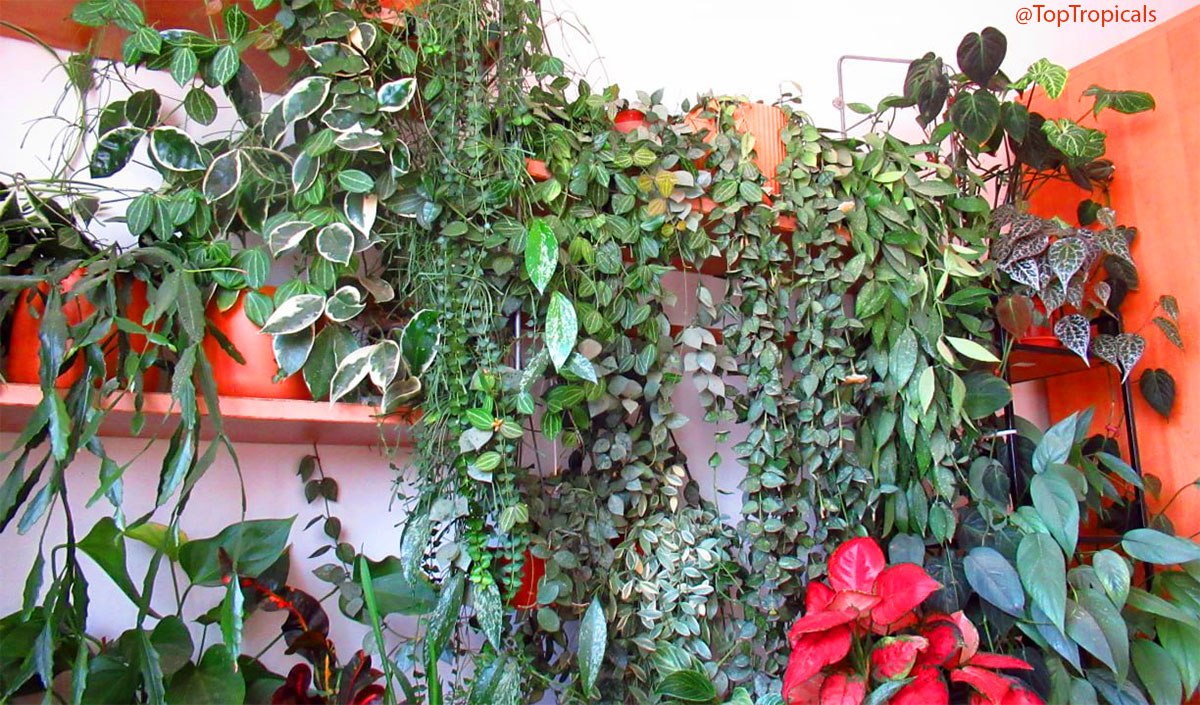
Indoor garden
🍀 How to keep your house plants beautiful all year by feeding them right
- 🌱 Healthy house plants are not just about light and water. They need food, just like we do. A good fertilizer routine keeps them green, strong, and blooming through every season. Here is a simple guide to feeding indoor plants the right way.
🌱 General rules for fertilizing house plants
- ▪️Feed lightly but regularly. Indoor plants grow in limited soil, so nutrients run out faster. Small, frequent feedings work better than one heavy dose.
- ▪️Never fertilize dry soil. Water first, then feed.
- ▪️Reduce feeding in winter when growth slows.
- ▪️Watch your leaves. Pale, yellow, or slow-growing plants are asking for nutrients.
- ▪️Use a complete formula. House plants need both macro-elements (N-P-K) and micro-elements, not just nitrogen.
🌱 What fertilizer to use
Sunshine Boosters - the everyday diet.
Sunshine Boosters are simple, balanced liquid fertilizers you mix with water. They give your plants everything they need for steady, healthy growth. They contain the right blend of nitrogen, phosphorus, potassium, and trace minerals. They do not contain harsh chemicals, so they are safe for homes with pets and kids. Regular use keeps plants growing faster, stronger, and more resilient to stress.
Sunshine Superfood - the vitamin supplement.
If a plant turns yellow or looks weak, it often needs micronutrients. These are the plant version of vitamins, including iron, zinc, copper, and manganese. Sunshine Superfood delivers these quickly and in the right proportions. Mix it with water and apply when you notice yellowing or slow growth. It corrects deficiencies fast and keeps leaves lush and green.
Green Magic - the long-term slow feeder.
Green Magic is a controlled-release fertilizer that works for six months. It uses poly-on coating technology to release nutrients slowly, without burning roots. It is perfect for repotting or for plant owners who want a set-it-and-forget-it option. Mix one teaspoon per gallon of soil during repotting or every six months. Excellent for container fruit trees and ornamentals that need steady feeding.
🌱 The simple routine
- ▪️For regular watering: use Sunshine Boosters.
- ▪️Once a month: add Sunshine Superfood to prevent yellowing.
- ▪️Every six months: mix Green Magic into the soil for long-term support.
With the right diet, your house plants stay green, strong, and beautiful year-round. Feed them well, and they reward you every day.
📸 In the photo: Indoor garden of Marina Rybka, Israel, the Editor of TopTropicals.
🛒 Get your plants some food
📚 Learn more:
- Why do you need Sunshine Boosters?
- Which dry fertilizer to use - slow release or controlled release?
- Green Magic effect: before and after
- The SECRET growers never tell you: simple trick how to bring plants back to life and keep green
📱 What are Sunshine Boosters
#Fertilizers #How_to
🟢 Join 👉 TopTropicals