Date: 31 Jan 2017
Plants of Love. TopTropicals Webinars
Plants of Love - Valentines Day Sale. For Valentines day, look beyond roses for a plant that will last a lifetime! It is not a surprise that the most popular plants that has been ordered from TopTropicals for Valentines day for the past 3 years, are: Vanilla, Chocolate, Grape, Strawberry tree, Rose apple - all things you get for your Valentines!
This year we are celebrating Valentines day with our special local event - "Aphrodisiacs, or Plants of Love".
When: Saturday, February 11, 2017, from 10 am to 2 pm
Where: Toptropicals Garden Center, 13890 Orange River Blvd, Ft Myers, FL 33905
Agenda:
10:00 am - Explore the grounds: Customers can come in to look through the nursery and guided tours through gardens.
12:00 pm - Aphrodisiac plants. Class on plants used for aphrodisiacs throughout history.
1:00 pm - Plant giveaway. Must be present to win one of the aphrodisiac plants in lecture.
2:00 pm - sale ends.
Special Love Discounts for local visitors! Snacks and drinks.
Just a few examples of the most famous plants of love that we will be talking about -
Coffea arabica - in East Africa and Arabia it was a sacred beverage to African sufis. For aphrodisiac results mix in cardamom and honey.
Banisteriopsis caapi, Ayahuasca - giant liana from tropical Amazon forests psychedelic, ritual inebriant that promotes potency. Drink is made from the bark and is taken in love rituals to revive the mythical past of the tribe.
Areca catechu, Betel Nut - seeds have stimulating effect on the entire body and eros. It's a traditional aphrodosiac in Ayurvedic medicine and is counted among the eight types of pleasure in the Brahmanic tradition. It has magical and religious properties and used as an offering to the Gods.
Theobroma cacao, Chocolate - mild stimulant, beans contain aphrodisiac. Antient Indian "recipe of chocolati" will be shared at the event! Cocoa was considered the "food of gods".
Cinnamon - in Southern Asia used as stimulant, in food or massage oil for erotic stimulation.
Cola nitida, Cola nut - used in love magic, was used as currency in W Africa.
Cananga odorata, Ylang-Ylang - increases eroticism with oil inhaled. Prescribed to treat impotency and frigidity.
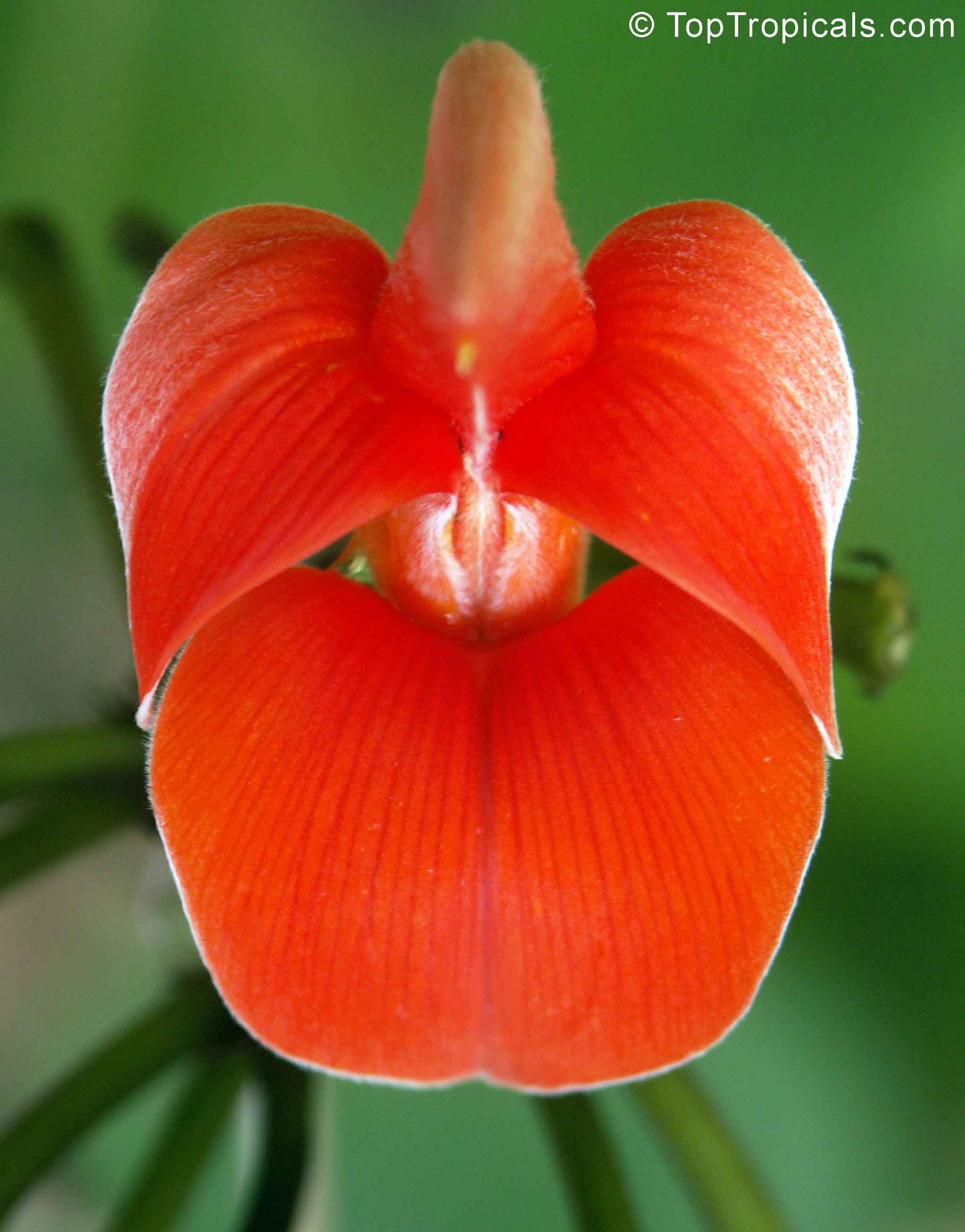
Butea monosperma, Flame of The Forest - is traditionally used to manage male sexual disorders.
Mimosa pudica, Sensitive Plant - significantly increases the libido and hormonal levels of testosterone.
Satureja Viminea, Kama Sutra Mint Tree - used for love gel...
- and much more!
TopTropicals Webinars. Welcome to Top Tropicals Webinar!
Date: 15 Nov 2016
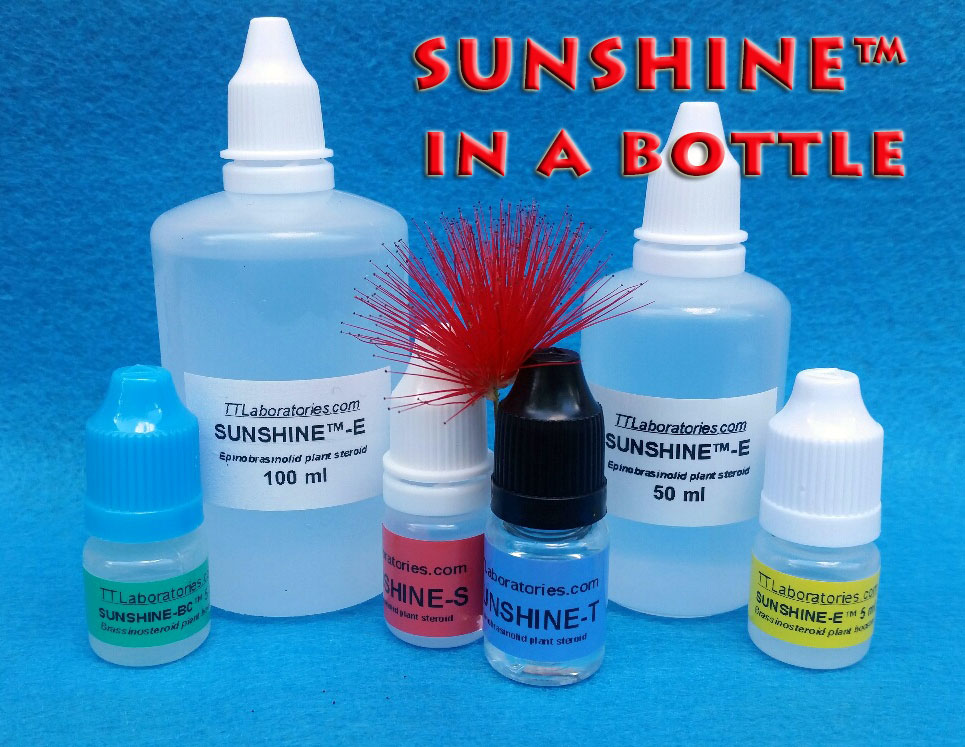
SUNSHINE in a bottle - your help during winter
Q: I have been using your new plant hormone SUNSHINE for plants after shipping, and I must admit it does make a big difference! They recover right away. I order plants online very often, and usually it takes up to a week or more until they start showing new growth. After SUNSHINE treatments, they look fresh within a day or two. My question would be, for improving cold tolerance, what do you recommend? I live in Florida and it is still warm here, should I start spraying my garden now or should I wait until cold spells?
A:
SUNSHINE
is very effective plant stimulant that helps tropical
plants survive different kinds of stress, including
cold, heat, drought, low light, etc. At TopTropicals
gardens and nursery, we have been using this hormone for
many years to protect our plants from unfavorable
conditions, and it saved us many rare tender species,
and lots of money!
The sooner in Fall you start treatments, the better.
Don't wait until cold spell. SUNSHINE works slowly and
in very low doses. The mechanism is actually about
boosting, building up the plant's own immune system. Low
doses once a week, even every other week will work just
fine, so you will need very little of the product. For
less than $5 you can help expensive rare plants to go
through winter painlessly. Recommended application is
only 2.5 ml/1 gal of water, to spray every 1-2 weeks
throughout winter period.
Start spraying your plants with SUNSHINE now, to help
them survive short winter days, build up insect
resistance (especially for plants indoors), and what is
most important, to remain strong through lower
temperatures. These are our suggestions:
- SUNSHINE-T
- thermo-protection booster. It is specially
formulated for winter protection of tropical plants. To
improve cold hardiness even more, spray 1-2 days prior
to cold with 5 ml/1 gal solution and after that,
continue applications with 2.5 ml/1 gal solution every
10-15 days throughout winter period.
- For large plant collections, and in-ground gardens in
subtropical areas, take advantage of very cost effective
bulk items 50
ml and 100
ml bottles of SUNSHINE.
- Don't forget that SUNSHINE is only a stimulant, and
not a plant food. While regular fertilizer should be
avoided during winter months, it is always beneficial to
apply microelements through foliar spray. During cooler
period, chances of chlorosis increase, because at low
temperatures iron is difficult so absorb by roots
especially in moist soil, hence iron deficiency! Our new
Iron supplement SUNSHINE-Super-Iron
microelement booster will help to avoid yellowing leaves
and to maintain your plants strong and healthy during
slow growth period. Ultra-potent, highly absorbable iron
mix, with chelated Iron with DTPA (instead of usual
EDTA) that is better soluble in hard water and more
effective for chlorosis. This mix contains both EDTA +
DTPA chelated iron in higher concentration than regular
micro-elements mixes.
See all SUNSHINE
booster products in our store. For advanced
information on SUNSHINE plant boosters, history of use,
formulation, and frequently asked questions, visit our
manufacturer's website TTLaboratories.com.
Best plants suitable for containers. Check out our large selection of plants that are easily grown in containers
Date: 10 Oct 2016
Cold protection - winter action for your plant collection
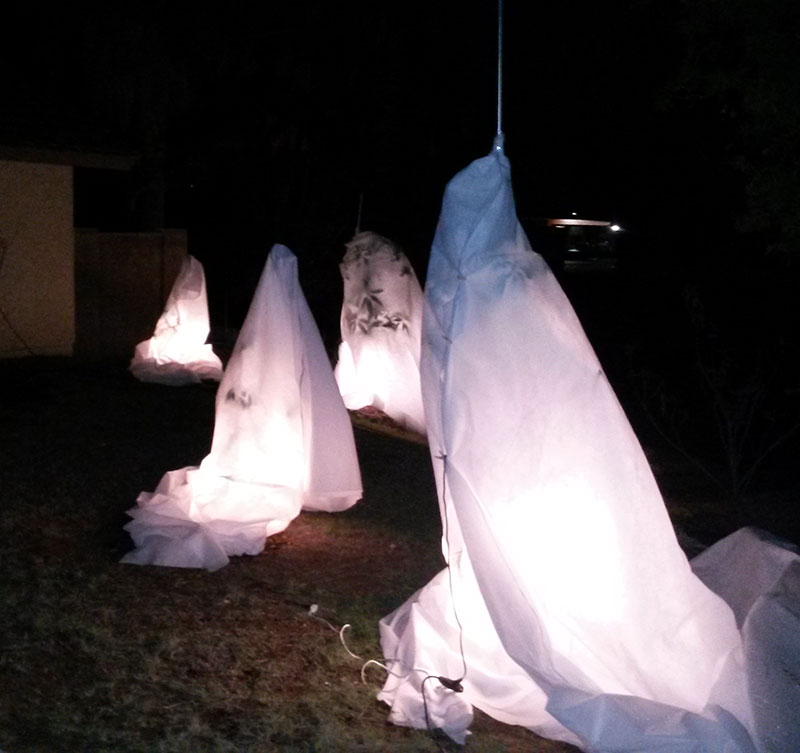
A note from our customer: Last winter was very cold here in Arizona, lower 30's. I used white synthetic sheets (called frost cloth, it is very light and yet effective) to cover my fruit trees, and kept simple light garlands on for the whole night. Sending you couple photos so you can share with others. It worked pretty well for my plants and no cold damage!
With winter approaching, it is time to take some actions to protect your rare plants from cold stress and damage.
If you live in a mild climate, you still need to get ready for the cold nights. When expecting a cold night, individual plants and trees can be wrapped with sheets, or blankets, to protect them from the wind chill. Christmas lights is a good idea for an additional warm up.
For large collections of tropical plants, temporary winter greenhouse doesn't have to be expensive. An easy-assembly mobile carport from a hardware store covered with a plastic or fabric will cost you $100-200. It can fit a hundred plants or more!
If you live in area with a hard freeze, Southern exposure windowsill will work for most of the compact tropicals providing proper care. Larger collections may also move into your garage for a few cold nights, or for longer periods if the garage has a bright light source.
Factors affecting tropical plant winter survival:
1. Duration of cold period. Tropical plants can't stand long periods of cold. A few days of even upper 30's may kill a tropical plant. A few hours of frost may cause leaf drop but the plant will recover.
2. Minimum temperature - of course, the warmer the better. But see 1) - if cold is not for too long, it may be OK.
3. Wind-chill can be more dangerous than low temperatures.
4. Exposure. Southern slopes get warm during daytime and stay warm longer.
5. Protection with a house, fence, larger trees - where a "pocket" of warm air forms and stays - is beneficial.
6. Humidity. A lake or a river nearby (especially ocean) will mild the micro-climate.
7. Individual species hardiness. Don't try to grow Orchid Tree outdoors in New York.
8. Plant maturity and health. A well-established plant with developed root system has more chances to survive cold. If a plant had a good change to develop during warm season (bright light, enough water, fertilizer), it will be more cold hardy. Healthy plant can withstand lower temperature, so proper nutrition is important, including micro-element applications. Large specimens, even ultra-tropical, may survive cooler winter than they normally do in their natural habitat. The Nature provided plants with better hardiness level than it is normally used. To boost plant immune system and improve cold tolerance even more, use SUNSHINE plant boosters. SUNSHINE-T
Date: 18 Aug 2023
Does Size Matter?
TopTropicals plants vs other mail order plants
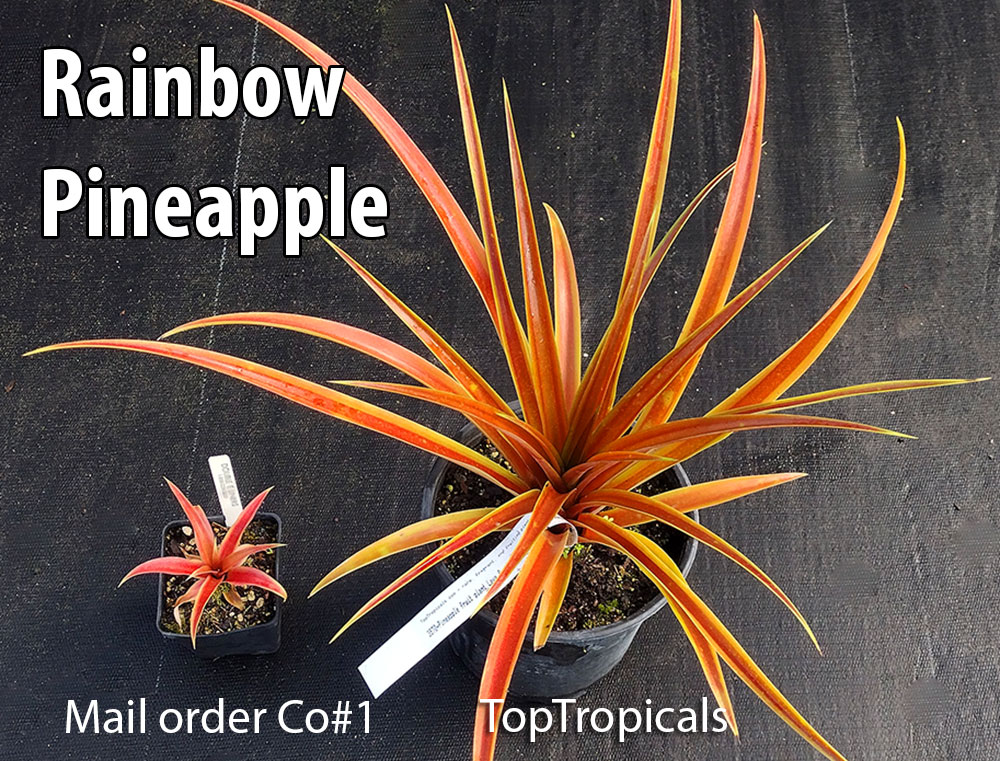
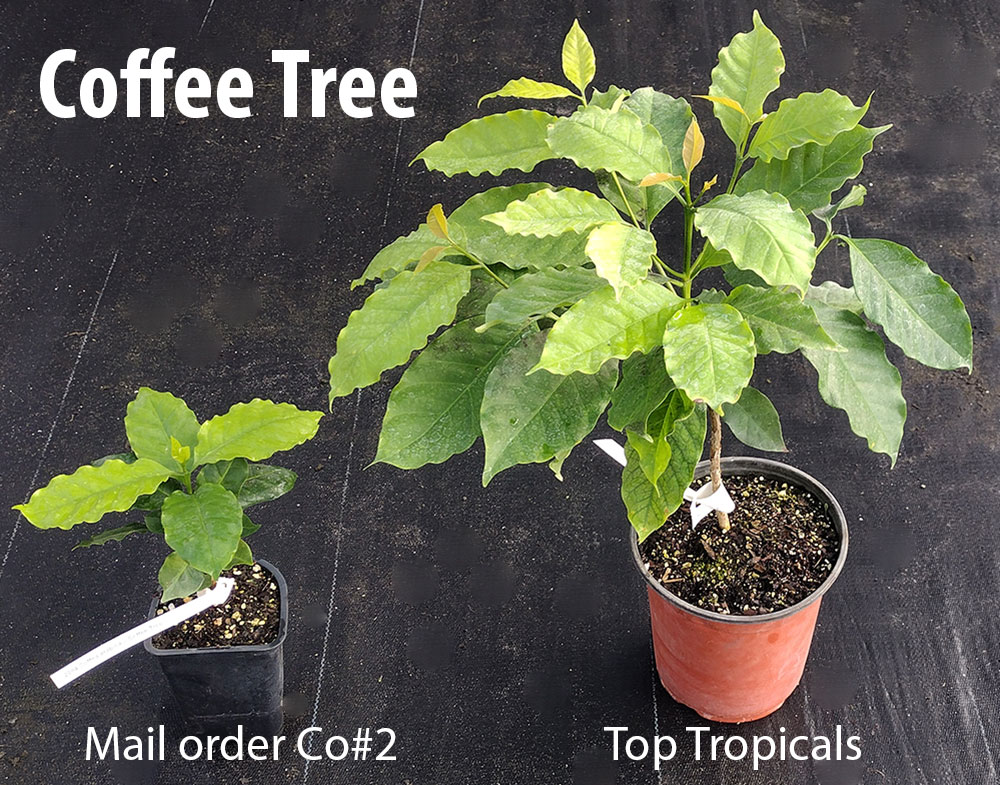
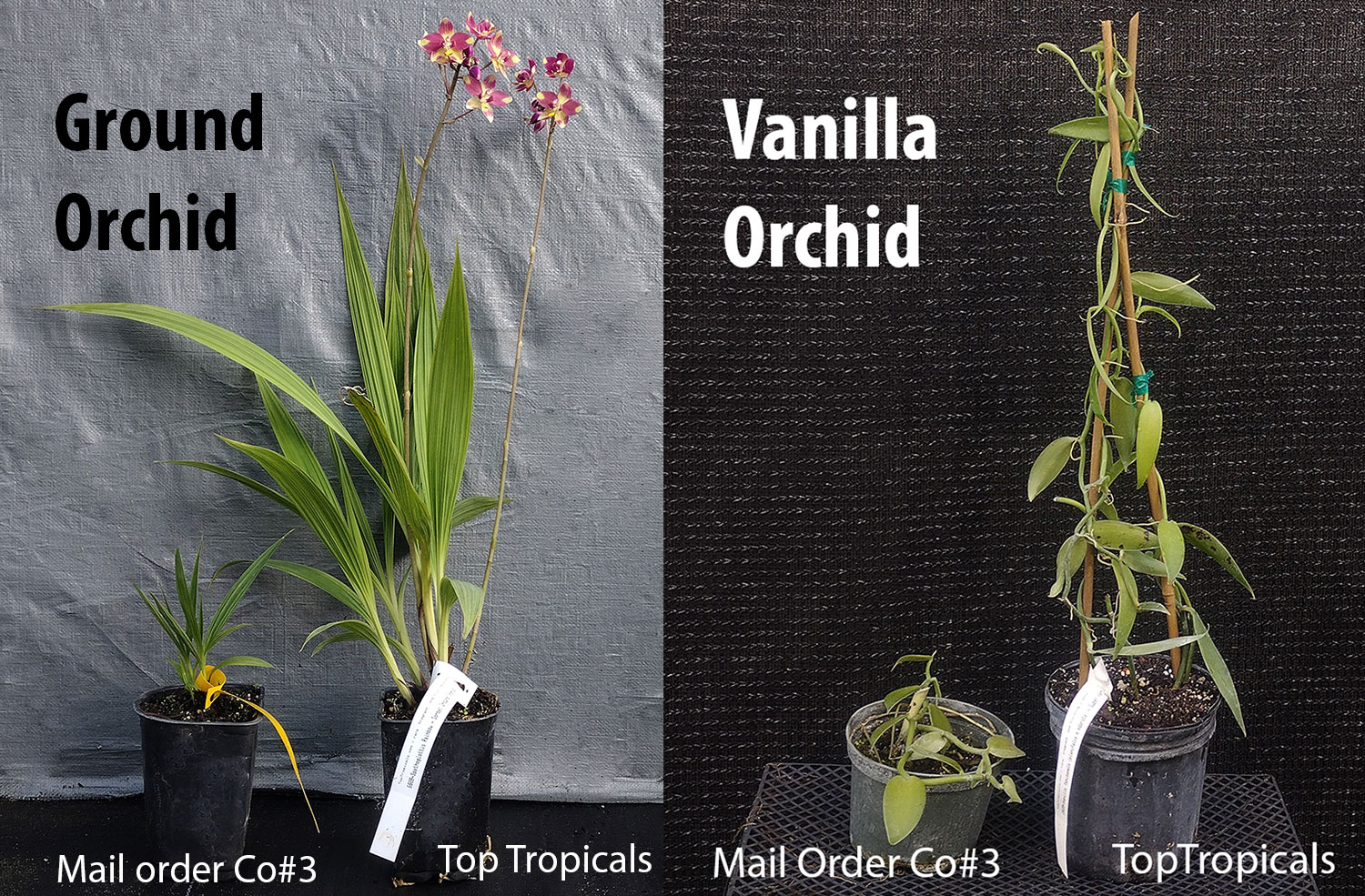
Q: I purchased various plants via mail order (including a Coffee tree and some flowering vines) from companies *** and ***, but they did not survive, possibly due to their small size and the stress of shipping. Could you provide information about the size of your plants, their resilience to shipping stress and the time required for establishment?
A: Plants, as living beings, may experience stress during a few days of travel in a dark box. However, the critical factor influencing their survival is the plant's size. Most of our plants are grown in pots ranging from 1 to 3 gallons, have established root systems and developed branches. Some even feature flowers and fruit, although these may drop during transit. We've included images comparing our 1 gallon size plants with those from other mail-order firms we previously obtained for our own collection.
Understanding that post-shipping plant establishment is a gradual process is crucial. Yet, most plants handle shipping well and commence new growth within days to a couple of weeks post-arrival. Here are some success pointers:
1) Opt for a container matching the root ball size, avoiding excessive
sizing until growth initiates.
2) Begin in a shaded area, progressively transitioning to brighter
spots.
3) Apply
Sunsine Epi spray to lessen stress and enhance vitality.
4) Initiate fertilization once the plant displays fresh growth.
For more information on how to establish mail order plants, simply download our Plant Care Guide.
Date: 19 Jan 2023
Plants and Cats... do they mix well?
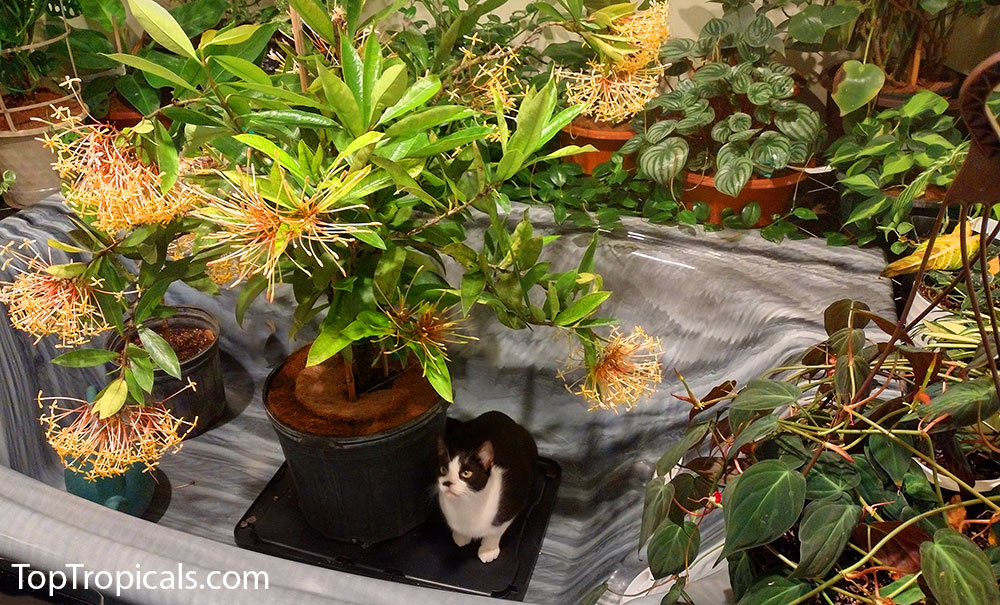
How to keep cats and plants together without going crazy
Growing indoor plants is a great hobby because it provides a sense of
accomplishment and allows you to have a piece of nature inside your home. Many
people know that indoor plants improve air quality and have a calming and
stress-relieving effect...
Having cats in the house is also fun: they provide companionship and can be
very affectionate. Just like plants, they also have a calming effect on
people and can be very entertaining to watch. Taking care of a cat can provide a
sense of responsibility and can be very rewarding...
When it comes to keeping both of these rewarding hobbies in the same house,
the question is: are they compatible? Cats may be attracted to houseplants
because they like to chew on leaves or dig in the soil... others pull the
vines or even swing in hanging baskets!
To keep cats and houseplants in the same house follow these tips:
1. Grow a potted "cat grass" so a cat has some greens to chew
2. Provide alternatives such as chew toys
3. Train your cat... yes, sometimes it takes a spray bottle to teach
staying away from a plant!
4. Create barriers/screens
5. Consider keeping plants in hanging baskets out of reach.
This will help keep your cats and plants happy and healthy together! As a purrfect start - order rare indoor plants online...