Garden Blog - Top Tropicals

Date: 5 Mar 2023

How to move plants from indoors to outdoors
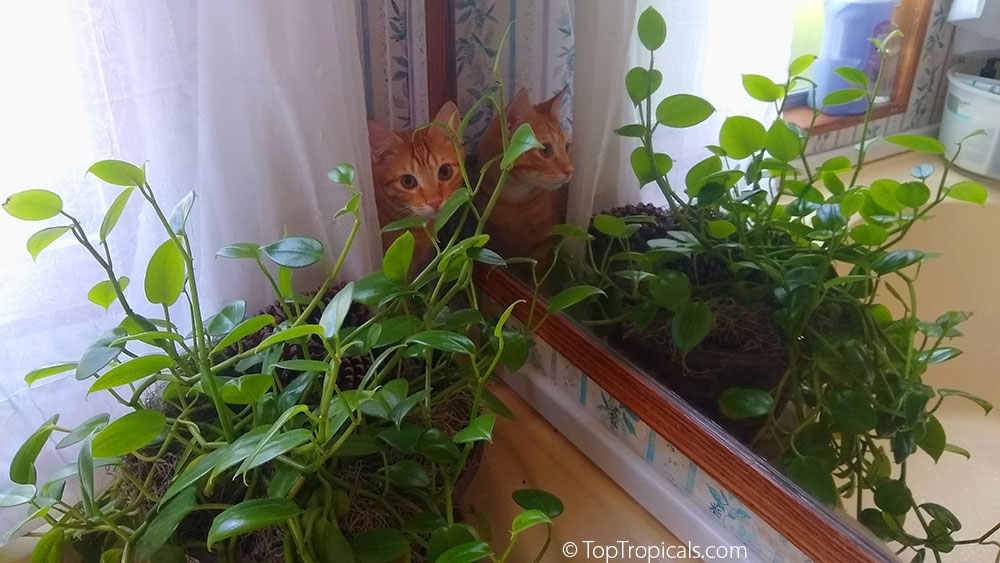
Cat  with  indoor  plant  hiding  behind  curtain

Q: When moving my tropical plant collection outside in the garden, what do I need to know to get them adjusted to this change?

A: As a tropical plant gardener, it's important to assess the temperatures outside before moving your plants outdoors. Most tropical plants thrive in sustained temperatures above 60F.
Moving your plants outside during the summer creates optimal growing conditions for sun-loving plants, providing them with more light and warmth than they can ever get inside. This active time of growth, along with the outdoor conditions of humidity, heat, sunlight, and natural day length, gives the plant a chance to experience growth in an outdoor environment, making for a much stronger plant.
However, be aware of sun burn. Direct sunlight can burn patches of white or brown on the surface of the tender leaves, so it's best to move your plants outside by hardening them off first. Gradually increase the amount of direct sunlight they receive over several days before moving them into full sun.
It's also a good time to prune your plants and repot them if needed, providing better aeration to the root system. But avoid root pruning as it can make your plant susceptible to disease and shock.
Overall, moving your tropical plants outside encourages their natural bloom cycle and provides extra vigor for the upcoming indoor season. However, be aware that you may have to deal with insects when you bring your plants back inside in the fall, so use preventive sprays like Sunshine NoBug before bringing them back inside. Leaf drop is also common when plants come back inside, so make sure to provide a well-lit location.
When moving plants outside, it's important to provide them with proper nutrients through fertilization. Outdoor conditions can deplete the soil of essential nutrients, so giving your plants a boost of fertilizer before moving them outside can help them acclimate to their new environment. Apply Sunshine Boosters with every watering, include micro-elements and bio stimulants to boost their immune system.
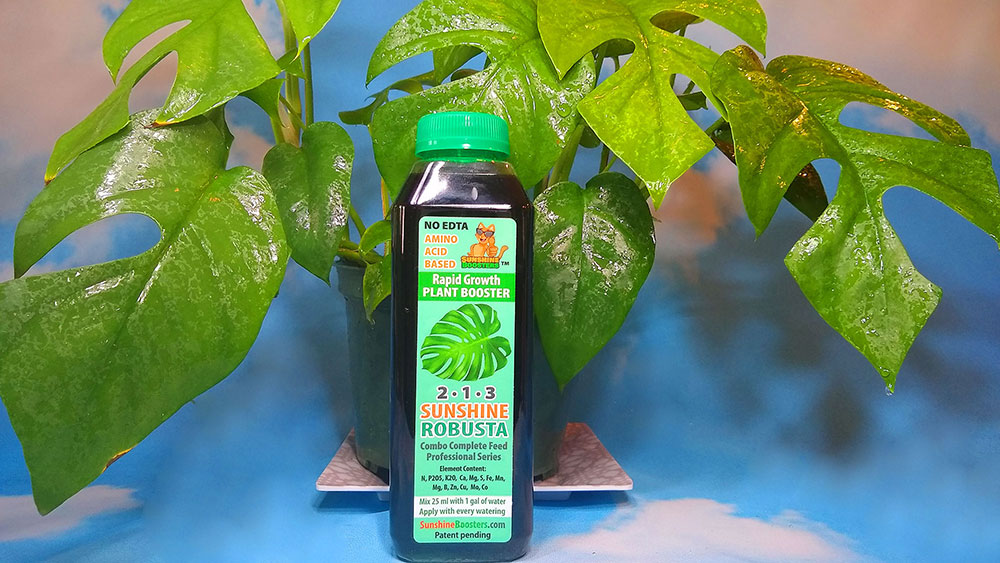
Sunshine  Robusta  Booster  with  lush  foliage  indoor  plant

Date: 26 Feb 2023

Organic or inorganic fertilizers, which is best?

A very smart article by Fedor, Mike, and Ed

Colorful  garden

Q: Which one is better - organic or inorganic fertilizer?

A: When it comes to fertilizer, gardeners always wonder if one better than the other. Does a total organic fertilizer make sense for you? Is it easier to just use a cheap granular fertilizer a few times per year? You may be surprised to learn that there is one fertilizer that has advantages over both!

While organic fertilizers may be all the rage, there is the difference between Sunshine Boosters fertilizers, organic and inorganic fertilizers. Sunshine Boosters fertilizers have been especially developed to provide optimal conditions for cultivating crops in pots and greenhouses. These specialized nutrient blends are essential in order to maintain an appropriate environment for successful crop production, as they compensate for the lack of natural beneficial bacteria and nitrifying organisms which are specific to open soil cultivation.
Learn about why Sunshine Boosters is the best choice...

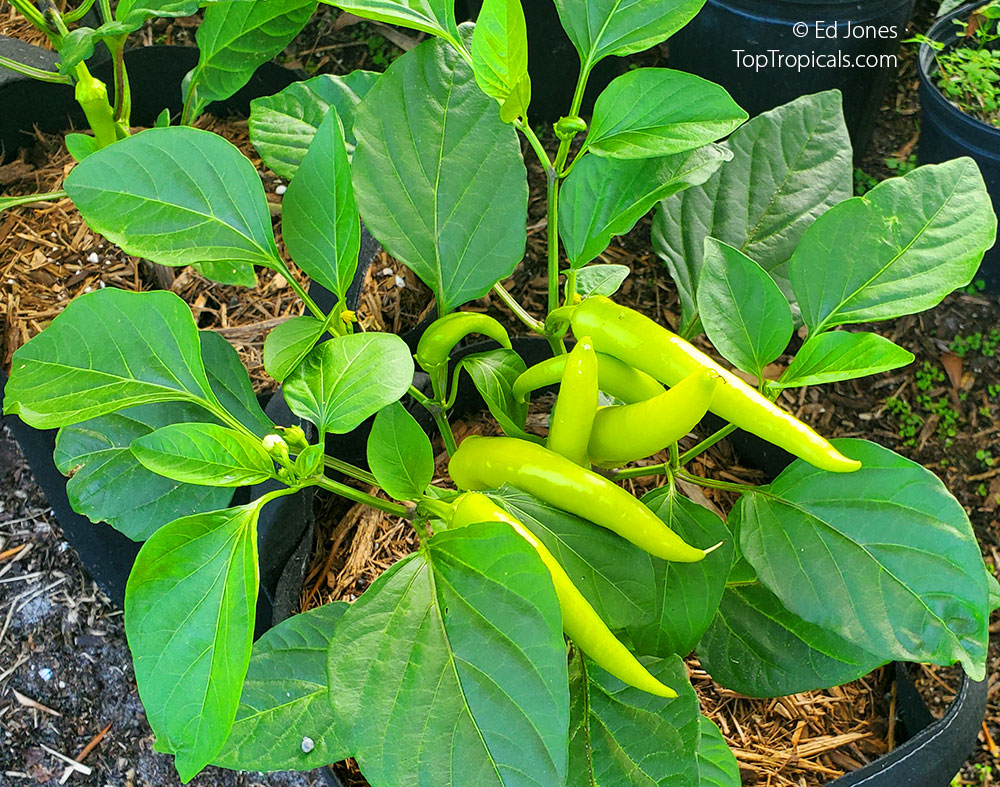
Hungarian  hot  wax  pepper

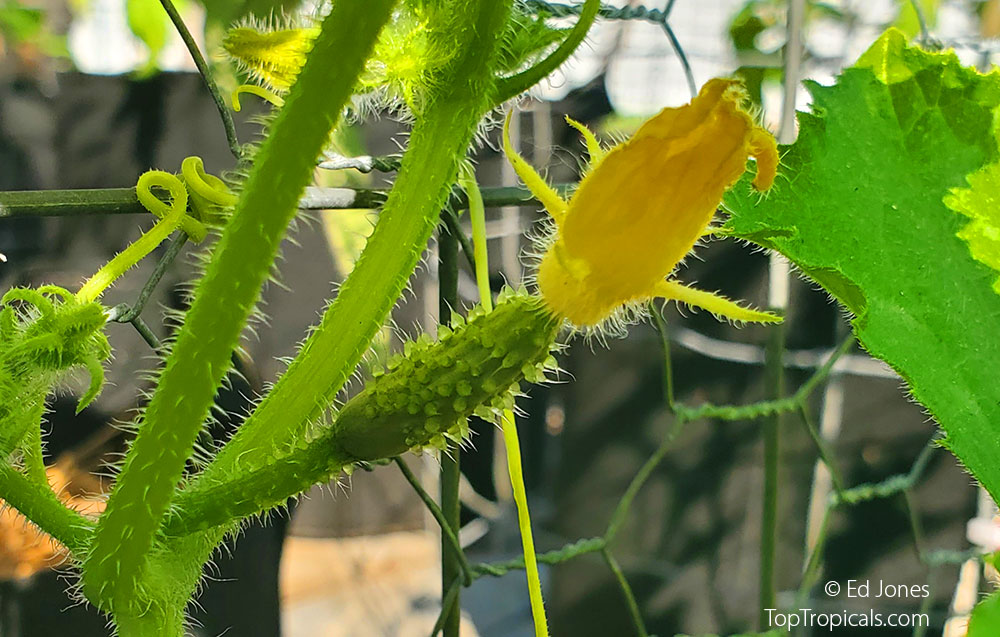
In the photos: Hungarian hot wax pepper (above) and a Baby Cucumber (below), both grown in Ed's organic garden with Sunshine Boosters

Baby  Cucumber  in  organic  garden

Date: 11 Jan 2021

Tropical gardener beginning-of-year checklist

Final pre-Spring check of whatever we had forgotten! For a gardener, the year ahead is a chance to do things you want, as a way to achieve the things you need to do. If your number one New Year's resolution is to garden more (a want-to item), you also will be exercising more (a need-to). Or if you plant a new edible garden (want, want, want), you will end up checking off "eat more leafy vegetables and fruits" from your to-do list!

12 steps to get ready for 2021 season:

1 - Spray fruit trees and houseplants with insecticide and micro-elements
2 - Continue spraying SUNSHINE-Epi to improve plant hardiness
3 - Protect tender plants during cold spells and especially from freeze
4 - Reduce watering during cooler months, keeping the root zone on a dry side
5 - To give your plants a kick start, fertilize with liquid SUNSHINE Boosters fertilizers - they are safe to be used year round
6 - Plant fruit trees: winter planting is beneficial to avoid heat stress for roots
7 - Plant Butterfly and Hummingbird Attractants
8 - Plant bulbs, vegetables and herbs. Use eco-safe, natural SUNSHINE boosters for all your edibles.
9 - Plan your summer garden and order seeds early
10 - Start tropical plants from seeds (indoors for cooler climates)
11 - Start ordering tropical plants and beneficial soil mix to get them established after shipping in pots
12 - Clean and oil garden tools

Date: 30 Jun 2020

Plants like to snack!
How to feed Poinciana tree

(and other tropical flowering trees)

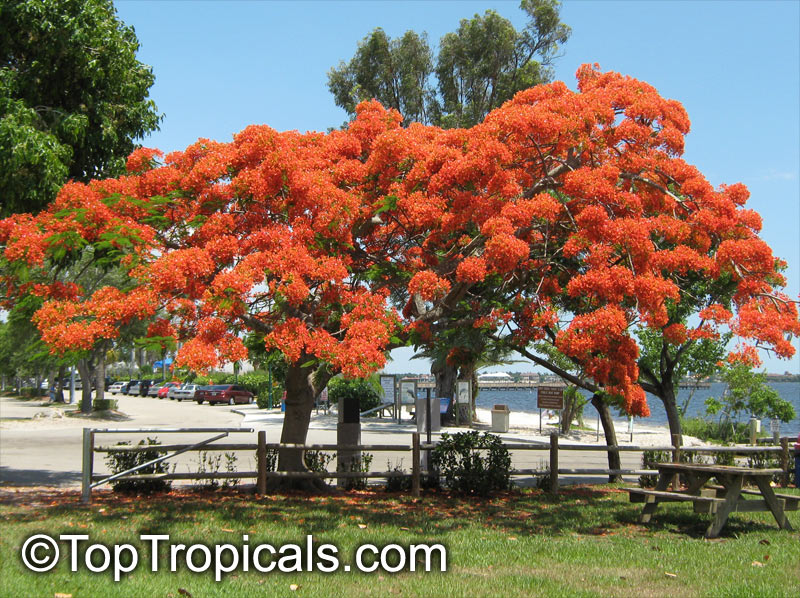
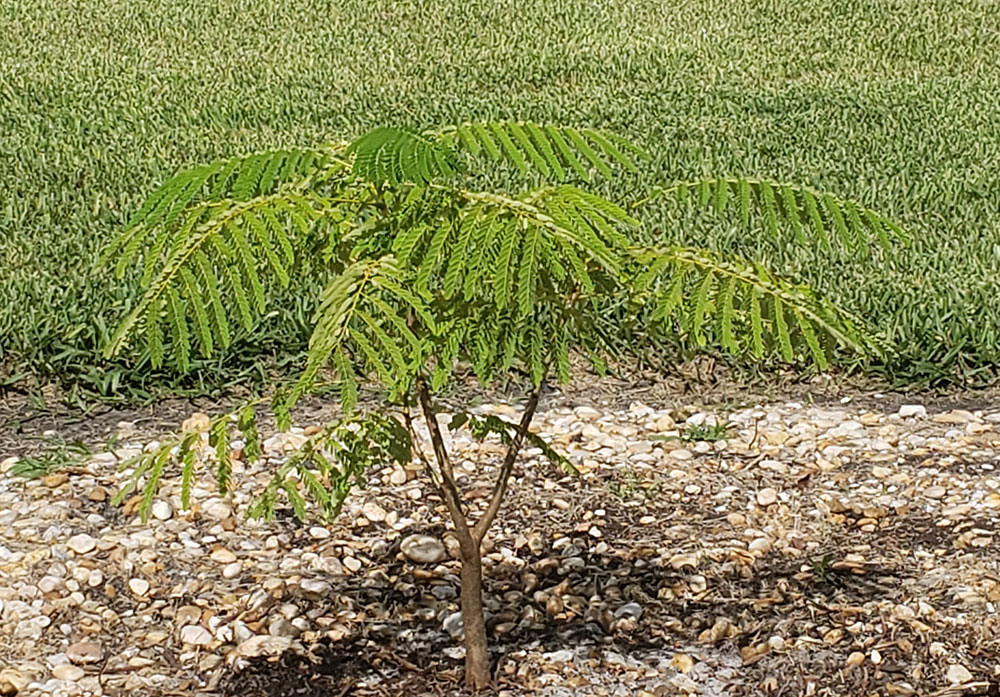
Q: We purchased a Royal Poinciana tree from TopTropicals not too long ago and we gradually gave it more sun until finally we were able to plant it in direct sunlight where it's been for a week or so. Rain has been sporadic lately so I'm giving it a little bit of water every day. It seems to be doing fine. I do have a question about whether the leaves are as green as they should be? I read online that I should fertilize it with gardenia / ixoria fertilizer in March, June, and October. I looked on homedepot.com but didn't really find anything that goes by that name. Would fertilizer help? Can you suggest a fertilizer?

A: Your Poinciana tree looks pretty healthy and happy, congratulations with a great job!
Traditional (old-school) fertilizer recommendations usually suggest feeding a plant 2-3 times a year with a slow-release fertilizer. And although a plant will benefit from any fertilizer application (extra food is always good), however, for the best results, faster growth, sooner and more profuse blooming, your should use complete plant nutrition products - liquid fertilizers (see why liquid fertilizers are better than dry).
Here is an example. Some people eat a big heavy meal once a day which we all know, is not very healthy. Other people eat balanced food more frequently but in smaller portions - this is always the best way to go.
From this point, plants prefer SNACKING - frequent feeding, but with less concentrated, mild and balanced nutrients.
For your beautiful Poinciana tree (and other flowering plants), we suggest the following nutrition program:

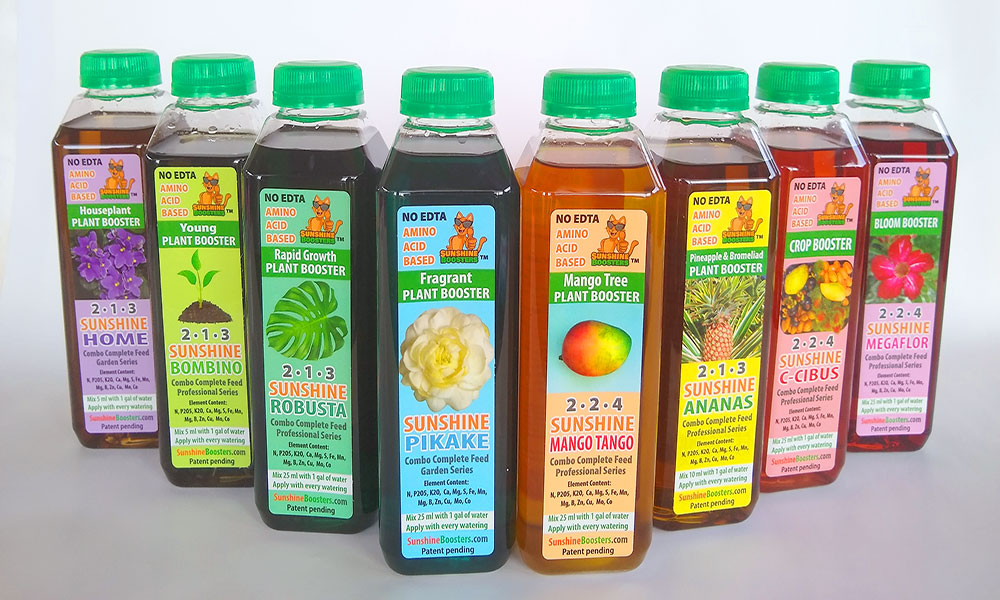
1) SUNSHINE Megaflor - Bloom Nutrition Booster - you may use this fertilizer as frequent as with every watering, it won't burn the roots, and will provide a complete nutrition for all plant needs throughout the year. You can continue fertilizing with Megaflor even during winter time. Sunshine Megaflor will help you to keep the plant healthy, vigorous, and resistant to stress and diseases. It turns leaves green and makes the plant strong so it will start flowering sooner for you.

2) Tropical Allure - Smart-Release Booster. Apply it once a month during hot season only (in Florida - from March to November).

Date: 6 Feb 2025

How to get mango trees to bloom and set fruit

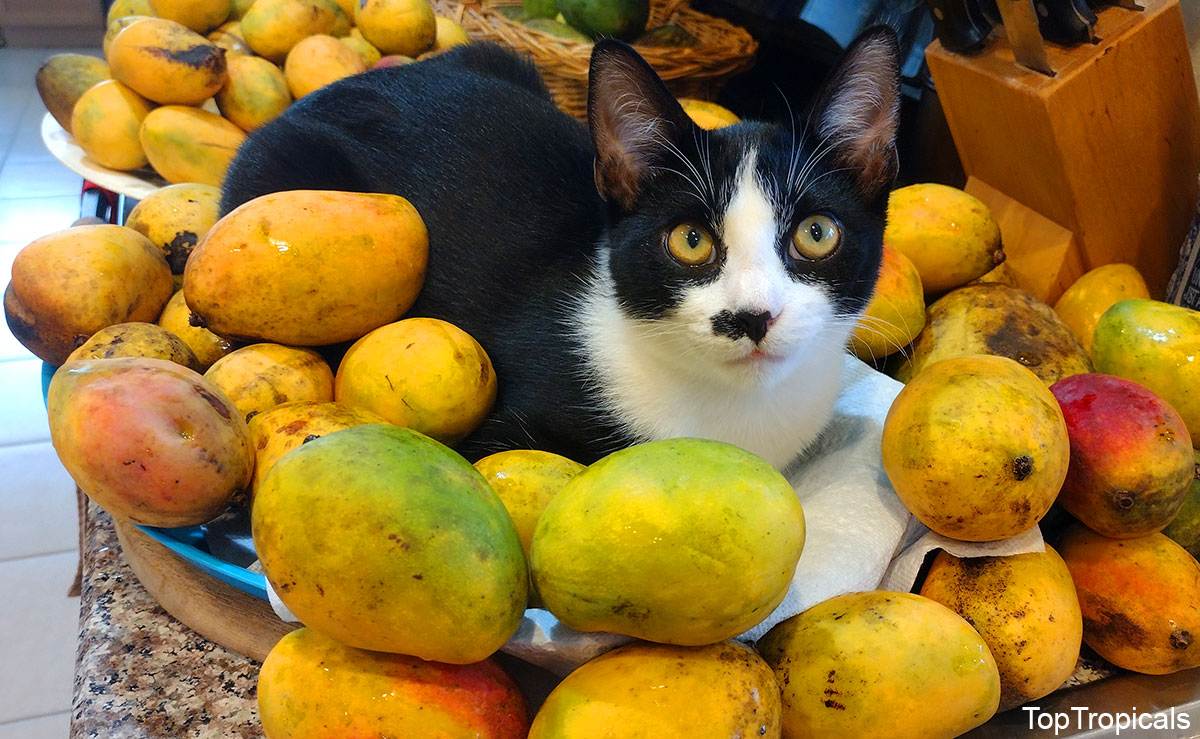
Cat  with  mango  fruit

Q: Is there any way to make a mango tree set more fruit? My mango trees bloomed like crazy last year but most of the flowers dropped and I had only a few fruit. What do I need to do to get more fruit?

A: Mango trees flower from late Winter to Spring, with the peak blooming season varying based on variety. During this time, mango trees produce hundreds of small, fragrant flowers in large panicles. A healthy mango tree can produce anywhere from 500 to 2,000 flowers per panicle. However, only a small fraction of the flowers will be successfully pollinated and develop into fruit, depending on the tree's size and health.

To support healthy flowering and fruit set, mango trees need dry weather, as excessive moisture can inhibit pollination and fruit development. During flowering period, it's important not to overwater, as the tree is less active in water uptake.

Avoid dry fertilizers during flowering since the tree is focused on reproduction rather than vegetative growth. Continue applying Sunshine Boosters Mango Tango liquid fertilizer to support the tree's overall health and vigor which will encourage fruit quantity and quality. Sunshine Boosters deliver essential nutrients in optimum amounts, proportionally to water intake.

Ensuring a dry, sunny environment and mild fertilizer Mango Tango will help the tree set fruit successfully.

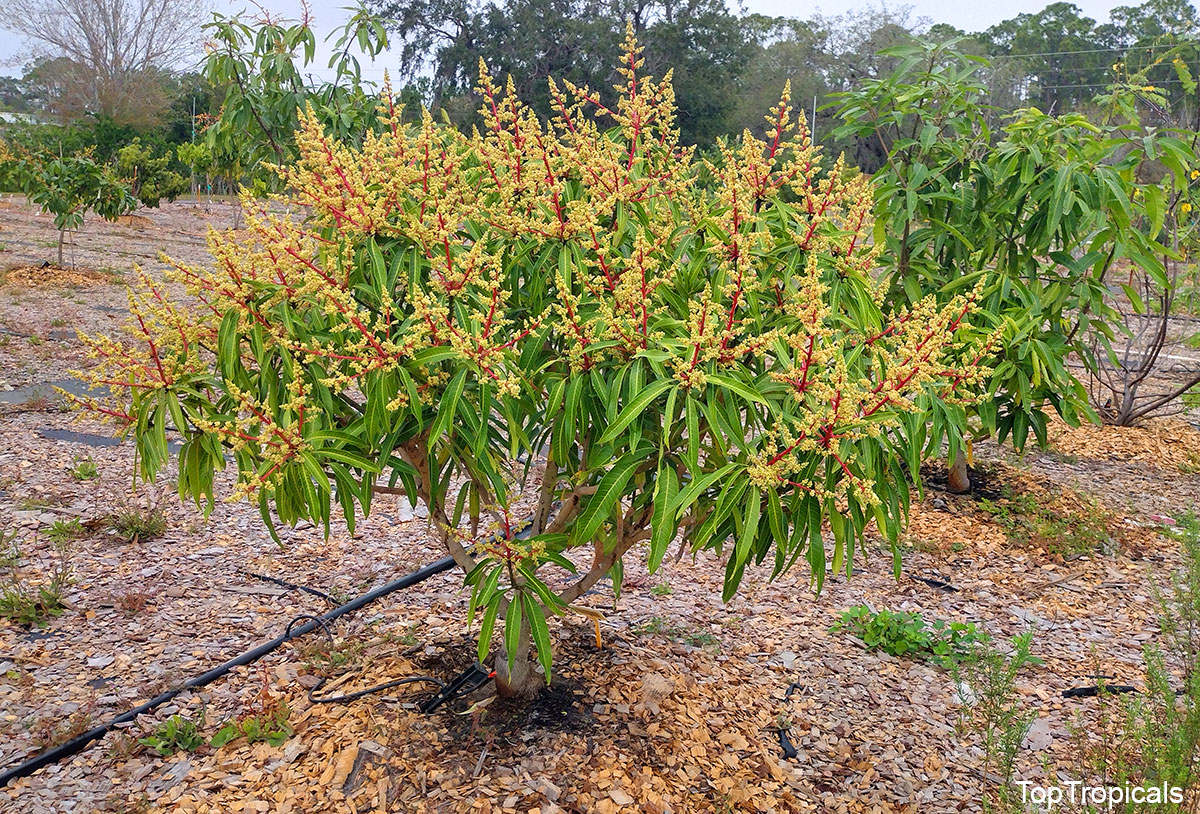
Mango  tree  flowering

Photo above: Our Mango garden in Sebring, FL is in full bloom now! Early spring in Florida started in January 2025. Surprisingly, all our mango varieties decided to start blooming: - early, mid- and late- season cultivars. It's a stunning view! Check out a short Video.

Photo below: 2024 fruiting trees. We use Sunshine Mango Tango year around.

Mango  tree  fruiting