Garden Blog - Top Tropicals

Date: 18 Apr 2020

PeopleCats amid COVID-Cat-20
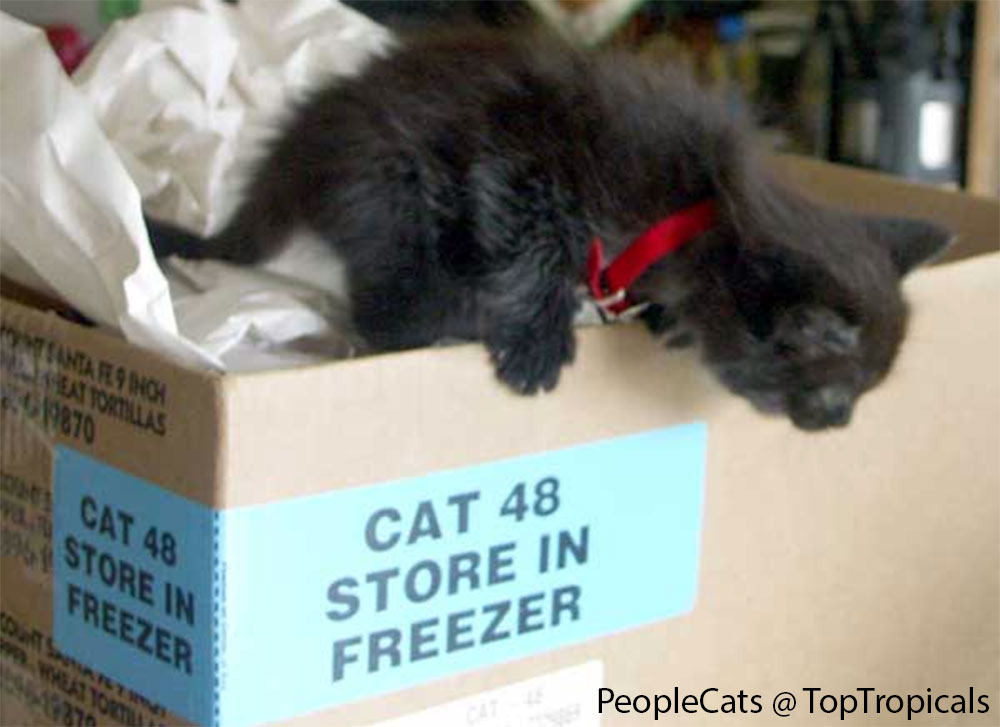
"It's not the size of the cat in the fight, it's the size of the fight in the cat"
- Mark Twain -

While the whole world is suffering the virus attack, cats are no exception. They do not get COVID-19, but they have their own coronavirus - a respiratory condition that may become very dangerous for them. And although cat coronavirus does not affect humans, we can transfer it to other cats through our hands/petting, shared bowls and bedding, etc.
At TopTropicals, we had several cats sick with the flu and it took us a long time and long hospital bills to bring them back to health! Below we are sharing with you a few tips from our own experience that may help you fight and treat cat coronavirus, that we call "Covid-Cat-20".
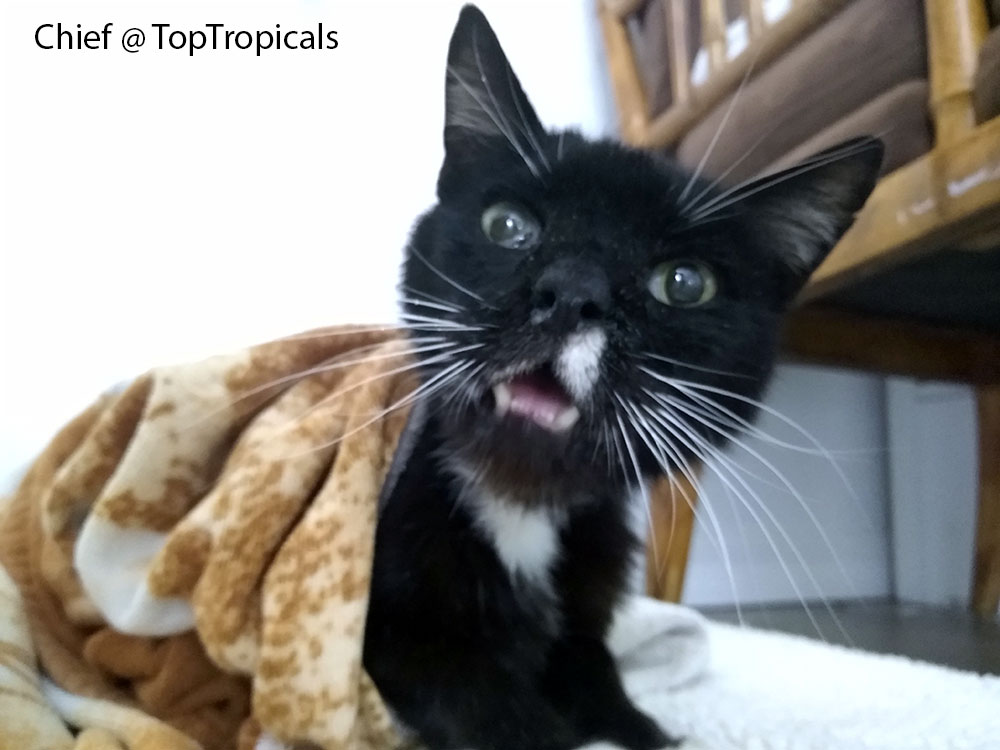
Chief is breathing through his mouth: "Stuffed nose sucks!"

How to treat Cat Coronavirus

When cats get a flu/virus/cold, they suffer congestion, sneeze and cough. Just like us humans. But for cats, stuffed nose is much worse trouble, because they can't smell food = they won't eat it! In tough cases, they won't even drink any water. Due to specifics of cat metabolism, if a cat doesn't eat and/or drink for more than a couple of days, it may become life-threatening. It is not the virus that kills a cat, it is dehydration, lack of nutrition, and possible secondary infections.

- Vet. During Covid-19 lockdown, many animal hospitals are closed, but if you are lucky to find a vet, it is wise to give the cat a long-lasting shot of antibiotic. You can't treat a virus with antibiotic, but it will prevent secondary infections (like pneumonia, etc.)
- Water is absolutely essential! Make sure your Cat drinks water. If he (she) doesn't want to drink on his own, you need to give him water with a syringe. As often as you can. Little by little. Or, ask a vet to put a "water pouch" under cat's skin. This will save the cat from dehydration.
- Food is the main key! Your cat must eat a normal size portion per day in order to fight the illness. Because he can't smell, it's possible he won't eat on his own. Offer him a smelly, soft/wet food of room temperature or slightly warmer: usually tuna works well. Get Salmon Oil and put on top of the food: it is smelly, plus a great vitamin supplement.
- Hand-feeding. If congestion is bad, even a smelly tuna may not help. Mix a spoonful of pate with some water and try to hand-feed this "soup" to the cat either using syringe, or a small spoon. Little by little. Remember, his nose is stuffed and he can't swallow and breath at the same time, so it must be tiny bites. (Wrap the entire cat tightly in a large thick towel to save yourself lots of scratching damage, leaving out just the face. Guaranteed, he won't like the procedure and you will be surprised how strong he is for a sick cat.)
- Supplements. For an extra nutrition support, you may use Critical nutrition food and other protein supplements. Consult your vet and you may want to try the following aids: High Calorie Liquid or Gel (easier to administer), HomeoPet Nose Relief (for de-congestion), Lysine Soft Chews, and Mirataz ointment (to promote appetite).
- Rest. Keep the cat indoors, in a warm place, away from drafts. Cover with a towel to make comfy. Keep lights dimmed. Change bedding, towels, blankets at least daily to keep clean, get rid of germs and drooling accidents.
- Quarantine from other cats, the cat coronavirus is super catchy! Find that spare room. Bleach, soap, alcohol and Hand Sanitizer - are your friends now to maintain germ- and virus-free environment.
- Mild cases. Some cats have mild symptoms (we've noticed that black cats and tuxedo cats are more susceptible regardless of age). In this case, do not panic - just give them time to recover. Lots of rest, privacy, and be sure to monitor water/food intake!
- Tough cases. Most cats look lethargic when sick. At some point, if within 3-4 days you don't see improvement and the coughing continues, you need x-ray to rule out pneumonia.

Stay well and healthy, PeopleCats!
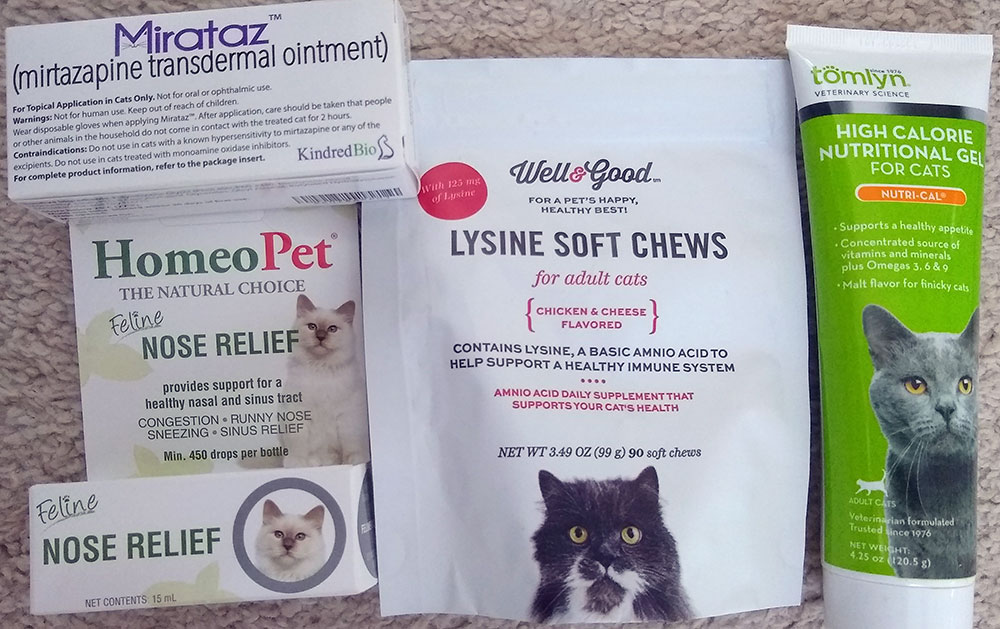
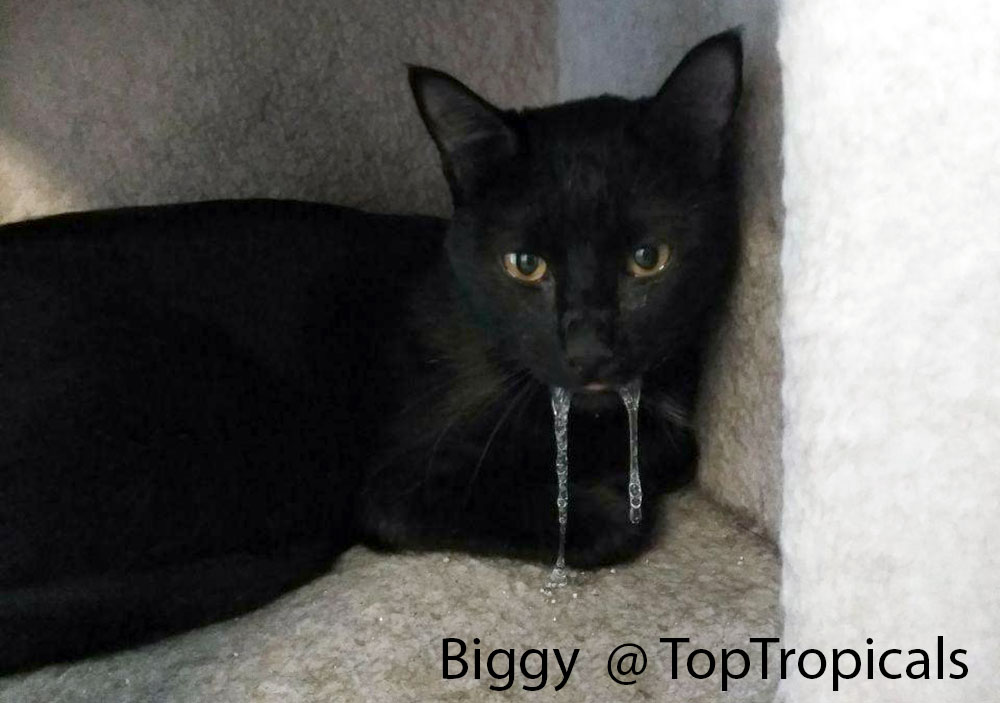
Biggy sneezed... Ooops, sorry for no mask!

TopTropicals PeopleCat Club

Thank you everybody for supporting us in helping PeopleCat Community!
Make your kind donation today and receive a surprise gift from us. Every little bit helps! Thank you and God bless you and your pets!
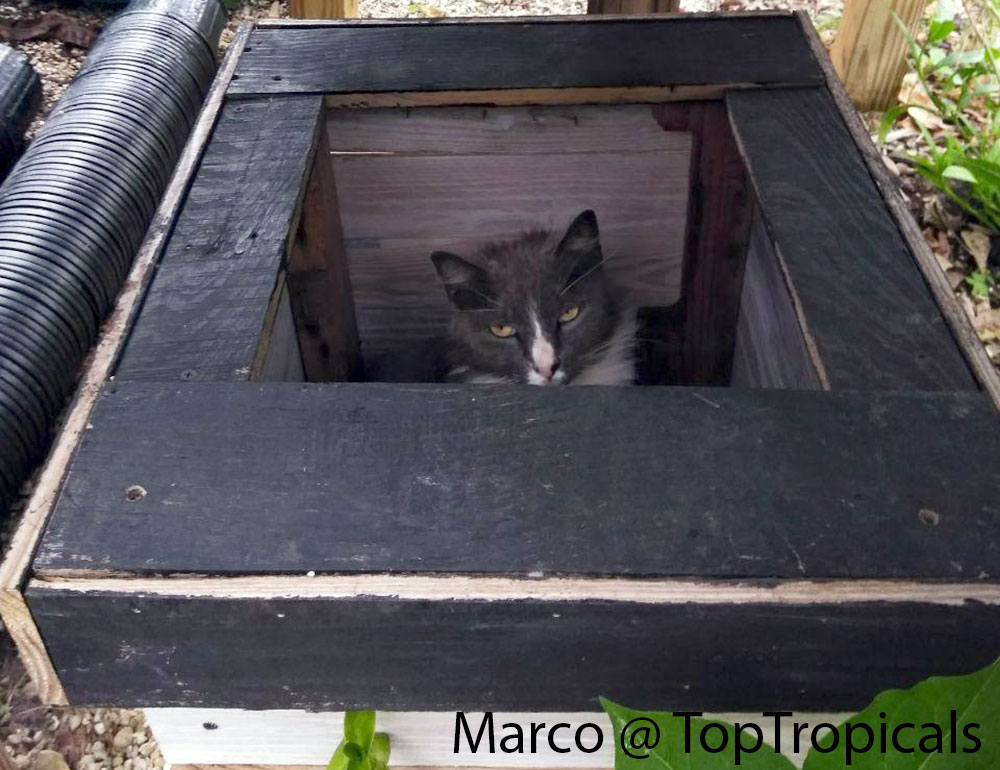
Coughing Marco is practicing Social Distancing

Date: 4 Jun 2019

Pretty in Pink... and Purple Prince for her!

TopTropicals.com

By Onika Amell, tropical plant specialist

Q: I have a bare spot in my front garden, behind a low wall, in part-sun. I'm hoping to find an evergreen, flowering ground cover that will cover it quickly. Any ideas on finding something with the ability to eventually also cascade over that wall? I live on Marco Island, Florida.

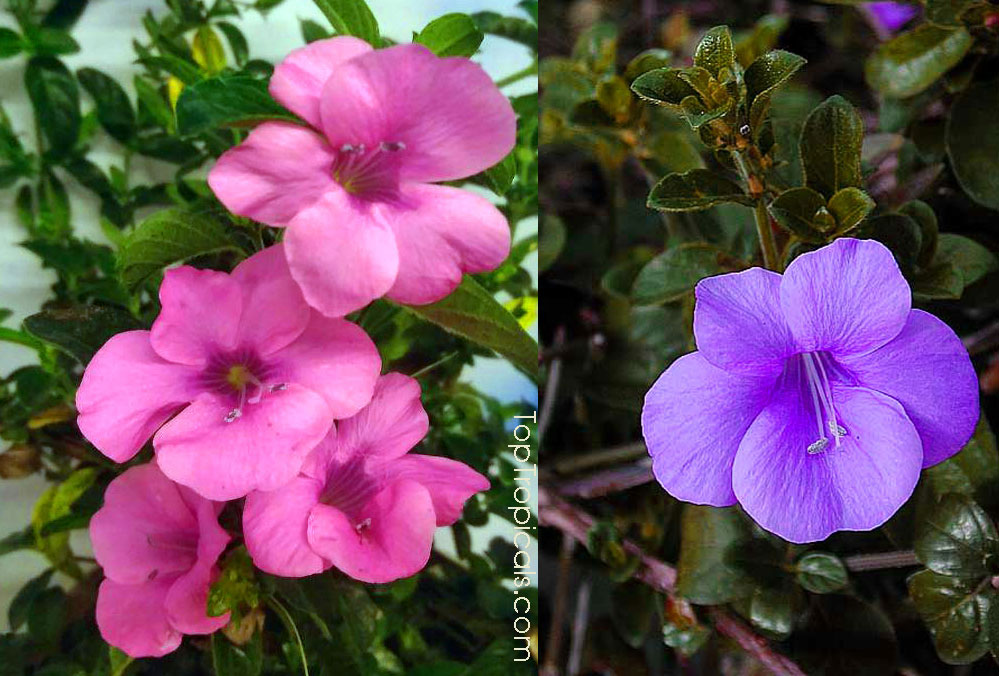
A: Barleria Repens - Small Bush Violet, is a tough, fast-growing evergreen that blooms from late spring to autumn. Of the many Barleria we see in the tropics, Pretty in Pink is one of the most striking! The name tells the whole story: pretty and pink. A lot of gardeners enjoy using them as a ground cover. They will quickly cover a large area - their stems root readily as the plant crawls along. They are easily propagated by lifting the rooted runners or using cuttings. They also reseed easily. Flowers are followed by seed pots that explode open when dry, dispersing 4 seeds at a time! But perhaps best liked by many gardeners, is their habit to cascade. It will be well suited for covering the bare area in your garden and spilling over that wall beautifully.
When used as a ground cover, remember to pinch out young shoots to encourage bushiness and prune the plant back hard after flowering to keep it neat.
Barleria repens will also adapt to different situations in a garden if you need them to. Although they usually form a rounded to spreading bushy shrub, 2 ft high by 3 ft wide, they will climb when you give them support. They are often allowed to lean into nearby trees and shrubs.
Hardy to 28F, Barleria repens is pest-free and fairly frost-tolerant. They love sun and part shade, as well as well-drained soil and plenty of organic material. Avoid planting it in deep shade as it will get leggy and reluctant to flower.
They will thrive when fed with a slow release fertilizer at intervals of 6-8 weeks, throughout the growing season.

There is another cultivar of this exact variety that has blue-purple flowers, it is called Purple Prince! It couples perfectly with Pretty in Pink! :)

See all Barlerias from our store


Recommended fertilizers:
Pink N Good Daily Plant Food Flower Booster
Tropical Allure Smart-Release Booster

Date: 24 May 2019

Heavenly Angel's Trumpet

TopTropicals.com

By Onika Amell, tropical flower specialist

Q: Can you please tell me which zones are the best for growing Angel Trumpets? When do they bloom and is there a specific fertilizer to use on them? Do you sell any variegated varieties?

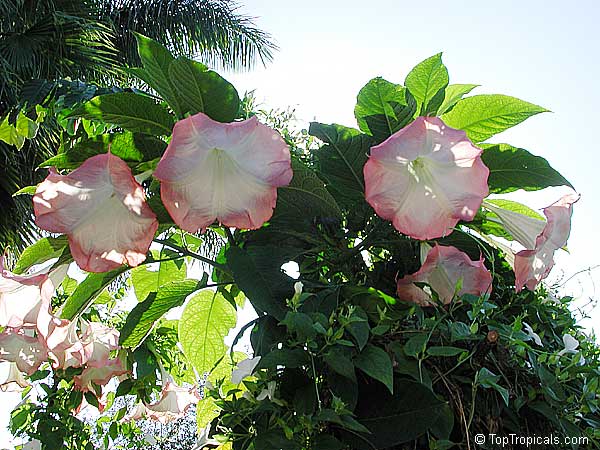
A: If you are lucky enough to live in an area that doesn't freeze or only has light frosts, you can grow Brugmansia (common name Angel Trumpet) outside all year long. They are only entirely hardy in USDA zones 9-12, but they remain very popular throughout the United States. They do really well in coastal settings in the Southwest. They are simply glorious in the coastal areas of South California. In the southwestern states, as well as in the tropics, they bloom spectacularly throughout the spring, summer, and autumn.

Angel Trumpets are very heavy feeders and they need huge amounts of nitrogen. You can use a standard balanced slow-release fertilizer on Brugmansia, but then you must apply it very generously. We've created a specialized fertilizer just for them. Angel Trumpet Delight is a perfect Brugmansia food for frequent monthly feed. It's a 30-day Smart-Release formula that works wonders for Angel Trumpets. A a well-balanced combination of macro- and micro- nutrients with a slow release action, it provides continuous feed, maintains vigor and disease resistance. It also contains coated nitrogen, early release nutrients and extra iron (water soluble and chelated) for quick green-up.

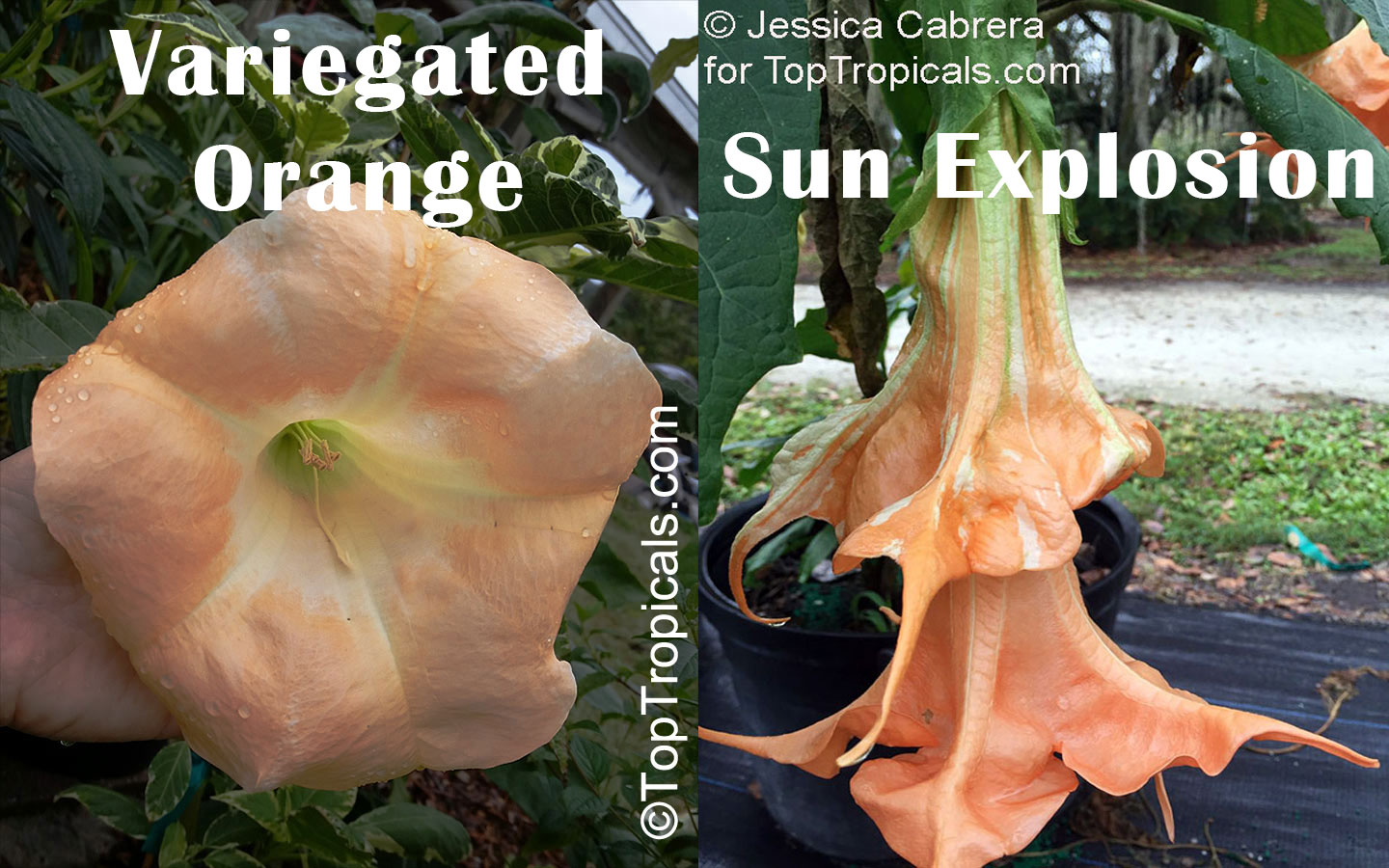
Angel Trumpets come in a dazzling array of colors: orange, yellow, green, white, pink, red, emerald and even purple (closely related Datura). One of our favorites is the beautiful Variegated Orange Angel Trumpet, a new hybrid with variegated leaves and a large single bloom that starts white and turns orange. Another amazing variety is "Sun Explosion" - with a variegated orange flower.

Most folks are usually in awe of the enormous trumpet flowers when they see it for the very first time. They most definitely need to be planted where they can be admired… near a deck, terrace, lanai or, entryway. The blossoms are short-lived, but numerous, continuous, and truly show-stopping! And they smell so good! This is a must have in any tropical garden. They can be grown either as a bush or a small tree. They are easy peasy to grow and root extremely easily, making them great as pass-along gifts for friends. They are sun-loving and super fast-growing plants. Plenty of water and fertilizers keep them happy and at their best. Did I mention they smell good too? ;)

TopTropicals.com

Date: 1 Feb 2021

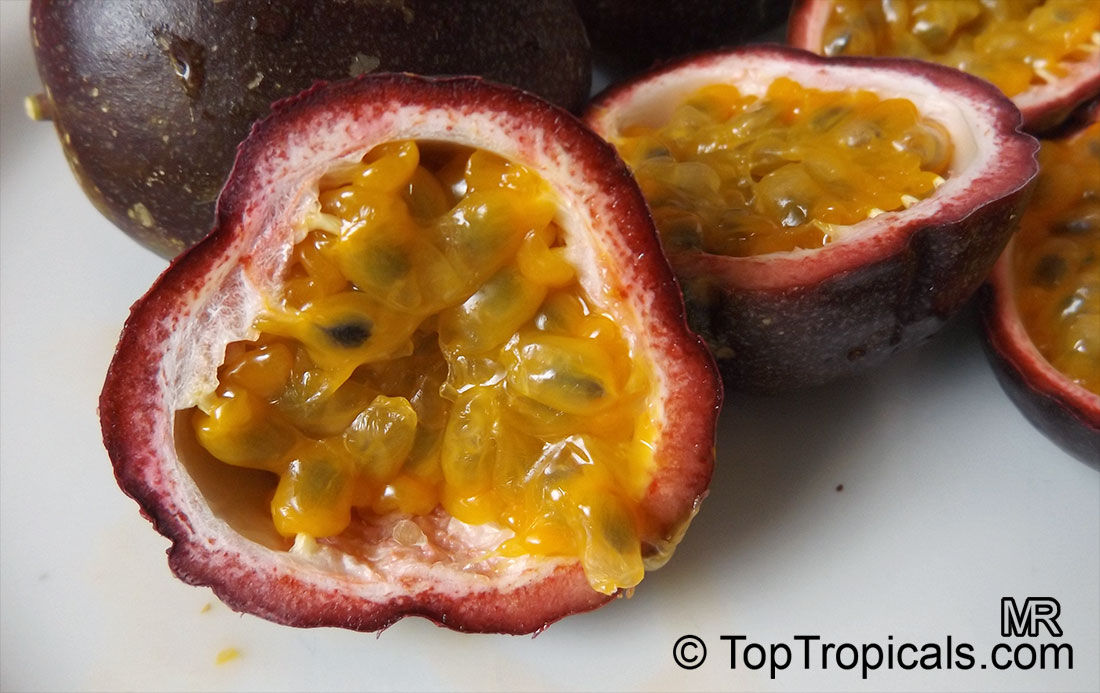
The Passion Fruit - Juicy Maracuya

by Alex Butova, the Witch of Herbs and Cats

...There was an unexpected confusion with the name of this plant. Most people understand its name literally: passiflora - a flower of passion, and its fruits - the fruits of passion, implying human, earthly passions. Nevertheless, the passion fruit is so called because it is one of the many  species  of  passion flower, the English translation of the Latin genus name,  PassiFlora.
Learn more about this delicious, flavorful fruit and how to grow it in your own garden in no time...

CONTINUE READING >>

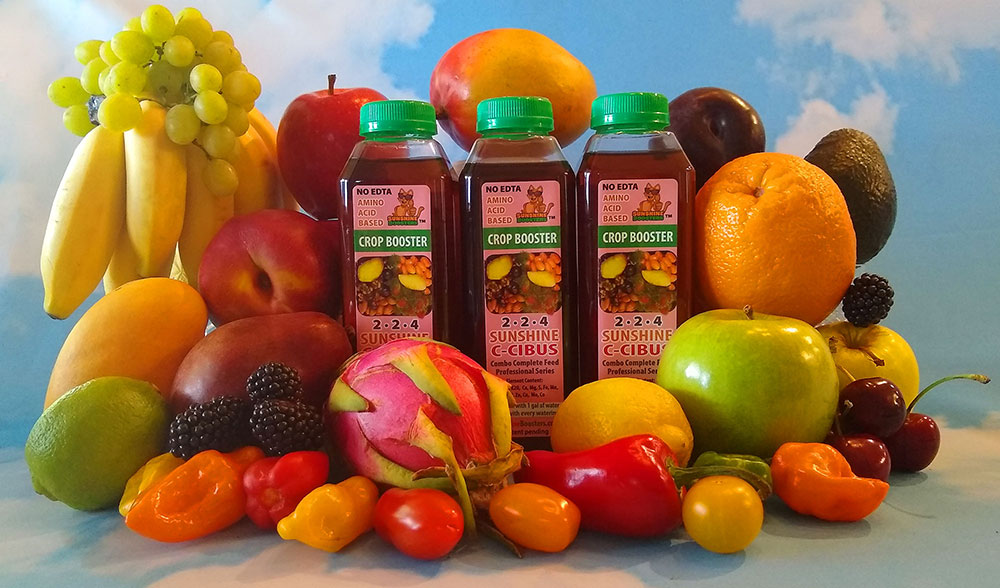
SUNSHINE C-Cibus - Crop Booster, an ultimate natural plant food for fruit and edibles.

Date: 15 Nov 2016

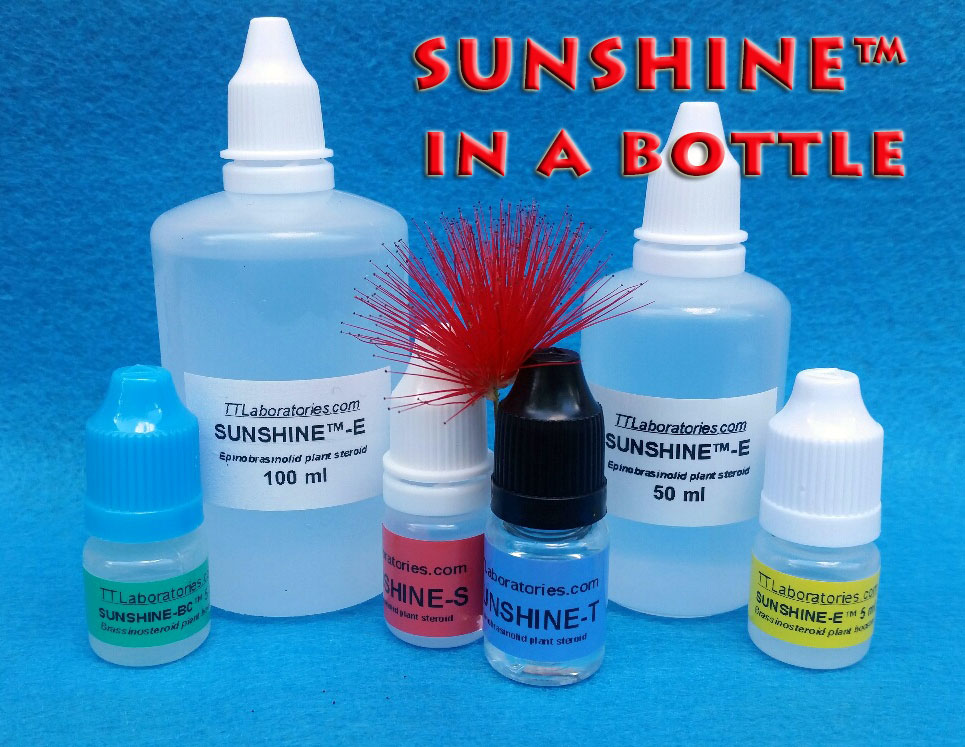
SUNSHINE in a bottle - your help during winter

Q: I have been using your new plant hormone SUNSHINE for plants after shipping, and I must admit it does make a big difference! They recover right away. I order plants online very often, and usually it takes up to a week or more until they start showing new growth. After SUNSHINE treatments, they look fresh within a day or two. My question would be, for improving cold tolerance, what do you recommend? I live in Florida and it is still warm here, should I start spraying my garden now or should I wait until cold spells?

A: SUNSHINE is very effective plant stimulant that helps tropical plants survive different kinds of stress, including cold, heat, drought, low light, etc. At TopTropicals gardens and nursery, we have been using this hormone for many years to protect our plants from unfavorable conditions, and it saved us many rare tender species, and lots of money!
The sooner in Fall you start treatments, the better. Don't wait until cold spell. SUNSHINE works slowly and in very low doses. The mechanism is actually about boosting, building up the plant's own immune system. Low doses once a week, even every other week will work just fine, so you will need very little of the product. For less than $5 you can help expensive rare plants to go through winter painlessly. Recommended application is only 2.5 ml/1 gal of water, to spray every 1-2 weeks throughout winter period.

Start spraying your plants with SUNSHINE now, to help them survive short winter days, build up insect resistance (especially for plants indoors), and what is most important, to remain strong through lower temperatures. These are our suggestions:

- SUNSHINE-T - thermo-protection booster. It is specially formulated for winter protection of tropical plants. To improve cold hardiness even more, spray 1-2 days prior to cold with 5 ml/1 gal solution and after that, continue applications with 2.5 ml/1 gal solution every 10-15 days throughout winter period.
- For large plant collections, and in-ground gardens in subtropical areas, take advantage of very cost effective bulk items 50 ml and 100 ml bottles of SUNSHINE.
- Don't forget that SUNSHINE is only a stimulant, and not a plant food. While regular fertilizer should be avoided during winter months, it is always beneficial to apply microelements through foliar spray. During cooler period, chances of chlorosis increase, because at low temperatures iron is difficult so absorb by roots especially in moist soil, hence iron deficiency! Our new Iron supplement SUNSHINE-Super-Iron microelement booster will help to avoid yellowing leaves and to maintain your plants strong and healthy during slow growth period. Ultra-potent, highly absorbable iron mix, with chelated Iron with DTPA (instead of usual EDTA) that is better soluble in hard water and more effective for chlorosis. This mix contains both EDTA + DTPA chelated iron in higher concentration than regular micro-elements mixes.

See all SUNSHINE booster products in our store. For advanced information on SUNSHINE plant boosters, history of use, formulation, and frequently asked questions, visit our manufacturer's website TTLaboratories.com.

Best plants suitable for containers. Check out our large selection of plants that are easily grown in containers. This week only, 20% off!