Q: When is the best time to repot tropical
plants?
A: Repotting tropical plants is vital for their
overall health and growth. The best time to repot them is during the Spring
through early Summer, when they start active growth.
Start by selecting a well-draining soil mix that consists of equal parts
potting soil, peat moss, and perlite. Gather the necessary supplies,
including a slightly larger pot, the soil mix, and a good fertilizer
Carefully remove the plant from its current pot, trim any damaged
branches, and place it in the new pot with fresh soil mix. Be sure to position the
plant with the growth point slightly above the soil level. Water the plant
thoroughly but avoid overwatering. After repotting, find an appropriate
location with suitable lighting conditions for your plant. Monitor the moisture
levels and water when the top inch of the soil feels dry.
Additionally, apply the appropriate Sunshine Boosters fertilizer
according to the instructions on the packaging. Use Sunshine Boosters fertilizers for specific plant needs (Robusta for foliage, Megaflor for flowering, Ananas for pineapples, etc.). It is safe to apply Sunshine Boosters all
year around. Keep a close eye on the plant for any signs of stress or issues
and adjust your care routine as needed. Help the plant to cope with stress
by spraying with solution of Sunshine Epi.
Enjoy the beauty of your thriving indoor tropical
garden!
NEW VIDEO Interview:
Sunshine Boosters Fertilizer works Magic for Plants
In this video our customer Kareem is sharing his experience with using Sunshine Boosters fertilizers.
How to grow bigger plants faster?
What fertilizer is organic and safe for edibles, pets and insects?
How to make your fruit and veggies juicier, sweeter and more flavorful?
What is the most efficient and economical fertilizer?
How much fertilizer to use, for how long, and when to start?
Find out now!
Stay updated with TopTropicals Videos by subscribing to our channel at
YouTube.com/TopTropicals
and get our latest video news of what is fruiting and blooming!
Q: I live in Deltona, Florida and hoping to find spreading ginger
with interesting foliage to grow in a partially shaded area in my garden
under a group of trees. Any suggestions?
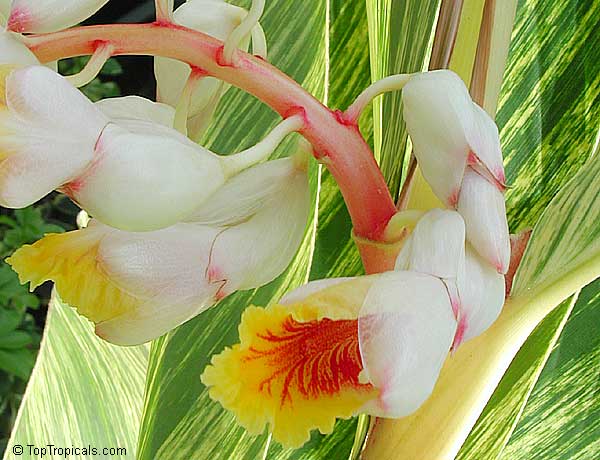
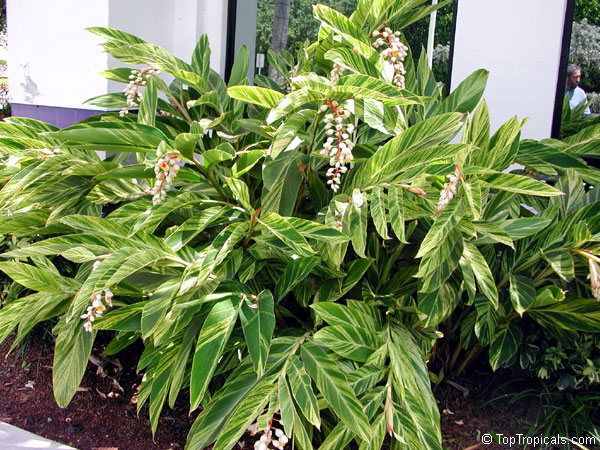
A: Variegated ginger Alpinia zerumbet variegata is a clumping ginger valued for its
beautiful variegated foliage. The dark, green leaves have striking yellow stripes.
This ginger is sought-after, not only for the stunning foliage but also for its
beautiful flowers. The flowers are different from other members of the
ginger family and appear in drooping racemes from the ends of leafy stems rather
than directly from the rhizomes. This ginger is also commonly known as Shell
Ginger because the flowers resemble seashells! They are pink-tinged, fragrant
and appear in summer.
This evergreen perennial grows in upright clumps 3-5 feet tall. You may
prune the plant to control size.
It does not tolerate drought or a hard freeze but can take a few hours
or light frost (goes dormant in such case). In colder areas, rhizomes should
be dug up and stored in a cool room during winter.
This ginger will love a shaded corner in your garden. Plant it in
organically rich, well-drained soil in full sun to part shade. Keep the soil moist
but not soggy, and spread a thick layer of organic mulch around the plant
for moisture retention. There are no serious insect or disease problems to
worry about!
This ginger can be also be grown as a house plant as long as it has
bright light and humid conditions. It will grow to around 3-4 feet tall as a
houseplant.
Q: I live in New Cumberland, West Virginia. I love the smell of
Night-Blooming jasmine. Is it possible to grow it in the northern panhandle of
West Virginia? Do I have to plant it every year or do I keep it in a pot and
take it inside during the winter months?
A: Technically, Night Blooming Jasmine is not a true jasmine
(those plants belong to Oleaceae, or Olive family). Night Blooming Jasmine
belongs to the Solanaceae family, also known as the Nightshade or "Potato" family
of plants. Yes, this sweet fragrant flower called Jasmine for its perfume is
related to potatoes and tomatoes!
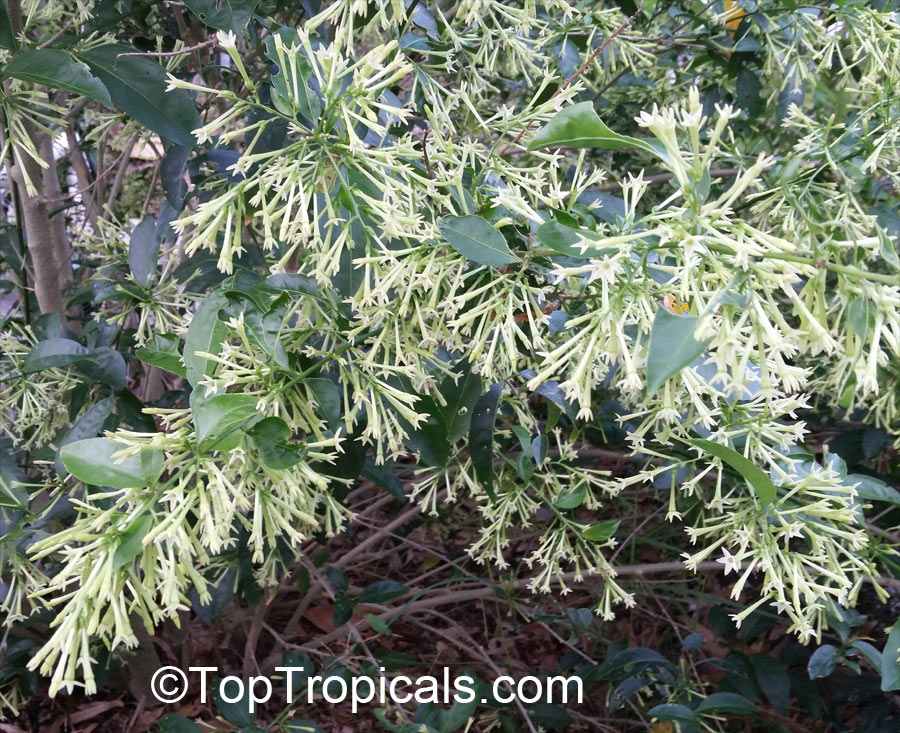
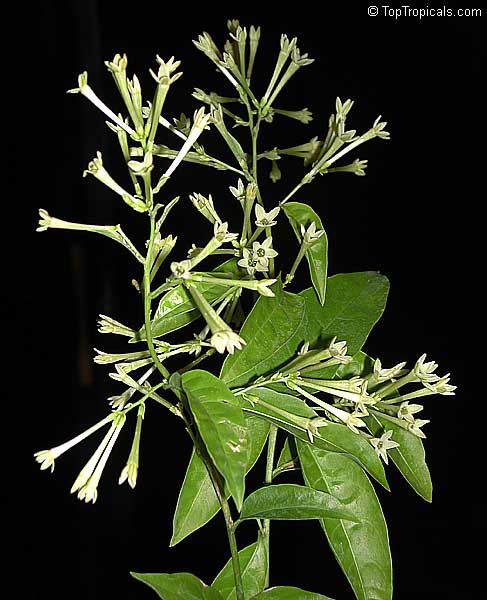
Night Blooming Jasmine - Cestrum nocturnum - is loved by many gardeners for its beautiful
fragrance at night. It is one of the most fragrant tropical evergreen shrubs
available. Cascading clusters of tiny, tubular pale yellow to white flowers open at
night and release a heavenly fragrance throughout the garden, especially on
warm summer evenings. The fragrance is much lighter during the day.
Night Blooming Jasmine is grown year-round in zones 9-11. It is at its
happiest in a sunny to a partially sunny spot in your garden in well-drained soil
but can be grown in cooler climates as a container or greenhouse plant.
You would absolutely be able to enjoy this plant during the warm months
in West Virginia, but it will most certainly not survive outside during the
winter. You will have to bring it inside. Take it outside again only once you
are confident there is no more possibility of frost. When grown indoors, be
sure to give it the sunniest, South facing window in your home. When grown in
a container, you will need to re-pot it every two to three years so it
doesn't become root-bound.
For those who are lucky to live in frost-free areas, in ideal growing
conditions outside, it can easily reach 8 feet with a spread of 5 feet. It has
a lovely informal look that can soften a more manicured garden. Add organic
matter to the planting hole when you plant to enrich the soil around the root
ball. Water well in the summer, but allow them to dry out a bit between
watering in the winter. Plant this Jasmine near pools, porches, doors, windows,
and walkways where its lovely fragrance can be enjoyed. The shrub is also an
excellent plant for privacy hedges and screens. When grown as a hedge, plant 3
feet apart.
Trim lightly after a bloom cycle to shape and then do a hard pruning in
fall or spring to control the size of this plant. Fertilize 3 times a year -
in spring, summer, and autumn - with a good quality granular fertilizer.
Night-blooming jasmine is an excellent mosquito repellent. The powerful
scent of the flowers attracts moths and bats that feed on mosquitoes and
other small insects.
The flowers of the Night Blooming jasmine are widely used in India and
other countries of South Asia for perfumery, medicinal applications and in
religious ceremonies.
Q: I need a tree for a space that is close to a pool and I don't
want a tree that is shedding leaves all year long. I don't want it too big
either. The canary tree caught my attention but I need to know if it is a
tree that is dropping leaves all year. If it does then can you recommend another
tree? I live in Fort Lauderdale.
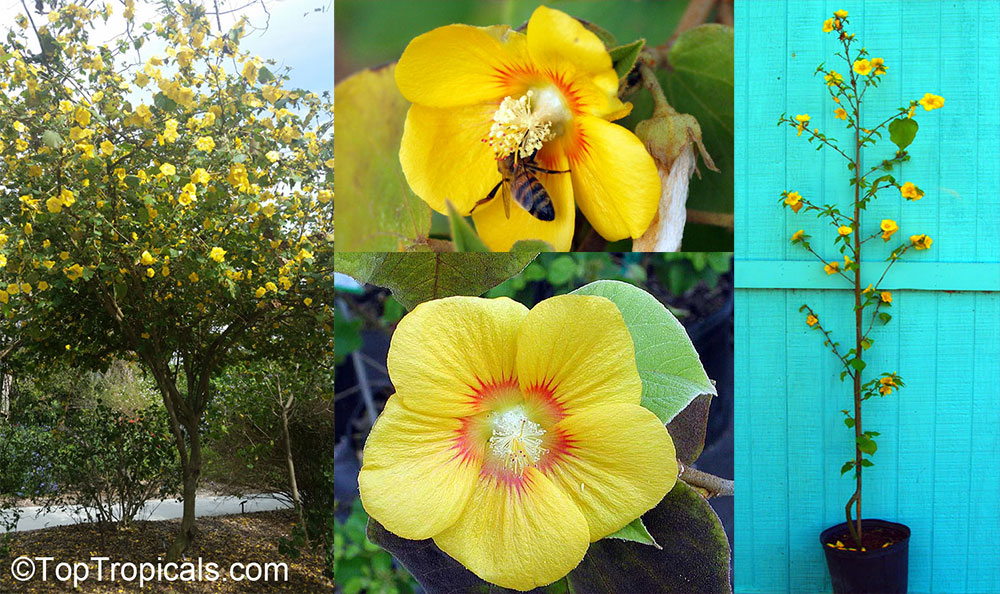
A:Canary tree is a good choice. It is free-flowering pretty little tree.
It is evergreen and doesn't shed leaves too much especially in your area with
mild winter. However, keep in mind that every plant sheds leaves. Even
evergreen trees replace old leaves with new ones. Some trees more than others.
Flowers also have a seasonal drop.
You may check the full list of compact flowering trees suitable for small spaces.
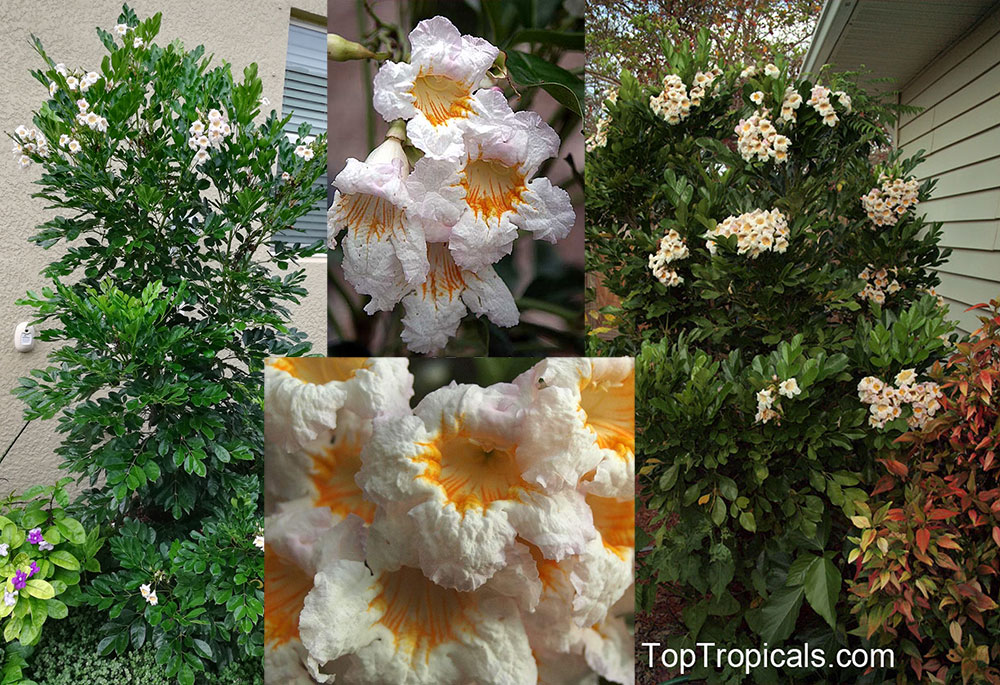
Another great choice is a Dwarf Tree Jasmine, Radermachera - also a free-flowering tree with rose-fragrant flowers
and large, architectural leaves that hardly ever drop. It has very dense yet
compact columnar shape, and is one of the greatest trees for smaller
landscapes.