Date: 15 Dec 2025
🌿 Bring the Jungle Inside: Winter Survival Guide. Part 3. Watering and Humidity. ❄️
💦 Water, Humidity, and the Small Things That Decide Who Makes It to Spring

Sunshine:"Great. I am excellent at not watering."
Smokey:"You have been practicing not doing any work your whole life."
In Part 1 (Winter Survival Guide: Temperature) we covered the foundation: light, placement, and acclimation. That is the survival layer.
Date: 16 May 2024
When Bigger means Better
Everybody loves shopping online nowadays, and plants are no exception. Buying plants by mail order is not uncommon anymore; it only takes one click, and luckily, there are many sources - from big shopping malls like Amazon to small backyard nurseries that sell their seedlings on eBay or Facebook - all delivered to your door. But plants are alive... So when doing your online plant shopping, you must ensure that you fully enjoy your experience and are happy with a healthy plant that a) doesn't die; b) recovers quickly; and c) starts growing fast, so you can see flowers and fruit as soon as possible.
The rule of thumb for shipping plants: bigger plants undergo shipping better, experience less stress, less leaf drop, and recover quicker than plants with smaller root systems. So when it comes to buying plants online, the bigger, the better. Unfortunately, many mail-order plant sources may sell you a tiny twig that has very few chances of surviving. Shipping is very expensive today, so shipping a bigger size plant may cost more than the plant itself.
Below is a piece of advice on how to make the best plant selection for your garden...
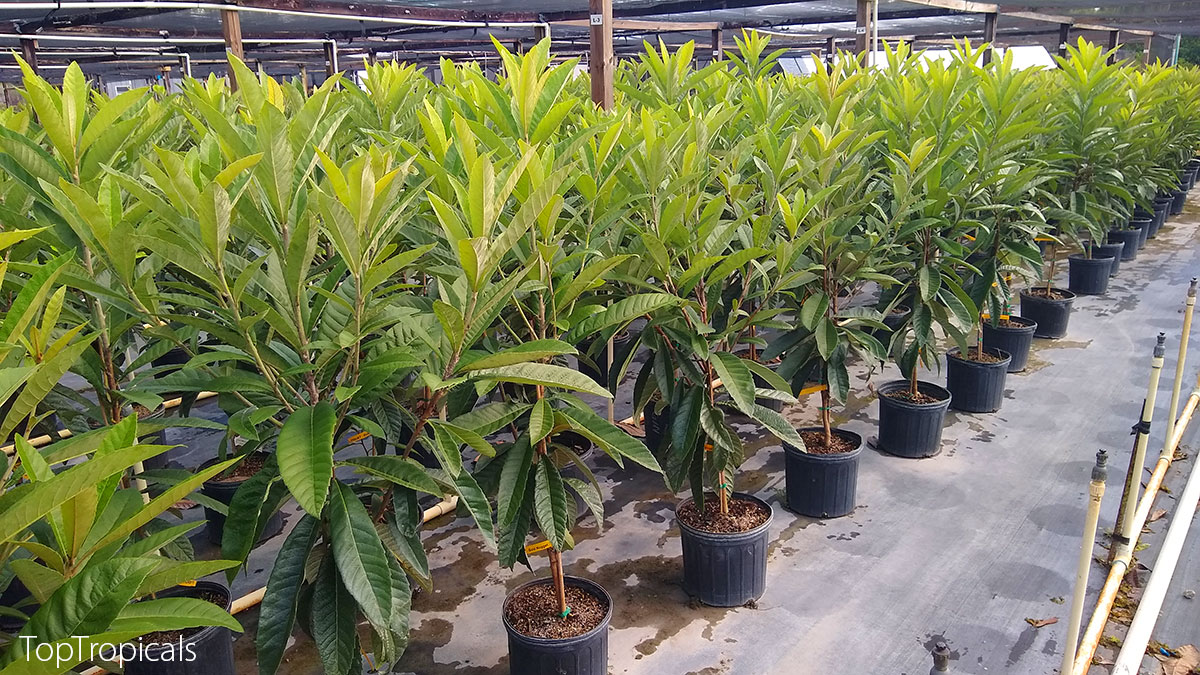
Photo above: Loquat trees in 3 gal containers.
5 important rules on how to buy trees online
1. Find a source with bigger plants. Check reviews, ask friends
for recommendations, inquire from the company about the size of their plants
and how they pack their plants for shipping.
TopTropicals offers well-established, strong plants with developed root
system, in container sizes 1, 3, 7, 15 gallon, directly from a tropical
Florida growing farm. Our unique plant-packing techniques are state of the art!
2. Price not always reflects the size and quality of the plant
TopTropicals offers many deals, discounts and sales, while still
providing the biggest and strongest plants grown in real tropical conditions.
3. Most fruit trees must be grafted to produce good fruit. Make
sure you are not purchasing a seedling when it comes to Mango, Avocado,
Peaches and some other trees with named varieties that don't come true to seed.
TopTropicals offers only grafted - Mango,
Avocado and a large number of other tropical cultivars.
4. Pick up when possible from the nursery your ordered from, or
get a delivery, instead of shipping the plants. A drive to the nursery will save you more time and money in the
future, plus you can hand-pick the biggest and healthiest specimens.
TopTropicals is open 7 days a week for your convenience. Visit our Ft Myers Garden Center or Sebring Farm to select the biggest plants.
5. Take advantage of X-Large size plant material if you live
outside the tropical zone and are trying to zone-push your tropical garden.
Bigger plants will establish faster and have more chances to survive cold winters.
Again, it will save you money in a long run (although bigger plants may be
more expensive, but their survival rate is much higher when it comes to cold
nights).
TopTropicals offers X-Large flowering and fruiting trees (7-15-25
gallons), and most of the varieties you see in our online
store can be custom-ordered in big sizes. Delivery and installation
available.
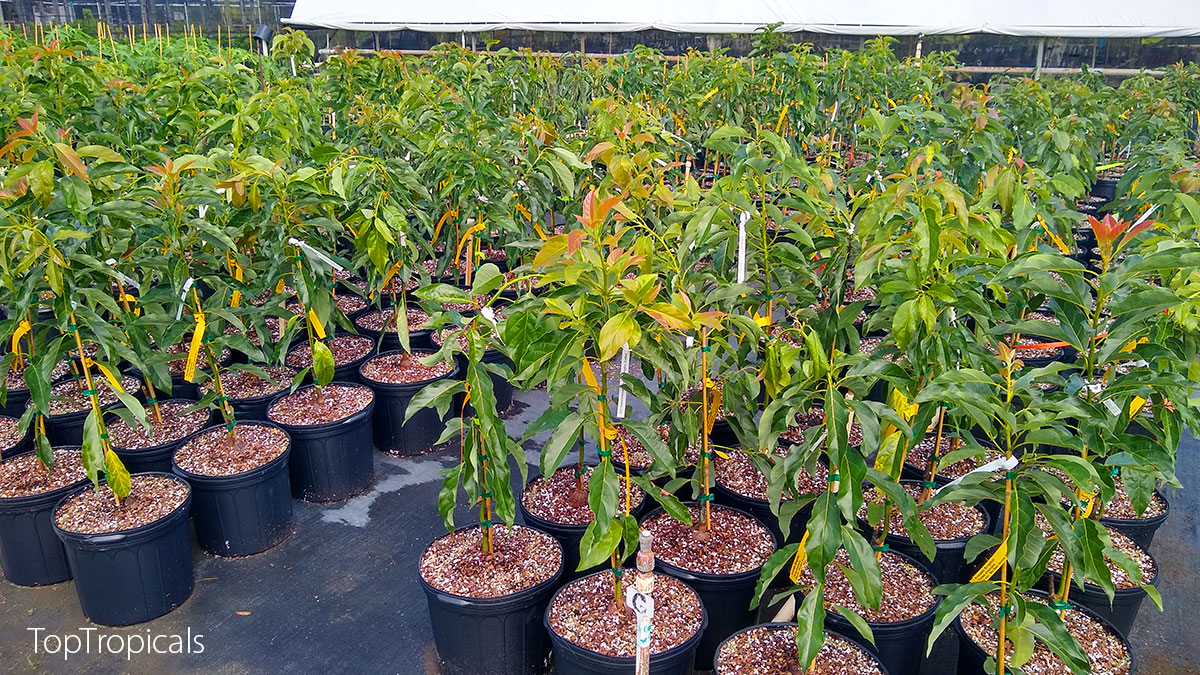
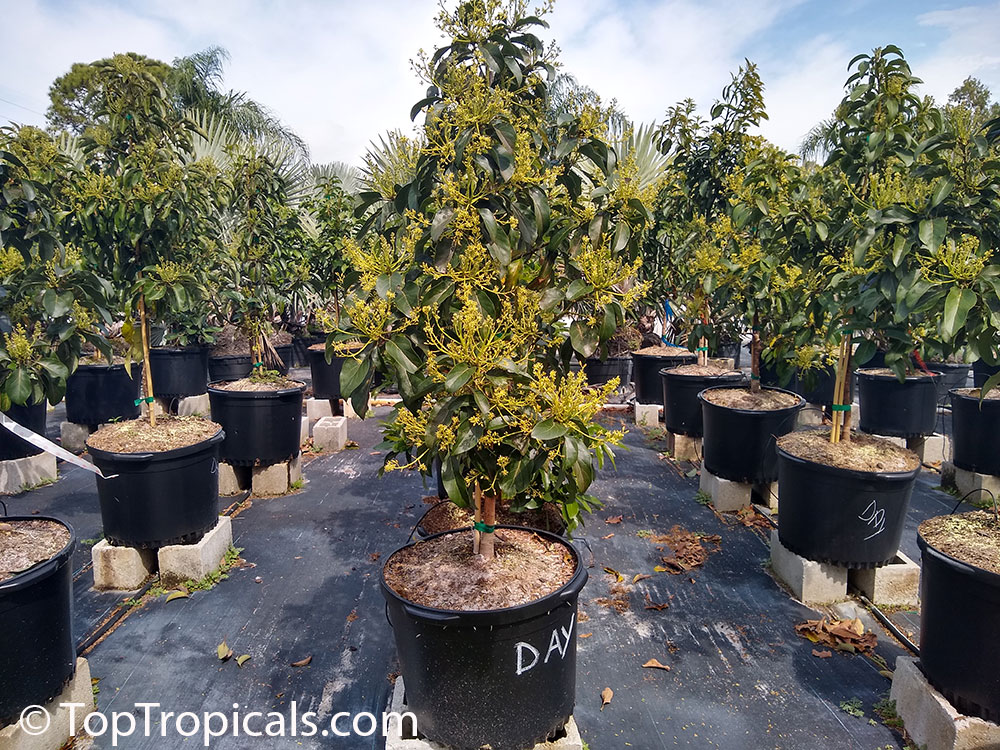
Photo above: Avocado trees in 7 gal containers.
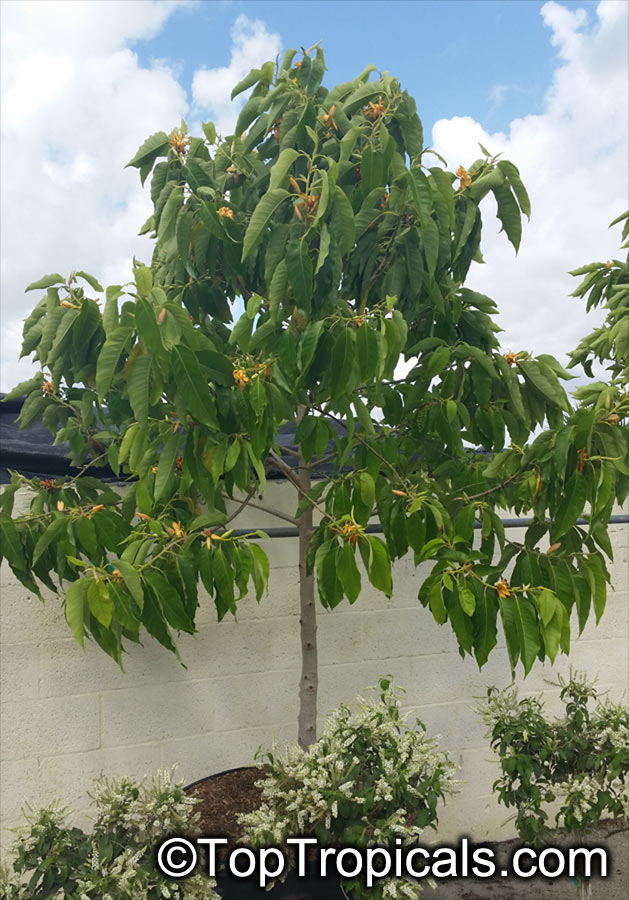
Photo above: Magnolia champaca
Date: 15 Jan 2026
When the Black Bat Lily decides to bloom
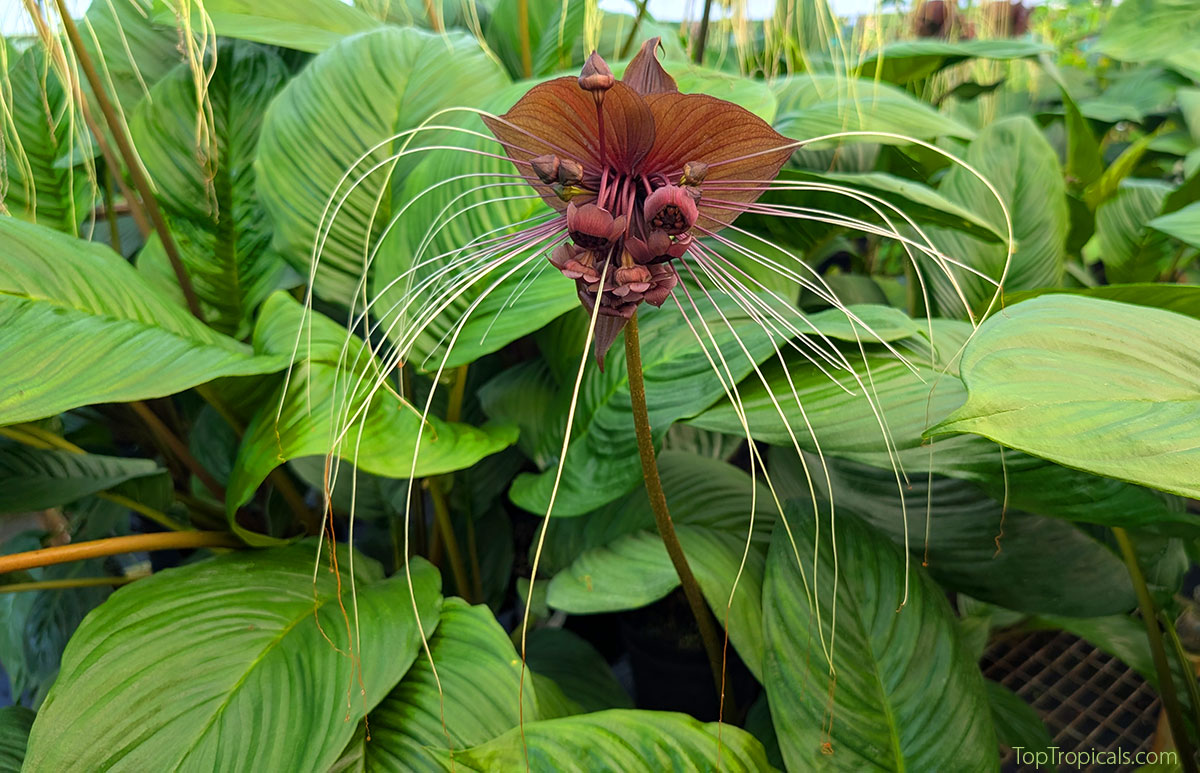
Every so often a plant blooms and the whole greenhouse seems to slow down.
That is what happened this week with the Black Bat Lily, Tacca chantrieri. We have grown Taccas for years, but when the black ones open properly, it still feels special. The flowers are dark and quiet, almost unreal up close. They do not shout for attention. They make you lean in.
Right now, we have a lot of them blooming at the same time. If you have never seen one in person, photos only get you part of the way there. The wings are darker than you expect, and the whiskers seem to go on forever. People walk into the greenhouse, stop, stare, and usually ask the same question: "Is that real?" - Yes. It is.
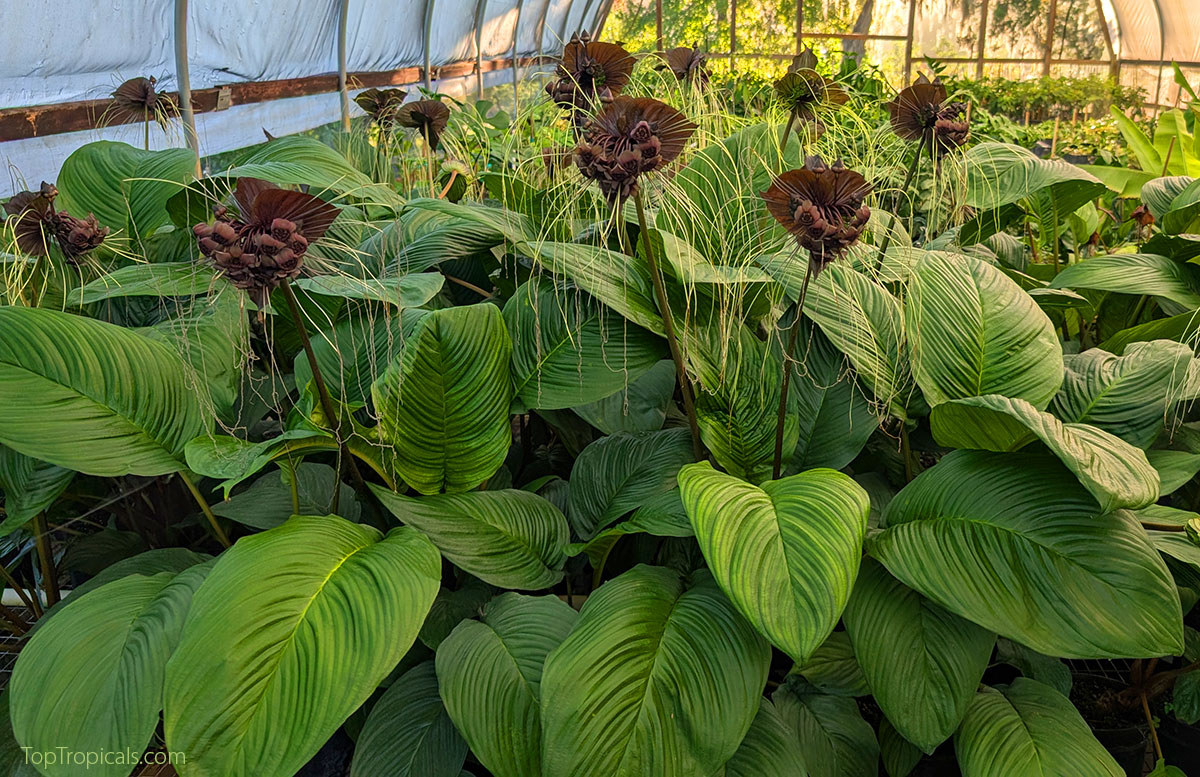
A quick honest note, because this matters. The blooms themselves are delicate and may not travel well. That is just the nature of this plant. The plants, however, are strong, well established. With the right conditions, they bloom again. This is not a one-time trick.
Black Tacca is not a beginner houseplant, but it is also not impossible. It likes filtered light, steady warmth, and humidity. It does especially well in a greenhouse or a bright indoor spot where you already keep plants that enjoy moisture. It is the kind of plant you keep close, not one you forget in the corner.
We are offering them now simply because they are ready and looking their best. If you have been waiting for one, this is a good moment.
You can see the Black Bat Lily here: https://toptropicals.com/store/item/2345.htm
Just wanted to share something we are enjoying in the greenhouse right now. Some plants come and go. Some stay with you.
Tacca (Bat Lily) FAQ
What is Tacca?
Tacca, also known as Bat Lily or Devil Flower, is a tropical plant grown for its unusual bat-shaped flowers with long whisker-like filaments. The most popular species is Tacca chantrieri, the Black Bat Lily.
Is Tacca hard to grow?
Tacca is not a beginner plant, but it is not impossible. It does best with warmth, humidity, and filtered light. Gardeners who already grow orchids, calatheas, or other humidity-loving plants usually do well with Tacca.
Does Tacca need a greenhouse?
A greenhouse is ideal, but not required. Tacca can be grown indoors in a bright spot with indirect light and good humidity, such as near a humidifier or in a bright bathroom with a window or skylight.
Will my Tacca arrive in bloom?
Plants may be blooming in the greenhouse, but flowers are often removed before shipping because they are delicate and do not travel well. The plants are well established and capable of blooming again with proper care.
How often does Tacca bloom?
Tacca does not bloom constantly. It may take time to establish before flowering, but once settled, it can bloom seasonally and may produce multiple flowers in warm, humid conditions.
Does Tacca grow from a bulb?
Tacca grows from a rhizome, not a bulb. The rhizome stores energy and allows the plant to regrow and bloom again.
Why does Tacca have long whiskers?
The long filaments are thought to help attract pollinators such as flies by mimicking the look of decaying organic matter. While unusual, this is part of the plant's natural pollination strategy.
✍️ More about growing Tacca🛒 Get your own Tacca plant
🎥Watch our videos about Tacca
Date: 1 Feb 2026
Valentines plants from around the world that symbolize love, connection, and appreciation
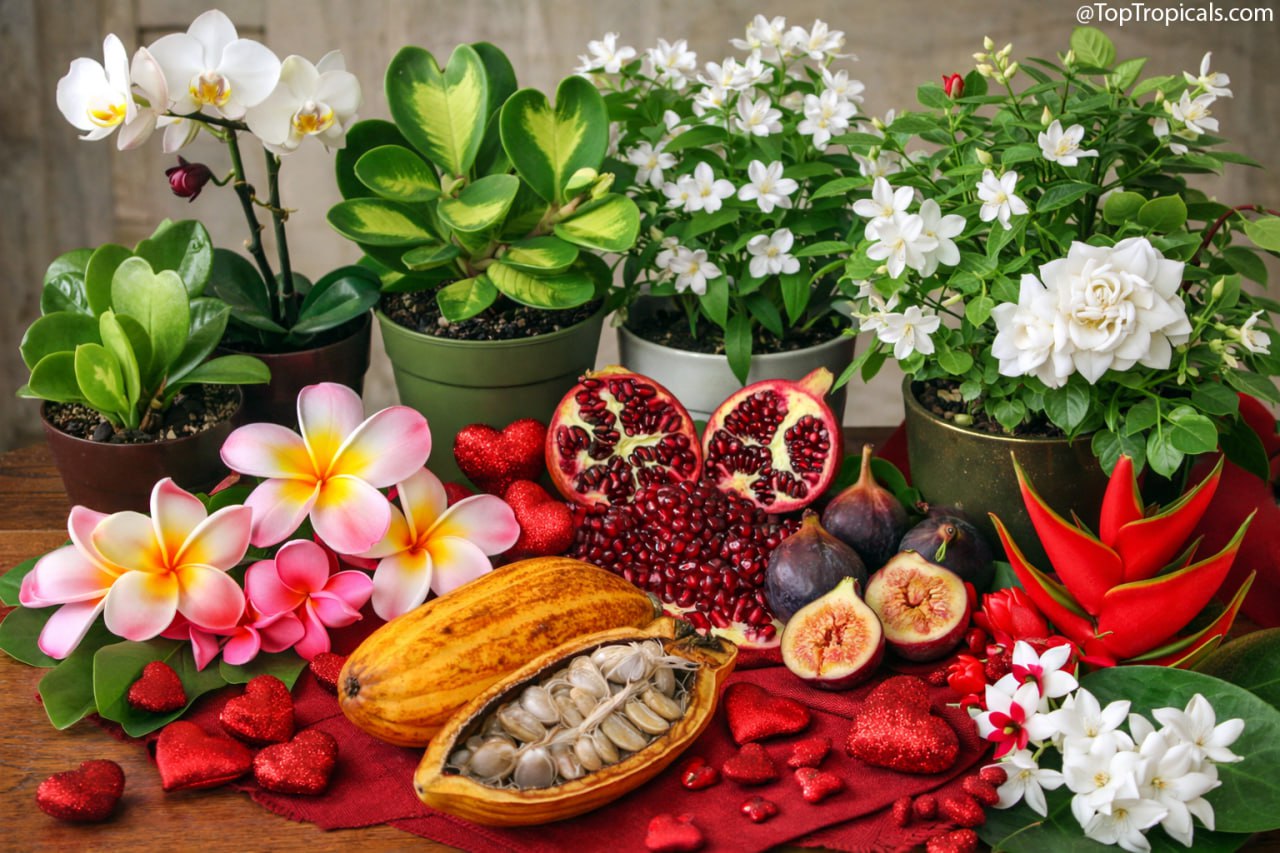
Valentines plants that symbolize love: Plumeria, Orchids, Gardenias, Heliconia, Stephanotis, Sweetheart Hoya, Cacao, Figs, Pomegranate
💕 Valentine’s plants from around the world that symbolize love, connection, and appreciation
- 💘 When we think of Valentine’s plants, roses usually steal the spotlight. But in many parts of the world, love has long been expressed through tropical plants - not only through flowers, but also through scent, ritual, shared food, and sensory experience.
- 💘 Across cultures, tropical plants have symbolized romance, friendship, devotion, fertility, desire, and emotional connection. Some speak through heart-shaped leaves and fragrant blooms. Others through taste, warmth, and the way they bring people together.
- 💘 Love beyond flowers? Together, these tropical plants show that love is expressed in many ways - through beauty, scent, taste, ritual, warmth, and shared moments. Valentine’s traditions around the world remind us that love is not only something we see, but something we experience with all our senses.
- 💘 In our upcoming collection we will explore Valentine’s plants from the tropics, grouped by how they express love:
- 💖 1. Plants of romance, affection, and emotional connection
- 💖 2. Plants of friendship, appreciation, and shared connection
- 💖 3. Plants of love, desire, and the senses
- 👉 Stay tuned, coming up next:
🛒 Explore gift plants
🎁 Get a Gift Card
📚 Learn more:
- ✦ Valentines day Best Gift Plant Ideas
- ✦ Eight favorite plants of romance, affection, and emotional connection
- ✦ Four popular plants of friendship, appreciation, and shared connection
- ✦ Top nine plants of love, desire, and the senses: aphrodisiacs and sensory connections
#Shade_Garden #Container_Garden
🟢 Join 👉 TopTropicals
Date: 26 Mar 2026
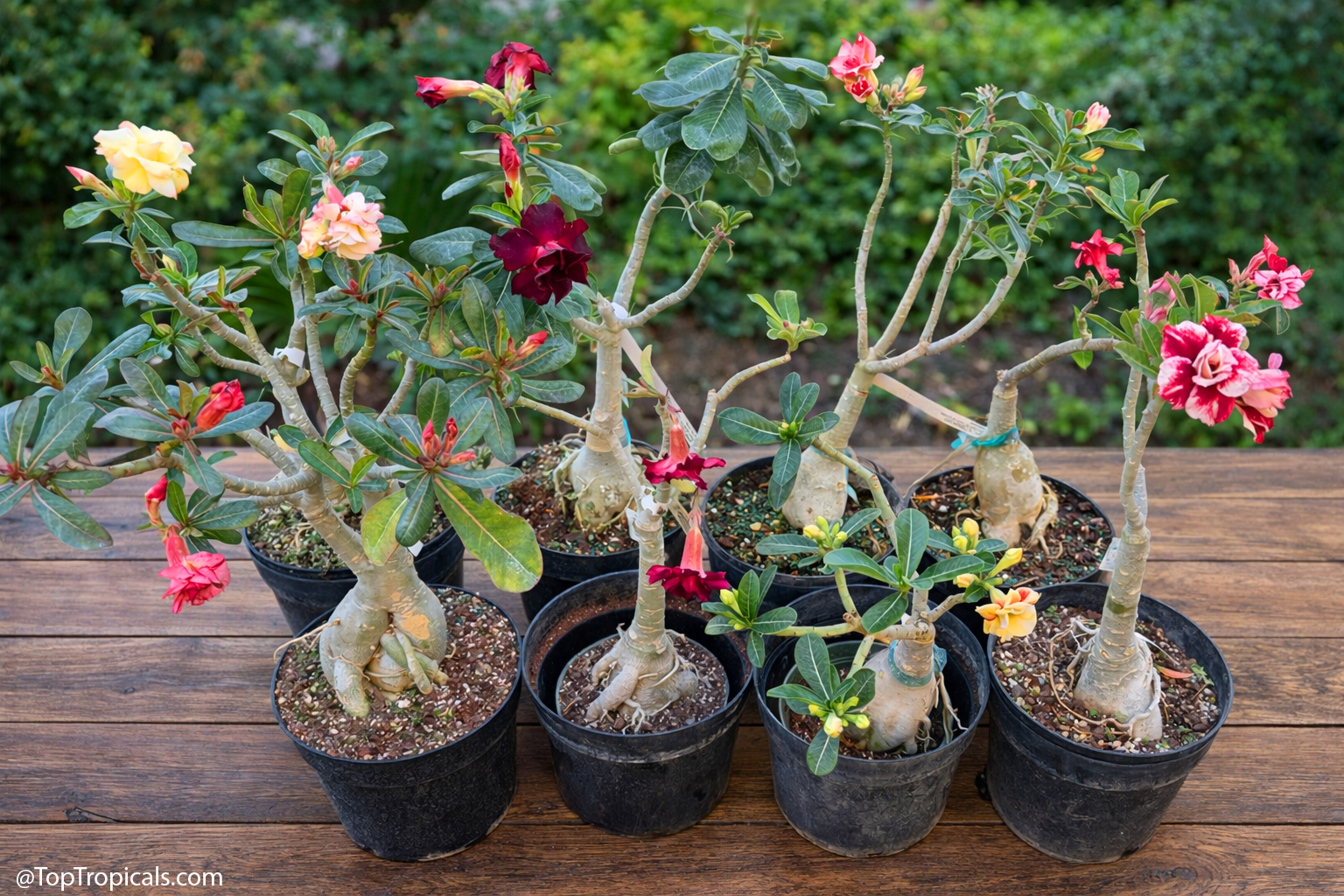
🌸 How to Grow Adeniums Without Overthinking It
By Tatiana Anderson, Horticulture Expert at Top Tropicals with Smokey & Sunshine help

✅ Simple rules that actually make them bloom and grow well
- Light - The more light, the better the growth and flowering. Full sun is ideal, but in very hot climates, filtered bright light keeps plants looking healthier.
- Water - Water well, then let soil dry on the surface. Sitting in wet soil damages roots, but letting plants dry out too often can push them into early dormancy.
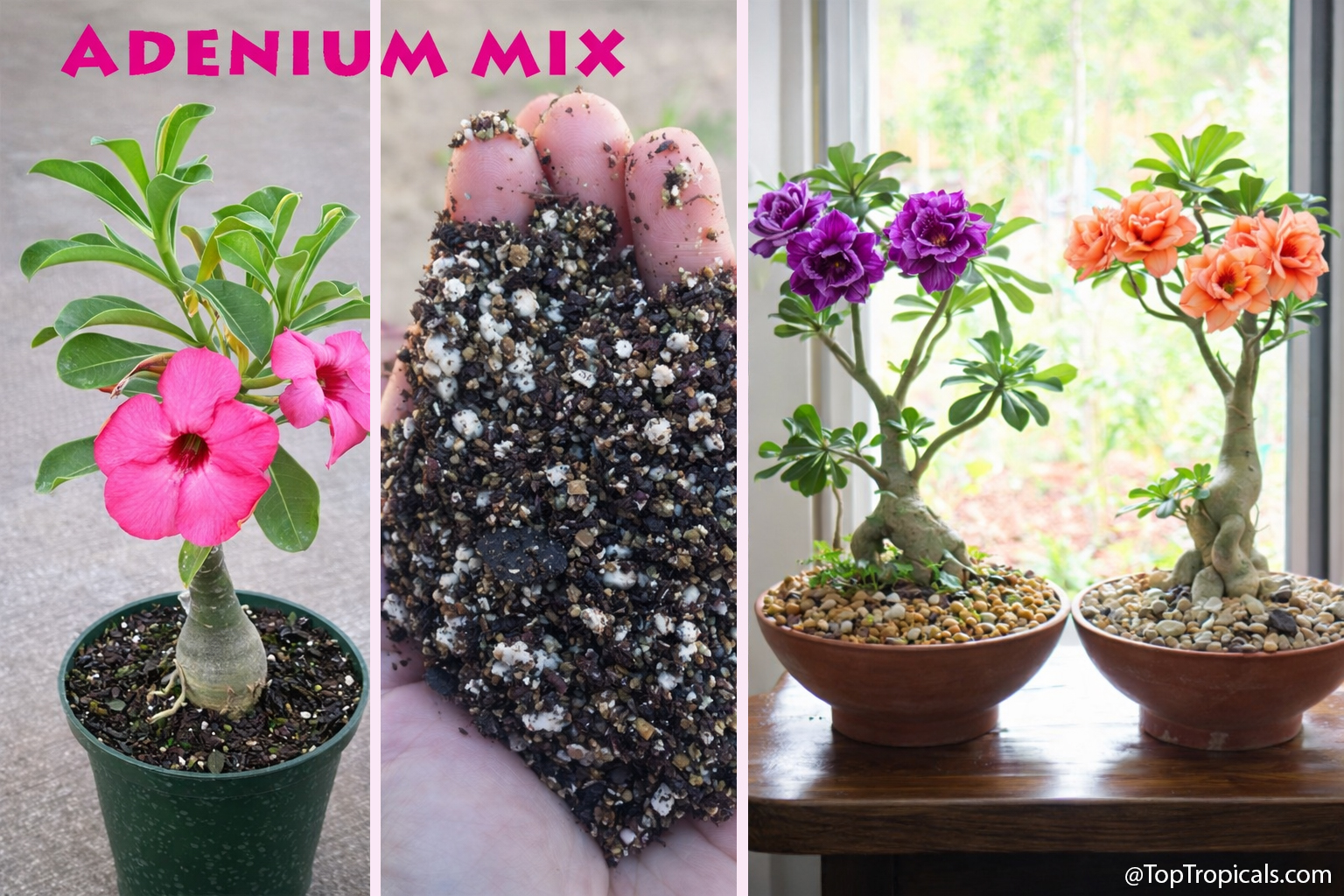
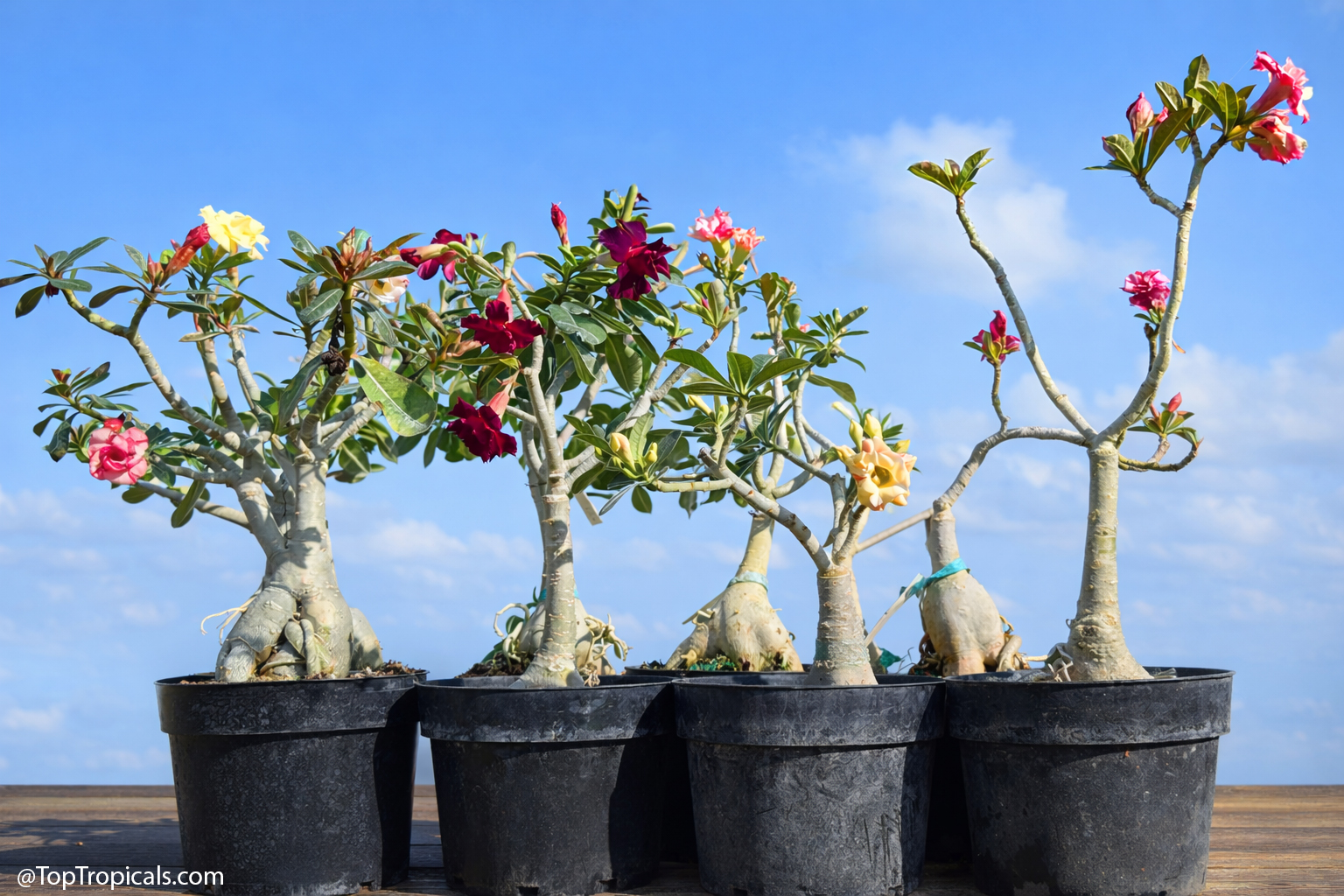
- Pot and shaping - Use a shallow pot with excellent drainage. To develop a sculptural caudex, lift the plant slightly each time you repot and remove some of the top soil so upper roots become exposed. Over time, this creates a thicker, more prominent base.
- Soil - Use a fast-draining Adenium potting Mix.
- Cold hardiness - Adeniums are tropical and do not tolerate frost. Keep above 40 F. Brief drops to mid 30s may be tolerated if dry, but cold and wet conditions can damage or kill the plant. In cooler climates, bring indoors or protect during cold nights.
- Indoor winter care - Move plants indoors before cold nights. Place in the brightest spot possible, ideally a south-facing window. Or use additional lighting. Water very lightly and less often, as growth slows. Do not fertilize during dormancy. Some leaf drop is normal in winter.
- Feeding - Adeniums respond best to liquid fertilizer. We apply Sunshine Megaflor Booster with each watering throughout the year. During dormancy, watering is reduced, so fertilizer use decreases accordingly. Consistent, light feeding promotes strong roots, a thicker caudex, and improved flowering.
- Pruning - For multiple blooms, regular pruning is essential. After flowering, cut back long or leggy growth to stimulate branching. Each new branch can produce more buds, leading to a much fuller bloom in the next cycle.

✍️ Learn more about Adeniums from our Blog
🎥 Watch videos of Adenium Rainbow
🛒 Explore Exotic Adenium varieties