Garden Blog - Top Tropicals

Date: 27 Feb 2020

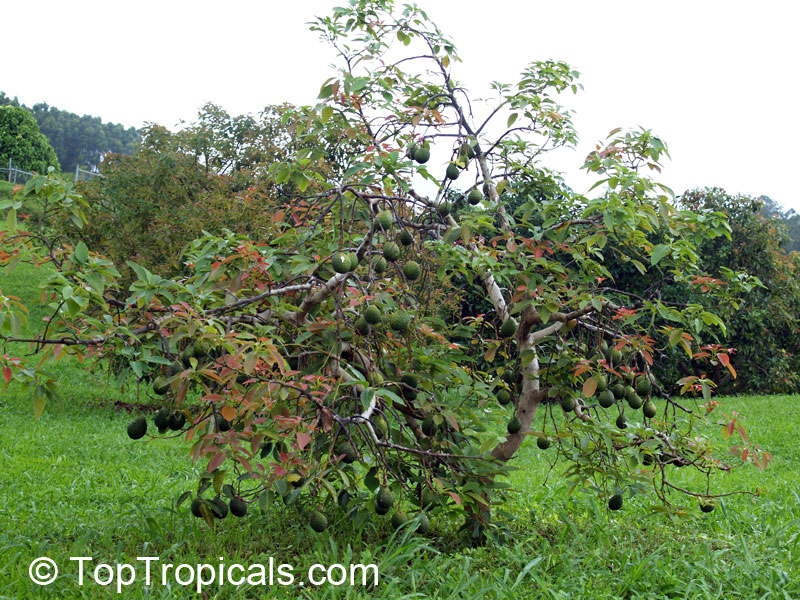
7 secrets of a Happy Avocado Tree
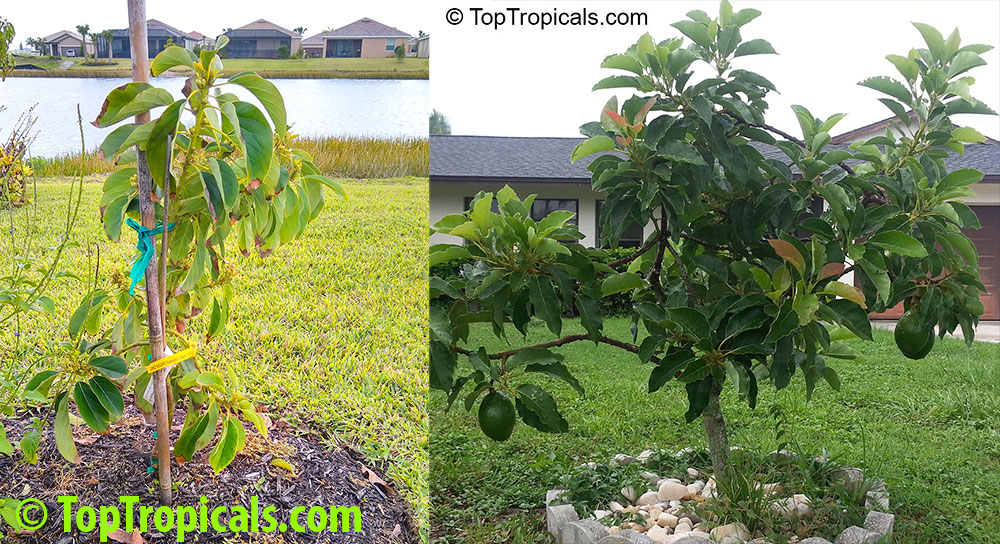
Q: I purchased an avocado tree from local garden centers three times but every time it dies on me. My neighbor has a nice tree in his yard and it grows beautifuly. I just purchased one online from you and I need to know what I was doing wrong? Are there any secrets how to make an Avocado tree happy? I have a big garden and several mango trees, but no luck with Avocado...

A: Avocado tree is famous for being such a pain to establish. But once it starts growing, it's growing! We will share a few simple tricks how to make it right.

1. Plant high and provide good drainage. Wet feet is number one reason for failing an avocado tree. It doesn't like wet soil and won't tolerate soggy conditions. Plant it in the highest spot of your yard and slightly on a "hill" (3-4"higher than the surrounding ground).
DO NOT plant Avocado tree in low spots or wet spots of your yard. Save those spots for Cannas or Black Sapote or even a Mango if you want a fruit tree there.
2. Use quality soil. Use only well-drained soil with high content of organic matter. You may add compost to existing sandy soil, or add some professional potting mix that contains pine bark and perlite. Remove rocks from the hole if you see any while digging. Dig a big hole and fill it with a good soil; compact the soil in the hole very well before setting the root ball. Reminder: plant the tree high!
3. Water regularly. After planting an Avocado tree in a nice high spot with a good drainage, start watering it... daily! Avocado likes water, although it doesn't like wet feet! Once you figure out this combination, you've got the recipe of success. Water by hand daily for the first week after planting, then twice a week for couple weeks, then once you notice new growth - you may rely on sprinklers, but keep watching the tree and don't let the soil over-dry. It must be slightly moist, but not soggy.
4. Fertilize. For such finicky tree, we suggest mild formulas of fertilizers. Dry fertilizers may burn roots, especially of a young tree. Even smart-release granulated fertilizers should be used very carefully. The best way to feed your young avocado tree - get a complete set of Sunshine Boosters Pro system. It has all necessary elements for all stages of plant development and never burns the roots. Sunshine Boosters Pro can be used with every watering - no need to guess how much and when. Besides, it is a natural fertilizer based on amino acids - exactly what you want to use on your fruit trees and other edibles!
5. Boost immune system of the tree. Apply Sunshine Epi plant hormone every 2 weeks as a foliar spray to boost immune system and metabolism of the tree and protect it from diseases. Epi makes plants (especially young plants) grow twice faster! It also enhances effect of fertilizers by increasing plant metabolism.
6. Do not prune until you see significant growth. The tree is small and can use as many leaves and branches as possible for photosynthesis and healthy metabolism. We suggest to avoid pruning for at least the first year. On the second year your tree most likely will be covered with flowers (assuming you followed fertilizer program). Let it go through the blooming stage and setting fruit; prune in Fall after fruiting is over.
7. Keep number of fruit to minimum for the first crop. Don't let the small tree exhaust itself. Keep just 2-3 fruit to develop. The next year, no need to control fruit quantity, the tree will develop as many as it can support.
P.S. If you got the tree from a mail-order, remember to establish it in a pot before planting in the ground; move gradually from shade to sun. Follow planting instructions.

Learn more about Sunshine Nutrition System - a Natural solution for your garden.

Date: 4 Jun 2019

Plants for South Texas and other hot states

Q: Pretty much adore last newsletter. Haven't been buying because our weather here in deep south Texas is so bad it is stunting and killing even the Tamaulipan Scrub! Do you have a cure for that? :) I have every expectation the new grafted Plumeria I purchased from you last year will bloom soon. One of my favorite plants. Thanks again and keep up the good works.

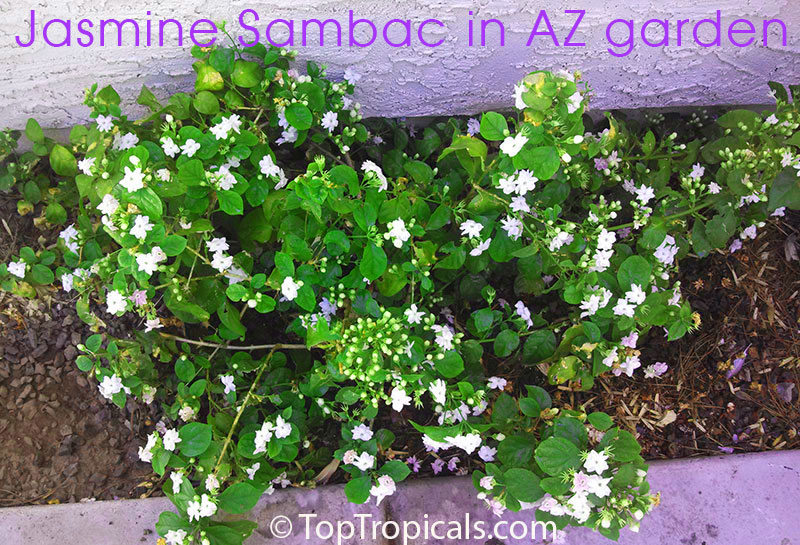
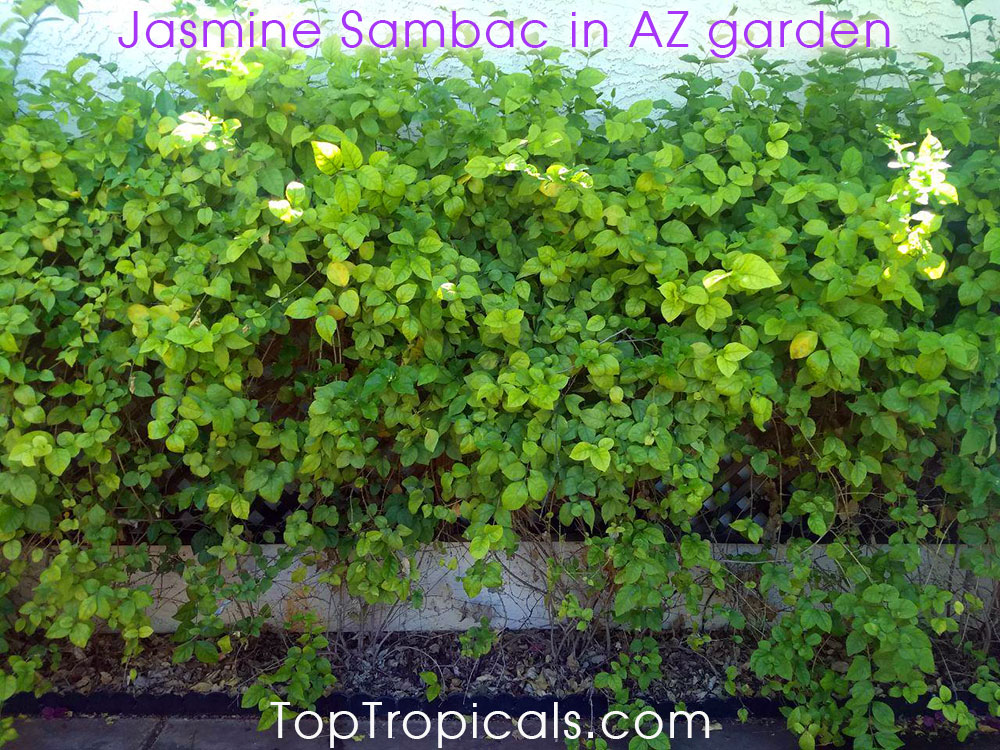
A: Yes, there is a "cure" - using biostimulants that improve drought- and heat- resistance (SUNSHINE boosters), plus the right plant selection. In fact, there is a large number of tropical rare plants that can be successfully grown in hot climates like yours. One of our partners lives in hot and dry Arizona area and has an amazing tropical garden that includes many fruit trees (Mango, Persimmons, Pomegranates, Loquats, etc). Here you can see a few pics from his garden.
Your choice is absolutely right about plumerias. Other easy plants would be Desert roses - Adeniums, and Fancy Euphorbia millii - all these come in so many varieties of colors and bloom throughout most of the year. Our special recommendations for you would be also:

Bougainvillea Dwarf Pixie
Jasmine sambac
Calliandra selloi Pink Lilian
Dracaena marginata Tricolor - Colorama, Money Tree
Hamelia patens Lime Sizzler - Variegated Fire Bush
Jatropha berlandieri - Buddah Belly
Pedilanthus tithymaloides - Devils Backbone
Trachelospermum asiaticum Mandaianum - Dwarf Confederate Jasmine

See full list of more plants that are suitable for hot and dry landscapes.

Apply fertilizers, miscroelements, and plant stimulants for improving heat tolerance

Date: 10 Apr 2016

Growing by the sea

Q: Please recommend me some interesting plants that can grow on my waterfront property and can withstand some salt wind. All my neighbors have Sea Grape trees and bougainvilleas, and I want something different and special. I would love to have some colorful or fragrant flowers, or fruit around my paradise home.

Q: Considering your neighbors successfully grow Sea Grape (Coccoloba), and Bougainvilleas, you have a mild, frost free climate. There is a number of spectacular and useful tropical plants that are salt tolerant. Orchid Trees - Bauhinias, Poincettia - Delonix, and Geiger trees - Cordias, are very showy flowering trees. For large size bushes, try Dwarf Poincianas - Caesalpinias, and Scarlet-Coral Erythrinas. Frangipani - Plumeria, come in different colors and bring you perfume fragrance from Hawaii. And of course, Desert Roses - Adeniums, can be grown and showy specimens anywhere in your yard, both in the ground or as potted bonsai.

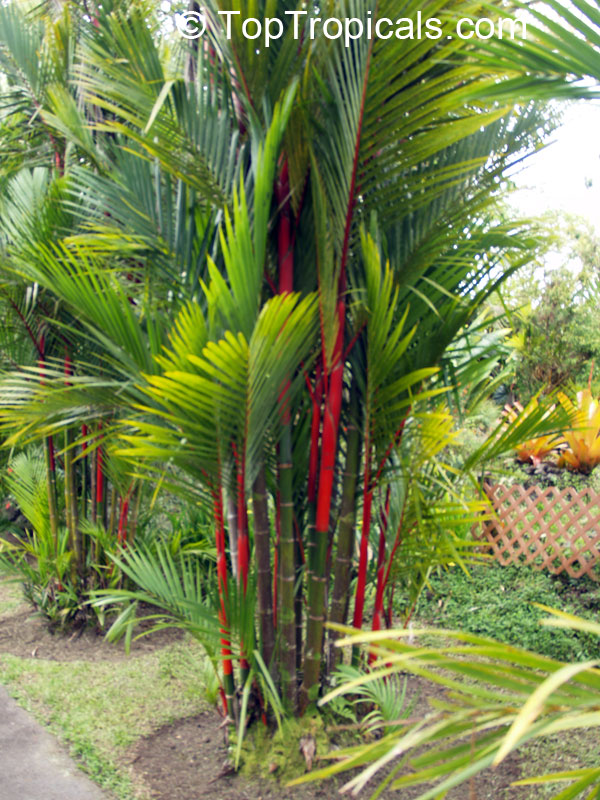
Most palms, especially popular Coconut Palm, source of tasty fruit and drink, are highly tolerant to salt breeze. If you are looking for something that nobody has, Lipstick palm, or Sealing wax palm - Cyrtostachys lakka, is definitely the most spectacular palm you can find. It is a stunning feather palm that develops a brilliantly red trunk. Palm is originally from Malaysia, but has been introduced to Costa Rica and other tropical areas of the world. Sealing Wax Palm seeds are very slow to germinate, up to a year, and large specimens are very rare and hard to find even in rare tropical plant nurseries. This palm will require a good overhead light, and constant warmth (above temperature 55F). It is definitely worth an effort to grow this beauty.

You may add more tropical accents to your landscape by the sea with many varieties of showy heliconias.

See full list of salt tolerant trees.

Date: 9 Jul 2024

How to grow Orchid Trees in pots

Orchid Trees in pots

🌸 How to grow Orchid Trees in pots

Everyone loves beautiful Orchid trees with butterfly-like leaves and colorful orchid-like flowers. They are widely used in Southern landscapes. But what if you don't have a room in your garden for another tree? Or what if it gets too cold in winter for a tropical Orchid tree? You can grow it in a pot!

📝 This is how to n enjoy the stunning flowers and foliage of Bauhinia right on your patio or balcony:
  • 💠 Choose the right variety. Some species suitable for containers:
  • B. galpinii, B. madagascariensis, B. monandra, B. alba (candida), B. acuminata, B. bidentata, B. blakeana, B. grandidieri and many others.
  • 💠 Choose the right pot: Select a large, sturdy pot with good drainage holes. Bauhinia trees have a vigorous root system
  • 💠 Use a well-draining potting mix. We recommend a professional soilless mix: Sunshine Abundance.
  • 💠 Sunny location: Position the pot in a location that receives full sun to partial shade. Bauhinia plants thrive in warm, sunny conditions.
  • 💠 Watering: Keep the soil slightly moist but not waterlogged. Water the plant when the top inch of soil feels dry to the touch.
  • 💠 Fertilizing: For the most profuse flowering like in the video, feed the Bauhinia with liquid Sunshine Boosters Megaflor year around, it's safe with every watering.
  • 💠 Pruning: Prune the plant to maintain its shape and encourage bushier growth.
  • 💠 Winter Care: If you live in a region with cold winters, bring the pot indoors or to a sheltered location to protect the plant from frost.


📸 Bauhinia monandra - Napoleons Plume Orchid Tree, starts flowering when only 2 ft tall and grows well in containers.

📚 Earlier posts on Bauhinias: 1 2 3
Bauhinias: trees with Orchid Flowers and Butterfly Wings

🛒 Shop Orchid Trees

#Container_Garden #How_to

🏵 TopTropicals

Date: 6 Aug 2024

What orchid tree has stunning red and yellow flowers year around?

Bauhinia madagascariensis - Red Butterfly Orchid Tree

💋 What orchid tree has stunning red and yellow flowers year around? Madagascar Orchid Tree.


We showed you in earlier post one showy red Orchid tree - Bauhinia galpinii; but this one is even more spectacular!
  • 🔴 Bauhinia madagascariensis - Red Butterfly Orchid Tree is a very rare plant in cultivation and one of the most spectacular Bauhinia. Rare, collectible species.
  • 🔴 Flowers and extremely showy, look like scarlet butterflies with bright yellow stripes at the base of each petal.
  • 🔴 It grows into a small tree or tall bush. Fast growing. Attracts butterflies.
  • 🔴 Plant in in full sun to get the most of its flowering season - this one literally blooms year around!


📚 More posts about Bauhinias:

🛒 Order rare Bauhinia madagascariensis

#Trees #Butterfly_Plants

🔴 Join 👉 TopTropicals