Garden Blog - Top Tropicals

Date: 27 Jul 2024

Five most exotic avocado varieties

Avocado Bacon

Avocado Bacon

Avocado Black Prince

Avocado Black Prince

Avocado Mexicola

Avocado Mexicola

Avocado Reed

Avocado Reed

Avocado Russel (red)

Avocado Russel (red)

Five most exotic avocado varieties


👀 We introduced 10 most popular varieties in our earlier posts. Here are 5 more - interesting and unusual cultivars.

1. Bacon - A large Mexican variety with dark-skinned medium sized fruits, and a rich creamy flavor. It is very cold hardy, late-producing variety of Avocado tree with exceptional fruit. It is a highly productive tree with a lovely upright and spreading habit. Its dark green, glossy leaves lend an attractive, tropical appeal to the 15-20 feet of heigh. The oval fruits ripen in late fall and into spring. The fruits are easy to peel and have a light, subtle flavor. The tree has angelic sweeping branches which helps keep the tree shorter and easier to pick its fruit.

2. Black Prince - The fruit was large, oval, 16-36 oz, green and slightly pebbly. The fruit turns black couple days after it is picked, ripens and softens. Black Prince deserves its title! The fruit pulp is thick, and has a rich, nutty flavor. The trees grow vigorously. Superior variety for a backyard grower. Harvesting mid-August to mid-September.

3. Mexicola - black fruit, rich butter content, one of the most cold hardy varieties. Mature trees may withstand temperatures in the low-mid 20s.

4. Reed - The fruit is large, weighing over a pound and round in shape. It has a large seed, but plenty of edible flesh. The skin remains green even when ripe. It is described by some as the best tasting avocado, buttery, bold, rich and nutty with an oil content of about 20%. It is a type A avocado, but fruits consistently year after year without other avocado trees around. It can be kept to around 15 feet with pruning. The branches do tend to droop horizontally.

5. Russel (green and red) - easily recognized by its gourd-like shape, large, 24-36 oz and up to 13 inches long! Flesh is yellow, sweet, excellent quality, the seed is small.

📚 Learn more: Avocado Variety Guide - check this out for interactive chart of Avocado varieties and sort them by flower type A or B, tree habit, fruit shape and quality, cold hardiness, origin, season and more!

What is your favorite Avocado variety?
Share in comments
👇

🛒 Shop Avocado Trees

#Food_Forest #Avocado


🔴 Join 👉 TopTropicals

Date: 19 Jun 2024

What is the largest tree-borne fruit in the world?

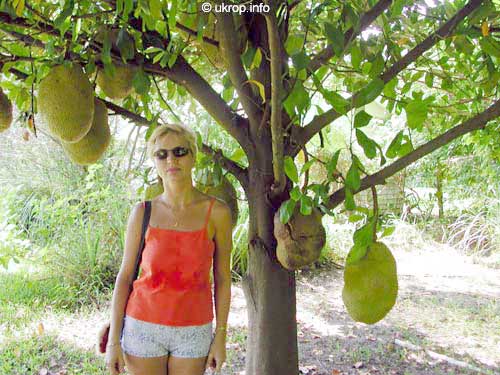
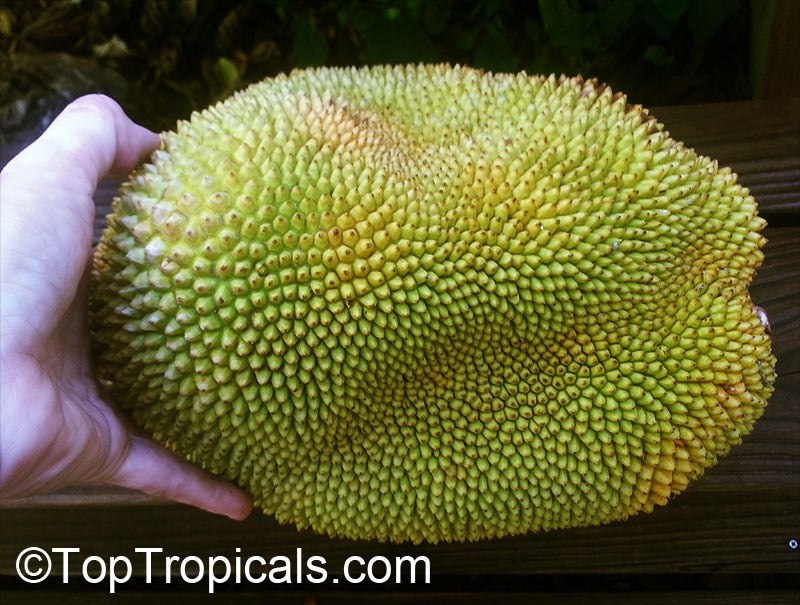
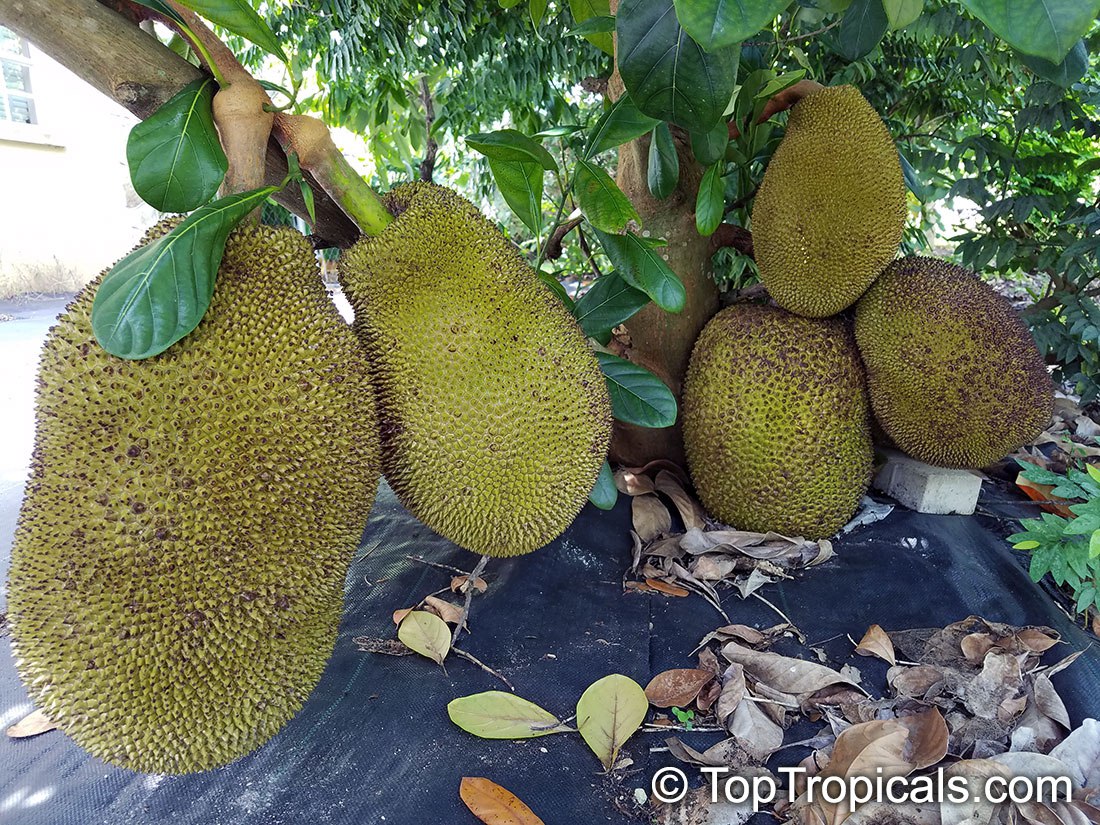
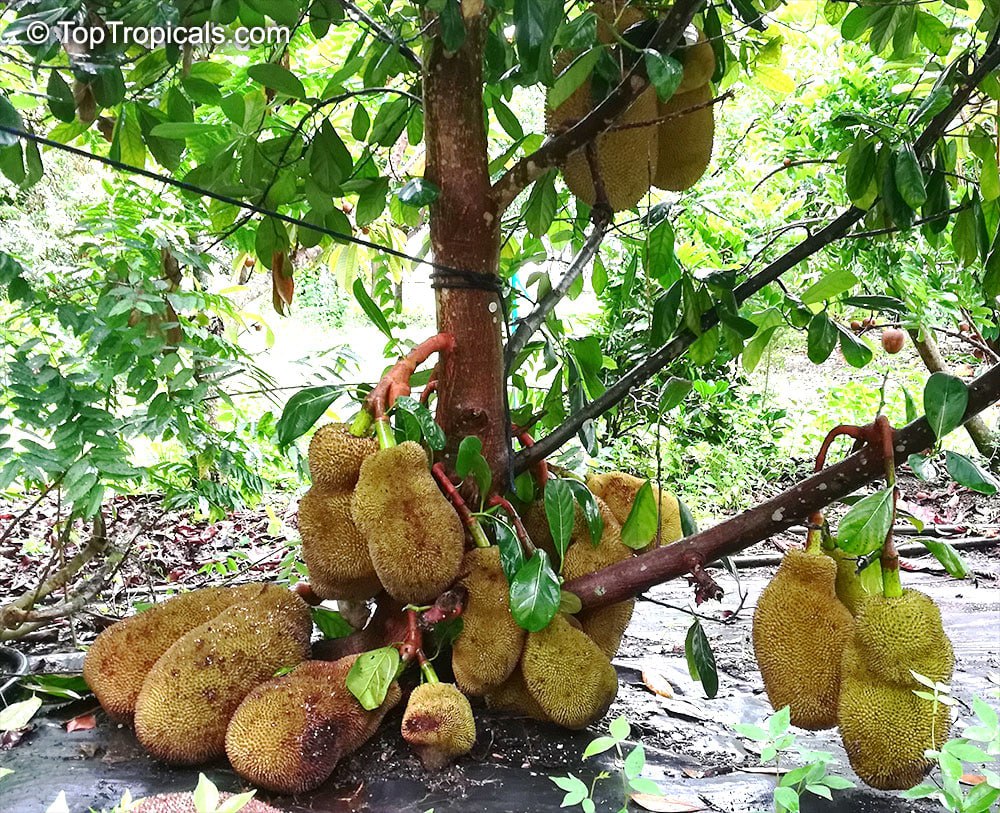
Jackfruit (Artocarpus heterophyllus)

👀 What is the largest tree-borne fruit in the world?


🍈 Jackfruit (Artocarpus heterophyllus) reaches 80 pounds in weight and up to 36 inches long! It is one of the most fascinating fruit in the world.
  • ✳️ The fruit consists of large edible bulbs of yellow, sweet, banana-flavored aromatic flesh. 
  • ✳️ The fruit is so large and heavy that the tree has a smart feature to produce only at the base of the trunk.  So the tree can be (and should be) pruned annually to 7-12' producing as much as 200 lbs. of fruit per year!
  • ✳️ Seedlings start fruiting within 3-4 years.  Fruit ripen pretty quickly, 4-6 months from flower to maturity. 


📚 Learn more about Jackfruit

#Food_Forest #Jackfruit

👉 Subscribe for more amazing fruit and plant facts: @TopTropicals

Date: 17 May 2024

Why cucumbers grow on a tree? Because they are candles!

Parmentiera edulis - Candle Tree, Guahalote

Parmentiera edulis - Candle Tree, Guahalote

Parmentiera edulis - Candle Tree, Guahalote

Parmentiera edulis - Candle Tree, Guahalote

Parmentiera edulis - Candle Tree, Guahalote

Parmentiera edulis - Candle Tree, Guahalote

Parmentiera edulis - Candle Tree, Guahalote fruit

Parmentiera edulis - Candle Tree, Guahalote fruit

Parmentiera edulis - Candle Tree, Guahalote flower

Parmentiera edulis - Candle Tree, Guahalote flower

Why cucumbers grow on a tree? Because they are "candles"! 🕯
  • 🕯 This bizarre tree is a conversation piece and every plant collector should have one!
  • 🕯 Parmentiera edulis - Candle Tree, or Guahalote - is a highly ornamental tree with interesting leaves, pretty cream flowers and...ready?
  • 🕯One foot long fruits resembling a greenish-yellow cucumbers or candles that hang off the tree!
  • 🕯Juicy fruit is edible and has a sweet flavor similar to sugar cane. Eaten raw or cooked; used to make pickles or preserves
  • 🕯The fruit is a remedy for colds; roots used as a diuretic.
  • 🕯Easy to grow and not fussy about conditions. Cold tolerant to light frost.


🎥

🛒Get your own Candle Tree

#Food_Forest #Recipes #Nature_Wonders #Remedies

🏵 TopTropicals

Date: 18 Mar 2025

Why is it called Star Apple?

Star Apple - Chrysophyllum cainito

Star Apple - Chrysophyllum cainito

🌟 Why is it called Star Apple?

  • ⭐️ Caimito Tree, or Star Apple - Chrysophyllum cainito - is a rare and exotic gem of tropical fruit world, related to Sapote and Sapodilla.
  • ⭐️ Exotic & Rare: Hard to find, this tree is a favorite in the Caribbean, Central America, and Southeast Asia.
  • ⭐️ Unique Fruit: The fruit has a mild, grape-like flavor and is best enjoyed fresh. When cut, the inside reveals a star-shaped pattern.
  • ⭐️ Attractive & Delicious: A great addition to your garden with both aesthetic and edible benefits!


🛍 Shop Caimito trees

#Food_Forest #Nature_Wonders

🔴 Join 👉 TopTropicals

Date: 6 Apr 2025

Why grow Grumichama? Benefits of Brazilian Eugenia Tree - Cherry of the Tropics

Grumichama (Eugenia brasiliensis), Brazilian Cherry, fruit

Grumichama (Eugenia brasiliensis), Brazilian Cherry, fruit

Grumichama (Eugenia brasiliensis), Brazilian Cherry, flowers

Grumichama (Eugenia brasiliensis), Brazilian Cherry, flowers

🍒 Why grow Grumichama? Benefits of Brazilian Eugenia Tree - Cherry of the Tropics

  • 🍒 Did you know you can grow a tropical cherry right in your backyard? Grumichama (Eugenia brasiliensis), also known as the Brazilian Cherry, is a compact, evergreen fruit tree that's as beautiful as it is delicious.
  • 🍒 With glossy green leaves and reddish new growth, it’s an ornamental gem. In spring, it produces white flowers that quickly turn into dark purple, cherry-like fruits - ready to harvest just four weeks after flowering!
  • 🍒 The fruits have soft, melting flesh with a flavor similar to northern cherries. Enjoy them fresh, dried, made into jams, or even in baked goods and herbal teas. This is our favorite fresh cherry @TopTropicals!
  • 🍒 Grumichama plant grows into a small tree or bush in tropical and subtropical climates. It tolerates light frost.
  • 🍒 Fruits in small spaces or containers (5–10 gallon pots)
  • 🍒 Perfect for edible landscaping and home orchards. Loaded with fiber and antioxidants.
  • 🍒 Whether in the ground or in a pot, Grumichama is easy to grow, stunning year-round, and gives you a sweet, juicy reward.


📚 Learn more about Eugenia cherries:


Ten best fruit trees to grow in Florida and Southern landscapes. # 3: Tropical Cherries: Eugenias.

🛒 Plant Grumichama and bring a little bit of Brazil to your garden

#Food_Forest #Fun_Facts #Discover

🔴 Join 👉 TopTropicals