Date: 12 Feb 2020
Dombeya seminole - Tropical Rose Hydrangea
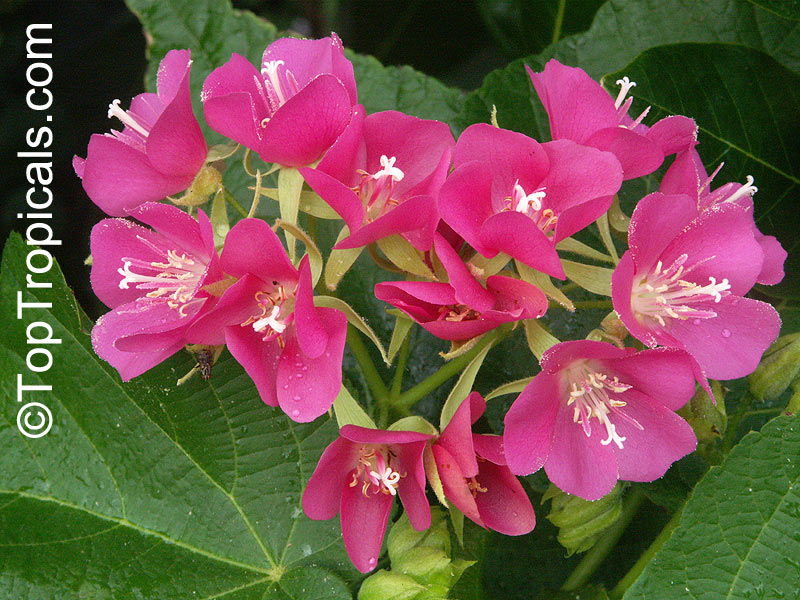
by Onika Amell, tropical plant expert
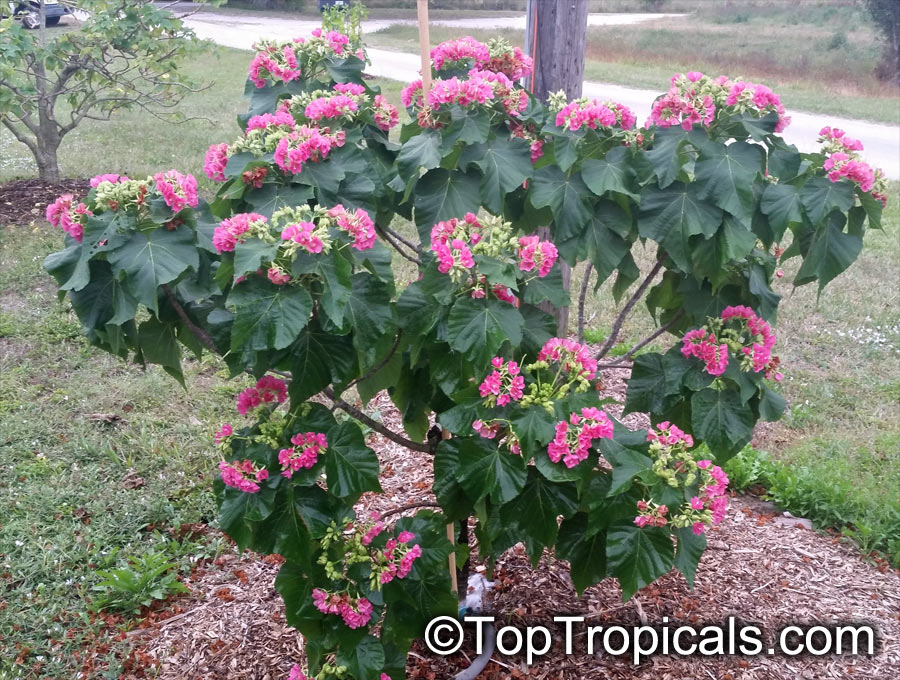
Looking for an unforgettable winter bloomer? Look no further than Dombeya Seminole. This is truly one of the showiest landscape plants. This beautiful shrub or small tree stuns with large clusters of showy, bowl shaped, pink flowers in late fall, winter and spring. It has dense heart shaped leaves. It is also called the tropical hydrangea because the flowers are similar to the hydrangeas we all know and love from up North...
CONTINUE READING >>

Date: 31 Jul 2024
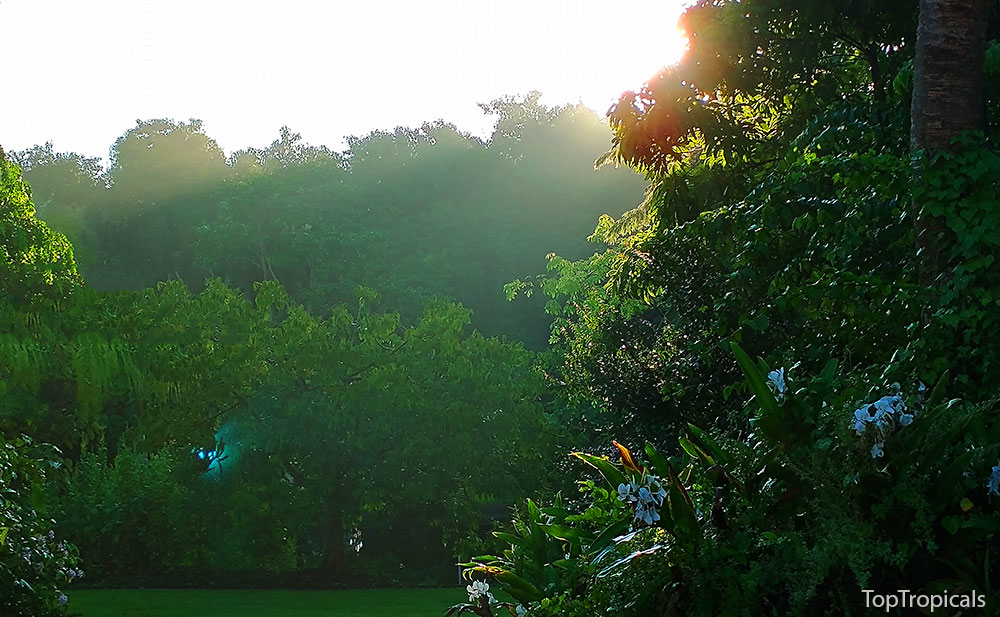
Why we want to plant a tree today

Code red: Study reveals
human degradation of tropical forests
is greater than previously estimated
This summer has been scorching hot across the globe, with every summer month breaking temperature records in recorded history.
Have you ever wondered what kind of natural world your children or grandchildren will inherit? Will they grow up surrounded by lush forests and greenery, or will they only know cities made of metal and concrete?
Tropical forests are super important for biodiversity and fighting climate change, but humans are messing them up more than we thought. Using fancy tech from the International Space Station, scientists found that human activities like logging and road-building are degrading these forests a lot. Even edges of forests are suffering, reducing canopy height and biomass significantly. This degradation is often overlooked, even though it has a huge impact on carbon emissions and biodiversity loss.
Planting trees in your yard, or even better, several trees, helps combat this problem by restoring some of the lost biodiversity and absorbing carbon dioxide. Plus, it's a fun way to make your space greener and contribute to a healthier planet!
Together, we've planted over 15,000 trees this year!
This year at TopTropicals, we have planted quite a few trees. Let's
see...
- 44 mango trees planted at our BFarm...
- 49 tropical fruit trees
- 127 flowering trees and shrubs... (special thanks to Mick and Aurelio)
- 15,282 plants were ordered and, hopefully, planted by our customers this
year so far...
Join us. Plant a tree today to make the difference!
"Someone is sitting in the shade today because someone planted a tree a long time ago." - Warren Buffett
Date: 31 Jul 2025
Shady spots aren't a problem - they're an opportunity
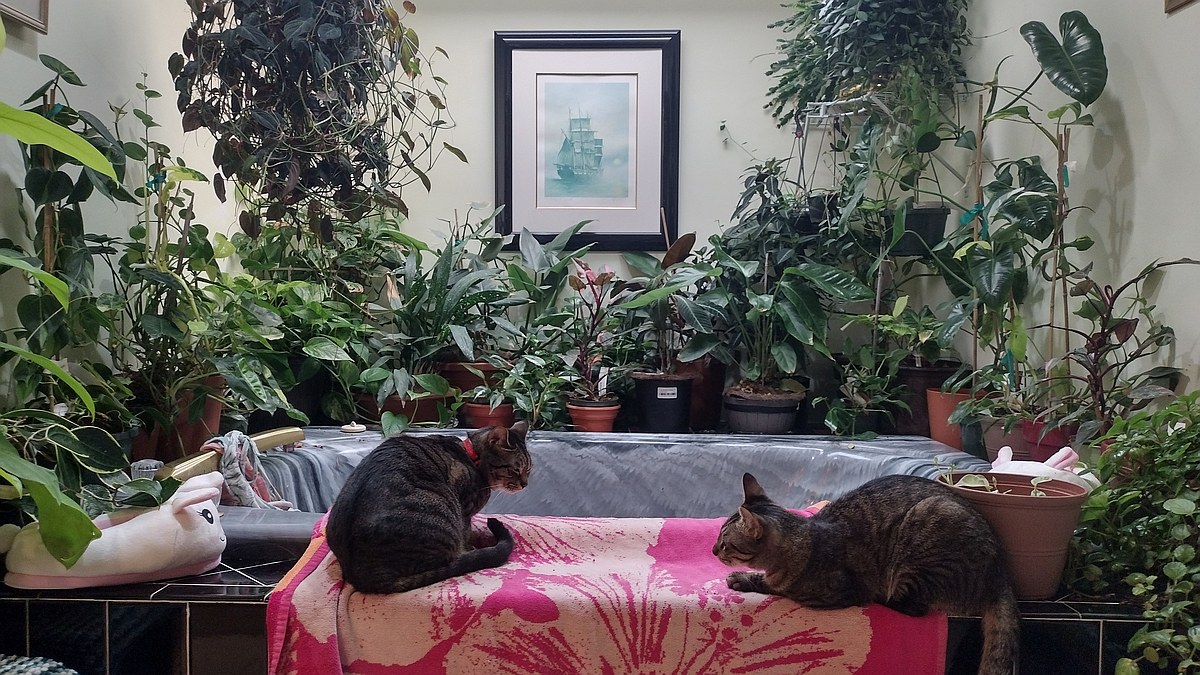
Photo above: Niki and Cash, the Top Tropicals PeopleCats-in-residence, lounging in a lush indoor jungle
Most tropical gardens have at least one corner that gets morning light, filtered sun, or just bright shade - and that's exactly where Anthuriums thrive, along with many other shade-loving plants. That makes them ideal for spaces where other tropicals struggle.
Don't have a greenhouse? You don't need one. Anthuriums do beautifully on a shaded porch, in a screened lanai, or even indoors near a north or east-facing window. They're perfect for:
- Bathrooms with natural light
- Bright kitchens with indirect sun
- Shaded entryways or under eaves
- Hanging baskets under tree cover
- Mounting on cork or wood in humid areas
Even a small space can feel like a tropical conservatory with the right plant - and Anthuriums bring that look without being demanding. They grow slowly, stay manageable, and don't need constant pruning or repotting.
Best of all, they reward consistency. Keep them warm, give them some humidity, water when the top inch feels dry, and they'll stay healthy for years. No drama - just quiet, lasting beauty. If you've never grown tropicals in the shade, this is where to start.
Date: 18 Aug 2025
Step Up Your Plants Before Fall
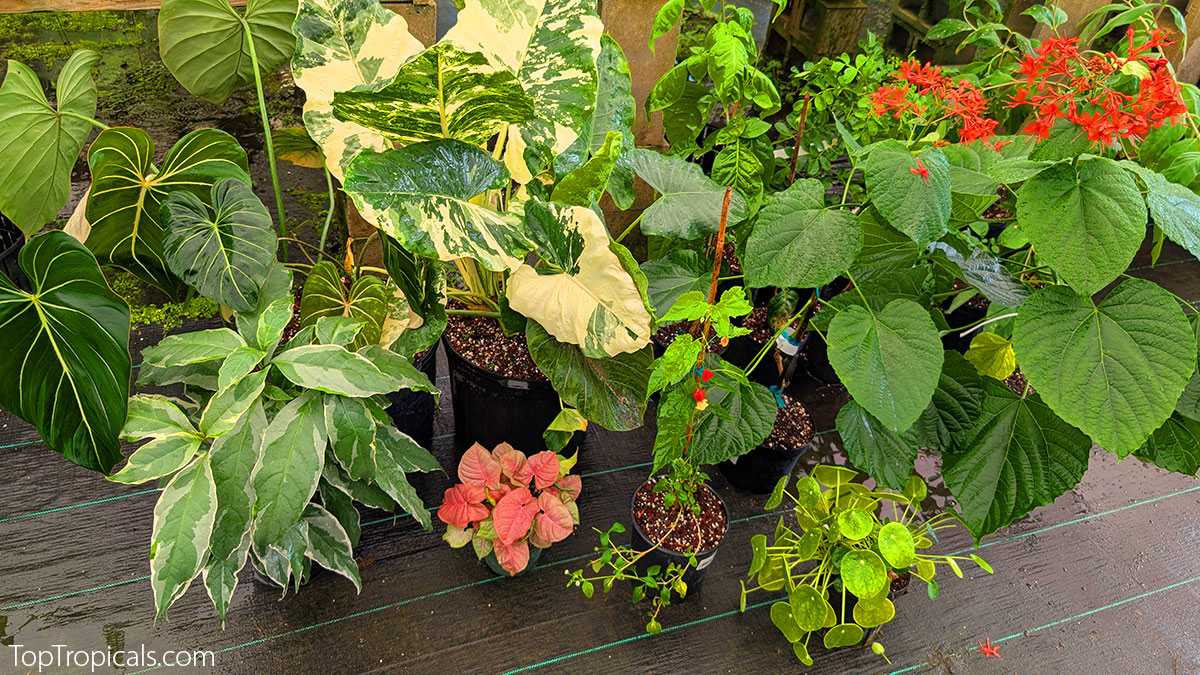
After a busy summer of growth, many potted plants are bursting out of their containers. Now is the perfect time to step them up into a slightly larger pot.
🌱 Why now in August?
Repotting before fall gives roots room to expand, while there’s still warmth for active growth. Plants have time to sprout new shoots, fill out, and build strength before cooler weather slows them down.
✂️ Trim and Shape
This is also your last chance to give plants a light trim. Pinching or cutting back helps them branch, bush out, and get denser — exactly what you want going into fall.
💚 Add Green Magic
When repotting, mix in Sunshine controlled-release Green Magic fertilizer to reduce transplant stress and boost new root growth. It helps plants settle in quickly and keep thriving.
👉 Watch our on how to step up your plant the right way, then check your pots — some of your summer growers are ready to move up!
⚠️ Important Note on Timing
This advice is for gardeners in warm climates or for anyone who still has at least a month of warm weather left. Tropical plants go dormant when temperatures drop below 75F, so planting in a larger pot at that time may cause root rot — roots stop growing in dormancy, and extra moisture in the soil can lead to rotting.
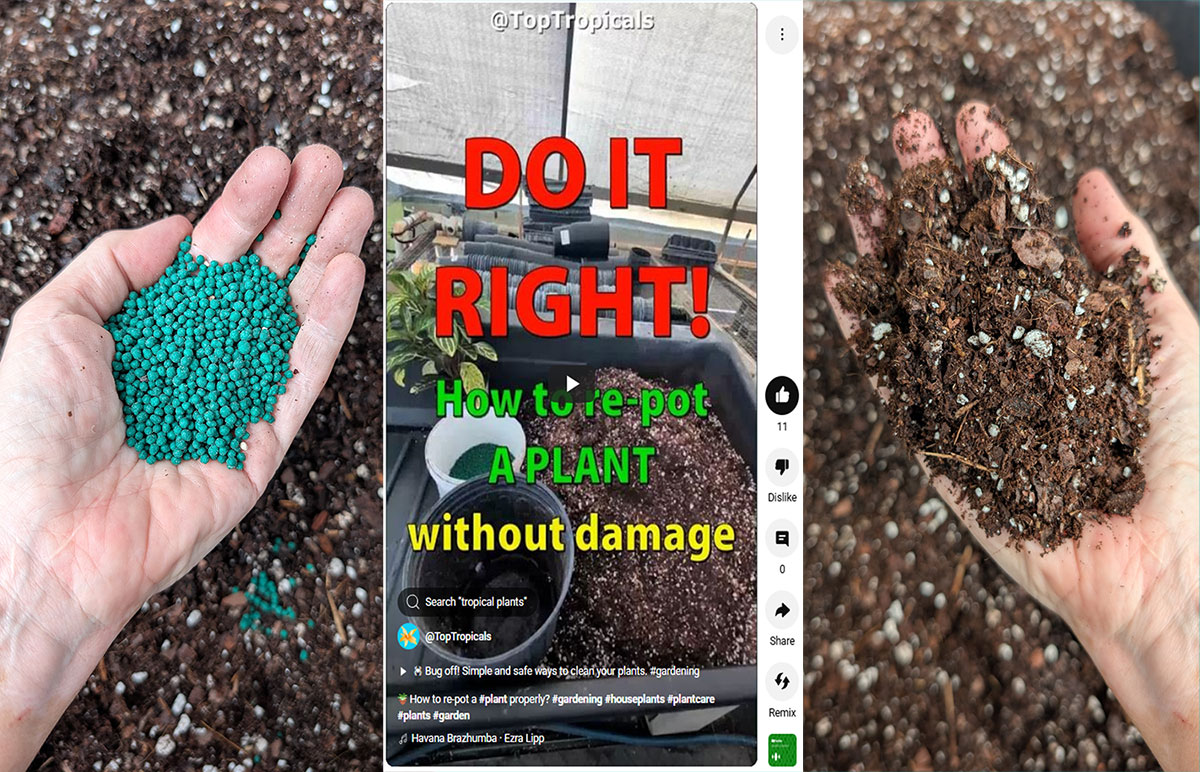
How to Repot a Plant Properly
Choose the Right Pot
Pick a pot just a few inches larger than the old one.
✅ Make sure it has good drainage — tropical plants hate sitting in water. A pot without drainage holes can cause waterlogging and root rot.
Why plastic pots are better than fancy ceramic
Ceramic pots may look pretty, but they are heavy, breakable, and often lack proper drainage. Plastic pots are lightweight, easier to handle, and — most importantly — if a plant is root-bound and stuck, you can simply cut the plastic pot to free it without harming the roots. For looks, slip the plastic pot inside a decorative cover pot.
Add Soil and Fertilizer
Place fresh potting soil at the bottom. Mix in a good fertilizer — we use Sunshine Green Magic.
Remove the Plant
Why turn it upside down? Gravity helps loosen the plant, and it slides out more easily without tugging.
Never pull a plant by its head (stems or leaves). That can damage the crown and tear roots.
If it doesn’t come out easily: lay the pot on its side and gently squeeze or tap the pot to dislodge the soil. If it is really stuck, cut the old pot instead of forcing the plant.
Check the Root System
If roots are circling tightly (pot-bound), gently untangle or loosen the outside layer so they will grow outward into the new soil.
Do not shake off or remove old soil from the root ball. Roots have tiny hairs that absorb water and nutrients, and damaging them will set the plant back. Keep the root mass intact and disturb as little as possible.
Set at the Same Level
Place the plant in the new pot so it sits at the same soil level as before.
👉 This is important: burying the stem too deep can suffocate it, while setting the plant higher than before may expose roots and cause drying. Keeping the level the same protects the root crown.Fill and Firm
Add more soil and fertilizer around the sides. Press lightly around the edges to remove air pockets.
Water Thoroughly
Give it a deep watering to help roots settle.
Aftercare
Don’t water again until the top inch of soil feels dry. Freshly repotted plants are vulnerable to soggy soil and root rot if kept too wet.
Date: 30 Jan 2019
How to set up indoor lighting for tropical plants
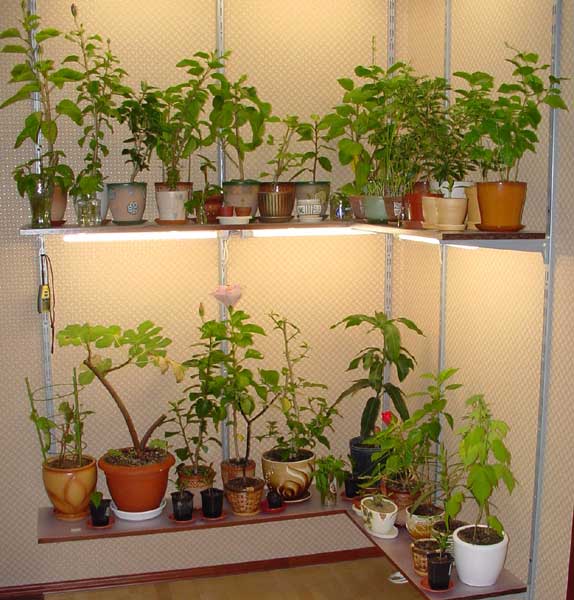
Q: My tropical plant collection goes indoors for winter. I have over 100 plants now and all windowsill space is taken. I am planning to build some shelves so I can also start some rare seeds indoors. Can you advise me on the choice of the grow lights so I can do it right?
A: Indoor plants are very unlucky: they have to grow in "caves," and everybody knows that plants don't grow in the caves. The luckiest plants win sunny windowsills, but even there they dwell rather like in underbrush under tall trees, where the sun illuminate them only early in the morning or in the evening, and its light is diffused by foliage. Usually, domestic plants are in desperate lack of illumination not only in winter but also in summer. No light - no growth, no flowering. So, plants need extra light to compensate for the lack of illumination in the "room-cave" conditions. And here is some science behind it...
Check out our selection of tropical plants tolerant to low light conditions