Date: 24 Jun 2025
🌞 How to help your plants survive a hot summer
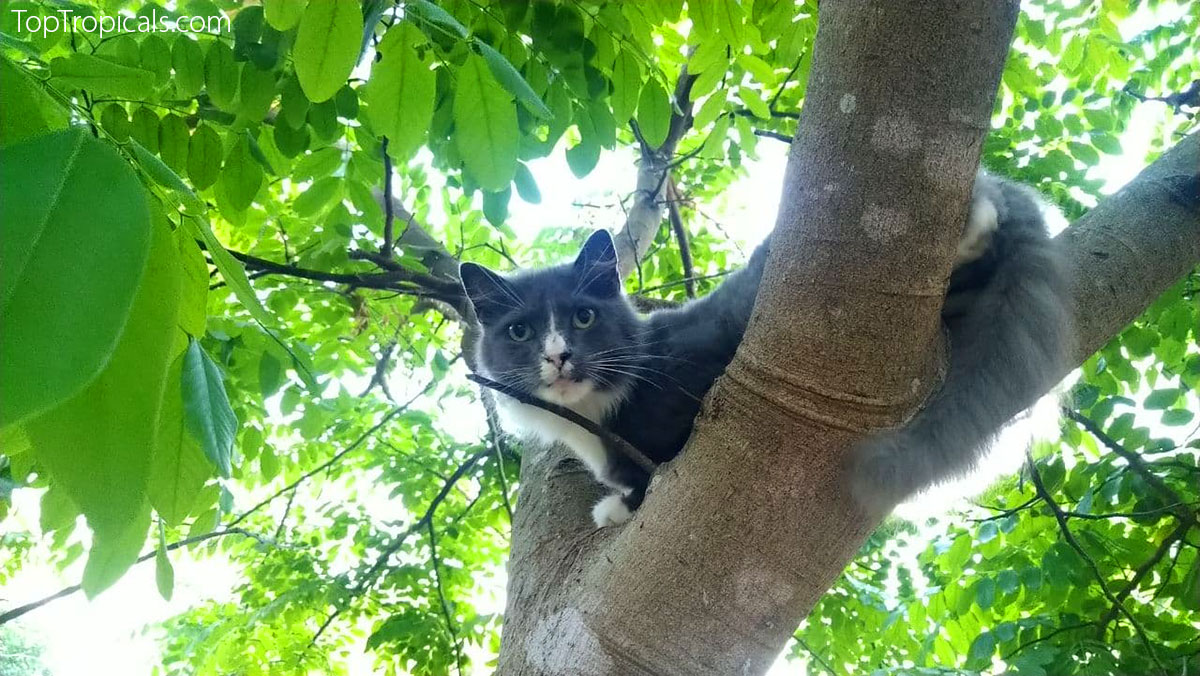
Q: It's getting so hot that my plants stay droopy all day, how much water is enough water? Any advice how to help them to survive this heat?
A: Yes, it's official - summer has cranked up the heat, and your garden knows it. Blame it on the dreaded heat dome - a big ol' pressure lid in the sky that traps hot air like a pressure cooker. Basically, it's summer's version of putting your plants in an oven - without the cookies... But don't panic! With a little extra care (and water), you can help your leafy friends make it through the sizzle without going crispy. Here's how to beat the heat in your garden:
Eight rules during summer heat
1. Water early, and generously. Morning is the magic hour. Before the sun gets too intense, give your plants a slow, deep drink - like a spa treatment before a big day. Watering in the middle of the day? Bad idea. It's like pouring water on a hot frying pan - evaporates fast, and can even scorch leaves.
2. Mulch like you mean it. A nice 2-3 inch blanket of mulch keeps your plants' roots cool and the moisture locked in. Think of it as sunscreen and air conditioning for the soil. Pine straw, bark chips, shredded leaves - whatever you've got, pile it on.
3. Give them some shade. If your plants are looking like they're sunbathing without sunscreen, help them out. Use old sheets, umbrellas, shade cloth - whatever works. Even a light shade can make a big difference. New plants, veggies, and shade lovers like philodendrons will thank you.
4. Put down the pruners. Right now, your plants are in survival mode. Pruning in extreme heat can stress them out more. Let them ride out the heat wave before giving them a trim.
5. Don't move in this heat. If you're thinking of transplanting that poor little tree - hold that shovel. Moving plants during extreme heat is like moving house during a heatwave - everyone ends up grumpy. Wait until cooler weather rolls back in.
6. Pamper your potted plants. Pots heat up fast and dry out even faster. Move your container plants to shadier spots and check their soil often - don't let it go bone dry. They can't dig deeper for water, so you're their lifeline.
7. Know the signs of heat stress:
- Droopy in the day, perky at night? Normal. They're just hot, not dying.
Keep watching.
- Crispy edges or curling leaves? They're too dry. Deep water, mulch,
shade.
- Still wilted the next morning? That's a red flag. Time to step up the TLC
- soak thoroughly and shield from the sun.
8. Don't forget about yourself! If your plants are feeling the heat, you probably are too. So wear a hat, slap on sunscreen, hydrate, and do your gardening early or late in the day.
Need help planning your garden's heatwave strategy? We're here for you, 7 days a week. Reach out to the Top Tropicals team and we'll get your plants through summer with style!
Stay cool and grow on,
Kristi V. - your Tropical Plant Expert 🌴
Date: 6 Nov 2022
Annona montana - Mountain Soursop
Grow Your Own Food
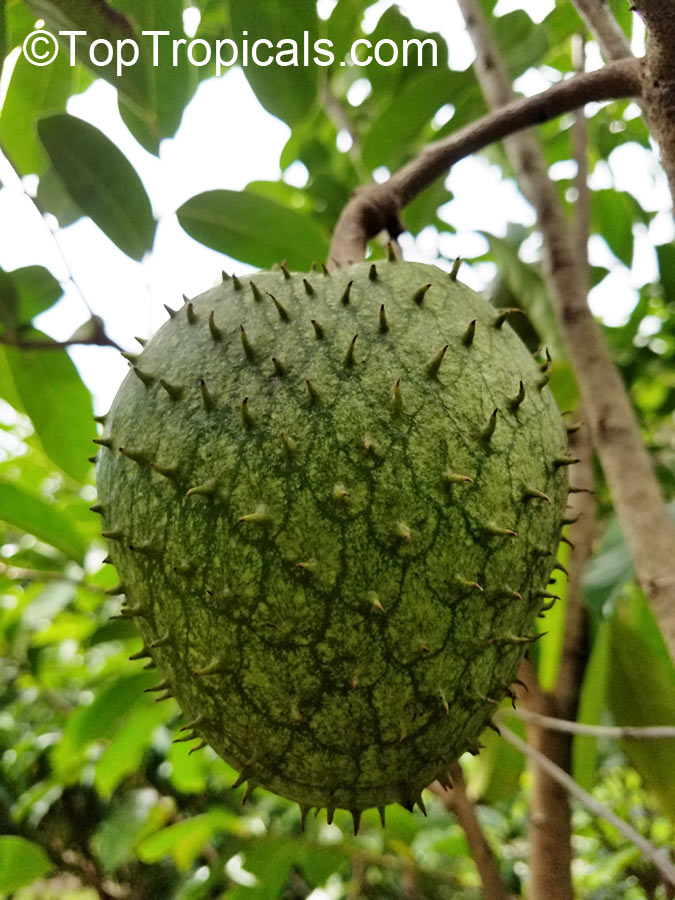
Exotic fruit, a cold hardy alternative to a Soursop
Not only tasty, this exotic fruit has the most unusual
looks! This exotic beauty grows up to a pound and just look at these curious
and life-like spines! We guarantee that everyone who sees this fruit in your
garden will ask for seeds even before they taste the fruit. And you will have
lots of seeds to share because Mountain Soursop is very reliable producer
with many seeds in each fruit.
Mountain Soursop tastes similar to regular Soursop (better known as the
Guanabana), with slightly milder flavor. The pulp is highly scented, with good
aroma. It is eaten out of hand or can be used in milkshakes and smoothies. The
fruit is softball sized with orange-yellow flesh, somewhat smaller and
rounder than the regular Soursop. The tree is medium sized, with beautiful, large,
leathery dark green leaves that emit a strong aroma when crushed.
How to grow Mountain Soursop?
Mountain Soursop is a very easy to grow, medium size exotic fruit tree that is great for beginners. This species is much more cold hardy than the Soursop, established trees can take temperatures a few degrees below freezing, tolerating cold spells down to 24F when full grown. Mountain Soursop tolerates a variety of soil types and will grow well in dry conditions. Trees produce within just 2-3 years from seed, like many Annonas, and can happily grow and produce in a large container.
Date: 18 Sep 2022
The fruit of Heaven:
Phyllanthus acidus - Amlak, Otaheite Gooseberry
Grow Your Own Food
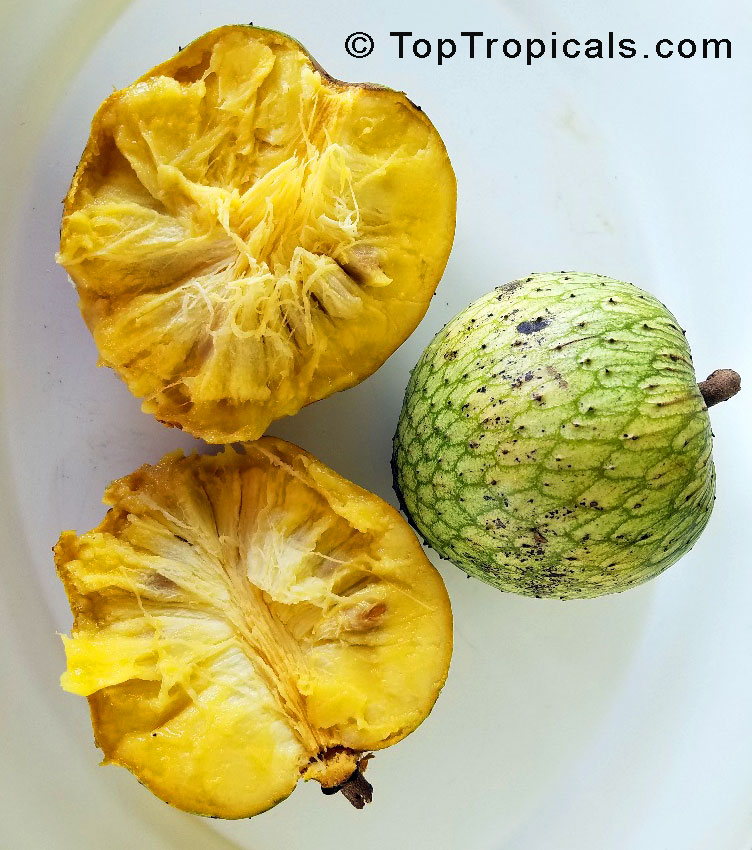
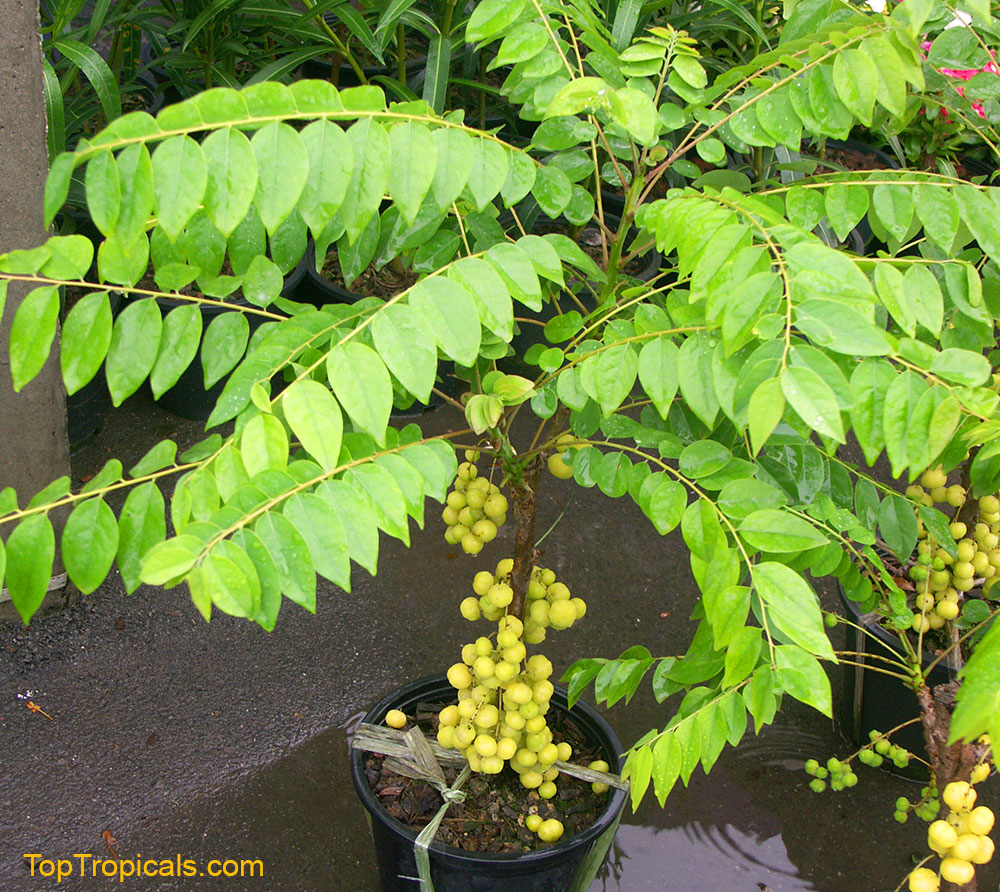
This is a fun rare fruit tree to have if you like lemonade and believe in Vitamin C benefits! The tree is super easy to grow, relatively cold hardy and doesn't require any special care. It is a fast growing plant, however the mature tree is only about 20 ft so it will be well suited for any size garden, even container garden. As you can see, it happily fruits in a pot. Bright yellow fruit are beautiful and curious, they always make a conversation piece!
About Otaheite Gooseberry
Otaheite Gooseberry, or Amlak, is a rare tropical fruit tree from SE Asia and India, very
close related to Phyllanthus emblica (Amla, Amlaki), however it is much cold
hardy than Amla. Known as Amritphala in Sanskrit, which literally means "the
fruit of heaven" or "nectar fruit". It is so called because it has many
helth benefits. Amlak is one of the favorite fruit of Indian people who definitely know what is good for
you! Fruit paste is a major ingredient of Chavyanprash, a popular Ayurvedic tonic. It is the
richest source of vitamin C.
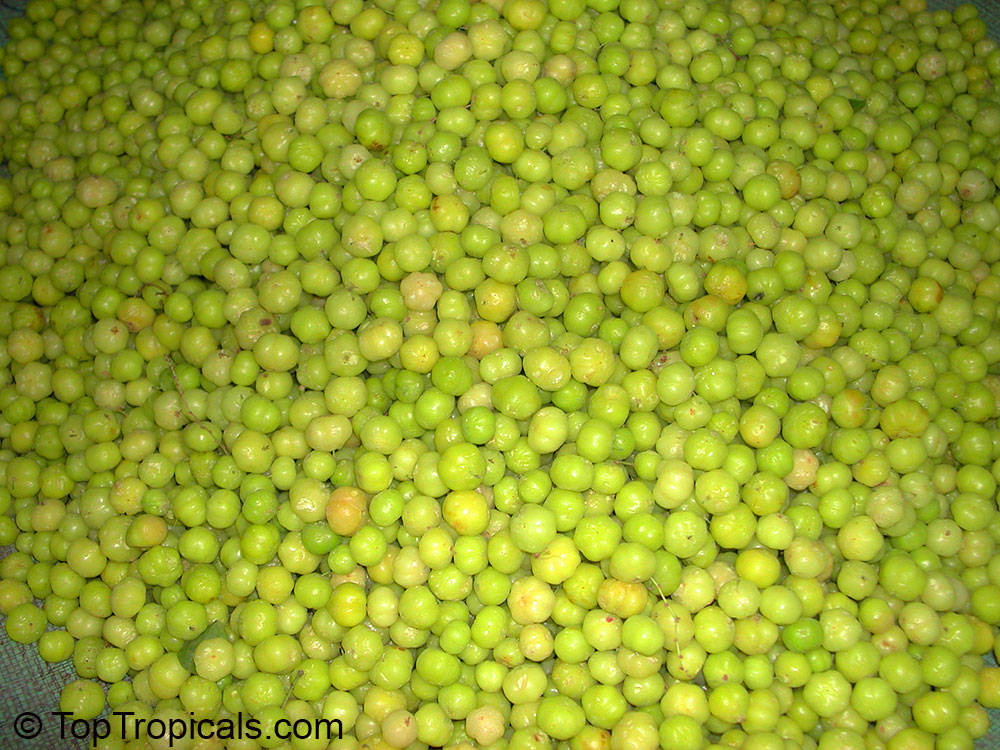
Fruits are borne in loose clusters, which hang from the tree trunk and main branches. Fruits are esteemed for jellies,
preserves and pastries, and are great for making a delicious lemonade rich in vitamin C. There are no commercial plantings; trees grow only in
home gardens.
You need to have one! Or two. We have only limited quantities.

Date: 25 Aug 2022
What is the largest succulent flower in the world?
Starfish Flower - Stapelia gigantea
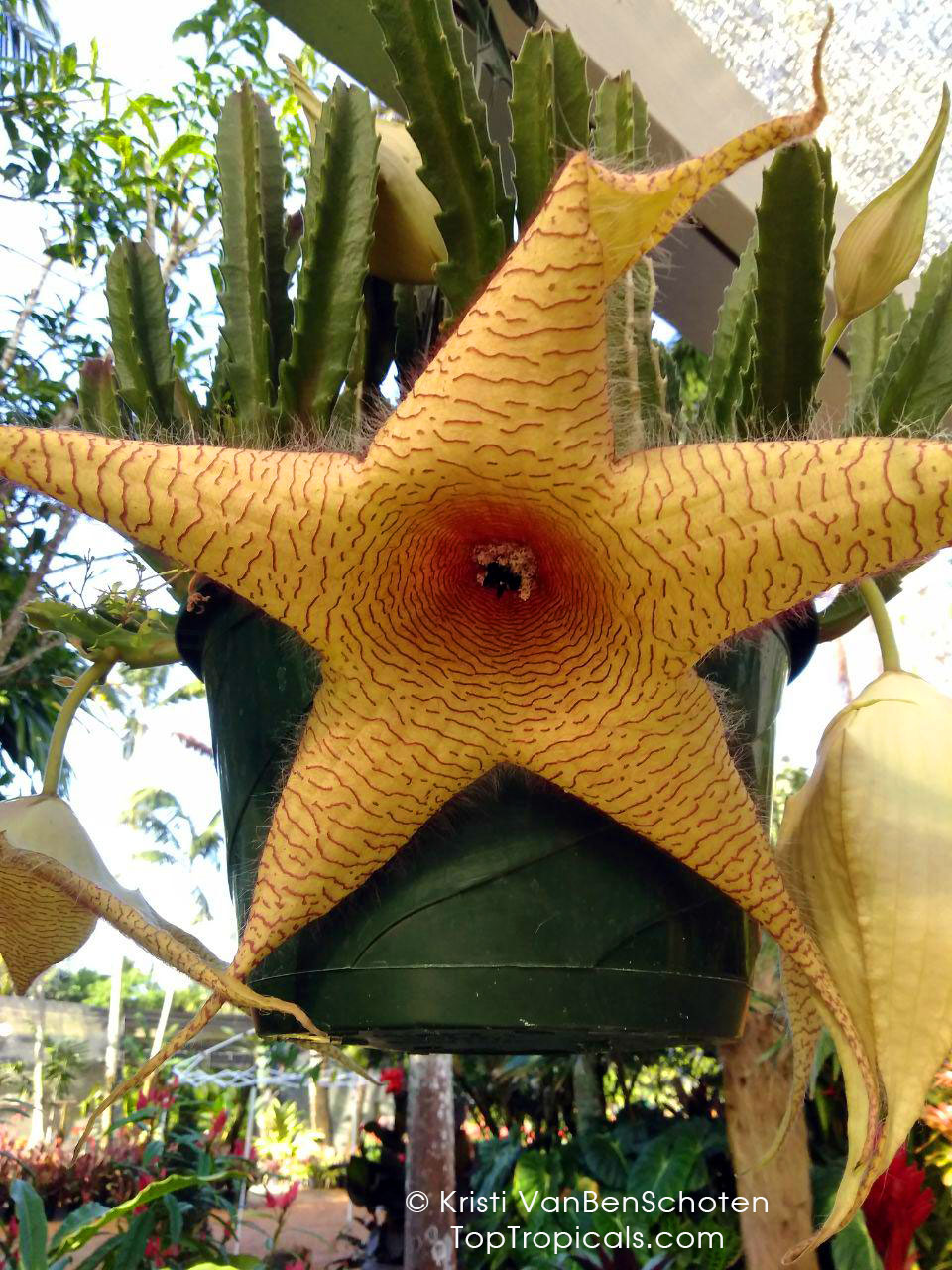
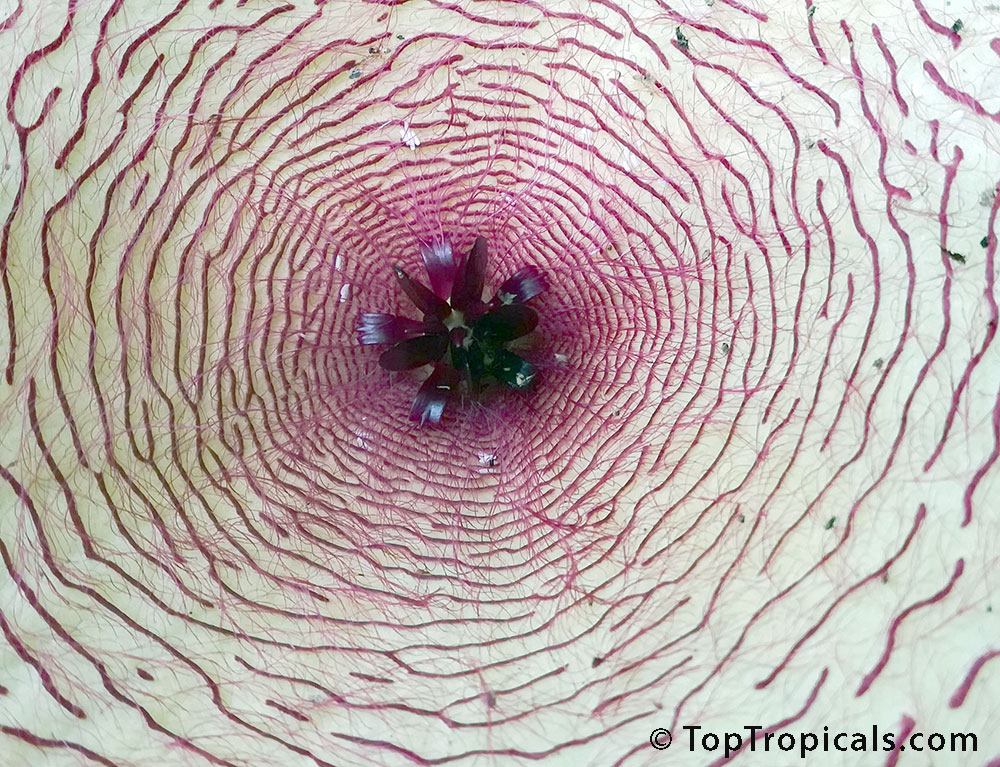
This is one of the most bizarre looking succulents you've even seen! Starfish Flower from
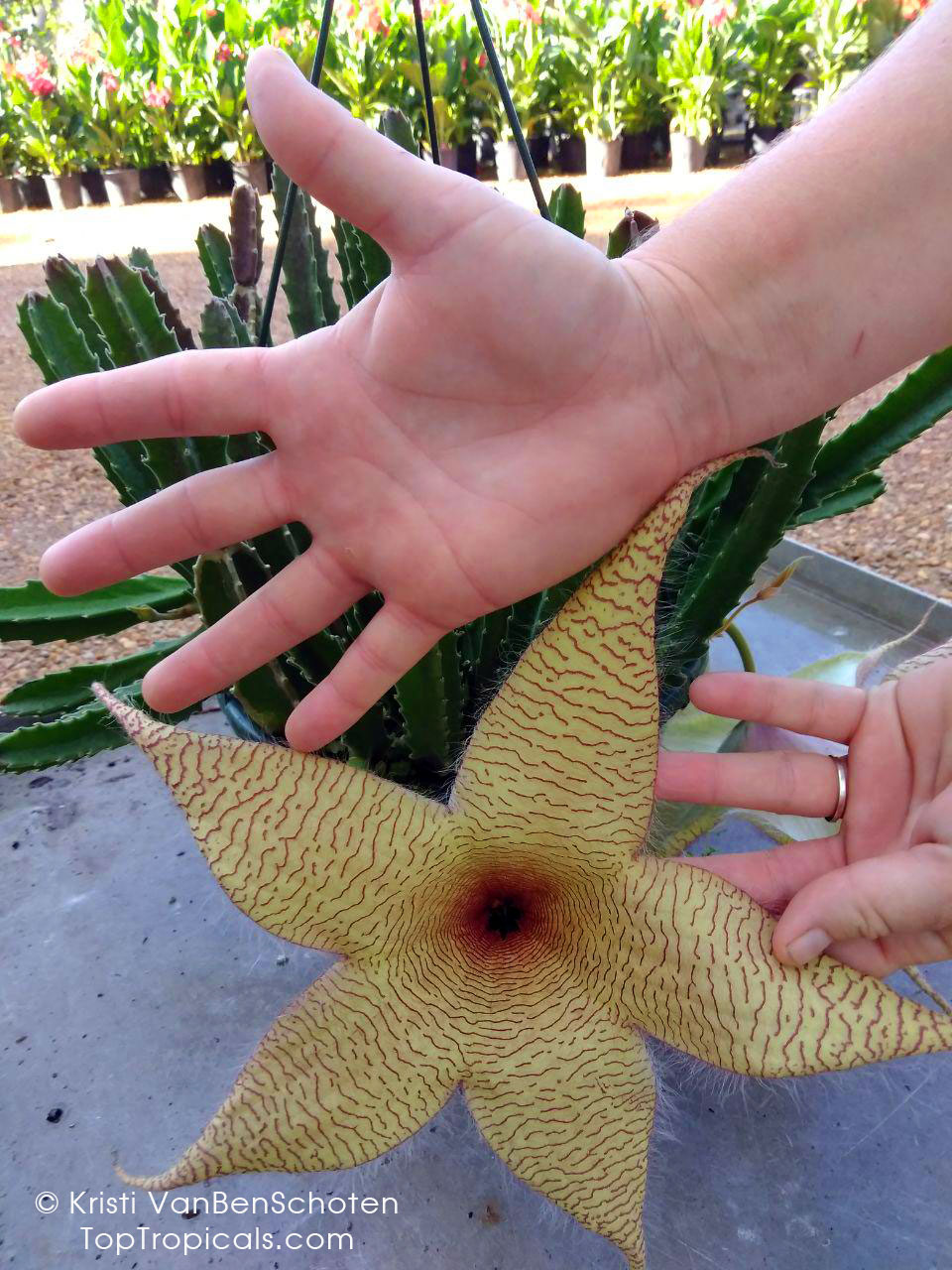
Tanzania is one of the largest flowers in the plant world!
It does look
like a startfish, and is absolutely beautiful! Being a succulent, the plant is
very undemanding and easy to grow, doesn't need much care or water. It also
doesn't mind regular irrigation, we have it in Summer Florida rains with no
problem. The focal point of this plant is the fleshy, 5-pointed, star-shaped
flowers (to 10-16"across), each being pale ochre-yellow with thin transverse
maroon lines. It is a great container plant and very fast growing, can fill a
large hanging basket within just one season. Flowers on and off during the
warm season with the most profuse flowering at the end of Summer (flower buds
are triggered by shortened daylight hours in fall). It is a spine-free
succulent member of the milkweed (not cactus!).
Date: 25 Jun 2021
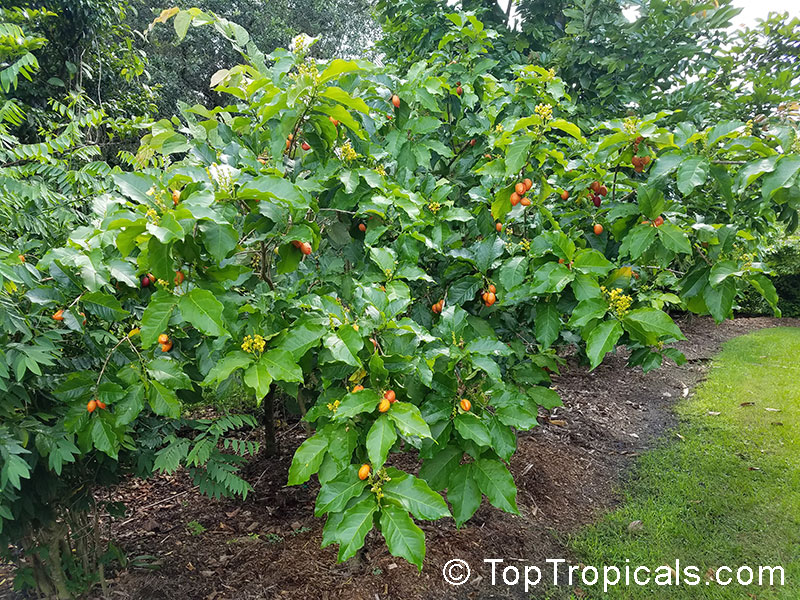
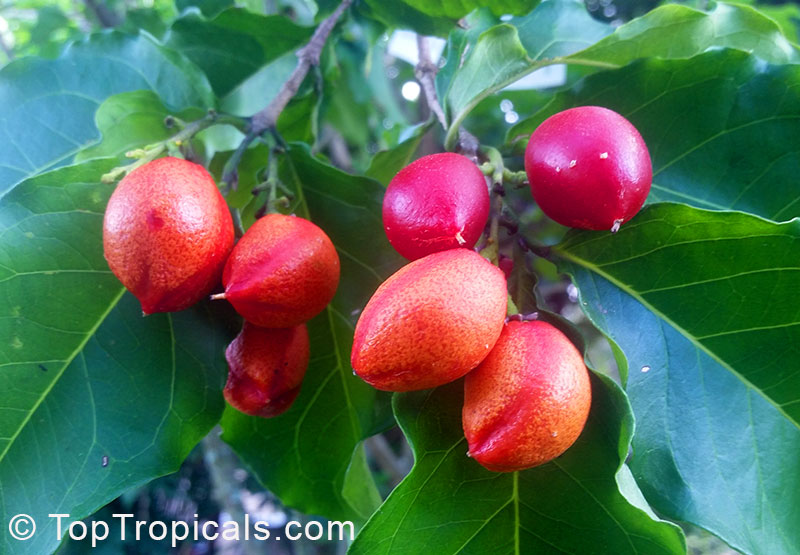
Peanut Butter Fruit... tastes like peanut butter!
by Alex Butova, the Witch of Herbs and Cats
...One of the most fascinating exotic fruit, as amazing as Miracle fruit, Peanut Butter Fruit is loved by both kids and
adults... and yes, it tastes exactly like peanut butter!.. Yet it is much healthier food, with many medicinal benefits...
...The easy, low-maintenance Peanut Butter Fruit tree is essential for any
edible landscape, rare fruit collector, or tropical/subtropical garden. It has a great ornamental or
screening value. Also can be grown in container, and will fruit indoors... Similar to fast-fruiting Annonas, and its close relatives Malpighia
(Barbados Cherry) and Bursonima (Nancy Tree), Bunchosia tree starts fruiting in small size and at young age: 2-3 years from
seed!..