Garden Blog - Top Tropicals

Date: 15 Oct 2020

Healthy Plants. Q&A from Mr Booster: Fertilizing Mango trees in Winter
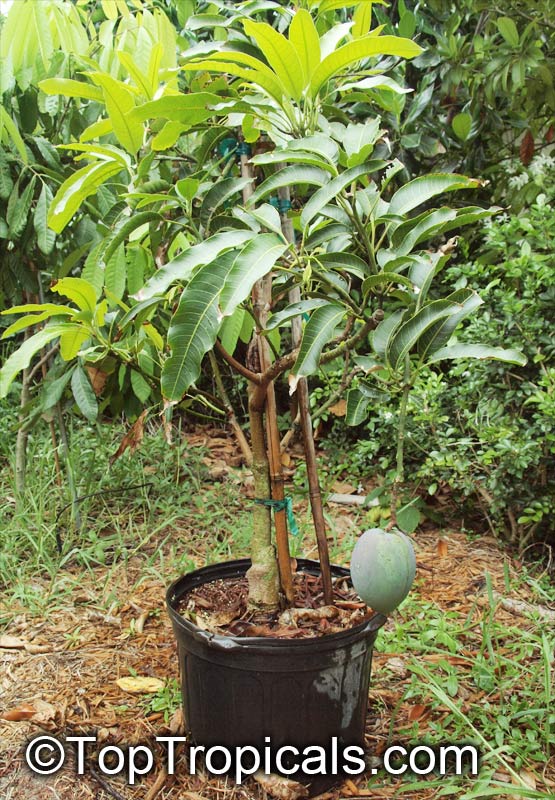
Q: I'm living in Maryland growing zone 7A and would like some info on when to fertilize my potted mango trees. I ordered your Sunshine Mango Tango 2-2-4. All your mango trees are in pots.

A: You can start using this fertilizer right away, any time of the year, and every time you water your plants.
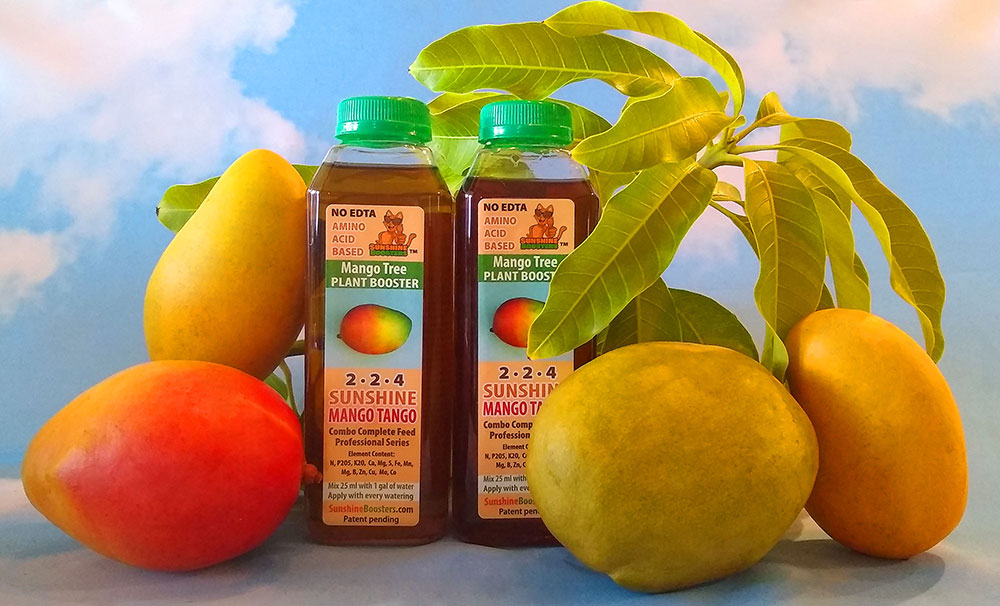
Sunshine Mango Tango, as well as other Sunshine boosters, is an amino-acid based liquid fertilizer that is scientifically developed for daily plant needs in all necessary nutrients. This means, you may use this fertilizer with every watering, including winter period.
Traditional fertilizers (both granulated and soluble, EDTA-chelated) can only be used during hot months while plants grow actively, and must be limited or not used at all during cooler months, to avoid nutrient lock up in soil (which basically means "building up unused elements"). With Liquid Sunshine Boosters, it is safe to add them every time you water your tree.
During cooler weather and when plant metabolism slows down, a tree will consume less water (as well as food), and you will automatically reduce watering, to keep over-wintering plants on a dry side. This means, less fertilizer too. This allows you to control elements intake naturally, like you control water amount just as much as the plant needs.
Date: 4 Oct 2020

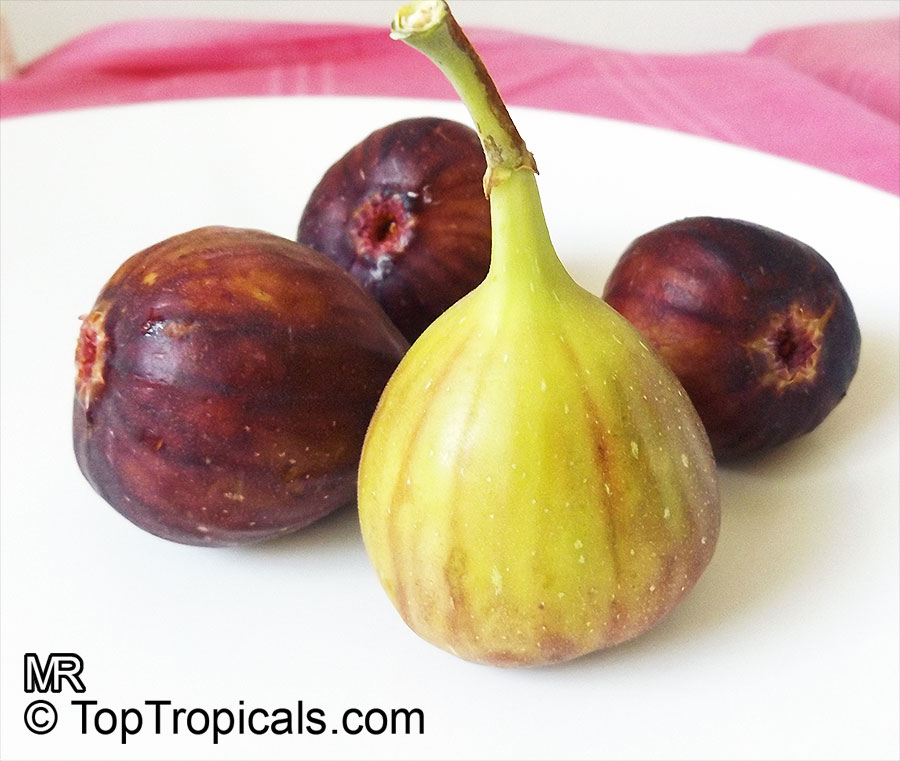
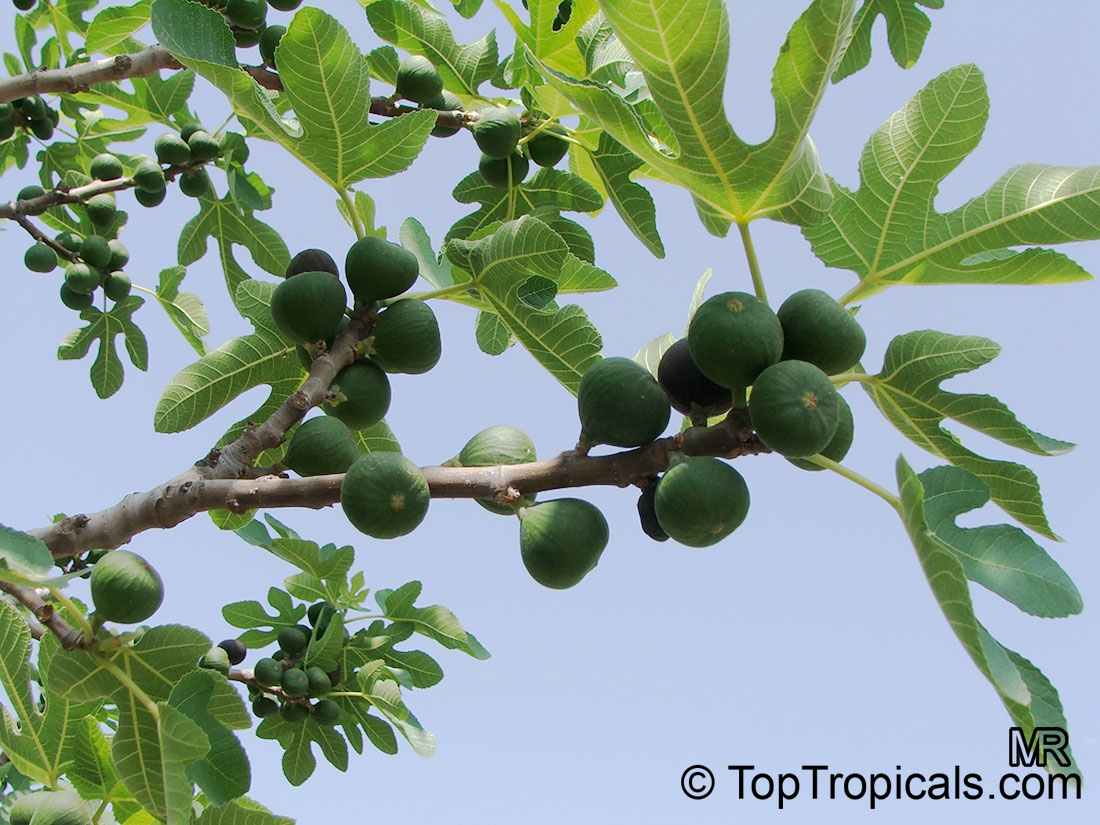
What fig trees are good for Florida?

Q: My baby fig tree was sprayed by the lawn people with weed killer :( Any ideas? Also what figs do you have available to grow here in Florida?

A: Unfortunately once a plant is affected by a herbicide, there is not much you can do about it. If you don't rinse the chemical within a few seconds, it gets into the plant internal system and nothing can be done to save the plant. The tree may remain green for a few days up to a week, but then gradually dies back. If your fig tree wasn't rinsed immediately after herbicide spray, it is probably too late.
If you want to replace it with a new one, here is a few suggestions of our favorite fig varieties which are great producers and grow well in Florida heat:

Brown Turkey Fig - our favorite!
Black Mission Fig
Beers Black Fig
Texas Everbearing Fig
Magnolia Fig
LSU Purple Fig
Olympian Fig
Texas Blue Giant Fig
See full list of Fig Trees.

Make sure to get appropriate plant food for your fig tree so it develops faster for you and gets well-established before winter: SUNSHINE C-Cibus - Crop Nutrition Booster from Garden Series, or Combo Total Feed Collection - all nutrients in just one bottle, for fruit trees and edibles.

Date: 25 Jun 2021

Kristi's Loquat Tropical BBQ sauce

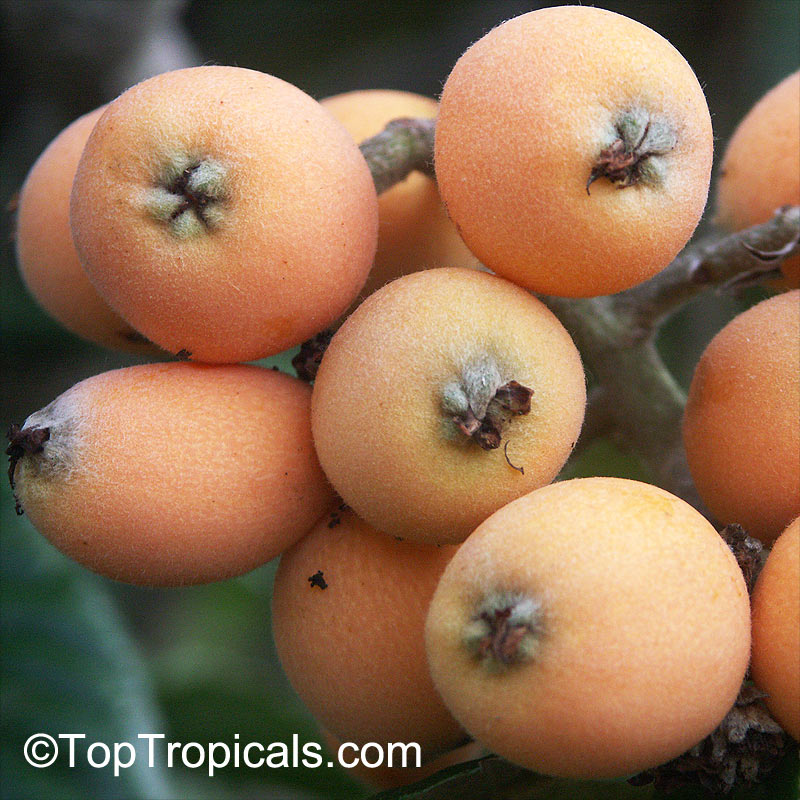
Loquat trees are famous for their abundant fruit production. Many customers who purchased this tree from us, soon end up with some serious crops and start asking if we have any special recipes for loquat fruit - because you can only eat so much out of hand! Here is our manager Kristi's favorite Loquat recipe - not only delicious and tropically-aromatic, but also good for you. Happy Tropical Meal!

Ingredients

2 lbs loquat fruit

  1. cup soft brown sugar
  2. cups malt vinegar
    1 onion chopped
  3. cloves garlic


1/2 tsp salt
1/2 tsp black pepper
1/4 tsp cayenne pepper
6 cloves whole or 1/2 tsp ground cloves

Instructions

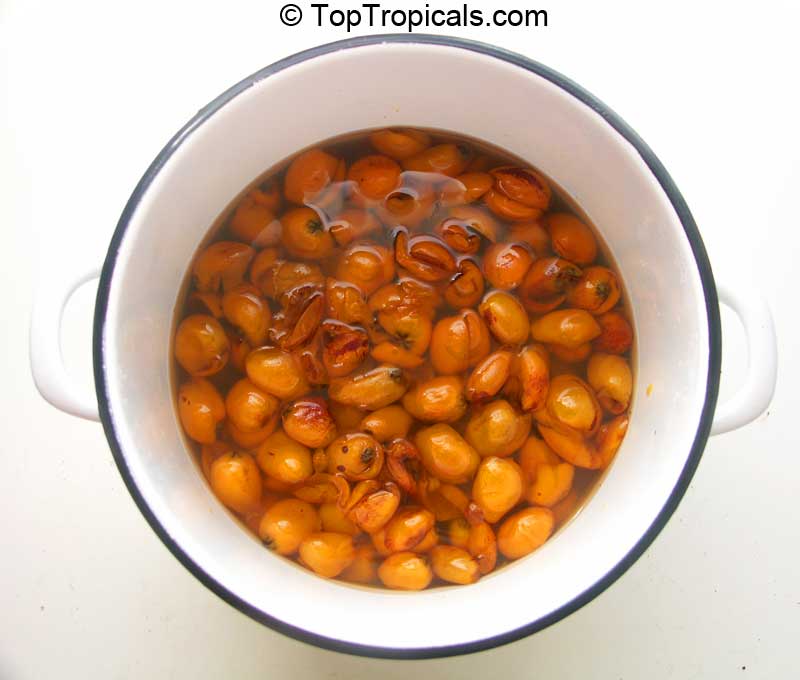
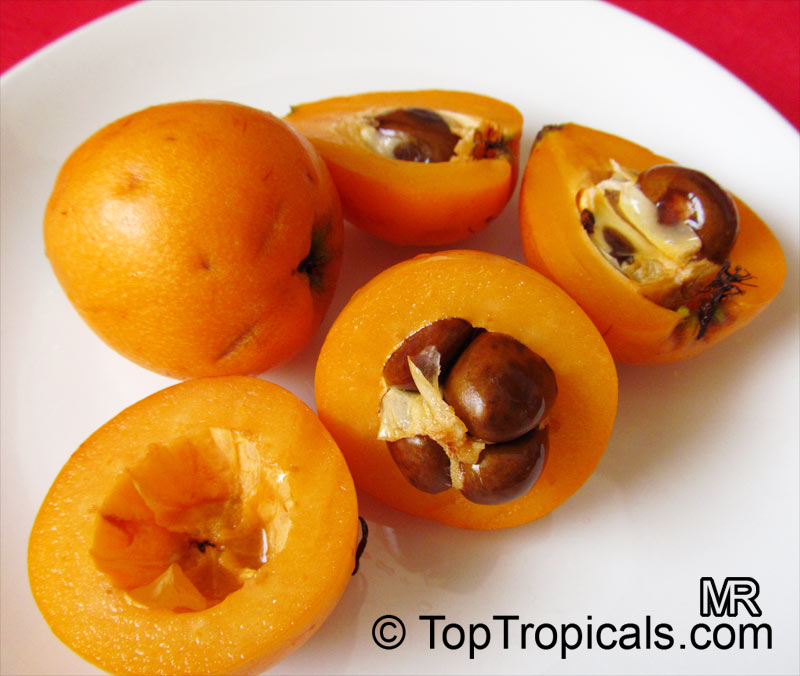
Wash the fruit, cut them in half and remove stones. The loquats will lose about a third of their weight once stoned (3 lbs of whole fruit = 2 lbs of fruit, stones removed). Add loquats and all remaining ingredients to a large saucepan. Bring to a low boil, then simmer for about an hour, stirring occasionally. The liquid will have reduced quite a bit and the fruit will be collapsed and very soft. Allow to cool slightly, then liquidize the sauce in a blender or a food processor. Be careful, hot sauce really burns!
This delicious tropical sauce is great for any BBQ - with meats or fish. Enjoy!

Date: 3 Nov 2016

SUNSHINE boosters for small and large gardens

Q: I tried your magic SUNSHINE booster on my Champaca tree and results were amazing. The tree was having a hard time establishing after shipping and didn't want to grow, losing leaves. I almost lost it. Then I sprayed SUNSHINE booster and right after the first application the plant perked up and new leaves grew within a week. Now I want to use this stuff on all my plants. I am a plant collector, with a few hundred pots and almost a hundred plants in the ground, living in California. I wonder if you have bigger size bottles of SUNSHINE so I can use on my flowering plants, and fruit trees, to promote blooming and fruiting. And another question, how often should I spray my plants? Your instructions say once in 20 days, should I spray more often for better results? Should I water through roots too? Do I still need to fertilize plants or SUNSHINE will be enough for their health?

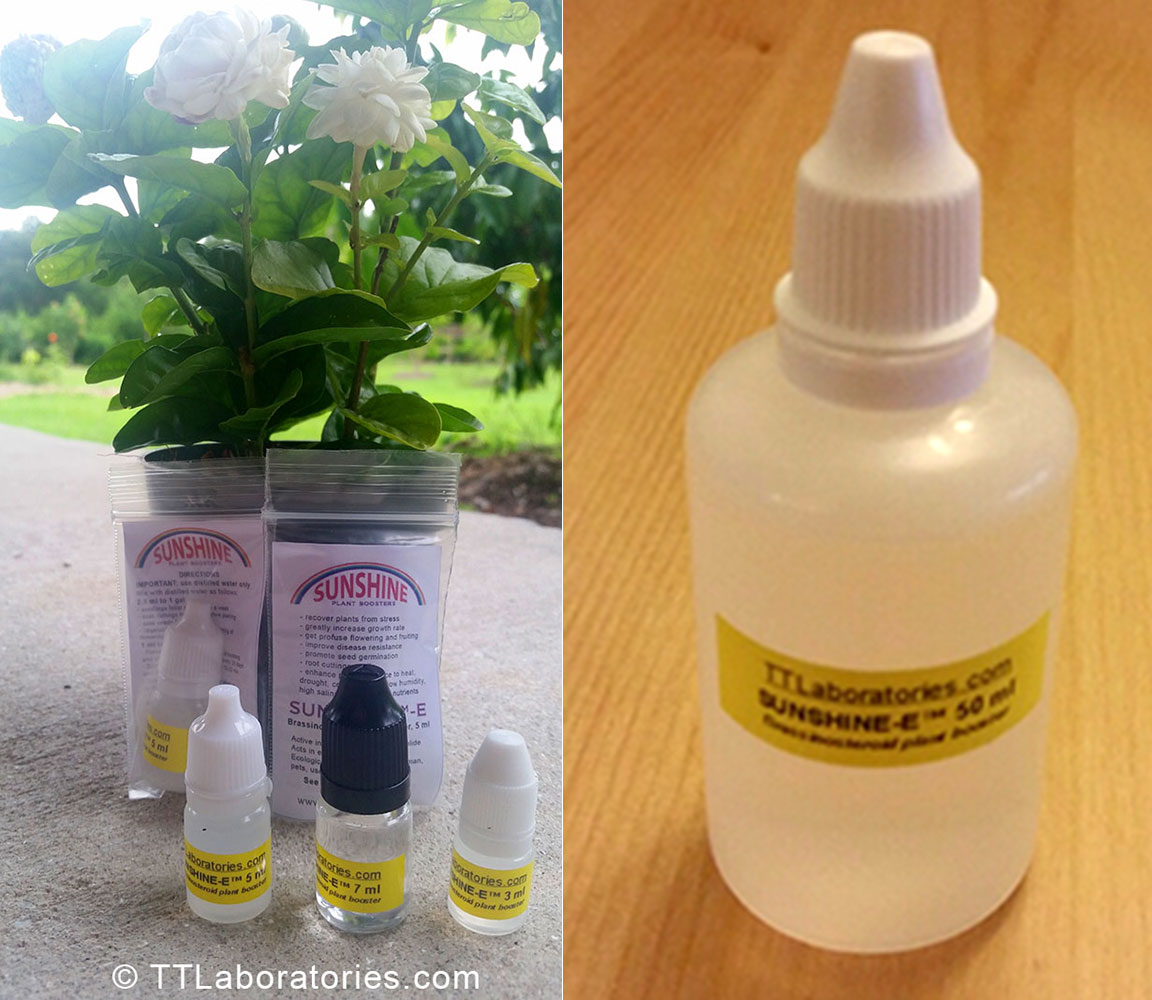
A: Great news! We just added new SUNSHINE items to our store, 50 ml and 100 ml - bigger bottles, they will be great for small and big gardens, as well as small plant nurseries and plant businesses. It is a good idea to start bi-weekly applications to improve your plants tolerance during winter time to cold and low light, especially when it comes to house plants. SUNSHINE improves plant resistance to insects which is a big deal during winter, when we bring tropical species indoors.
SUNSHINE is indeed a wonderful plant stimulant and stress reliever, although it is not a "magic-cure-all" medicine where one can't find its active ingredient. The hormone (epibrassinolide) is well-known and used in different countries along with other hormones for promote growth, fruiting, blooming, rooting, etc. One of the most amazing properties of SUNSHINE is that it works in extremely low dozes. Only a few drops will be enough to make a solution in distilled water, to treat a large size plant. If you want to try it out, one 5 ml bottle will last for several applications.
The formula works through plant metabolism within 2-4 days, repeat application not sooner than in one week. The formula is created for absorption through foliage, not roots, so do not try to water with solution. Plants should be evenly sprayed in clear windless day. Do not spray if rain is expected. Re-spray if it rains within 12 hours.
Remember that SUNSHINE is not a fertilizer and won't replace it. You have to apply fertilizer (except during winter months) and micro-element solution to keep your plants healthy.
See more information about SUNSHINE boosters, and buy them from our store.

Date: 11 Sep 2020

The best Loquat varieties with big, sweet fruit

Q: I'm interested in loquat and read through the varieties you offer but wanted your recommendation. I'm looking for a variety that is big, sweet (not tart) with 1 seed. Of the varieties you offer... Which variety would you recommend?

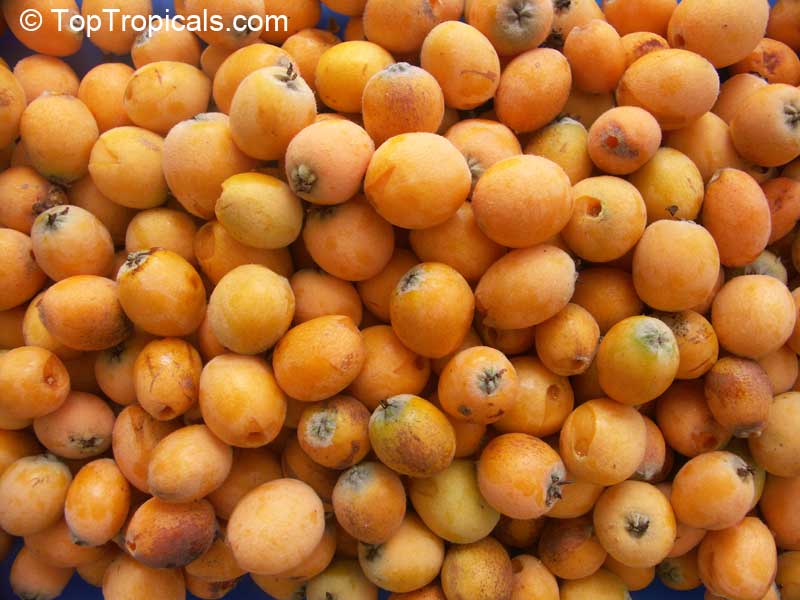
A: From our experience, the most popular Loquat variety is Christmas. It is an early ripening type hence the name Christmas. Fruits are very large for a loquat, they are bright yellow with a tangy apricot flavor.
Another good variety we recommend is Yehuda - it has a large fruit and very small seed Also, variety Oliver for many years has been considered the best loquat for South Florida. The fruiting season is March to May. It has medium to large fruit. The fruit is very sweet with only one-two seeds.
Loquats are very cold hardy tropical fruit trees, easy to grow, drought tolerant, fast growing. Fruit is great for eating fresh or making jam.

Check them out while they are on sale!