Garden Blog - Top Tropicals

Date: 31 Oct 2018

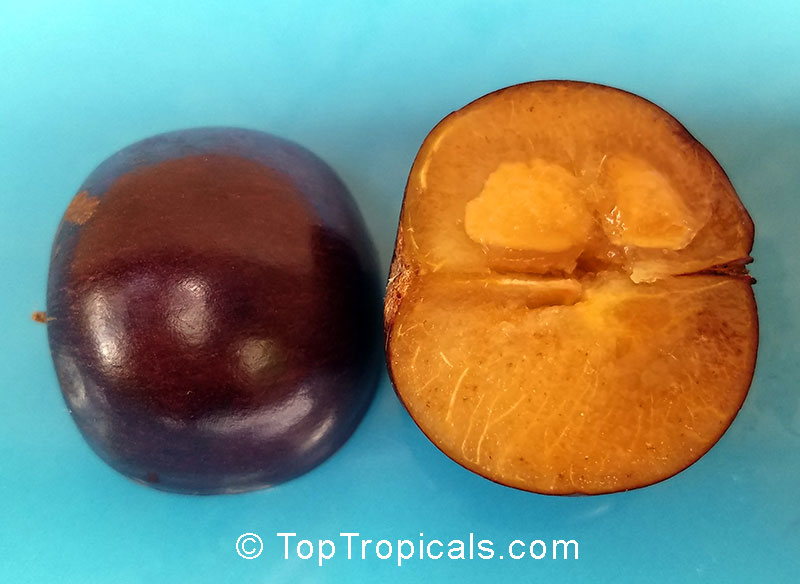
Featured Plant. Flacourtia indica - Governors plum
TopTropicals.com

Flacourtia indica - Governors plum

Governors plum, Madagascar Plum, Batoko palm - is a tropical or subtropical small shrubby tree. It is cultivated in tropical regions as a hedge plant and for its deep red acid fruits resembling small plums. The fruits are about one inch wide and can be eaten fresh or made into preserves. They are sweet and sour, with a texture and flavor similar to a plum. Fruits mature after one to two months from flowering.
The tree is easy to grow, self-fertile and doesn't require much care, not fussy about soil and very forgiving if you forget to water it.
Seeds germinate readily, but it takes a while until the seedling is ready to be transplanted into a big pot or in the ground. If you plant them now, by spring you have a chance to get the little tree ready to go!

We have fresh seeds!

Date: 7 Oct 2018

Multi-flowering Hoyas:
from Mark, the Garden Whiz

TopTropicals.com

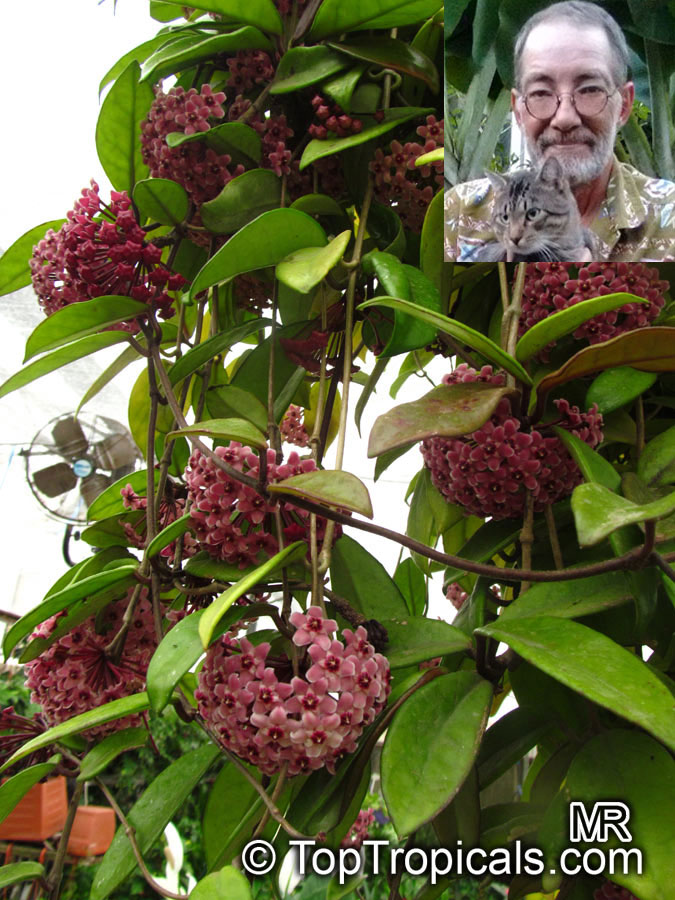
Q: A few months ago, i was given a Hoya vine. At the time, I was told to not cut-off the flowers but was never told why. However now that it IS flowering, they are so wonderful I would like to. Is there really a reason to not clip them off?

A: Actually, that was very good advise. Unlike most plants we encounter, hoyas develop perennial flower spikes. This means that each spike flowers more than just once! In other words, after the flowers on such a spike have gotten old and fall off, the knobby ended spike remains. Then, after a period of time, that same spike will develop another ring of flower buds. Depending on what kind of hoya it is, these perennial flower spikes may continue to periodically make more flowers for several years! And while the plant will continue to make more of these perennial spikes its whole life, the flowering display becomes better all the time as more and more spikes grow. (By the way, these are technically called "flowering spurs"). So every time a spur might be cut for ornamental purposes, it'll be one less place the vine can flower from in future years.

See our selection of Hoyas...

Date: 25 Sep 2018

How to get Passion Vine to flower?
From Mark Hooten, the Garden Whiz

TopTropicals.com

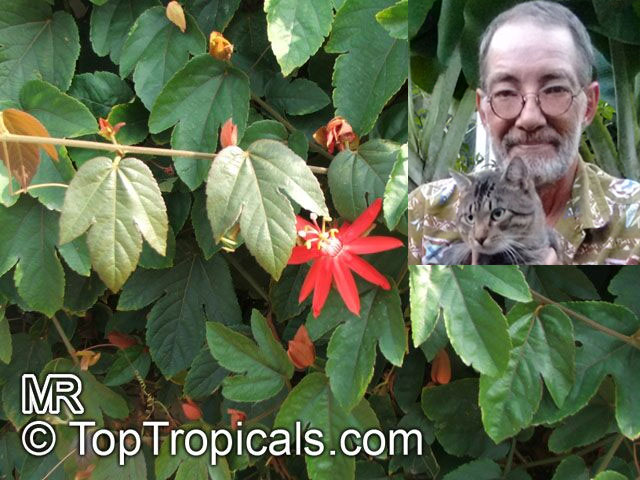
Q: Several months ago, I purchased a passionflower vine, a red one with lots of flowers. I ended up putting it in a much larger pot with a large trellis, using a popularly advertised bagged potting soil recommended at a big box store. I have given it a blue colored water-soluble fertilizer every couple of weeks as recommended. However, while the vine seems very happy, growing faster than i can keep winding it around the trellis, it has not flowered all summer. I there something I am doing wrong?

A: Passionvines as a group (and there are some 500 different kinds!) are sort-of unusual among popularly grown ornamentals because they have "nitrogen issues". This is because, even though unrelated, they are much like most legumes, as they maintain a symbiotic relationship with certain beneficial soil bacteria which allows them to gather atmospheric nitrogen and store it in their roots. When they have an overabundance of nitrogen, they simply stop flowering and produce rampant leafy growth while never flowering. They only flower well after a period of healthy vine growth, because the plant had finally used up all of its stored nitrogen.
Since you had both used a bagged potting soil which likely already contained fertilizer with nitrogen added, as well as bi-monthly doses of a liquid fertilizer which also contains nitrogen, it has been receiving so much nitrogen it only knows to grow more vineage until the nitrogen is used up. If and when that happens, it will again begin to flower. This rule applies of course not only to flowering but also to fruiting varieties of Passiflora: the more flowers, the more fruit you get!
So the answer is - for the time being, just stop giving it supplemental fertilizer and it will start flowering for you sooner than later!

See all passion vines from TopTropicals.

Date: 24 Jun 2018

Tip of the day: Growing Plumeria from seed

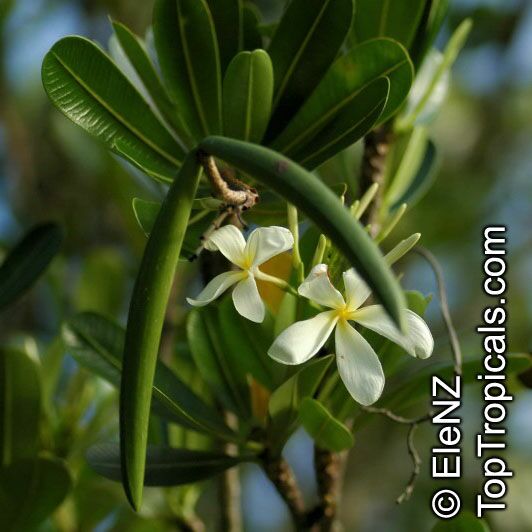
Q: I purchased a Plumeria from your company. It has done quite nicely and now has produced a seed pod. Please forward me information on how to care for it and use the seeds that may be inside to propagate another plant.

A: Wait until seeds are ripe (seed pod turns brownish). Soak seeds overnight. Use only well drained soil, or cactus mix. Insert heavy end of seed 1/4"into soil, leaving feathered end exposed. Place the pot in direct sunlight. Don't allow soil to completely dry out, but don't let it be soggy. Germination occurs usually within 3 weeks. Do not overwater. For more information on growing Plumerias, see our slideshow guide:

Date: 24 Jun 2018

TopTropicals

Carambola (Star Fruit) in winter

A word from our customer:
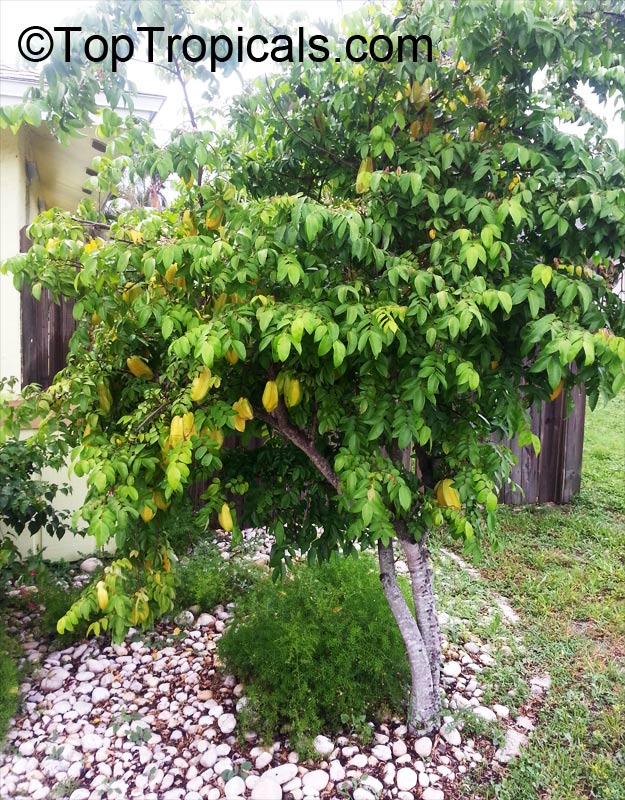
I just wanted to let you know that the Dwarf Carambola Kari has survived last winter and turned into a nice bushy tree this summer.I have been trying to grow this tree forever it never survived winters here. Then last year you suggested me to plant Carambola in wind protected corner, so I picked a place next to the house,South side very close to the wall. I covered it several times with a sheet on windy days like you said. The tree did lose leaves during winter but it survived and established well. I had my first crop this year nearly 20 fruit!Just thought your other customers wanted to know keep it protected from winds this is the secret,it works! (M., Avon Park, FL)

Check out this plant...