Garden Blog - Top Tropicals

Date: 16 Jan 2019

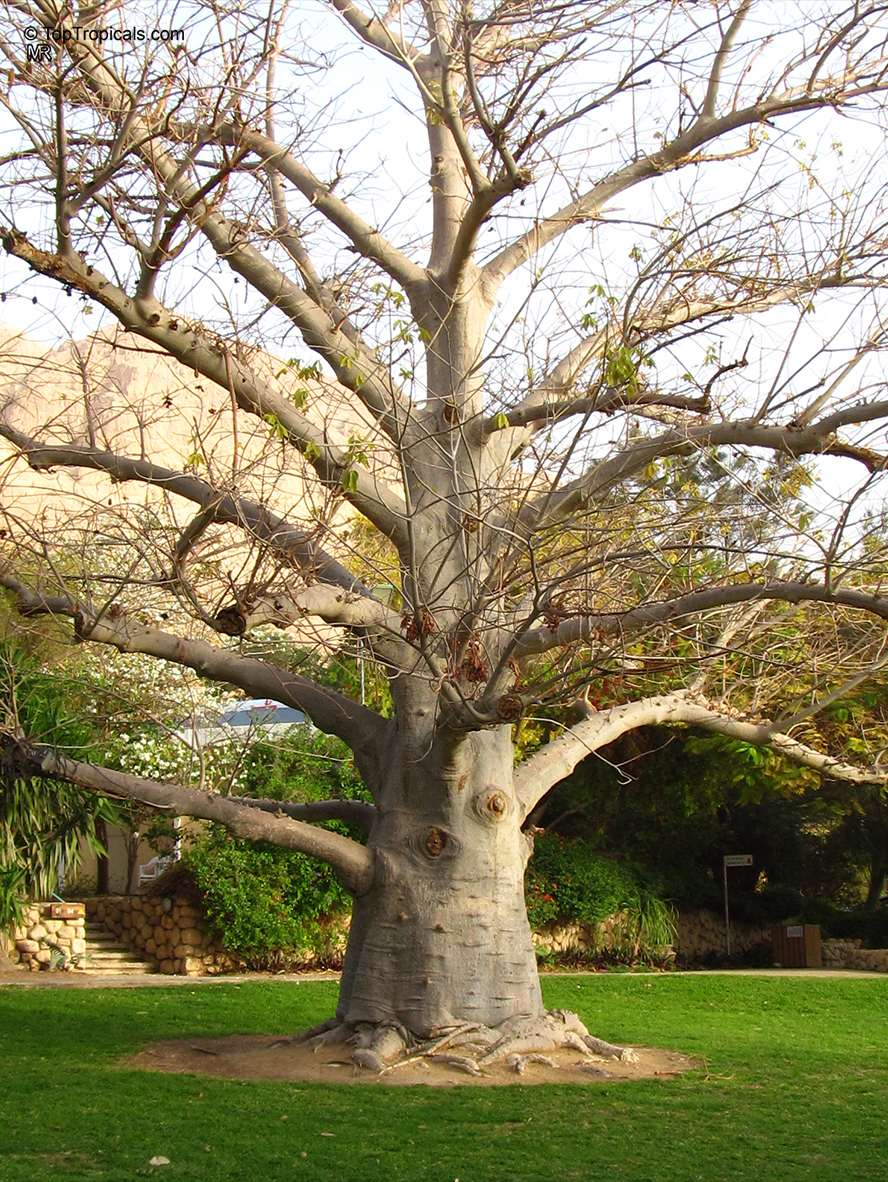
Climate change is wiping out the Baobab, Africa's tree of life...

TopTropicals.com

According to The Guardian News and Media, Africa's "tree of life" may not have much longer left... These highly important species are threatened with extinction, due to climate change and human development. Some species may not survive the next century. While plants have generally adapted to extended droughts, climate change is different, and with the Anthropocene, we are already witnessing the loss of these impressive trees. Africa's largest, oldest inhabitants, that have played silent witness to numerous generations, are already paying a heavy price for the environmental crimes of foreign lands.
Baobab forms an integral part in people's livelihoods. In West Africa, it is also called the "palaver tree" because of its social functions: when there is a problem in the community, meeting under the Baobab tree with the chief or the tribesmen would be synonymous with trying to find a solution to that problem; it reinforces trust and respect among members of the community. Its extinction would not simply be an environmental tragedy...

Every tropical gardener should have a Baobab to help to save this amazing species for the planet!

Date: 25 Jul 2018

Looking for the rarest plant? This is the one!

TopTropicals

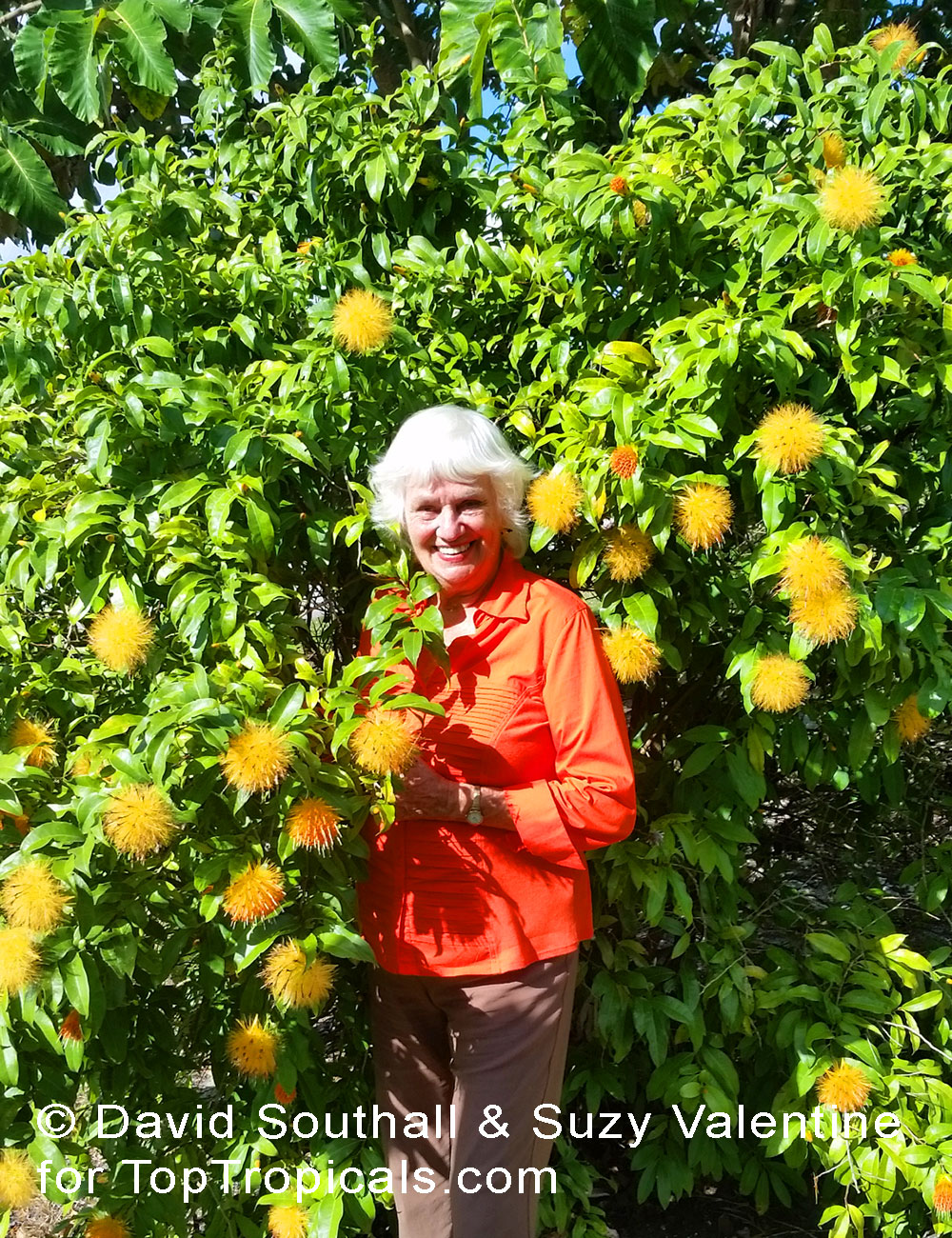
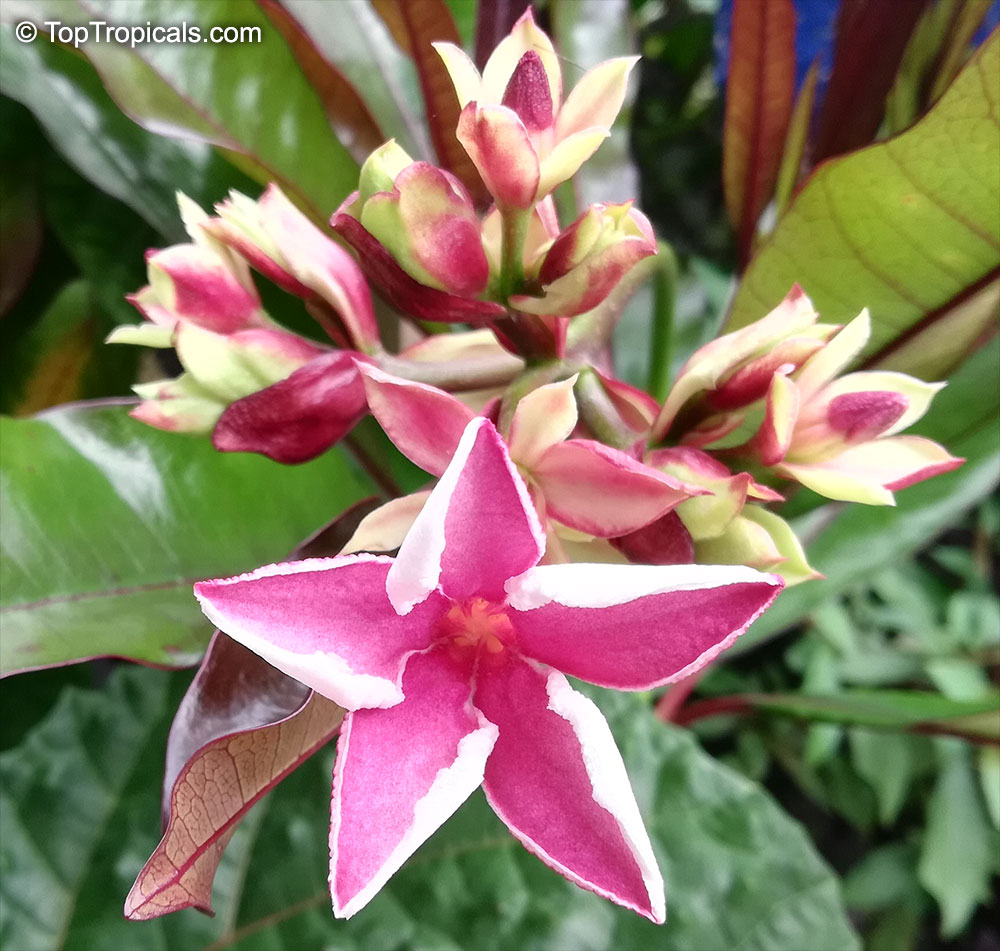
Stifftia chrysantha - Pompom, Rabo-de-Cutia

Looking for the rarest plant? This is the one!
Stifftia chrysantha is an exotic, rare flowering small tree with spectacular flowers, endemic to the vast tropical savanna ecoregion of Brazil called Cerrado. It grows into a bushy, attractive tree between 8 and 15 ft tall and starts flowering within 1.5 - 2.5 years from seed. It is a very rewarding plant that blooms 9 months out of the year, starting in Winter with great intensity during July-September, with each flower staying on the plant for several weeks. Seeds ripen from September through November.
The tree belongs to Aster family (Compositae) and has nothing to do with Powderpuffs which are from Bean (Fabaceae) family. The flower has 30 to 40 green, imbricated scales with short hairs, and actinomorphic corollas are orange below and darker above. After flowering, the inflorescence blows apart, which would scatter seeds. The dried center remaining is very attractive, like a small dried flower, and lasts for many months.
Stifftia can be grown in full sun to partial shade and is relatively cold tolerant, can take short cold spells.
The plant doesn't like wet feet and heavy/soggy soils; requires very well drained, acidic soil. We strongly recommend to use our professional soilless mix. Let soil slightly dry between waterings. It can be grown in full sun to partial shade and is relatively cold tolerant, can take short cold spells. If grown in a pot, try to keep the container shaded because roots don't like to be overheated. The plant needs monthly applications of slow release fertilizer as well as extra iron - use micro-nutrients to keep leaves green and healthy.
See more pictures of this beauty.

Check out this plant...

Date: 24 Jun 2018

Growing Bougainvillea and Plumeria in Florida

Q: I have recently moved from New Jersey to Florida (Orlando area) and I am so excited to start my own Tropical Paradise Garden! A few years ago I visited Hawaii and saw many beautiful colorful Bougainvilleas as well as fragrant Frangipani. Do they grow well in Florida? These are flowers of my dream!

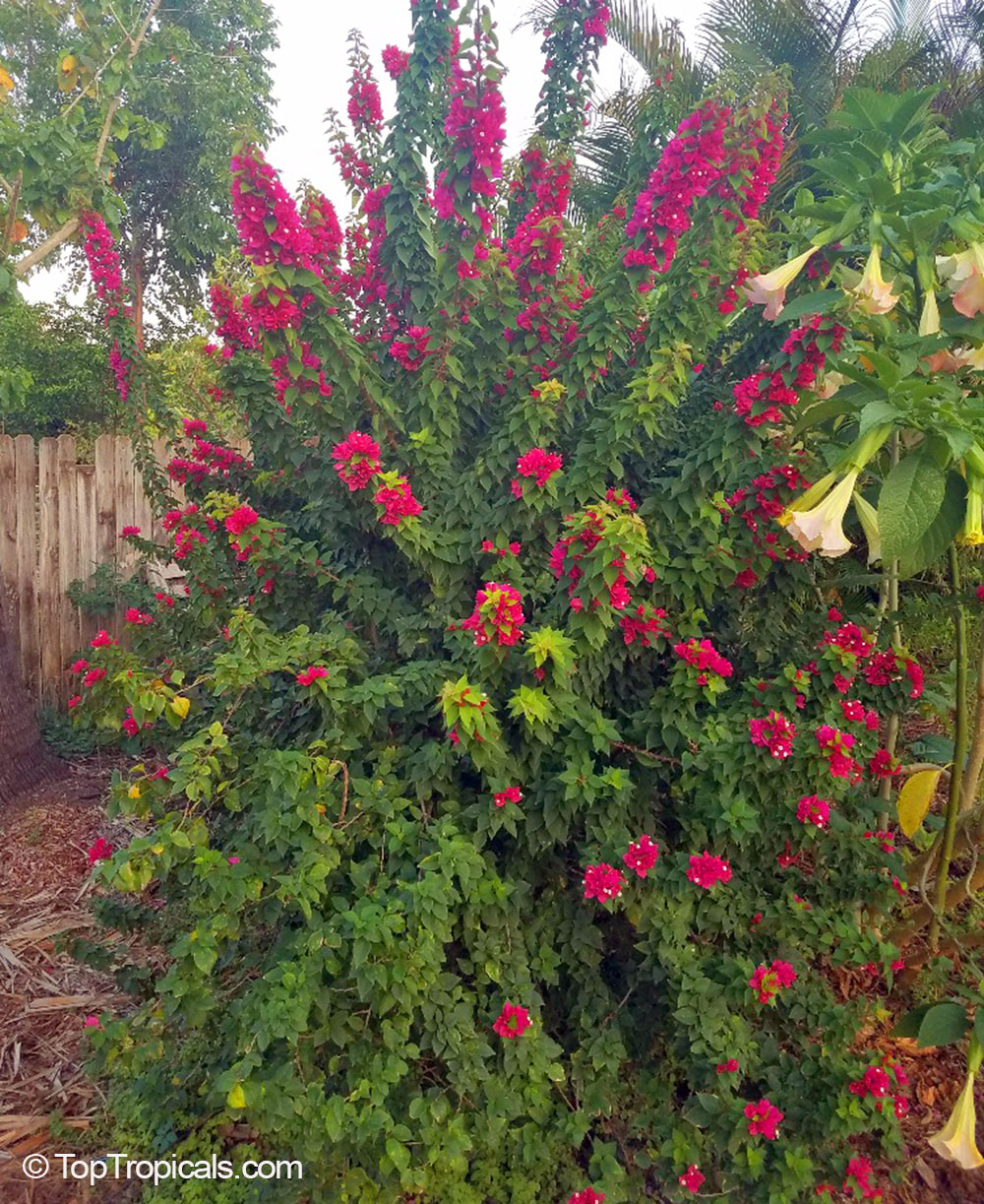
A: Both Bougainvillea and Plumeria grow well in most parts of Florida, especially South and Southwest. Bougainvillea can tolerate some light freeze and can be seen in the streets of Central Florida (young plants require some cold protection for the first year), so it is a very good candidate for your new garden. Keep in mind that unlike in Hawaii, where they bloom year around, Bougainvilleas tend to have a distinctive flowering season which in Florida is winter time - these plants enjoy dry weather that triggers their bloom. To enjoy Bright bougainvillea flowers for a long time, apply balanced fertilizer, prune regularly (this promotes flowering on new growth) and keep established plants on a dry side. Dwarf cultivar Pixie is super compact and can be grown in pots or in a small garden without any pruning! See photo of Pixie on the left.
Plumerias, all-time perfume favorites and symbols of Hawaii, are also residents of many gardens and collections throughout state of Florida. Their cold hardiness is close to the one of Bougainvillea, however keep young plants protected from frost. There are also many new exciting cultivars including multiple "rainbow" colors, and several dwarf varieties, some of them are evergreen - Plumeria obtusa. Plumerias are very undemanding and can stay happy and blooming in a pot and without regular watering. Give them as much sun as possible, and enjoy the fragrance for many months!

Date: 22 Aug 2021

How to fertilize herbs and vegetables

Q: We moved to Florida from New York earlier this year. My wife and I used to grow many fresh veggies and herbs in our garden up North during Summer, but it seems like in hot Florida the season for them is not until Fall. So we are preparing the beds and also looking for some organic fertilizer solutions. We've heard a lot about your natural Boosters and wonder if they can be used in our vegetable garden?

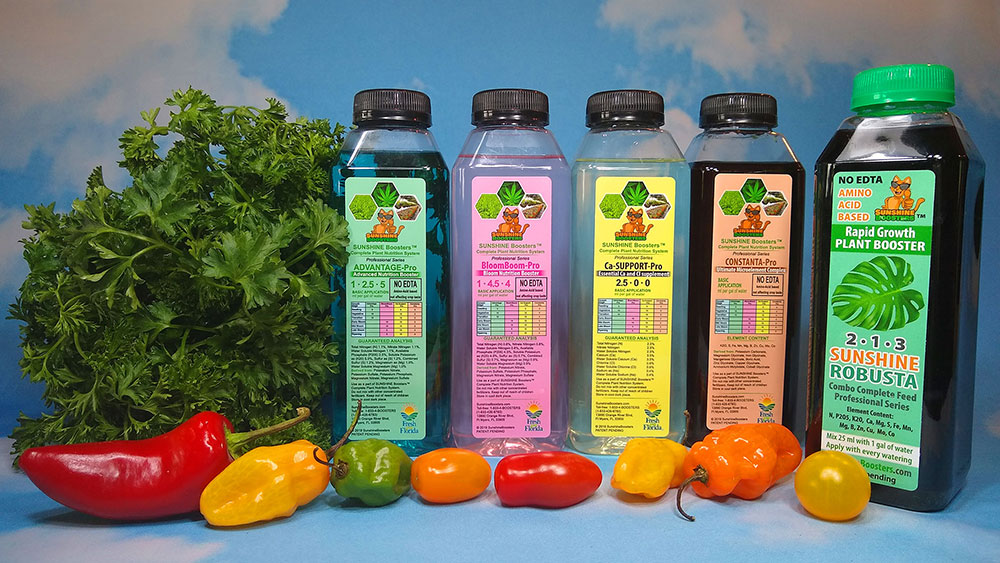
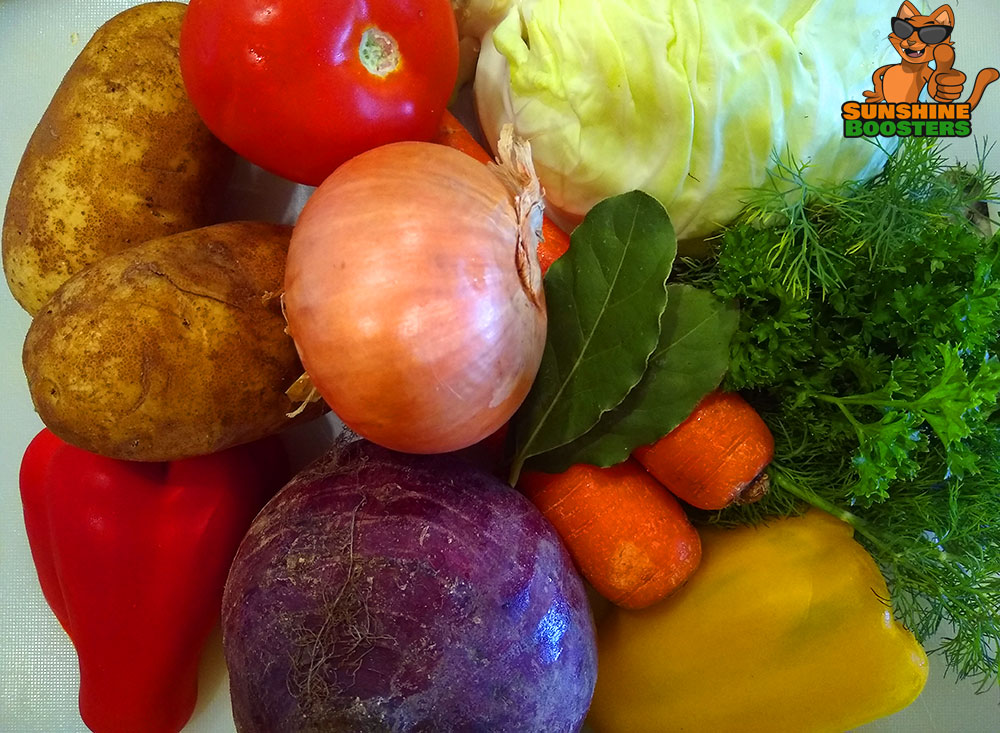
A: You came to the right place for organic fertilizer solution. Sunshine Boosters are based on organic amino-acids and are completely natural, non-toxic, eco-friendly, and do not build up nutrients in the soil. Their mild formulas designed specifically for edibles.
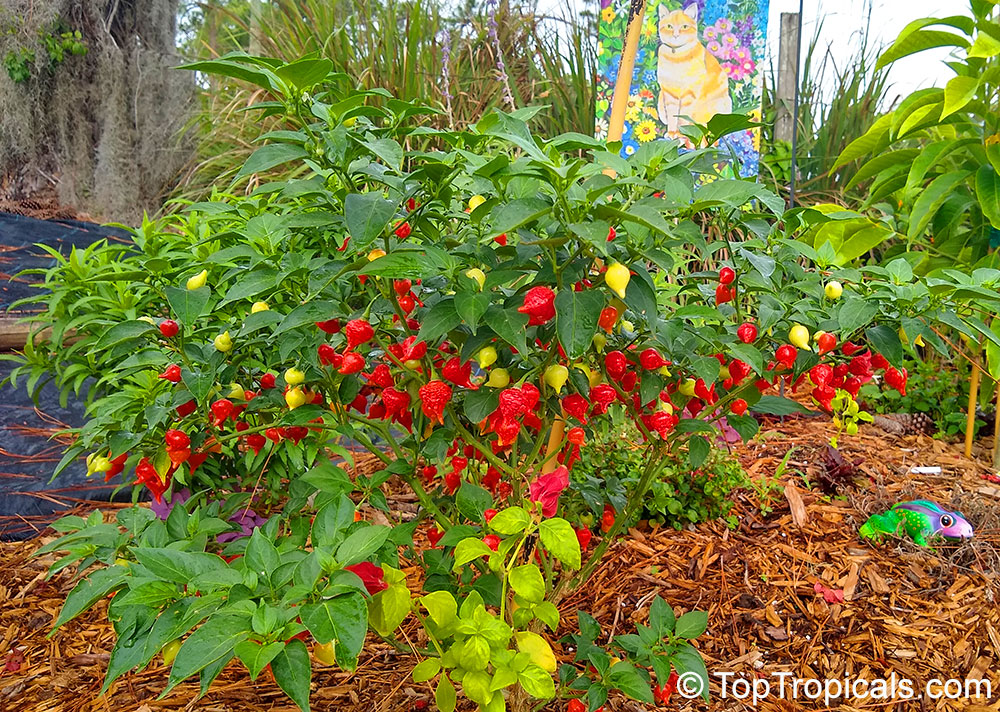
We just have started our own vegetable garden with some Biquinho and Wiri Wiri peppers, cherry tomatoes, and basil, and will be adding more as the the weather cools down.
For small scale gardens (both vegetables and herbs), you can start with Sunshine Robusta - a total feed "all on one". All necessary elements are provided in just one bottle, both macro- and micro-elements, it is a scientifically balanced formula. For larger gardens, especially if you have fertilizer injector system, we recommend Sunshine Boosters Pro Series - this product is much more economical, and you will need to mix only 3 solutions into your watering tank at the time of watering.
For more information, please contact our Booster guy Ed Jones, he can help you with selection and dosage information. Sample Discount program is available for samples of Sunshine Pro.

Date: 15 Aug 2021

How to grow Cerbera and make it flower
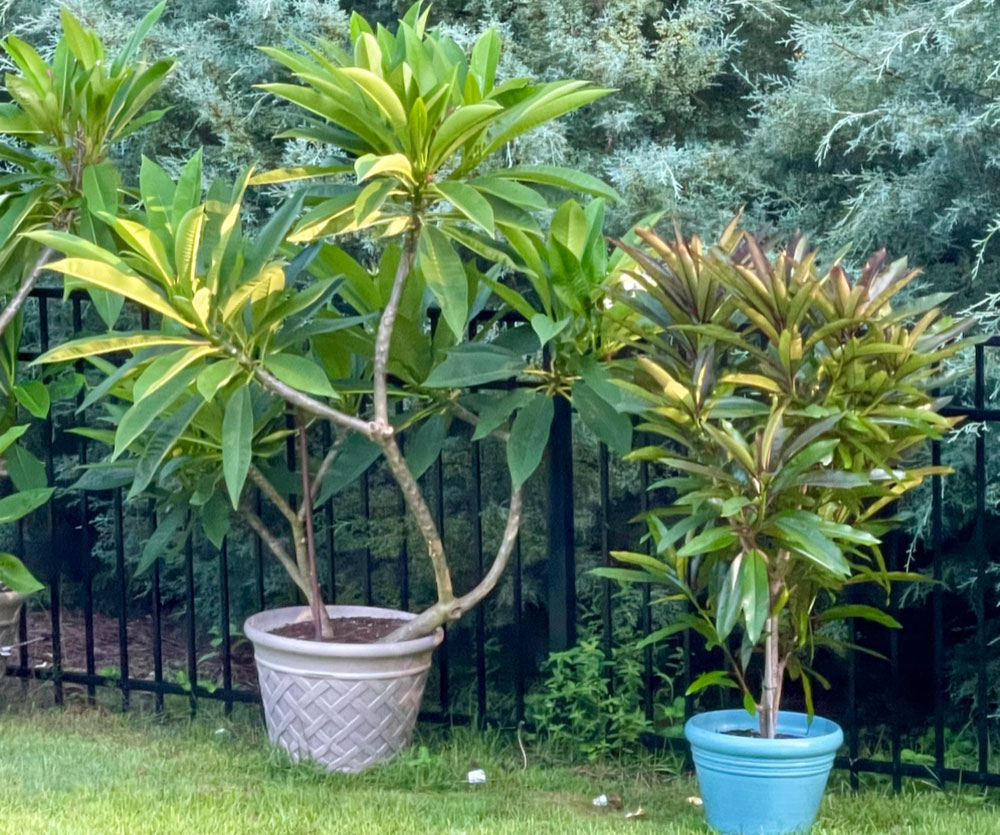
Q: I purchased Cerbera manghas - Enchanted Incense a year ago. As you see from the photo, it's doing great however, no blooms. I fertilize properly and very often and use worm castings for micronutrients. Yes it's not "your" fertilizer, but my plumerias, that are also in pots they are over 5 feet tall and blooming like crazy. I don't see any inflows coming on the Cerbera at all and it is hot and humid here in North Carolina, so it's happy but no sign of blooming. What is your advice?

A: Top Tropicals first brought Cerbera manghas into the US plant market a few years ago, it was recommended to us by our friend, plant taxonomist John Mood who visited Thailand, and among other exotic plants noted this fragrant beauty. Since then we've been successfully growing this plant, it has become one of everybody's favorites.

Generally speaking, Cerbera culture is very similar to Plumerias. These plants are closely related. So if you know how to grow Plumeria, you sure will succeed with Cerbera. Hot and sunny location, well-drained mix, moderate water and bloom boom fertilizer will do the trick. However, we have noticed a few distinctive features that make this plant somewhat challenging at times.

1) Flowers

For past years, we've been studying what triggers its flowering. Sometimes these plants start flowering in 1 gal pot, 1 ft tall. Other times a large developed tree 5-6 ft tall, in 5-7 gal pot, grows beautiful foliage with no signs of flowers. Eventually all of them bloom, no matter how stubborn they are, it's just some individual plants start flowering sooner than others, all grown in the same conditions.
One of our plants in the ground, a well-branched tree, was covered with flowers for a few months, but only on the 3d year after planting. Before that, it only produced a few random blooms. Others bloomed in pots at very young age.
The following factors benefit to Cerbera flowering:
- full sun at least 10 hours a day
- hot temperatures above 85F
- regular water but not heavy rains
- regular fertilizer - Bloom Booster type
- very good drainage and drying out before waterings. If root ball stays moist, the plant may look healthy but won't set flower buds. Keeping on a dry side will encourage flowering. Very similar to Jasmines: they bloom like crazy in April while it's hot and dry in Florida, but once our summer rainy season starts, they reduce blooming.

We highly recommend using Sunshine Megaflor bloom booster or SUNSHINE Pikake in combination with micro-element supplements Sunshine Honey (B-Mo) and Sunshine Superfood (complex micro) that induce flowering. Dry and granulated fertilizers may not supply exactly what a plant needs: certain elements that trigger flowering may be missing. Sunshine Boosters formulas are scientifically balanced, they contain precise amounts of nutrients needed for setting flowers. Besides, excessive salts from regular dry fertilizers create nutrient lock up that may retard plant metabolism; with liquid amino-acid based Sunshine boosters, plants consume the whole menu of elements without building them up in the soil.
2) Fruit

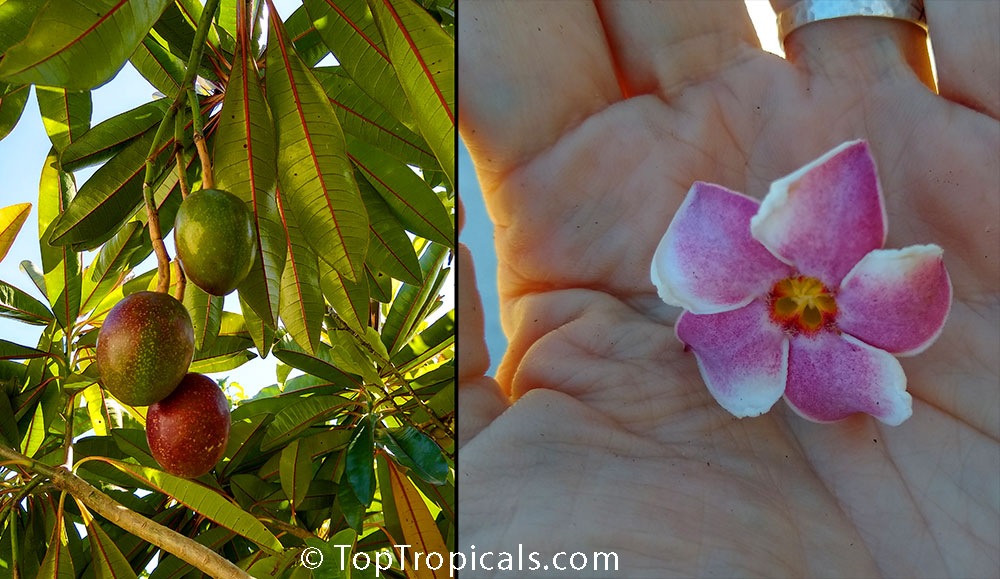
Fruit of Cerbera are very pretty and cover the tree after profuse flowering. To inexperienced eye they may look very much like small mango or avocado fruit - so make sure kids or visitors don't try to eat them! Cerbera seeds are extremely poisonous.

3) Leaves

If you ever grew Passiflora or Milkweed, you know how leaves can be eaten by caterpillars overnight. This may happen to Cerbera too, as we discovered. In Florida environment this exotic plant doesn't have natural predators for protection from certain insect species that may feed on it. So watch out and if noticed first signs of leaves damage - its time for insect control.
Other than that, Cerbera foliage is usually beautiful and colorful, here in Florida it looks much healthier than that of Plumerias often affected with rusty residue during high humidity months.

Hope this helps. The Cerbera fragrance is enchanting, it is worth the efforts and waiting!