Garden Blog - Top Tropicals

Date: 10 Feb 2019

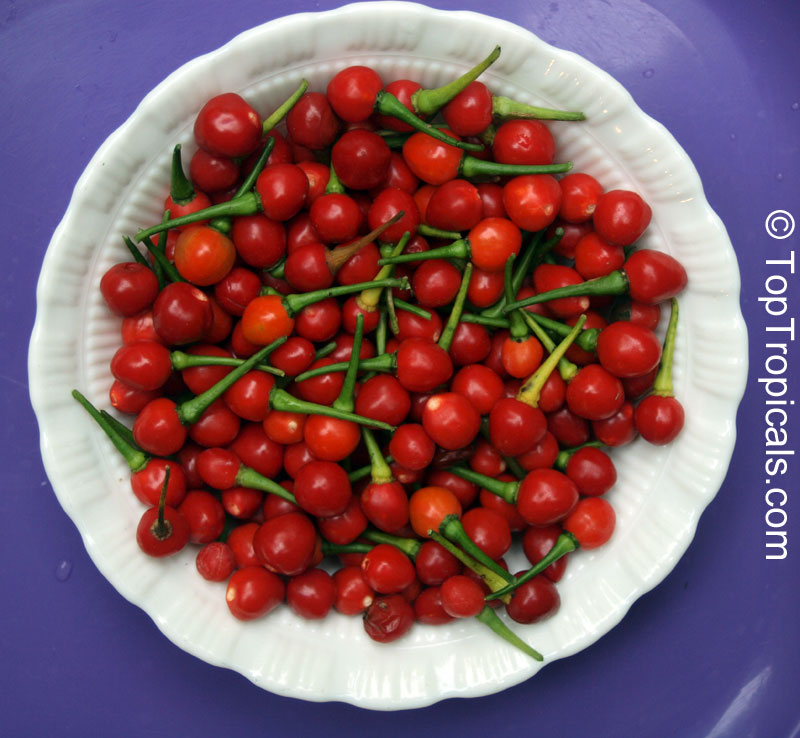
Featured plant. Capsicum frutescens - Wiri Wiri Pepper

TopTropicals.com

Capsicum frutescens - Wiri Wiri Pepper

A variety from Guyana, the Wiri Wiri pepper is the illustrious gem; hard sought and rarely found. This plant produces good yields of small 1/2"berry shaped hot peppers. Peppers grow upright, are very hot, and turn from green, to orange, to red when mature. What makes it so much different than any other hot pepper grown in the garden or bought at the store?
Hot? Yes, it is important that hot peppers are, but the people who really know, know that it is not just about heat, it is about flavor! And that is exactly what makes this little red gem so special. Guyanese dinners will only take one of those meals for you to never forget! The secret of their food is the flavor, and one of the cornerstone ingredients in many of their dishes is the Wiri pepper. The Guyanese population claim that it is not just a key ingredient to their diet, but also to why they are so good looking, live so long and have such great skin.

Read more about this plant...

Date: 21 Jan 2019

Garden-burned Calories in 30 minutes

TopTropicals.com

This is interesting! According to Harvard Medical School research, gardening activities are compared with some serious workout! Calories burned in 30 minutes by:

Walking 178
Bowling 133
Gymnastics 178
Dancing 244

Planting seedlings, shrubs 178
Planting trees 200
Gardening-weeding 205
Digging, spading dirt 222

So what are you waiting for? Start losing weight now by planting a tree and dancing!

Date: 16 Jan 2019

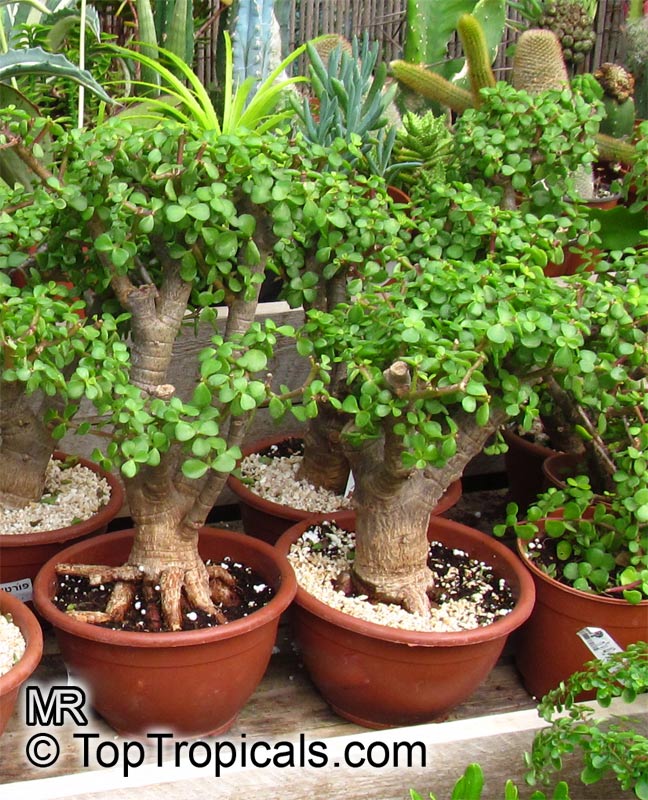
Fascinating Spekboom (Portulacaria afra, or Baby Jade)

By Mark Hooten, the Garden Doc
...I love this plant! I first grew it in the 1960s when I was just a kid. I found it growing as a fantastic four-foot tall houseplant in a big sunny window in a schoolmate's home and was happily given a cutting. When I inquired about this most unusual plant, my friend's mother explained that she had brought a piece of it with her when she came from South Africa many years earlier. She told me that in Africa, it is a favorite food for both Elephants and Rhinoceros and that it was grown all over her families farm for feeding both animals and people. Being a little kid in Illinois, I found this especially fascinating...
Continue reading...

Date: 7 Jan 2019

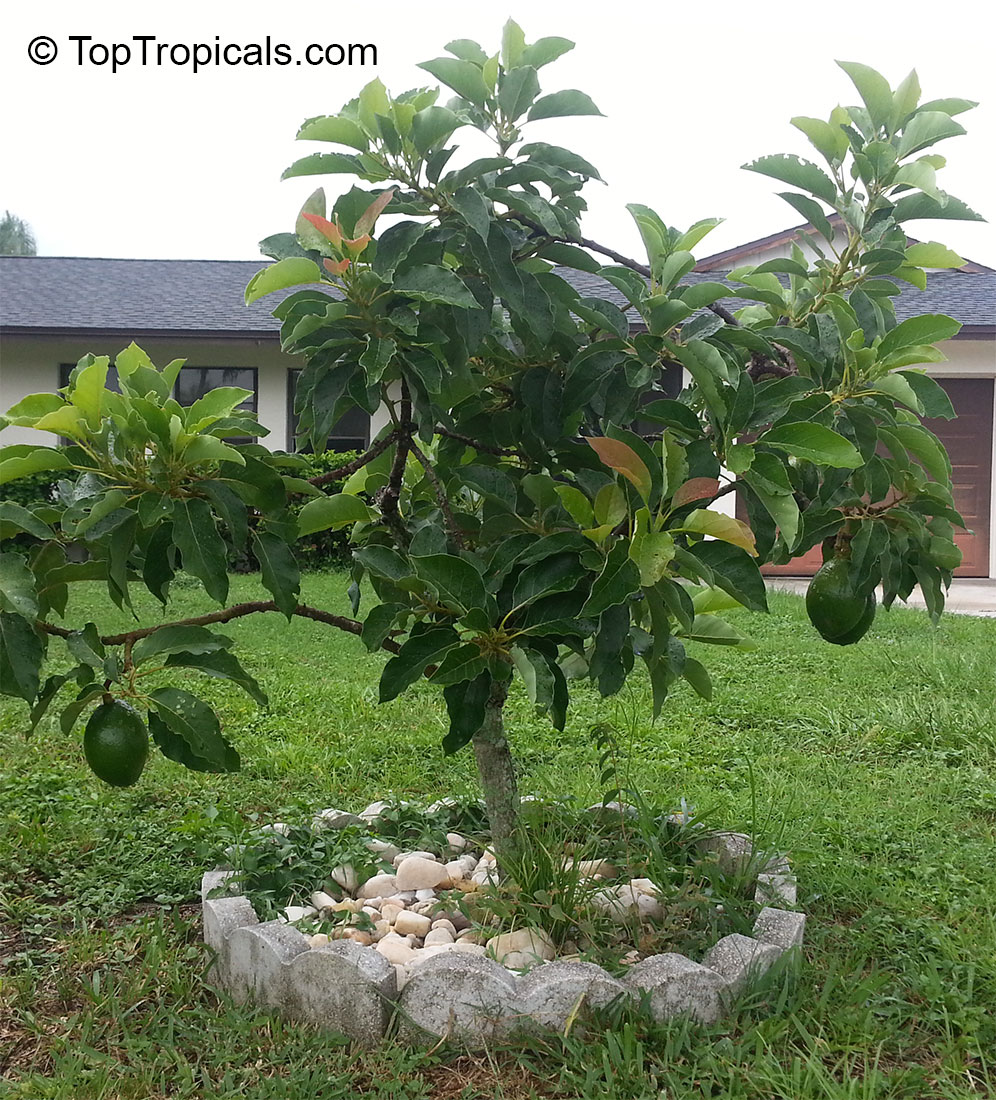
Three interesting varieties of Avocado
TopTropicals.com

Q: I intend to gift three avocados, at least one type A and one type B, to a friend who lives in an area where the temperature never goes below 25F. The idea is to give them a ripening season as long as possible. Which combinations do you suggest, and which are the A and B?

A: When talking about "A" type and "B" type in Avocados, we are referring to the flowers. An avocado will produce both male and female flowers on the same plant. "A" type means that the flowers are female in the morning and male at afternoon. "B" type means that the flowers are male in the morning and female in the afternoon. If you plant to start a commercial growth, then it's important to create a proper mix of both types. However, in hot and humid climate a single tree produces flowers of both types, so it is NOT necessary to have both A- and B- types planted together in the backyard. Even a single tree produces enough fruit for a home gardener.

It is also important to know that while there are "more cold hardy" avocados (hardy to as low as 15F), it refers to a full grown established tree. Young trees still need protection from the cold until they are bigger and more established. One can not expect a small tree planted in June to survive the first winter with a hard freeze. It'll take a few years until the tree is strong enough.

These a few rare varieties that may be of your interest.

Poncho Avocado
Very cold hardy variety. Produces medium to large green fruit. It survived temperatures around 10F near San Antonio, Texas (Zone 8b). Mature trees can take temperatures down to 15F for short period of time without significant damage.

Anise Avocado
This avocado has strongly scented leaves that smell like Anise. Very rare variety. Fruit is of excellent quality, creamy and buttery.

Catalina Avocado
Catalina is a very nice mid-season pear-shaped fruit that is especially rich and creamy. It is an extremely popular variety in South Florida in the Cuban Community. The Story of this variety says...
...Catalina is an amazing avocado floated across from Cuba, 60 years ago just before Fidel Castro took over the Island Nation. Wise Cubans jumped into the ocean to escape the Castro regime and tossed in some favorite scions for us to enjoy here in the States. We owe a great debt to poor old Don Miguel Cruz de la Santa Maria Espinoza Sanchez Alvarez Jr. who sadly was lost at sea. His amazing scion wood, wrapped in cellophane and aluminum foil floated over, washing ashore on Miami Beach. His shiny little package was miraculously picked up on the shoreline and immediately grafted and cared for by keen-eyed avocado lovers in Miami...
So be sure to think about this story every time you eat a Catalina!

These three Avocados will provide you with fruit ripening during the whole warm season. See more information on avocado varieties and the most cold hardy cultivars.

Check out our full selection of avocado varieties. They are 15% OFF today!

Date: 28 Dec 2018

FEATURED BUTTERFLY PLANT:

TopTropicals.com

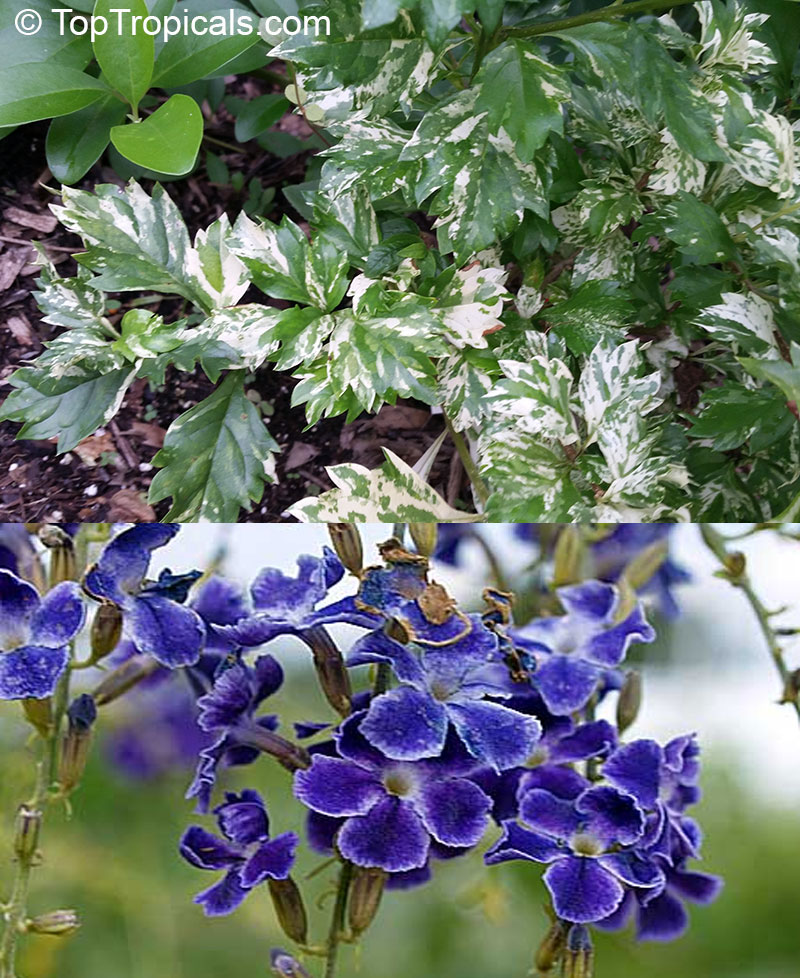
Duranta variegata - Variegated Sky Flower

Variegated Sky Flower is grown for its summer flowers and ornamental fruit. This evergreen fast-growing shrub spreads and arches to 10 feet tall and wide and is great for live hedges and covering fences and corners. In the summer, cascading clusters of blue tubular flowers appear followed by wonderfully contrasting orange-yellow berries. This variegated form has creamy-yellow margins around the one inch long serrated leaves. In mild climates, this plant can be in flower nearly year round with flowers and fruit appearing at the same time. It does best in full sun with frequent deep watering and is hardy to about 20-25F. A good choice for espaliers, as a small tree or large bush; all forms benefit from frequent selective pruning. Flowers are very attractive to butterflies. Great for providing a color contrast in the landscape, and is especially well-suited as a bright-colored background or screening. Prune back in late winter to encourage a more compact shape and strong flush of fresh spring foliage. Requires moderate watering in a well-drained soil.

Check out this plant...