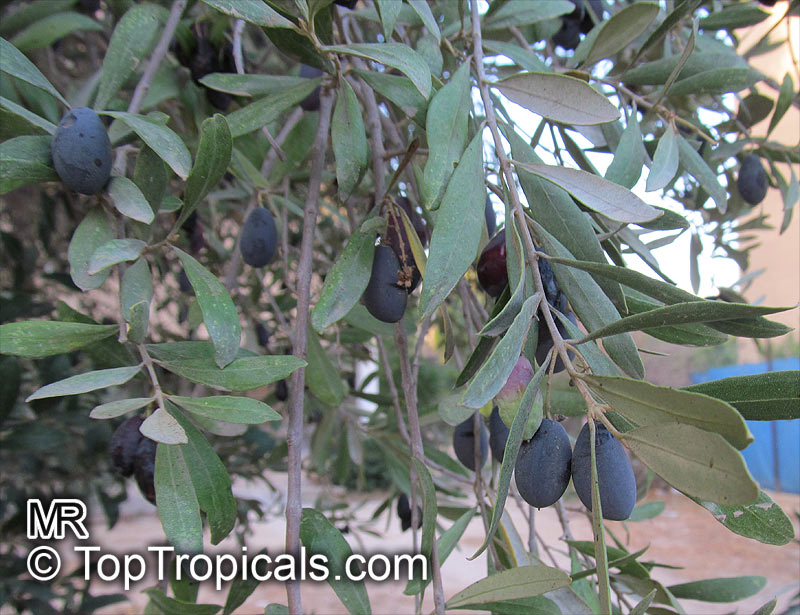
Garden Blog - Top Tropicals

Date: 22 Apr 2026

Secrets of Real Mango Flavor

Top-down  view  of  a  white  tray  filled  with  assorted  mango  varieties  in 
 different  shapes  and  colors,  including  green,  yellow,  red,  and  orange, 
 arranged  outdoors  on  a  textured  surface.

A colorful mix of mango varieties - different shapes, colors, and flavors all in one harvest.

Mango Practical Growing Tips (Keep It Simple)

  • Sun: Full sun is key. 6–8+ hours daily for best growth and fruiting.
  • Soil: Excellent drainage is critical. In pots, use well-draining mix with added perlite or sand. Mango does not like wet roots.
  • Watering: Water deeply, then let soil dry slightly before watering again. Avoid constantly wet soil.
  • Containers: Excellent for pots. Condo mango varieties stay compact and are easy to manage on patios.
  • Feeding: Light but consistent feeding during active growth makes a big difference. Use controlled-release Green Magic for steady nutrition, and supplement with liquid Sunshine Boosters Mango Tango during warm months to push growth and fruiting.
  • USDA Zones: Best suited for Zones 9b–11. In Zone 9b, choose a warm, protected microclimate (south-facing wall, patio, or near structures) and be prepared to protect during cold snaps. In Zones 10–11, mango grows reliably in-ground. If you live in colder zones, grow in a pot so you can move the tree indoors or protect it during cold weather.
  • Cold Protection: Protect young trees during cold nights. Use cover or place near a wall or warm microclimate. Mature trees are more tolerant.
  • Airflow: Good airflow helps prevent disease and keeps growth clean.
  • Spacing: Give the tree room for light and airflow. Even compact trees benefit from space.
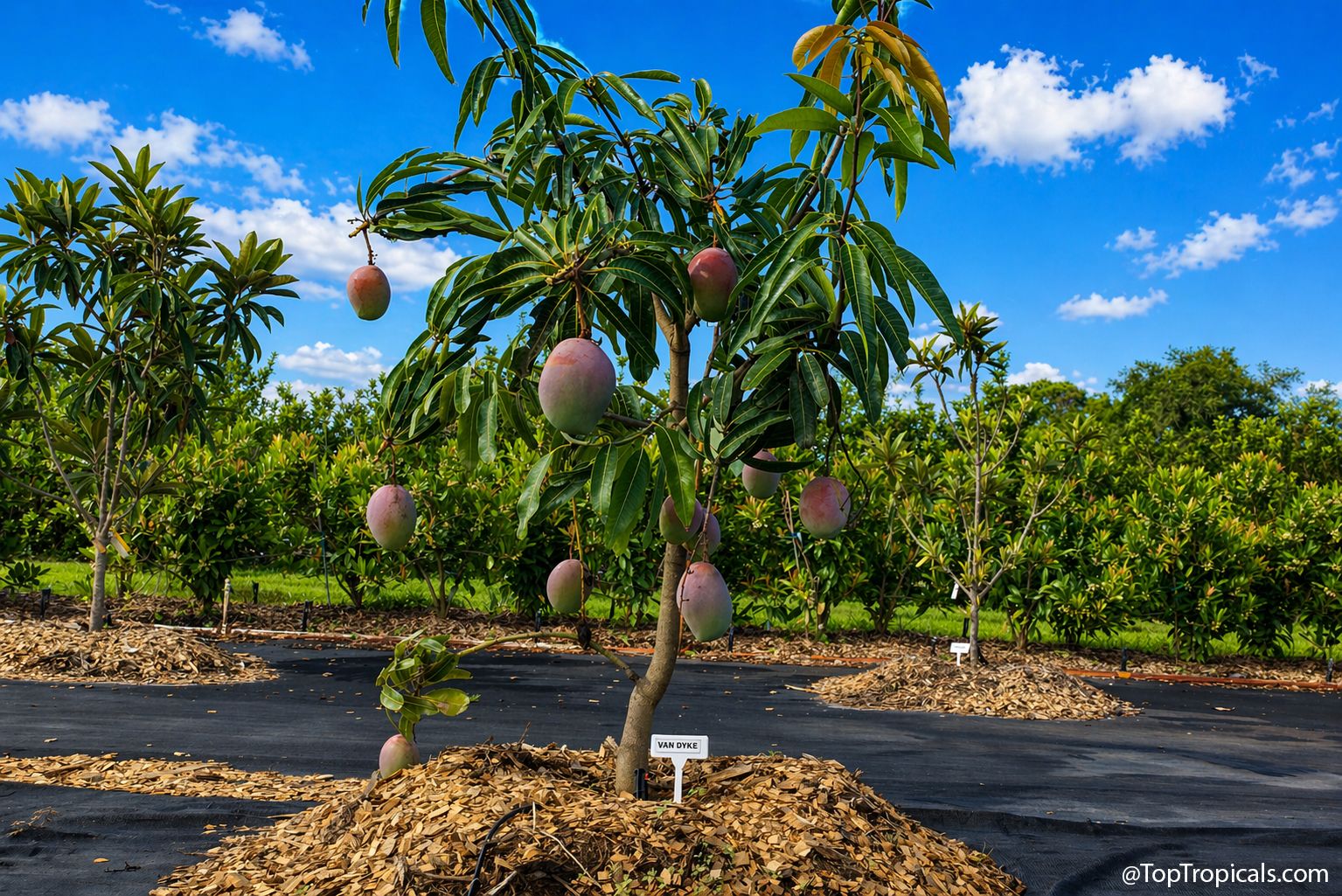
Mango  tree  Van  Dyke  growing  in  an  orchard,  loaded  with  ripening  mango 
 fruits,  surrounded  by  mulch  and  irrigation,  under  a  bright  blue  sky  with 
 scattered  clouds.

A fruiting mango tree Van Dyke in the grove, heavy with developing mangoes and enjoying full sun.

Mango Winter Care (Very Important)

Mango is not a truly cold-hardy plant. It performs best in USDA Zone 9b and warmer, where freezes are rare and short. In borderline areas, winter protection becomes part of the routine. Mango trees should be covered during cold nights, and planting near a south-facing wall helps protect from cold winds. That small microclimate can make a real difference. If your winters are less predictable, growing mango in a container becomes the simplest solution. It gives you full control — you can move the tree to a protected space when temperatures drop, and bring it back into the sun when conditions improve.

That is where condo mango varieties make the most sense. They are naturally compact, easier to manage in pots, and still produce full-size, high-quality fruit. You get all the benefits of a mango tree without needing a large yard or perfect climate — just sun, a container, and a bit of seasonal movement when needed.

📚 Mango tips from our Blog

Growing Mango in a Pot (Condo Mango Made Easy)
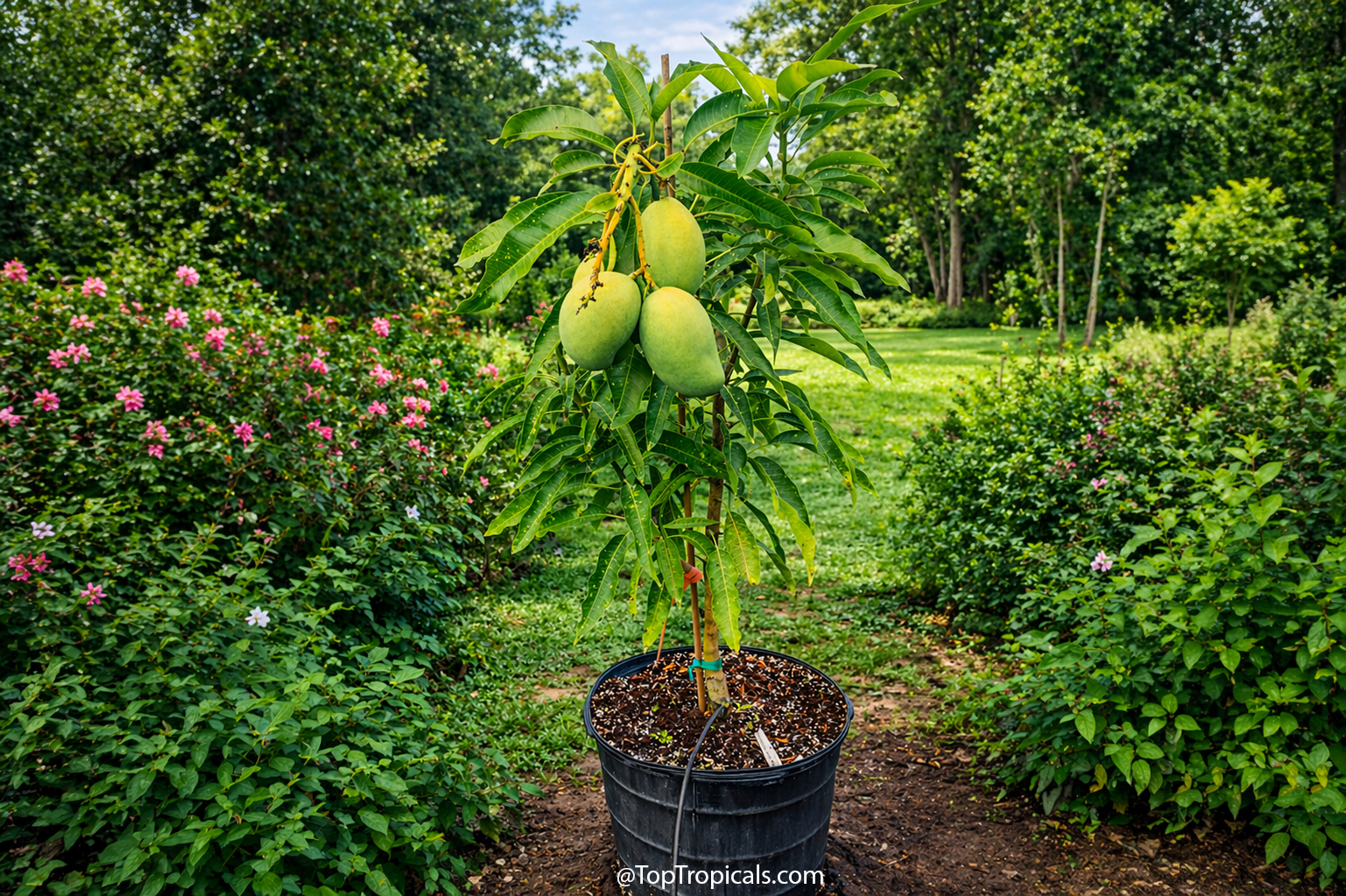
Young  mango  tree  growing  in  a  large  black  nursery  pot,  supported  with 
 stakes  and  drip  irrigation,  bearing  several  green  mango  fruits,  set  in  a 
 lush  garden  with  flowering  shrubs  and  a  sunny  lawn  in  the  background.

Young mango tree in a container, already holding fruit and thriving in a sunny garden setting.

Growing mango in a container is one of the easiest ways to control size, soil, and winter protection. Condo mango varieties stay naturally compact and adapt well to pots, making them ideal for patios, small spaces, or colder climates. You get full flexibility — move the tree when needed, manage its growth, and still enjoy real tree-ripened fruit.

  • Pot size: Start with 3–7 gallon, move up to 15–25 gallon as the tree grows.
  • Soil: Use fast-draining mix such as Abundance soilles mix.
  • Sun: Place in full sun. More light = better growth and fruiting.
  • Watering: Water deeply, then let soil dry slightly before next watering.
  • Feeding: Use controlled-release Green Magic for steady nutrition, plus liquid Sunshine Boosters Mango Tango during active growth.
  • Climate Flexibility: Can be grown in any USDA zone when kept in a container. Simply move indoors or to a protected area during cold weather to keep the tree safe.
  • Pruning: Light pruning keeps the tree compact and productive.

Once you taste a real mango from your own tree, everything changes. It is no longer something you buy — it is something you grow, wait for, and look forward to every season. What felt like hype suddenly makes sense. The passion people have for mango is not exaggerated — it just comes from a completely different experience.

And for people who have never tasted a fresh, juicy mango warmed by the sun, that moment comes as a surprise — the first time they realize what mango is actually supposed to taste like.

As Smokey quietly puts it: Now you know.

📚 More about Condo Mango

🛒 Shop Condo Mango

Landscape  infographic  showing  how  to  cut  a  mango  in  five  steps.  Step  1 
 -  slicing  along  each  side  of  the  pit.  Step  2  -  separating  the  two  cheeks  and
    the  pit.  Step  3  -  scoring  the  mango  flesh  in  a  grid  pattern.  Step  4  - 
 turning  the  cheek  inside  out  to  create  cubes.  Step  5  -  scooping  or  slicing 
 the  cubes  to  eat.  Bright  yellow  background  with  whole  and  cut  mangoes  and 
 green  leaves  decorating  the  layout.

Simple step-by-step guide to cutting a mango into clean, easy cubes - from slicing off the cheeks to popping and scooping the fruit.

🎥 Watch Mango videos

🛒 Shop Mango Trees

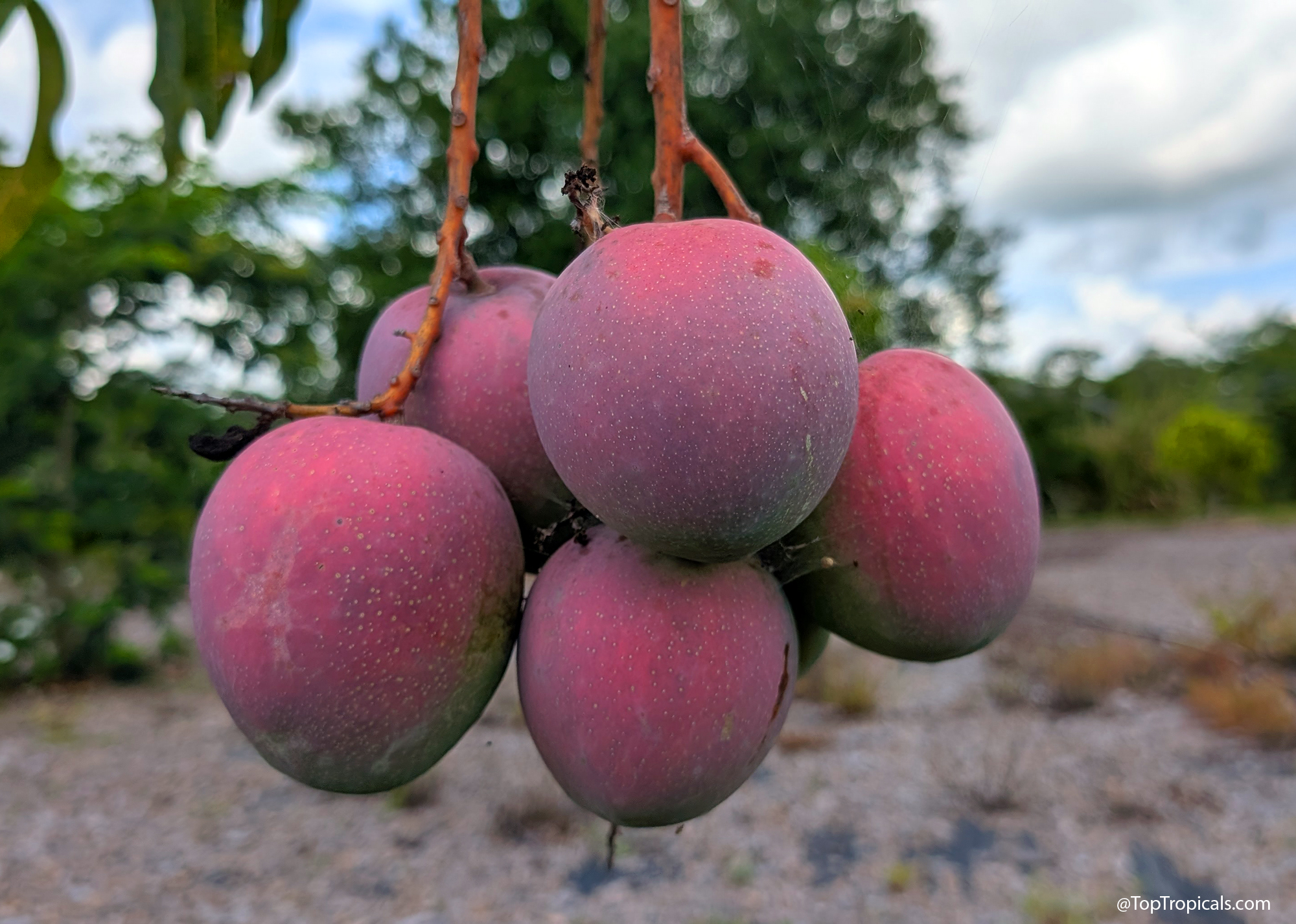
Close-up  of  a  cluster  of  ripening  mangoes  hanging  from  a  branch, 
 showing  red  and  purple  blush  tones  against  a  blurred  outdoor  background.

Cluster of ripening mangoes developing rich color on the tree just before harvest.

Taste the Mango Difference - Save 10%
Once you taste a real mango from your own tree, everything changes. Now you know. Get 10% off with coupon code MANGO2026 on 3 gal mango trees.
Offer valid through 04/28/2026.
Discount applies to 3 gal plants only. Not valid on previous purchases and cannot be combined with other promotions or discounts. Offer subject to change without notice.

Date: 6 Dec 2025

🌿 Bring the Jungle Inside: Winter Survival Guide Part 2.Temperature. ❄️

Smokey  the  tuxedo  cat  checks  thermometers  by  a  cold  window  while  Sunshine  the  ginger  tabby  relaxes  near  a  heater  holding  a  room  thermometer  showing  74  F.

Smokey: Too cold. We need more heaters so the plants feel comfortable.
Sunshine: I feel comfortable.
Smokey: You are not part of my plant collection, but I am glad you are comfortable.

🌡️ TEMPERATURE: THE TROPICAL DORMANCY LINE

In Part 1 (Winter Survival Guide: Temperature) we covered the foundation: light, placement, and acclimation. That is the survival layer.

Most tropicals stop growing below 70 to 75 F. They stay green, but their engine shuts down.

Below 70F:

  • Water intake drops.
  • Roots slow down.
  • Fertilizing becomes risky.
  • Root root becomes easy.

If you WANT your plants to grow in winter, you must take care of everything: Warmth, light, humidity, water. It all works together.

  • Aim for 75 F with bright light. Water lightly. No fertilizer.
  • Watch out for drafts. Cold windows. Door blasts. Garage entryways. Even one gust can trigger leaf drop.
  • Vents are the opposite problem: hot, dry, dusty air. That gives you crispy edges and mites.
  • Root zone temperature matters just as much as room air. Your thermostat may say 72 F, but your pot on a tile floor may be sitting at 55 F. Fix this by elevating pots on boards or stands. Use Styrofoam. Never keep pots directly on cold tile o windowsill
  • Extra winter heat: Space heaters are fine if used smartly. Do not blow hot air directly on plants. Keep heaters away from cords, trays, and water. Oil filled radiators are the safest option for plant rooms.
  • Use a humidifier if you want growth or want to prevent spider mites. But do not blow mist directly onto leaves. Always place the unit lower than the plant canopy.
  • Grouping helps. Put tropical plants close together to share humidity. Do not mix succulents with humidity lovers.
  • Cats and dogs love to knock over lights and stands. Secure your fixtures. Trust us.
  • Airflow: Light airflow is healthy. Direct fan blast is not. Still, dry corners invite mites.
  • A mild night drop is OK. A big one below 55 F will stop growth completely.

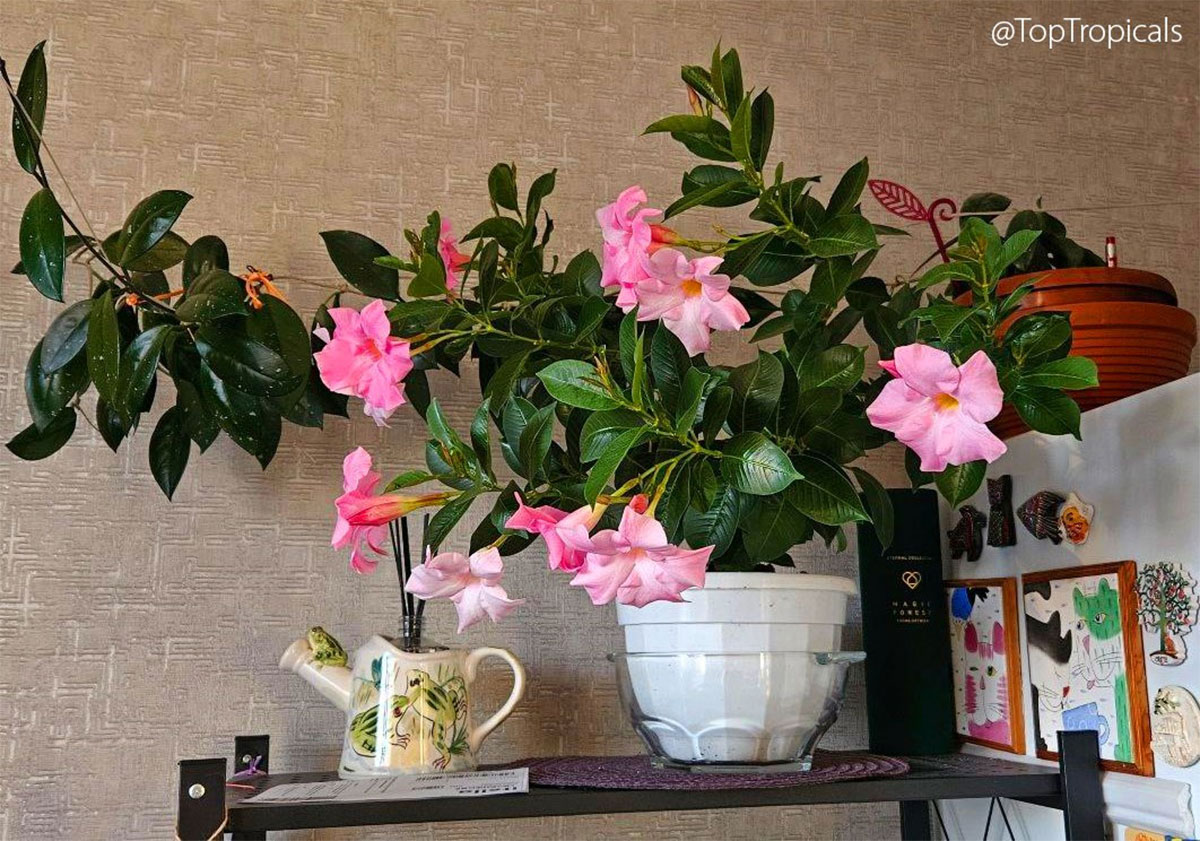
Pink  mandevilla  vine  blooming  indoors  in  a  white  pot  on  a  shelf.

A mandevilla thriving indoors with bright pink blooms and glossy green leaves.

☂️ PLACEMENT: MICROCLIMATES RULE EVERYTHING

Indoors is one big tradeoff: light but cold near windows, warm but dim away from them. The winning combo is a warm room with supplemental light.

Best zones to keep plants in winter:

  • South or east windows with additional light
  • Warm living spaces
  • Bright bathrooms for natural humidity

Worst zones to keep plants in winter:

  • Behind curtains
  • Directly on windowsills
  • Near heaters or vents
  • Against cold exterior walls
  • Dark corners without supplemental lighting

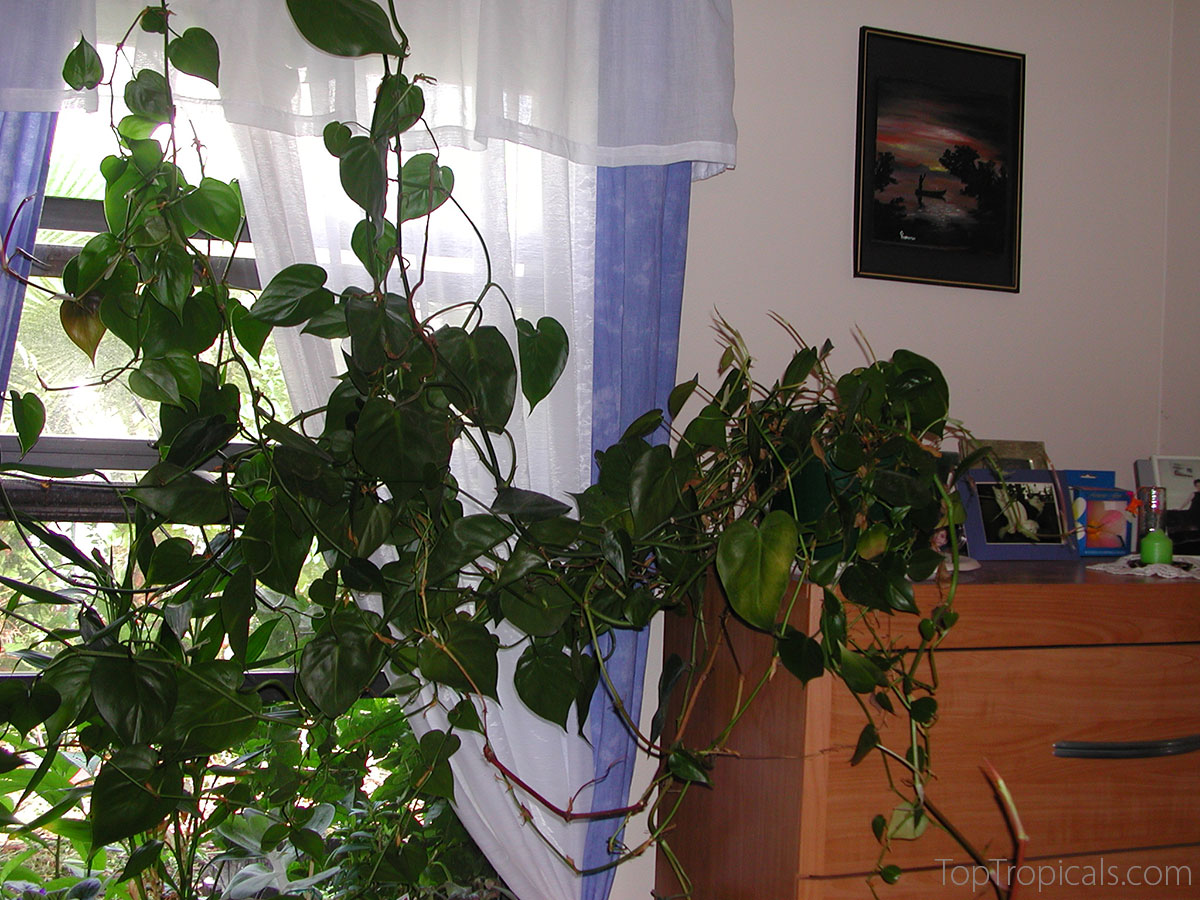
Large  philodendron  vine  growing  indoors  across  a  window  and  dresser.

A vigorous indoor philodendron stretching across the window.

💨 ACCLIMATION

Moving a plant from outdoors to indoors is a shock. Light drops. Humidity drops. Airflow stops. Soil cools. Even healthy plants may drop some leaves for a few weeks. That is normal.

Before you bring them inside:

  • Rinse foliage to remove dust and pests. We recommend Sunshine NoBug - and organic, safe solution.
  • Check for ants.
  • Trim weak branches.
  • Treat soil if fungus gnats are present.

Try to bring plants inside before the first cold front, not after. If you are reading this too late, do the prep now and expect a little leaf drop.

If you nail light and temperature, winter becomes simple. In the next mail-list we will cover watering, fertilizer timing, humidity, and other indoor tricks that keep tropicals happy till spring. Stay tuned.

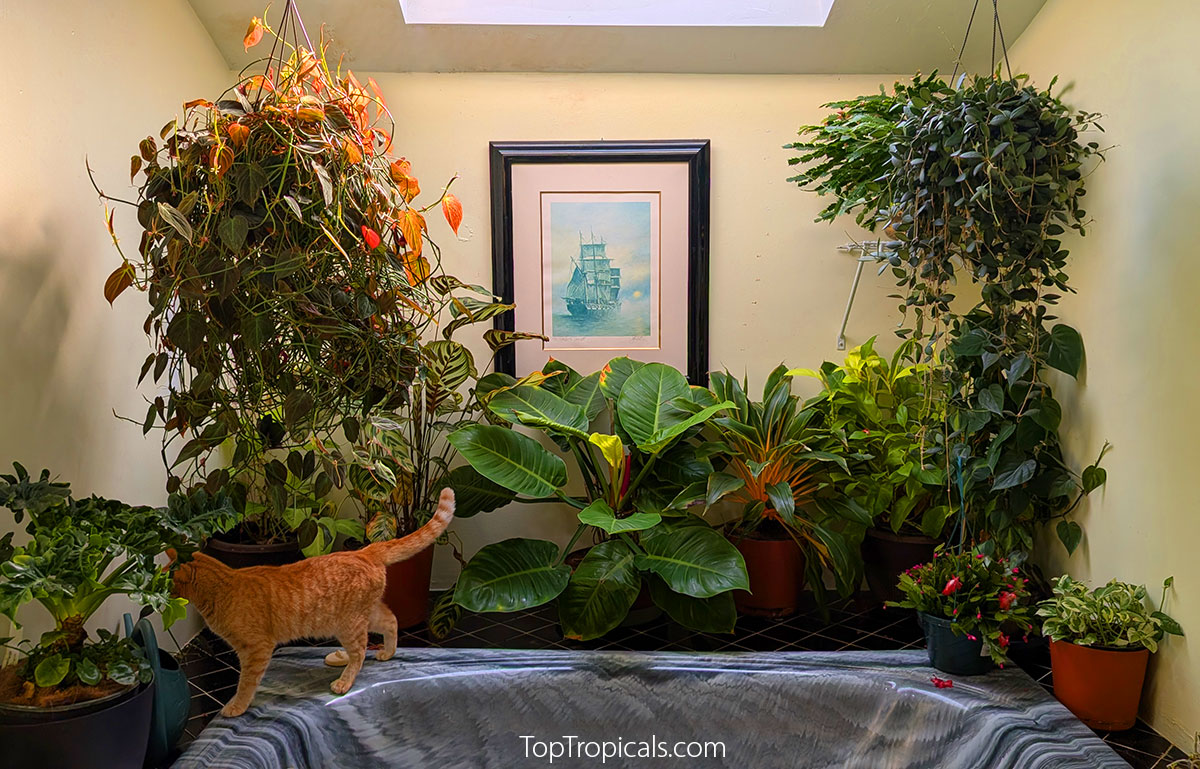
Indoor  bathroom  garden  with  tropical  plants  under  a  skylight  and  an  orange  cat  walking  in  front.

Cat Bob is inspecting his indoor garden around the tub with a bright skylight


✔️ WINTER INDOOR FAQ: TEMPERATURE AND PLACEMENT

Q: Why are leaves dropping only on the window side?
A: Cold glass. The room may be warm, but the glass surface can be much colder.

Q: Is a cold room OK for tropicals?
A: They may survive, but they will not grow below about 65F to 75F. When nights stay below 65F for a week, many plants enter dormancy.

Q: My room feels warm. Why is my plant still not growing?
A: Check the soil temperature. Pots on cold tile can be 10 to 20F colder than the air.

Q: Can plants sit directly on the floor?
A: Not on cold tile. Always elevate them on boards, stands, or trays.

Q: Is it OK to keep plants near a heater or vent?
A: No. Vents and heaters blast hot, dry air and cause crispy leaves and mites.

Q: My plant is dropping leaves after coming indoors. Why?
A: Normal acclimation to reduced light and humidity right after the move.

Q: Can I keep plants in a bright bathroom?
A: Yes. Bathrooms can have good humidity. Just keep pots off cold tile.

Q: Do I need a humidifier?
A: Not for survival. Yes if you want better growth and fewer pests like spider mites.

Q: Do I need a grow tent?
A: No. A bright LED plus a warm room is enough for winter holding.

Q: Should I fertilize in winter?
A: Not now. Winter fertilizer rules will be covered in the next mail-list.

Q: Should I water the same as in summer?
A: No. Indoor plants need much less water in winter. Watering rules also coming soon.

🛒 Shop Indoor Garden


Indoor  plants


📚 Learn more:


Date: 8 Jun 2023

Repotting tropical plants

Orange  cat  with  indoor  plants

By Alex Butova, the Witch of Herbs and Cats

Q: When is the best time to repot tropical plants?

A: Repotting tropical plants is vital for their overall health and growth. The best time to repot them is during the Spring through early Summer, when they start active growth.

Start by selecting a well-draining soil mix that consists of equal parts potting soil, peat moss, and perlite. Gather the necessary supplies, including a slightly larger pot, the soil mix, and a good fertilizer

Carefully remove the plant from its current pot, trim any damaged branches, and place it in the new pot with fresh soil mix. Be sure to position the plant with the growth point slightly above the soil level. Water the plant thoroughly but avoid overwatering. After repotting, find an appropriate location with suitable lighting conditions for your plant. Monitor the moisture levels and water when the top inch of the soil feels dry.

Additionally, apply the appropriate Sunshine Boosters fertilizer according to the instructions on the packaging. Use Sunshine Boosters fertilizers for specific plant needs (Robusta for foliage, Megaflor for flowering, Ananas for pineapples, etc.). It is safe to apply Sunshine Boosters all year around. Keep a close eye on the plant for any signs of stress or issues and adjust your care routine as needed. Help the plant to cope with stress by spraying with solution of Sunshine Epi.

Enjoy the beauty of your thriving indoor tropical garden!

repotting  a  plant

Date: 8 Apr 2022

NEW VIDEO Interview:
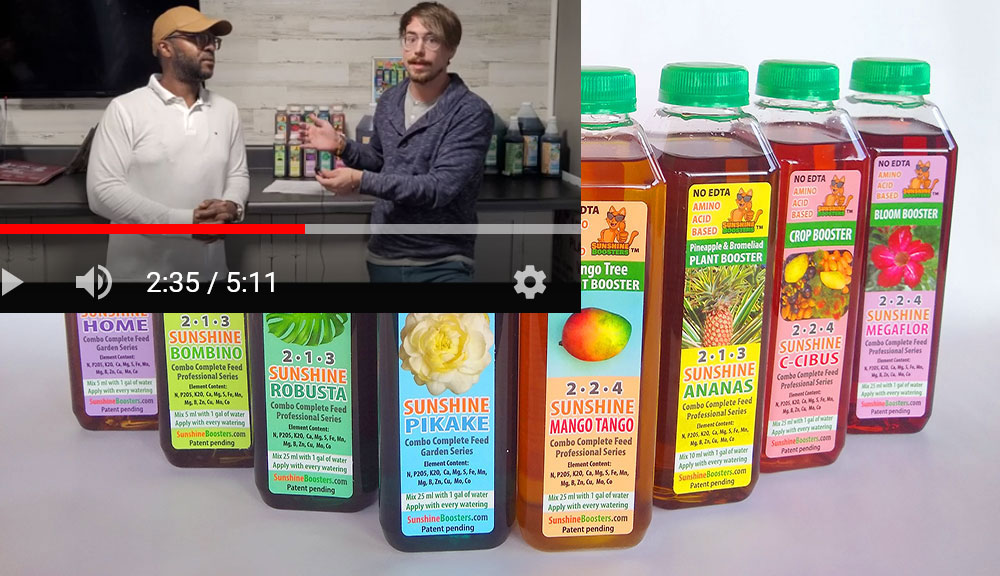
Sunshine Boosters Fertilizer works Magic for Plants

In this video our customer Kareem is sharing his experience with using Sunshine Boosters fertilizers.
How to grow bigger plants faster?
What fertilizer is organic and safe for edibles, pets and insects?
How to make your fruit and veggies juicier, sweeter and more flavorful?
What is the most efficient and economical fertilizer?
How much fertilizer to use, for how long, and when to start?
Find out now!

Sunshine  Boosters  YouTube  video

Subscribe to our Channel:

Stay updated with TopTropicals Videos by subscribing to our channel at YouTube.com/TopTropicals and get our latest video news of what is fruiting and blooming!

Date: 5 Nov 2021

How to grow a nice Olive tree fast?

by Ed Jones, the Booster guy

Q: I got an Olive tree from you a few months ago, planted in the ground and it is doing well, but I don't see any active growth. The tree looks healthy but still about the same size when I planted it in June. I'm old and I want to see the olives sooner than later. Any suggestions, should I give it some fertilizer?

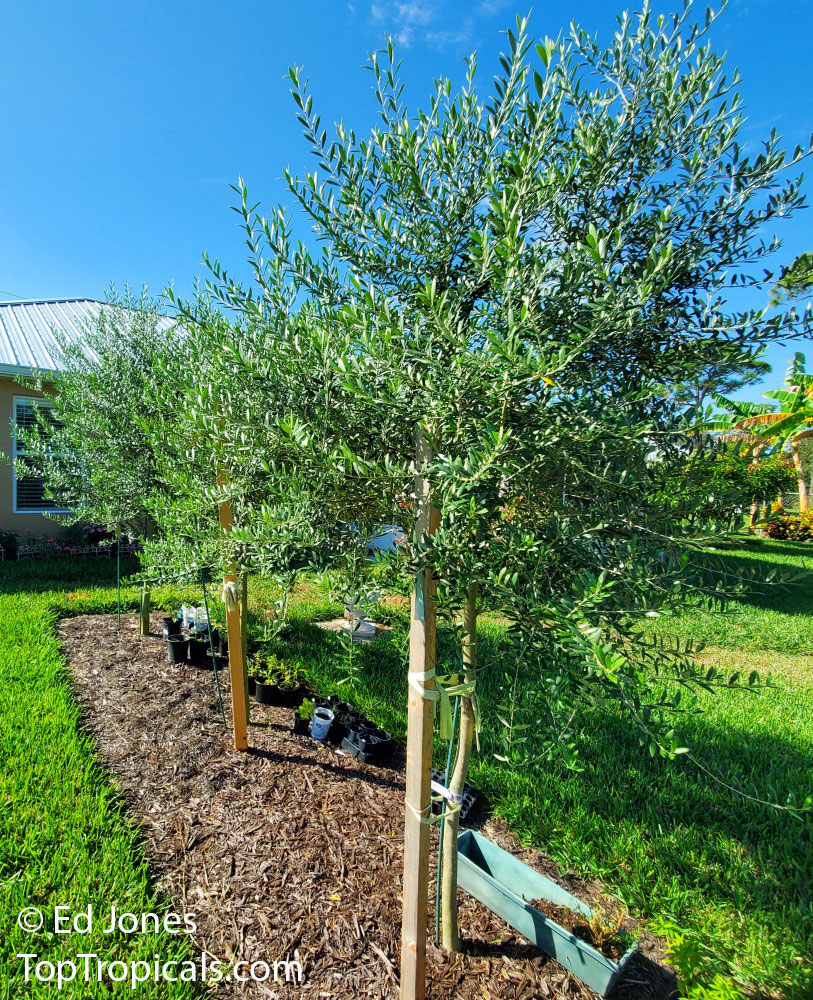
A: Olive trees are relatively slow growers, however, with balanced nutrition they can grow much faster, as fast as a few feet per year. Check out this Article by Ed Jones where he describes how he grew nice, bushy Olive trees just within one season with a help of Sunshine Boosters fertilizers. The article shows in details how to properly use liquid fertilizer on your fruit trees.

CONTINUE READING >>