Garden Blog - Top Tropicals

Date: 24 Jun 2018

TopTropicals

URBAN TROPICAL GARDENING:
10 secrets of successful Container Mango growing on a balcony.

Q: I live in Miami in apartment on a second floor, and I have a balcony with SE exposure. I wonder if I can grow a mango tree in a pot? Will it fruit for me? I recently moved to South Florida and I don't know much about tropical plants; but I tasted real fiberless mangos from someone's garden - it was so delicious and different from those in the grocery store. I wonder if I can have a fruiting tree on my balcony? And if yes, how do I plant and take care of it?

A: Yes, you can! Here is what you need to do:
1) Temperature. You are lucky to live in Tropics, keep it on a balcony year round.
2) Light. Position the pot in a spot with the most sun exposure. Mango trees can take filtered light too, but the less sun, the less fruit you will get.
3) Soil and Container. Use only well drained potting mix. Step up the purchased plant into next size container (3 gal into 7 gal, 7 gal into 15 gal). When transplanting, make sure to keep growth point (where roots meet the trunk) just at the top of the soil. Covering base of the trunk with soil may kill the plant.
4) Water. Water daily during hot season, but only if top of soil gets dry. If it still moist, skip that day. Mangoes (unlike Avocados!) prefer to stay on a dry side.
5) Fertilizer. Use balanced fertilizer once a month, 1 tsp per 1 gal of soil. Do not fertilize during fruiting - this may cause fruit cracks.
6) Microelements. Apply SUNSHINE-Superfood once a month. This will help your mango healthy, vigorous, and resistant to diseases. Use SUNSHINE-Honey to make your fruit sweeter.
7) Insect control. Watch for scales and mealybugs, clean with solution of soapy water + vegetable oil (may need to repeat 2-3 times with 10 days interval), or with systemic insecticide like imidacloprid only as needed (if non-harsh treatment didn't help). Most Flea shampoo for dogs contain that chemical, you may try that shampoo solution.
8) Trimming. Once potted, do not remove leaves that are discolored or have spots until new growth appears. Dark dots on mango leaves, especially in humid climate like Florida, may be signs of fungus. Treat with fungicide according to label, and remove only badly damaged leaves. Trim crown as needed after flowering and fruiting (by Fall). Train into a small tree, and you may remove some lower branches eventually.
9) Flower and fruit. Mangoes are winter bloomers with bunches of tiny flowers coming in thousands. Many of them set fruit (if pollinating insects present). Keep in mind that young trees can only bare a few fruit. Normally a tree will drop excessive fruit and keep only a few that it can manage. To save the young tree some energy, remove fruit if too many and leave only 2-3 for the first year. It will pay you next year with more abundant crop.
10) Variety. Last but not least: Choose the right variety for container culture! Pick from "condo" dwarf varieties such as Icecream, Nam Doc Mai, Carrie, Cogshall, Julie, Fairchild, Pickering, Graham, Mallika, and a few others - check out Mango Chart pdf and full list of our Mango varieties.

Date: 19 Oct 2025

Many faces of hibiscus

Hibiscus plants: schizopetalus - Coral Hibiscus, Cotton Candy - Mallow Hibiscus, Double Red - Double Rose of Sharon, Apricot Brandy, El Capitolio Tequila Sunrise, El Capitolio Bloody Mary

Hibiscus plants: schizopetalus - Coral Hibiscus, Cotton Candy - Mallow Hibiscus, Double Red - Double Rose of Sharon, Apricot Brandy, El Capitolio Tequila Sunrise, El Capitolio Bloody Mary

🌺 Many faces of hibiscus


📸 Pictures for the previous post:


❓ What is your favorite Hibiscus plant?

🛒 Explore Hibiscus species and varieties

#Hedges_with_benefits

🟢 Join 👉 TopTropicals

Date: 19 Oct 2025

Much more than fancy flowers: discover the many faces of hibiscus

Hibiscus varieties

🌺 Much more than fancy flowers: discover the many faces of hibiscus

  • 🌺 When people think of hibiscus, they usually picture the "fancy hibiscus" - those dazzling hybrids of Hibiscus rosa-sinensis with wild color blends and exotic shapes. These varieties, often grown in pots or as showy houseplants, are famous for their tropical flair. But while they steal attention, there's far more to the hibiscus world than the exotic hybrids alone.
  • 🌺 The fancy hibiscus types can be a bit demanding: they prefer full sun but dislike extremes, need consistent feeding with liquid fertilizer and microelements, and require close watch for pests like mealybugs. Growing them in containers makes it easier to manage water, soil, and weather. With the right care, they’ll reward you with spectacular blooms, though not every variety flowers year-round.
  • 🌺 Beyond the showy hybrids lies a whole family of hibiscus species that deserve just as much admiration - if not more. These include tough, easy-growing, and even edible types that thrive in the landscape with minimal care. Many are cold-hardy, pest-resistant, and bloom for months. Some are used for teas and salads, adding both flavor and color to your kitchen.
  • 🌺 This season, several flowering standouts worth discovering include:


❓ What is your favorite Hibiscus plant?

🛒 Explore Hibiscus species and varieties

📚 Learn more:


#Hedges_with_benefits

🟢 Join 👉 TopTropicals

Date: 12 Dec 2021

Golden Sugar Apple and Jackedak Cheena
50% OFF and MORE!

We've combined the exotic fruit of this rare Annona from Costa Rica - Golden Sugar Apple with the sweet, crunchy and excellent flavor of the Jackedak Cheena. Both rare and unique plants can be yours at considerable savings, but don't delay as there are limited quantities in stock.

Rare Fruit Collection:
two Jackfruit-textured rare fruit!

For this Easy Sunday we have priced these at incredible savings:
The Golden Sugar Apple regularly $39, is on Easy Sunday sale for only $19
The Jackedak Cheena, regularly $49, is on Easy Sunday Sale for only $24 .
Combine the two for your own Rare Fruit Collection and save even more, only $39 for the set!

Jackedak Cheena

Artocarpus x integer (Jackfruit x Chempedak) - Jackedak Cheena has been grown in TopTropicals garden from a seedling and fruited within 3 years from planting. The fruit is the best we ever tasted! It is super sweet, crunchy, with a rich, excellent flavor, with very little latex which makes it easy to handle when cutting up. Our tree survived light frosts as well as 48 hours of 3 ft flooding, with no damage! Cheena is a natural hybrid between Jackfruit and Chempedak with low and spreading growth habit, can be maintained at 8 ft with annual pruning.

Picture of 3 y.o. Cheena at Top Tropicals garden, loaded with fruit:

Golden Sugar Apple

The Golden Sugar Apple or Pineapple Annona originally was brought to us by our customer from Costa Rica. We believe it to be a natural hybrid between A. muricata and A. glabra. It is a very ornamental small tree similar in growth habit to A. muricata, A. montana or Rollinia. Fast growing, forms nice bushy specimen. Fruit is very large, up to 1 lb, golden to orange when ripe, with strong Pineapple scent, and resembling Jackfruit in texture, with pineapple, papaya, apricot and melon overtones. The tree tolerates flooding and is cold hardy at least to upper 20's. Very interesting for rare fruit collectors as much more hardy and water tolerant alternative to its sensitive relatives Soursop and Rollinia.

Picture of 3 y.o. tree full of fruit:

Remember, the Easy Sunday special has been extended through Wednesday, December 15th. Limited availability, hurry up! All orders over $75 (excluding S&H) are eligible for 20% off!

For 20% off - use code YEAREND20

Min. order $75 (excluding S&H). Good through December 15th

Enjoy your Holiday Tropical Fruit!

Photo above: Jim is Holiday decorating with super-sweet tropical fruit balls - Pom-Poms!

Date: 1 Jan 2022

Easy Sunday Morning Deals: Five Tropical Garden favorites for 2022

Saving on your favorite plants is Easy. Easy like Sunday Morning...

"...The ticking of the hands of your watch are telling you how time is passing away, never to return. Listen to it..."
Ryan Holiday, Daily Stoic

Tropical Colors for the New Year

This New Year, resolve to add color into your garden and into your life.

Today we feature five Tropical Garden favorites for 2022.

1. Bolivian Sunset

Gloxinia sylvatica - Bolivian Sunset. Low growing perennial that will always surprise you with a sudden burst of scarlet blooms in Fall-Winter.

2. Dwarf Tibouchina

Tibouchina lepidota - Jules Dwarf. So much purple for such a small compact plant! Relatively cold tolerant.

3. Tropical Hydrangea

Dombeya seminole - Tropical Rose Hydrangea. All time favorite that blooms for several months from Fall through Winter.

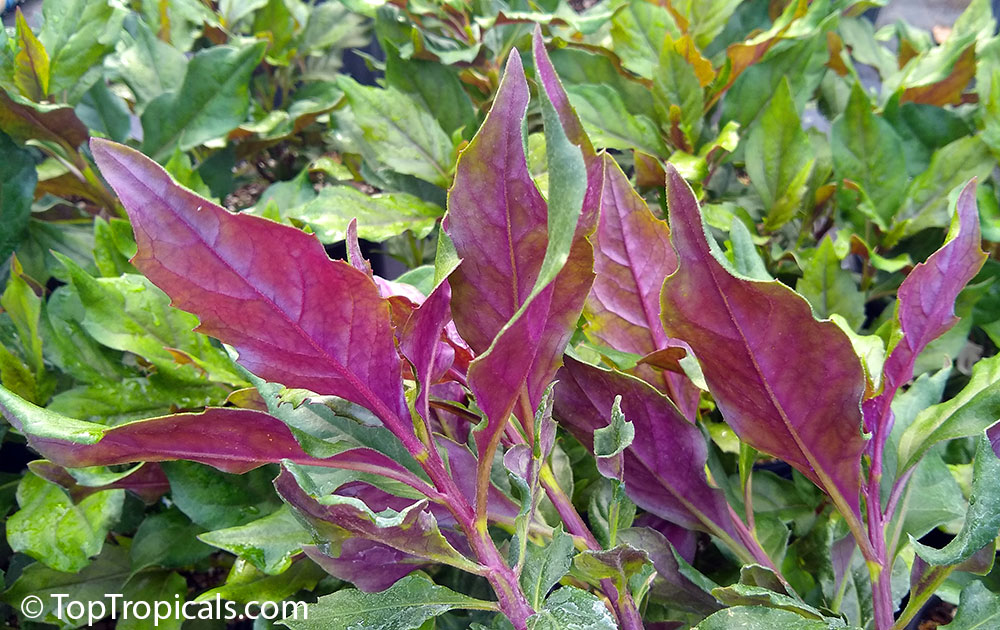
4. Cranberry Hibiscus

Hibiscus acetosella - African Cranberry Hibiscus. Super fast growing colorful shrub with beautiful flowers and edible leaves.

5. Burgundy Thread

Alternanthera dentata - Red Thread Burgundy. Ultimate fast growing groundcover for sun or shade, any soil and any water, any size of garden, cold- and heat-tolerant.

The Easy New Year Deal expires at midnight Sunday, January 2nd, 2022.
Enjoy your Hot Deal!