Garden Blog - Top Tropicals

Date: 31 Mar 2023

Elderberry Kir Royale

Grow your own... drink and medicine
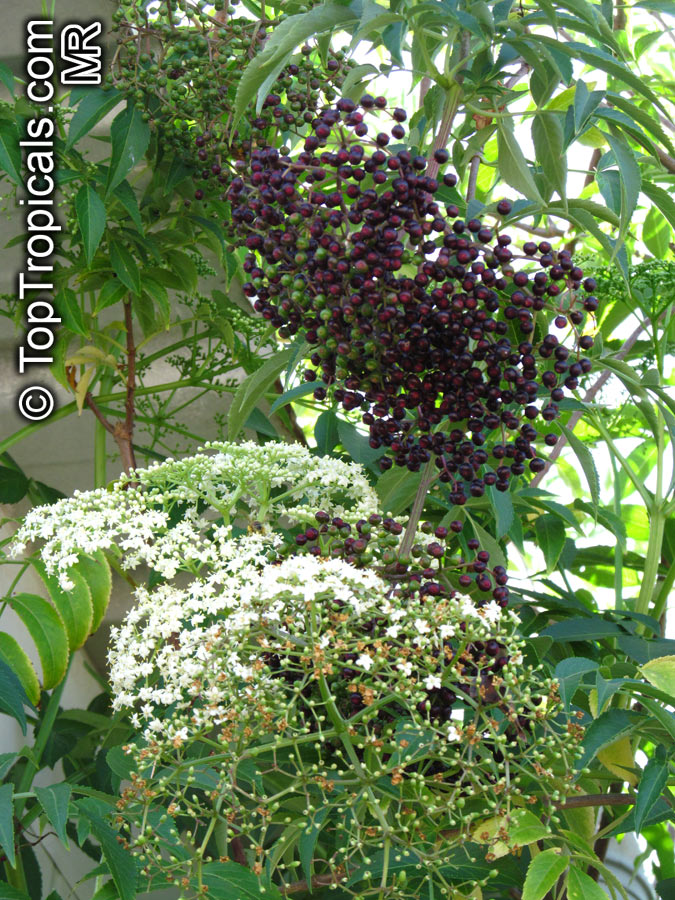
Sambucus  canadensis  (nigra)  -  Elderberry,  American  Elder

In the summertime, Elderberry bushes transform into small, bushy trees adorned with sizable umbels of white flowers. As late summer approaches, the tree produces an abundance of dark purple berry clusters. Elderberry is known for its ability to withstand cold weather and can thrive in a variety of soils in either full or partial sun. While it typically grows to a height of 10 feet, its spreading can be managed through pruning.

This dense shrub is beloved by nesting birds, who are not the only creatures that appreciate its fruit. People also prize Elderberry for its delicious uses in winemaking, cocktails, and jellies. Elderberry syrup or cordial can be used to create flavorful fruity drinks and cocktails, like the Elderberry Kir Royale. Alternatively, the berries can be left to infuse their flavor into spirits, with Elderberry gin being a particularly delightful option.
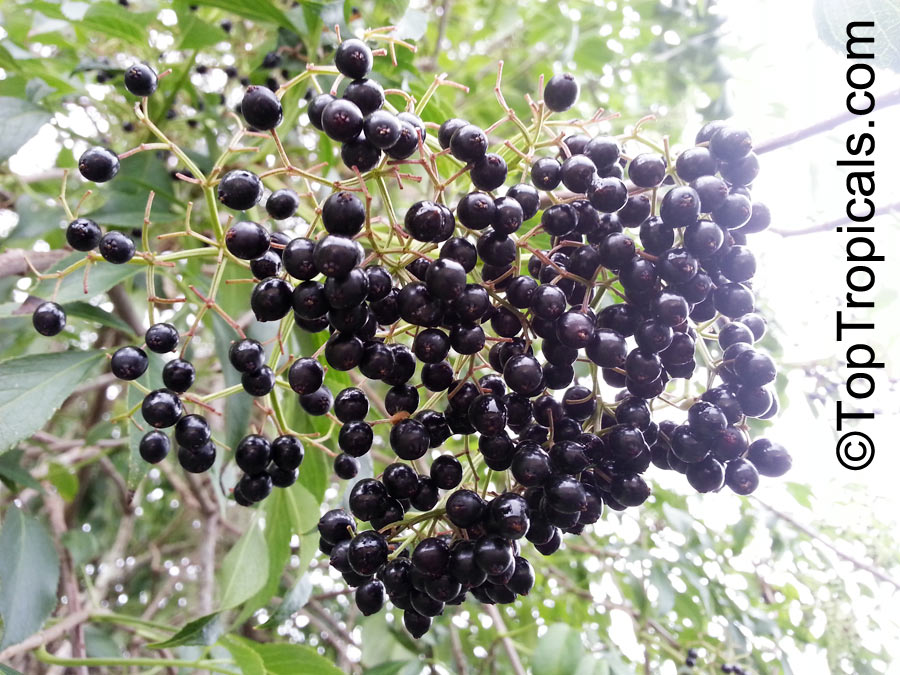
Sambucus  canadensis  Elderberry,  American  Elder  berries

Elderberry Cordial

When it comes to combating various strains of the flu virus, Elderberry Cordial ranks among the top natural remedies. Whether sipped in small servings or drizzled over a delectable dessert, Elderberry Cordial is a guilt-free way to fortify your immune system against colds and flus.

2 cups of fresh elderberries
16 oz water

  1. 1/2 cups sugar

1/2 lemon (rind + juice)
2 tablespoons minced fresh ginger
  1. stick cinnamon, crushed
    1 ¼ cups dried elderberries

1/4 cup dried rosehips
About 3 cups brandy
Honey, to taste

Add all ingredients in a jar and cover with a lid. Set aside in a cool, dark place for 3-4 weeks. When ready to decant, strain and squeeze through cheesecloth. For every 1 cup of liquid retained, add 1/2 cup honey. Mix thoroughly. Pour the cordial into a decorative bottle for storage, or gift giving.

Elderberry Kir Royale Cocktail

5 oz white wine, sparkling wine or champagne
2 oz Elderberry cordial
Rocks
Mint leaves (optional)
Pour the Champagne in a flute glass. Add the Elderberry Cordial slowly.
Party time!
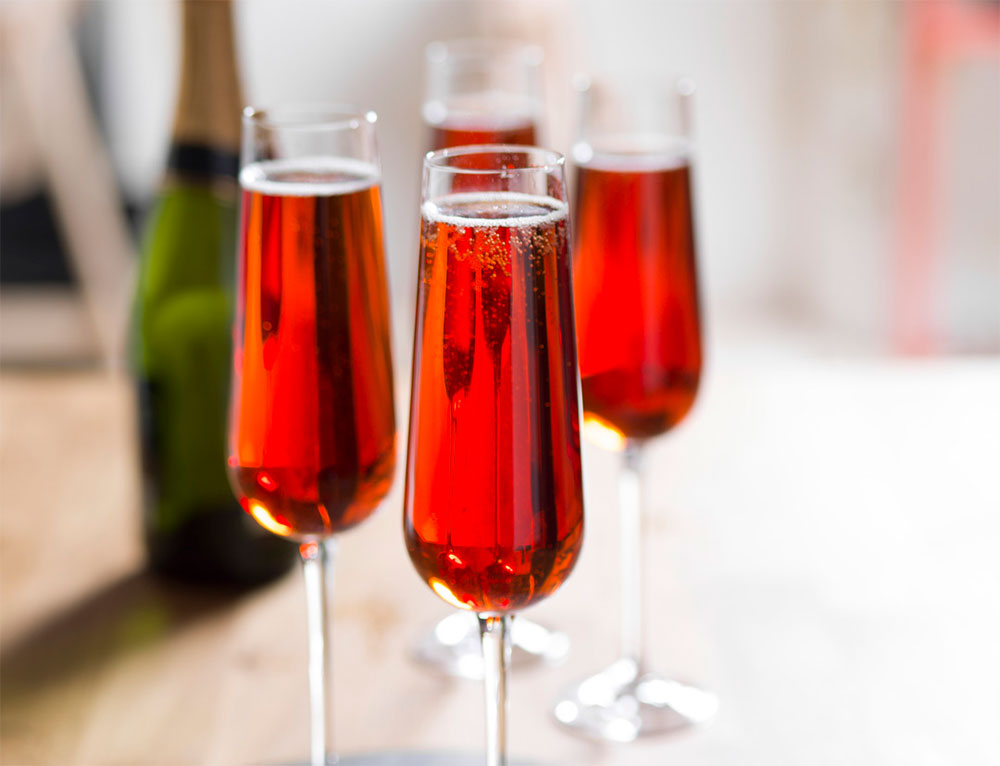
Elderberry  Kir  Royale  Cocktail

Date: 19 Feb 2023

Top 5 butterfly attractors

"Just when the caterpillar thought the world was over, it became a butterfly"
Chuang Tzu (Taoist philosopher)

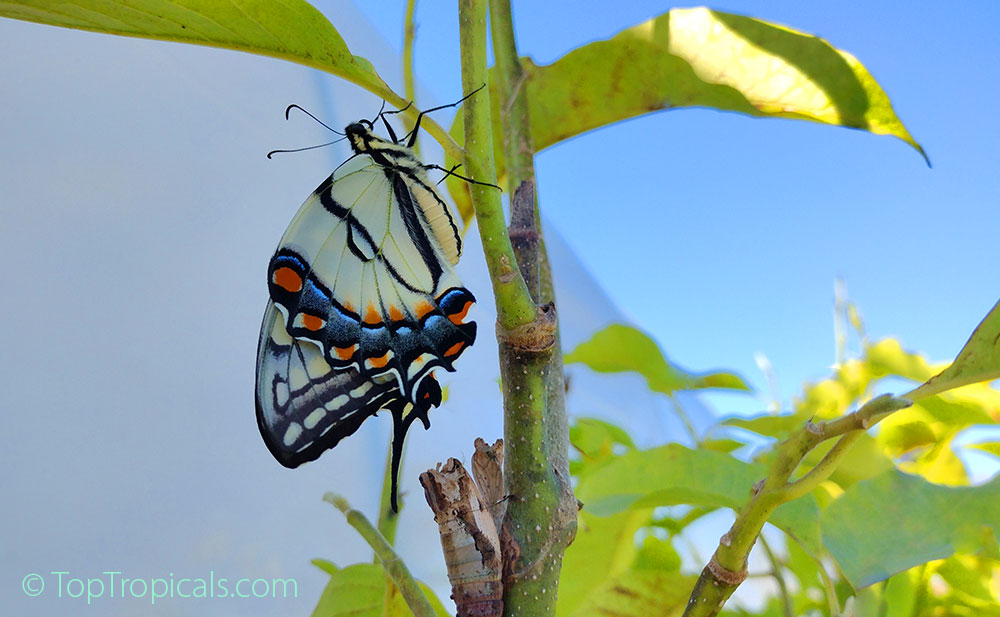
Newborn  Butterfly

In the photo: yesterday we watched a butterfly born on one of our Champaka trees!

Q: What are the best butterfly attracting plants for a Southern garden?

A: If you love butterflies and if you enjoy having nature around your home, then plant a butterfly garden. Florida is a perfect place to create a year round and fully functioning butterfly garden. Caterpillars, which transform into butterflies, require special kinds of plants to feed upon and these plants grow extremely well in the South Florida and other subtropical areas. Below are the top five winners that butterflies appreciate the most. Besides, remember That all yellow flowers are attractive to them, for example Cassias. Butterflies like the Sun and everything that looks like the Sun!
1. Calotropis gigantea - Giant milkweed, Arka
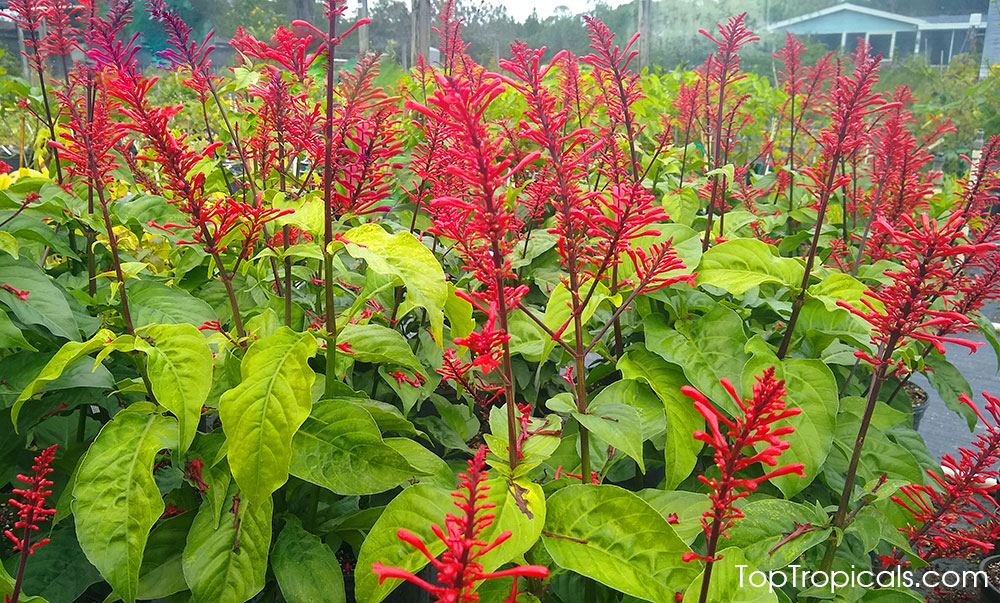
2. Odontonema cuspidatum - Firespike
3. Plumbago auriculata Imperial Blue
4. Rondeletia leucophylla - Panama Rose
5. Asclepias curassavica - Red Milkweed, Butterfly Weed

Read more about Butterfly garden:
The Milkweed and the Monarch, how to raise your own
Musings of a butterfly gardener about the milkweed bug
Plants that attract butterflies and hummingbirds

Odontonema  cuspidatum  -  Firespike

In the photo: Odontonema cuspidatum - Firespike

Date: 11 Oct 2022

Fertilizing in Fall:
Plants need food too!

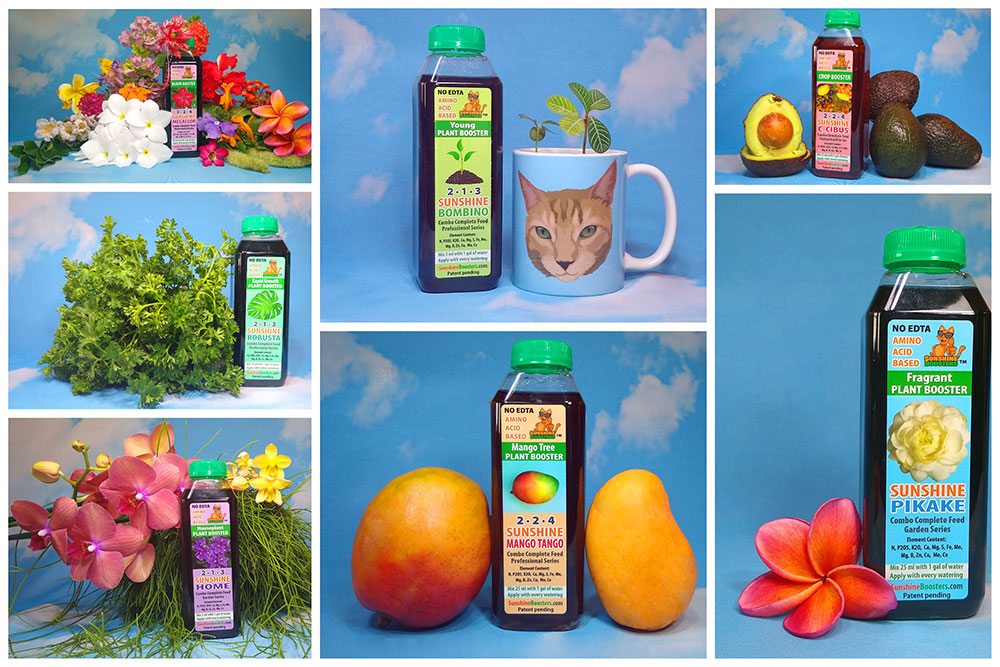
Sunshine  boosters  products  collage

Q: I know that I am not supposed to fertilize plants in winter. But I just bought several ground orchids from you, they are blooming now and I wonder if I can give them some food to support their bloom energy? When should I do the last application of fertilizer? I will keep them in a sun room during Winter until Spring.

A: Traditionally, end of October to November is the time when we give the last dose of fertilizer to our tropical plants. Liquid fertilizers, and especially amino-acid based Sunshine Boosters, are safe to apply year around. This means, you can continue feeding your plants with Sunshine Boosters through the Winter without risk of over-feeding or burning roots. Why?
The answer is very simple: even with their metabolism slowed down in Winter, plants will use all that food.
Sunshine Boosters have special mild formulas that are scientifically designed and based on Amino Acids. Plants will use all essential elements from the solution as needed.
Liquid fertilizer is diluted in water, and will be applied only when you water the plant. During Winter, water needs are lowered = watering times are less frequent, with less amount of water = the plants will get less water and less fertilizer accordingly.

Importance of micro elements
in combination with plant food during winter

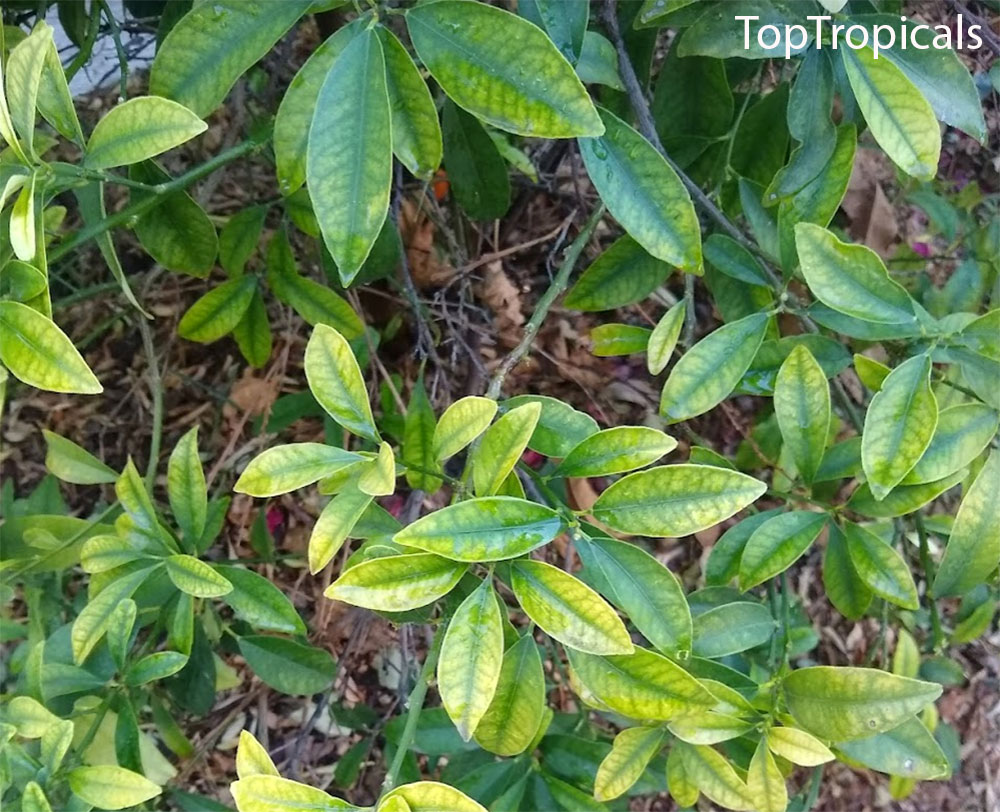
winter  chlorosis  on  Kumquat  leaves

In the photo: winter chlorosis on Kumquat leaves that is very hard to treat and should be prevented instead

Keep in mind that feeding your plants regularly during Winter will help to avoid "winter chlorosis" and other deficiency problems. So called "cool-temperature-induced chlorosis" (CTIC) is especially common in Spring on young, actively growing leaves. Unless chlorosis is prevented by micro-element applications, affected leaves may remain in this condition for the rest of the growing season.

Make sure to select proper type of fertilizer for your over-wintering plants. We have special formulas for foliage, flowering plants, fruit trees, young seedlings, even for for orchids and bromeliads. Check out our selection!

Cats  looking  for  food  in  grocery  bags

Date: 25 Sep 2022

Guava, the easiest container fruit tree

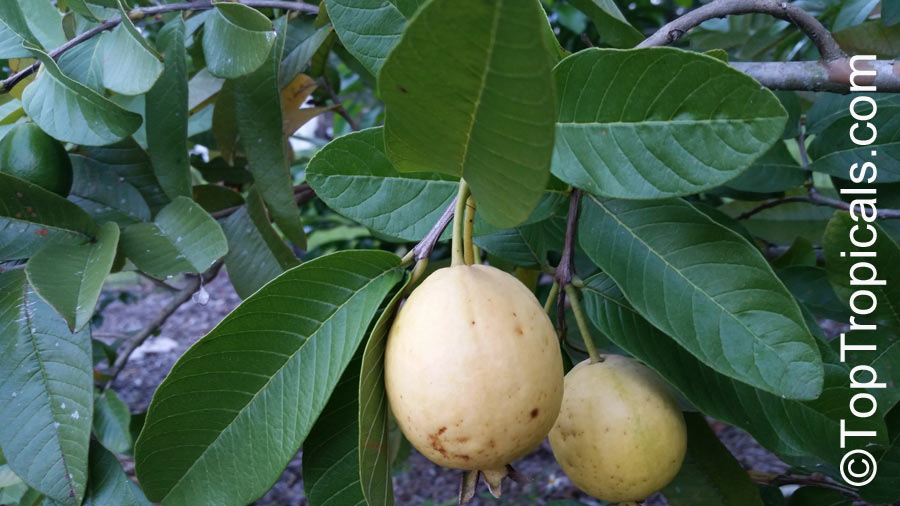
Guava  fruit  on  a  branch

Grow Your Own Food

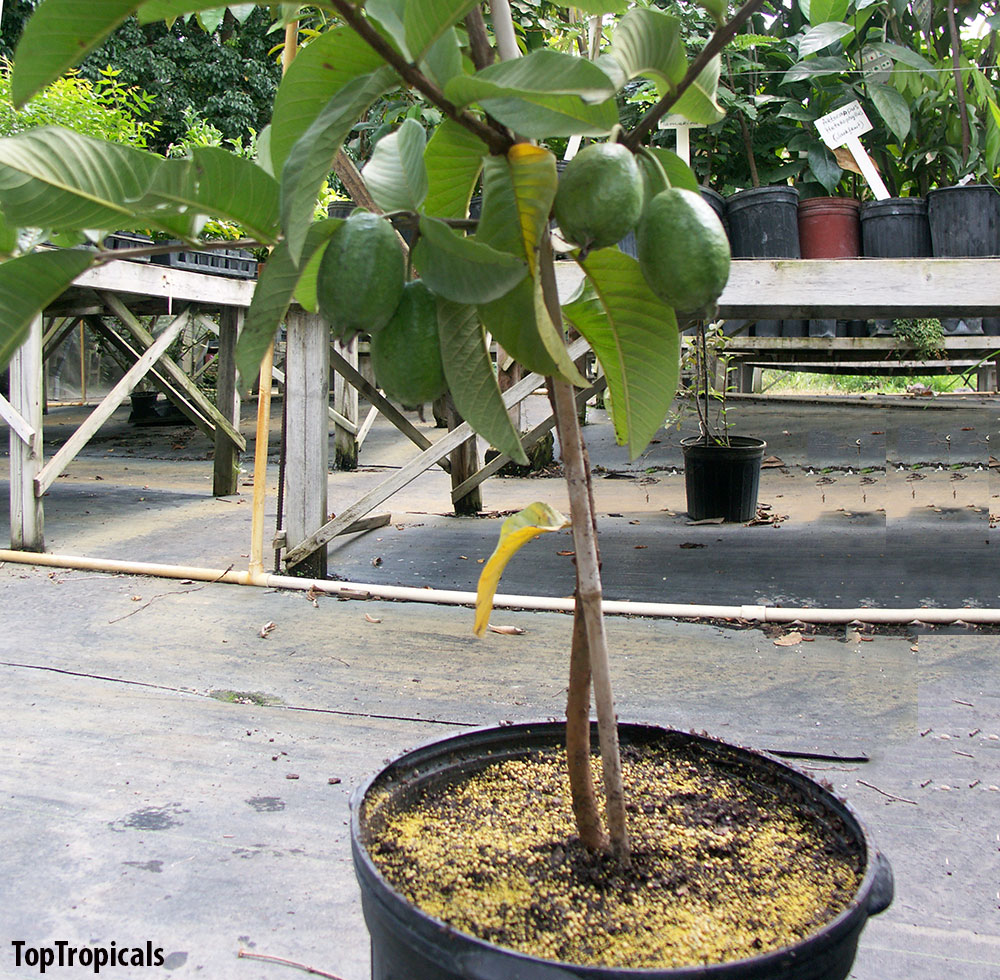
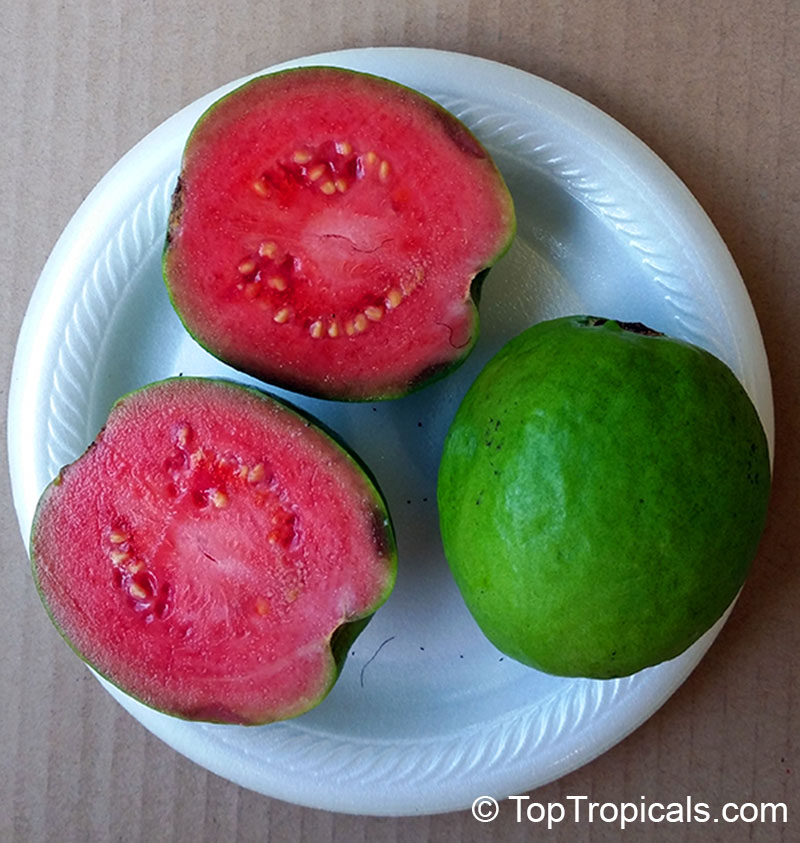
Guava is one of the most popular and well-known tropical fruit because it is so tasty, sweet, juicy and flavorful! Many people are familiar with it because of the large number of products made from this aromatic fruit. But very few people know that Guava tree culture is very easy and this plant can fruit in a pot right away. Guava tree start blooming and producing fruit as small as 1 gal pot size. It can be kept in compact shape, responds well to pruning, stays bushy and grows very fast. It is a perfect container fruit tree or a specimen for a tropical garden of any size.
Upon ripening, the fruit becomes soft and juicy. It may be eaten fresh, made into a juice or nectar contain fruit pulp, or made into preserves, jam, jelly, or paste. A distinctive, savory-fresh aroma of fruit is thermo-stable, thus survives processing. The guava is an excellent source of vitamins C and A.
The plant is relatively cold hardy. Our young trees, 3 months after being planted in the ground were exposed to a short period of freeze last winter (mid-20's) but they grew back without significant damage. Try to keep Guava cold-protected for the first winter, then it will be much hardier once established.
Guavas are fast growers and heavy feeders, and benefit from regular applications of fertilizer. Make sure to get some Sunshine Boosters fertilizer: Sunshine C-Cibus - Crop Booster, and feed them your round.

Guava  tree  fruiting  in  container

Guava  fruit

Date: 18 Sep 2022

The fruit of Heaven:
Phyllanthus acidus - Amlak, Otaheite Gooseberry

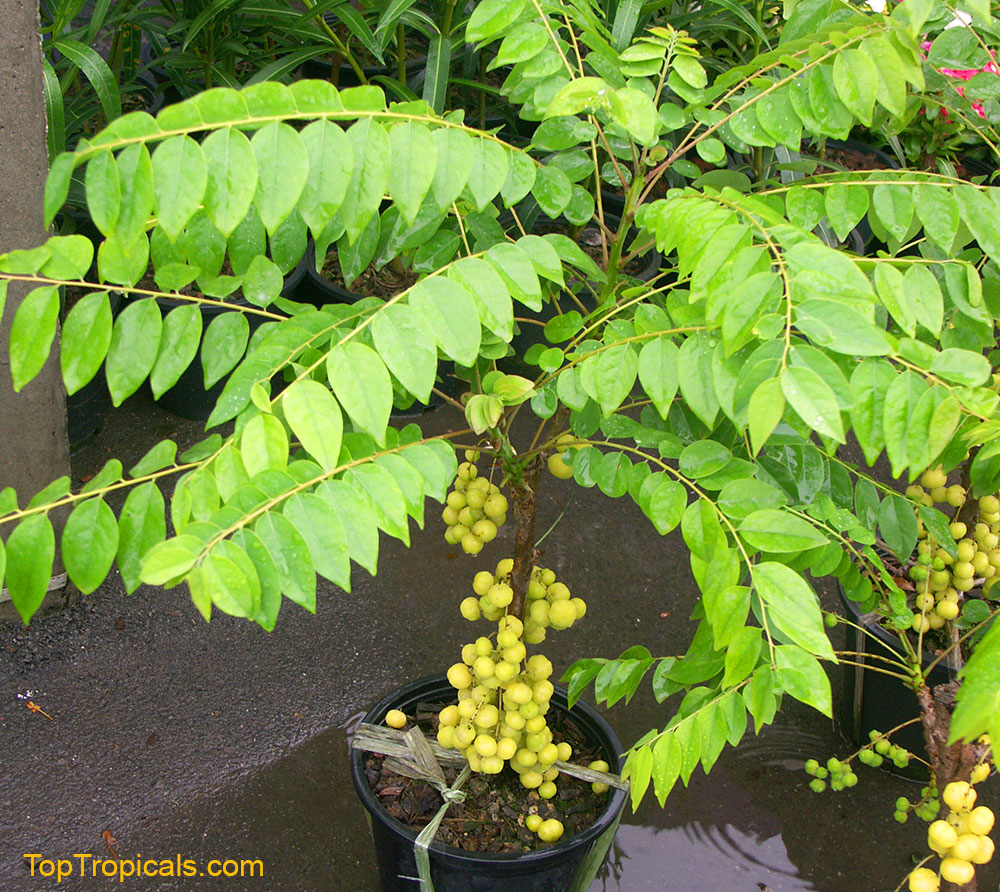
Phyllanthus  acidus  -  Amlak,  Otaheite  Gooseberry  in  a  pot

Grow Your Own Food

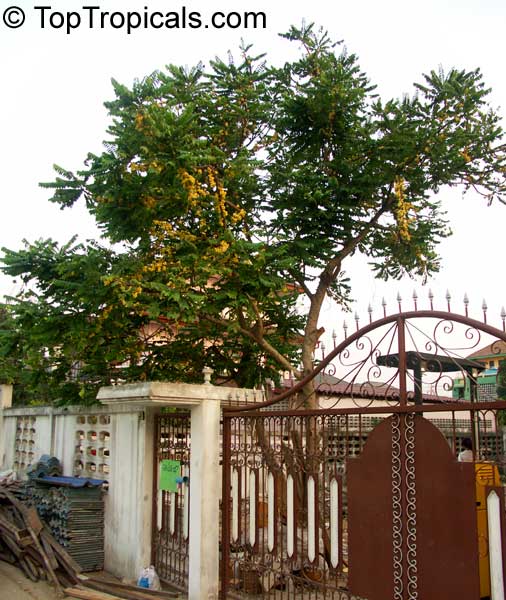
This is a fun rare fruit tree to have if you like lemonade and believe in Vitamin C benefits! The tree is super easy to grow, relatively cold hardy and doesn't require any special care. It is a fast growing plant, however the mature tree is only about 20 ft so it will be well suited for any size garden, even container garden. As you can see, it happily fruits in a pot. Bright yellow fruit are beautiful and curious, they always make a conversation piece!

About Otaheite Gooseberry

Otaheite Gooseberry, or Amlak, is a rare tropical fruit tree from SE Asia and India, very close related to Phyllanthus emblica (Amla, Amlaki), however it is much cold hardy than Amla. Known as Amritphala in Sanskrit, which literally means "the fruit of heaven" or "nectar fruit". It is so called because it has many helth benefits. Amlak is one of the favorite fruit of Indian people who definitely know what is good for you! Fruit paste is a major ingredient of Chavyanprash, a popular Ayurvedic tonic. It is the richest source of vitamin C.
Fruits are borne in loose clusters, which hang from the tree trunk and main branches. Fruits are esteemed for jellies, preserves and pastries, and are great for making a delicious lemonade rich in vitamin C. There are no commercial plantings; trees grow only in home gardens.

You need to have one! Or two. We have only limited quantities.

Phyllanthus  acidus  -  Amlak,  Otaheite  Gooseberry,  mature  tree

Phyllanthus  acidus  -  Amlak,  Otaheite  Gooseberry,  lot  of  loose  fruit