Garden Blog - Top Tropicals

Date: 13 Jul 2023

Fertilizing during rainy season
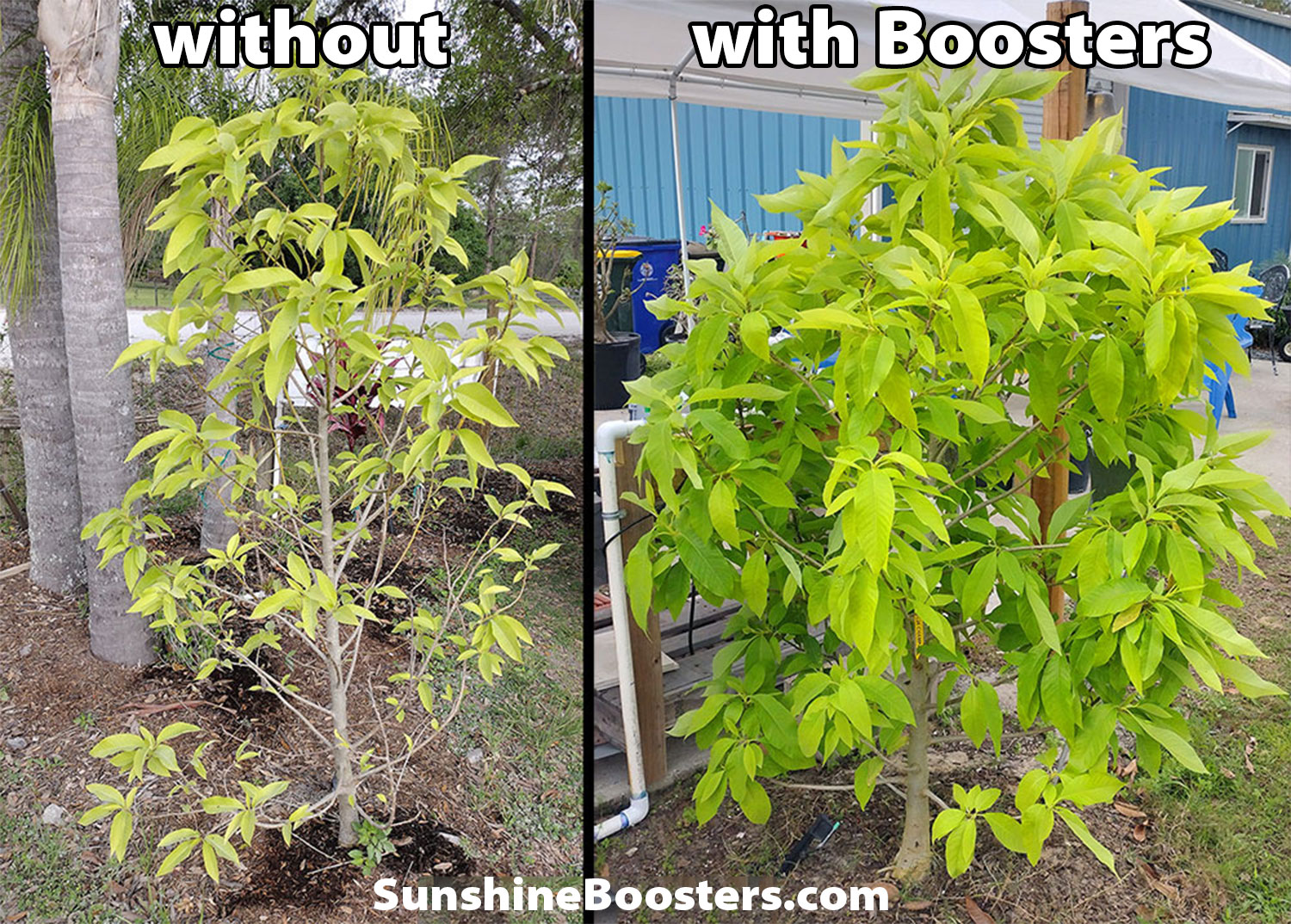
Champaka  trees  without  and  with  Sunshine  Boosters

Q: I have installed your Robuster unit to fertilize my fruit trees, but here in Florida, it is the rainy season and most of the time I do not need to irrigate during the summer. What do you recommend to keep up with fertilizing program?

A: This is what we recommend for fertilizing during rainy season:

For in the ground plants

If there are frequent rains, it's not necessary to use any fertilizers except for slowly soluble ones. During rainy periods, use a slow release fertilizer. Simply scatter 3 oz per 100 square ft. You can adjust the amount based on your specific area and number of plants.

Additionally, for foliar treatments, use Sunshine SuperFood microelement supplement and Sunshine Epi biostimulator.
When you water next time, regardless of whether it rained or not, resume using liquid Sunshine Boosters.
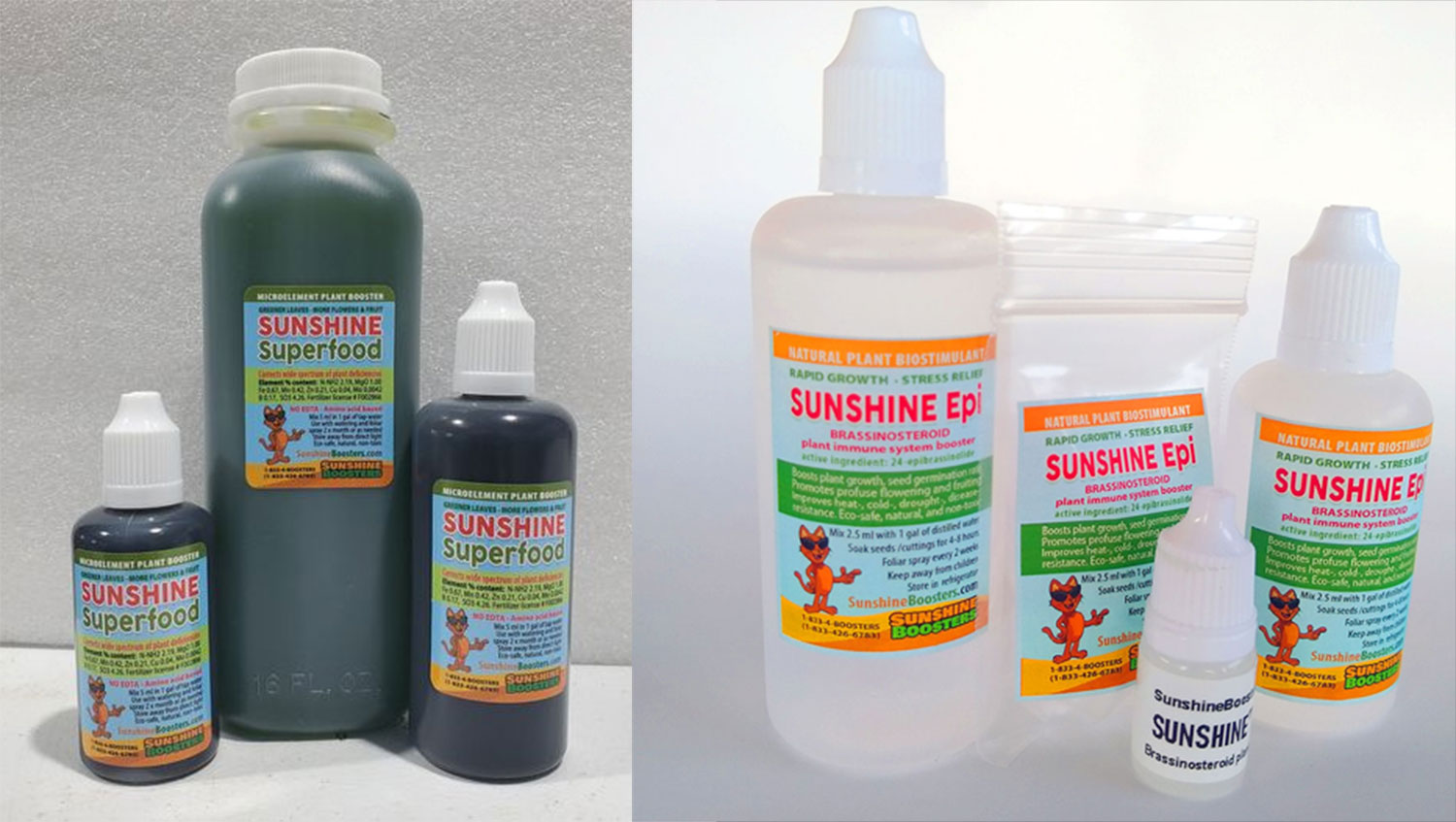
Sunshine  Superfood  and  Epi

For potted plants

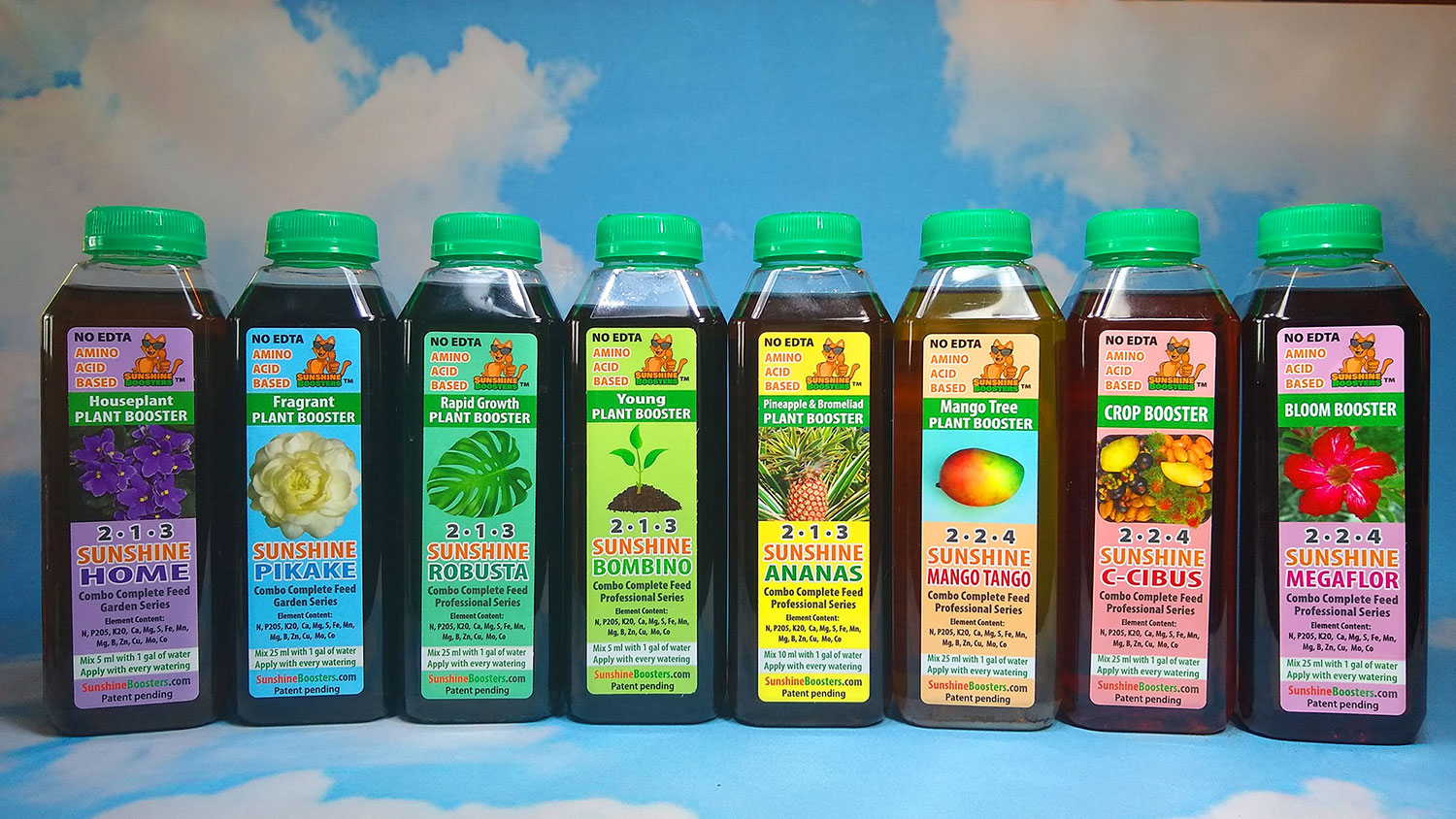
When you water your potted plants, use liquid Sunshine Boosters. Every 1 or 2 weeks (we recommend weekly), apply Sunshine Garden Series (the same type you are using when watering) for foliar treatment. Use the same dosage as you would for watering. By following these recommendations, you can ensure that your plants receive the appropriate nutrients during the rainy season.

Sunshine  Boosters  Garden  Series

the  Robuster

Date: 16 Jun 2023

NEW VIDEO:
ABC7 Fort Myers News:
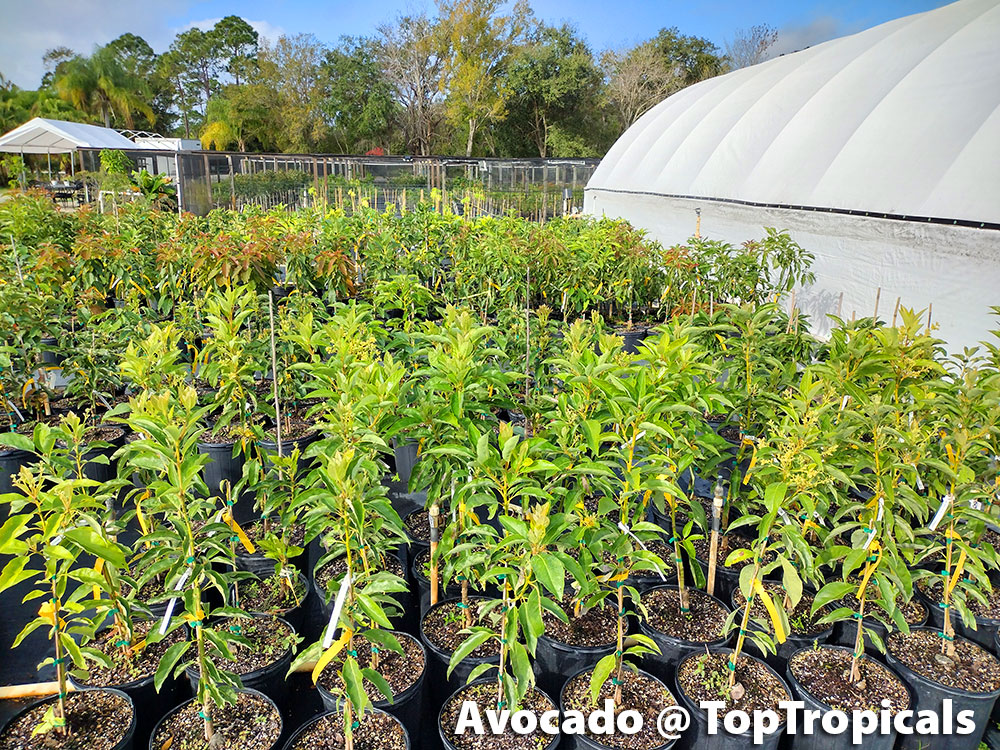
Avocado Varieties at Top Tropicals

We continue the series of ABC-7 News on Top Tropicals selections. Previously, we showed you segments about Butterfly Plants, Rare Fruit Trees, and Mango varieties. Today's video is about growing an Avocado tree in your home garden.

Growing your own avocado tree has many benefits. You can enjoy fresh, delicious avocados right from your garden. Avocado trees are attractive, provide shade, and enhance your landscape. There are many avocado varieties to choose from, offering unique flavors, sizes, and ripening times. You will find Avocado trees for sale online right here at TopTropicals.com. Our trees can be shipped to you!

Watch the news segment by Rachel Anderson for ABC-7:
Avocado Varieties at Top Tropicals.

Subscribe to our Channel:

Stay updated with TopTropicals Videos by subscribing to our channel at YouTube.com/TopTropicals and get our latest video news of what is fruiting and blooming!

Avocado  trees  in  3  gal  pots

Date: 12 Jun 2023

What is Akee?

Grow Your Own Food

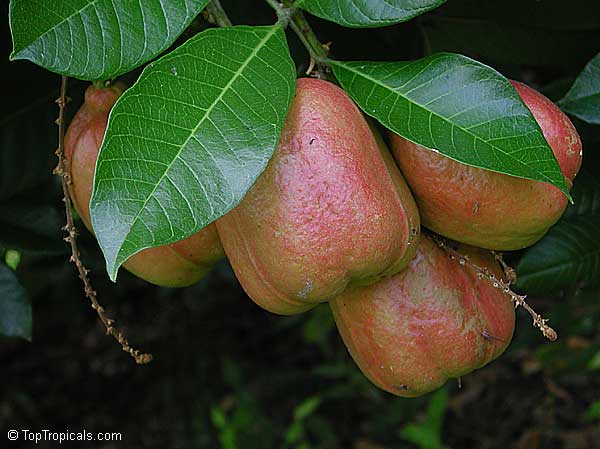
Akee  fruit  on  the  branch

Q: What is Akee and how do you eat it? Is it a fruit or a vegetable?

A: Blighia sapida, commonly known as Akee, holds a special place as the Jamaican National Fruit. The fruit of this medium size, fast growing subtropical tree is used as a vegetable, is renowned for its delicious taste, vibrant red pods, and creamy texture. Akee is primarily grown in Jamaica and is an integral part of Jamaican cuisine. Its unique ripening process and the need for careful preparation make it distinctive.

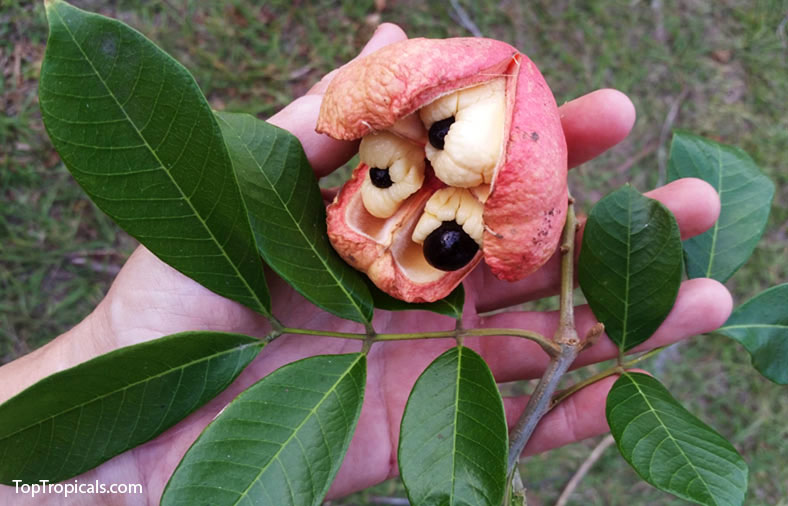
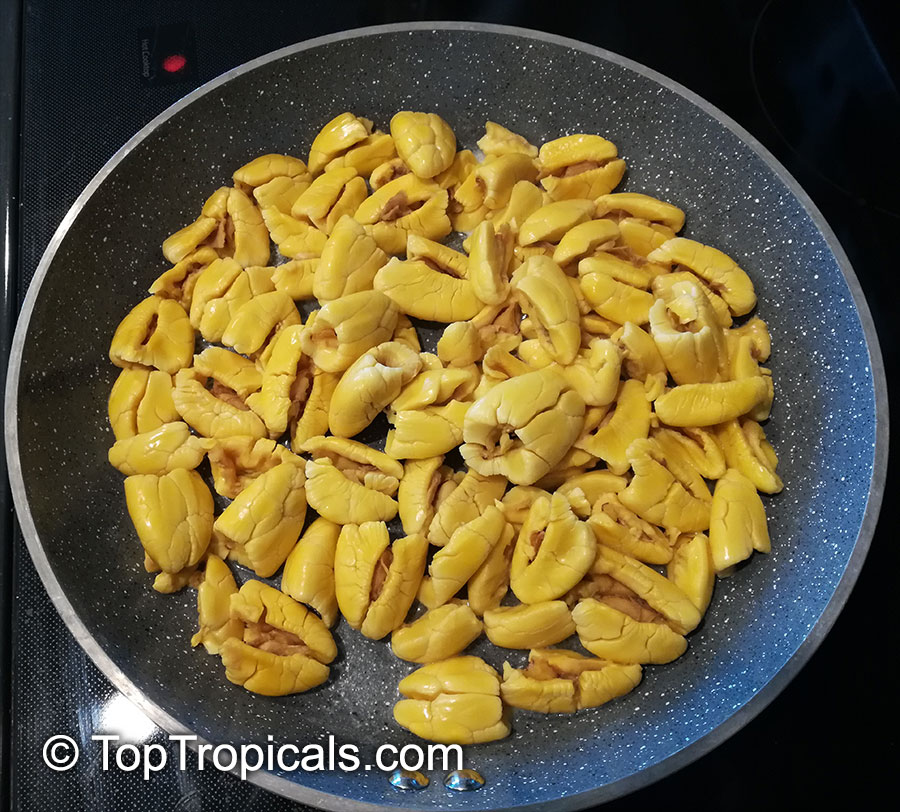
The fruit starts off green and gradually transforms into a vibrant red hue when it matures. To enjoy Akee, the pods must be harvested when fully ripe, and the skin should be orange to red. They are then carefully opened, revealing three distinct sections: the creamy white or yellow flesh, the central seed, and a thin, dark membrane. The seed and the membrane are not edible, only the ripe yellow flesh is consumed, which has a soft, buttery consistency and a mild, nutty flavor.

Akee is often cooked and served in various traditional Jamaican dishes. It is famously paired with salted codfish, creating the popular national dish known as "Ackee and Saltfish." This dish is a flavorful combination of sauteed Akee with flaked salted codfish, onions, peppers, tomatoes, and spices. Akee is also used in stews, curries, and salads, adding a rich and distinct taste to the culinary preparations.

Beyond its culinary significance, Akee holds cultural and historical importance in Jamaica. It is believed to have been brought to the Caribbean region from West Africa during the transatlantic slave trade era. Today, Akee symbolizes national pride and is a source of cultural identity for Jamaicans.

Akee tree is fast growing and easy to grow. It will start producing within 2-3 years after planting.

Akee  fruit  on  a  plate

Akee  fruit  on  a  tree

Date: 12 Apr 2023

Colocasia vs Alocasia

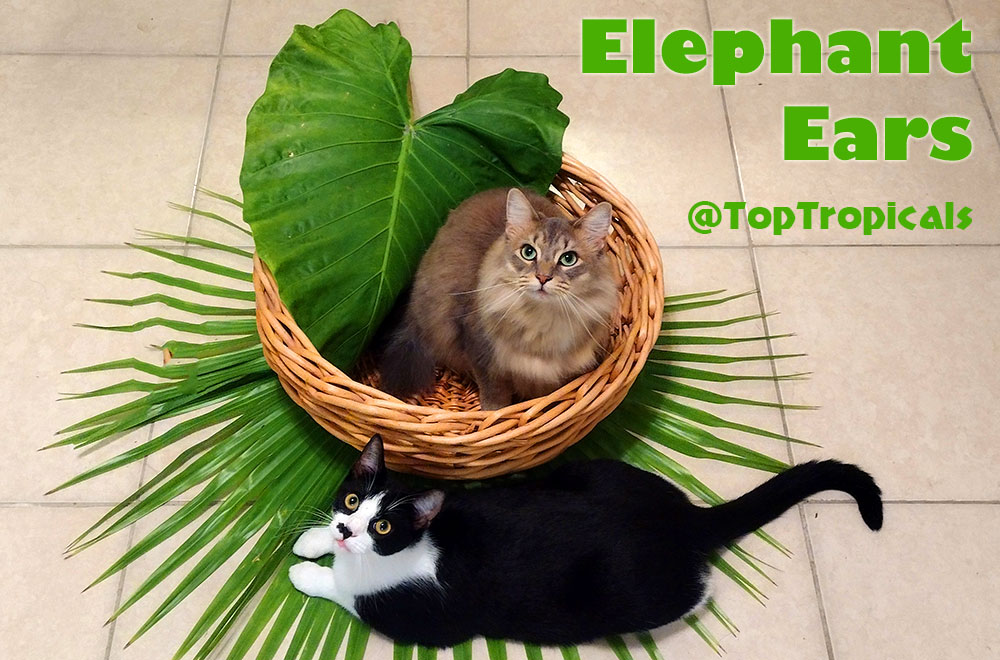
Cats  with  elephant  ears

Q: What is the difference between Alocasia and Colocasia? They both are called Elephant Ears...

A: Alocasia and Colocasia are exotic tropical-looking plants with large, arrow- or heart-shaped leaves resembling elephant ears, hence the common name. They are both members of the Araceae family and are often confused with each other due to their similar appearance. The key differences between the two plants:

Leaf shape: The leaves of Alocasia are typically arrowhead-shaped and have a more elongated appearance. The leaves of Colocasia, on the other hand, are more heart-shaped and broader.

Leaf texture: Alocasia leaves have a smooth, glossy texture, while Colocasia leaves are typically more matte and have a slightly rough texture.

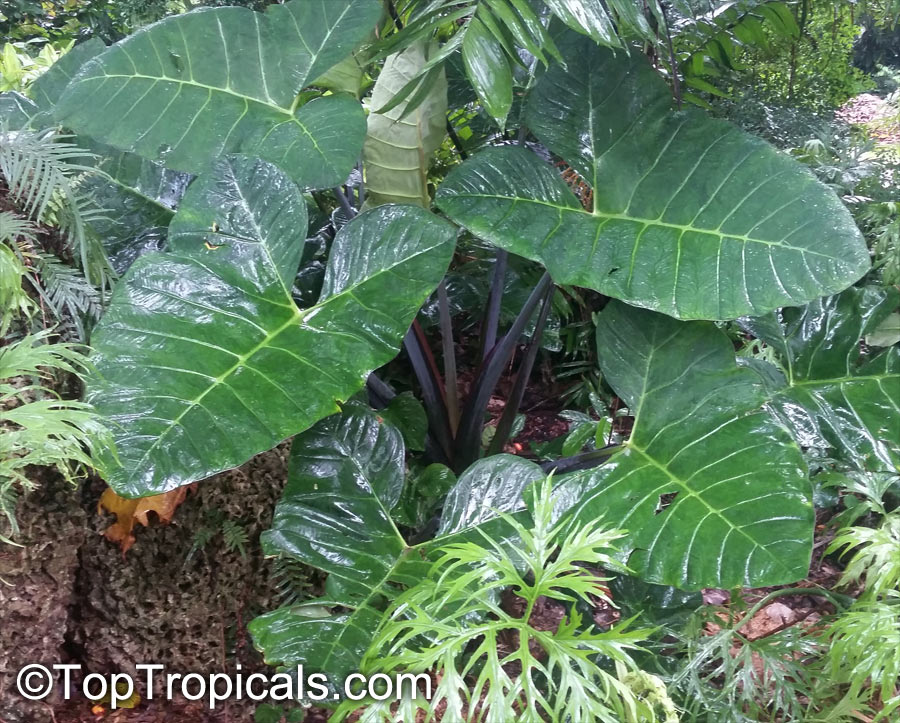
Stem color: The stems of Alocasia plants are typically green, while the stems of Colocasia plants are usually purplish, dark or almost black.

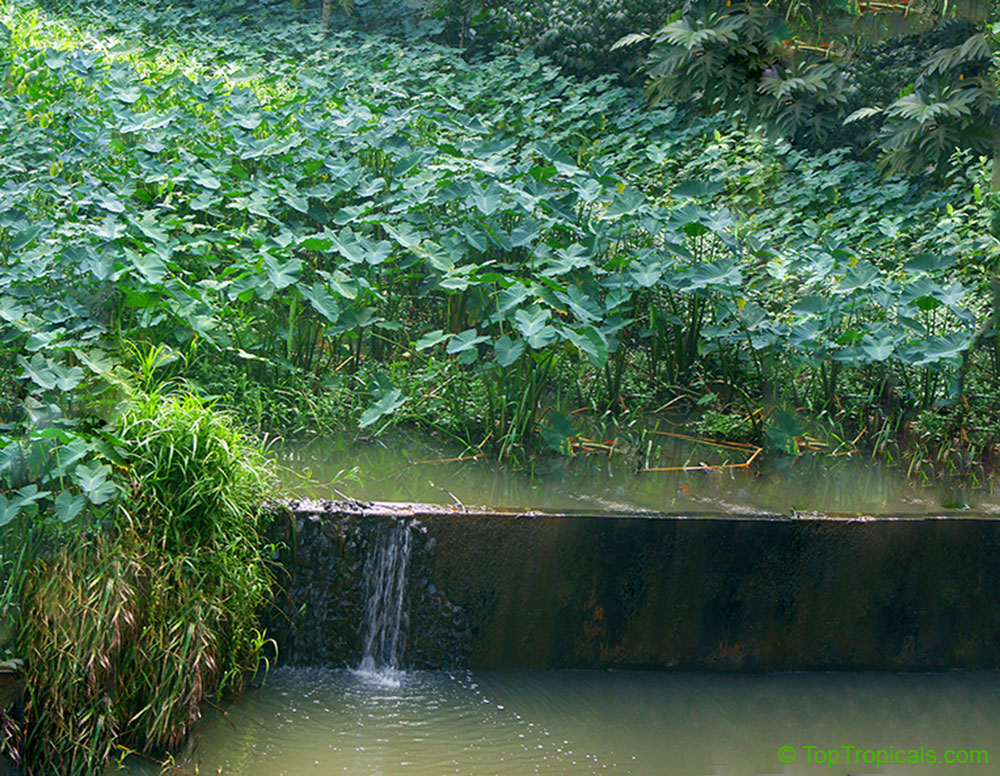
Growing conditions: Alocasia plants prefer bright, indirect light and well-draining soil, prefering to stay on a dry side, while Colocasia plants prefer partial to full shade and moist soil.

Hardiness: Colocasia plants are generally more cold-hardy than Alocasia plants and can tolerate colder temperatures. Both Alocasia and Colocasia may go dormant in Winter especially in cooler climates, and grow new leaves in Spring.

Elephant Ears are absolutely gorgeous tropical plants. They add bold texture, tropical flair, and thrive in filtered light, making it a unique and low maintenance addition to any garden, especially shaded locations.

Xanthosoma  violaceum

Colocasia  in  water

Date: 31 Mar 2023

Elderberry Kir Royale

Grow your own... drink and medicine

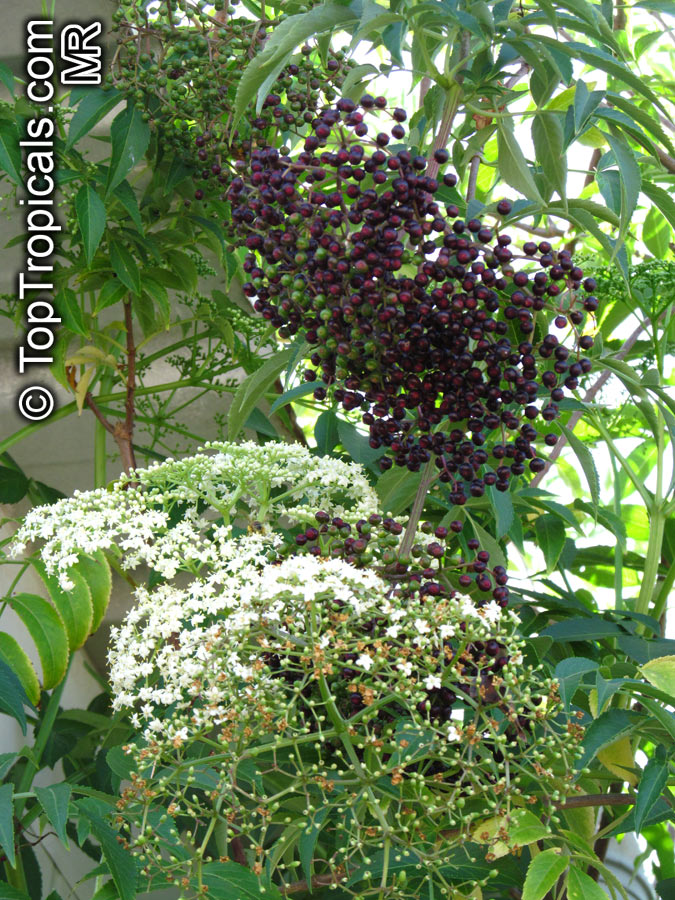
Sambucus  canadensis  (nigra)  -  Elderberry,  American  Elder

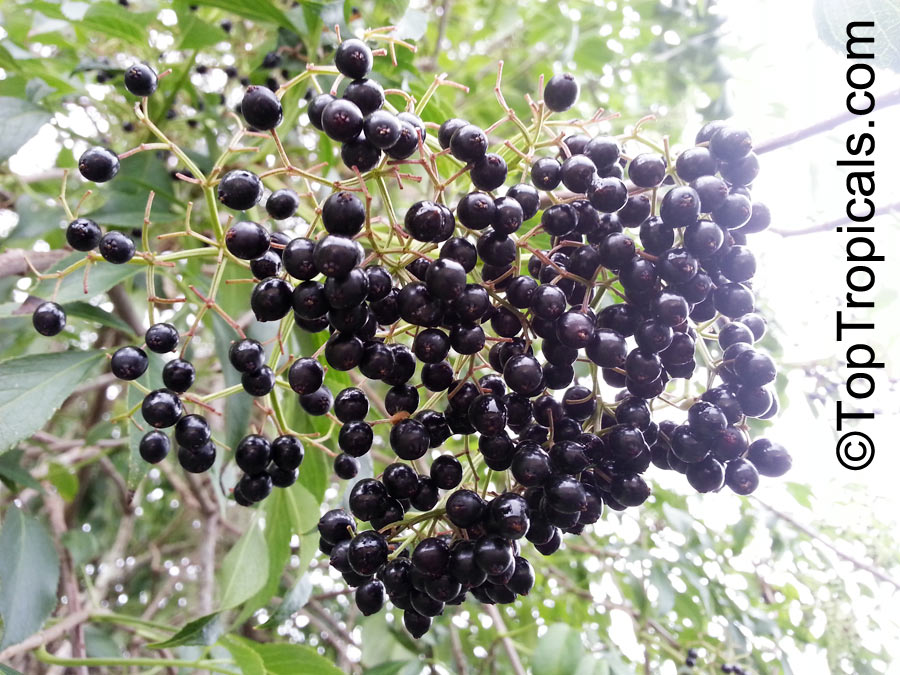
In the summertime, Elderberry bushes transform into small, bushy trees adorned with sizable umbels of white flowers. As late summer approaches, the tree produces an abundance of dark purple berry clusters. Elderberry is known for its ability to withstand cold weather and can thrive in a variety of soils in either full or partial sun. While it typically grows to a height of 10 feet, its spreading can be managed through pruning.

This dense shrub is beloved by nesting birds, who are not the only creatures that appreciate its fruit. People also prize Elderberry for its delicious uses in winemaking, cocktails, and jellies. Elderberry syrup or cordial can be used to create flavorful fruity drinks and cocktails, like the Elderberry Kir Royale. Alternatively, the berries can be left to infuse their flavor into spirits, with Elderberry gin being a particularly delightful option.

Sambucus  canadensis  Elderberry,  American  Elder  berries

Elderberry Cordial

When it comes to combating various strains of the flu virus, Elderberry Cordial ranks among the top natural remedies. Whether sipped in small servings or drizzled over a delectable dessert, Elderberry Cordial is a guilt-free way to fortify your immune system against colds and flus.

2 cups of fresh elderberries
16 oz water

  1. 1/2 cups sugar

1/2 lemon (rind + juice)
2 tablespoons minced fresh ginger
  1. stick cinnamon, crushed
    1 ¼ cups dried elderberries

1/4 cup dried rosehips
About 3 cups brandy
Honey, to taste

Add all ingredients in a jar and cover with a lid. Set aside in a cool, dark place for 3-4 weeks. When ready to decant, strain and squeeze through cheesecloth. For every 1 cup of liquid retained, add 1/2 cup honey. Mix thoroughly. Pour the cordial into a decorative bottle for storage, or gift giving.

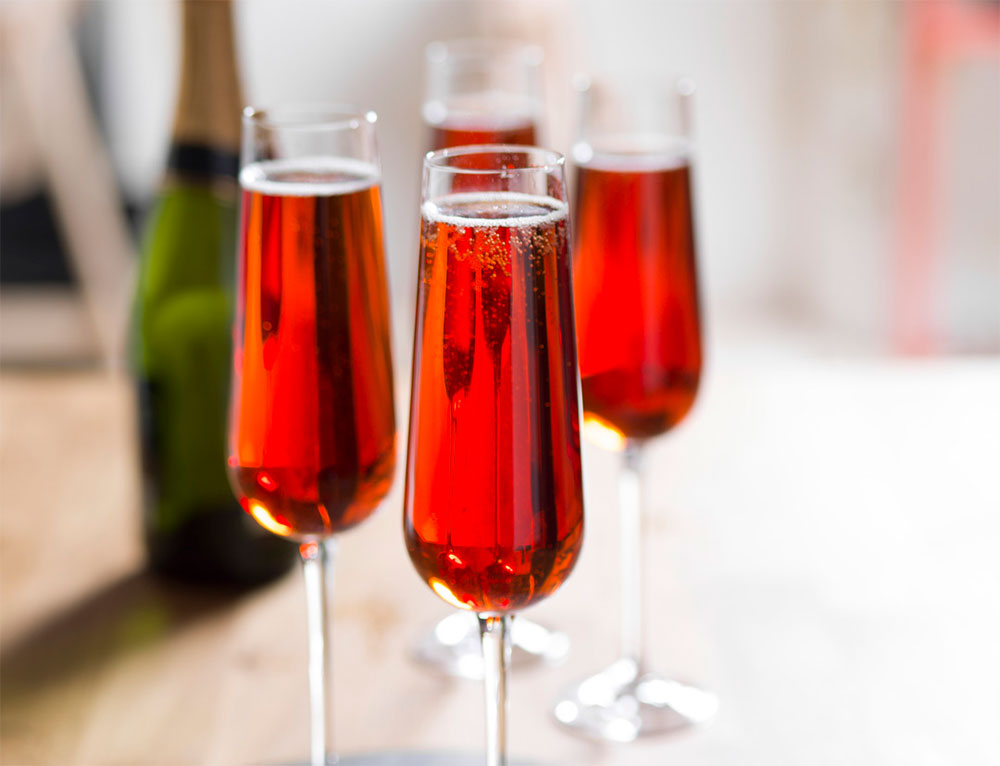
Elderberry Kir Royale Cocktail

5 oz white wine, sparkling wine or champagne
2 oz Elderberry cordial
Rocks
Mint leaves (optional)
Pour the Champagne in a flute glass. Add the Elderberry Cordial slowly.
Party time!

Elderberry  Kir  Royale  Cocktail