⭐️ Have you seen a yellow jasmine? If you saw the Primrose Jasmine in our earlier post, this one a must have for a yellow jasmine collection, because it is sweetly fragrant!
⭐️ Italian jasmine (Jasminum humile) brings charm and fragrance with its sunny yellow flowers and sweet scent. Bright yellow blooms that radiate warmth and cheer.
⭐️ Fragrant oil: The flowers produce a rich, warm, and sweet scent that is extracted as jasmine oil, often used in perfumes as a middle note.
⭐️ Hardy and adaptable: This jasmine is pretty hardy - thrives in USDA Zone 8 and above,
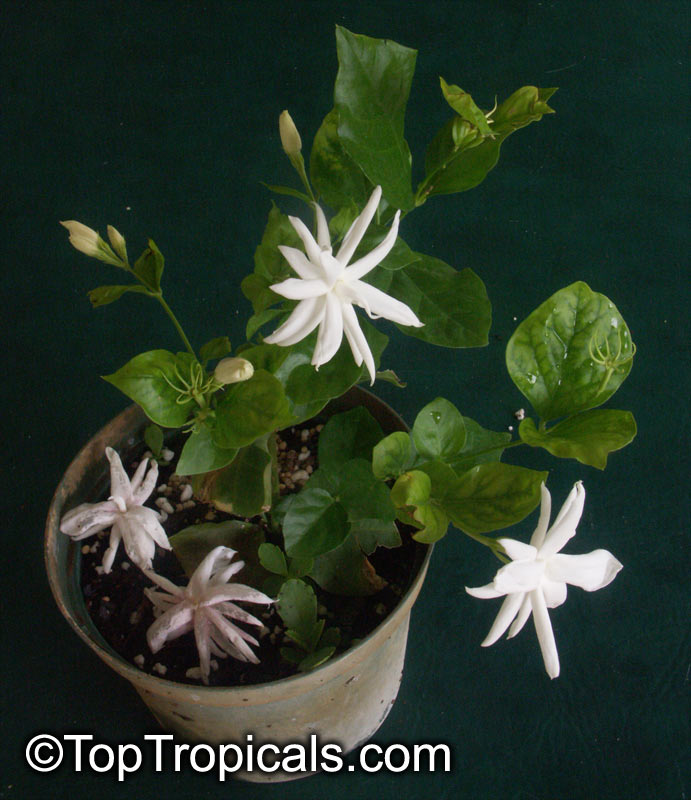
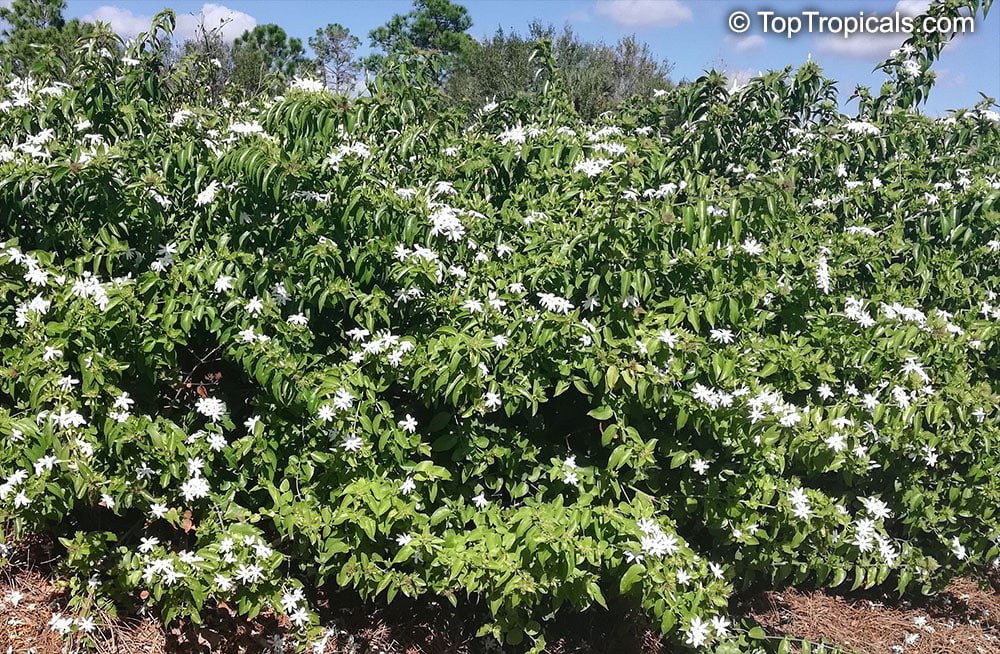
⭐️ Once you smell it, you’ll never forget it! If you are looking for a jasmine that truly stands out, Jasminum molle (also known as Indian Jui or Jasminum auriculatum) is one of the best-kept secrets among fragrant plants.
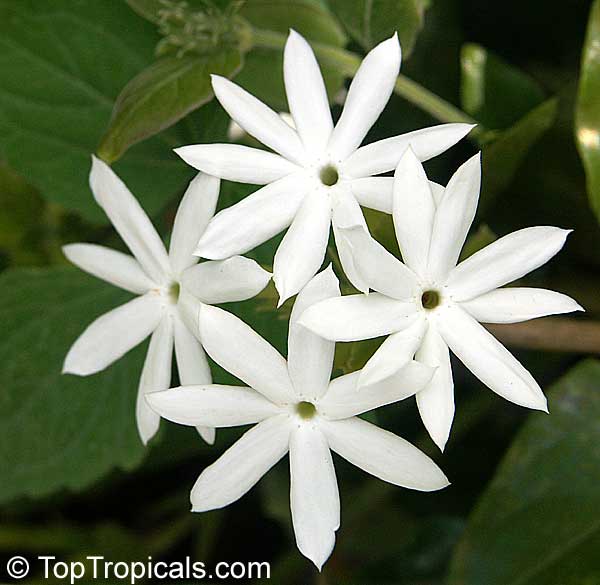
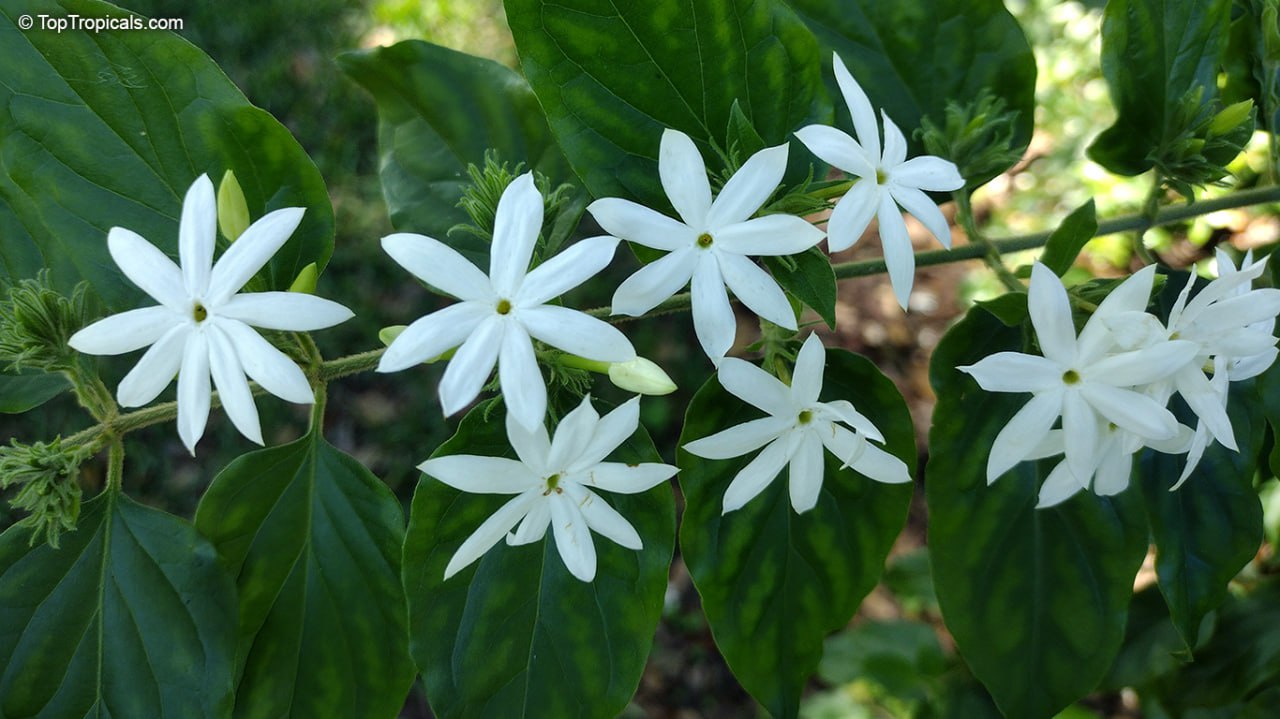
⭐️ An uncommon jasmine with an unforgettable scent, with a rich, gardenia-like perfume that rivals the world-famous Jasmine Sambac, this stunning species deserves a special place in your collection.
⭐️ Extraordinary fragrance: The satin-white flowers release an intense, sweet scent that fills the air - one of the strongest among all jasmines.
⭐️ Multiple growth habits: Naturally bushy and fast-growing, it can be shaped into a dense shrub, grown in containers, or even allowed to climb slightly on a trellis. It also makes a great hedge.
⭐️ Versatile and hardy: Adapts well to full sun or part shade, wet or dry soil. Fairly cold-hardy, it can handle a light frost with no damage.
⭐️ Seasonal blooms: While blooming peaks in summer, flushes of flowers can appear again in fall or even winter, often in clusters that cover the plant.
⭐️ Cultural significance: In India, this jasmine is sacred to the Goddess Devi and widely used in religious ceremonies, garlands, perfumes, and hair adornments.
⭐️ Medicinal uses: Traditional remedies use jasmine oil for hair and skin health, and the roots for treating skin conditions.
⭐️ With small, dark green leaves and powdery white blooms, Jasmine Molle is a top choice for gardeners who love richly fragrant plants. It's easy to grow, low maintenance, and incredibly rewarding. Whether in a pot, a border, or a spiritual garden, this jasmine is more than just a plant - it's an experience.
How to get a Jasmine to bloom.
Caring for jasmines as container plants during Winter
Locate the jasmine plant where it will receive bright filtered light at
least six hours every day.
Put a few pebbles in a shallow plate or tray and pour fresh water over
the pebbles. Set the pot on the pebbles, but don't let the water level touch
the bottom of the pot. This increases the humidity in the air around the
jasmine. Keep the plant away from wood stoves, heat vents and radiators.
Water the jasmine when the top 1/2 inch of the soil feels dry. Don't let
the soil get soggy, and never let the pot sit in water. Water the plant
sparingly during the winter.
Feed jasmine twice a month between Spring and early Fall, using a
granulated slow-release, or water-soluble houseplant fertilizer mixed at half
strength. Don't fertilize during the winter months.
Prune the jasmine as needed to maintain the desired shape. Never prune
in winter, as the plant will be preparing to bud.
Encourage the jasmine to bloom by putting it in a cool room at night for
four to five weeks during Fall to Early Winter. The plant should get plenty
of sunlight during the day, but during the night, move it to a pitch-dark
room where the temperature is between 40 and 50 degrees F. After four to five
weeks, leave the plant in its regular, daytime location. The plant should start
blooming in mid-Winter to early Spring.
Q: My mother loves gardening and I am thinking to buy her a live plant to make her happy. What plant do you recommend?
A: At Top Tropicals, we have a big selection of
wonderful gift plants
. Below are a few suggestions for you, these plants are large, developed and ready to bloom or fruit!
1. Joy Perfume Tree
The
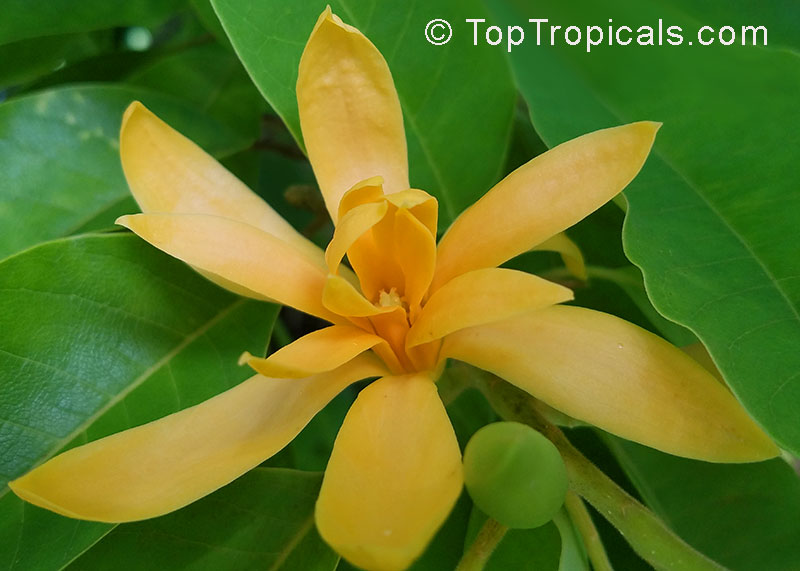
Champaka or Joy Perfume Tree (Magnolia champaca) - is a top choice for
Southern landscapes, prized for its striking columnar shape and fragrant,
fruity bubble gum-scented blooms - you won't be able to stop sticking your nose
in this flower! A signature plant at Top Tropicals, it's known for producing
the world's most expensive perfume, Joy. The Joy Perfume Tree blooms on and
off year-round and is currently in full bloom at our farm in Sebring, FL,
filling the air around with fantastic sweet scent. This tree thrives in both pots
and the ground, growing bushy and full as it matures. At Top Tropicals, we
have beautiful Champaka trees in all sizes, from 3-4 ft tall (ready to bloom in a year) to 6-10 ft tall (already
bloomed) for local pick up or delivery. Learn more, with a short video.
Tropical
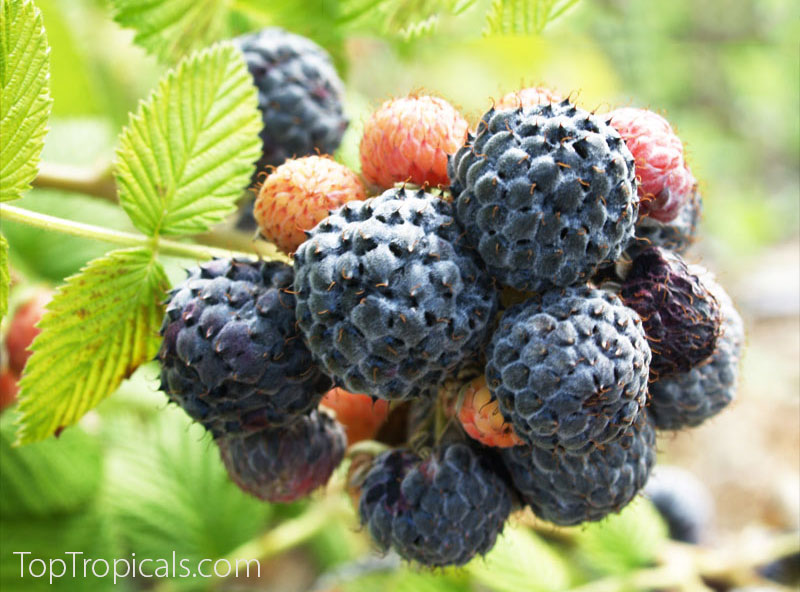
Raspberry Mysore (Rubus albescens) - is the perfect solution for those missing
Northern fruit in hot climates. Unlike traditional raspberries that can't
handle the heat, this fast-growing Raspberry from India thrives in humid, hot
conditions and produces juicy, sweet fruit almost year-round! The clusters of
purple-black fruit are packed with flavor, and the plant is perfect for large
containers, producing plenty of fruit in no time. Cold-hardy to the upper 20s
F, it's an easy-to-grow, fast producer. We have beautiful, fruit-ready 3 gal Raspberry
bushes, ready to add a burst of sweetness to your garden! Learn more, with a short
video.
Jasminum
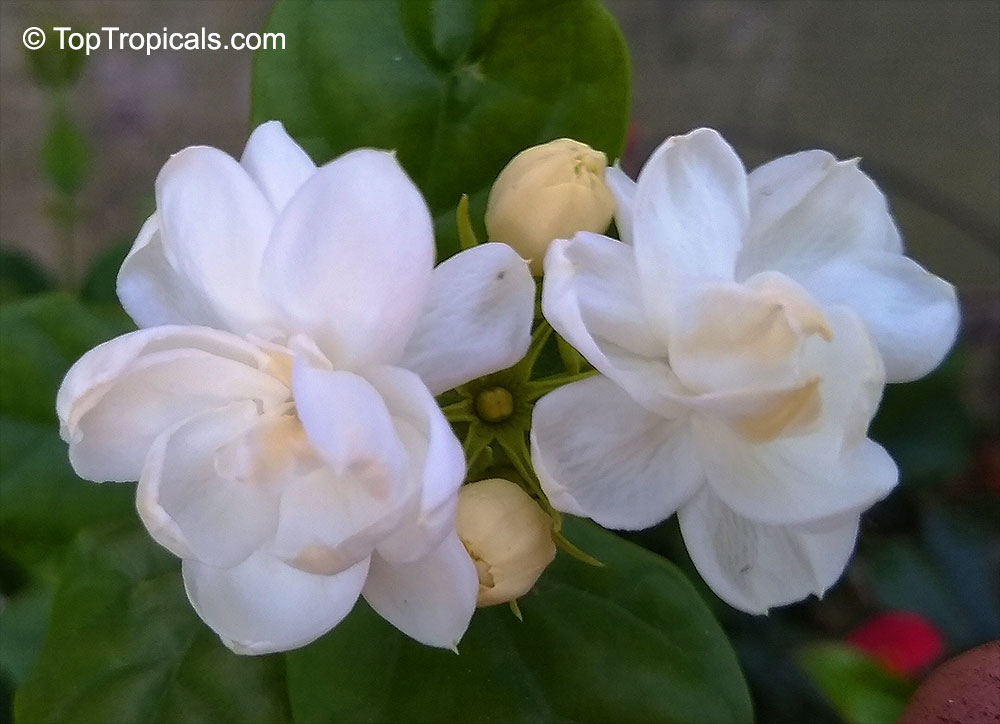
Sambac is widely regarded as the most fragrant jasmine, cherished by
tropical gardeners and plant collectors alike. Native to India, this jasmine is the
source of jasmine perfume oil and the signature ingredient in jasmine tea.
With various varieties offering unique flower sizes, shapes, and growth
habits, it’' perfect for both sun and shade, thriving as a container plant or
indoor favorite. Its delightful fragrance fills the air, and with the help
of
Sunshine Pikake plant booster, you can enjoy even more blooms. Jasmine Sambac,
along with Champaka, is another signature plant of Top Tropicals. Through the decades, we've collected all the available varieties in cultivation - check them out! Learn more about Jasmine Sambac
varieties, with a short video.
The Dwarf
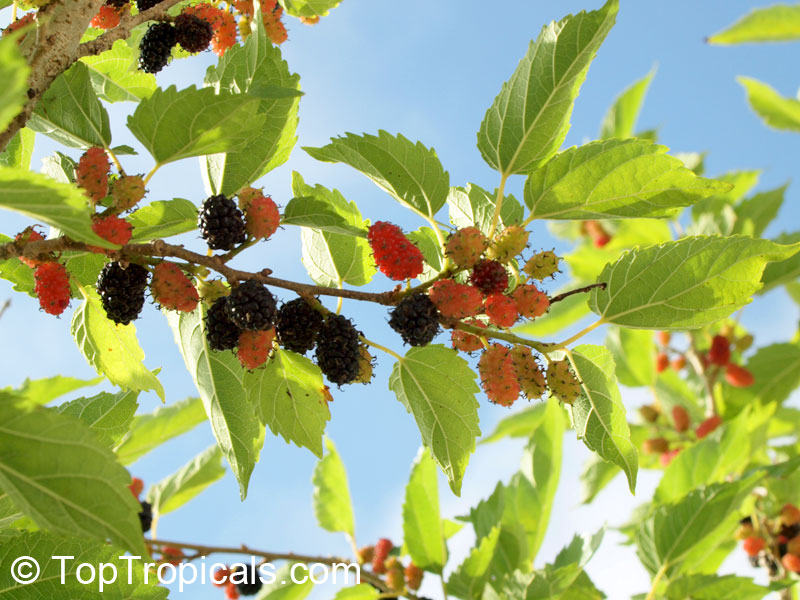
Everbearing Mulberry (Morus sp.) - is the perfect way to enjoy fruit
year-round! This beautiful, cold hardy bush produces sweet, juicy mulberries starting
from the very first year - often the same season you plant it. With its dwarf
habit (easily maintained at 4-6 ft), it's perfect for containers and small
spaces. Cold-hardy and drought-resistant, this productive plant thrives in
various climates, from USDA zones 5 to 10! The fast-growing Mulberry will provide
fruit year-round, and with minimal care, it will flourish in almost any soil. Our
Everbearing Mulberry bushes produce enough fruit for both birds and breakfast - we pick a handful every day! Learn more, with a
short video.
Rare Medinilla
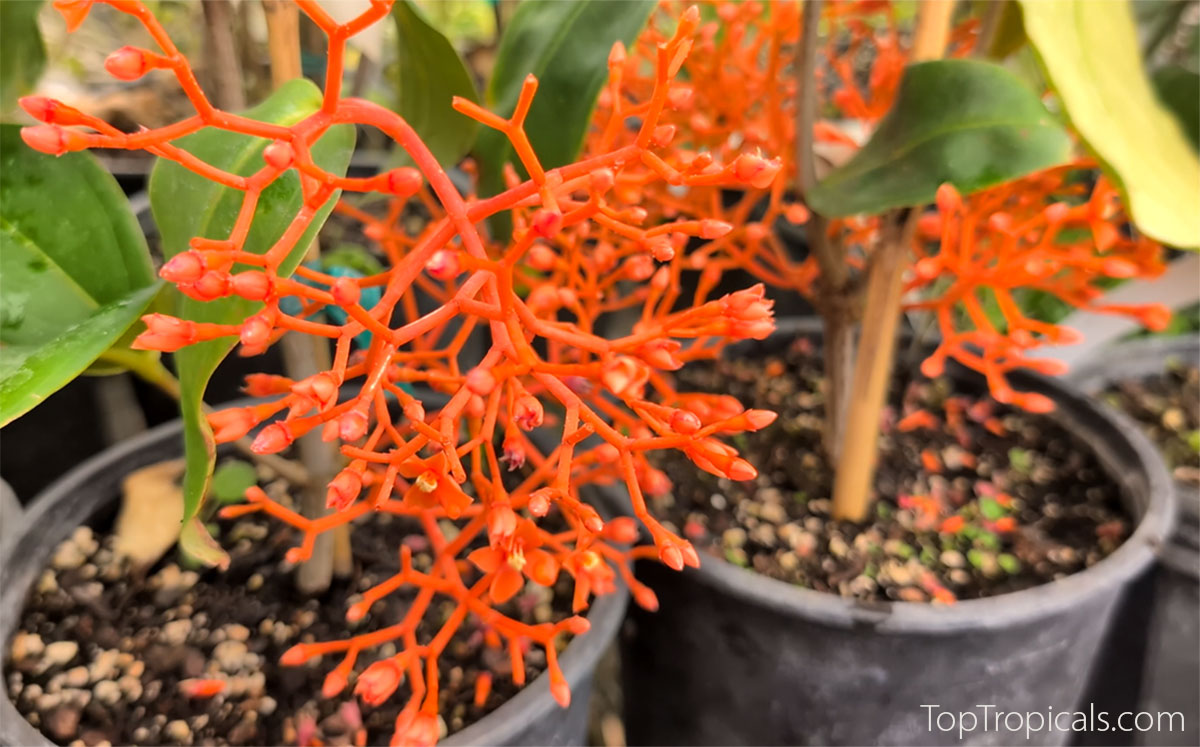
scortechinii - Orange Coral Spike - is a rare gem that brings a touch of
the ocean to your garden! With bright orange stems bursting into star-shaped
blooms, it looks like something straight from a coral reef. Compact and easy to
grow, this plant stays under 2-3 ft tall, making it perfect for pots,
hanging baskets, or as an epiphytic accent. The glossy dark leaves contrast
beautifully with the vibrant orange panicles, and it thrives in bright shade. A must-have for collectors of unusual
tropical plants, this coral spike adds a bold pop of orange wherever it grows - but hurry, it doesn't stay in stock for long! Learn more, with a short video.
💫 What is a good plant for a fragrant elegant hedge? Discover the Angel Hair Jasmine.
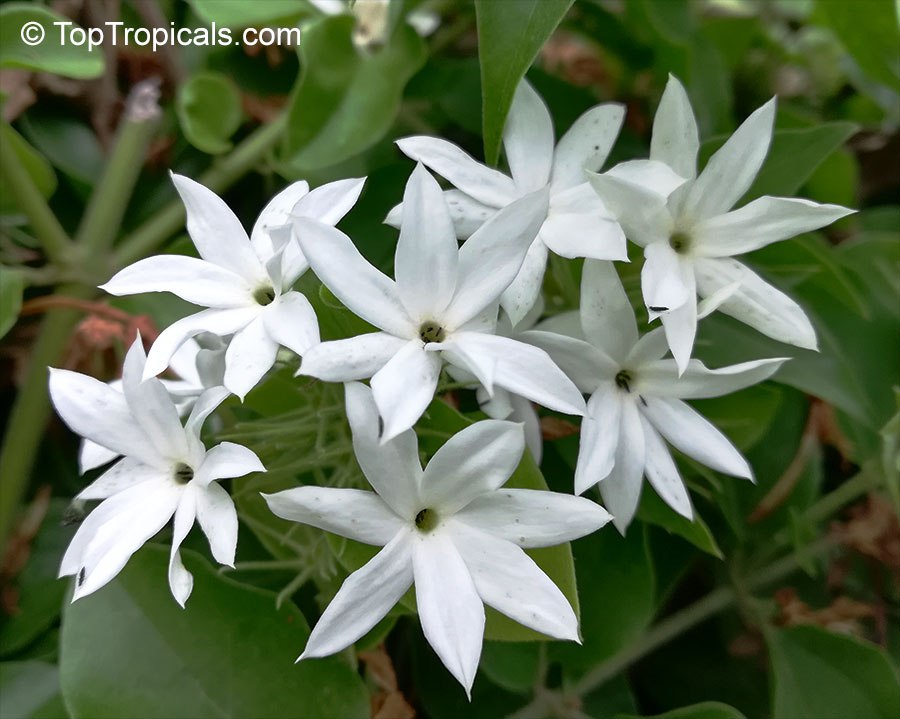
💮Jasminum pubescens (multiflorum), also known as Angel Hair Jasmine, is a beloved choice for landscapes, prized for its multitude of exceptional qualities.
💮 Bushy, dense vining shrub with star-like white flowers emitting a delightful fragrance.
💮 Soft, velvet-like leaves add to its charm.
💮 Rapid growth makes it ideal for creating lush hedges or adding vertical interest to garden spaces.
💮 Perfect for hedges, fences, or trellises, adding a touch of beauty and fragrance to any outdoor setting.