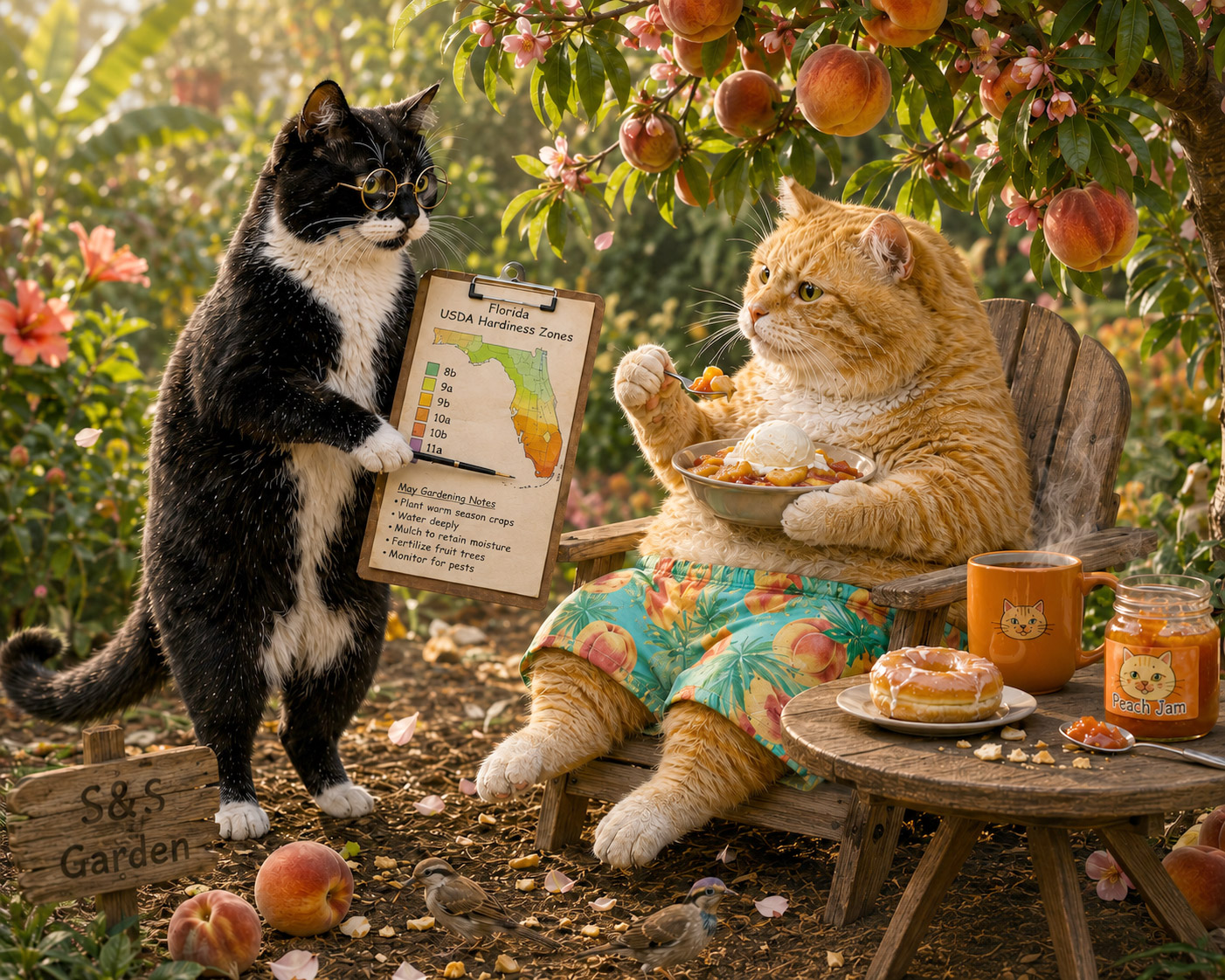
Sunshine: I love peach cobbler. Smokey, why are peaches on
the tree so early? Smokey: Low-chill peach varieties for Florida. They ripen
much sooner. Sunshine: I thought peaches were for Georgia. Smokey: Not if you plant low-chill peaches. And speaking
of peaches, do you know about donut peaches? Sunshine: Donut peaches? Finally, horticulture I can
understand.
Some fruits carry memories before you've even tasted them.
There's something about a peach still warm from the tree - the way it
gives a little when you pick it, the smell that hits you before you even
take a
bite. It makes you slow down. It makes summer feel like it actually meant to
show up.
Peach Plant Facts
Botanical name: Prunus persica, Amygdalus persica Also known as: Peach
USDA Zone: 5 - 10
Highligths
For Florida gardeners, that moment used to feel borrowed. Peaches were a
Georgia thing, a Carolina thing. You'd admire someone else's harvest and
quietly file it under not for us.
Low-chill peaches rewrote that story.
Here's the thing about regular peaches - they need cold. Not just a cool
night or two, but a real winter. We're talking 600 to 1,000 hours below 45F.
That's how they know to wake up in spring and actually fruit. South Florida
just doesn't deliver that. The trees will grow fine, look healthy even, and
then give you almost nothing come harvest time. Frustrating doesn't cover
it.
Low-chill varieties are different. They were bred specifically for
places like ours - warm winters, mild springs. Some only need 100 hours of
chill.
A hundred. That's a few cold fronts, not a season. And because they're
working with our climate instead of against it, they fruit reliably. Every
year.
They're not just a Florida trick either. Gardeners in coastal Texas,
southern Louisiana, southern California - anywhere in that Zone 8b to 10
range -
have been growing these successfully. If you've got warm winters and thought
peaches weren't for you, they probably just weren't the right peaches.
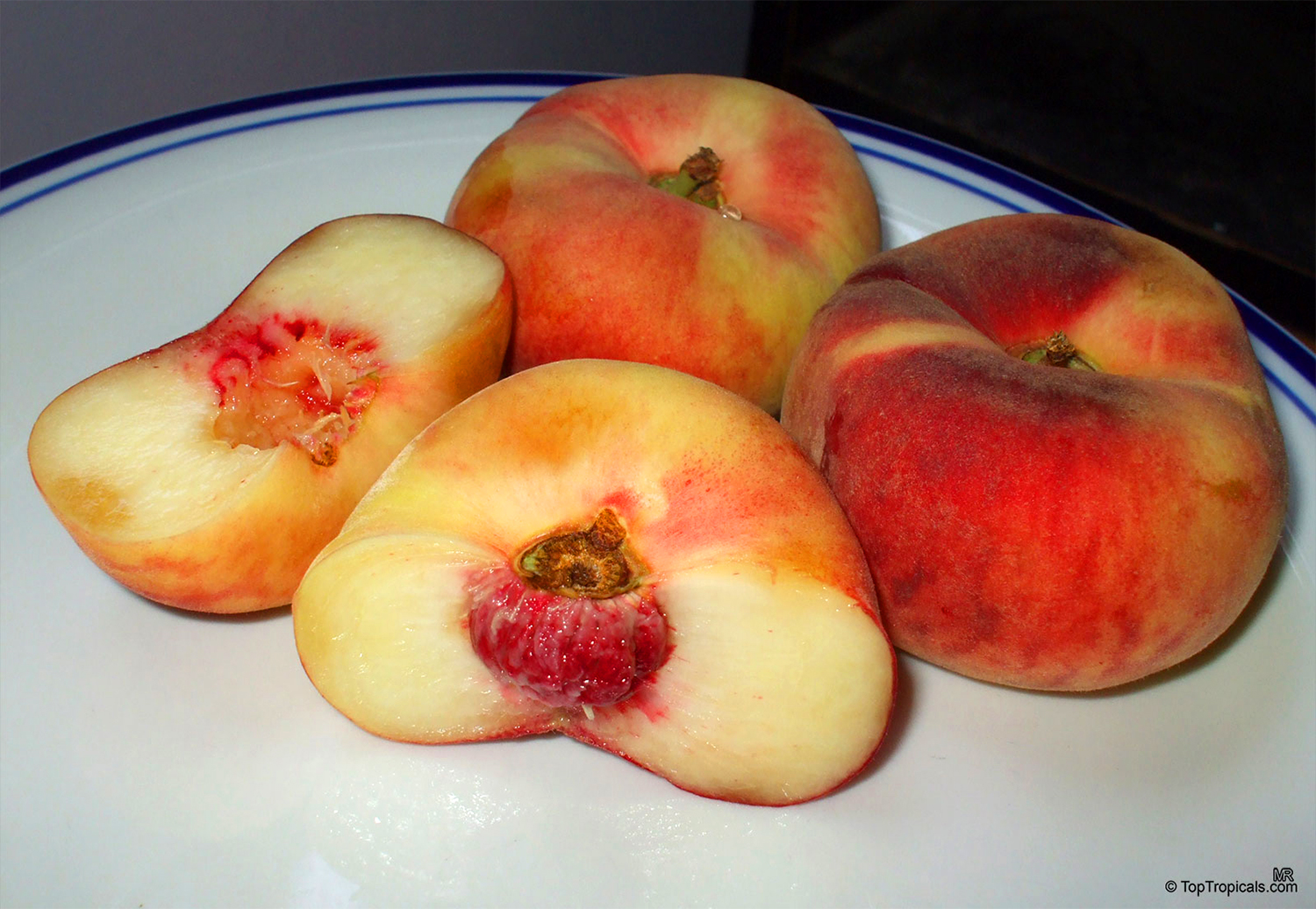
Flat peaches - sometimes called DONUT peaches - are
known
for their sweet white flesh, low acidity, and fun squashed shape.
Date: 4 May 2026
🍲 Where the
Garden Becomes the Kitchen
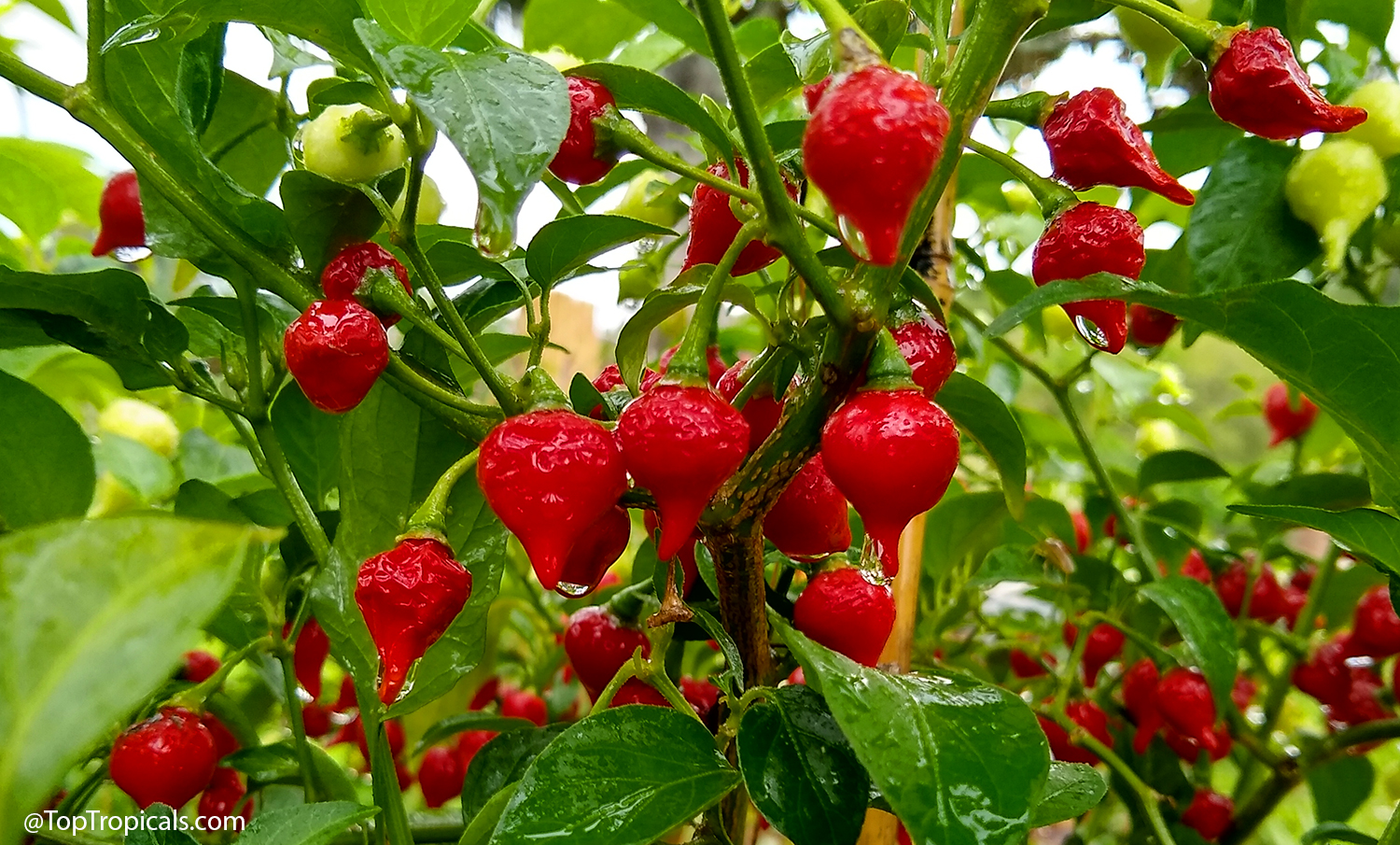
Biquinho
pepper loaded with fruit - small, beak-shaped peppers ripen
from green to bright red, offering intense fruity habanero flavor with
little to no heat on a compact, heavy-producing plant.
Sweet Pepper Plant Facts
Botanical name: Capsicum annuum Also known as: Sweet Pepper, Chilli Pepper, Cayenne Pepper, Paprika, Ornamental pepper
USDA Zone: 4 - 10
Highligths
A lot of plants that thrive in Florida heat have deep roots in Mexico, and
not just as ornamentals. Think coral vine or flame vine climbing a fence in
summer, or bird of paradise
sitting at the edge of a patio like it owns the place. These are not plants
that need coaxing. They grow fast, full, and unapologetically.
Then there are the plants you actually eat: peppers,
prickly
pear, sweetleaf,
and fruit trees like avocado, guava,
and sapodilla.
They do not just decorate the yard. They change how the yard works, and how
the kitchen feels all year.
Avocado Plant Facts
Botanical name: Persea americana, Persea gratissima Also known as: Avocado, Alligator Pear, Aguacate, Abacate
USDA Zone: 9 - 11
Highligths
That is the part that sneaks up on you. Gardening stops being about having a
pretty yard and starts becoming a way of living. Mango tacos taste
different when you picked the mango yourself. Everything does.
Mango Plant Facts
Botanical name: Mangifera indica Also known as: Mango
USDA Zone: 9 - 11
Highligths
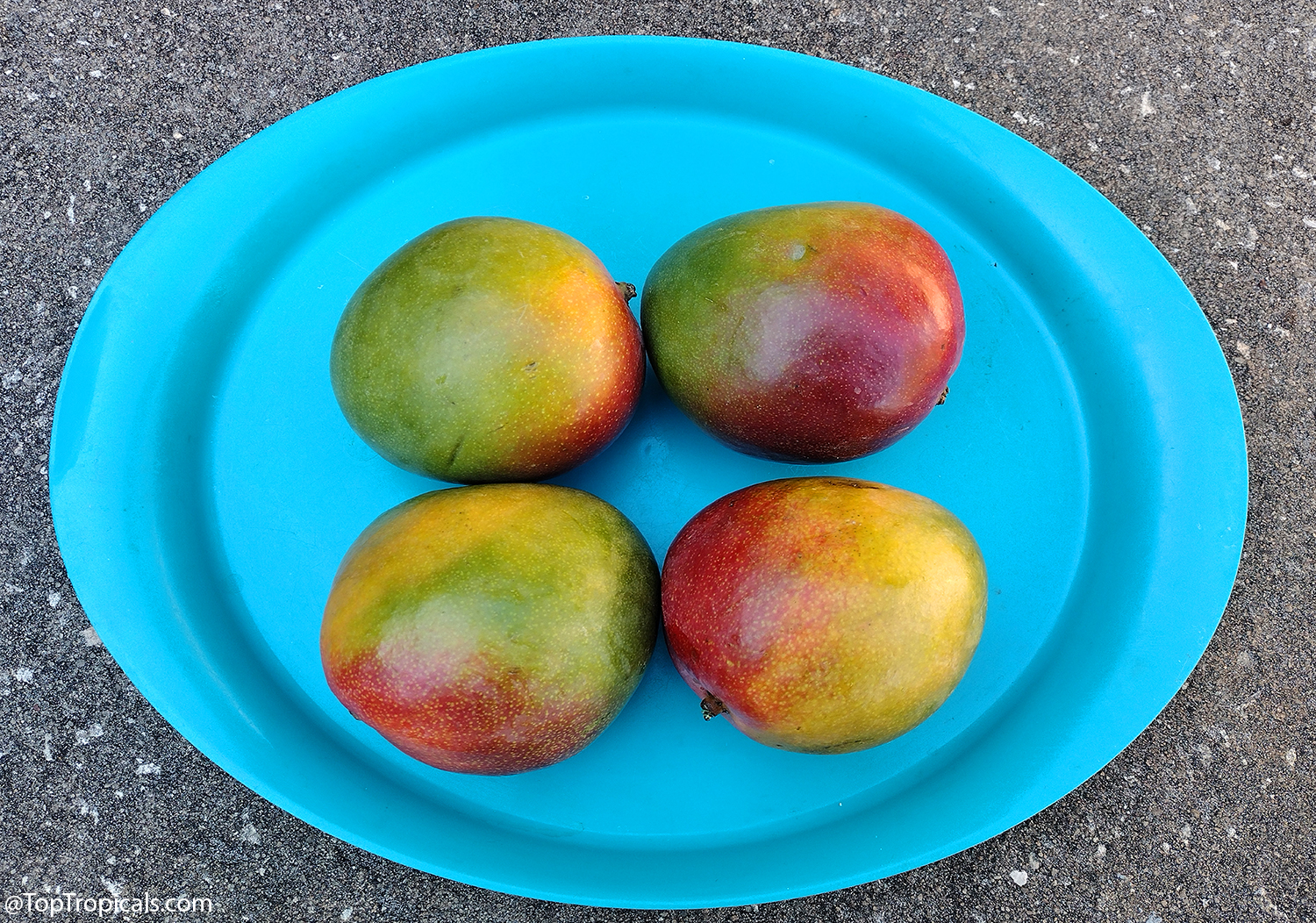
Kent mango - classic late-season variety with smooth,
fiberless flesh and rich, sweet flavor.
🍀Mexican
Plants That Thrive With Minimal Effort
by Tatiana Anderson, Top Tropicals Garden
Expert
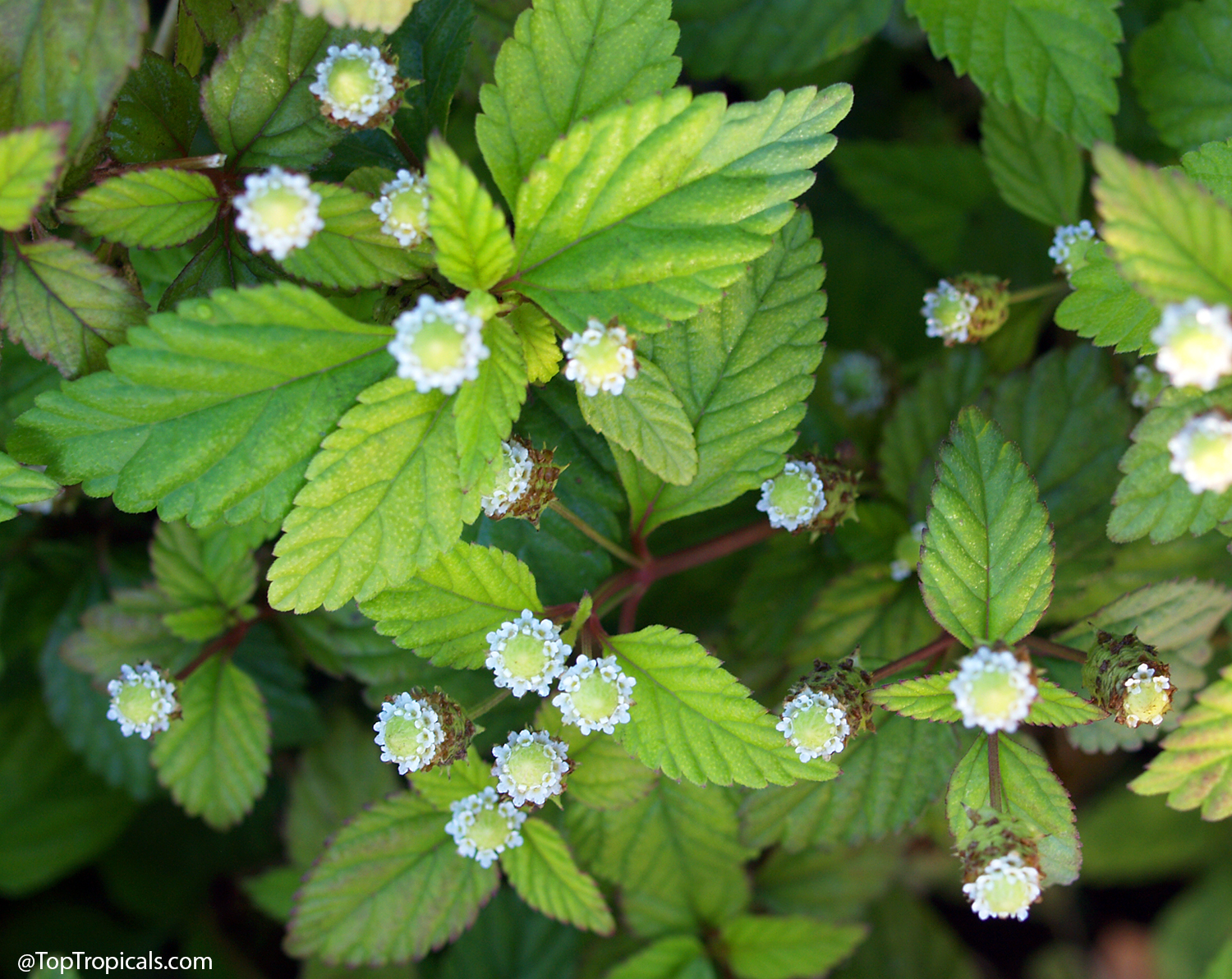
Lippia
dulcis - Aztec Sweet Herb in bloom - a low-growing Mexican herb
with tiny white flowers and remarkably sweet leaves that can be eaten fresh
or added to fruit dishes, traditionally used since Aztec times for coughs
and colds.
Aztec Sweet Herb Plant Facts
Botanical name: Phyla dulcis, Lippia dulcis, Phyla scaberrima, Lippia mexicana Also known as: Aztec Sweet Herb, Sweetleaf
USDA Zone: 9 - 11
Highligths
These Mexican plants are surprisingly easy to grow if you give them what
they expect: sun, heat, and good drainage. Most of them are built for tough
conditions and will grow fast with minimal care once established.
The one rule that matters: fill the planting hole with water. If it does
not drain in 5-10 seconds, plant on a mound or use a container.
Flowering
vines will take off quickly, edibles like peppers and sweetleaf
lippia
are very forgiving, and cactus types prefer to be left alone rather than
overwatered.
For full, step-by-step growing tips and plant-specific advice, read our blog
- we break everything down in practical, real-world terms.
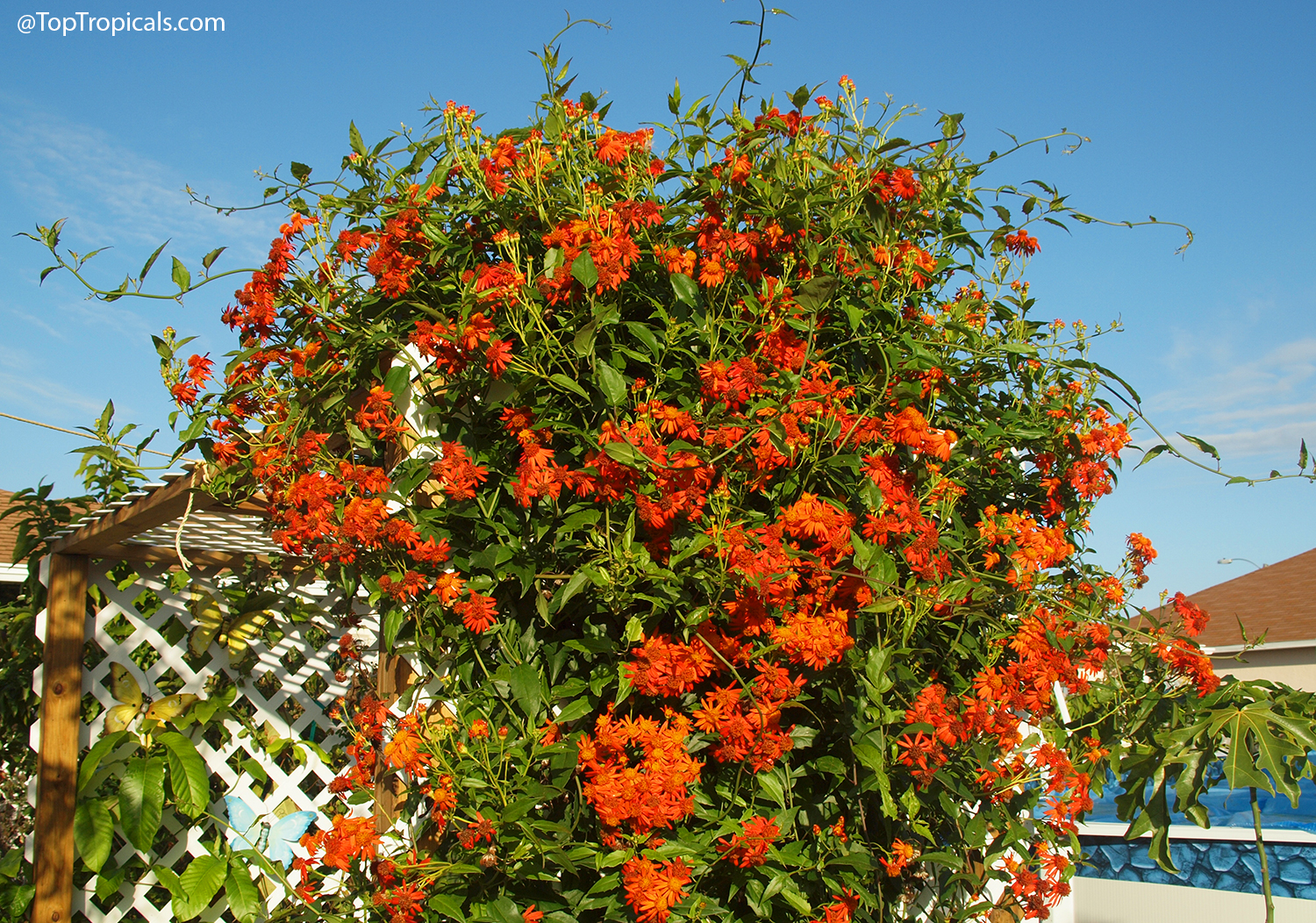
Mexican Flame Vine in full bloom - a fast-growing,
drought-tolerant climber that quickly covers fences with vivid red flowers,
attracting
pollinators and adding bold color with minimal care.
Mexican Flame Vine Plant Facts
Botanical name: Pseudogynoxys chenopodioides, Senecio confusus Also known as: Mexican Flame Vine, Orangeglow Vine
Smokey: Work first. Celebrations later. Sunshine: I am celebrating efficient workflow. Smokey: Impressive. Somehow your workflow smells like
tacos. Sunshine: I assembled mango tacos. Join my festivities.
Cinco de Mayo has a way of sneaking up the right way. The weather
settles, the evenings stretch a little longer, and suddenly everything moves
outside -
plants, people, and whatever happens to be for lunch. It is the kind of day
where you stay out longer than planned, something cold is sweating on the
table,
and dinner becomes whatever sounds good.
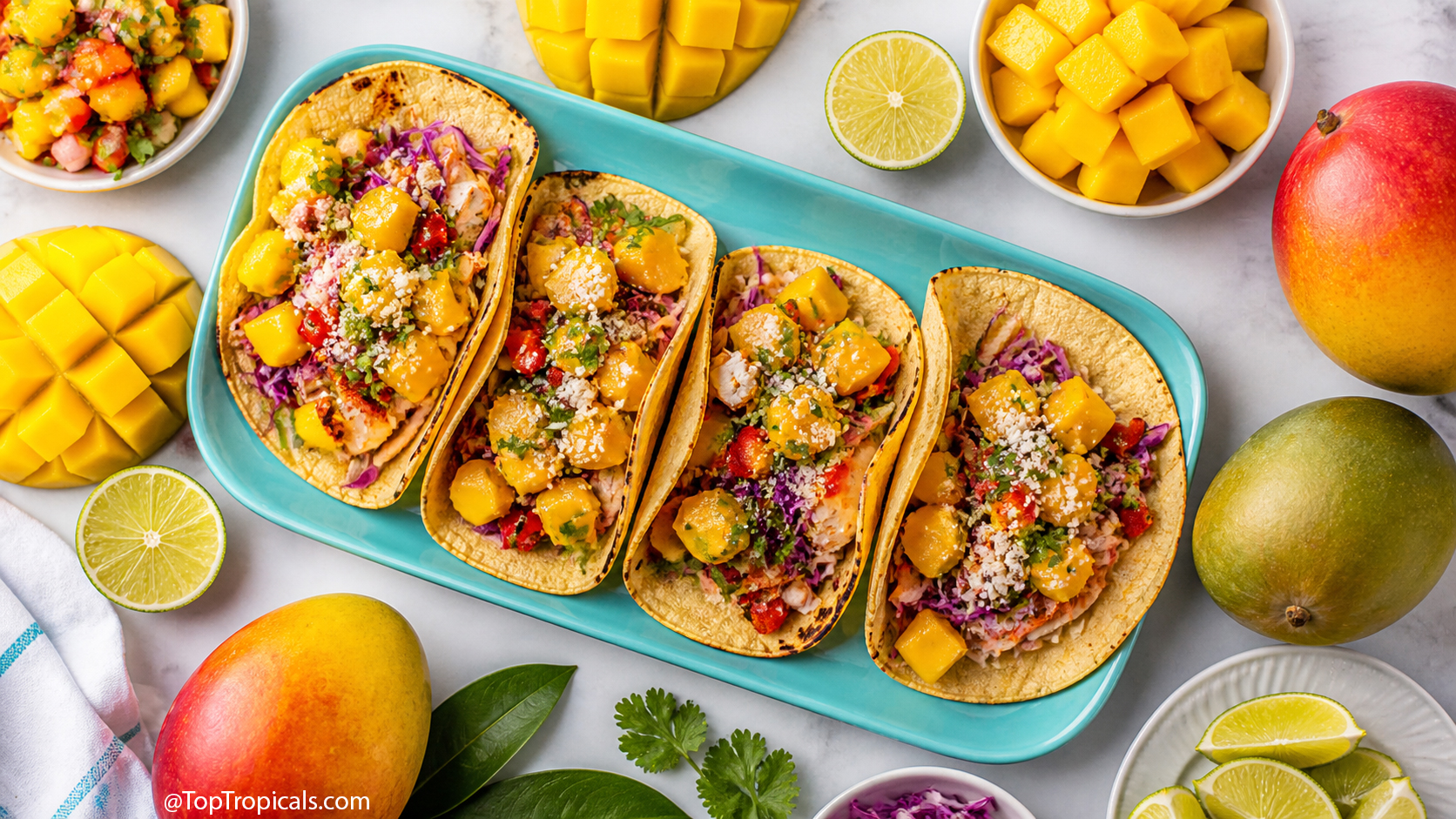
This year, it was mango tacos. Not a recipe we planned - just a few ripe
mangoes that needed a purpose and the kind of lazy
inspiration that shows up around 5pm in the garden. Nothing complicated.
Just something warm from the pan and a quick assembly that somehow feels
like a celebration.
Mango Plant Facts
Botanical name: Mangifera indica Also known as: Mango
USDA Zone: 9 - 11
Highligths
It's funny how a good meal can send you down a rabbit hole. One bite of
something fresh and you start wondering where it came from, whether you
could grow it yourself, and how much better it might taste if you did.
That is really the point. A small shift from planning to picking, where
the line between the garden and the kitchen starts to blur. If you are
growing fruit, or thinking about it, this is your reminder: the best meals
usually start about ten feet from your back
door.
🎁 Mothers Day plant gift guide: something for
every
kind of mom
Skip the bouquet, give her something that
grows
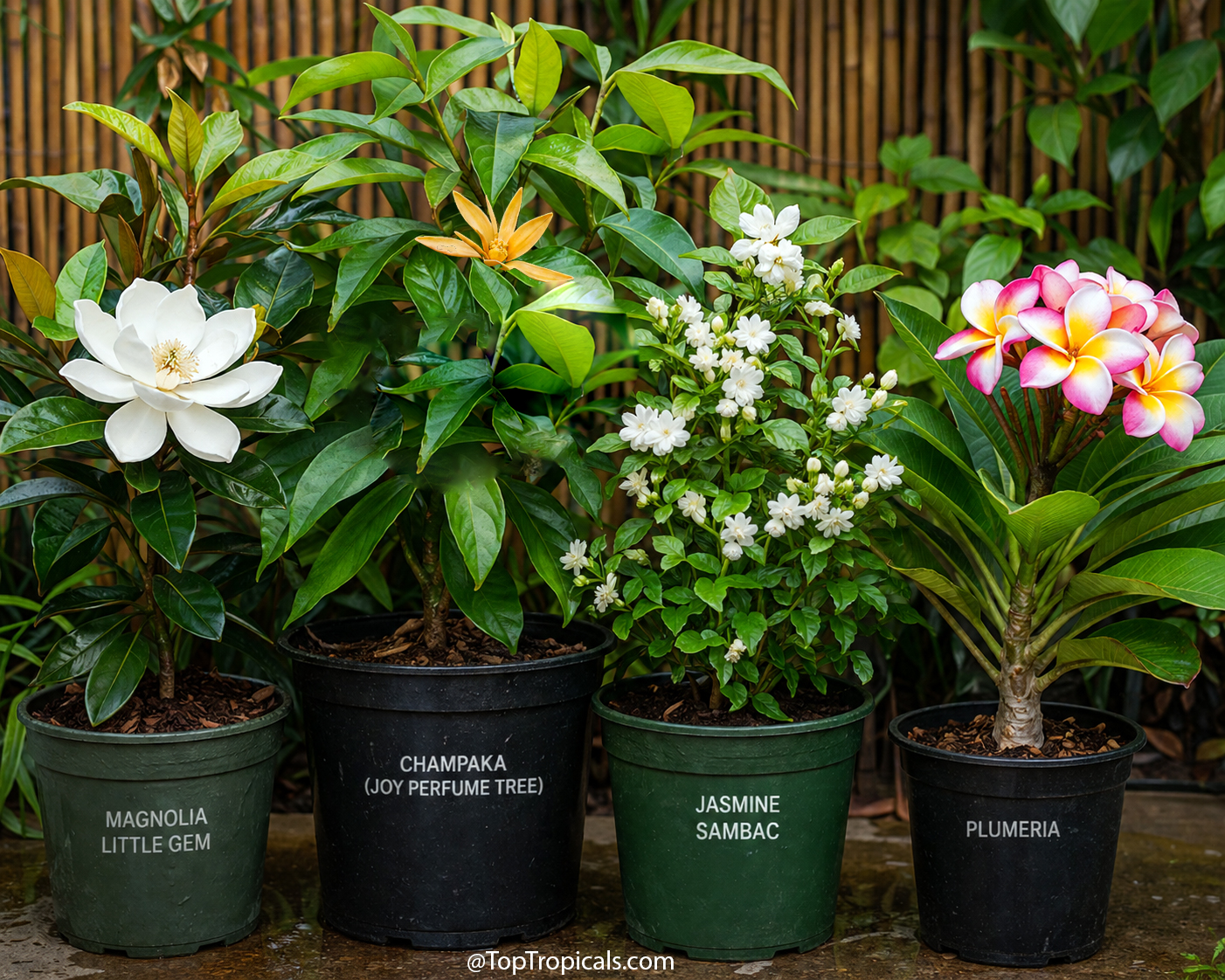
Magnolia Little Gem, Champaka, Jasmine Sambac, and Plumeria
Some gifts last a few days. These don't. Right now, these plants are at
their best in our nursery - full, established, and ready to impress the
moment she sees them. This year, give her something that doesn’t fade.
Pick
a plant that will keep growing, blooming, and reminding her of you long
after
Mother's Day is over. Here are a few easy ways to choose the right one.
Plumeria Plant Facts
Botanical name: Plumeria sp. Also known as: Plumeria, Frangipani
USDA Zone: 9 - 11
Highligths
All of these grow well in containers and are beginner-friendly.
1. For moms who love fragrance - give her living perfume ✨
These are the plants people remember. Soft, rich scent that fills the
garden, patio, or even a warm evening indoors.
Champaka Joy Perfume Tree - the legendary Joy perfume flower - rich,
sweet, and unmistakably bubble gum-like.
Magnolia Little Gem - the classic Southern magnolia in a smaller form -
big, creamy, fragrant blooms that never go out of style.
Wrightia religiosa - a sacred Buddhist tree - delicate white flowers
with a soft jasmine fragrance that feels calm and refined.
href="https://toptropicals.com/store/findname/Jasminum-Sambac.htm?utm_source=mlist"
>Jasmine Sambac - intensely fragrant and impossible to ignore - once you
have it, you won’t want a garden without it
Plumeria - the iconic Aloha flower - bold color, rich perfume, and pure
tropical feeling in bloom.
Parijat Tree Jasmine (Nyctanthes arbor-tristis) - blooms at night and
fills the air with a gentle, unforgettable fragrance.
4. For the fruit lover - grow something she can enjoy and taste
🍒
A gift that turns into harvest. Fresh fruit, right from her own
garden.
Mango Plant Facts
Botanical name: Mangifera indica Also known as: Mango
USDA Zone: 9 - 11
Highligths
Avocado Plant Facts
Botanical name: Persea americana, Persea gratissima Also known as: Avocado, Alligator Pear, Aguacate, Abacate
USDA Zone: 9 - 11
Highligths
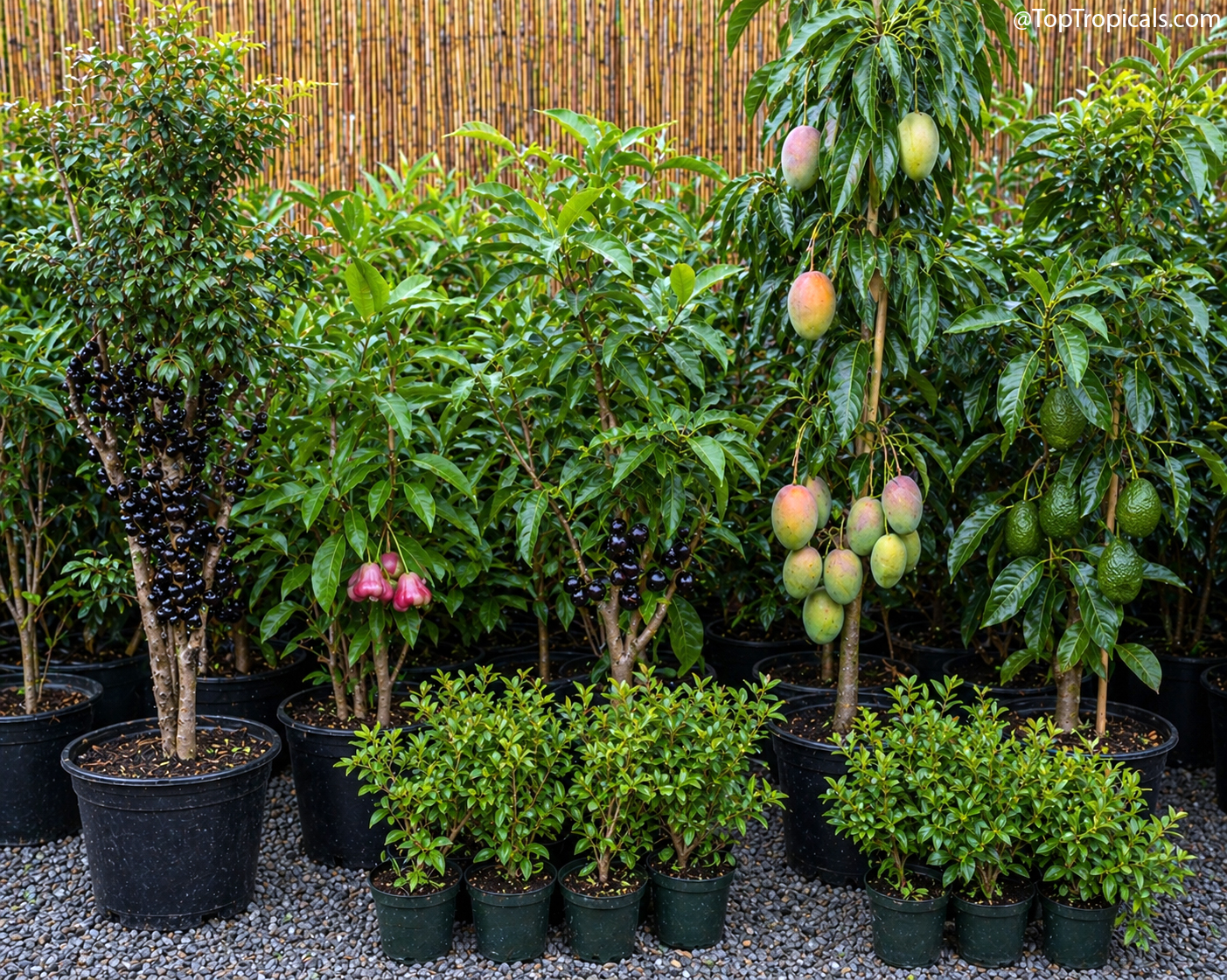
Jaboticaba - a truly unique fruit tree that produces sweet, grape-like
fruit right on the trunk, turning it into a conversation piece.
Rose Apple - crisp, refreshing fruit with a light floral taste and a
beautiful ornamental tree to match.
Java Plum (Jambolan) - deep purple fruit with a sweet-tart flavor,
loved for both its taste and its shade tree presence.
Mango - the king of tropical fruit - rich, sweet, and incredibly
rewarding to grow in your own garden.
Avocado - creamy, nutrient-rich fruit from a tree that becomes a
long-term staple in the garden.
Eugenia cherries - Surinam Cherry, Rio Grande and Grumichama - compact
trees with glossy foliage and delicious, dark cherries that are easy to grow
and quick to fruit.
Tropical fruit trees selection - from Jaboticaba fruiting on the trunk to
Mango, Avocado, and rare Eugenia cherries - a great mix for building a
productive food forest.
Mothers Day Gift Card
💌
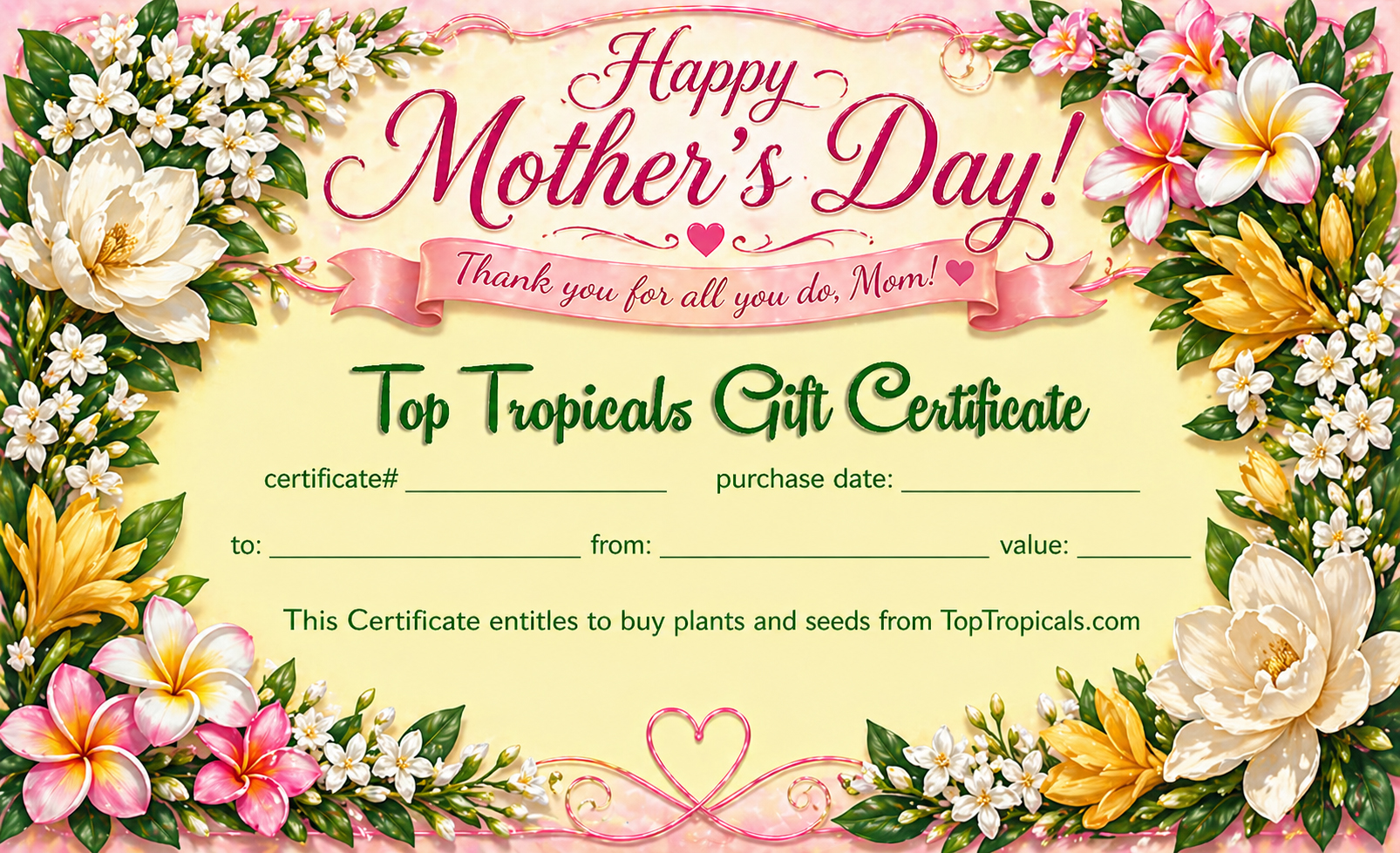
Mother’s Day Top Tropicals gift certificate
Still not sure what to choose? A gift card keeps it simple. She can pick
exactly what she wants, when she is ready for it. No guessing, no pressure -
just something she will actually enjoy.
Get 15% extra value on gift certificates. Just mention
Mother’s Day in the message field.
For example, a $100 certificate becomes $115. A $50 certificate becomes
$57.50.
Offer valid through 05/12/2026.
Bonus value applies to gift certificates only. Must include “Mother's
Day” in the message field at checkout. Not valid on previous purchases
and cannot be combined with other promotions or discounts. Offer subject to
change without notice.
Date: 25 Apr 2026
♥️ Mother’s Day: More Than a
Gift
Mom: You grew this… for me? You remembered my
favorite… Smokey: I did. Mom: You never forget what matters. It’s beautiful.
Smokey: Not as much as you. Happy Mother’s Day. Sunshine: You raised him right. It shows.
Some things stay with you from your mom.
A favorite fruit. A smell from the garden. The way she showed you how to
care for something and stick with it.
At the time, it felt small. Later, you realize it wasn’t. It turns
into something real - a tree, a habit, a way of doing things you still
follow.
Mother’s Day is simply a reason to tell your mom you remember. To
say thank you for what she taught you, and to show your love.
It does not have to be complicated. Just something that makes it clear
you were paying attention.
If you are thinking what to give, start simple.
A fruit she loves. A plant she will enjoy watching grow. Something
alive, not just something that sits on a shelf.
It does not have to be big. What matters is that it means something to
her.
And maybe, years from now, it becomes one of those things that stays.
We put together a few plants that make good Mother’s Day gifts.
Fragrant flowers. Fruit trees she can enjoy year after year. Easy
growers that do not require much effort.
If she has a favorite, start there. If not, pick something simple and
reliable.