Garden Blog - Top Tropicals

Date: 11 Feb 2021

Schlumbergera x New Deal

A remarkable Christmas cactus hybrid

by Mark Hooten, the Garden Doc

...This hybrid, completely lost to the trade today, is being offered here for the first time after it was originally offered for purchase at the Brooklyn Botanic Garden over 80 years ago. That institution was having a special rare plant sale on the day of the famous presidential election on November 8, 1932, when F.D.R. was historically voted in as the next American president.
The plants we are offering are all 3rd generation vegetative propagations from an original specimen (still alive btw) of a plant purchased from them that very day. Its name is identical to that president's main campaign slogan!..

CONTINUE READING >>

Date: 28 Dec 2020

Spanish Lime Tree

Q: Do I need two plants of the Spanish lime to have fruits? Do you have a grafted tree that I would only need one plant?

A: From our experience with Spanish Lime trees - Melicoccus bijugatus, fruiting habit really depends on variety. There are self-pollinating varieties that only require one tree. Seedling usually require cross-pollination between two trees for better production. It doesn't mean that one tree won't bloom or fruit - it will, but production may be lower than if they were cross-pollinated.
The Spanish Lime trees we currently have in stock are seedlings from a good, self-pollinating variety Key West, however, only grafted trees are precisely true to variety since they are technically clones. Seedlings normally take a few years (3-4) until they start fruiting. Spanish Limes don't have to be grafted to produce quality fruit, however, grafted trees may take less time till they fruit.
This species is really hard to obtain and we do not have any grafted trees now, and probably not for another year. So if you really want this fruit tree, you may want to try at least with a seedling. We only have a few left in stock and many people want them. Otherwise, you may sign up for the wish list and wait until we (hopefully) have grafted specimens (enter Melicoccus bijugatus in wish list).

Date: 20 Dec 2020

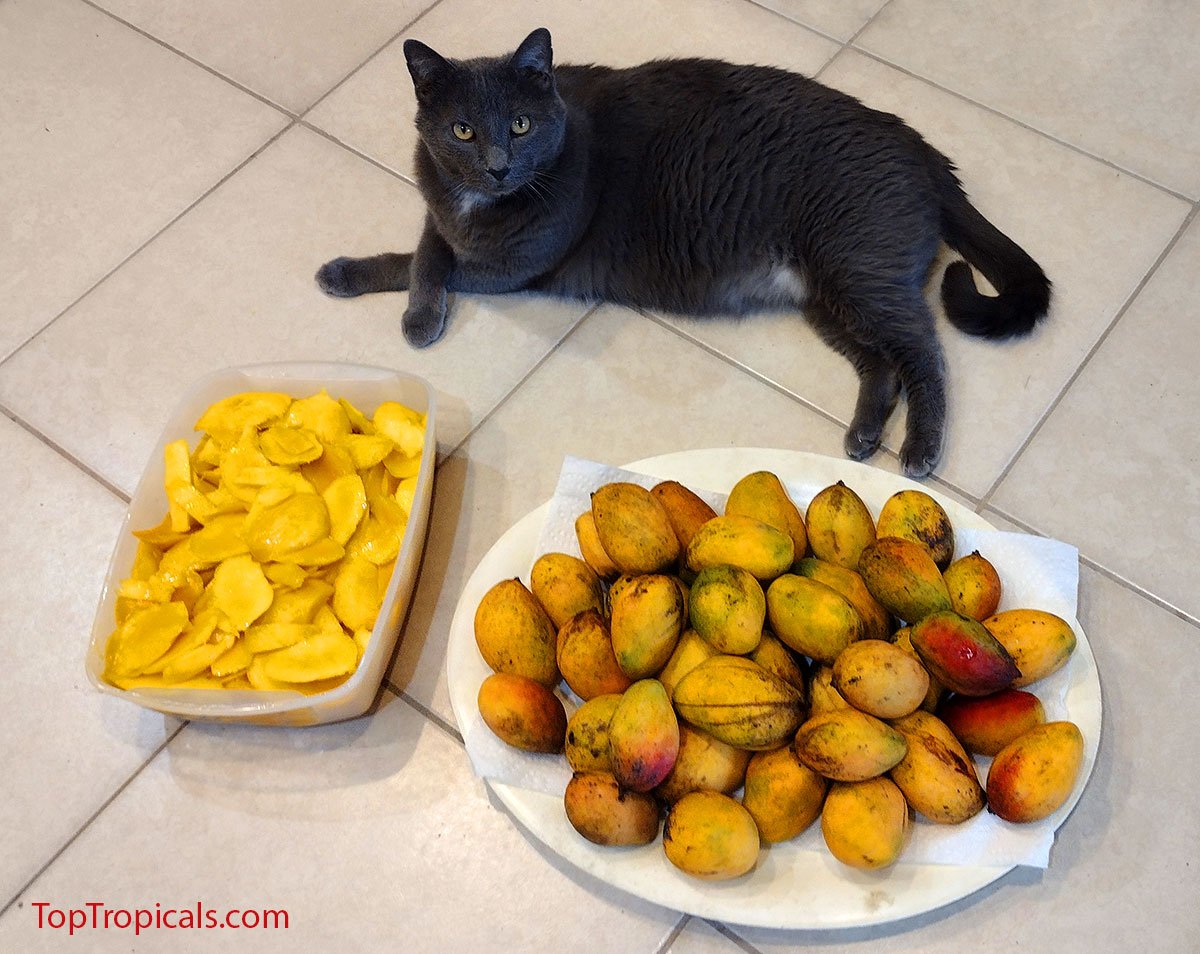
Mango ID and ripeness

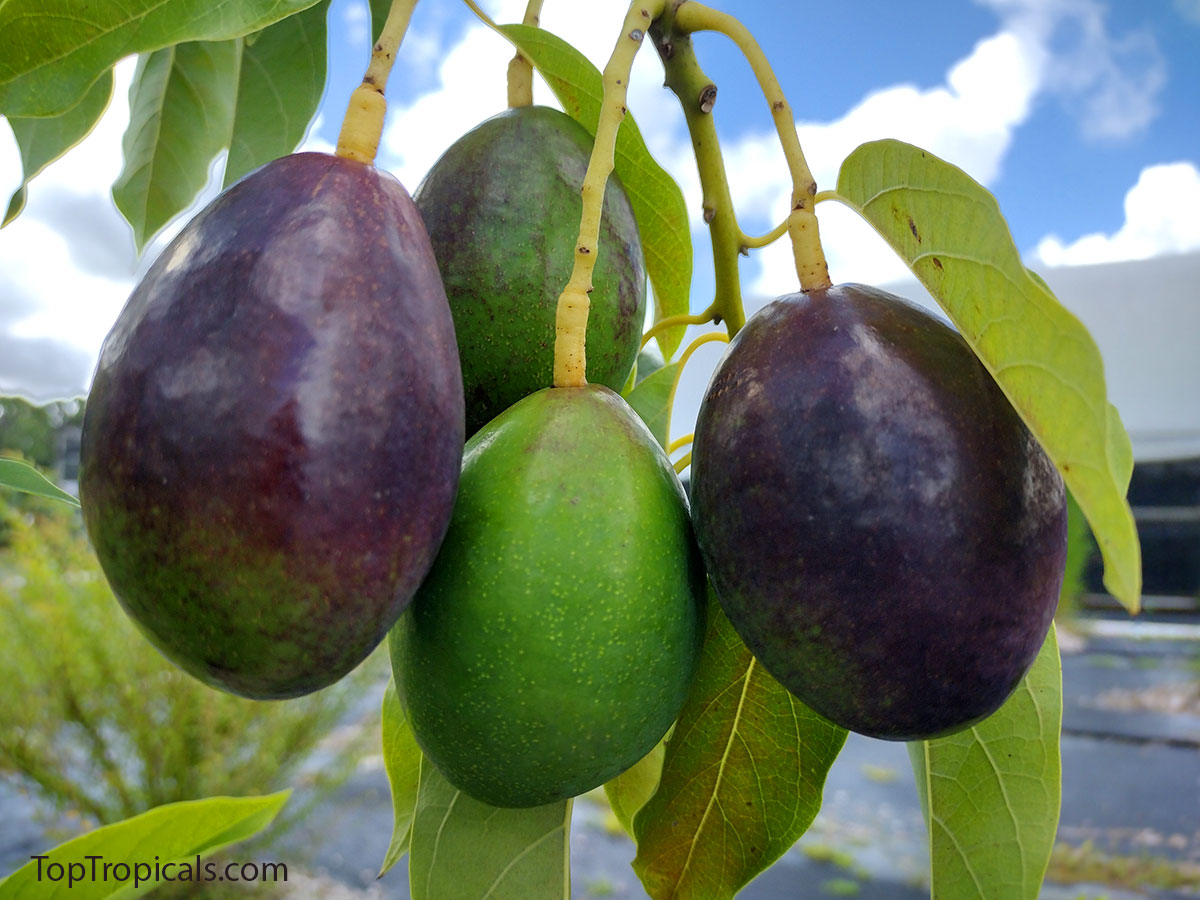
Q: As the World's Leading Authority on Tropical Plants, I hope you can help us out. We obtained a mango tree from a City giveaway, and planted it a few years ago. This is the 1st year it has produced fruit. They are almost all green color, & range from 6-7 inches in length. Attached are a few photos of the tree & its fruit. Please help to identify the type, and how to determine when they would be ready to pick. Or should we just wait until they fall off of the tree?

A: If the tree is grafted, it normally starts flowering within a year after planting. If the tree is over 6 years old and just now started fruiting - chances are, this is a seedling (possible at giveaways) without specific variety. However the fruit looks pretty good size and shape, hopefully it tastes great. You will find out soon!
Based on the pictures, there maybe a few possible choices, including varieties (or their seedlings) Keitt, Rosigold, it can be even Lancetilla if fruit grows bigger than 7" long. The next step would be, wait until the fruit get some color, then it will be easier to narrow down the variety. Also see if there is a lot of fiber or no fiber.
You may wait until at least one fruit ripens on the tree and let it fall naturally - that will be the color (can be all green, but in your case it looks like it's turning yellow blush). After that, you may pick full size fruit before they fall and let them ripen on a kitchen table. Usually once the fruit starts showing color, it is close to ripening. For all-green varieties, just wait till fruit grows to maximum full size. You may also check if the fruit gets softer to touch, then it's ready.

Date: 15 Dec 2020

Plant of the Month:

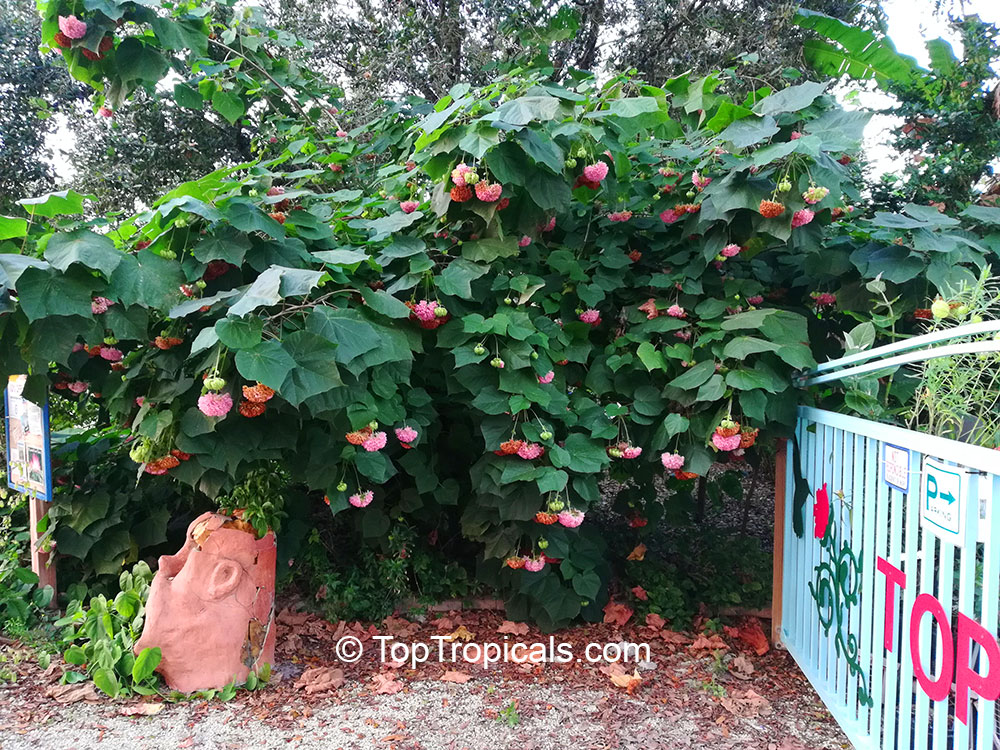
Fragrant Dombeya Tree

Every tropical gardener wants to have a Dombeya (a.k.a. Tropical Hydrangea) in their collection - an easy to grow, fast growing winter bloomer. These plants don't require any special care, thrive in neglect in both sun or shade, and flower profusely during Fall-Winter months - what an awesome treat! Dombeyas are also wanted for their vigorous growth habit - they can cover unwanted view in no time, fill and empty corner in your yard, create a colorful tropical display, and attract lots of butterflies and bees. They are not afraid of water logging, in fact the more you water them, the faster they grow. The large tropical leaves are beautiful - soft, fuzzy, with shallow, maple-like lobes. This plant is tolerant to both light frost and periods of drought.
Most Dombeyas grow into round, dense bushes, but this one variety of is very special. Dombeya burgessiae from South Africa actually grows into a small (10-15 ft), pretty, upright tree that is covered with beautiful blossoms during winter. The flowers are creme color with raspberry centers, attracting lots of pollinators, and what is the most special - they are sweetly fragrant! What a beauty!

Surround yourself with aromatic cloud of Dombeya winter blooms!

Date: 4 Dec 2020

Musa ensete Maurelli - Red Abyssinian Banana

by Onika Amell, tropical plant expert

Q: I am looking for a colorful, tropical plant with in particular, coarser texture, to add to planting beds next to my decks and around my swimming pool. Any suggestions? I am located in St. Petersburg, FL.

A: Consider incorporating some fast growing Red Abyssinian Banana, also known as wild banana or Ethiopian banana. This is a fantastic ornamental from East Africa and an excellent choice to create a tropical feel and to add coarse-textured foliage. This plant is not a true banana and therefore does not produce any edible fruit. American gardeners were rather slow to discover this enormous perennial, but finally woke up to them over the last decade to a point where they now are considered to be one the most beautiful ornamental banana plants for the landscape and for good reason...

CONTINUE READING >>