Garden Blog - Top Tropicals

Date: 14 Jul 2018

How to grow a Dragon Fruit

TopTropicals

Q: I want to grow a Dragon Fruit. Should I use cuttings or seed? What varieties do you recommend? How difficult it is to grow? How soon does it start flowering and fruiting?

A: Dragon Fruit, or Pitaya is a highly prized, vining, fruit bearing cactus, extremely unusual terrestrial/epiphytic plant. It has magnificent flowers, stunningly beautiful fruit with an intense color, curious shape, and a delicious taste. The night blooming white flowers can be up to 14 inches in length. The fruit is most often eaten chilled and cut in half so the flesh may be spooned out. The juice is used in frozen drinks and it is in a new Tropicana Twister flavor. It is a must have for any collector or gardener with the flair for the unusual.
It takes 2-3 years for seedlings to fruit, besides the variety pay not come true to seed. We grow our plants from cuttings that are easy to root. We offer many selected varieties, most of them self-pollinating. The plants are ready to flower and fruit this year, or the next year.
Dragon Fruit Cactus is easy to grow, doesn't need much other than strong support, full sun, well-drained soil - adenium soil mix works great - and fertilizer during hot months, and SUNSHINE-Honey applications for growing sweeter fruit. For larger fruit bud thinning is recommended.

Check out Dragon Fruit varieties

Date: 24 Jun 2018

Plant Horoscope. Scorpio Zodiac lucky plants: Peppers, Ceiba, Baobab,Pistachio, Nutmeg

TopTropicals

Scorpio Zodiac lucky plants

Scorpio - 10/23-11/21. A WATER sign ruled by both Mars and Pluto. Scorpio's plants are often found in remote places or on poor ground. They will likely have thorns, can be red in color, and grow under adversity. The good news is, most of these plants are nearly indestructible! This makes them desirable for every gardener.

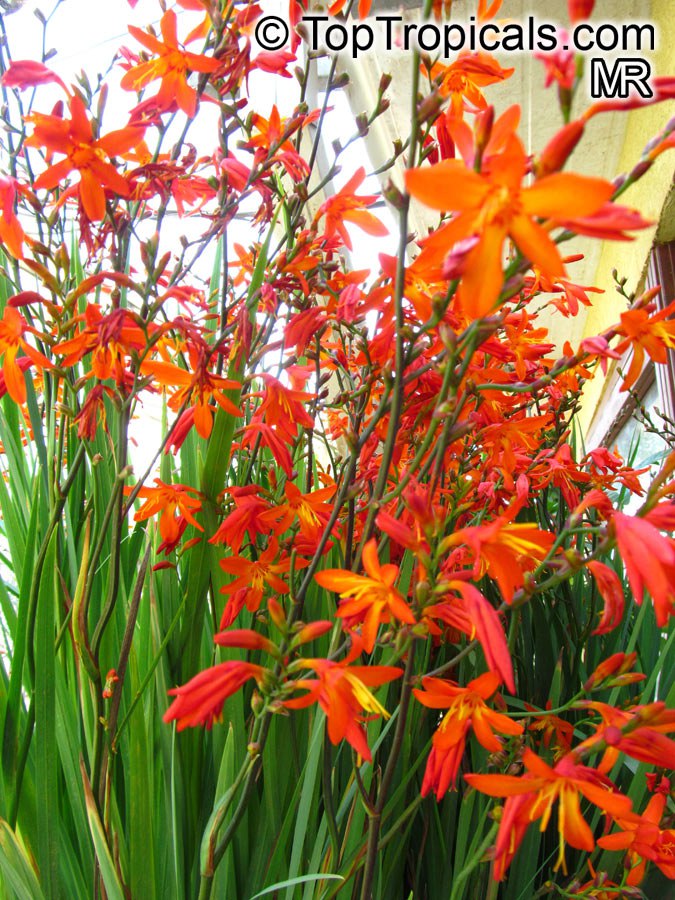
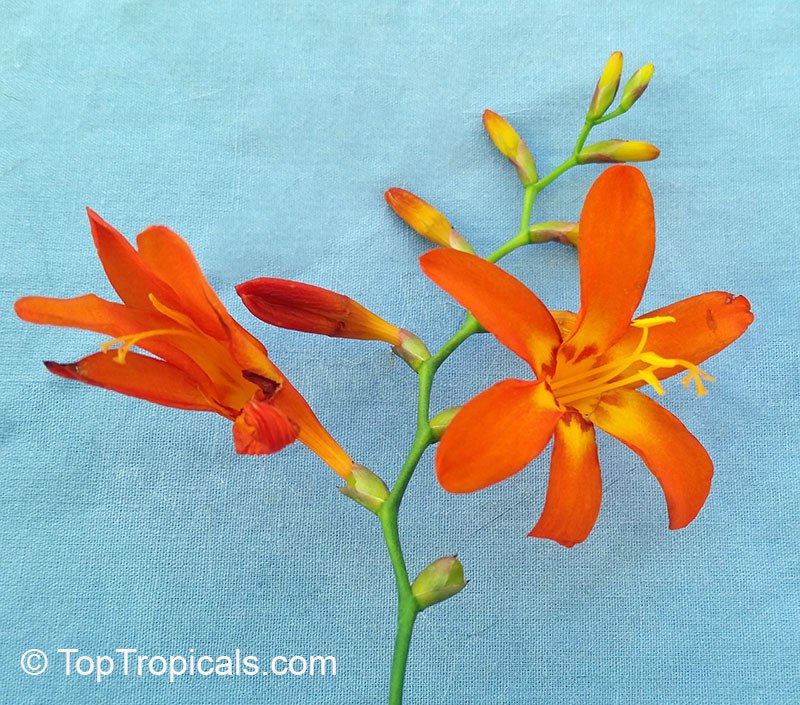
Scorpio Zodiac lucky plants: Peppers, Ceiba, Baobab, Pistachio, Nutmeg, Black-eyed Susan Thunbergia, Combretums, Dragon fruit, Medinilla, Camphor Basil, Cuban Oregano, Vanilla orchid, Hibiscus, Various cacti and succulents, Adenium, Honeysuckle, Cordyline, Spider plant, Jasmine, Gooseberries, Wild indigo, Bougainvillea, Aloe vera, Raspberry, Palmetto, Horseradish tree, Camphor, Allspice and Bay Rum, Jujube, Sweet Mimosa, Agave, Milkweed, Hong Kong Orchid Tree, Pony Tail, Dwarf Poinciana, Bottlebrushes, Clusias, Crocosmia, Zig-Zag Cactus, Dracaena, Fire Bush, Hoyas, Jatropha, Kalanchoe, Sausage tree, Devils Backbone, Pereskia, Red Plumeria, Firecracker, Rattlebox, Rhoeo, Calendula, Geranium, Thistles, Mint, Sage, Catnip, Coriander, Sandalwood, Ginseng, Euphorbias, Acacias.

For more info on Scorpio Lucky plants, links to these plants and other signs information, see full Plant Horoscope.

Date: 24 Jun 2018

TopTropicals

Elephant Foot, Turtle Shell - back in stock!

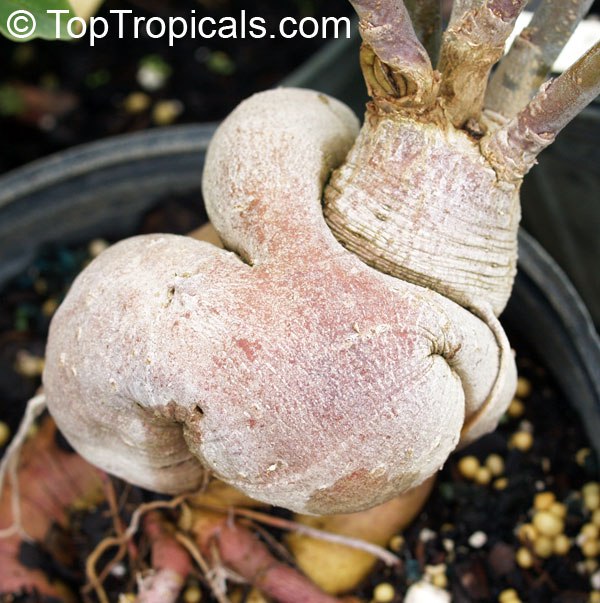
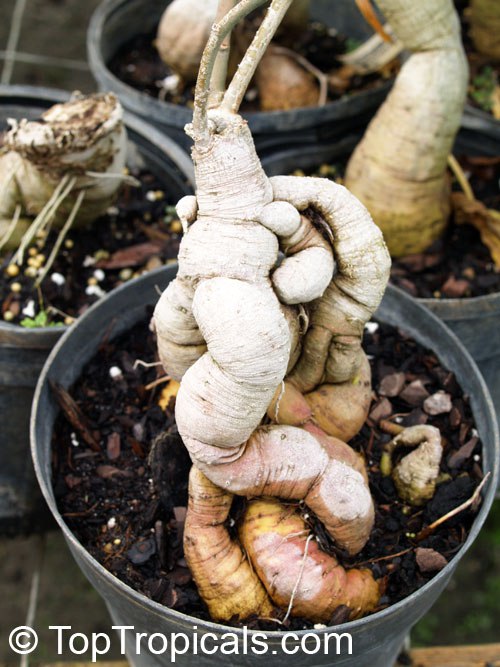
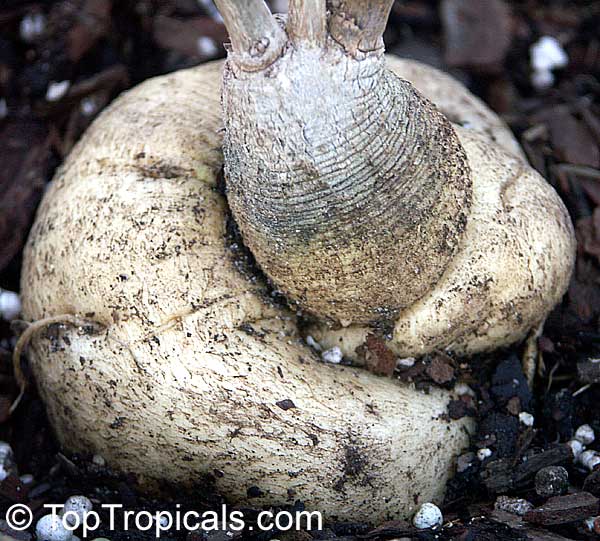
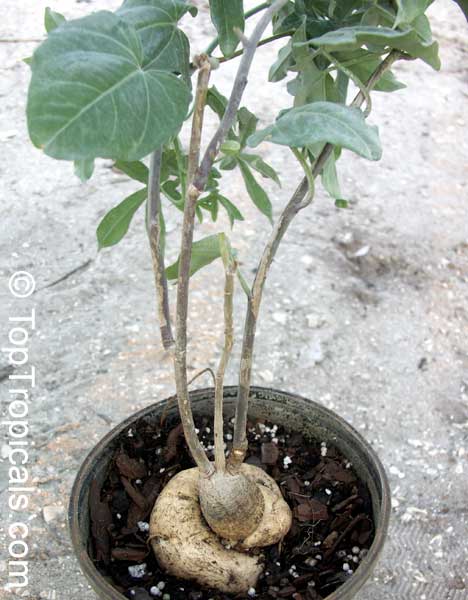
Dioscorea elephantipes.
Dioscorea is a curious plant with tuber above ground level covered with layers of corky bark, resembling a caudex. It is a slow growing, very unusual succulent. Tuber contains saponins, originally cooked and eaten as a famine food by the Hottentots. Caudex that grows up to 6' in nature, resembling an elephant's foot and looks as if it is segmented into geometric patterns (smaller plants look like tortoises) and looks dead but is actually a living tuber. A plant with 18" caudex can be almost 100 years old! The plant grows into a vine with attractive heart-shaped leaves and small yellow flowers. Culture is relatively easy. The vines may die back and regrow several times a year, depending on the particular plant and your region. The plant doesn't send down deep roots, so plant in a shallow pot about 1" larger than the diameter than the caudex. Potting soil should be very porous/loose so that there is easy drainage. Water well around the edges. Keep in a warm area and wait for the first shoots of the vine to appear. Water regularly from that point on. The plant should not be kept damp as with other tropical plants. Allow it to dry before watering again. Many books will say that they are winter growers, because they are native to the southern hemisphere. In fact, they grow in all seasons! Let the plant be your guide. You cannot force them to grow, and over watering will simply cause them to rot.
Elephant Foot is a collectors item, but remarkably easy to grow. It will be with you for years with no effort. It is a wonderful conversation piece! See more info about Dioscorea elephantipes.

We have limited stock, while supply lasts, hurry up!
*** 4-6" caudex *** 6-8" caudex *** 10-12" caudex *** Seeds. Don't forget special TopTropicals Adenium Soilless Mix that perfectly works for this plant!

Date: 10 Nov 2025

❄️ How to Prepare Your Tropical Garden for Winter

Two  cats  in  a  tropical  garden  at  sunset.  Smokey,  a  black-and-white 


tuxedo  cat  wearing  a  wool  cap,  holds  a  thermometer  while  Sunshine,  a  fluffy 


orange  tabby,  sits  beside  mulch  and  folded  frost  cloths  surrounded  by  banana
 
 
  and  hibiscus  plants.

Smokey and Sunshine Wrap Up the Garden with Frost Cloth Before the Chill.

Smokey: "Thermometer says 45. Time to wrap the bananas!"
Sunshine: "You wrap the bananas. I’ll guard the mulch… from this sunny spot."
Smokey: "Teamwork, Sunshine. Teamwork."

🌡️ Cold nights are coming - but your tropicals do not need to shiver!

Even in sunny Florida and other warm zones, one cold snap can undo months of growth. Preparation is everything. Tropical plants can handle a lot, but they dislike surprises. Let’s make sure your garden stays safe, strong, and happy all winter long.

Tips from Tatiana Anderson, Top Tropicals Plant Expert

👉 Group and Check Your Plants

You already know which plants are in pots and which are in the ground. What matters now is prioritizing by cold sensitivity. Identify the tender tropicals – papaya, banana, plumeria, adenium, heliconia – and decide which ones get covered first when temperatures drop. Keep frost cloths or old sheets near those areas, ready to grab fast. If your garden is large, label protection zones or mark plants that always need extra care. The goal is to have a plan, not a panic, when the cold alert hits.

Once you know your priorities, you can plan the rest of your protection strategy.

👉 Feed and Mulch

Stop using high-nitrogen fertilizers by late fall. They push soft new growth that freezes easily. Add compost around the base of your plants and top with 3 to 4 inches of mulch. Mulch acts like a blanket: it keeps warmth in, protects the roots, and keeps soil moisture steady. Just make sure the soil drains well; cold and soggy soil leads to root rot. In raised beds, check that water flows away easily.

After you feed and mulch, it is time to look at how your local zone changes the game.

👉 Zone-by-Zone Tips

Woman  sitting  between  two  large  potted  tropical  plants  on  a  wooden  deck
 
 
  in  front  of  a  house,  preparing  to  move  them  indoors  for  the  winter.

Moving Tropical Plants Indoors for Winter Protection

  • Zone 10: You are lucky! This is mostly a maintenance season. Watch for root rot after heavy rain, trim lightly if needed, and protect tender young trees during surprise chills. Keep some frost cloth ready just in case.
  • Zone 9: This is the main action zone. Nights can dip into the 30s. Deep-water your trees once before cold nights to insulate the roots. Apply heavy mulch, and have frost protection ready to go. If you grow tropical fruit like mango or guava, consider wrapping young trunks in burlap or foam pipe insulation.
  • Zone 8: This is where tropical gardening becomes creative. Stick to cold-hardy tropicals such as loquat, guava, or cold-hardy avocado varieties. Use portable greenhouses, wrap trunks, and move smaller plants indoors or to a heated porch when frost threatens.

Now that the garden beds are set, let’s look at your pots and containers – your most mobile plants.

👉 Container and Patio Plants

Potted plants are the easiest to protect but also the quickest to freeze. Start reducing watering now so roots do not stay too wet in cooler weather. Before moving them, check for insects hiding under leaves or in the soil. Group your pots close to a wall for reflected heat and wind protection. If you plan to bring them indoors, do it gradually. Move them closer to the house for a few days before bringing them all the way inside to help them adjust to lower light and humidity.

When the chill starts, many gardeners rush to move everything inside at once – but a smooth transition works much better.

👉 Indoor Plants

When bringing plants inside, give them a good rinse to remove dust and bugs, and flush the soil to wash out salts from summer fertilizing. Keep them separate from your houseplants for a week to make sure no pests come along. Expect some leaf drop – it is normal as they adjust to lower light. Give them bright light near a window, and cut watering by about half until spring. Avoid misting too much; good airflow matters more than humidity during winter.

Many tropicals, like hibiscus, brugmansia, and crotons, may look tired for a while, but they will bounce back quickly once days get longer.

👉 Timing Is Everything

The key is to prepare before the first cold warning. Check your weather app regularly once nights start dropping into the 50s. Keep covers, mulch, and supplies ready so you are not running outside at midnight with a flashlight and a frozen hose. Have your frost cloths labeled by plant group and stored in an easy spot. A little organization now saves a lot of stress later.

Many tropicals, like hibiscus, brugmansia, and crotons, may look tired for a while, but they will bounce back quickly once days get longer.

Remember: the goal is to help your plants rest safely. Many gardeners prune or fertilize too late in the season – we will talk about why that can be risky next week." — says Tatiana Anderson, Top Tropicals Plant Expert

Coming next mail-list: The best gadgets for cold protection (lights, heaters, frost covers) and what NOT to do in winter.

📚 Learn more from Top Tropicals Blog:

Cold protection - winter action for your plant collection

What plants are good to order in Winter?

How to take care of house plants in Winter

How to protect tropical plants in Winter

How to take care of a mango tree in winter

How to protect Avocado from cold

Overwintering Adeniums outside of tropics

Rows  of  tropical  plants  in  black  pots  covered  with  frost  cloth  and 


plastic  sheeting  for  winter  protection  at  Top  Tropicals  nursery.

Protecting Tropical Plants with Frost Covers at Top Tropicals Nursery

Date: 22 Nov 2025

Content with little

Visitor Cat found his comfy spot with Desert Roses at TopTropicals

Visitor Cat found his comfy spot with Desert Roses at TopTropicals

🐈‍⬛ Content with little


"The greatest wealth is to live content with little." - Plato

🐈📸 Visitor Cat found his comfy spot with Desert Roses at TopTropicals PeopleCats.Garden

#PeopleCats #Quotes

🟢 Join 👉 TopTropicals