Date: 26 Mar 2016
Growing Exotic Adeniums
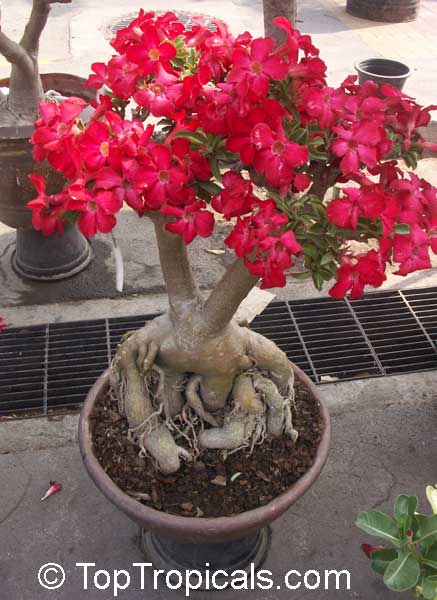
Exotic varieties of Desert Roses. Adeniums have many spectacular hybrids. The basic culture is very similar to orchids. A small pot with excellent drainage is a must. Adeniums do not like both over-watering or drying-out. There is a secret how to create a large swollen caudex: raise the plant a bit every time you re-pot it, so that the upper part of roots will be a little exposed. The plant will form more roots that will go down.
To make your plant develop a large swollen base/trunk, you'll need a good quality fertilizer. Fertilizer requirement for swelling up trunks is also used to increase flowering. It shouldn't be too high in nitrogen, the middle number should be the highest (similar to 10-50-10). Never apply fertilizer directly on roots and do not liquid feed when a plant is thirsty: always water first slightly to avoid root burn and leaf drop. Do not wet leaves. Adeniums need lots of light for heavy flowering.
Most hybrids and species start blooming in the spring when the conditions are warm and days get longer, and continue blooming through the fall and winter in warmer climates. Adeniums like a neutral to hard water. Acidic water tends to sour the soil too fast and may cause root rot. Water plants preferably in the early morning, and allow them to drink up throughout the day. Watering can be done daily to every few days. Never allow your plants to sit in a saucer of water, but don't let them to dry out too often - this causes adeniums to go into early dormancy.
Planting instructions for bare-rooted succulent plants. Position the plant in a pot, size of root system. Use only well-drained soil with high content of Perlite and/or sand (cactus mix can be used), water once and keep in warm (75-80F) place in filtered light. Do not water again until soil dries on surface. Once the plant is established and starts growing new leaves (may take a few weeks), gradually move it into brighter light. Then you can start fertilizing it.
Date: 22 Apr 2022
Spend time among trees...
"...Time spent among trees is never time wasted..."
- Katrina Mayer -
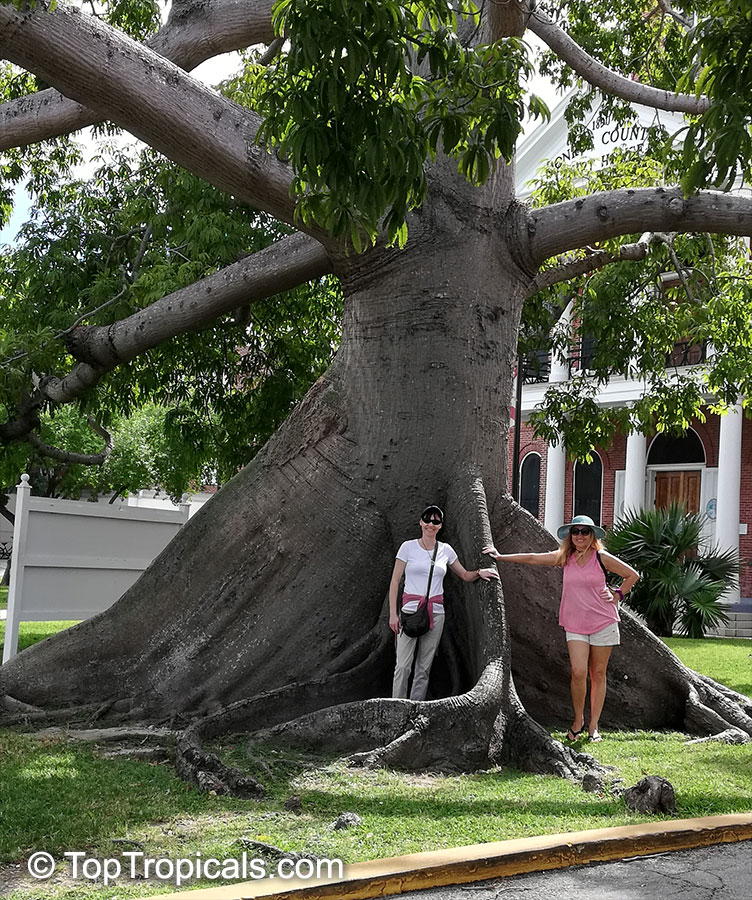
One of the most impressive and massive trees in the world - Ceiba pentandra - Kapok Tree. A majestic tropical tree! The ancient Maya of Central America believed that a great Ceiba tree stood at the center of the earth... Would you like to try growing it in the center of your backyard? Considering it will take decades to grow this big...
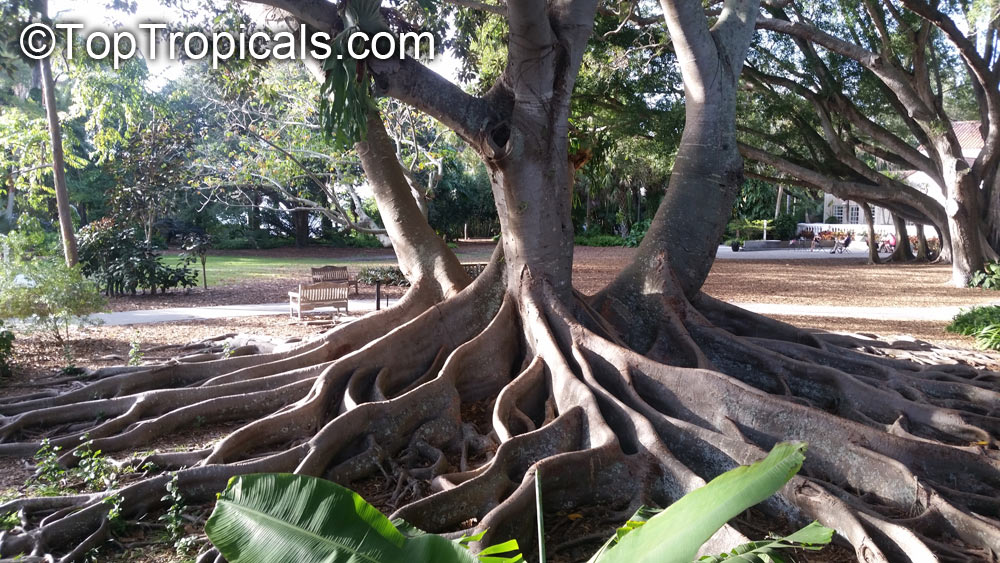
Ficus macrophylla (Banyan). Did you know that exotic Banyan Trees are close related to Fig trees
Date: 29 Aug 2021
Those mouthwatering Blackberries...
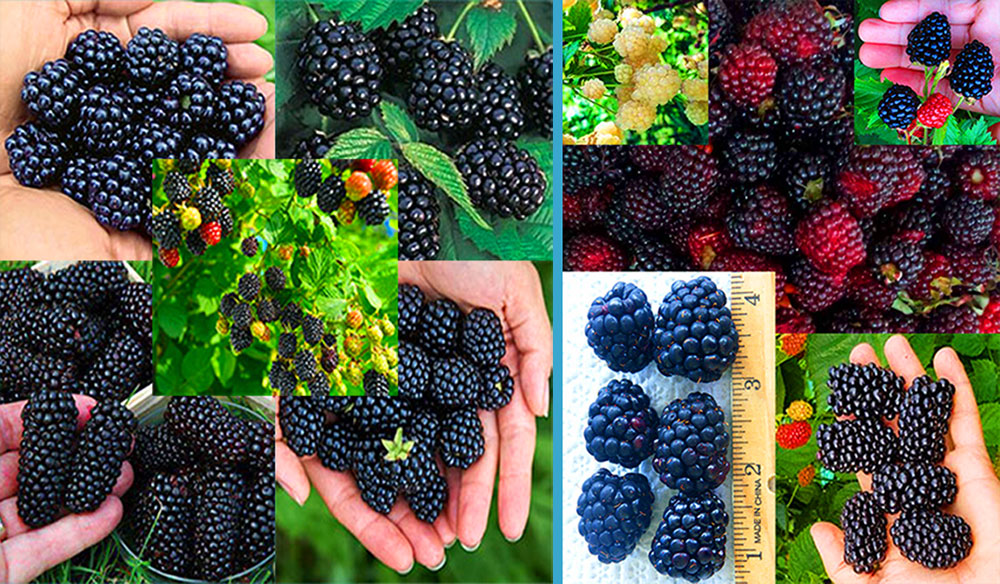
Blackberry Patch Bundle Exclusive Collection
Two Collections of Superior Blackberry Varieties, well adopted to tropical and subtropical climates. Mouth watering, all time favorite fruit will be always with you - these plants are so easy to grow!
Blackberry Patch Bundle Exclusive Collection - buy 3 get 2 free.
The Collection includes 5 blackberry varieties: Navaho, Osage, Ouachita,
Triple Crown Thornless, Iceberg White Blackberry.
Blackberry Patch Bundle Premier Collection - buy 3 get 2 free.
The Collection includes 5 blackberry varieties: Arapaho, Caddo, Kiowa,
Natchez, and Prime-Ark Freedom.

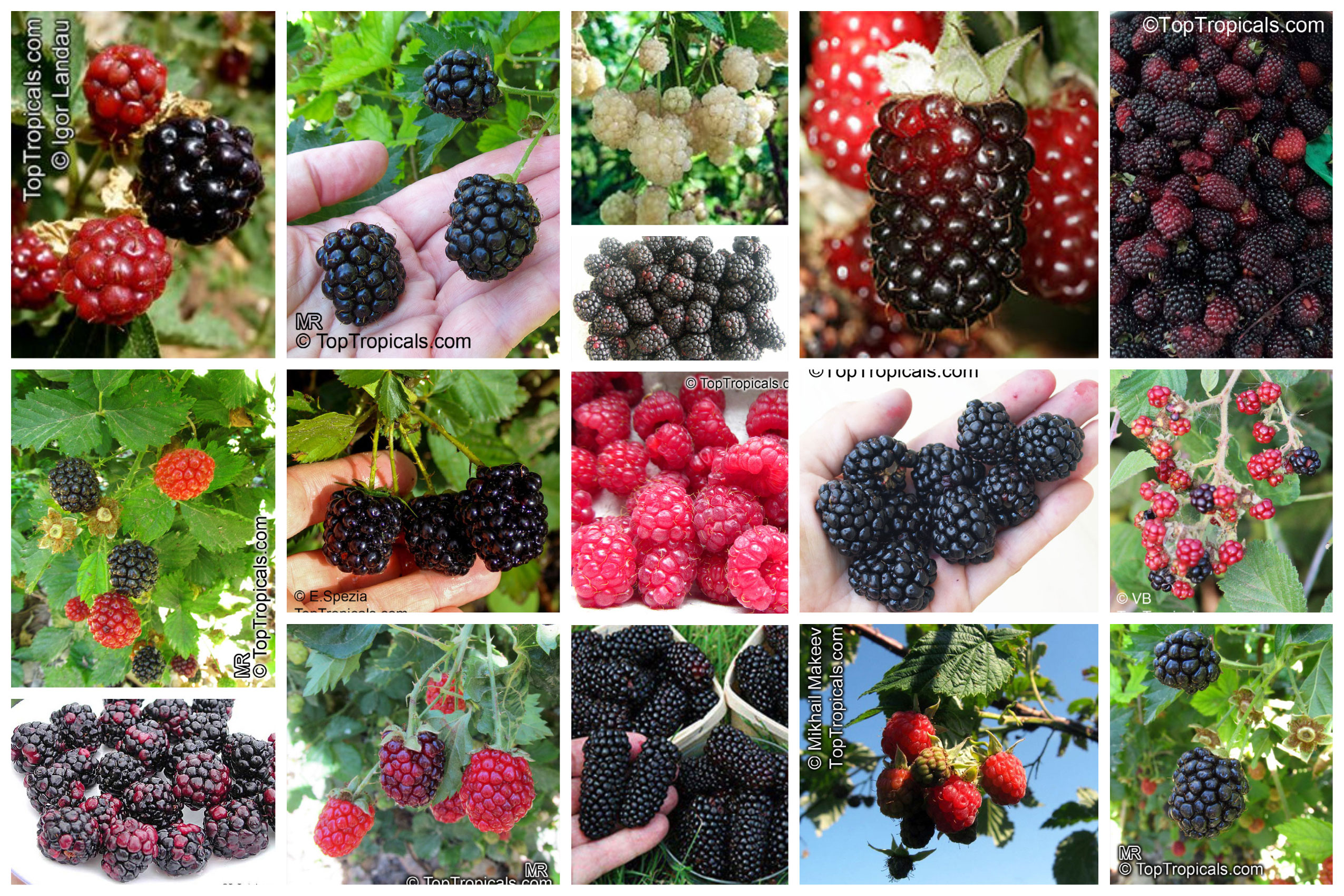
Mouth Watering High Protein Blackberry Cobbler
Ingredients
25g light butter
45g self-rising flour
33g vanilla whey
20g egg whites
50g almond or cashew milk
75g blackberries
Stevia/Splenda to taste
Instructions
Preheat oven to 350 degrees F. Melt butter half-way so it's just warm, not hot. In a mixing bowl, combine all ingredients except for blackberries. Pour into a 4-5"ramekin sprayed with Pam. Sprinkle blackberries on top of batter and bake for 15-20 minutes. It's best slightly gooey on the inside (not completely cooked). Enjoy!

Date: 22 Aug 2021
How to fertilize herbs and vegetables
Q: We moved to Florida from New York earlier this year. My wife and I used to grow many fresh veggies and herbs in our garden up North during Summer, but it seems like in hot Florida the season for them is not until Fall. So we are preparing the beds and also looking for some organic fertilizer solutions. We've heard a lot about your natural Boosters and wonder if they can be used in our vegetable garden?
A: You came to the right place for organic fertilizer solution.
Sunshine Boosters are based on organic amino-acids and are completely natural,
non-toxic, eco-friendly, and do not build up nutrients in the soil. Their
mild formulas designed specifically for edibles.
We just have started our own vegetable garden with some Biquinho and Wiri Wiri peppers, cherry tomatoes, and basil, and will be adding more
as the the weather cools down.
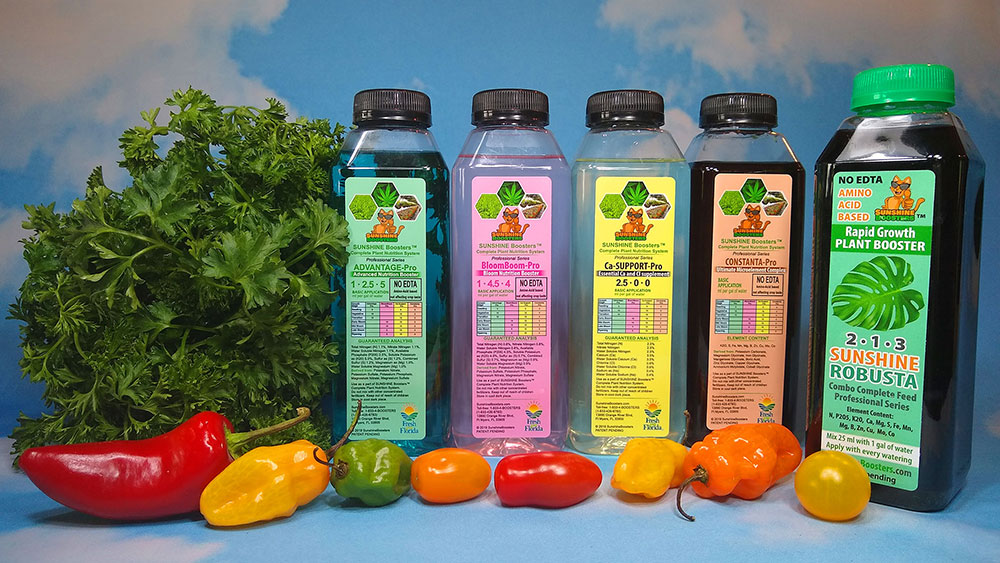
For small scale gardens (both vegetables and herbs), you can start with Sunshine Robusta - a total feed "all on one". All necessary elements are provided in just one bottle, both macro- and micro-elements, it is a scientifically balanced formula. For larger gardens, especially if you have fertilizer injector system, we recommend
Sunshine Boosters Pro Series - this product is much more economical, and
you will need to mix only 3 solutions into your watering tank at the time of
watering.
For more information, please contact our Booster guy Ed Jones, he can help you with selection and dosage information. Sample Discount program
is available for samples of Sunshine Pro.

Date: 15 Aug 2021
How to grow Cerbera and make it flower
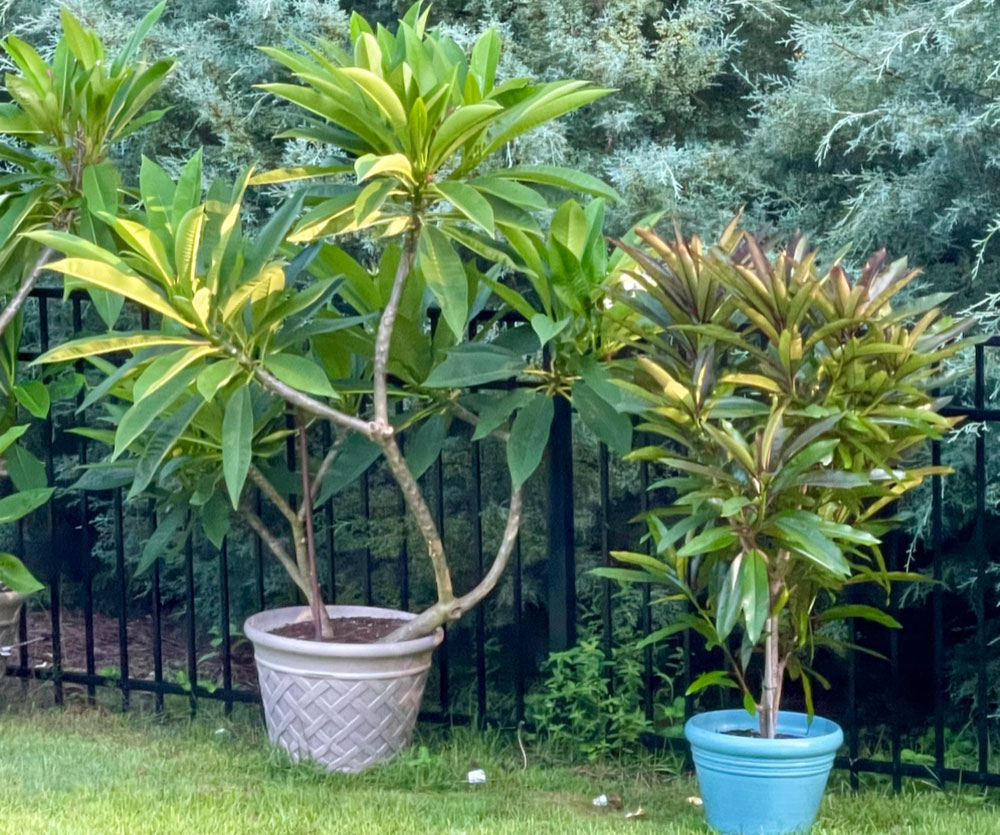
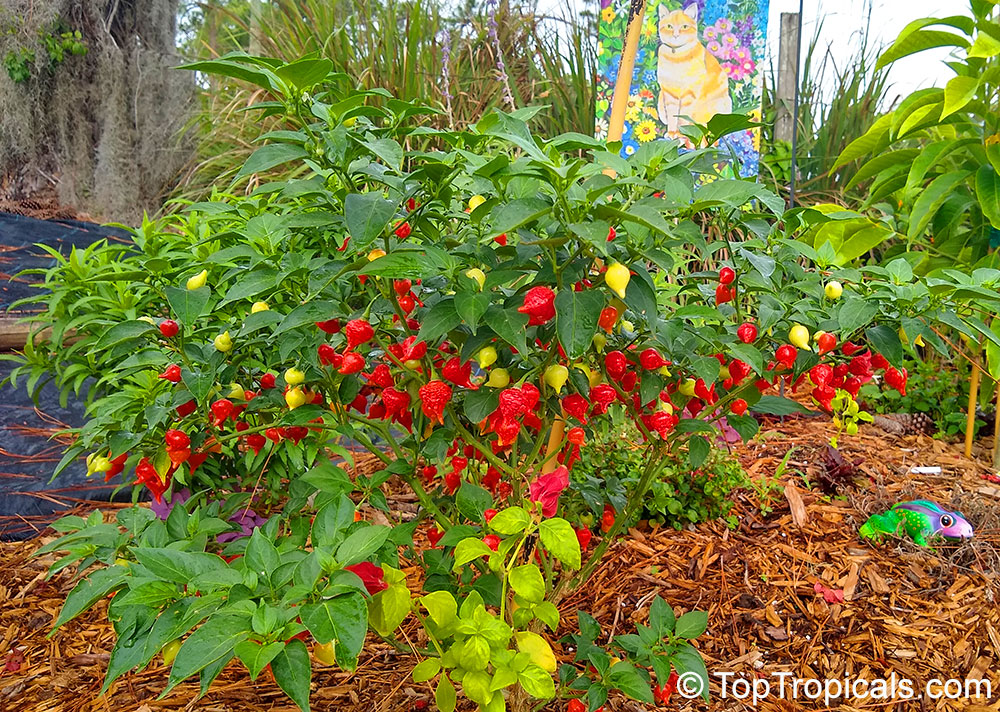
Q: I purchased Cerbera manghas - Enchanted Incense a year ago. As you see from the photo, it's doing great however, no blooms. I fertilize properly and very often and use worm castings for micronutrients. Yes it's not "your" fertilizer, but my plumerias, that are also in pots they are over 5 feet tall and blooming like crazy. I don't see any inflows coming on the Cerbera at all and it is hot and humid here in North Carolina, so it's happy but no sign of blooming. What is your advice?
A: Top Tropicals first brought Cerbera manghas into the US plant market a few years ago, it was recommended to us by our friend, plant taxonomist John Mood who visited Thailand, and among other exotic plants noted this fragrant beauty. Since then we've been successfully growing this plant, it has become one of everybody's favorites.
Generally speaking, Cerbera culture is very similar to Plumerias. These plants are closely related. So if you know how to grow Plumeria, you sure will succeed with Cerbera. Hot and sunny location, well-drained mix, moderate water and bloom boom fertilizer will do the trick. However, we have noticed a few distinctive features that make this plant somewhat challenging at times.
1) Flowers
For past years, we've been studying what triggers its flowering.
Sometimes these plants start flowering in 1 gal pot, 1 ft tall. Other times a large
developed tree 5-6 ft tall, in 5-7 gal pot, grows beautiful foliage with no
signs of flowers. Eventually all of them bloom, no matter how stubborn they
are, it's just some individual plants start flowering sooner than others, all
grown in the same conditions.
One of our plants in the ground, a well-branched tree, was covered with
flowers for a few months, but only on the 3d year after planting. Before that,
it only produced a few random blooms. Others bloomed in pots at very young
age.
The following factors benefit to Cerbera flowering:
- full sun at least 10 hours a day
- hot temperatures above 85F
- regular water but not heavy rains
- regular fertilizer - Bloom Booster type
- very good drainage and drying out before waterings. If root ball stays
moist, the plant may look healthy but won't set flower buds. Keeping on a dry
side will encourage flowering. Very similar to Jasmines: they bloom like crazy
in April while it's hot and dry in Florida, but once our summer rainy season
starts, they reduce blooming.
We highly recommend using Sunshine Megaflor bloom booster or SUNSHINE Pikake in combination with micro-element supplements Sunshine Honey (B-Mo) and Sunshine Superfood (complex micro) that induce flowering. Dry and granulated fertilizers may not supply exactly what a plant needs: certain elements that trigger flowering may be missing. Sunshine Boosters formulas are scientifically balanced, they contain precise amounts of nutrients needed for setting flowers. Besides, excessive salts from regular dry fertilizers create nutrient lock up that may retard plant metabolism; with liquid amino-acid based Sunshine boosters, plants consume the whole menu of elements without building them up in the soil.
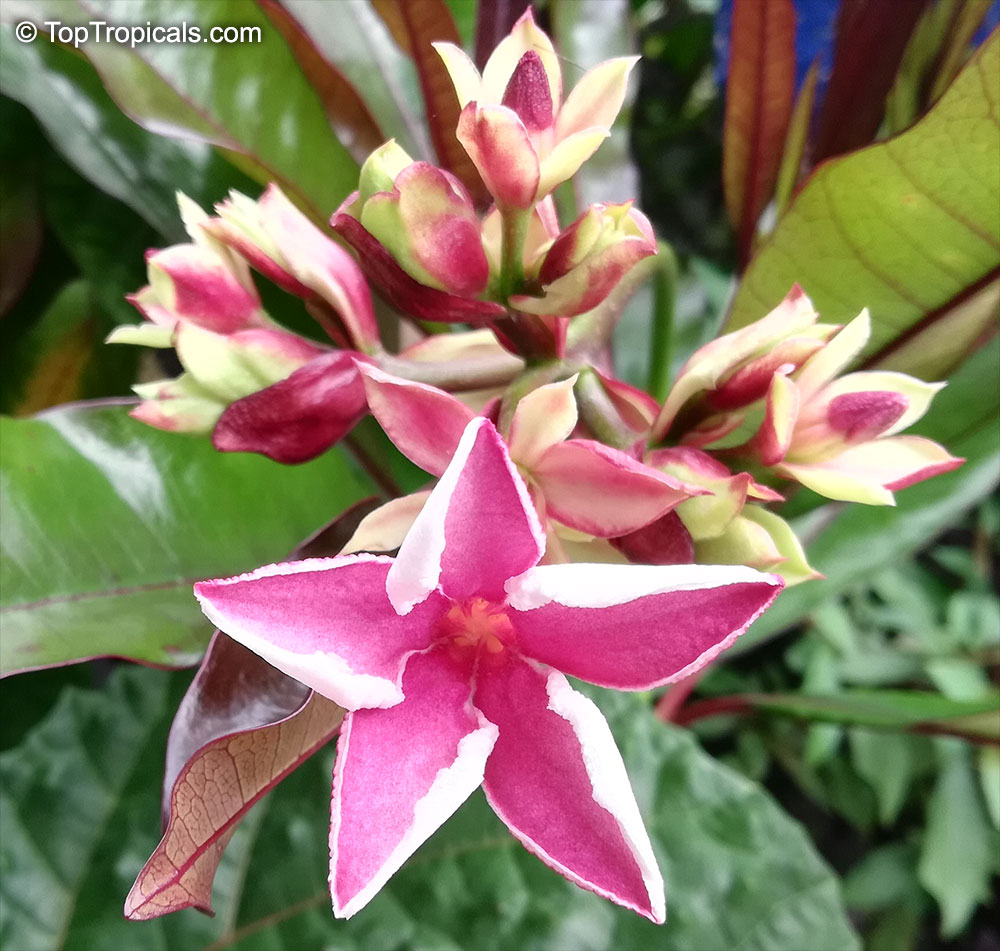
2) Fruit
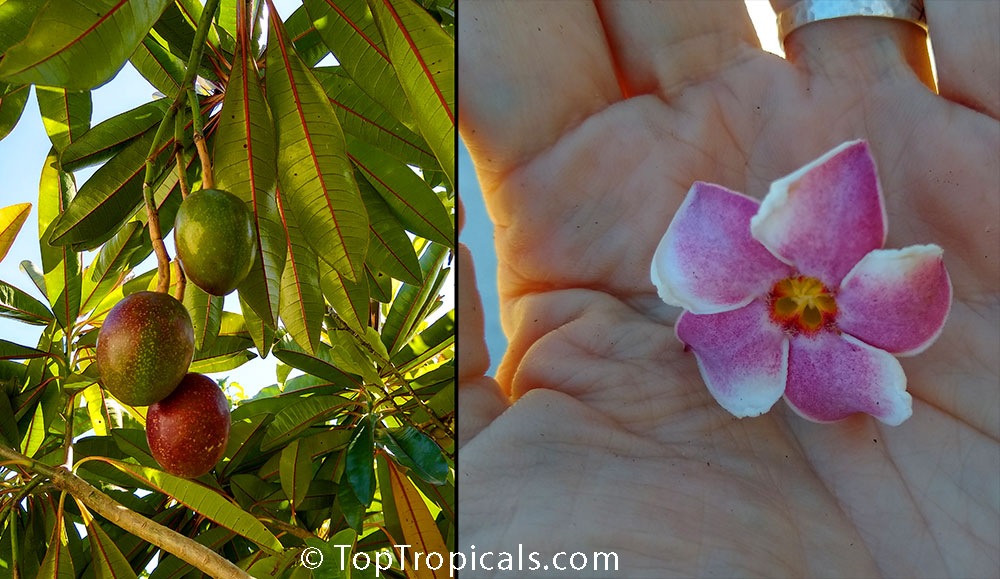
Fruit of Cerbera are very pretty and cover the tree after profuse flowering. To inexperienced eye they may look very much like small mango or avocado fruit - so make sure kids or visitors don't try to eat them! Cerbera seeds are extremely poisonous.
3) Leaves
If you ever grew Passiflora or Milkweed, you know how leaves can be
eaten by caterpillars overnight. This may happen to Cerbera too, as we
discovered. In Florida environment this exotic plant doesn't have natural predators for
protection from certain insect species that may feed on it. So watch out and
if noticed first signs of leaves damage - its time for insect control.
Other than that, Cerbera foliage is usually beautiful and colorful, here in
Florida it looks much healthier than that of Plumerias often affected with
rusty residue during high humidity months.
Hope this helps. The Cerbera fragrance is enchanting, it is worth the efforts and waiting!