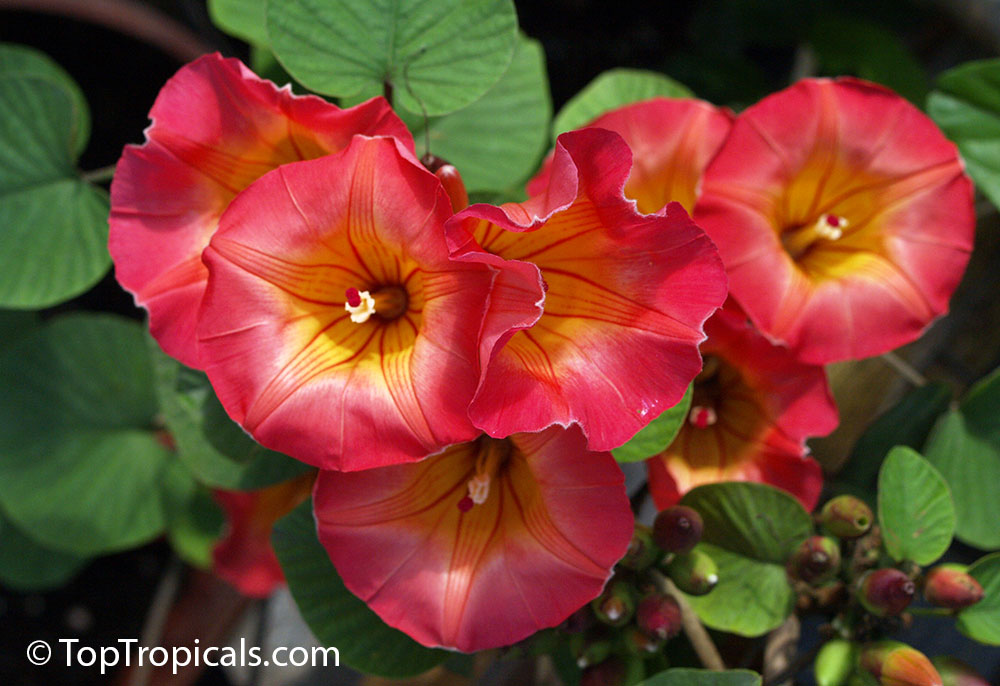
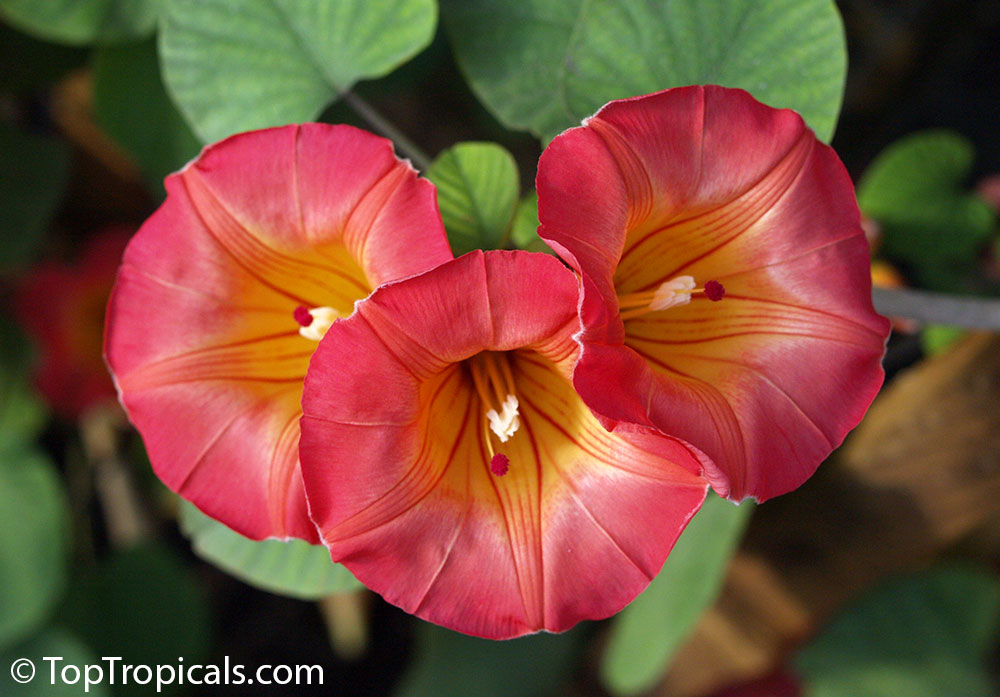
Encouraging blooms on the Hawaiian Sunset Bell Vine
Q: Please can you advise how to encourage the Stictocardia beraviensis the Hawaiian Sunset Bell
vine blooms? Mine is all beautiful leaves and full sun in Miami.
A: Providing full sun, Stictocardia blooms profusely. In your area, it
should be happy and thriving. However, keep in mind that these flowers can be seasonal (meaning, not ever-blooming). The good
news it, Hawaiian Sunset Bell usually blooms several times a year on and off. In our garden, we have a large plant growing in
the ground and covering a whole fence; we see flowers 3 times a year:
- Early Spring
- Summer (sporadically)
- Late Fall to early Winter
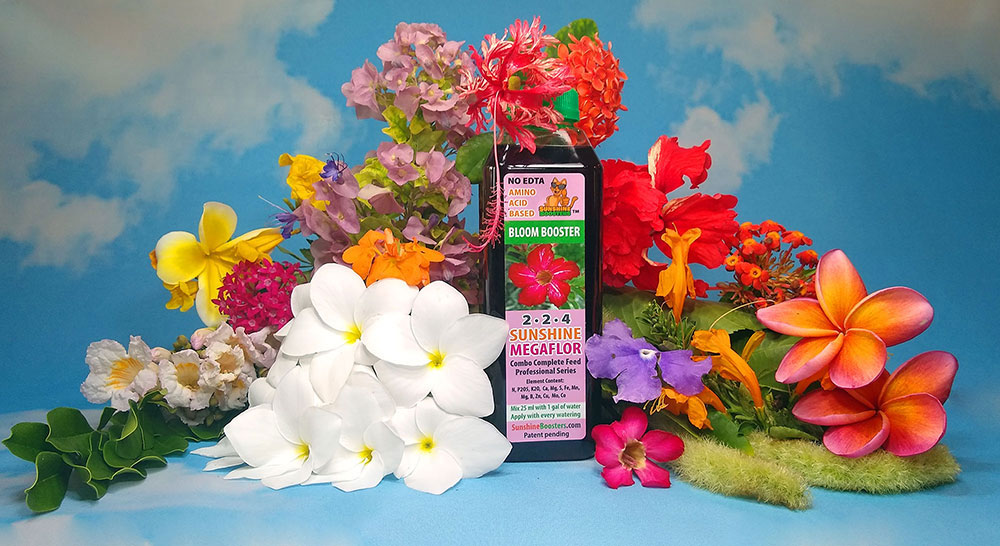
Make sure to provide proper fertilizer to encourage blooms. It is especially important if
you grow this plant in container (where nutrients are very limited). We suggest the following fertilizer for your
Stictocardia:
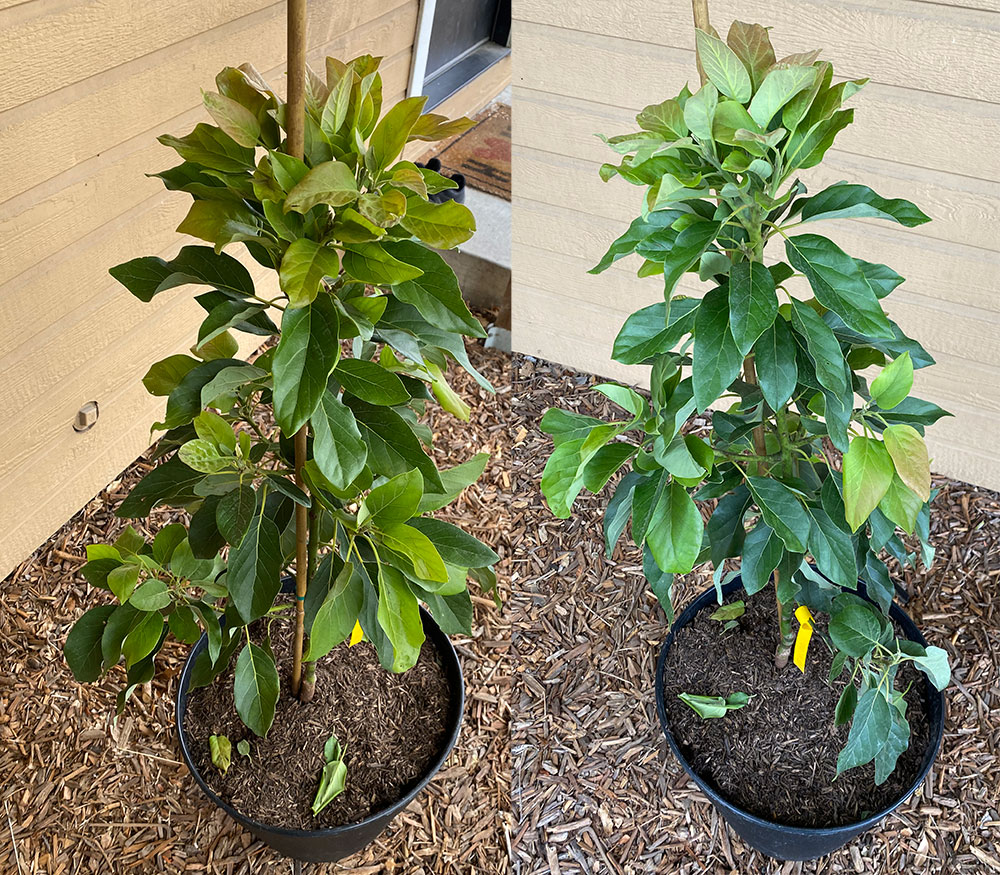
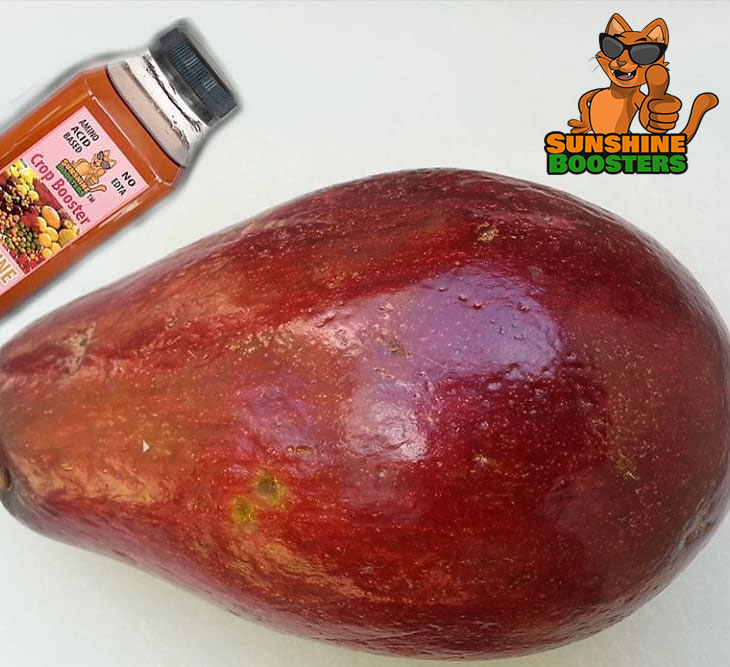
Q: I received my avocado Wurtz tree yesterday. Per instructions I
have put the tree in a pot first. However I am having difficulty deciding
what to trim off. Yesterday I removed obvious damaged leaves. However as you
can see, the leaves are lighter in some areas and contain yellow and red in
some spots. What would you advise? Given this is a critical state as I do not
want to shock the tree after the trip, I would like to do everything possible
to protect it and ensure viability.
A: Your Avocado tree looks great and healthy overall. You've done excellent job planting it. Wurtz is a good, vigorous variety, while the tree is somewhat dwarf,
great for containers.
You are right, it is the best for the tree to leave it alone and do not
trim or remove leaves any more, until it starts showing new growth. Then it will
be obvious what needs to be trimmed. Reddish/orange color of young leaves is
normal. If any spots or dots - no need to remove those leaves yet. Wait
until the plant grows more leaves. It needs them for photosynthesis, in order to
become stronger.
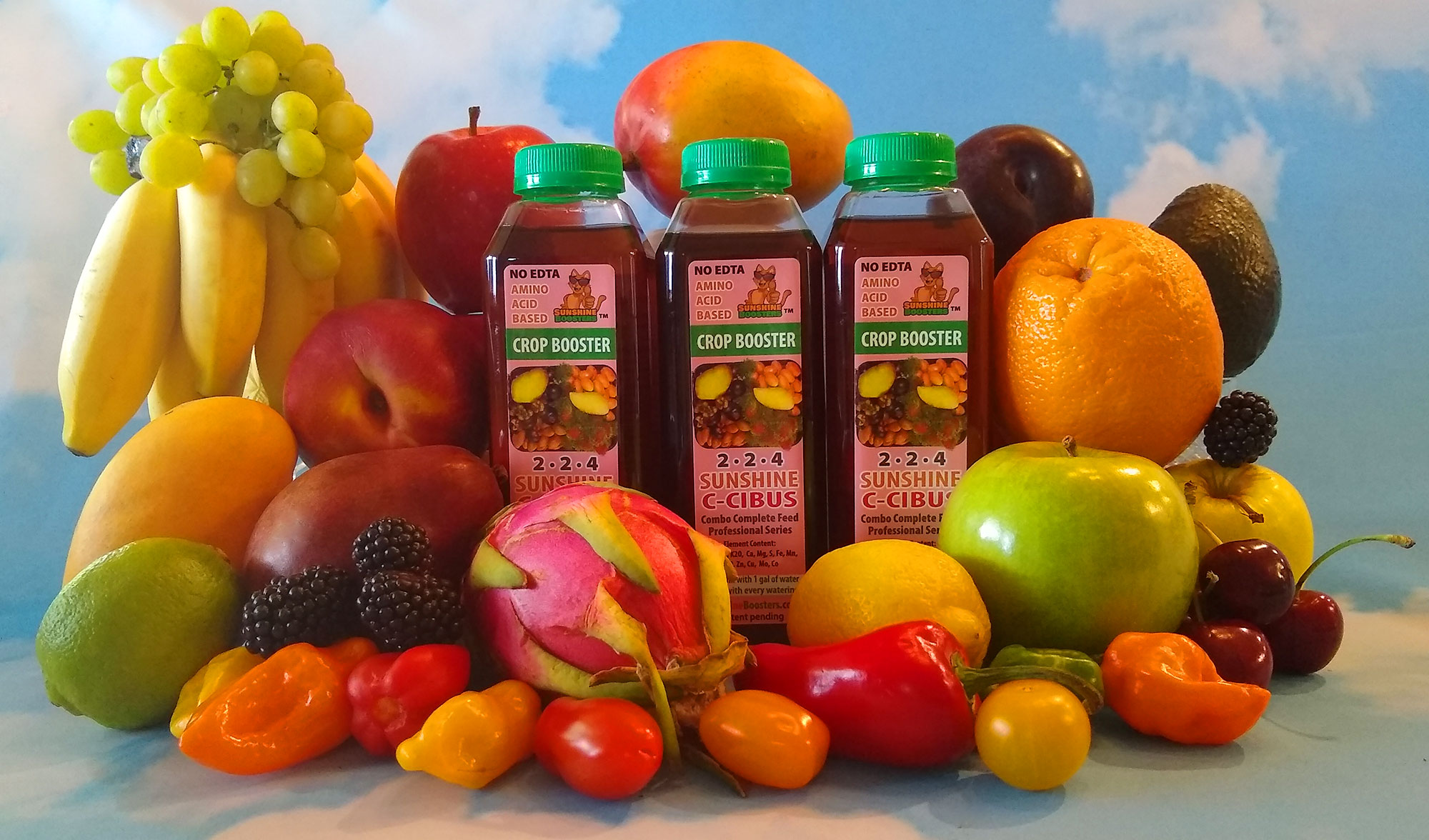
SUNSHINE C-Cibus - Crop Nutrition Booster from Garden Series, or Combo
Total Feed Collection - all nutrients in just one bottle, for fruit trees and
edibles.
Q: I have 2 Starfruit plants from you. One on the left is B10 has a lot of flowers
but no fruit is developing. On the rite is Kenjeng. This one has no flowers
at all. Both plants are growing very well. Plenty of sun and water. I am
located in Boynton Beach Florida. So what to do?
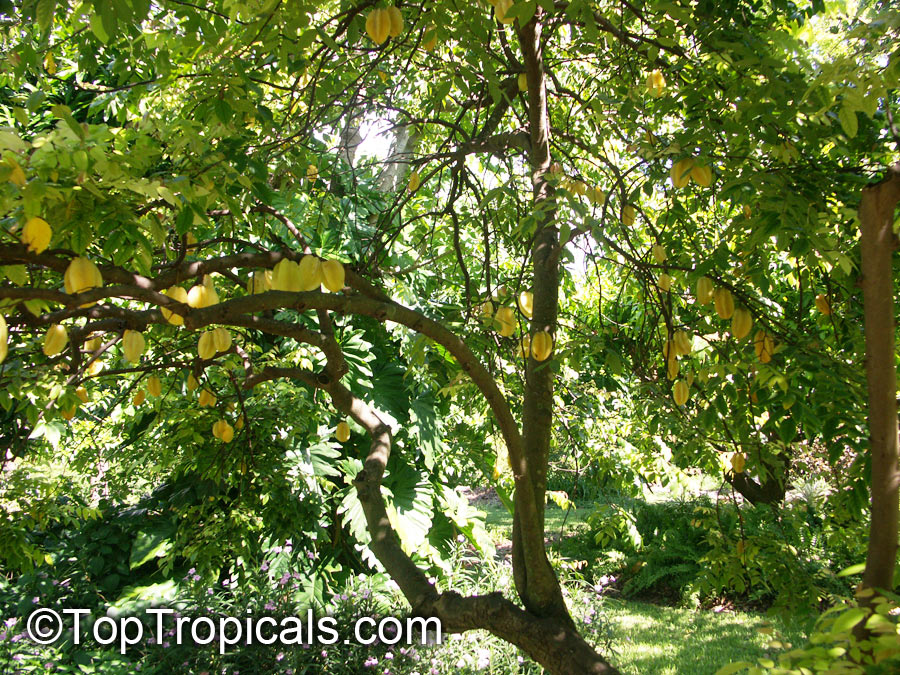
A: Your trees on the pictures look very healthy, congratulations
with a great care!
Starfruit, as well as other grafted fruit trees (like mango, avocado, etc)
usually flower/fruit easily and readily while in pots in the nursery.
Sometimes, once planted in the ground, they may reduce flowering or even stop
flowering. What happened?
The answer is simple. In pots, we fertilize them on regular basis. In our
nursery, we have fertilizer injector inline with irrigation system that dozes
plant food with EVERY watering. In other nurseries, they may also use
slow-release fertilizers, but it is still a regular routine to provide plant food to
potted plants.
In the ground, especially in Florida poor soils, fruit trees may stop
flowering or delay fruiting due to lack of nutrients, or dis-balance of elements
in the ground. Without fertilizer, a tree may take extra time to develop
bigger root system to reach out for necessary elements, and eventually will start
fruiting anyway.
But we want it to fruit soon! The only way to fix the problem is to provide
fertilizer on regular basis for a young tree. It is especially important
during hot summer months when plant metabolism is fast due to high temperatures,
plus nutrients may get washed away with frequent summer rains (like we have
in Florida) even if you've added some fertilizer at time of planting.
But the most effective way to get a tropical tree to flowering and
fruiting, is frequent applications of liquid fertilizer. We use Sunshine Boosters
with every watering on our plants. They work great even on hard cases and
weak plants, and you see the difference in a matter of weeks, sometimes even
days.
We recommend the following fertilizer that contains all necessary elements
for young fruit trees:
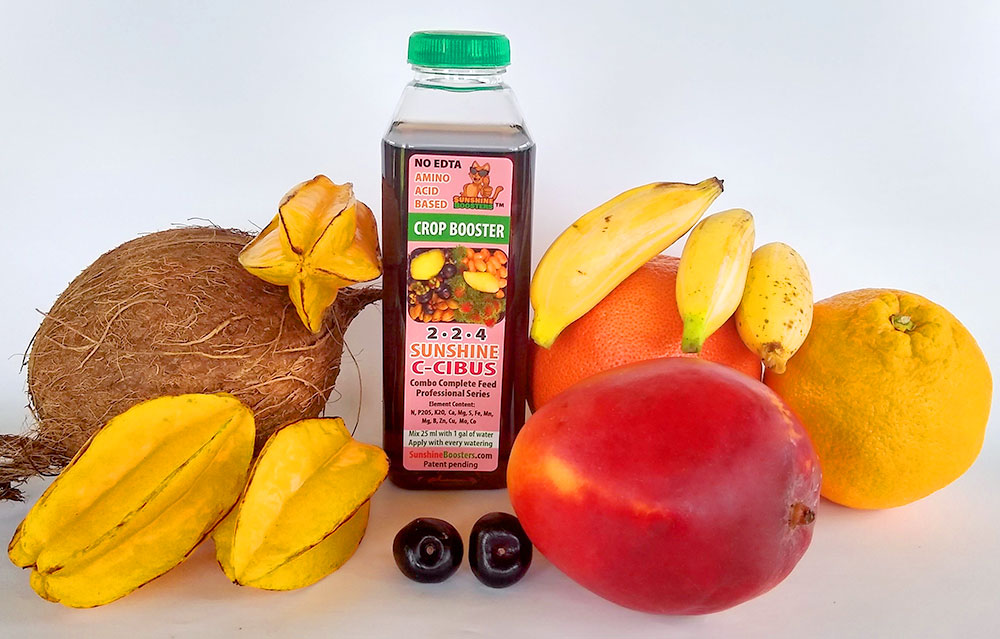
SUNSHINE C-Cibus - Crop Nutrition Booster
SUNSHINE C-Cibus - Crop Nutrition Booster from Garden Series, or Combo
Total Feed Collection - all nutrients in just one bottle, for fruit trees and
edibles.
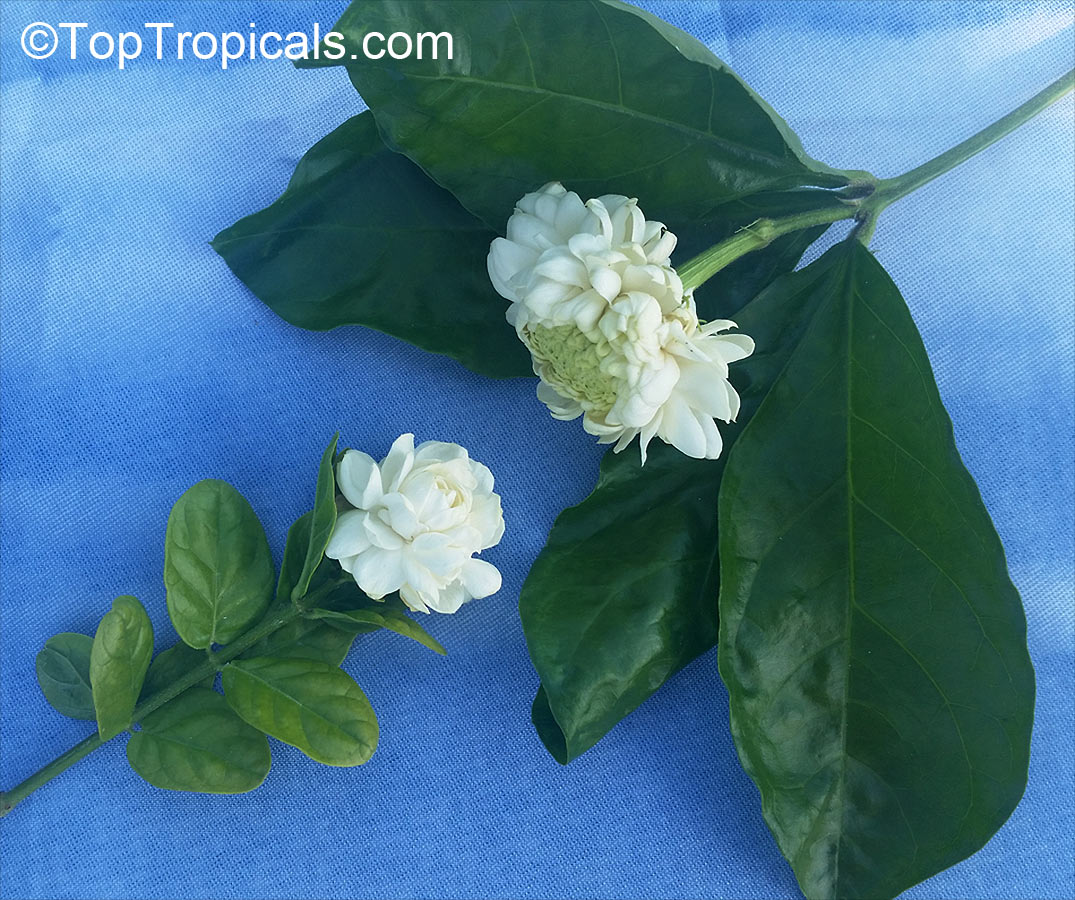
Q: Hey can you help me figure out why my jasmine grand duke supreme is not flowering? Ive had it for almost a
year (in NY) and only had 1 flower bloom and that immediately turned brown and
died. Since then no flowers have come. The leaves are green and healthy and
its growing like crazy but not flowers. Please help me figure this out.
A: For profuse flowering, Jasmine sambac needs 2 things: bright light and special plant food.
We have plenty of both here in Florida. If your grow this plant indoors in
colder climate, get it to flowering can be a bit tricky.
Your plant grows well overall with lots of vegetative growth, this is a
good sign, it means it's healthy, and not being overwatered which is one of the
most common problems with Sambacs. You're doing a great job! This jasmine
just needs more sun and fertilizer.
Make sure to keep it in the brightest spot of your home. The more hours of
light, the better. When night temperatures stay above 65F, it is beneficial
to bring the plant outside on a balcony, patio, or in a garden in full sun as
a potted specimen (move to bright light gradually).
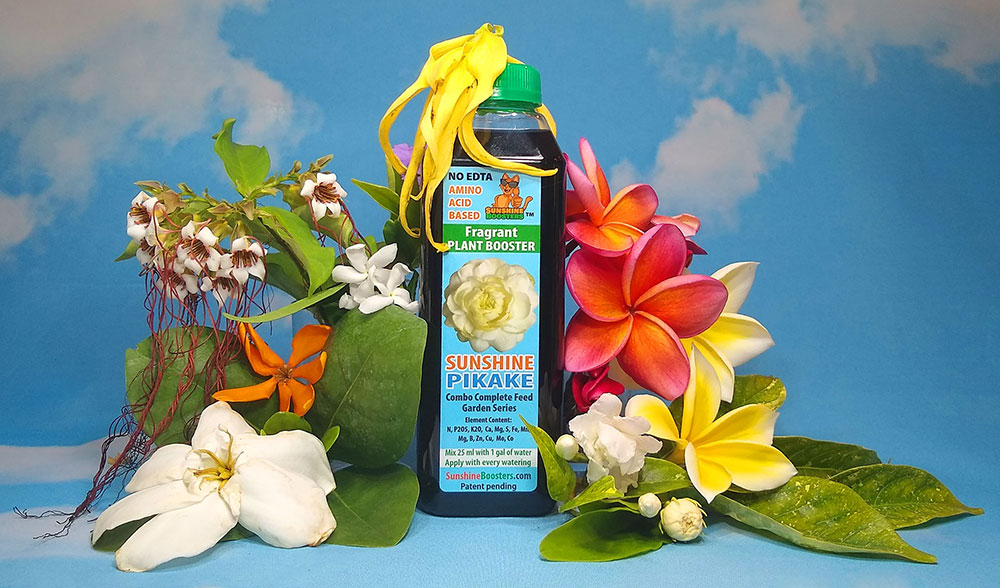
You should give this Jasmine plenty of food with every watering. We
recommend SUNSHINE Pikake - Fragrant Flower Booster. This is a natural fertilizer
that can be applied to plants year round without risk of burning the roots
or nutrient lock up in the soil. It provides all necessary elements for the
flowering cycle - just add a bit into watering can, every time you water.
How to get Canistel tree to produce
without dropping flowers and fruit
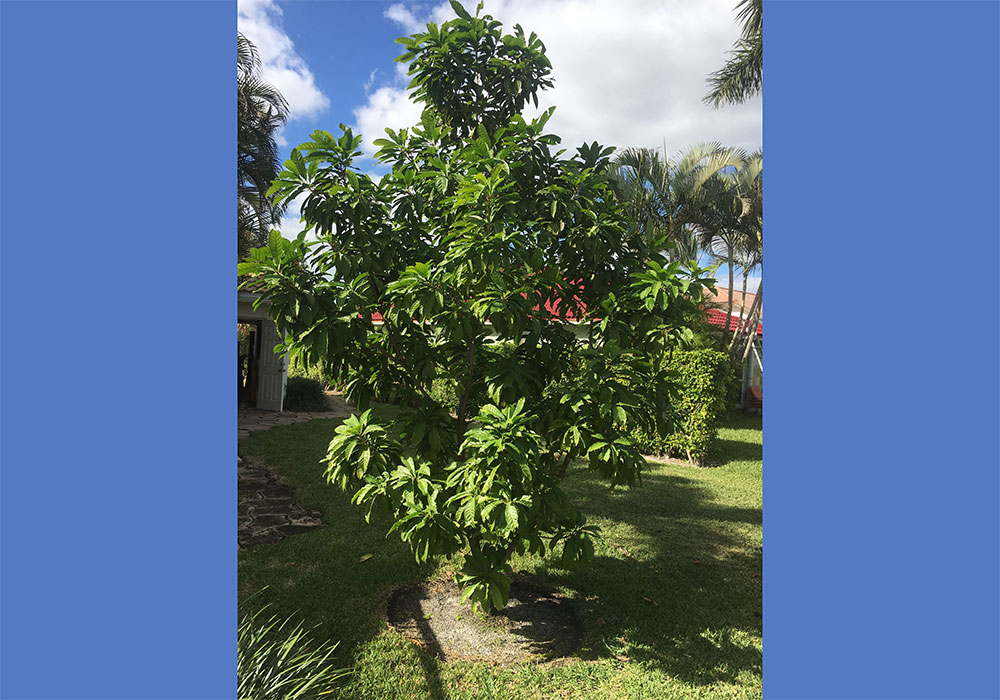
Q: My Canistel tree is 3 1/2 years old and is growing very well, see the
picture below. It gets hundreds of pea sized "berries" but then they fall off. No
canistel fruit. What's wrong?
A: You have such a nice looking tree, it is a shame you can't get
any fruit to ripen.
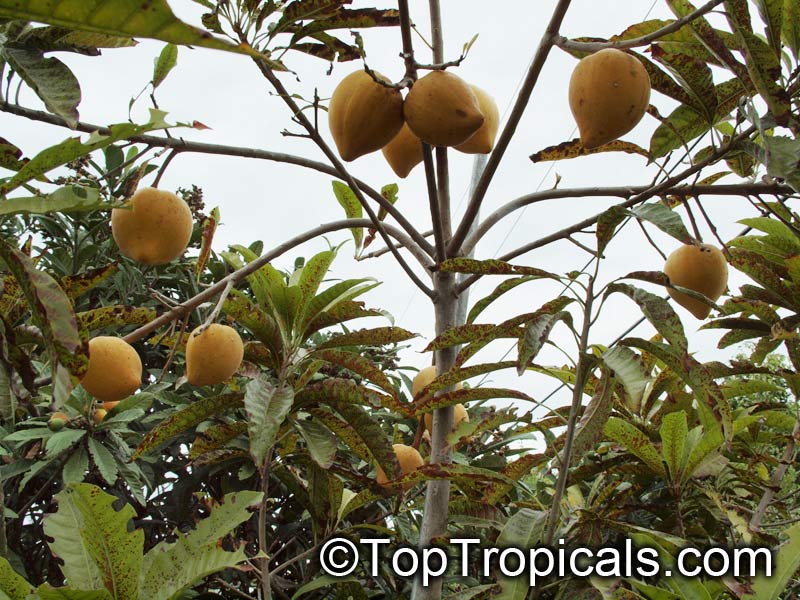
In our experience, Pouteria trees dropping fruit prematurely is a very common problem.
There may be one of the following reasons, or a combination of them:
- Cold winters may affect production, and while Canistel is generally
pretty hardy tropical plant that can easily withstand short periods of chill, the
fruit may never form properly if it had a cold winter.
- Lack of water. Canistel tree is pretty drought tolerant, but for the
proper production cycle it needs regular irrigation. Especially during hot
summer.
- The tree may be not strong enough; young trees drop fruit very often when
they don't have enough "fruiting energy" built up in their system.
Your tree looks well established and vigorous, however, flower/fruit drop
is often a sign of insufficient nutrients of particular kind, usually Boron
(B) and/or Molybdenum (Mo): either when a tree is too young and not strong
enough, or because of poor soils and lack of necessary elements.
Here is what can be done, considering you live in a warm, frost-free
climate.
1. Provide regular fertilizing program. We recommend liquid
fertilizers Sunshine Boosters that are safe to use with every watering and year
around. It is beneficial to switch plants from traditional "slow-release"
fertilizer to the liquid one because it makes a huge difference in plant growth
and flower/fruit quality and quantity. See also:
- Why liquid fertilizers are better than dry
- Article about benefits of liquid fertilizers.
2. Apply micro-element remedies that are very effective for
improving fruit production, especially when flower or fruit drop occurs:
SUNSHINE Honey - promotes more efficient blossoming and pollination, makes
flowers bigger and reduces bud drop. SUNSHINE SuperFood - improves plant vigor and quality and size of
flowers
These are all natural, eco-friendly supplements that work great for fruit
trees and other edibles.