Garden Blog - Top Tropicals

Date: 24 Jun 2018

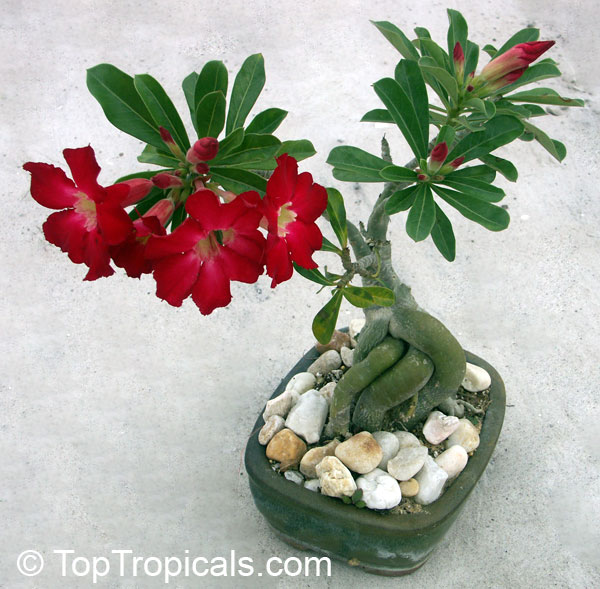
Adenium: a Rose by any Other Name

New article by Jane Jordan.
"...The famous quote is often used to imply that the names of things do not affect what they really are, in the case of The Desert Rose (Adenium obesum) it is not a rose at all, rather a succulent that thrives in hot, dry and sunny conditions. These spectacular plants have no relation to the rose family, they are a species of flowering plant from the dogbane family, Apocynaceae. The naming of this plant is partly correct as they originate in sub-Saharan Africa and the Arabian Peninsula, where they can grow into large trees with huge swollen trunks..."
Continue reading...

Date: 19 May 2016

Care of mail-order plants during hot summer

Q: I live in California and about a month ago ordered several plants from you, including fruit trees (Carambola, Mango, Avocado) and flowering trees (Xanthostemon, Adeniums, Champaca, Ylang Ylang). They were all doing well until I tried to move them into full sun, when they got leaf burn immediately. Ylang Ylang was doing great in a shade, but I repotted it from 1 gal into 3 gal and it is drooping leaves now. It has been very hot (over 100F) and dry (humidity is less than 25%). Any suggestions?

A: Hot summer can be pretty challenging time for establishing new plants. These are some guidelines to make your summer gardening more successful and rewarding.

1. You can order plants at any time, but keep your eye on your local weather forecast and try to chose cooler periods to schedule your plant shipments. Here at TopTropcals we monitor weather at destinations, and we can also delay shipment per your request until more favorable conditions.

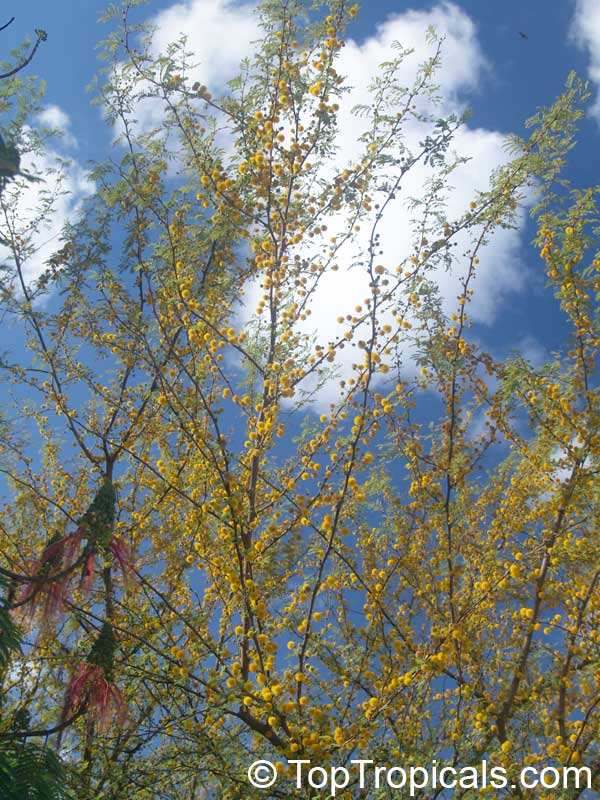
2. During hot Summer months, many plants are still OK to ship, and to be planted, many species are heat tolerant. It's usually safe to ship most succulents, including Desert roses and Euphorbias. Some fruit trees are pretty easy too, like Loquats, Mango, Eugenias. Many flowering trees can take heat: Acacias, Clusias, Jatropha, Sausage Tree, Plumerias and many others. Check our full list of plants suitable for hot and dry conditions. Most jasmines, including Jasmine Sambac and Trachelospermum make also a safe choice for hot weather planting.

3. Use shade cloth or simply white sheets to protect young plants and new plantings from hot sun.

4. When establishing mail ordered plants during hot weather, keep them in shade for longer period of time than average recommended 1-2 weeks. Give them a chance to establish really well. In areas with low air humidity, try to create a simple mist system. It can be purchased in your local Home Depot for only $20 and set up takes only 10 minutes! It makes a big difference and can help you save many plants from hot weather stress.

5. Although it may seem that during hot weather plants need more water due to high evaporation, be careful with watering, and check soil with your finger before watering - don't water if it is still wet. Combination of "hot and wet" can be as harmful for the root system as "cold and wet" during winter. Protect root systems from overheating: covering black pots with white cloth will work. Remember when temperature is above 90F, most of plants slow down their metabolism, which means roots slow down or even stop pumping water and become more vulnerable to overwatering. For the same reason, do not hurry to step up into bigger container if roots haven't filled yet the existing pot.

Date: 10 Apr 2016

Growing by the sea

Q: Please recommend me some interesting plants that can grow on my waterfront property and can withstand some salt wind. All my neighbors have Sea Grape trees and bougainvilleas, and I want something different and special. I would love to have some colorful or fragrant flowers, or fruit around my paradise home.

Q: Considering your neighbors successfully grow Sea Grape (Coccoloba), and Bougainvilleas, you have a mild, frost free climate. There is a number of spectacular and useful tropical plants that are salt tolerant. Orchid Trees - Bauhinias, Poincettia - Delonix, and Geiger trees - Cordias, are very showy flowering trees. For large size bushes, try Dwarf Poincianas - Caesalpinias, and Scarlet-Coral Erythrinas. Frangipani - Plumeria, come in different colors and bring you perfume fragrance from Hawaii. And of course, Desert Roses - Adeniums, can be grown and showy specimens anywhere in your yard, both in the ground or as potted bonsai.

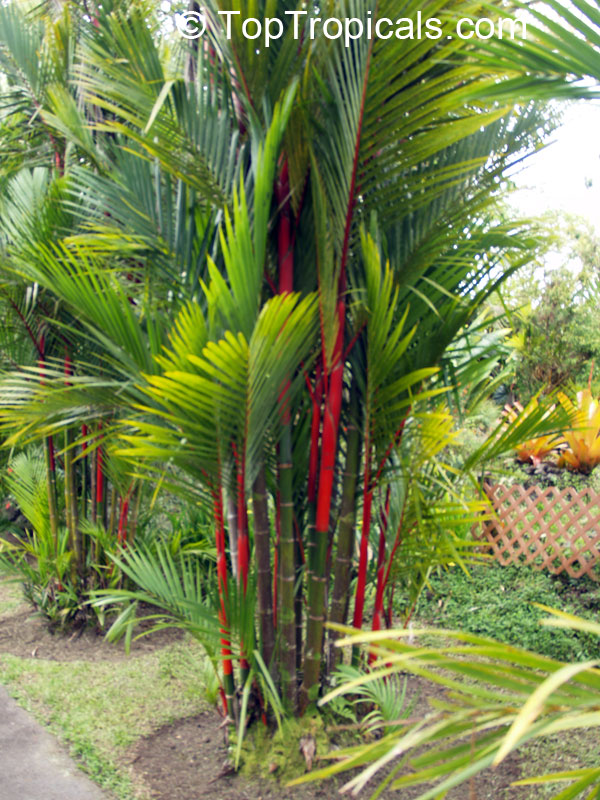
Most palms, especially popular Coconut Palm, source of tasty fruit and drink, are highly tolerant to salt breeze. If you are looking for something that nobody has, Lipstick palm, or Sealing wax palm - Cyrtostachys lakka, is definitely the most spectacular palm you can find. It is a stunning feather palm that develops a brilliantly red trunk. Palm is originally from Malaysia, but has been introduced to Costa Rica and other tropical areas of the world. Sealing Wax Palm seeds are very slow to germinate, up to a year, and large specimens are very rare and hard to find even in rare tropical plant nurseries. This palm will require a good overhead light, and constant warmth (above temperature 55F). It is definitely worth an effort to grow this beauty.

You may add more tropical accents to your landscape by the sea with many varieties of showy heliconias.

See full list of salt tolerant trees.

Date: 6 Dec 2025

🌿 Bring the Jungle Inside: Winter Survival Guide Part 2.Temperature. ❄️

Smokey  the  tuxedo  cat  checks  thermometers  by  a  cold  window  while  Sunshine  the  ginger  tabby  relaxes  near  a  heater  holding  a  room  thermometer  showing  74  F.

Smokey: Too cold. We need more heaters so the plants feel comfortable.
Sunshine: I feel comfortable.
Smokey: You are not part of my plant collection, but I am glad you are comfortable.

🌡️ TEMPERATURE: THE TROPICAL DORMANCY LINE

In Part 1 (Winter Survival Guide: Temperature) we covered the foundation: light, placement, and acclimation. That is the survival layer.

Most tropicals stop growing below 70 to 75 F. They stay green, but their engine shuts down.

Below 70F:

  • Water intake drops.
  • Roots slow down.
  • Fertilizing becomes risky.
  • Root root becomes easy.

If you WANT your plants to grow in winter, you must take care of everything: Warmth, light, humidity, water. It all works together.

  • Aim for 75 F with bright light. Water lightly. No fertilizer.
  • Watch out for drafts. Cold windows. Door blasts. Garage entryways. Even one gust can trigger leaf drop.
  • Vents are the opposite problem: hot, dry, dusty air. That gives you crispy edges and mites.
  • Root zone temperature matters just as much as room air. Your thermostat may say 72 F, but your pot on a tile floor may be sitting at 55 F. Fix this by elevating pots on boards or stands. Use Styrofoam. Never keep pots directly on cold tile o windowsill
  • Extra winter heat: Space heaters are fine if used smartly. Do not blow hot air directly on plants. Keep heaters away from cords, trays, and water. Oil filled radiators are the safest option for plant rooms.
  • Use a humidifier if you want growth or want to prevent spider mites. But do not blow mist directly onto leaves. Always place the unit lower than the plant canopy.
  • Grouping helps. Put tropical plants close together to share humidity. Do not mix succulents with humidity lovers.
  • Cats and dogs love to knock over lights and stands. Secure your fixtures. Trust us.
  • Airflow: Light airflow is healthy. Direct fan blast is not. Still, dry corners invite mites.
  • A mild night drop is OK. A big one below 55 F will stop growth completely.

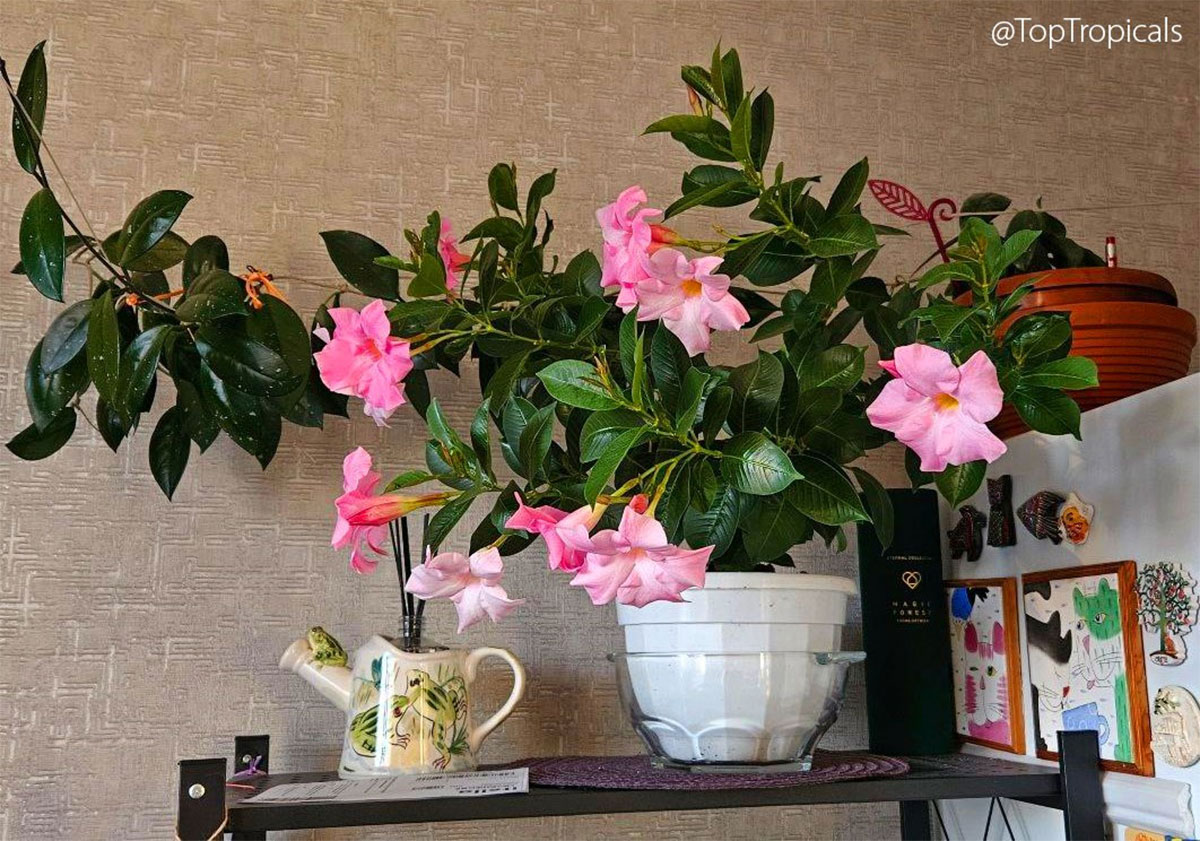
Pink  mandevilla  vine  blooming  indoors  in  a  white  pot  on  a  shelf.

A mandevilla thriving indoors with bright pink blooms and glossy green leaves.

☂️ PLACEMENT: MICROCLIMATES RULE EVERYTHING

Indoors is one big tradeoff: light but cold near windows, warm but dim away from them. The winning combo is a warm room with supplemental light.

Best zones to keep plants in winter:

  • South or east windows with additional light
  • Warm living spaces
  • Bright bathrooms for natural humidity

Worst zones to keep plants in winter:

  • Behind curtains
  • Directly on windowsills
  • Near heaters or vents
  • Against cold exterior walls
  • Dark corners without supplemental lighting

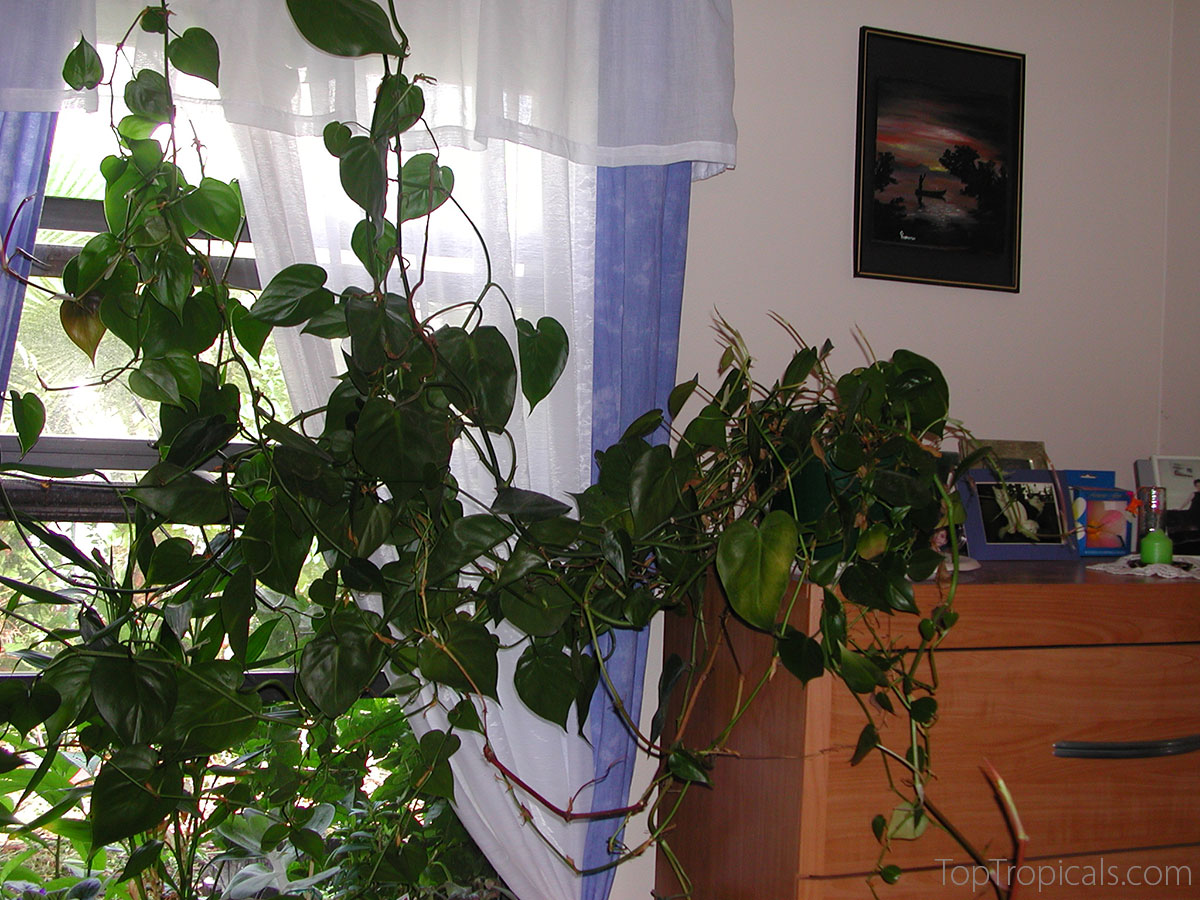
Large  philodendron  vine  growing  indoors  across  a  window  and  dresser.

A vigorous indoor philodendron stretching across the window.

💨 ACCLIMATION

Moving a plant from outdoors to indoors is a shock. Light drops. Humidity drops. Airflow stops. Soil cools. Even healthy plants may drop some leaves for a few weeks. That is normal.

Before you bring them inside:

  • Rinse foliage to remove dust and pests. We recommend Sunshine NoBug - and organic, safe solution.
  • Check for ants.
  • Trim weak branches.
  • Treat soil if fungus gnats are present.

Try to bring plants inside before the first cold front, not after. If you are reading this too late, do the prep now and expect a little leaf drop.

If you nail light and temperature, winter becomes simple. In the next mail-list we will cover watering, fertilizer timing, humidity, and other indoor tricks that keep tropicals happy till spring. Stay tuned.

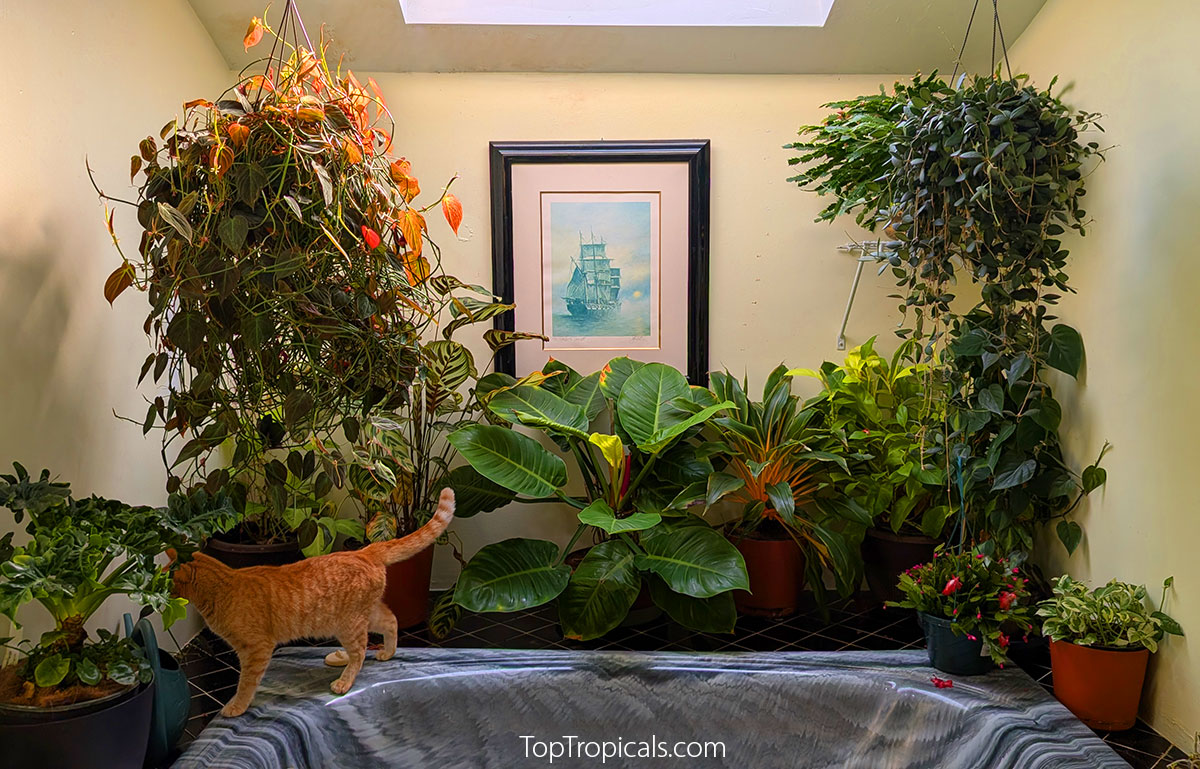
Indoor  bathroom  garden  with  tropical  plants  under  a  skylight  and  an  orange  cat  walking  in  front.

Cat Bob is inspecting his indoor garden around the tub with a bright skylight


✔️ WINTER INDOOR FAQ: TEMPERATURE AND PLACEMENT

Q: Why are leaves dropping only on the window side?
A: Cold glass. The room may be warm, but the glass surface can be much colder.

Q: Is a cold room OK for tropicals?
A: They may survive, but they will not grow below about 65F to 75F. When nights stay below 65F for a week, many plants enter dormancy.

Q: My room feels warm. Why is my plant still not growing?
A: Check the soil temperature. Pots on cold tile can be 10 to 20F colder than the air.

Q: Can plants sit directly on the floor?
A: Not on cold tile. Always elevate them on boards, stands, or trays.

Q: Is it OK to keep plants near a heater or vent?
A: No. Vents and heaters blast hot, dry air and cause crispy leaves and mites.

Q: My plant is dropping leaves after coming indoors. Why?
A: Normal acclimation to reduced light and humidity right after the move.

Q: Can I keep plants in a bright bathroom?
A: Yes. Bathrooms can have good humidity. Just keep pots off cold tile.

Q: Do I need a humidifier?
A: Not for survival. Yes if you want better growth and fewer pests like spider mites.

Q: Do I need a grow tent?
A: No. A bright LED plus a warm room is enough for winter holding.

Q: Should I fertilize in winter?
A: Not now. Winter fertilizer rules will be covered in the next mail-list.

Q: Should I water the same as in summer?
A: No. Indoor plants need much less water in winter. Watering rules also coming soon.

🛒 Shop Indoor Garden


Indoor  plants


📚 Learn more:


Date: 25 Apr 2026

🎁 Mothers Day plant gift guide: something for every kind of mom

Skip the bouquet, give her something that grows
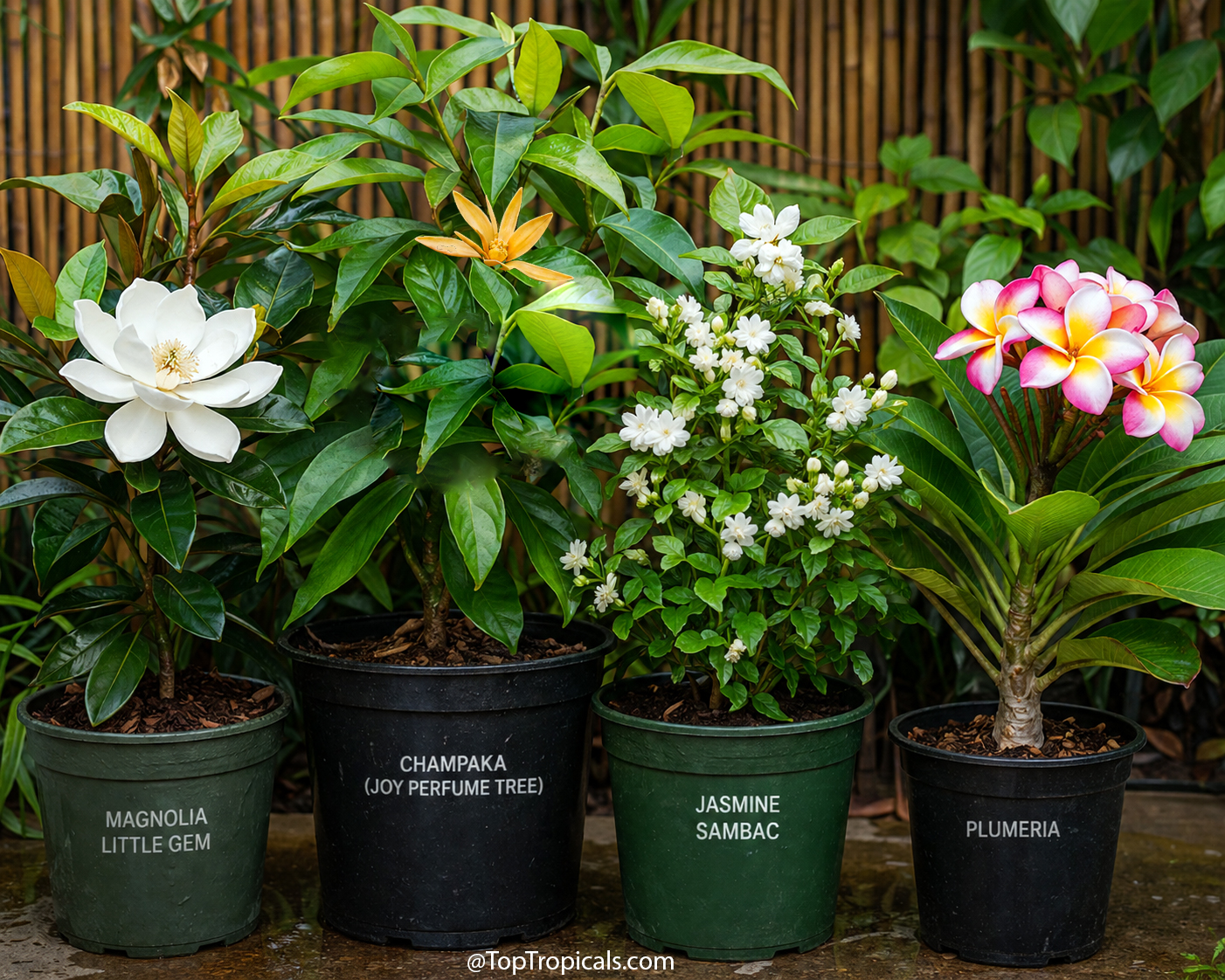
Four  potted  tropical  plants  in  bloom  -  Magnolia  Little  Gem,  Champaka, 
 Jasmine  Sambac,  and  Plumeria  -  arranged  on  gravel  in  a  garden  setting 
 against  a  light 
 fence.

Magnolia Little Gem, Champaka, Jasmine Sambac, and Plumeria

Some gifts last a few days. These don't. Right now, these plants are at their best in our nursery - full, established, and ready to impress the moment she sees them. This year, give her something that doesn’t fade. Pick a plant that will keep growing, blooming, and reminding her of you long after Mother's Day is over. Here are a few easy ways to choose the right one.

All of these grow well in containers and are beginner-friendly.

1. For moms who love fragrance - give her living perfume ✨

These are the plants people remember. Soft, rich scent that fills the garden, patio, or even a warm evening indoors.

- Champaka Joy Perfume Tree - the legendary Joy perfume flower - rich, sweet, and unmistakably bubble gum-like.
- Magnolia Little Gem - the classic Southern magnolia in a smaller form - big, creamy, fragrant blooms that never go out of style.
- Wrightia religiosa - a sacred Buddhist tree - delicate white flowers with a soft jasmine fragrance that feels calm and refined.
- Jasmine Sambac - intensely fragrant and impossible to ignore - once you have it, you won’t want a garden without it
- Plumeria - the iconic Aloha flower - bold color, rich perfume, and pure tropical feeling in bloom.
- Parijat Tree Jasmine (Nyctanthes arbor-tristis) - blooms at night and fills the air with a gentle, unforgettable fragrance.

  • 🛒 Shop Perfume plants

    2. For easy care and everyday enjoyment - beautiful, low maintenance choices 🌸

    No fuss. No overthinking. Just strong, reliable plants that look good and keep going

    - Jatropha podagrica - Buddha Belly - a quirky caudex plant with a swollen trunk and bright red flowers that shows character without needing much care.

- Dorstenia bahiensis - Mattress Button Plant - a strange, sculptural plant with flat, button-like blooms that always gets people curious.
- Columnea - Flying Goldfish Plant - trailing stems covered in bright orange flowers that look just like little goldfish in motion.
- Adeniums - collectible forms in many colors - bold caudex shapes and striking blooms, easy to grow and hard to stop collecting.

🛒 Shop Indoor Garden

3. For the plant collector - rare, unusual, unforgettable 🔮

For moms who already have a garden... and still want something different.

- Rainbow Eucalyptus - a one-of-a-kind tree with peeling bark that reveals streaks of green, orange, red, and purple like living artwork.
- Tacca Bat Head Lily - an unforgettable plant with dark, bat-shaped flowers and long whiskers that look almost unreal.
- Dwarf Ceiba Princess - a rare, compact silk floss tree with a sculptural trunk and soft, showy blooms that feel truly special.

🛒 Shop Rare Plants

4. For the fruit lover - grow something she can enjoy and taste 🍒

A gift that turns into harvest. Fresh fruit, right from her own garden.

- Jaboticaba - a truly unique fruit tree that produces sweet, grape-like fruit right on the trunk, turning it into a conversation piece.
- Rose Apple - crisp, refreshing fruit with a light floral taste and a beautiful ornamental tree to match.
- Java Plum (Jambolan) - deep purple fruit with a sweet-tart flavor, loved for both its taste and its shade tree presence.
- Mango - the king of tropical fruit - rich, sweet, and incredibly rewarding to grow in your own garden.
- Avocado - creamy, nutrient-rich fruit from a tree that becomes a long-term staple in the garden.
- Eugenia cherries - Surinam Cherry, Rio Grande and Grumichama - compact trees with glossy foliage and delicious, dark cherries that are easy to grow and quick to fruit.

🛒 Shop Fruit trees and edibles
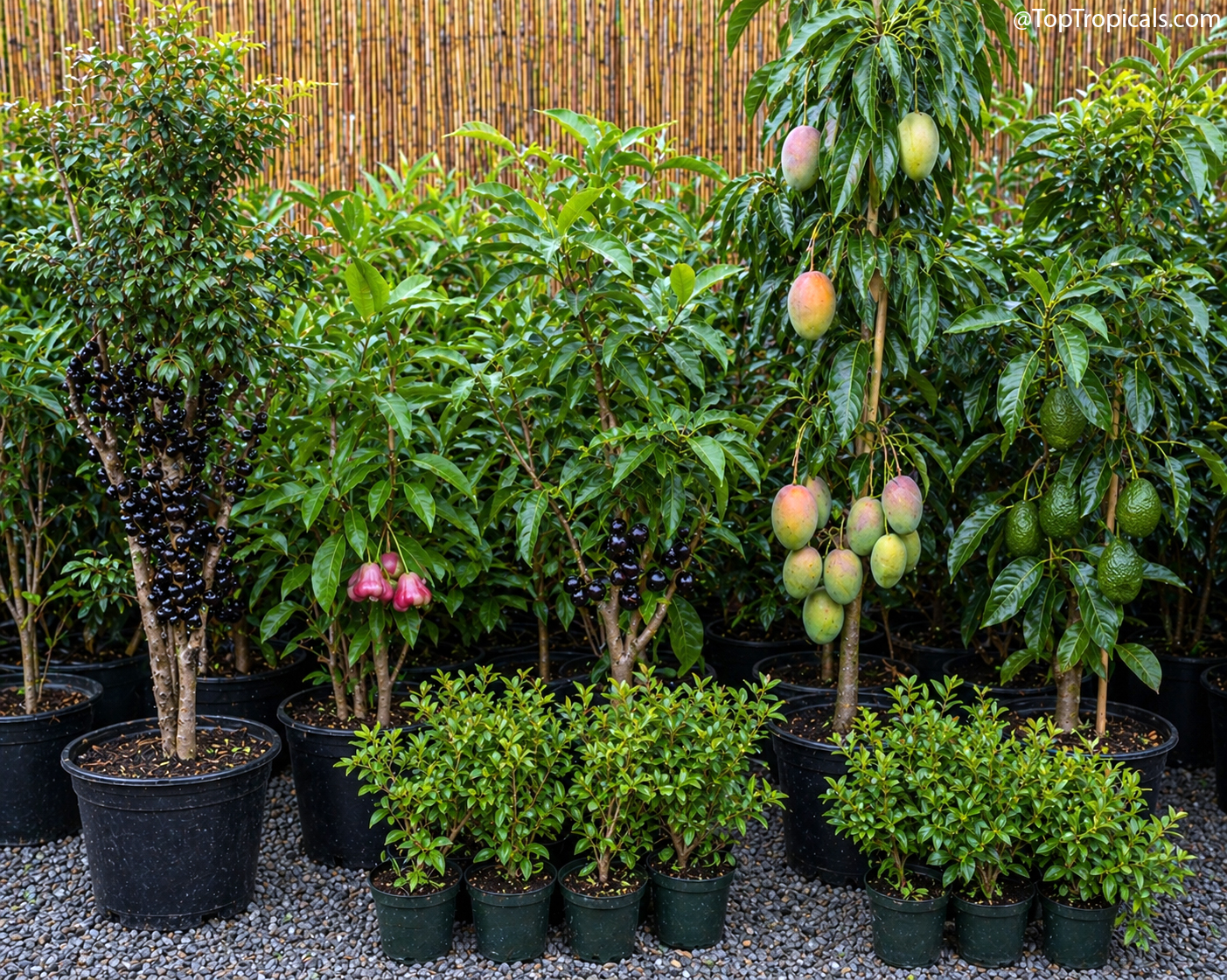
Potted  tropical  fruit  trees  including  jaboticaba,  Wax  jambu,  Java  plum,
    mango,  avocado,  and  Eugenia  cherries  arranged  in  a  nursery  setting  on 
 gravel.

Tropical fruit trees selection - from Jaboticaba fruiting on the trunk to Mango, Avocado, and rare Eugenia cherries - a great mix for building a productive food forest.

Mothers Day Gift Card 💌
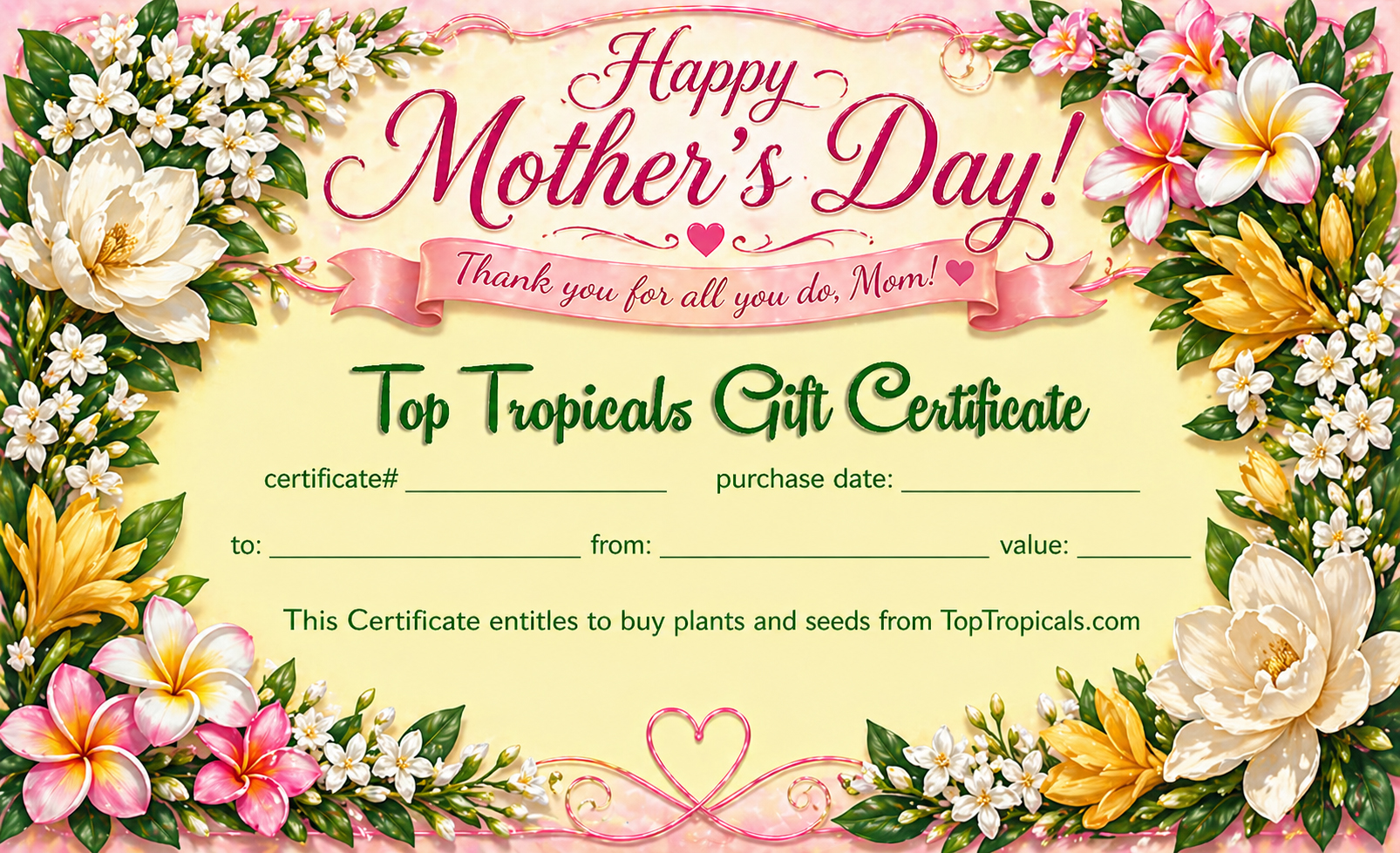
Mother’s  Day  themed  Top  Tropicals  gift  certificate  with  a  pink 
 decorative  frame  filled  with  jasmine,  plumeria,  magnolia,  and  champaka 
 flowers,  tropical  fruits  across  the  center,  and  a  Happy  Mothers  Day  banner 
 at  the  top,  with  space  for  certificate  details  and 
 message.

Mother’s Day Top Tropicals gift certificate

Still not sure what to choose? A gift card keeps it simple. She can pick exactly what she wants, when she is ready for it. No guessing, no pressure - just something she will actually enjoy.

Get 15% extra value on gift certificates. Just mention Mother’s Day in the message field. For example, a $100 certificate becomes $115. A $50 certificate becomes $57.50.
Offer valid through 05/12/2026.
Bonus value applies to gift certificates only. Must include “Mother's Day” in the message field at checkout. Not valid on previous purchases and cannot be combined with other promotions or discounts. Offer subject to change without notice.