Garden Blog - Top Tropicals

Date: 18 Feb 2021

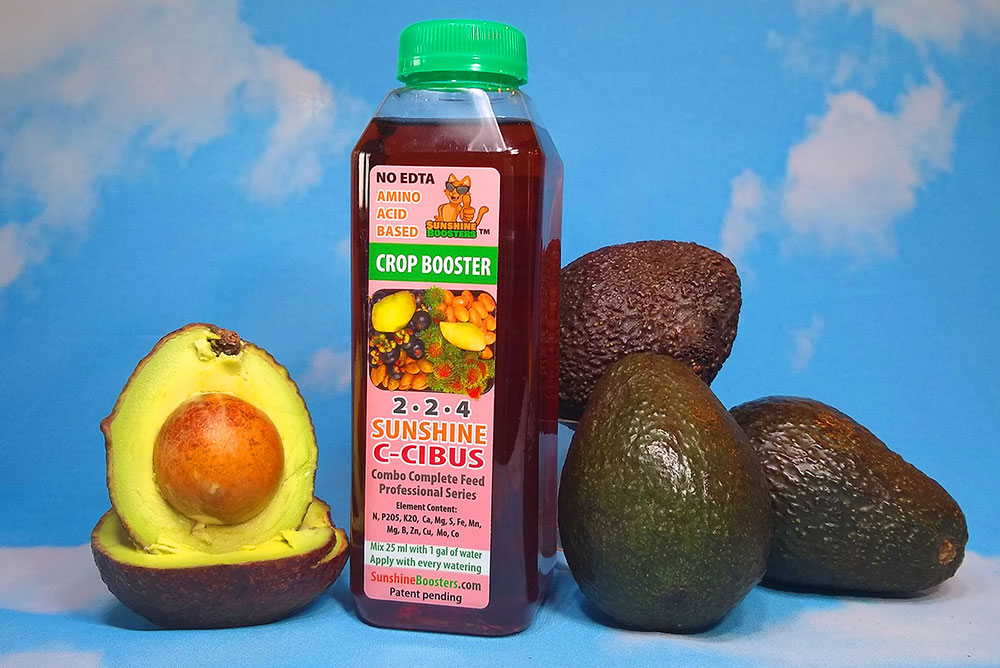
Healthy Plants - Q&A from Mr Booster: Feeding Avocado Tree

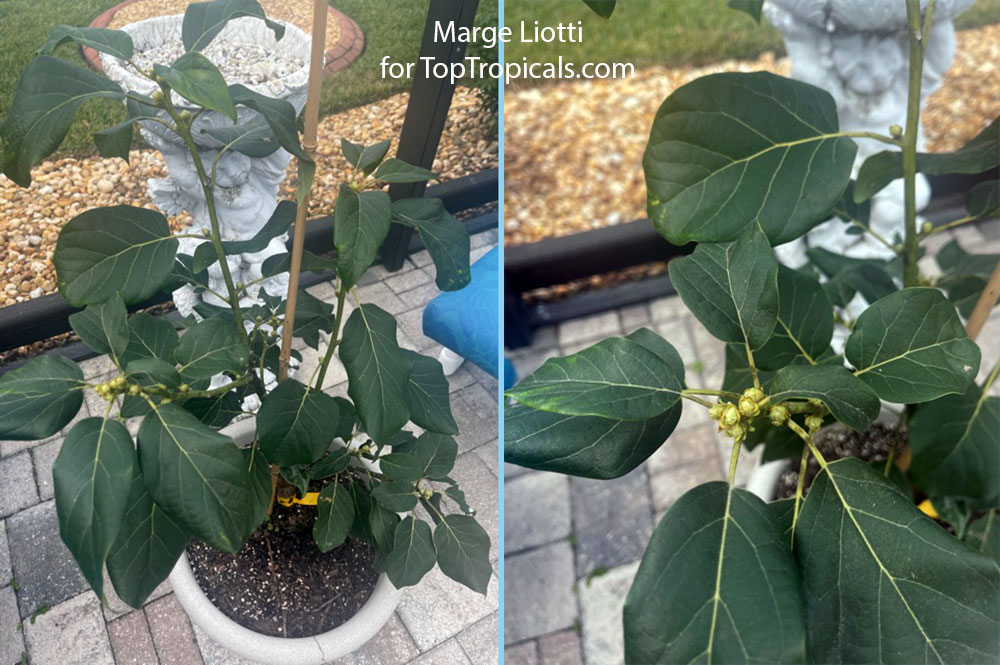
Q:We bought one of your avocado grafts and it's doing great, lots of buds for fruit. It's still in a pot and fertilizing with the Sunshine Boosters. Should we continue with this product? We'll plant it in the ground in March. Thought you'd enjoy pictures of our wonderful tree. No freezing temperatures in Riverview, but when it got down into the 30s, the plant came in. One good thing about growing in the pot. I'll be buying some more Sunshine Boosters. This stuff is working great on all our plants.

A: Congratulations with a good job on growing avocado over winter. Avocado trees are not easy, we are happy to hear that your plant is ready for production, this is amazing! We've noticed that Sunshine Boosters perform miracles. Here are some suggestions for you:
1) Continue fertilizing with Sunshine Boosters according to the feeding chart
2) When ready to plant, dig a large hole and fill it with good soil full of organic matter (compost mixed with existing sandy soil will be good). Make sure to plant the tree on 3-4"high elevation, like on a little hill. Avocados need perfect drainage and can't tolerate wet feet. See more info on planting and planting instructions (pdf).
3) Water daily with a hose, do not rely on sprinklers. Avocados like water (considering perfect drainage)
4) Continue applications of Sunshine Boosters at least until the tree is established and starts growing new branches with lots of leaves. After that, you can switch to slow-release fertilizers once a month if it makes it easier, but if you can, continue Sunshine Boosters at least on weekly basis - they really boost plant growth!

Date: 13 Aug 2025

🌸 Orchid Tree - Bauhinia: Winter Blooms & Year-Round Beauty

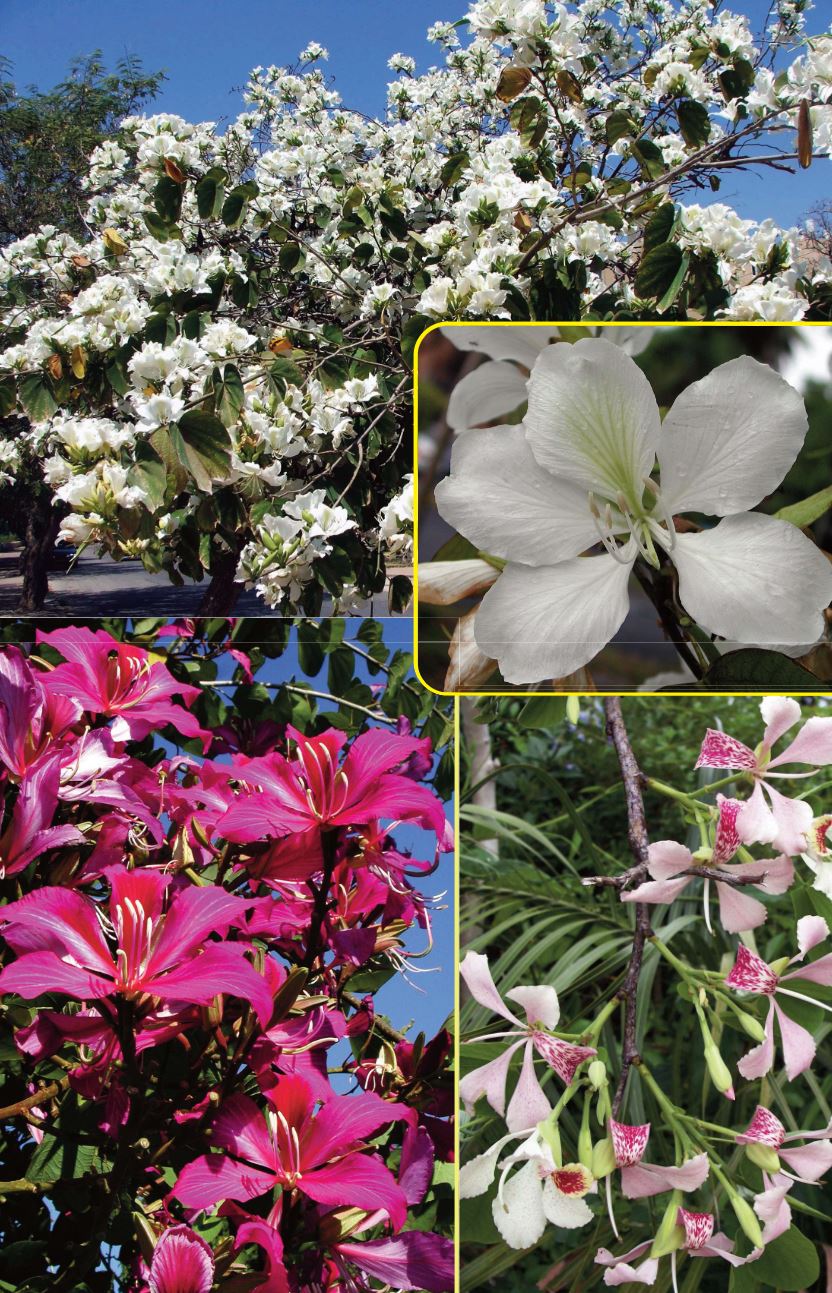
Collage  showing  Bauhinia  blakeana  with  magenta  flowers,  Bauhinia  variegata  var.  candida  with  white  blooms,  and  Bauhinia  monandra  with  pink  speckled  flowers;  all  suitable  for  gardens,  with  some  varieties  adapted  to  container  growing  if 
 trimmed.
Bauhinia blakeana, Bauhinia variegata var. candida, and Bauhinia monandra – Orchid Trees in Bloom

Sometimes a plant stops you midwalk. Flowers so bright they almost glow, leaves shaped like butterflies — that’s a Bauhinia, the Orchid Tree. These fast growers bring color when many gardens are quiet, with some blooming in the heart of winter.

🌟 Why Grow Bauhinia?

  • Exotic blooms in colors from white to deep magenta
  • Distinctive leaves — nature’s own butterfly design
  • Many varieties flower in the cooler season
  • Fast growth, easy shaping, more blooms after pruning
  • Varieties for large yards, small gardens, and sunny patios
  • Tolerant of heat, drought, and poor soils

Bauhinia Care Tips
🌞 Outdoor

Full sun for best flowering, well-draining soil, deep watering once established. Light pruning after bloom keeps shape and encourages more flowers. Protect young plants from frost. During the growing season (Spring - Fall), apply a balanced fertilizer - like top-dress slow release fertilizer or controlled-release Green Magic. Liquid fertilizer Sunshine Boosters Megaflor can be used year around - to promote vigorous growth and abundant blooms.

🏡 Indoor / Patio

Bright sun (south window or outdoors in warm months), large pot with drainage, even moisture during growth, and a bloom-booster feed in season. Feed regularly with a balanced fertilizer controlled-release Green Magic. Liquid fertilizer Sunshine Boosters Megaflor can be used year around - to promote vigorous growth and abundant blooms. Bring indoors before frost.

🍂 Seasonal Note – Bauhinias are Deciduous

Bauhinias drop their leaves in winter — even in warm climates. This is normal and part of their rest cycle. Bare branches in the cool season will leaf out again in spring, often just as flowers begin.

📝 Quick choice guide

Shop Bauhinas

Watch videos about flowering trees

Date: 11 Oct 2019

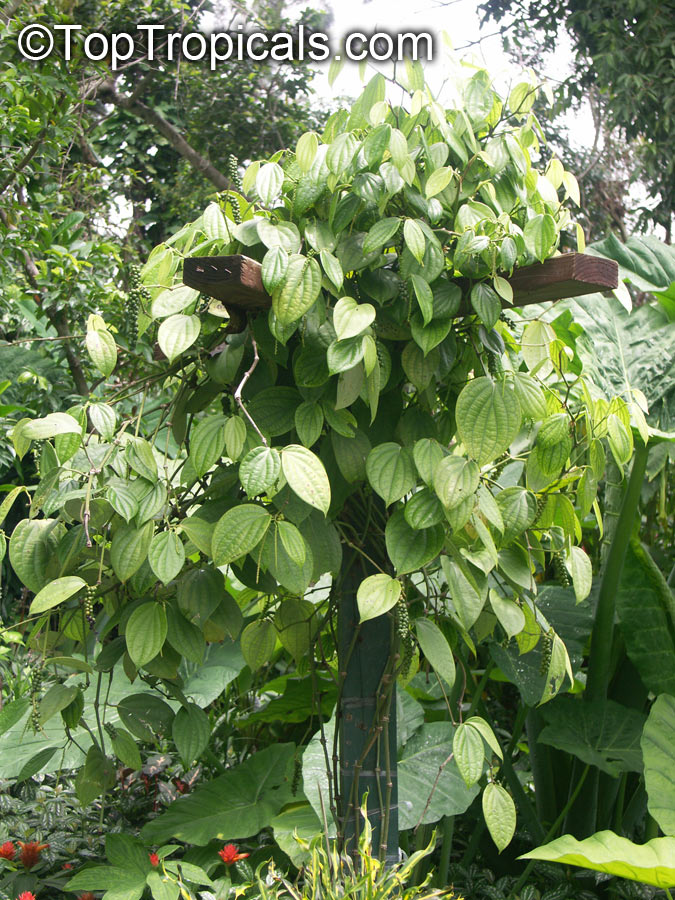
Fun of growing your own Pepper

By Onika Amell, tropical plant specialist

Q: Can you grow your own black pepper plants in the USA?

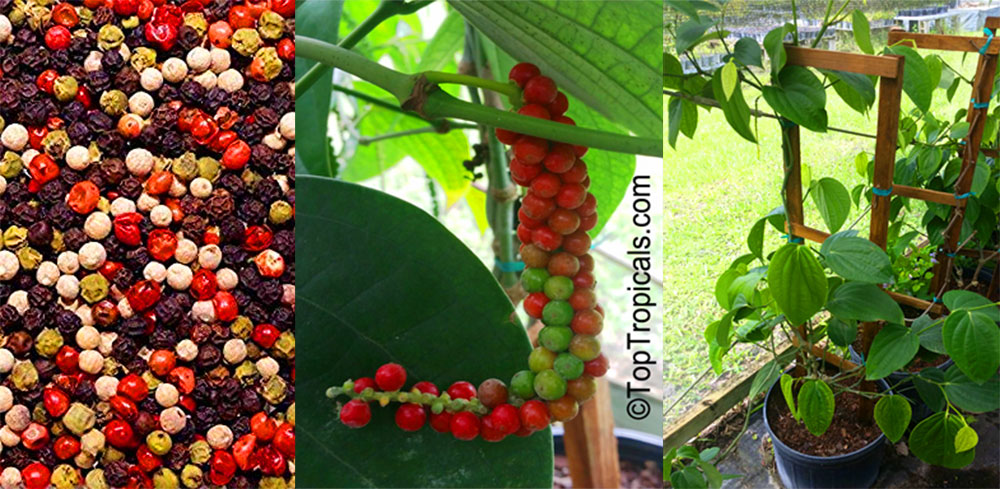
A: Who does not love the smell of freshly ground pepper, especially that lovely combination of white, green, black and red peppercorns, which are so much more interesting than just plain black corns. Yes, you can absolutely grow your own pepper! Peppercorns come from the plant Piper nigrum.

Growing Pepper Plant

Black pepper plants are actually vigorous vines, although they are pretty slow growing and can be kept in a pot as a compact plant. But they will need a strong support to climb over. Indoors, you can provide this support by installing a trellis in a large pot. Some gardeners prefer to grow them as a hanging plant instead. In warm climates, you can plant them directly outdoors in a protected location with partial shade. These plants need rich, moist, well-draining soil and warm, humid conditions. Peppers do not like temperatures below sixty degrees, although they can survive some cold spells. It is very important to bring these plants indoors or wrap them in a blanket if colder weather arrives.
If you live in colder parts of the country, you can certainly grow peppercorns in large pots. Grow them outdoors during the summer and move them indoors during the winter, or grow them year-round in your greenhouse. Houseplants will need bright light and consistent moisture. Spray the leaves regularly with a bottle of water to increase humidity. Do not allow room temperatures to fall below sixty degrees.
Besides the benefit of being able to grow your own gourmet pepper corns, the foliage, as well as the flowers on this plant, are beautiful in its own right. Off-white flowers appear from spring through summer, followed by slow fruit production. The berries will appear on spikes, with 50 to 60 berries per spike.

Fertilize this vine in the spring before new vigorous growth emerges. We recommend:
Tropical Greenhouse Plus - Plant Booster
Tropical Allure - Smart-Release Booster

You may be surprised to learn that black, white, green and red peppercorns are all the same seed on the same plant in the various stages of development and processing.

Black peppercorns are the most familiar and come from the corns that have reached their full size but are still green and not quite ripe. They are picked and allowed to dry in the sun. Enzymes in the berries cause the skin to turn black during the drying process. They are the strongest in flavor.

White peppercorns are the mature berries that ripen to a red color before being picked. After harvesting, they are soaked and rubbed free of the outer skin down to the smooth white underlayer, then dried and bleached by the sun. They are slightly milder than black pepper.

Green peppercorns are the unripe peppercorns picked at the same stage of ripeness as black peppercorns, but not allowed to dry. They can be pickled in vinegar or brine. They are the least pungent.

Red peppercorns are the mature, but unshelled version of the peppercorn. One can usually find them in some gourmet and health food stores. They can be quite expensive.

Ground pepper will only stay fresh for about three months, but peppercorns will last indefinitely. To make the most of your pepper harvest, store the peppercorns in an airtight container in a cool, dark location. Grind them immediately before use for the best flavor.
There is nothing like freshly ground black pepper simply combined with a good quality olive oil and a splash of balsamic vinegar. This makes a wonderful dipping sauce for fresh bread. Simple, yet elegant. All the better if the pepper was grown in your very own garden!

Date: 10 May 2026

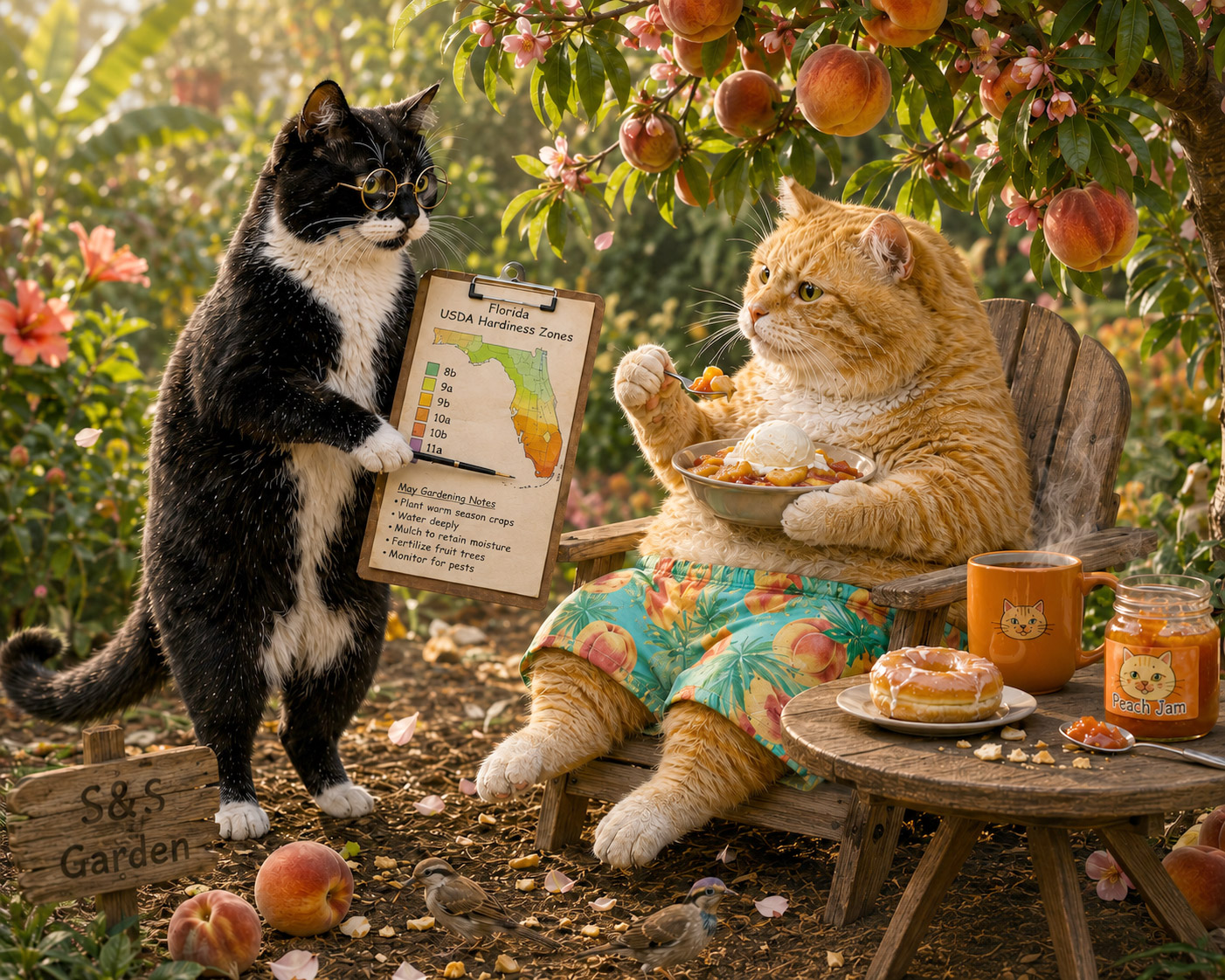
🍑 Tree-Ripened Peaches Change Everything

Smokey  and  Sunshine  relax  under  a  peach  tree  in  the  S&S  Garden, 
 discussing  low-chill  peaches  for  Florida  while  enjoying  peach  cobbler  with 
 ice 
 cream.
Sunshine: I love peach cobbler. Smokey, why are peaches on the tree so early?
Smokey: Low-chill peach varieties for Florida. They ripen much sooner.
Sunshine: I thought peaches were for Georgia.
Smokey: Not if you plant low-chill peaches. And speaking of peaches, do you know about donut peaches?
Sunshine: Donut peaches? Finally, horticulture I can understand.

Some fruits carry memories before you've even tasted them.

There's something about a peach still warm from the tree - the way it gives a little when you pick it, the smell that hits you before you even take a bite. It makes you slow down. It makes summer feel like it actually meant to show up.

Peach Plant Facts

Botanical name: Prunus persica, Amygdalus persica
Also known as: Peach
USDA Zone: 5 - 10
Highligths Small tree 10-20 ftFull sunWatering: Regular. Let topsoil dry slightlyWhite, off-white flowersPink flowersEdible plantDeciduous plantSubtropical plant. Mature plant cold hardy at least to 30s F for a short time
Get personalized tips for your region

For Florida gardeners, that moment used to feel borrowed. Peaches were a Georgia thing, a Carolina thing. You'd admire someone else's harvest and quietly file it under not for us.

Low-chill peaches rewrote that story.

Here's the thing about regular peaches - they need cold. Not just a cool night or two, but a real winter. We're talking 600 to 1,000 hours below 45F. That's how they know to wake up in spring and actually fruit. South Florida just doesn't deliver that. The trees will grow fine, look healthy even, and then give you almost nothing come harvest time. Frustrating doesn't cover it.

Low-chill varieties are different. They were bred specifically for places like ours - warm winters, mild springs. Some only need 100 hours of chill. A hundred. That's a few cold fronts, not a season. And because they're working with our climate instead of against it, they fruit reliably. Every year.

They're not just a Florida trick either. Gardeners in coastal Texas, southern Louisiana, southern California - anywhere in that Zone 8b to 10 range - have been growing these successfully. If you've got warm winters and thought peaches weren't for you, they probably just weren't the right peaches.

🛒 Shop Low-Chill Peach trees

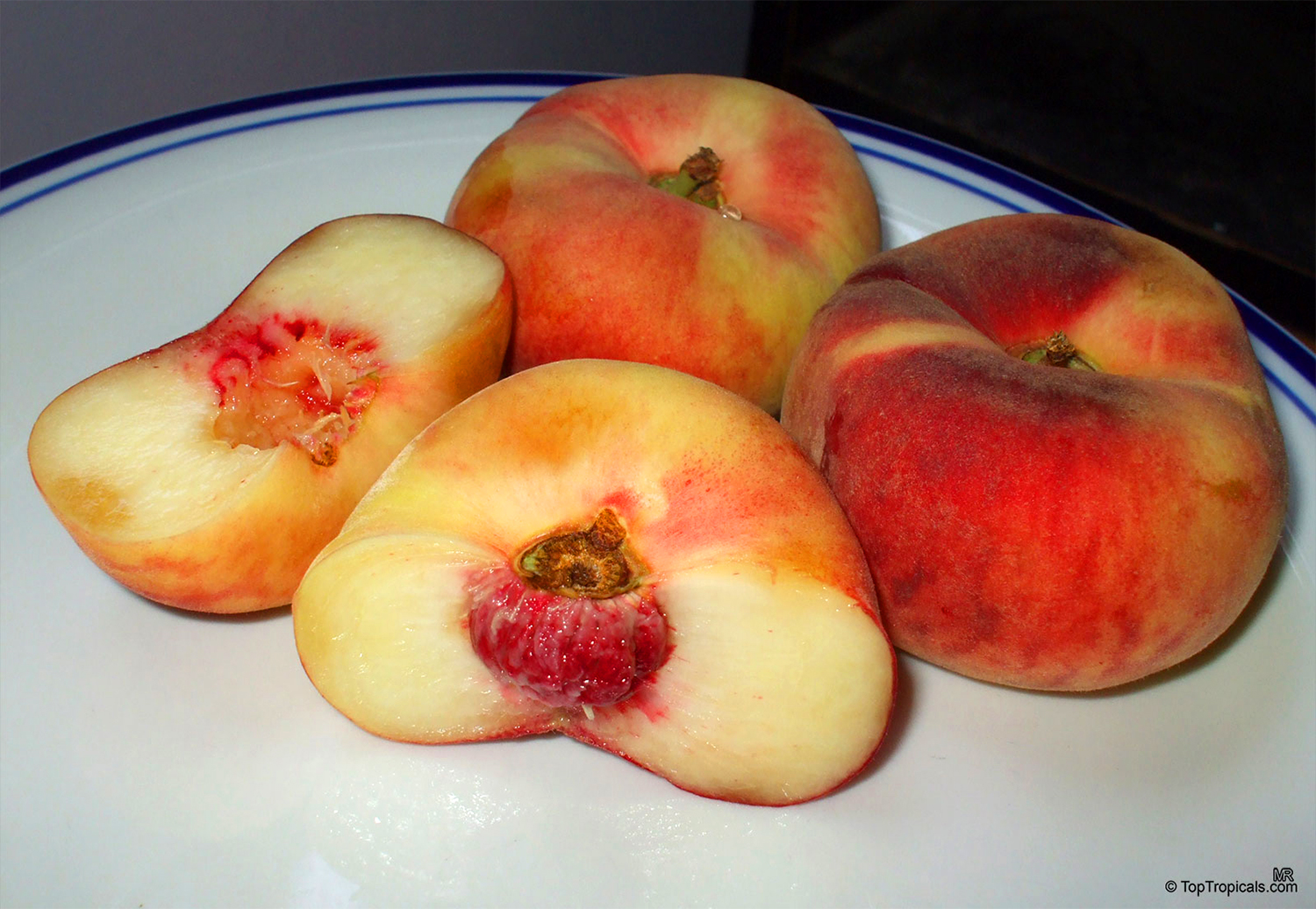
Several  ripe  flat  peaches,  also  known  as  donut  peaches  or  Saturn 
 peaches,  displayed  on  a  white  plate.  Two  peaches  are  cut  open,  showing  the 
 pale  white  flesh  and  small  central  pit  with  pink-red  coloring  around  the 
 seed 
 area.

Flat peaches - sometimes called DONUT peaches - are known for their sweet white flesh, low acidity, and fun squashed shape.

Date: 6 Feb 2026

💘Rooted love lasts longer than flowers

Smokey  the  tuxedo  cat  and  Sunshine  the  ginger  cat  sit  in  a  greenhouse 
 beside  a  Sweetheart  Hoya  with  heart-shaped  leaves,  a  tag  reading  rooted 
 love,  and  a  cup  of  coffee  with  donuts  on  a  wooden 
 table.
Sunshine: Valentine Day soon. We need flowers.
Smokey: Nope. Heart-shaped hoya. Flowers fade. Plants stay.
Sunshine: Alright. One for my Valentine. One for me, with coffee.

💖 Sweetheart Hoya: a Valentine gift that lasts

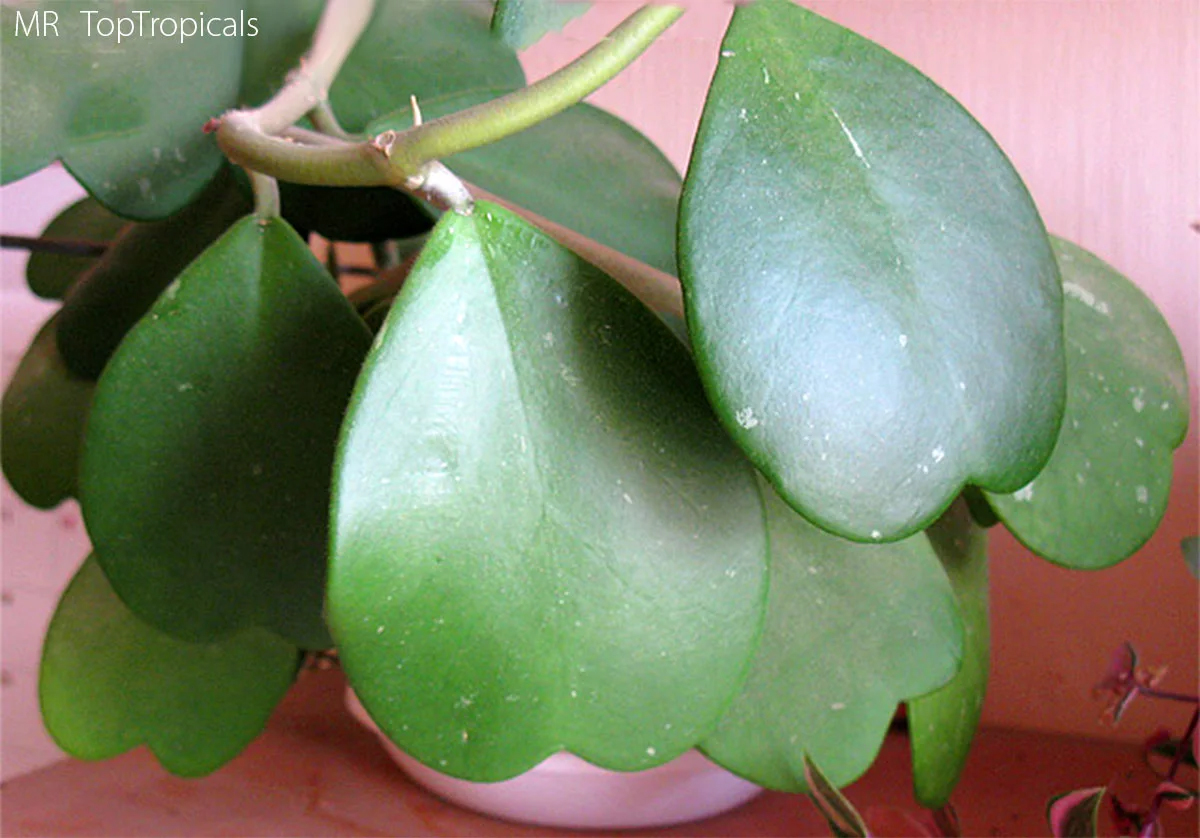
Sweetheart Hoya (Hoya kerrii) has thick, heart-shaped leaves and a compact form that fits easily on a windowsill, desk, or shelf. It does not need constant attention, bright sun, or frequent watering. In fact, it prefers a lighter touch.

Wax Hearts Plant Facts

Botanical name: Hoya kerrii
Also known as: Wax Hearts, Sweetheart Hoya, Valentine Hoya, Heart leaf
USDA Zone: 9 - 11
Highligths Groundcover and low-growing 2ft plantSemi-shadeShadeFull sunWatering: Moderate. Water when top soil feels dryOrnamental foliageWhite, off-white flowersPlant attracts butterflies, hummingbirdsFragrant plant
Get personalized tips for your region

This is a plant that works well indoors, grows slowly, and forgives missed waterings. It is comfortable in normal home conditions and does not require special tools or experience. That makes it a good gift not only for plant lovers, but also for people who have never kept a houseplant before.

Unlike flowers, it does not come with an expiration date. It becomes part of daily life and stays there quietly, doing its job. Over time, it feels less like a purchase and more like something chosen with intention.

For Valentines Day, Sweetheart Hoya is a simple, lasting way to give something real.

Sweetheart Hoya care: quick how-to

  • Light: Bright window light is ideal. Avoid harsh, hot direct sun.
  • Water: Let the potting mix dry between waterings. When you water, water thoroughly, then let it drain.
  • Feeding: Light feeding during active growth helps. A balanced fertilizer like Sunshine™ Robusta keeps growth steady and leaves healthy.
  • Pace: Slow-growing and patient. Do not overwater or overpot.

❓Sweetheart Hoya: quick FAQ

  • Is it good for beginners? Yes. It is forgiving and does not need constant attention.
  • Can it live indoors year-round? Yes, in bright indoor light and normal home conditions.
  • Does it need flowers to be special? No. The heart-shaped leaves are the main feature.
  • Learn more: What is the best Valentines Day gift that actually lasts?

♥️ Shop Sweetheart Hoya

Valentine  Sweetheart  Hoya  Plant