Garden Blog - Top Tropicals

Date: 27 Jan 2026

🌸 Adenium, Coffee, and Donuts

Smokey  and  Sunshine  with  a  blooming  adenium  desert  rose  on  a  worktable,  surrounded  by  potted  adeniums  in  the  background.
Smokey: Desert rose. One caudex. Multiple grafts. Different flowers.
Sunshine: So it is a team plant. Everyone blooms, nobody agrees.
Smokey: Yet it grows just fine.
Sunshine: That is the secret. Coffee and donuts.

Adenium Plant Facts

Botanical name: Adenium sp.
Also known as: Adenium, Desert Rose, Impala Lily
USDA Zone: 9 - 10
Highligths Plant with caudexLarge shrub 5-10 ft tallSmall tree 10-20 ftFull sunWater Requirement: Low. Allow soil to dry out between wateringsWatering: Moderate. Water when top soil feels dryYellow, orange flowersRed, crimson, vinous flowersUnusual colorBlue, lavender, purple flowersWhite, off-white flowersPink flowersToxic or Poisonous
Get personalized tips for your region

🌸Featured Adeniums

Recommended by our Horticulturist, Tatiana Anderson

Moung KusumaMoung  Kusuma  adenium  flower  with  deep  magenta  velvety  petals  and  dark  edging

Deep magenta flowers with a velvety look and a darker, almost black edge. A bold, elegant adenium that stands out immediately.

SunshineAdenium  Sunshine  flower  with  pink  and  white  petals  and  bright  color  contrast

Bright yellow and mauve swirls across layered petals create a warm, cheerful bloom that lives up to its name.

White RabbitAdenium  White  Rabbit  flower  with  white  petals  and  bright  pink  streaks.Clean white petals brushed with playful pink streaks. A reliable bloomer with soft ruffled flowers.
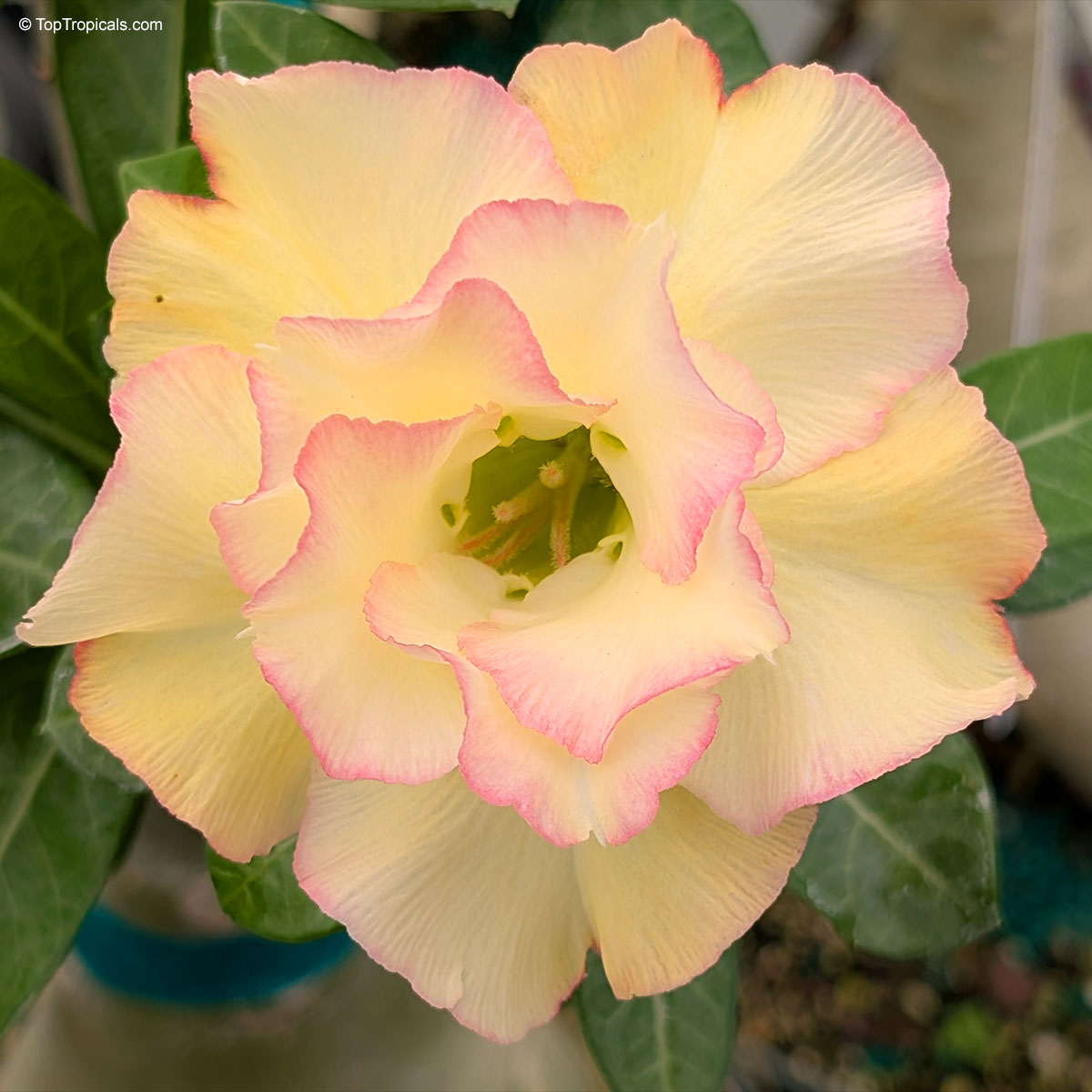
Thong SamseeAdenium  Thong  Samsee  flower  with  creamy  yellow  petals  and  soft  pink  edges

Known for its three-color effect, shifting from yellow to pink to nearly white on the same plant.

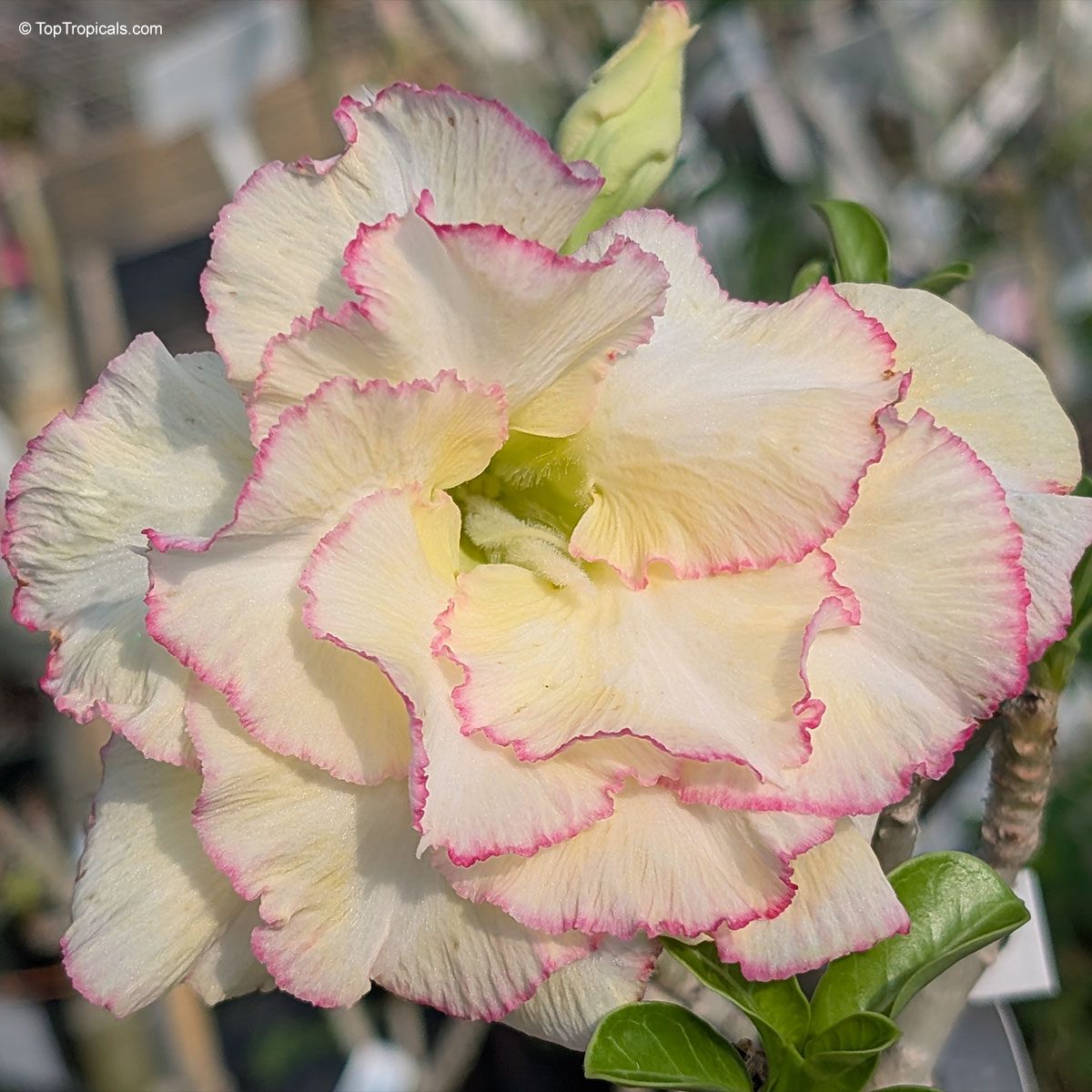
CandyAdenium  Candy  flower  with  creamy  white  petals  and  soft  pink  edges

Cheerful yellow petals dipped in cherry red with bold ruffled layers. Bright, playful, and impossible to miss.

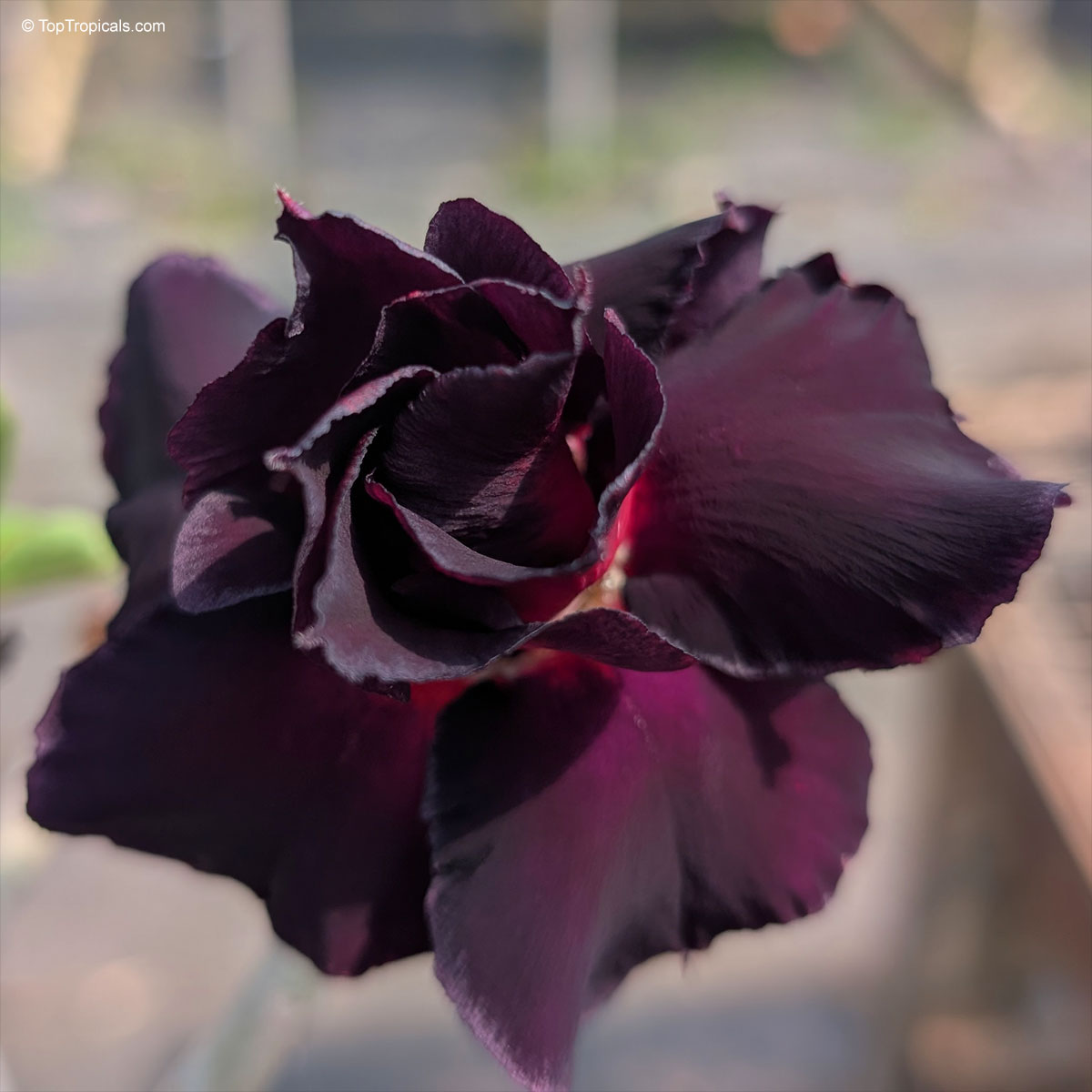
Black SheepAdenium  Black  Sheep  flower  with  nearly  black  petals  and  deep  red  highlights

Nearly black petals with a glowing red center. Dark, dramatic, and different.

Free Adenium (Desert Rose) Shipping
Plant now, bloom soon. Get select Adenium (Desert Rose) varieties shipped to you with FREE S&H.
Offer valid through 02/06/2026. Limited quantities. While supplies last.
Free shipping applies to qualifying Adenium items only. Excludes other items and prior orders.

✍️ Learn About Adeniums

🎥 Watch Adenium Videos

🛒 Shop Adeniums

Date: 16 May 2026

🔮 When the World Around Becomes Too Gray: Plant a Tree. Eat a Donut. Keep going.

When  the  world  feels  gray,  plant  another  tree.  Smokey  brings  the 
 jaboticaba.  Sunshine  brings  donuts  and 
 encouragement.
Sunshine: Smokey, what do we do when the world around becomes too gray?
Smokey: Plant a tree.
Sunshine: And if that does not help?
Smokey: Plant another one.
Sunshine: And eat a donut.
Smokey: Not strictly necessary, but statistically beneficial.

If you have been feeling a little worn down lately, you are not alone.

You already know about the headlines. We do not need to list them. You have probably seen them today before breakfast.

We are not here to pretend that is not happening. It is happening. And it is a lot. But here is the thing we keep coming back to, the thing that has been true for as long as people have had hands and a patch of ground: when the world feels out of control, you can still plant something.

Gardening is not an escape. It is an answer. When you put a tree in the ground, you are making a quiet statement. You are saying that you expect there to be a future. That you intend to be in it. That shade and fruit and flowers still matter, and you are going to make sure they exist in your corner of the world.

That is not naive. That is courageous in the most ordinary and underrated way.

One tree, planted this season, might give you fruit in a few years. It might give butterflies somewhere to stop. It might give a bird a place to nest. It will almost certainly give you something to look at on a hard day that reminds you the world still contains beauty, and that you put some of it there. And if one tree does not quite do it? Plant another one.

Dostoevsky said beauty will save the world. We think a mango fruiting in your backyard counts. So does a Magnolia opening on a quiet morning.

Do not skip the donut.

A donut is a small, simple, completely unnecessary thing. That is exactly the point. It is not productive. It does not solve anything. It is just good, and sometimes that is the whole reason. In a world that constantly demands you be useful and informed and concerned, eating a donut is a quiet act of being human. You are allowed to enjoy a small thing on a hard day. You do not have to earn it.

Rest a little. Then go put something in the ground. Anything that will grow and flower and remind you that beautiful things are still happening whether the headlines mention them or not.

We have the plants. You bring the donuts.

🛒 Plant a sweeter world: grow color and flavor

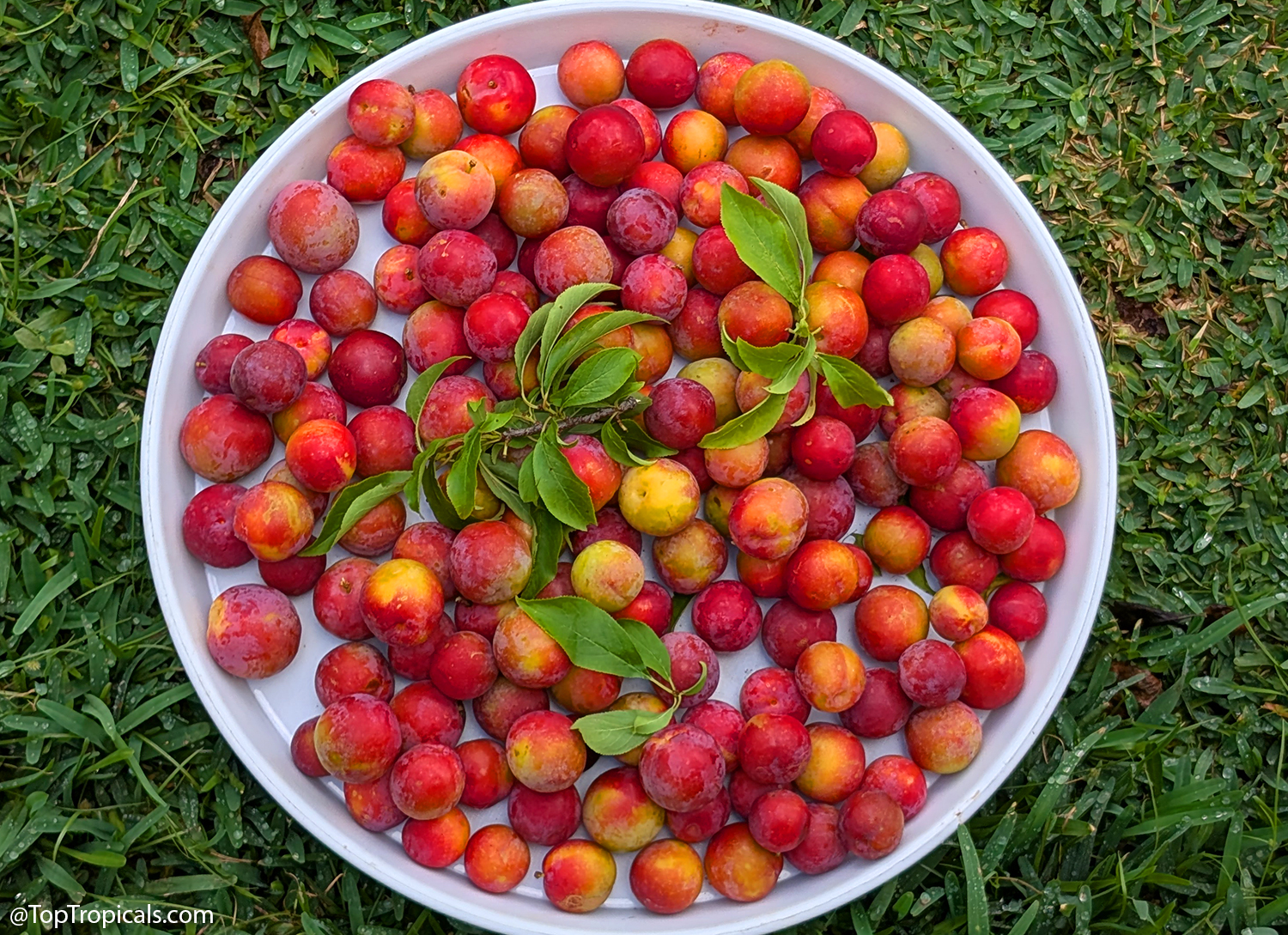
Tray  filled  with  freshly  harvested  tropical  plums  in  shades  of  red, 
 orange,  and  yellow  resting  on  green  grass,  with  a  few  leafy  branches  placed 
 on  top  of  the 
 fruit.

We just finished harvesting loquats and mulberries, and now another wave is coming in - low chill plums, peaches, and nectarines fresh from the garden. This is one of the most rewarding times of the year, when every season brings the fruit of your labor and all that work finally turns into something sweet.

📚 Learn more from our garden Blog

Date: 11 Oct 2019

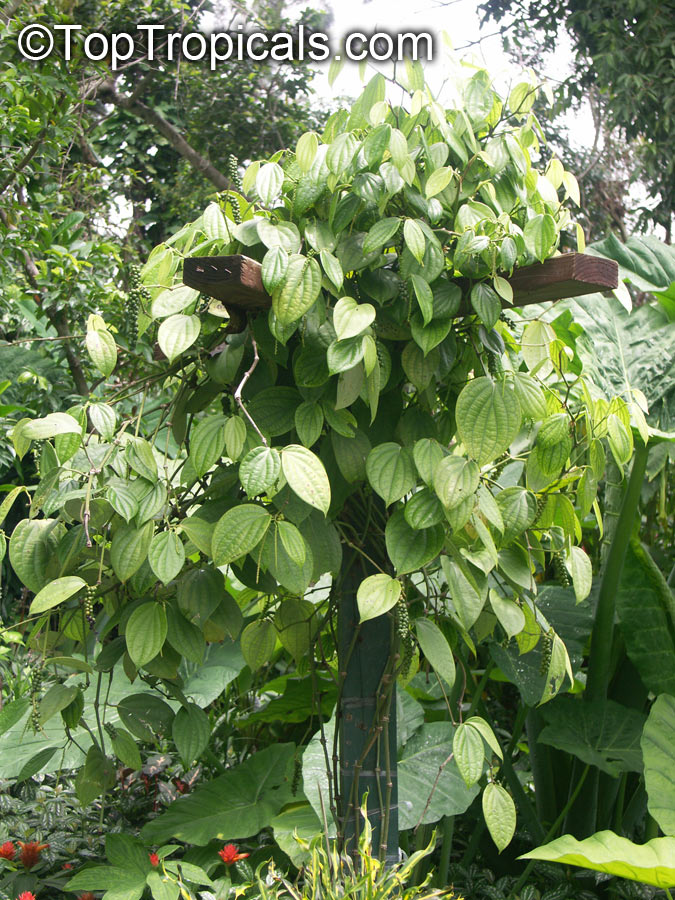
Fun of growing your own Pepper
By Onika Amell, tropical plant specialist

Q: Can you grow your own black pepper plants in the USA?

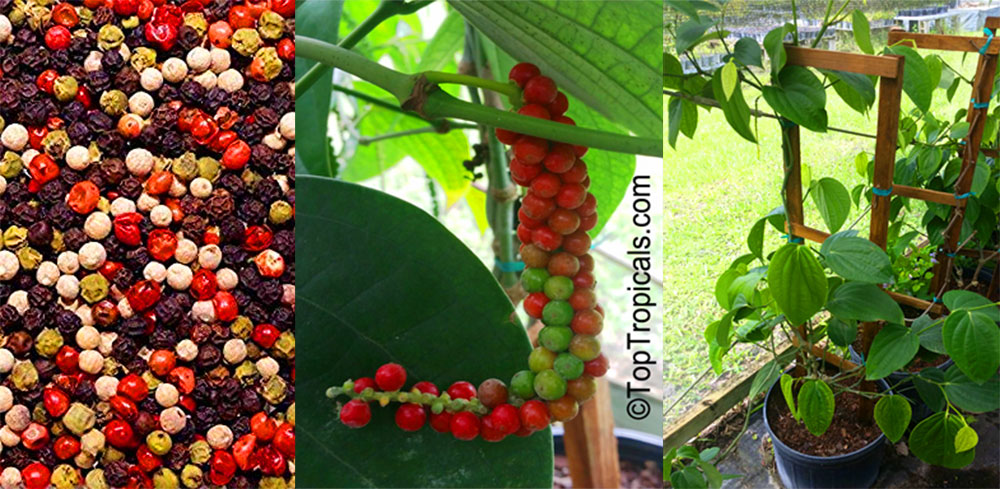
A: Who does not love the smell of freshly ground pepper, especially that lovely combination of white, green, black and red peppercorns, which are so much more interesting than just plain black corns. Yes, you can absolutely grow your own pepper! Peppercorns come from the plant Piper nigrum.

Growing Pepper Plant

Black pepper plants are actually vigorous vines, although they are pretty slow growing and can be kept in a pot as a compact plant. But they will need a strong support to climb over. Indoors, you can provide this support by installing a trellis in a large pot. Some gardeners prefer to grow them as a hanging plant instead. In warm climates, you can plant them directly outdoors in a protected location with partial shade. These plants need rich, moist, well-draining soil and warm, humid conditions. Peppers do not like temperatures below sixty degrees, although they can survive some cold spells. It is very important to bring these plants indoors or wrap them in a blanket if colder weather arrives.
If you live in colder parts of the country, you can certainly grow peppercorns in large pots. Grow them outdoors during the summer and move them indoors during the winter, or grow them year-round in your greenhouse. Houseplants will need bright light and consistent moisture. Spray the leaves regularly with a bottle of water to increase humidity. Do not allow room temperatures to fall below sixty degrees.
Besides the benefit of being able to grow your own gourmet pepper corns, the foliage, as well as the flowers on this plant, are beautiful in its own right. Off-white flowers appear from spring through summer, followed by slow fruit production. The berries will appear on spikes, with 50 to 60 berries per spike.

Fertilize this vine in the spring before new vigorous growth emerges. We recommend:
Tropical Greenhouse Plus - Plant Booster
Tropical Allure - Smart-Release Booster

You may be surprised to learn that black, white, green and red peppercorns are all the same seed on the same plant in the various stages of development and processing.

Black peppercorns are the most familiar and come from the corns that have reached their full size but are still green and not quite ripe. They are picked and allowed to dry in the sun. Enzymes in the berries cause the skin to turn black during the drying process. They are the strongest in flavor.

White peppercorns are the mature berries that ripen to a red color before being picked. After harvesting, they are soaked and rubbed free of the outer skin down to the smooth white underlayer, then dried and bleached by the sun. They are slightly milder than black pepper.

Green peppercorns are the unripe peppercorns picked at the same stage of ripeness as black peppercorns, but not allowed to dry. They can be pickled in vinegar or brine. They are the least pungent.

Red peppercorns are the mature, but unshelled version of the peppercorn. One can usually find them in some gourmet and health food stores. They can be quite expensive.

Ground pepper will only stay fresh for about three months, but peppercorns will last indefinitely. To make the most of your pepper harvest, store the peppercorns in an airtight container in a cool, dark location. Grind them immediately before use for the best flavor.
There is nothing like freshly ground black pepper simply combined with a good quality olive oil and a splash of balsamic vinegar. This makes a wonderful dipping sauce for fresh bread. Simple, yet elegant. All the better if the pepper was grown in your very own garden!

Date: 5 Jan 2021

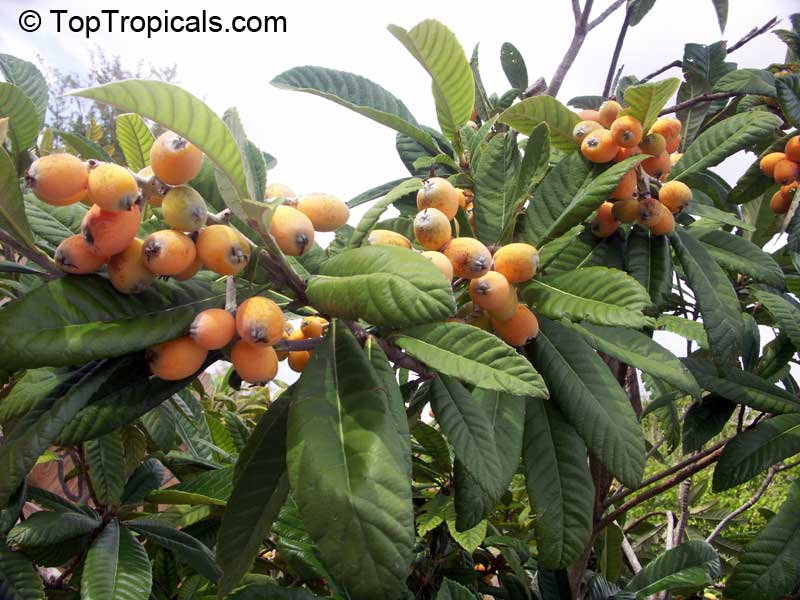
Growing Loquat in container

Q: I purchased a Sherry Loquat tree from you in April of 2020. It got off to a slow start initially, but now is five feet tall with healthy leaf growth! It is in a 15-gallon pot and was brought into the house by October 15th. I live in Zone 6 and kept the plant outside from end of May to October 15th. I have given the tree artificial lights in addition to slow release fertilizer. Can you please advise me on what steps I need to take to get the Sherry Loquat tree to fruit? E.g., lighting requirements, soil pH, soil type, etc.

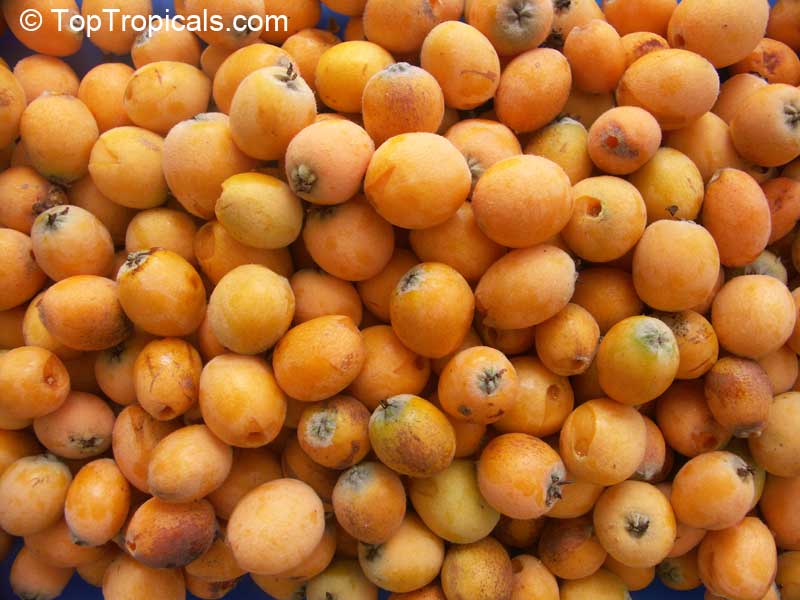
A: Loquat is normally winter flowering and spring fruiting tree, here in Florida it is usually heavily covered with fruit by April. With a proper care, you may see flowers throughout the winter and they may set some fruit for you. Considering that during this time you have to keep the plant indoors, here are some recommendations:

1. Soil. Well-drained, porous potting mix. Do not use any heavy garden soils. For our plants we use the following mix which is excellent for containers: Abundance

2. Light. The brighter the better. Sunroom would be great, or at least put the tree next to a large window. Extra lighting with grow lights is beneficial. Any type of light will work, you can even use a simple clip-on light, the brighter the better. 8-10 hours a day.

3. Water. Loquat is drought tolerant but for fruiting it will need regular watering; just don't keep soil soggy, let is slightly dry before waterings.

4. Fertilizer program. Use liquid fertilizer. We recommend Sunshine Boosters that are safe to use with every watering and year around - SUNSHINE C-Cibus - Crop Nutrition Booster.
We recommend to switch plants from traditional"slow-release"fertilizer to the liquid one because it makes a huge difference in plant growth and flower/fruit quality and quantity. Sunshine Boosters are scientifically balanced fertilizers that supply all necessary elements for daily plant needs. They are natural and eco-safe, great for any edibles.

5. Micro-elements. These are essential for potted plants, because in containers roots can't reach out to elements that are usually present in soil when trees grown in the ground.

Apply micro-element remedies that are very effective for improving fruit production, especially when flower or fruit drop occurs:
SUNSHINE Honey - promotes more efficient blossoming and pollination, makes flowers bigger and reduces bud drop.
SUNSHINE SuperFood - improves plant vigor and quality and size of flowers
These are all natural, eco-friendly supplements that work great for fruit trees and other edibles.

Read more about Loquat trees: The best grafted Loquat varieties.

Date: 8 Jun 2023

Repotting tropical plants

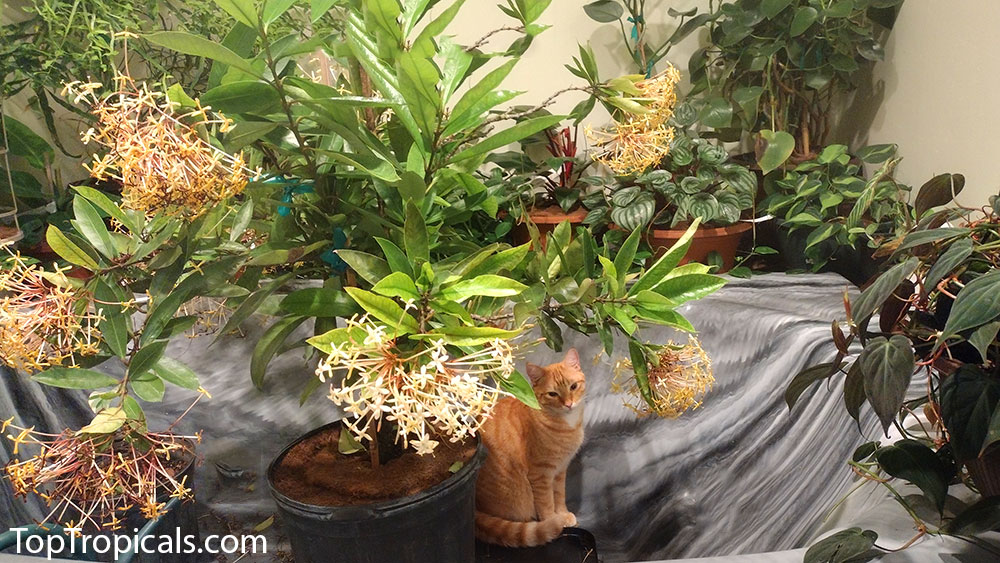
Orange  cat  with  indoor  plants

By Alex Butova, the Witch of Herbs and Cats

Q: When is the best time to repot tropical plants?

A: Repotting tropical plants is vital for their overall health and growth. The best time to repot them is during the Spring through early Summer, when they start active growth.

Start by selecting a well-draining soil mix that consists of equal parts potting soil, peat moss, and perlite. Gather the necessary supplies, including a slightly larger pot, the soil mix, and a good fertilizer

Carefully remove the plant from its current pot, trim any damaged branches, and place it in the new pot with fresh soil mix. Be sure to position the plant with the growth point slightly above the soil level. Water the plant thoroughly but avoid overwatering. After repotting, find an appropriate location with suitable lighting conditions for your plant. Monitor the moisture levels and water when the top inch of the soil feels dry.

Additionally, apply the appropriate Sunshine Boosters fertilizer according to the instructions on the packaging. Use Sunshine Boosters fertilizers for specific plant needs (Robusta for foliage, Megaflor for flowering, Ananas for pineapples, etc.). It is safe to apply Sunshine Boosters all year around. Keep a close eye on the plant for any signs of stress or issues and adjust your care routine as needed. Help the plant to cope with stress by spraying with solution of Sunshine Epi.

Enjoy the beauty of your thriving indoor tropical garden!

repotting  a  plant