Garden Blog - Top Tropicals

Date: 7 Oct 2019

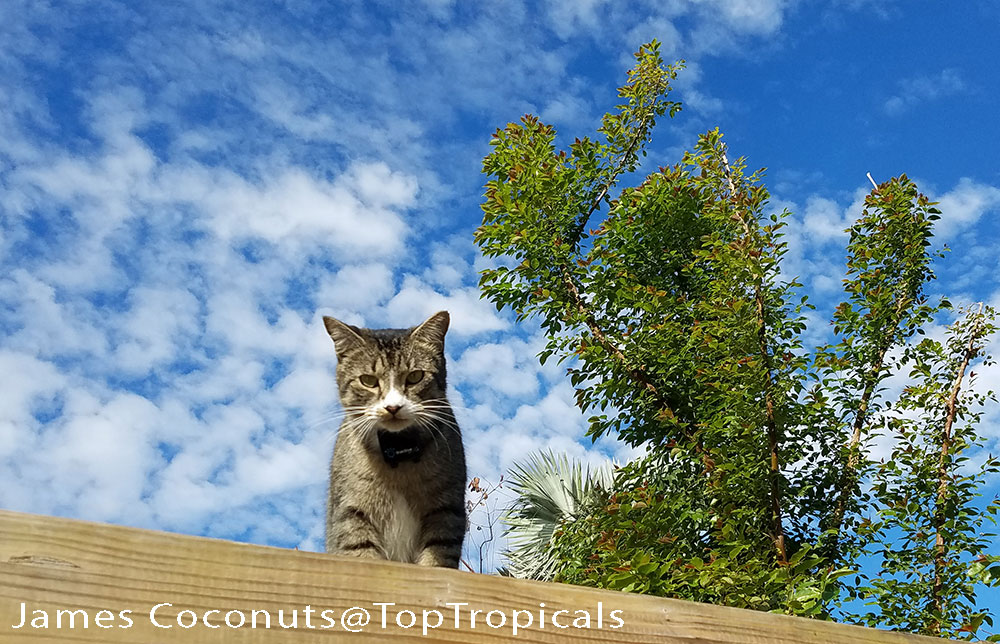
Meet PeopleCats of TopTropicals. Cat of the Day: James Coconuts
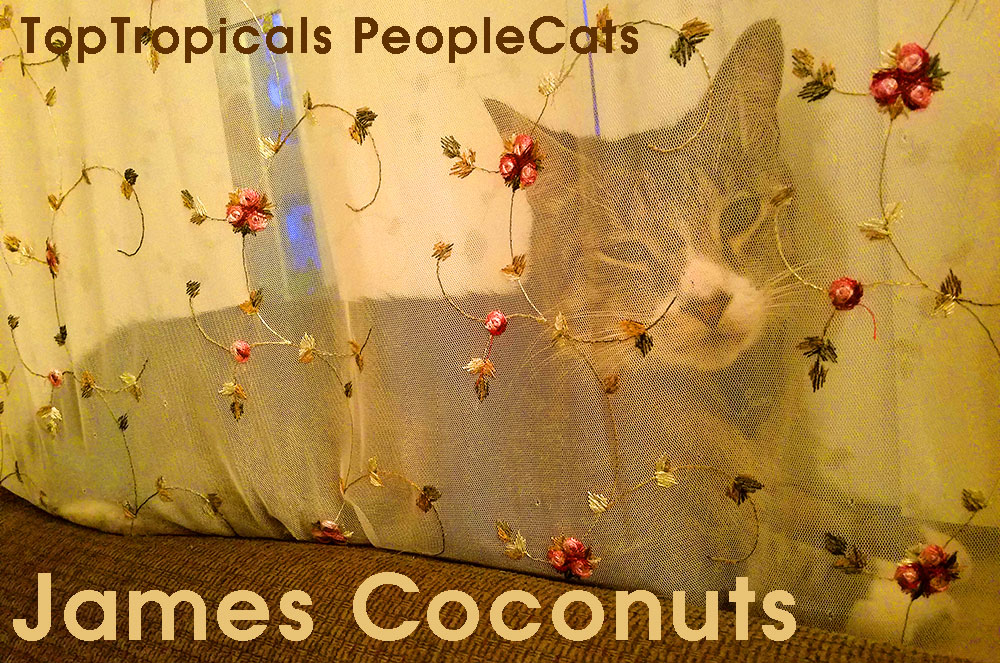
Winning a Lucky Ticket for a Croissant

Many of you have already met James Coconuts who has been in charge of our Customer Service Team for a long time. After many years of hard work, Coconuts is now finally retired in a comfortable home but still does some consulting for Anna Banana and other office team members. So you will hear from him again in our Blog, helping with planting, and organizing holiday events.
Originally, Coconuts came from the Middle-of-Nowhere (what a surprise). Tenants from our old property in Punta Gorda left him behind when they moved out... So Coconuts lived in woods for a month and, considering being deaf (but not dumb!) from birth, living in the wild was quite a challenge for him. When he saw our car, he jumped right into the open trunk and never regretted that decision. We left us no choice but to take him into our big CatFamily. He had starved so much that he ate a whole croissant... as we had nothing else to offer at the moment... Since then, Coconuts went through lots of troubles including a minor stroke, being run over by a truck, lost in woods again for a month, and surviving a wild animal fight followed by a life-threatening abscess. Finally, he decided to stay away from trouble and happily landed on his couch with Margaritas and Nachos, getting chubby, singing his favorite opera songs, and writing poetry.

Date: 9 Sep 2019

Time to clean your yard!

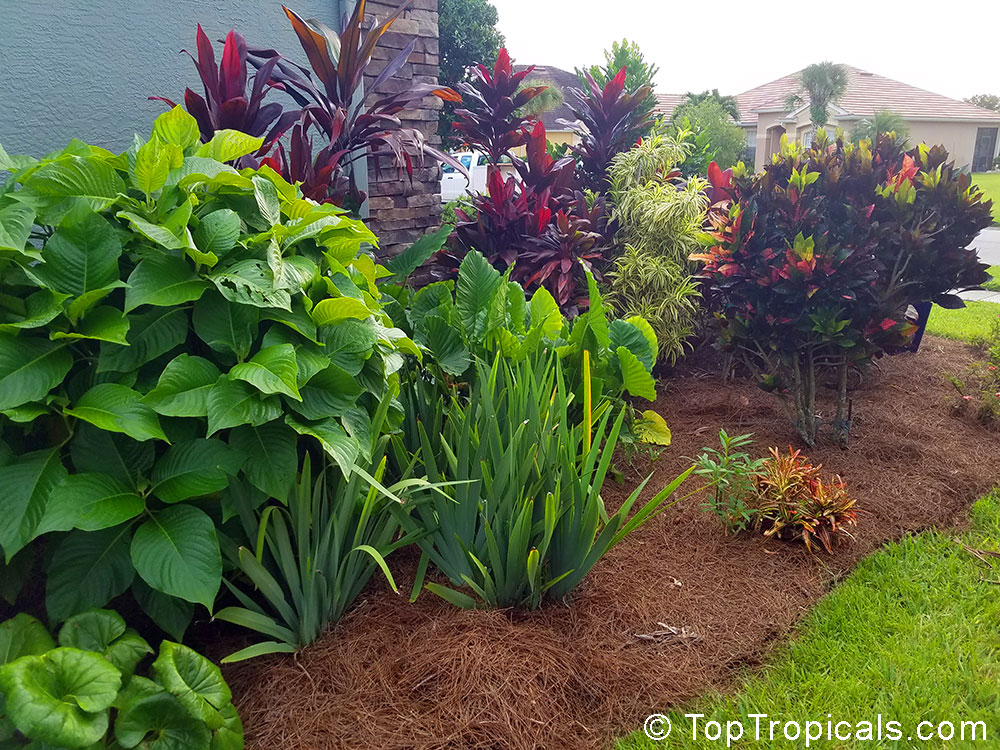
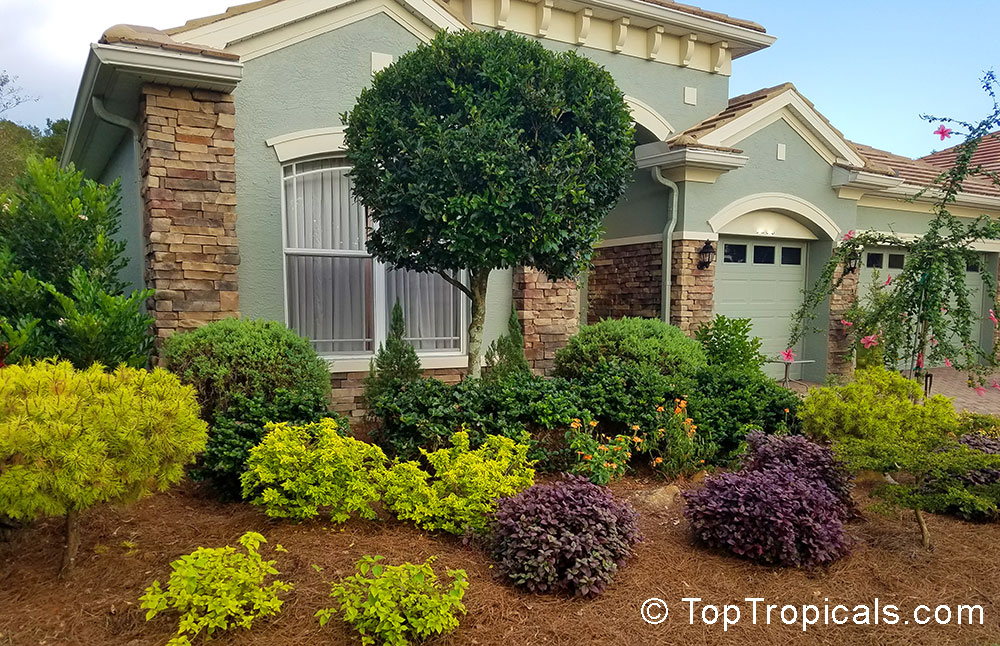
In the South. It's getting cooler in subtropical areas, and garden work becomes even more enjoyable. Your garden now is in the most perfect shape after summer vigorous growth. It is the best time now to run the last trim before winter, as well as last fertilizer application. Clean up your yard without sweating off, add mulch to help plants to survive through possible winter chills. Don't forget to start reducing watering! Remember once temperatures drop below 65F, tropical plants slow down or stop growing and go into winter dormancy sleep.

Up North. When temperatures drop below 45F, start bringing sensitive plants indoors or into protected areas. Prepare/cover greenhouse, check availability of covers (sheets, plastic) and condition of heaters. Plants indoors will experience environment change, may drop leaves, and need different care than out in the sun. Reduce watering, check for insects once a week, and stop fertilizing until spring. Remember to pick the brightest spots for overwintering your tropical plants!

Enjoy cooler weather, fresh air, and thank yourself for a wonderful work you have done in your yard!

Date: 29 Jul 2019

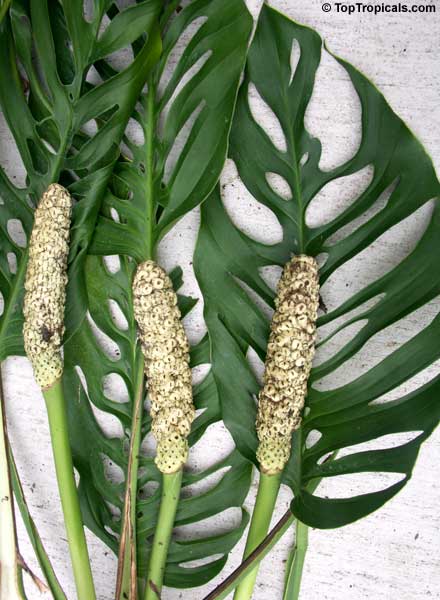
Monster hybrids of Monstera: juvenile and mature

by Mark Hooten, the Garden Doc

Q: I am a rare plant collector and obtained a very interesing cultivar of Monstera from you that says it's a hybrid Monstera adansonii x obliqua. Is there a named hybrid? The leaves on this specimen that came in 1 gal pot are much larger than the plant I have grown in a 3 gal pot for a few years, under name of Monstera friedrichsthalii.

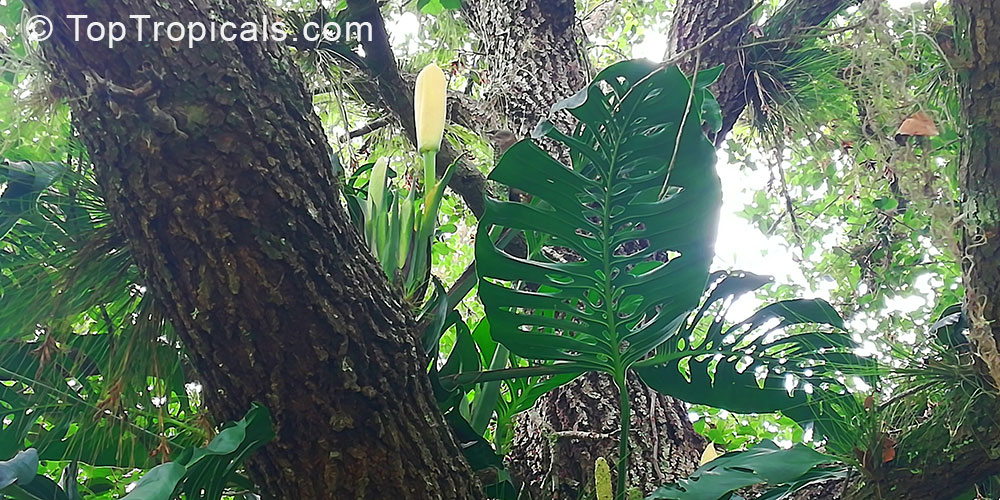
A: Due to their diversity, it is hard to find verified hybrids in the genus Monstera. M. friedrichsthalii is apparently an old Florida name for what is actually technically M. adansonii. The "primitive" juvenile growth is very different from the much larger more robust form that only occurs when it is allowed time to climb a tree, in which case the foliage becomes very different and much larger with many many more fenestrations (holes) of various sizes. If you visit our Garden Center, you can see the mature form climbing the oak tree in our Shade Garden in front of our office - we use this mature plant for propagation. If you take a cutting and don't let it attach to a bark/trunk and climb upwards, it will quickly revert to the wimpy juvenile form. Seems that even climbing a pole indoors, it never actually develops into the truly mature more complex adult stage. Some juvenile forms growing on a tree if given too much shade, do not develop into the larger mature form. Move it in more light and allow it to climb, and it will look very different, but still is the same plant under different conditions.

Date: 21 Jun 2019

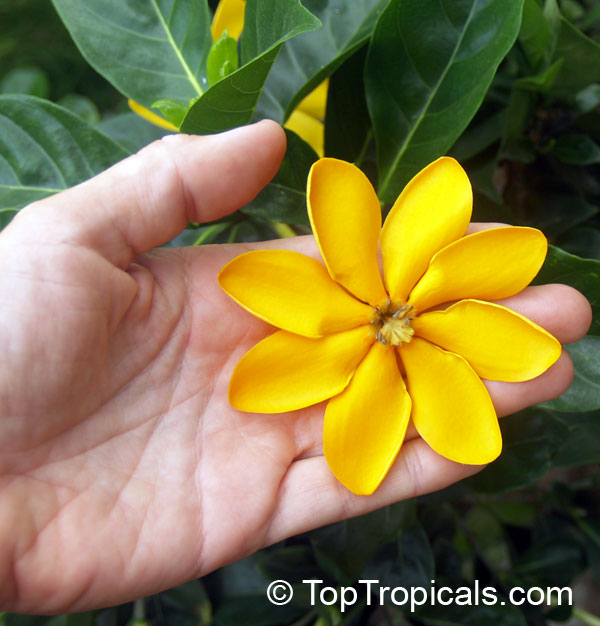
The Flower of Gold

By Onika Amell, tropical plant specialist

Q: I am concentrating on adding more fragrance to my garden. I've had great success growing gardenias and I have many different varieties, but their flowers are all white, and I would like to add some colors to my garden too. Are there any gardenias available in different colors? I live in Waipio Acres, Hawaii.

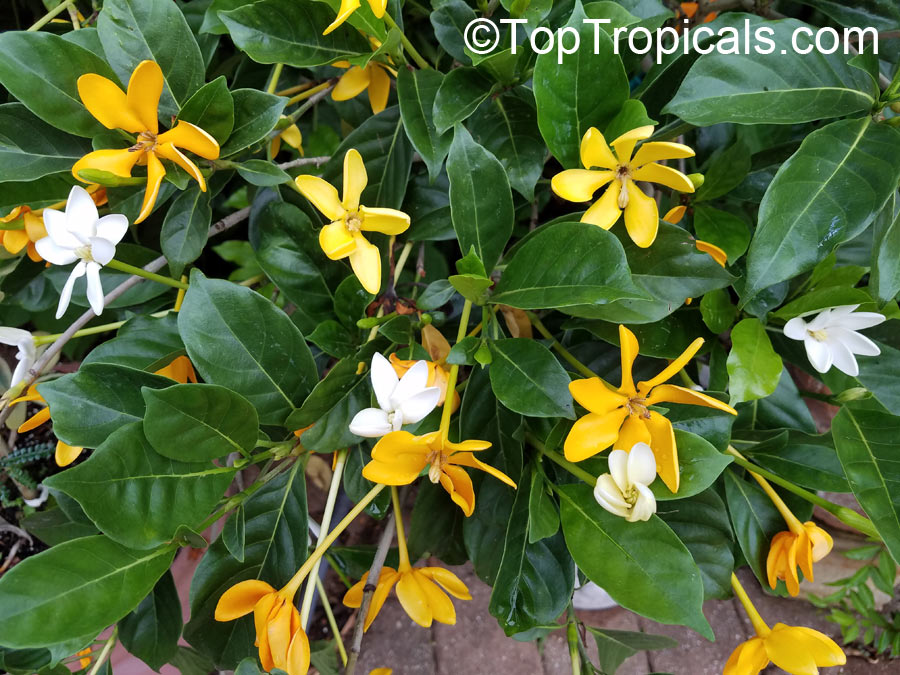
A: Meet the very rare and highly fragrant, tropical Gardenia tubifera Kula or Golden gardenia. Kula flowers change color as they mature, which is a unique feature! Kula flowers start out as cream, then change to yellow and finally to a beautiful gold. In addition to the spectacular flowers, this gardenia also has beautiful, leathery, deep green foliage.
This is a slow-growing and compact plant. Like all the other members in the Gardenia family, the Golden gardenia will do best in an acidic, well-drained, and fertile soil. It will appreciate a good deal of direct sunlight but will be very happy if provided with midday and afternoon shade. As with with gardenias, the more sunlight the more flowers.
It will eventually grow into a rounded shrub if left unpruned, but also can be trained into a small tree, maintainable to a height of under 7-8 feet. Blooms will appear from spring onward. Prune after flowering, this will encourage more flowers in a few months.
Gardeners living in colder areas, do not fret. Gardenias make perfect container plants and can be grown indoors in colder climates. Just be sure to provide high light when bringing them indoors.
The fragrance and changing colors of a Gardenia Kula is unforgettable. They are most fragrant near sunset and during early evening hours. Plant them near walks and patios where their lovely fragrance can be enjoyed.
This rare tropical Gardenia is sure to be a conversation piece in any garden. Great collector's plant!

Recommended fertilizers:
Pink N Good Daily Plant Food - Flower Booster
Tropical Allure - Smart-Release Booster

Limited time special offer:
Instant $5 OFF Golden Gardenia!

Date: 5 May 2019

The most desired iconic Chanel flower...

TopTropicals.com

By Onika Amell, tropical flower specialist

Q: I live in Beverly Hills, Los Angeles. I'm looking for something fragrant to grow on my porch. I don't have a lot of space and am interested to find something unusual that won't grow too large. Any suggestions? I've heard about Chanel #5 tree and I wonder I can keep it in a pot?

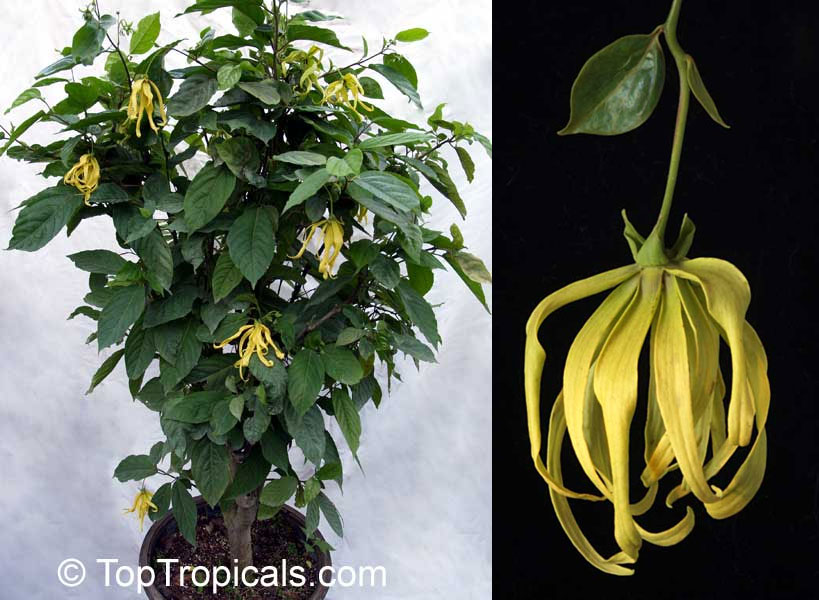
A: The Ylang-Ylang tree, Cananga odorata, emits a fragrance so soft and beautiful it became an essential ingredient of Coco Chanel's iconic and much-loved perfume Chanel No 5. Trouble is, it will grow into a giant. How do you get this kind of magic onto your lanai or porch? Opt for its smaller relative: Dwarf Ylang Ylang, Cananga fruticosa (pronounced ee-lang ee-lang, meaning: flowers of flowers).

The fragrance is a little less intense than its larger cousin, but still wonderful to have around. Let the fragrance drift slowly through the air into your home at night. The scent is strongest from dusk to dawn and it will need warm and humid conditions for a fuller aroma.
Dwarf Ylang-Ylang is ideal for folks with limited space as it can be grown in a container or as a house plant. It's a very unusual and interesting plant to add to your porch, lanai or garden. It's pretty easy to grow and disease resistant too. It will stay compact and in nice tree-like shape. Dwarf Ylang Ylang starts blooming quite young and will continue to bloom year-round with profuse blooming during the spring and summer months.
The tree prefers a high-humidity environment, evenly moist soil, warm temperatures and will grow best in plant hardiness zones 10-11 but can take short periods of cold.
Read more about Chanel No5 Flower...

Dwarf Ylang Ylang is certainly one of the most desired and sought after rare, fragrant plants. Get yours today!