Garden Blog - Top Tropicals

Date: 7 Jun 2025

This is what we plant for a compact colorful hedge solution

Thunbergia erecta - Kings Mantle

💜 This is what we plant for a compact colorful hedge solution

  • 💜 Thunbergia erecta - Kings Mantle - is currently in full bloom in our garden, showcasing its vibrant flowers that last almost year-round.
  • 💜 One of our favorite flowering shrubs, it's compact, easy-going, and perfect for adding a splash of color.
  • 💜 Available in blue, white, and even variegated lavender flowers, King's Mantle thrives in both sun and filtered light, with its dense, manageable habit making it ideal for low-growing hedges or garden specimens.
  • 💜 It attracts butterflies and hummingbirds, and with simple pruning, it stays under 4 feet while producing a profusion of blooms.
  • 💜 Hardy to 30°F and suitable for USDA Zones 9-11, it's also great for container gardening in colder regions.


🛒 Shop Thunbergias - colorful flowers for sun and shade

📚 Learn more:


#Container_Garden #Shade_Garden #Hedges_with_benefits #Butterfly_Plants
🟢 Join 👉 TopTropicals
Date: 8 Jun 2025

Charming Elephant Ears: Alocasia vs Colocasia

Alocasia and Colocasia

🐘 Charming Elephant Ears: Alocasia vs. Colocasia - which one is better?


Alocasias and Colocasias, or Elephant Ears, are both remarkable and popular plants that can bring a tropical exotic touch to your garden, pond, or pool area. Why are they so popular - and which one should you choose?
  • 🍀 Why gardeners love Elephant Ears


  • ✔️ Tropical appeal: Bold, architectural foliage creates a lush, exotic atmosphere.
  • ✔️ Striking leaves: Huge heart- or arrow-shaped leaves in green, purple, black, or variegated tones.
  • ✔️ Versatile placement: Ideal for containers, garden beds, water features, or borders.
  • ✔️ Low maintenance: Thrive in part shade with moist soil and occasional fertilizer.
  • ✔️ Big impact: Some varieties reach over 6 ft tall, adding strong vertical structure.


🍀 Alocasia vs. Colocasia - what's the difference?

  • 🟢Leaf shape: Alocasia = upright, arrow-shaped; Colocasia = drooping, heart-shaped.
  • 🟢Leaf texture: Alocasia = glossy; Colocasia = more matte.
  • 🟢Stem color: Alocasia = green; Colocasia = often purplish.
  • 🟢Light and soil: Alocasia prefers bright, indirect light and good drainage; Colocasia loves shade and wet soil.
  • 🟢Cold tolerance: Colocasia is generally more cold-hardy and water-tolerant.


📚 Learn more:


🛒 Go big with giant leaves!

#Shade_Garden #Container_Garden

🟢 Join 👉 TopTropicals

Date: 5 Aug 2025

Blue lips smell like violets - Mazabuka, Sclerochiton harveyanus

Sclerochiton harveyanus - Mazabuka, Blue Lips

👄 Blue lips smell like violets
  • 💙 Sclerochiton harveyanus - Mazabuka, or Blue Lips blooms with quirky blue-to-purple flowers that really do look like lips. And in the tropical plant world, blue flowers are rare. And they are lightly violet-lavender-fragrant!
  • 💙 Even better? It's a total shade lover. No need for blazing sun - this beauty is happy to bloom in the cool, leafy spots of your garden.
  • 💙 Loved by bees and birds, and just the right mix of weird and wonderful.


🛒 Add Blue Lips to your shade garden

📚 Learn more:


#Perfume_Plants #Shade_Garden #Butterfly_Plants
🟢 Join 👉 TopTropicals

Date: 7 Aug 2025

What is the best purple flowering bush? Glory bush!

Tibouchina multiflora (grandifolia) - Glory bush, Quaresmeira

💜 What is the best purple flowering bush? Glory bush!

  • 🟣 Why everyone in Florida wants this fuzzy-leaf Tibouchina? Tibouchina multiflora (grandifolia), Glory bush, Quaresmeira
  • is one of those plants that stops people in their tracks.
  • 🟣 The leaves are huge, soft, and fuzzy - up to 10 inches wide, sometimes 12 in shade. They're as fun to touch as they are to look at!
  • 🟣 And when it blooms? You get bold spikes of purple flowers from August through winter, turning your garden into a purple paradise.
  • 🟣 But here's the twist: the older leaves can surprise you by turning shades of orange and red - a rare bonus of fall color in the tropics.
  • 🟣 It thrives in sun or shade, grows fast, and handles Florida’s winters without a fuss.

This isn’t just a flowering shrub. It’s a statement.

🛒
Make your garden pop with purple: explore Tibouchina plants

📚 Learn more:


Why this Tibouchina is so popular

#Hedges_with_benefits
🟢 Join 👉 TopTropicals

Date: 25 Jul 2018

Looking for the rarest plant? This is the one!

TopTropicals

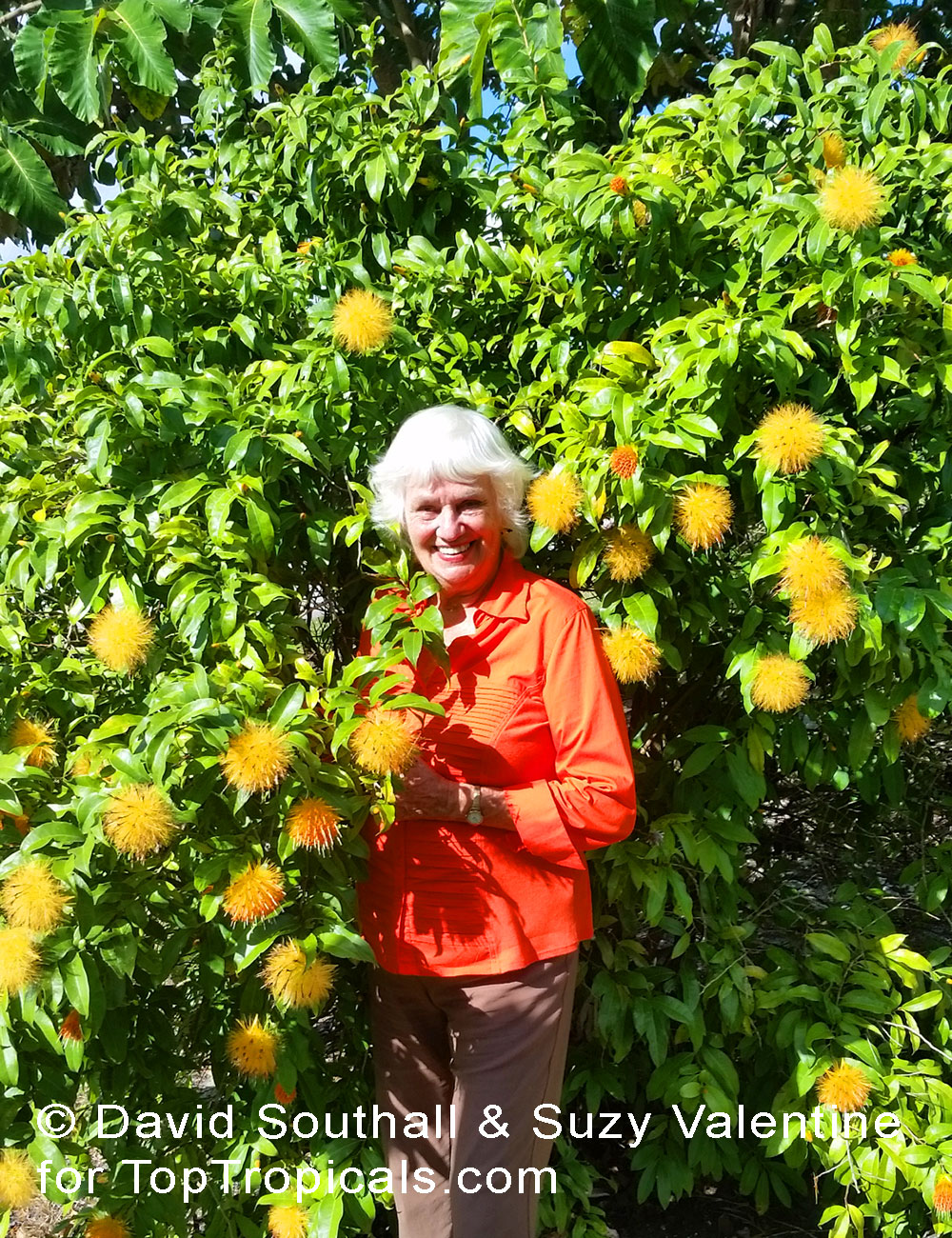
Stifftia chrysantha - Pompom, Rabo-de-Cutia

Looking for the rarest plant? This is the one!
Stifftia chrysantha is an exotic, rare flowering small tree with spectacular flowers, endemic to the vast tropical savanna ecoregion of Brazil called Cerrado. It grows into a bushy, attractive tree between 8 and 15 ft tall and starts flowering within 1.5 - 2.5 years from seed. It is a very rewarding plant that blooms 9 months out of the year, starting in Winter with great intensity during July-September, with each flower staying on the plant for several weeks. Seeds ripen from September through November.
The tree belongs to Aster family (Compositae) and has nothing to do with Powderpuffs which are from Bean (Fabaceae) family. The flower has 30 to 40 green, imbricated scales with short hairs, and actinomorphic corollas are orange below and darker above. After flowering, the inflorescence blows apart, which would scatter seeds. The dried center remaining is very attractive, like a small dried flower, and lasts for many months.
Stifftia can be grown in full sun to partial shade and is relatively cold tolerant, can take short cold spells.
The plant doesn't like wet feet and heavy/soggy soils; requires very well drained, acidic soil. We strongly recommend to use our professional soilless mix. Let soil slightly dry between waterings. It can be grown in full sun to partial shade and is relatively cold tolerant, can take short cold spells. If grown in a pot, try to keep the container shaded because roots don't like to be overheated. The plant needs monthly applications of slow release fertilizer as well as extra iron - use micro-nutrients to keep leaves green and healthy.
See more pictures of this beauty.

Check out this plant...