Garden Blog - Top Tropicals

Date: 8 Aug 2019

How to grow Parijat indoors in winter
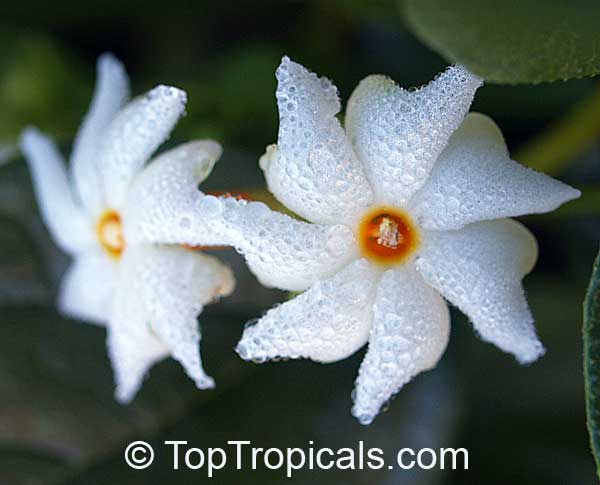
Q: I purchased Parijat plant last year spring. It had good growth in Summer, after that I kept the plant inside the house in winter. A couple of weeks it was ok, after that the plant lost leaves. What is a better idea for growing Parijat plant indoors in Winter?

A: Nyctanthes arbor-tristis, Parijat - is a semi-deciduous plant, which means, it may lose its leaves during unfavorable conditions such as drought, cold, low light and/or humidity. In your case, the plant dropped leaves because of the stress of moving indoors that includes reducing light and humidity levels. When a tropical plant loses leaves during winter, this means it goes into a dormant stage. If this happens, you need to reduce watering and keep the plant on a dry side, water in only when the top level of the soil feels dry to touch. Do not fertilize.
Try to place the plant in a well-lit spot such as a windowsill. If the windowsill and the window glass feel too cold for touch during wintertime, you may place a sheet of a Styrofoam underneath the pot, and a sheet of a bubble-wrap between the plant and the window glass, to create an extra barrier from cold. The plant may re-leaf during wintertime; if not, it may wait until spring, be patient.
Bring it back into outdoor light when minimum temperatures rise above 65F and resume fertilizing.

Recommended fertilizers for fragrant plants:

Pink N Good Daily Plant Food - Flower Booster
Plumeria Top Dress - Smart-Release Booster
SUNSHINE SuperFood - microelement supplement

Date: 8 Feb 2026

How to grow Chinese Hat Flower

Holmskioldia sanguinea - Chinese Hat Flower

🎩 How to grow Chinese Hat Flower - when winter colors most needed

  • The Holmskioldia sanguinea, better known as the Chinese Hat Flower, gets its name honestly. Each bloom looks like a tiny hat or parasol - a little tube backed by a flat, round disc. Once you notice it, you cannot unsee it!
  • What really makes this plant special is when it blooms. While most gardens slow down, Chinese Hat Flower kicks into gear from winter through early spring. The branches fill with flowers first, and the leaves follow later. It is one of those plants that quietly steals the show when everything else is taking a break.
  • More than one color


    Most people know the classic red form, but there are several color varieties worth mentioning:

🔴 Red - the most common and bold
🟡 Yellow - Holmskioldia citrina, bright and cheerful, harder to find
🟠 Bronze / orange-bronze - warm tones that glow in winter light
Having different colors makes it easy to mix them or use just one as a winter focal point.
  • How it grows and where it works best


    Chinese Hat Flower is a fast-growing, scrambling shrub. It is not stiff or formal. Think loose, graceful branches that like support. It does great when trained on:

· Trellises
  • · Fences
  • · Arbors
  • · Large containers with a support
  • · You can also let it grow as a free-form shrub and lightly prune to keep it tidy.


Care, the practical version

  • · Light: Full sun to light shade
  • · Water: Regular watering, especially while establishing
  • · Soil: Well-drained, not picky
  • · Pruning: After flowering to shape and encourage new growth
Once established, it is easygoing and forgiving.

Bonus points

  • · Blooms when the garden needs color most
  • · Attracts butterflies and hummingbirds
  • · Works as a flowering screen or accent plant
  • · Looks tropical without being high-maintenance

If you like plants that earn their space and do something interesting in winter, Chinese Hat Flower is one to keep in your garden.

🛒 Explore varieties of winter-blooming Chinese Hats

📚 Learn more:

Plant Facts

Holmskioldia sanguinea
Chinese hat, Cup and Saucer, Parasol Flower, Mandarins hat
USDA Zone: 9-11
Large shrub 5-10 ft tallVine or creeper plantSemi-shadeFull sunKeep soil moistRed, crimson, vinous flowersPlant attracts butterflies, hummingbirdsSubtropical plant. Mature plant cold hardy at least to 30s F for a short timeSeaside, salt tolerant plant

#Butterfly_Plants #How_to #Hedges_with_benefits

🟢 Join 👉 TopTropicals

Date: 14 Sep 2023

Time to plant some Winter Bloomers!

Orange  Cat  at  the  edge

Winter is upon us, but for tropical gardeners, it's the perfect time to enjoy. As the days grow shorter and the heat of summer subsides, Fall planting brings its own advantages. It's not so hot now, making it the ideal moment to dive into the enchanting realm of winter flowering plants. Don't miss out on the opportunity to add some tropical gems to your plant collection and keep the spirit of summer alive all winter long.

Plant them now to enjoy winter flowers!

Orange  Cat  at  the  edge

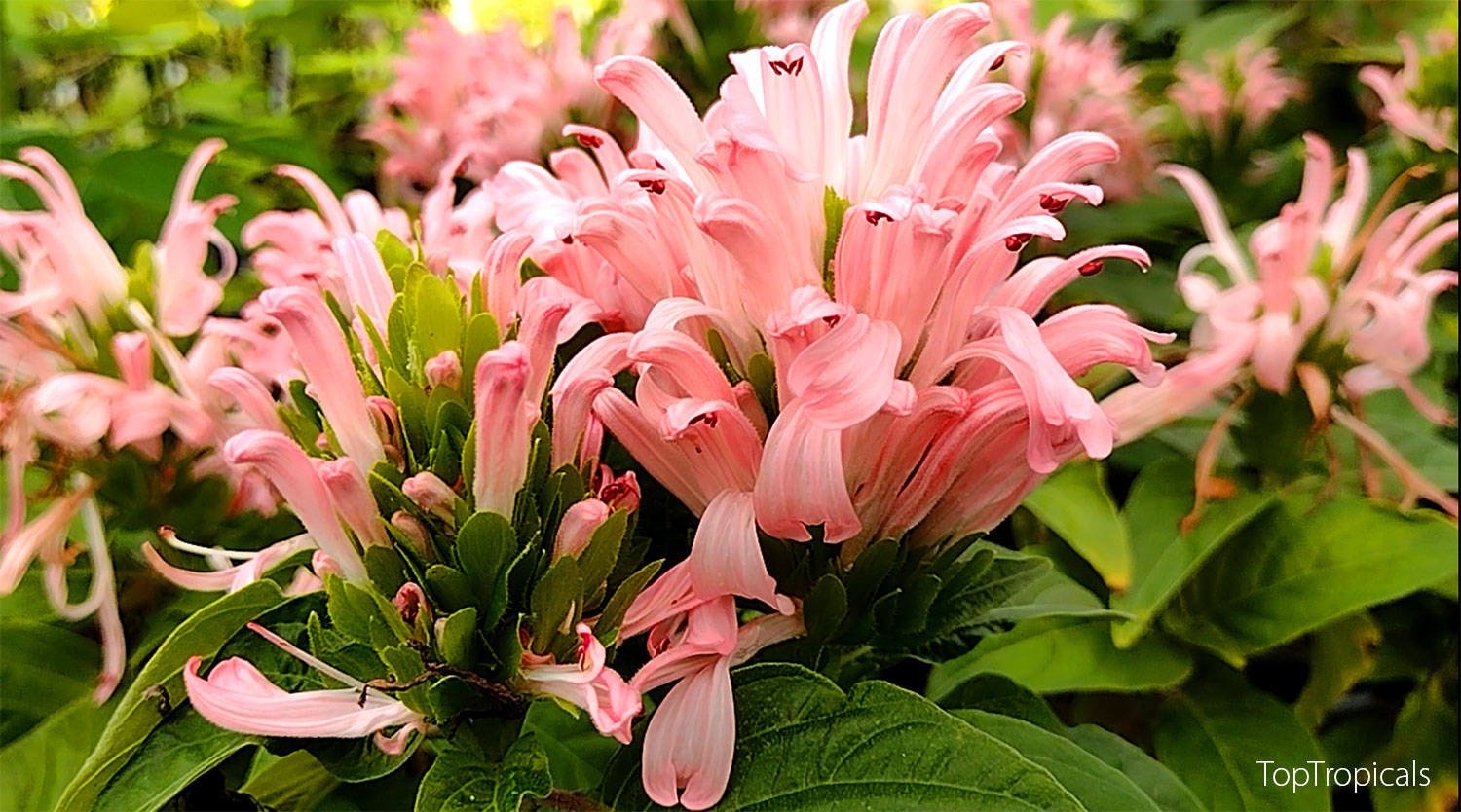
In the photo: in full bloom now - Justicia carnea - Pink Brazilian Plume, Jacobinia. Spectacular pink flowers, butterfly and hummingbird attractor. The plant is relatively cold hardy to light freeze and grows back from roots even if leaves are damaged.

Date: 10 Mar 2024

Growing Adeniums: A Beginners Guide

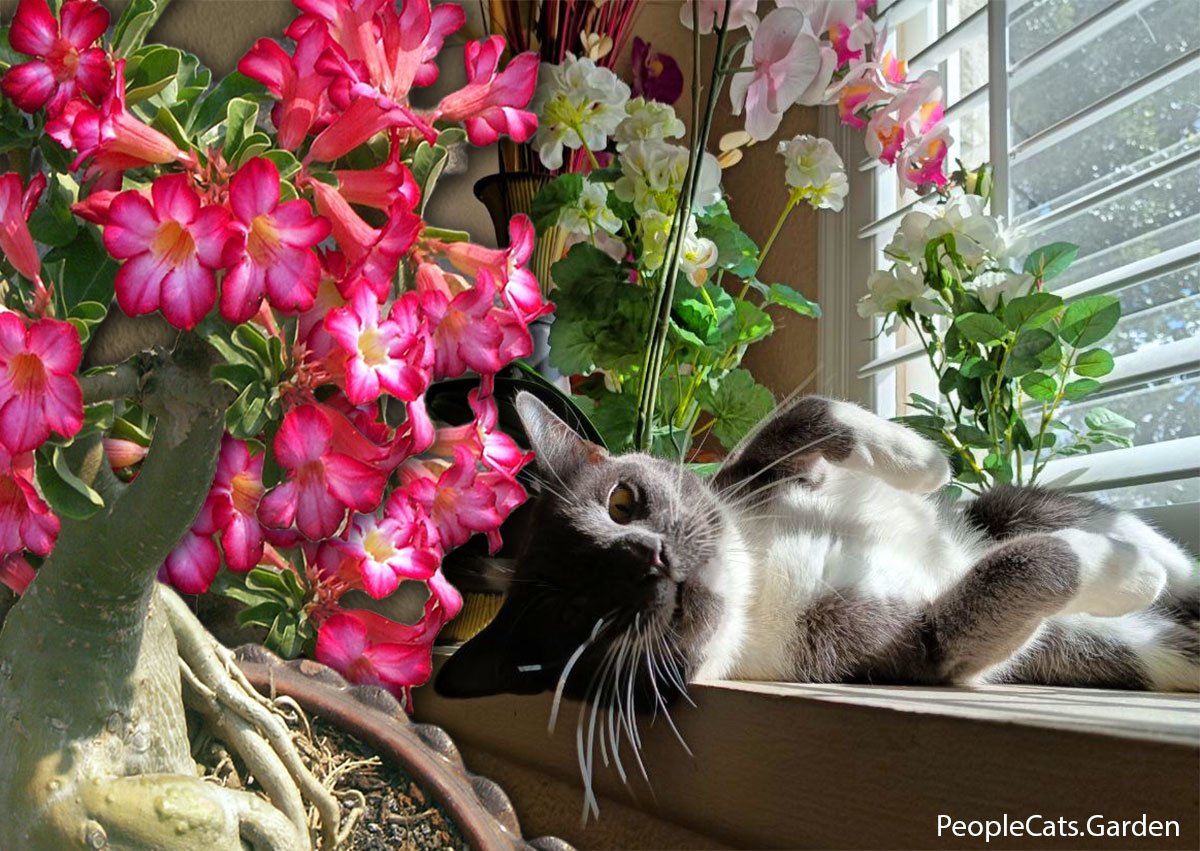
Cat  with  adenium  flowers

Q: How to you keep Adenium happy and blooming like on the pictures?

A: Adeniums, also known as Desert Roses, are exotic and striking plants that can bring beauty to any indoor or outdoor garden. Despite their desert origins, they require a bit of care to thrive. Here's a simple guide to help you grow healthy and vibrant adeniums:

Light and Location: Adeniums prefer filtered light, although they can tolerate full sun. In hot climates, they thrive in bright, indirect light. Position your plant accordingly to ensure optimal growth.

Potting and Soil: Use a small pot with excellent drainage to prevent waterlogging. Opt for a well-draining soil mix specifically designed for adeniums or create your own mix using cactus mix with added limestone for slightly alkaline conditions.

Watering: Water sparingly, allowing the soil to dry out between waterings. Avoid overwatering, which can lead to caudex rot. Water in the early morning and ensure the plant drinks up throughout the day.

Fertilization: Use a liquid fertilizer with high phosphate content to encourage both caudex growth and flowering. Apply according to label instructions, avoiding direct contact with the caudex. We recommend Sunshine Megaflor.

Caring for the Caudex: To promote a large swollen caudex, gradually raise the plant each time you repot it, exposing the upper roots. This encourages the formation of additional roots.

Maintenance and Blooming: Adeniums typically bloom from spring through fall. Ensure they receive ample light for heavy flowering. Avoid wetting the leaves and apply fertilizer to support overall plant health.

By following these simple steps, you can enjoy the beauty of adeniums in your own garden or home. With proper care and attention, your Desert Roses will flourish and delight you with their stunning blooms.

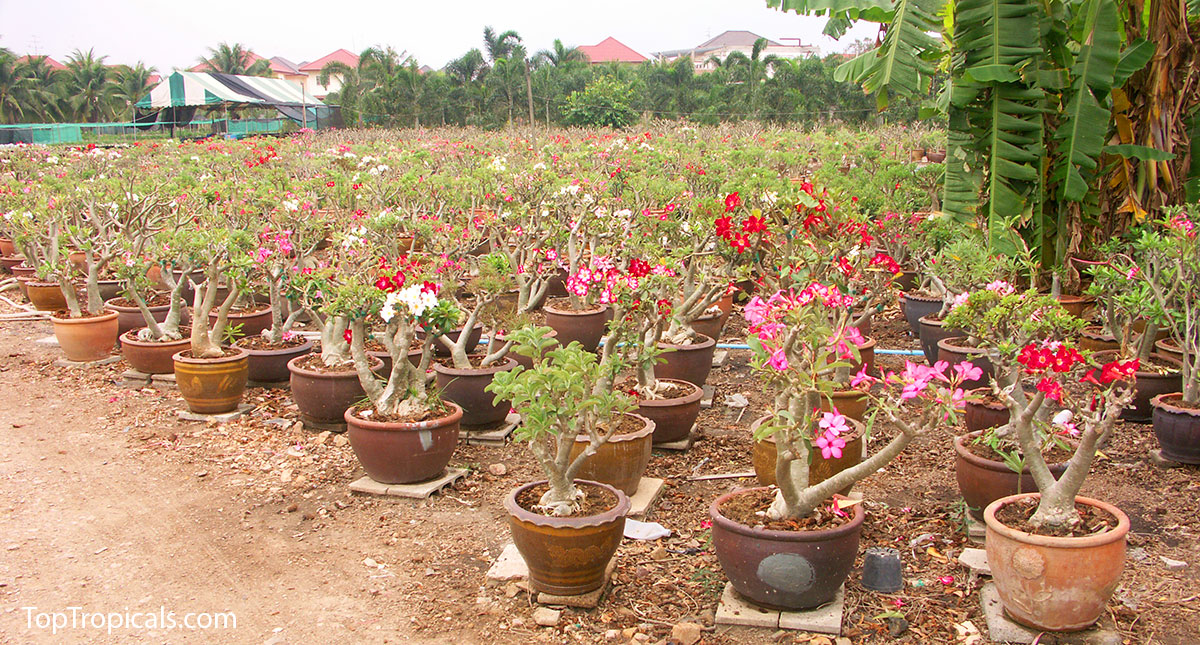
Adenium  field

Date: 19 Aug 2019

Colorful Yesterday-Today-Tomorrow

Q: I have a large oak in front of the house and nothing grows under it, even grass. Can you recommend me a compact, colorful flowering shrub that will tolerate shade location and still will bloom for me? I love fragrant flowers, that would be nice... Also, I am a snowbird staying in Florida mostly from Fall to Spring so I miss the flowering season! Any winter bloomers? Or am I asking for too much?

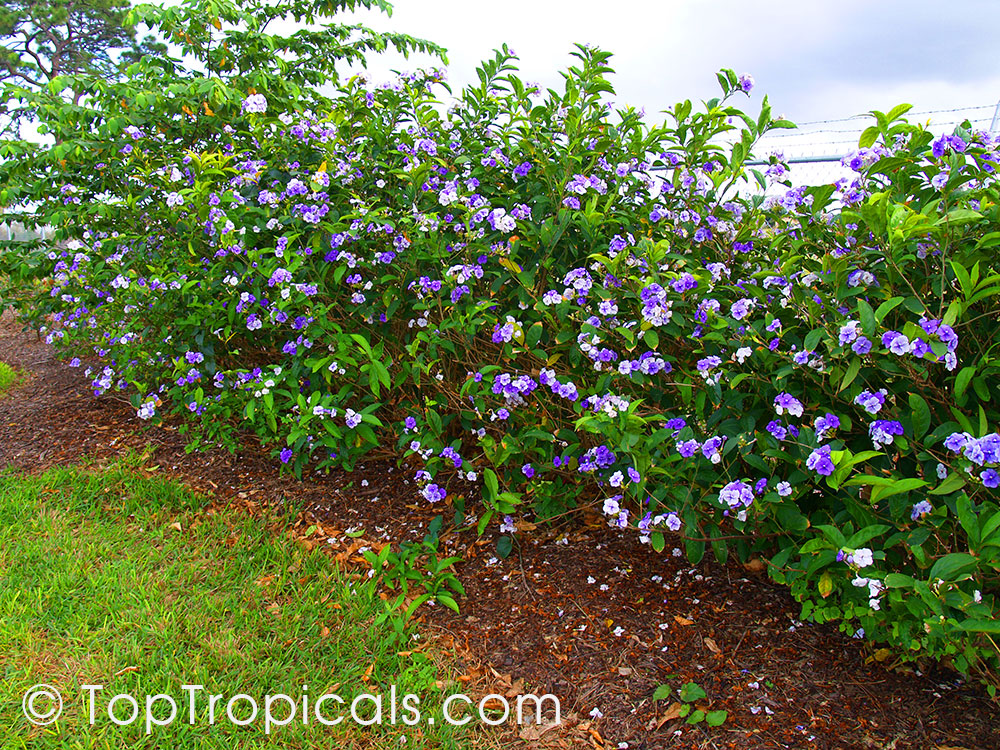
A: There is a plant for every location and every need! Here is a perfect plant for you, Brunfelsia grandiflora - Yesterday-Today-Tomorrow. It is a winter bloomer and it enjoys filtered light. In fact, in full sun Brunfellsia leaves sometimes turn yellowish, so a shade location will be perfect for it, leaves will be healthy and dark green.
It is a beautiful specimen plant. The unusual popular name of this medium-sized shrub becomes clear to anyone who observes it over the course of two or three days. Its tubular fragrant flowers change from purple to lavender and then to white over a three day period (First they open as rich lavender-blue; then they change to pale lavender and finally to almost white before they fall). Then all three colors can be seen on the same plant. It grows to about 3-6 ft and does best in filtered sunlight. Blooms fall to winter.

Check out all Brunfelsias from our store - they all are shade lover and free-flowering!

And here is a list of all winter flowering plants for you... and a Winter-Flowering Guide for Snow Birds (PDF file) that includes many late-season trees, shrubs and fruiting plants.