Garden Blog - Top Tropicals

Date: 4 Jun 2021

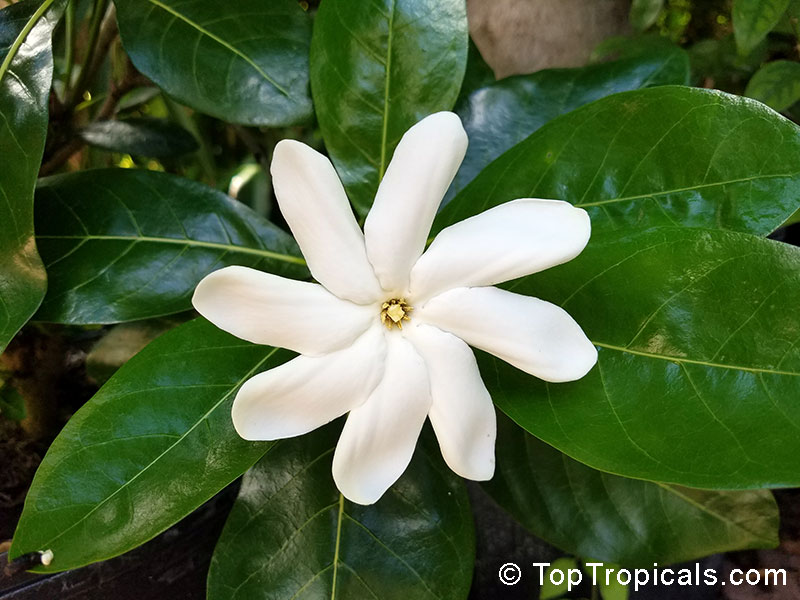
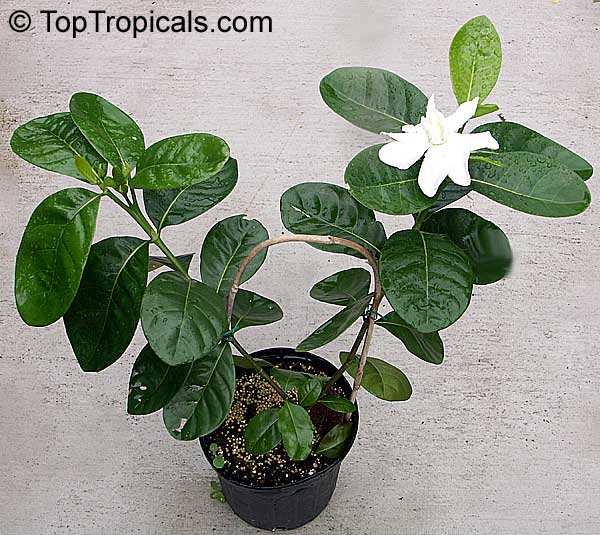
Tahitian Gardenia

Q: I am interested in your Tahitian Gardenia and I would love to try and grow this plant in a large container/fabric pot. The soil here where I live is terrible as it's hard rock, clay, and sand! So I'm not sure if amending the soil would help to plant in the ground? Can you tell me if this will do okay in a container or best in ground? I live here in Las Vegas, NV (zone 9a). Any information would be great to help me make a this decision, I love the selection of cool tropical plants you offer! Also my daughter does Tahitian/Polynesian dance and this would be a cool "topping on the cake" if she could have a live Tiare flower in her performances.

A: Tahitian Gardenia will be doing best if grown in container in your area. In its natural habitat, it grows full sun but also it enjoys mild weather conditions and high air humidity. All gardenias prefer acidic soils. In your area, if planted in the ground, it may be exposed to some harsh conditions: too high temperatures, too hot sun, dry air, and as you mentioned - heavy clay and sandy soil. You can enjoy this plant grown in container, which can be moved as needed away from too much sun during summer months. Use well-drained potting mix. Use plastic pot, do not use fabric or clay pots - soil will dry out too quickly.
Also remember to fertilize this plant on regular basis with a liquid fertilizer SUNSHINE Pikake - Fragrant Flower Booster.
Grow gardenia in full sun or semi-shade during the hottest months. You may spray it with pure water if the air too dry and hot. Enjoy your Tropical Beauty and good luck!

Date: 21 Apr 2021

Healthy Plants: Q&A from Mr Booster

Mango leaves and fertilizing

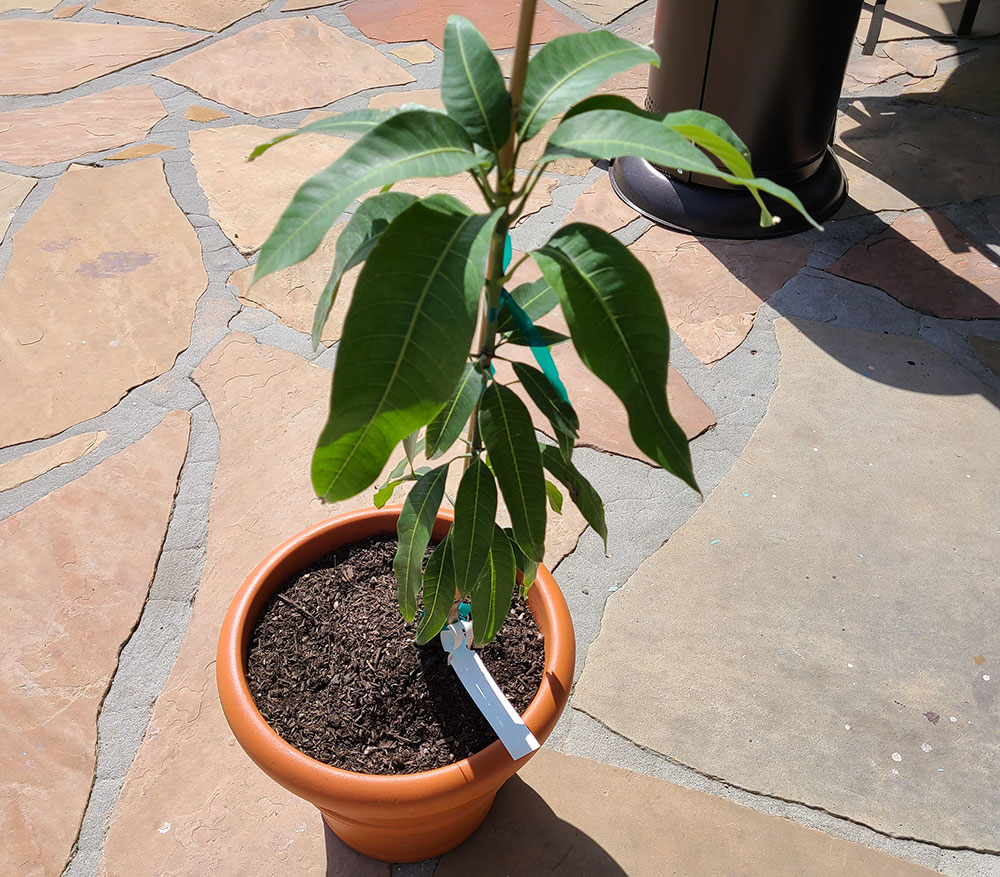
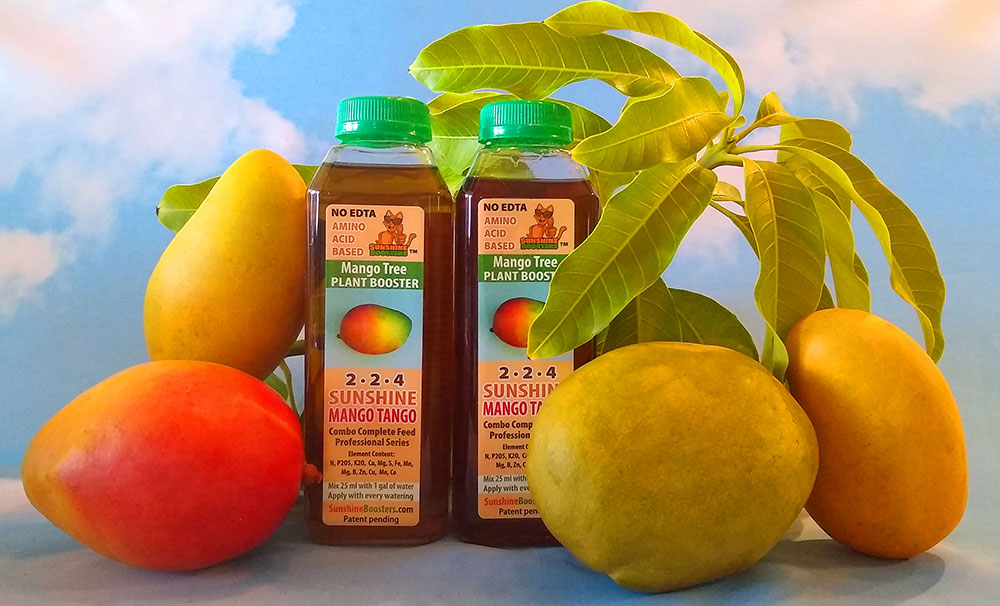
Q: I received a mango tree we ordered last week (I am in California) and am trying to make sure we take care of it properly. I noticed the corners of some leaves have began drying out. I wanted to see if there was anything else we should be doing or if it is something normal. Overall the tree looks good and the leaves have perked up, but I noticed the dry tips on a handful of leaves. Any help is appreciated! I have not fertilized in the pot yet or applied the mango sunshine booster.

A:Your mango tree looks pretty healthy, and these dry leaf tips may be caused by overall shipping stress. You have dry air in California, and temperatures may be getting up, this may cause additional drying effect. You may start fertilizing with a liquid fertilizer, it will help the plant to get stronger and grow faster - then heat and dry air won't be a problem as soon as the plant becomes better established and hopefully go into a bigger pot soon, or in the ground. Make sure to provide regular water if you have hot dry summers.

Date: 29 Mar 2021

Small flowering tree for community

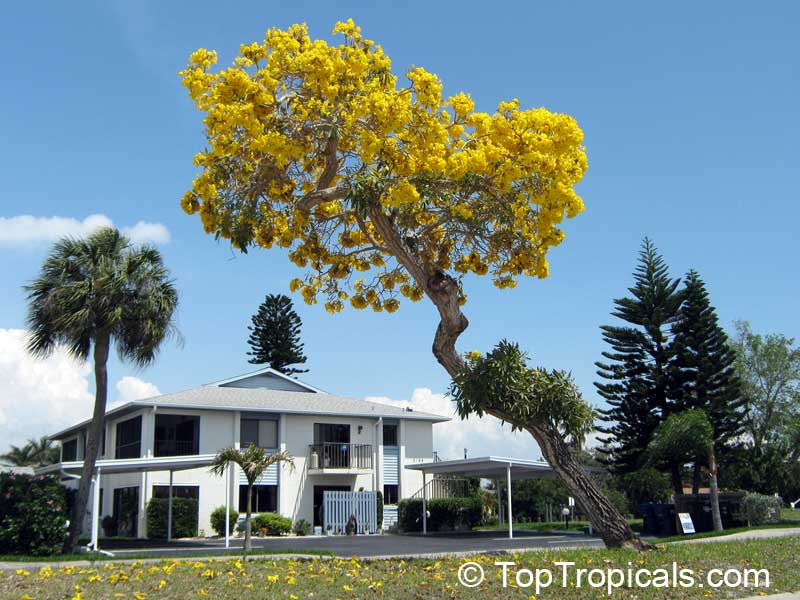
Q: Hi, I live on the east coast near West Palm, but I see you ship your plants. My HOA allows for Yellow Tabebuia species and I'm looking for two or three smaller trees that can fit in my front yard in smaller spaces. Ideally looking for trees that would stay under 20' in height, but preferably even smaller. Can you tell me the average height and spread of the Dwarf Golden Tabebuia or Silver Trumpet trees?

A: The Yellow Tabebuia - Tabebuia caraiba is a very good choice for a small yard. It grows about 20 ft average size, 7-10 ft wide. Sometimes taller, but it is slow growing and it will take many-many years to grow to a bigger size. It is a spectacular tree when in bloom, however, keep in mind that it is not very wind resistant; although it is not difficult to secure it back being a small tree. Another Tabebuia which is even more compact tree, has stronger root system and is more wind resistant:
Tabebuia chrysotricha - Dwarf Golden Tabebuia
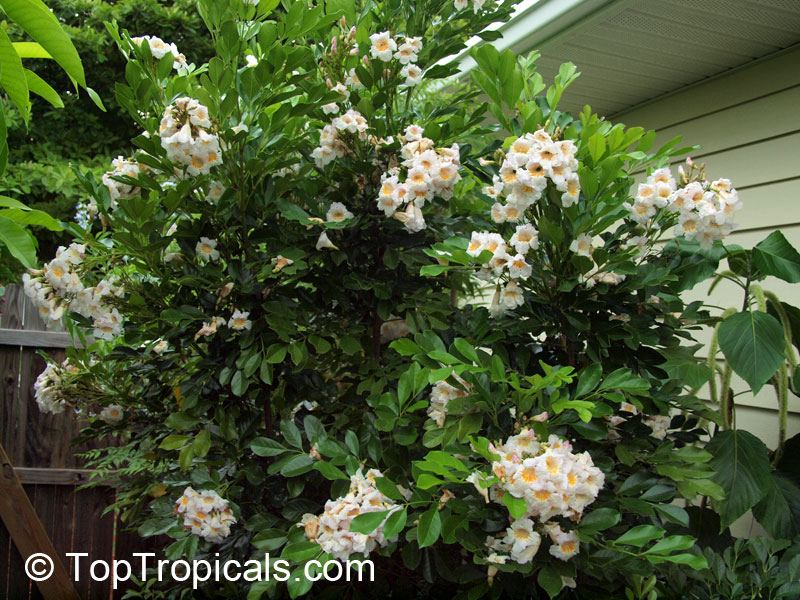
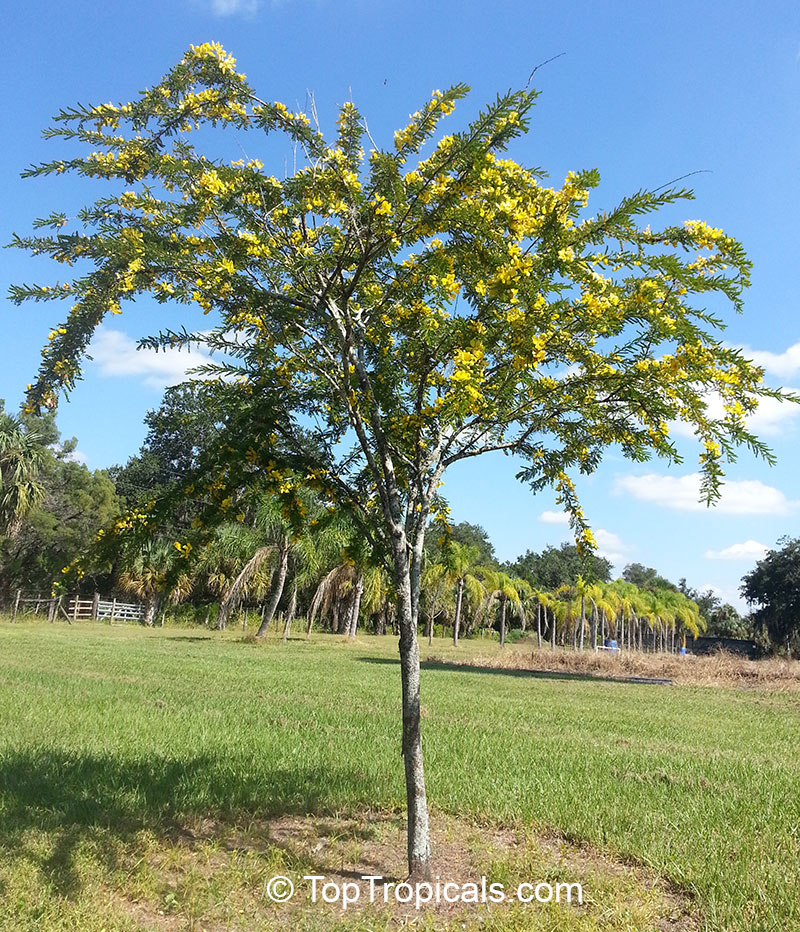
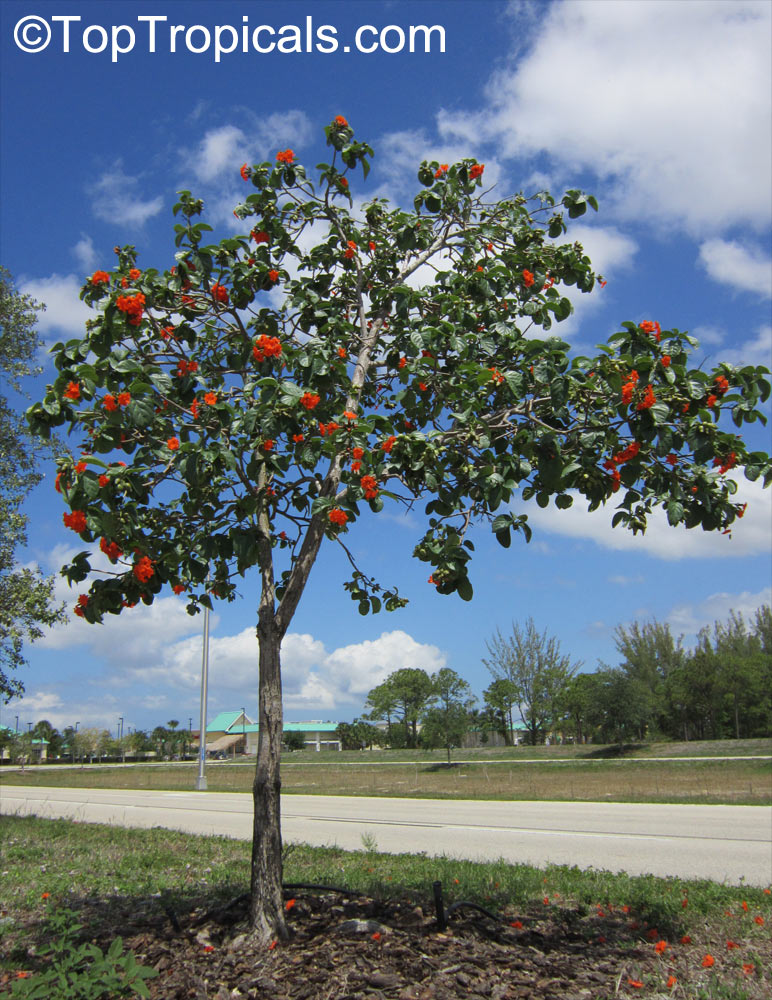
Also some other interesting choices:
Radermachera Kunming - Dwarf Tree Jasmine
Senna polyphylla - Bahamas Cassia, Desert Cassia
Cordia sebestena - Scarlet Geiger tree

See full list of compact small trees

Tabebuia chrysotricha - Dwarf Golden Tabebuia

Radermachera Kunming - Dwarf Tree Jasmine

Senna polyphylla - Bahamas Cassia, Desert Cassia

Cordia sebestena - Scarlet Geiger tree

Date: 5 Jan 2021

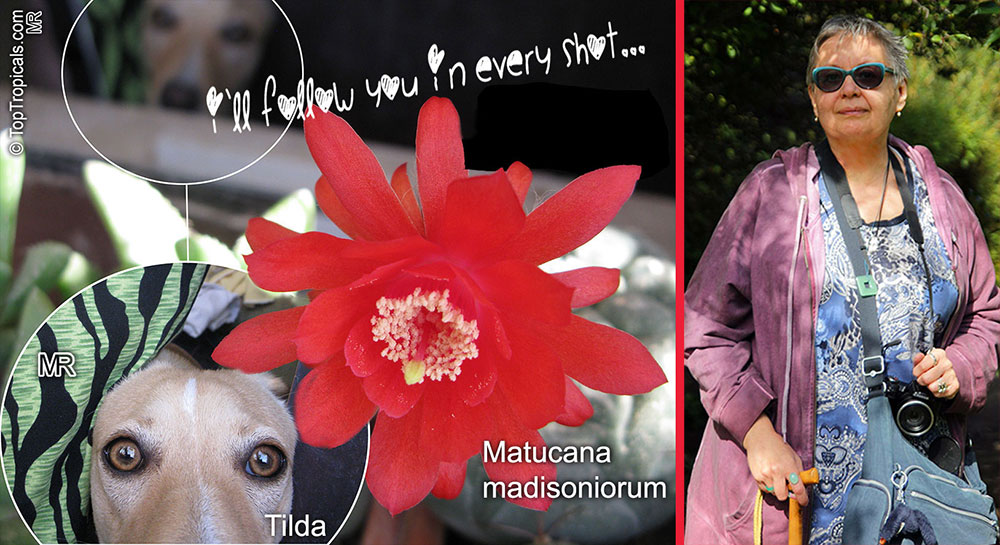
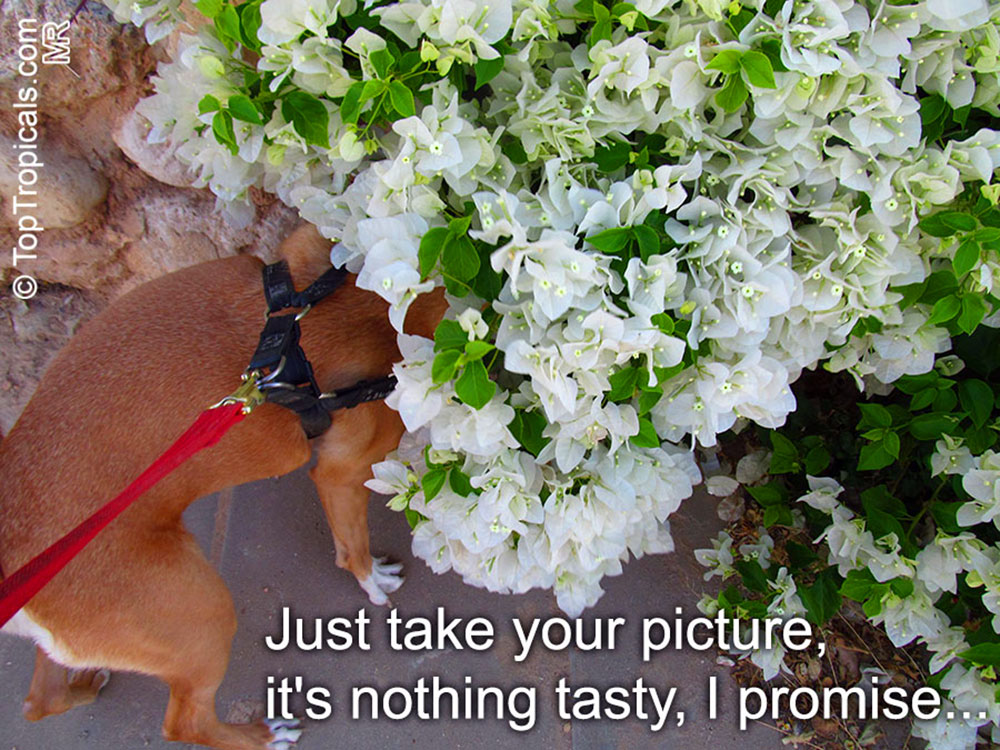
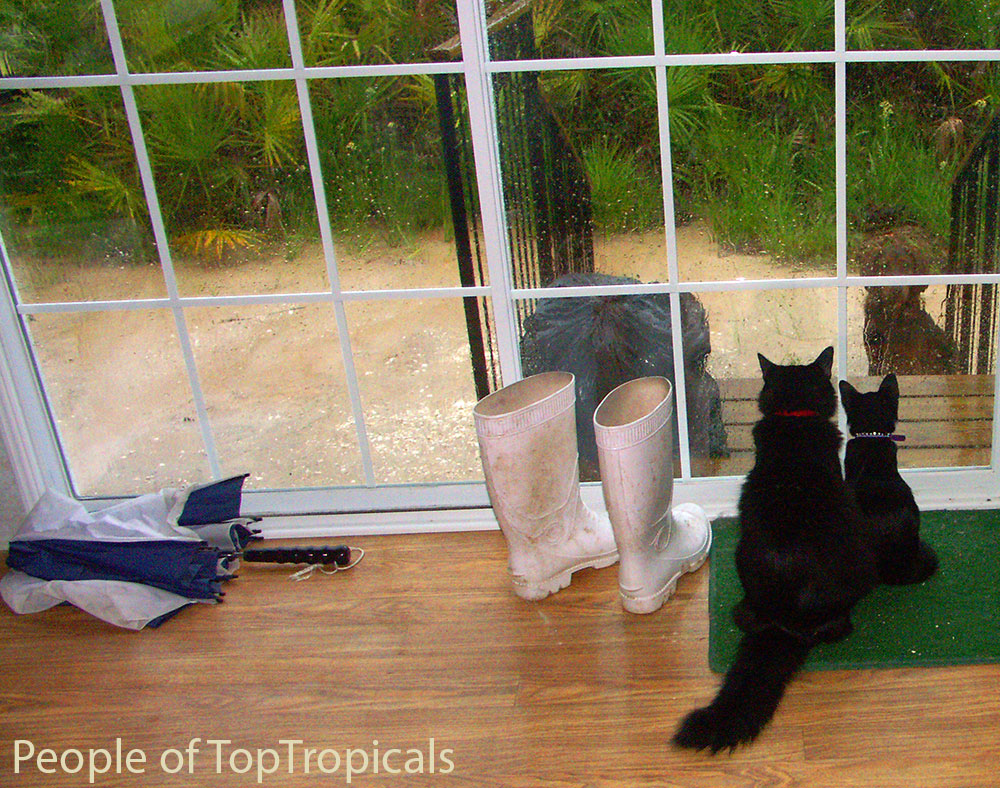
People of TopTropicals. Dog of the Year: Tilda, the Assistant Photographer

Today is a sad day. Our Editor and Photographer assistant Tilda left us for her last trip to Eternity... to the Dog's Paradise. For many years, Tilda has been helping Top Tropicals Editor and Plant Expert Marina Rybka to take pictures of beautiful plants from all over the world. We can often see Tilda's tail, paws, ears or eyes in many photos of our plant catalog. With Marina's and Tilda's help, our catalog today has 4900 tropical plant profiles with 53989 photos!
Tilda, you will always stay with us. You will follow us in every shot you made with your Mom. Thank you for being there for Marina and her TopTropicals. Thank you for making life of tropical gardeners happier! You made the difference. We love you forever.

TopTropicals PeopleCat Club and Zoo

Thank you for supporting us in helping PeopleCat Community!
Make your kind donation today and receive a surprise gift from us! Every little bit helps. Thank you and God bless you and your pets!

Date: 29 Sep 2020

Healthy Plant Food: Q&A from Mr Booster

Why my Sapodilla is not fruiting?
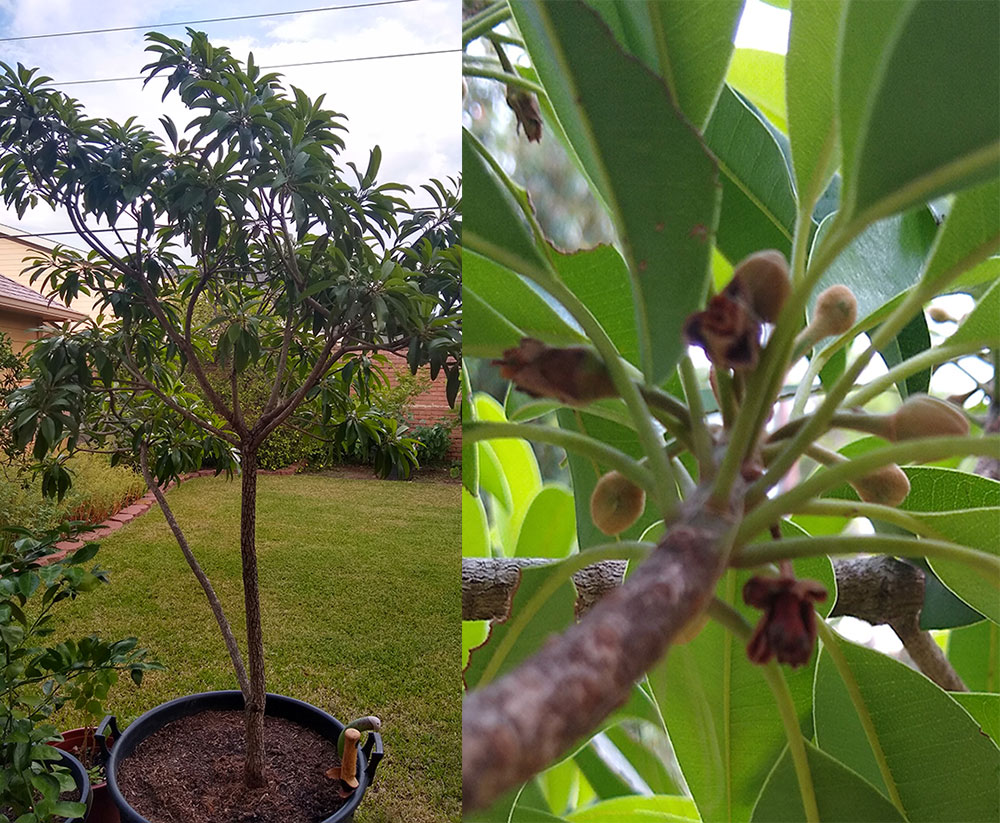
Q: I bought a Sapodilla tree from you several years ago, Silas Woods. I live in Houston area. The tree grows and produces blossoms for fruits, but then they just dry up and fall off. To-date, I have not gotten any fruits off the tree. Is there a reason for this? I really want a fruiting tree because Sapodilla is one of my favorite fruits. I have attached pictures of the tree. Please help.

A: Silas Woods is a free-flowering variety and in favorable conditions it should produce fruit almost year round, considering warm temperatures. The fact that the tree is producing flowers indicates that it is strong, overall healthy and ready for production, but for some reason these flowers don't set fruit. There may be several reasons for such behavior.

1) Too high temperature and too low humidity
In Houston area, humidity should be good in summer. However, if temperatures stay above 90F for a long time, this may cause flower dry-n-drop.
Solution: try to move the potted tree into filtered light, or in a spot where it does not get direct burning sun during the hottest hours of the day (morning sun is the best)

2) Root bound.
Solution: check if the tree needs stepping up into a larger container.

3) Lack of certain nutrients that are responsible for proper fruit formation.
In particular, elements B (Boron), Mo (Molybdenum), and a few other micro-elements (Fe - iron, Cu - Copper, etc.). This is most likely the cause of a flower drop. This is very common reason for undeveloped fruit or lack of fruit in container-grown fruit trees. When grown in the ground, plants can reach out to all necessary elements in surrounding soil (considering soils are not too poor on necessary elements). In a pot, a supply of nutrients can be exhausted very quickly, so a quality fertilizer program is very important. Fertilizer must include all necessary nutrients in easy accessible form, and a plant must have their constant supply for proper development.
Solution: prescribe to your Sapodilla tree the following combination of plant food:
- SUNSHINE C-Cibus - Crop Nutrition Booster. It will provide well-balanced amounts of high absorption Nitrogen, as well as other macro-elements - to provide enough energy to the tree, plus a combination of all necessary micro-elements. It is safe to apply this fertilizer as frequent as with every watering, including winter time.
- SUNSHINE-Honey - sugar booster. This supplement has a high content of elements Mo and B - once the tree starts getting them on regular basis (a few times a year, according to the label), it will change its habit dropping flowers and/or premature fruit drop. As extra bonus, Sunshine Honey makes fruit sweeter by bringing sugars from all over the plant and concentrating them into fruit.

4) Lack of pollinating insects.
Solution: For most effective pollination, we always recommend to put some pieces of fruit under the tree, apple peels, or even banana peel. Those attract tiny beetles that are responsible for small flower pollination.

With winter time approaching, fruiting season is about to end, however, do not get discouraged and start the fertilizing program right away: this will bring up the plant into a healthy stage within a few months, and by next season it should be covered with fruit you like so much! Remember, Sunshine liquid fertilizers can be used year round, including winter, without a risk to burn roots or overdose, as long as you follow label instructions.
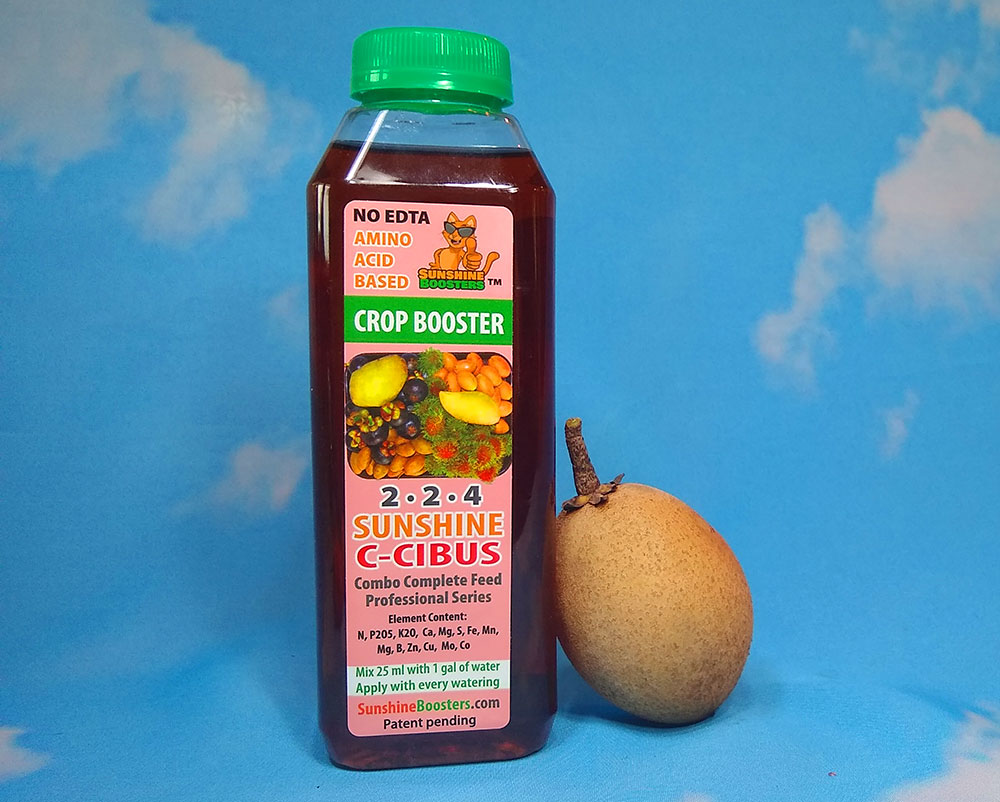
SUNSHINE C-Cibus - Crop Nutrition Booster from Garden Series, or Combo Total Feed Collection - all nutrients in just one bottle, for fruit trees and edibles.