Garden Blog - Top Tropicals

Date: 25 Jun 2019

True love of Night Blooming Jasmine
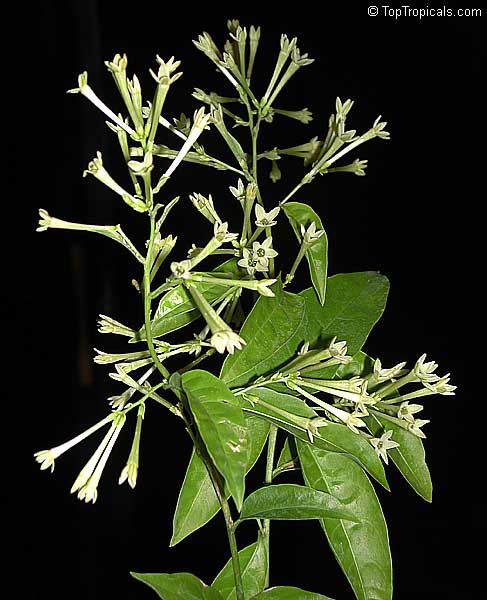
By Onika Amell, tropical plant specialist

Q: I live in New Cumberland, West Virginia. I love the smell of Night-Blooming jasmine. Is it possible to grow it in the northern panhandle of West Virginia? Do I have to plant it every year or do I keep it in a pot and take it inside during the winter months?

A: Technically, Night Blooming Jasmine is not a true jasmine (those plants belong to Oleaceae, or Olive family). Night Blooming Jasmine belongs to the Solanaceae family, also known as the Nightshade or "Potato" family of plants. Yes, this sweet fragrant flower called Jasmine for its perfume is related to potatoes and tomatoes!
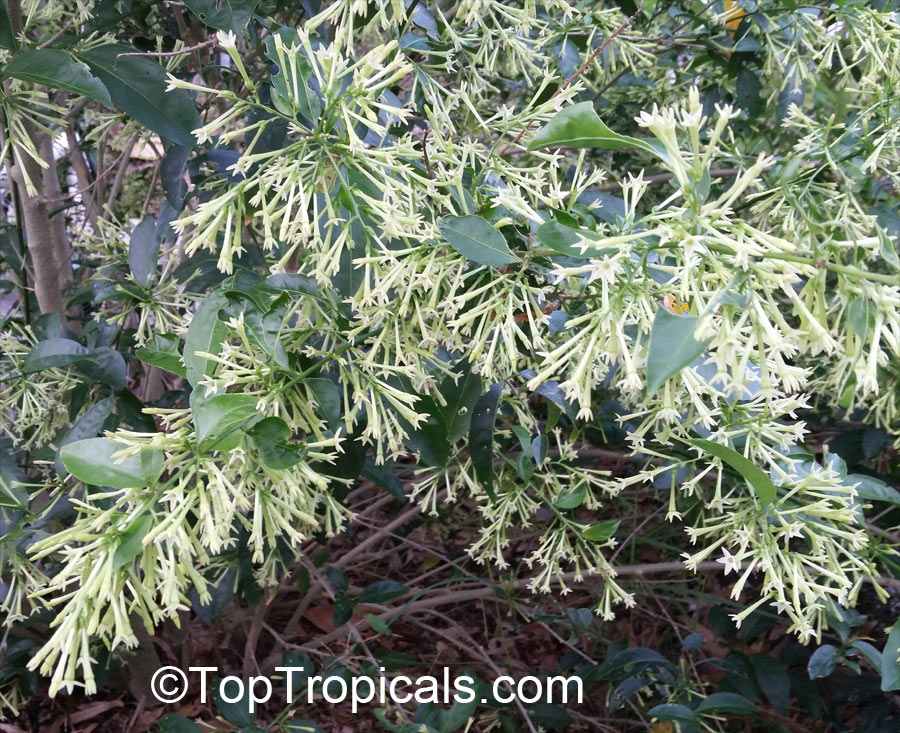
Night Blooming Jasmine - Cestrum nocturnum - is loved by many gardeners for its beautiful fragrance at night. It is one of the most fragrant tropical evergreen shrubs available. Cascading clusters of tiny, tubular pale yellow to white flowers open at night and release a heavenly fragrance throughout the garden, especially on warm summer evenings. The fragrance is much lighter during the day. Night Blooming Jasmine is grown year-round in zones 9-11. It is at its happiest in a sunny to a partially sunny spot in your garden in well-drained soil but can be grown in cooler climates as a container or greenhouse plant.
You would absolutely be able to enjoy this plant during the warm months in West Virginia, but it will most certainly not survive outside during the winter. You will have to bring it inside. Take it outside again only once you are confident there is no more possibility of frost. When grown indoors, be sure to give it the sunniest, South facing window in your home. When grown in a container, you will need to re-pot it every two to three years so it doesn't become root-bound.
For those who are lucky to live in frost-free areas, in ideal growing conditions outside, it can easily reach 8 feet with a spread of 5 feet. It has a lovely informal look that can soften a more manicured garden. Add organic matter to the planting hole when you plant to enrich the soil around the root ball. Water well in the summer, but allow them to dry out a bit between watering in the winter. Plant this Jasmine near pools, porches, doors, windows, and walkways where its lovely fragrance can be enjoyed. The shrub is also an excellent plant for privacy hedges and screens. When grown as a hedge, plant 3 feet apart.
Trim lightly after a bloom cycle to shape and then do a hard pruning in fall or spring to control the size of this plant. Fertilize 3 times a year - in spring, summer, and autumn - with a good quality granular fertilizer.

Recommended fertilizers:

Pink N Good Daily Plant Food - Flower Booster
Tropical Allure - Smart-Release Booster

Interesting facts:

Night-blooming jasmine is an excellent mosquito repellent. The powerful scent of the flowers attracts moths and bats that feed on mosquitoes and other small insects.
The flowers of the Night Blooming jasmine are widely used in India and other countries of South Asia for perfumery, medicinal applications and in religious ceremonies.

Limited time special offer:
Instant $5 off Night Blooming Jasmine

Date: 17 Jun 2025

What jasmine has a stronger scent than Sambac?

Jasminum molle, Indian Jui, Jasminum auriculatum

🎆 What jasmine has a stronger scent than Sambac?


⭐️ Once you smell it, you’ll never forget it! If you are looking for a jasmine that truly stands out, Jasminum molle (also known as Indian Jui or Jasminum auriculatum) is one of the best-kept secrets among fragrant plants.

⭐️ An uncommon jasmine with an unforgettable scent, with a rich, gardenia-like perfume that rivals the world-famous Jasmine Sambac, this stunning species deserves a special place in your collection.

⭐️ Extraordinary fragrance: The satin-white flowers release an intense, sweet scent that fills the air - one of the strongest among all jasmines.

⭐️ Multiple growth habits: Naturally bushy and fast-growing, it can be shaped into a dense shrub, grown in containers, or even allowed to climb slightly on a trellis. It also makes a great hedge.

⭐️ Versatile and hardy: Adapts well to full sun or part shade, wet or dry soil. Fairly cold-hardy, it can handle a light frost with no damage.

⭐️ Seasonal blooms: While blooming peaks in summer, flushes of flowers can appear again in fall or even winter, often in clusters that cover the plant.

⭐️ Cultural significance: In India, this jasmine is sacred to the Goddess Devi and widely used in religious ceremonies, garlands, perfumes, and hair adornments.

⭐️ Medicinal uses: Traditional remedies use jasmine oil for hair and skin health, and the roots for treating skin conditions.

⭐️ With small, dark green leaves and powdery white blooms, Jasmine Molle is a top choice for gardeners who love richly fragrant plants. It's easy to grow, low maintenance, and incredibly rewarding. Whether in a pot, a border, or a spiritual garden, this jasmine is more than just a plant - it's an experience.

🛒 Bring sacred fragrance into your garden

📚 Lean more about #Perfume_Plants

#Perfume_Plants #Hedges_with_benefits

🟢 Join 👉 TopTropicals

Date: 10 Jan 2026

How to grow Patchouli indoors

Patchouli - Pogostemon cablin

How to grow Patchouli indoors

Patchouli - Pogostemon cablin is easy to grow indoors if you give it what it likes. It is one of those plants that does double duty - it looks great and makes your home smell amazing. Those big, soft leaves release that deep, earthy scent just by being there.

☘️ Light and temperature


Patchouli loves bright shade. Think filtered light near a window, not harsh direct sun. Too much sun can burn the leaves, especially indoors. In lower light, it still grows well and keeps its fragrance. It is a tropical herb, so keep in warm - at room temperature.

☘️ Water and soil


This plant loves water. Use a well-draining soil mix and a pot with drainage holes, but do not let it dry out. Daily watering is usually fine in warm conditions. Good air circulation is important.
Growing patchouli is similar to growing herbs in containers - just be more generous with water than you would be with basil or oregano.

☘️ Containers and growth


Patchouli grows fast. Start in a 1-gallon pot, but plan to move it up to a 3-gallon container fairly quickly. More room means bigger leaves and a stronger scent.

☘️ Feeding


Feed regularly. You can use Sunshine Boosters Robusta with every watering, or apply Green Magic controlled-release fertilizer every 6 months and at each transplant. Patchouli responds quickly to feeding with lush growth.

☘️ Pruning and uses


Prune as the plant gets bigger to keep it full and bushy. Do not throw the leaves away - dry them for sachets or use fresh/dry leaves for tea.

☘️ Propagation


Patchouli roots very easily from cuttings. Snip a healthy stem, place it in water or moist soil, and it will root fast. It is one of the easiest plants to share with friends.

If you want a plant that grows fast, smells incredible, and actually does something useful indoors, patchouli is hard to beat.

🛒 Grow calming Patchouli Scent at home

📚 Learn more:

Patchouli Plant Facts

Botanical name: Pogostemon cablin, Pogostemon patchouli, Pogostemon heyneanous
Also known as: Patchouli, Pucha-pat
USDA Zone: 9 - 11
Highligths Groundcover and low-growing 2ft plantSmall plant 2-5 ftSemi-shadeFull sunWatering: Moderate. Water when top soil feels dryWatering: Regular. Let topsoil dry slightlyOrnamental foliageSpice or herb plantEthnomedical plant.
Plants marked as ethnomedical and/or described as medicinal, are not offered as medicine but rather as ornamentals or plant collectibles.
Ethnomedical statements / products have not been evaluated by the FDA and are not intended to diagnose, treat, cure, or prevent any disease. We urge all customers to consult a physician before using any supplements, herbals or medicines advertised here or elsewhere.Fragrant plant
Get personalized tips for your region

Patchouli - Pogostemon cablin in Plant Encyclopedia
Health Benefits of Pogostemon cablin (Patchouli, Pucha-Pat)
Patchouli: more than just a pretty scent
Archeologists found Patchouli perfume from Ancient Rome
Patchouli tea recipe

#Perfume_Plants #Remedies #Food_Forest #How_to

🟢 Join 👉 TopTropicals

Date: 10 Apr 2016

Growing by the sea

Q: Please recommend me some interesting plants that can grow on my waterfront property and can withstand some salt wind. All my neighbors have Sea Grape trees and bougainvilleas, and I want something different and special. I would love to have some colorful or fragrant flowers, or fruit around my paradise home.

Q: Considering your neighbors successfully grow Sea Grape (Coccoloba), and Bougainvilleas, you have a mild, frost free climate. There is a number of spectacular and useful tropical plants that are salt tolerant. Orchid Trees - Bauhinias, Poincettia - Delonix, and Geiger trees - Cordias, are very showy flowering trees. For large size bushes, try Dwarf Poincianas - Caesalpinias, and Scarlet-Coral Erythrinas. Frangipani - Plumeria, come in different colors and bring you perfume fragrance from Hawaii. And of course, Desert Roses - Adeniums, can be grown and showy specimens anywhere in your yard, both in the ground or as potted bonsai.

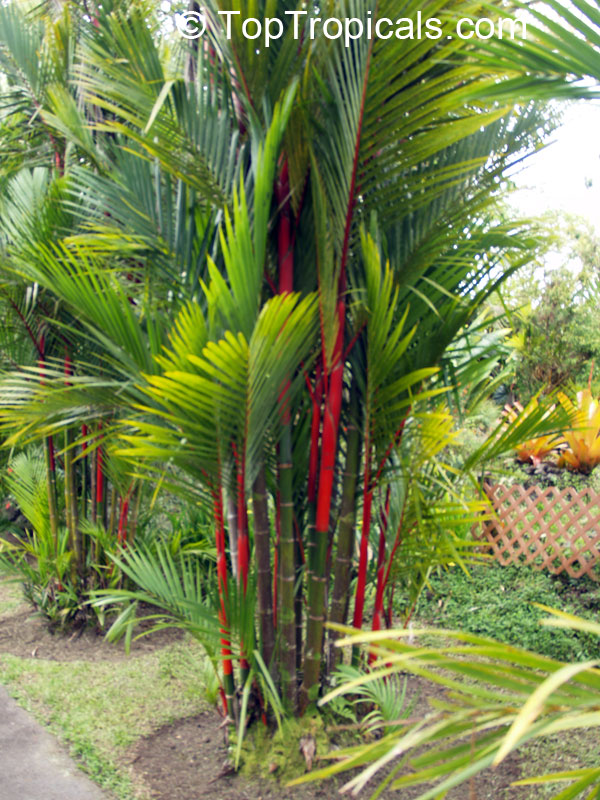
Most palms, especially popular Coconut Palm, source of tasty fruit and drink, are highly tolerant to salt breeze. If you are looking for something that nobody has, Lipstick palm, or Sealing wax palm - Cyrtostachys lakka, is definitely the most spectacular palm you can find. It is a stunning feather palm that develops a brilliantly red trunk. Palm is originally from Malaysia, but has been introduced to Costa Rica and other tropical areas of the world. Sealing Wax Palm seeds are very slow to germinate, up to a year, and large specimens are very rare and hard to find even in rare tropical plant nurseries. This palm will require a good overhead light, and constant warmth (above temperature 55F). It is definitely worth an effort to grow this beauty.

You may add more tropical accents to your landscape by the sea with many varieties of showy heliconias.

See full list of salt tolerant trees.

Date: 5 May 2019

The most desired iconic Chanel flower...

TopTropicals.com

By Onika Amell, tropical flower specialist

Q: I live in Beverly Hills, Los Angeles. I'm looking for something fragrant to grow on my porch. I don't have a lot of space and am interested to find something unusual that won't grow too large. Any suggestions? I've heard about Chanel #5 tree and I wonder I can keep it in a pot?

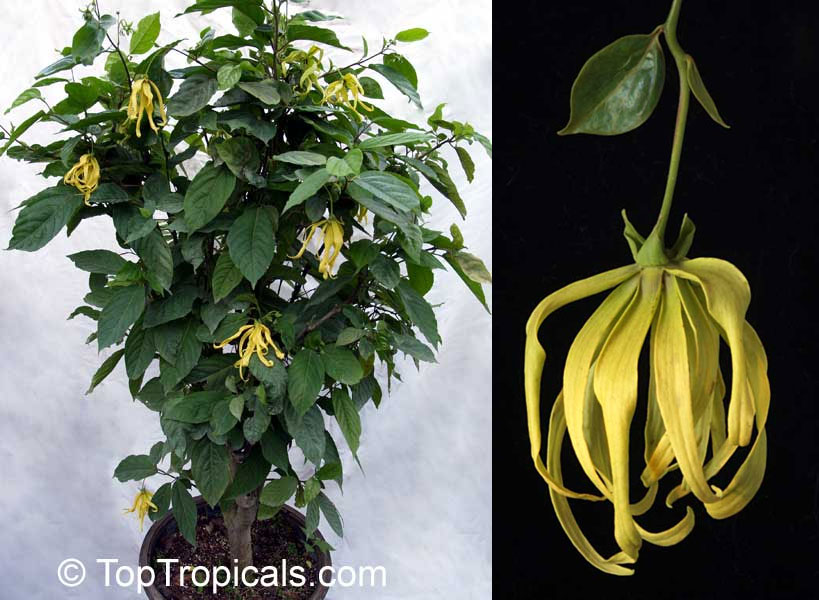
A: The Ylang-Ylang tree, Cananga odorata, emits a fragrance so soft and beautiful it became an essential ingredient of Coco Chanel's iconic and much-loved perfume Chanel No 5. Trouble is, it will grow into a giant. How do you get this kind of magic onto your lanai or porch? Opt for its smaller relative: Dwarf Ylang Ylang, Cananga fruticosa (pronounced ee-lang ee-lang, meaning: flowers of flowers).

The fragrance is a little less intense than its larger cousin, but still wonderful to have around. Let the fragrance drift slowly through the air into your home at night. The scent is strongest from dusk to dawn and it will need warm and humid conditions for a fuller aroma.
Dwarf Ylang-Ylang is ideal for folks with limited space as it can be grown in a container or as a house plant. It's a very unusual and interesting plant to add to your porch, lanai or garden. It's pretty easy to grow and disease resistant too. It will stay compact and in nice tree-like shape. Dwarf Ylang Ylang starts blooming quite young and will continue to bloom year-round with profuse blooming during the spring and summer months.
The tree prefers a high-humidity environment, evenly moist soil, warm temperatures and will grow best in plant hardiness zones 10-11 but can take short periods of cold.
Read more about Chanel No5 Flower...

Dwarf Ylang Ylang is certainly one of the most desired and sought after rare, fragrant plants. Get yours today!