Date: 17 Nov 2023
Privacy Hedges with Benefits

What's the numero uno question we get bombarded with at Top Tropicals Nursery? Well, it's a real head-scratcher:
Q: "...Can you recommend me a flowering privacy hedge to spice up my yard's life? My current hedge is just a green wall and I'm tired of the monthly trim routine. I need something lively, fast-growing, and unusual if possible. No plain old ixora, please!.."
A: After over two decades of being the go-to advice-givers, we thought, "Why not spill the floral beans and share our tropical wisdom?" But where to begin? The jungle of flowering ornamentals is vast, and picking the perfect shrub is like finding the missing piece of a gardening puzzle. So, in our new column "Hedges with Benefits" we're dishing on those not-so-average shrubs that'll not only prettify your patch but also bring some serious practicality. Today's lineup is -
Top Ten Winners:
Fast growing flowering shrubs
Below is the top selection of spectacular flowering shrubs that can create a nice hedge or a natural screen within just a couple of seasons.
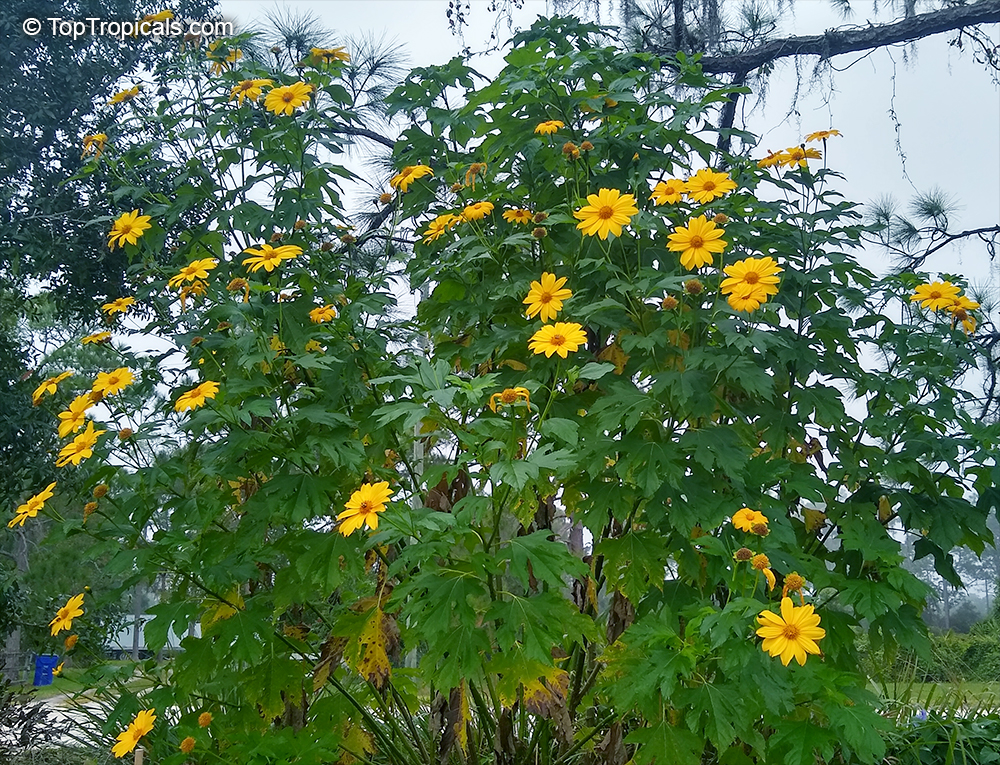
Tithonia diversifolia - Sunflower tree.
Grows super fast to a very tall dense hedge, and starts flowering right away. Full sun, very easy, not
fussy about soil or water. Winter bloomer.
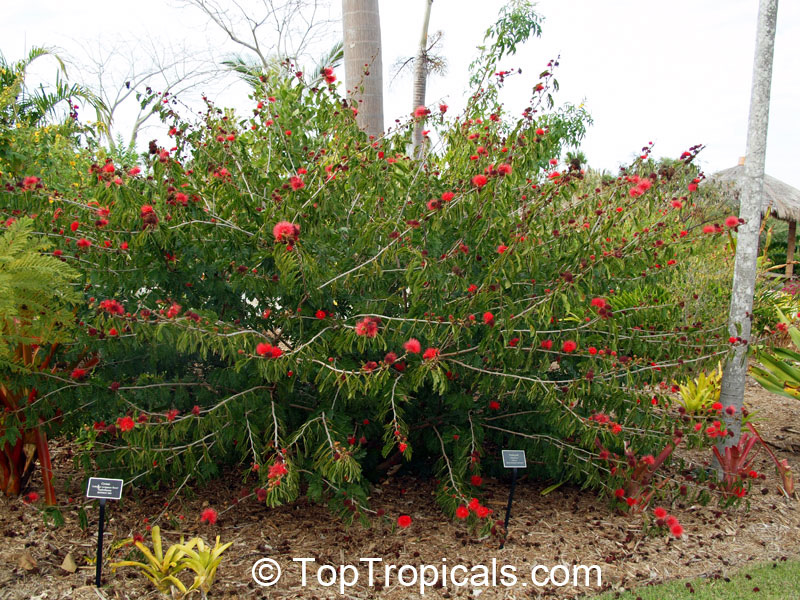
Calliandra surinamensis - Powderpuff.
Pretty pink powderpuffs almost year around! Easy to prune.
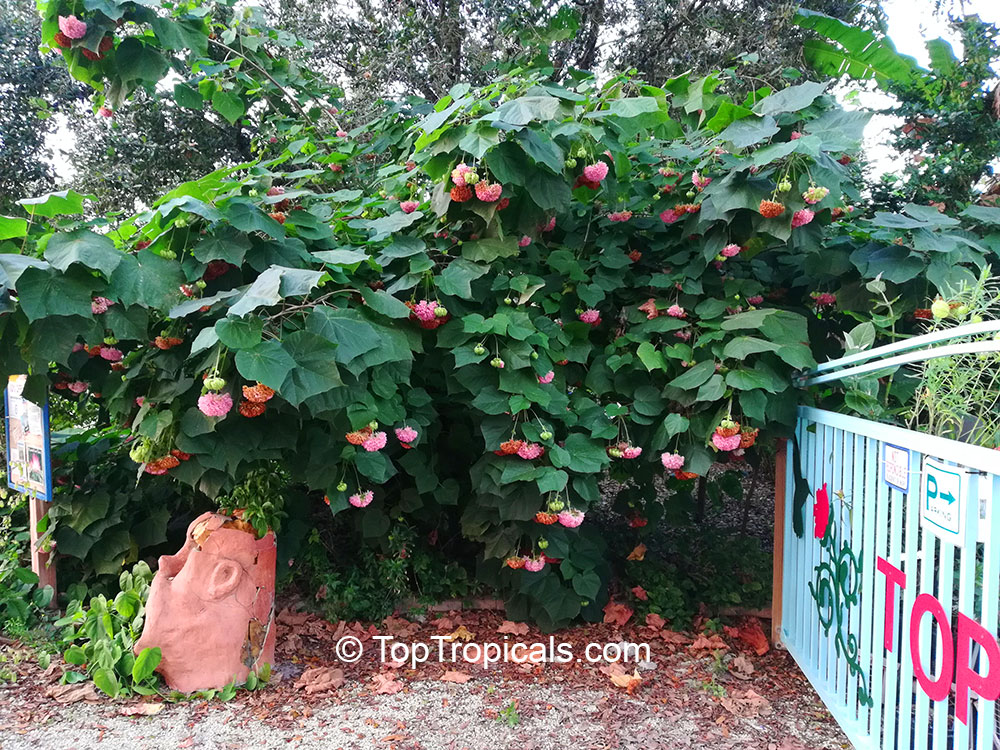
Dombeya x wallichii - Tropical Hydrangea.
You can see this beautiful bush right at Top Tropicals gate. Winter bloomer, large lush leaves and huge, pink hydrangea-like blooms. Very large and fast growing, likes water, tolerates shade.
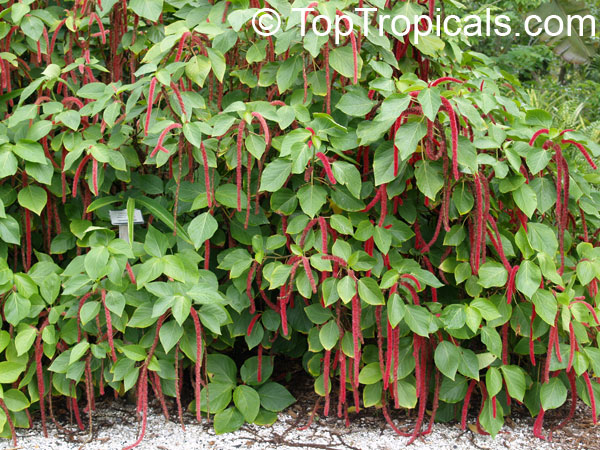
Acalypha hispida - Cat tail, Chenille plant.
All time favorite, everblooming with red cat tails! Full sun. Easy to control.
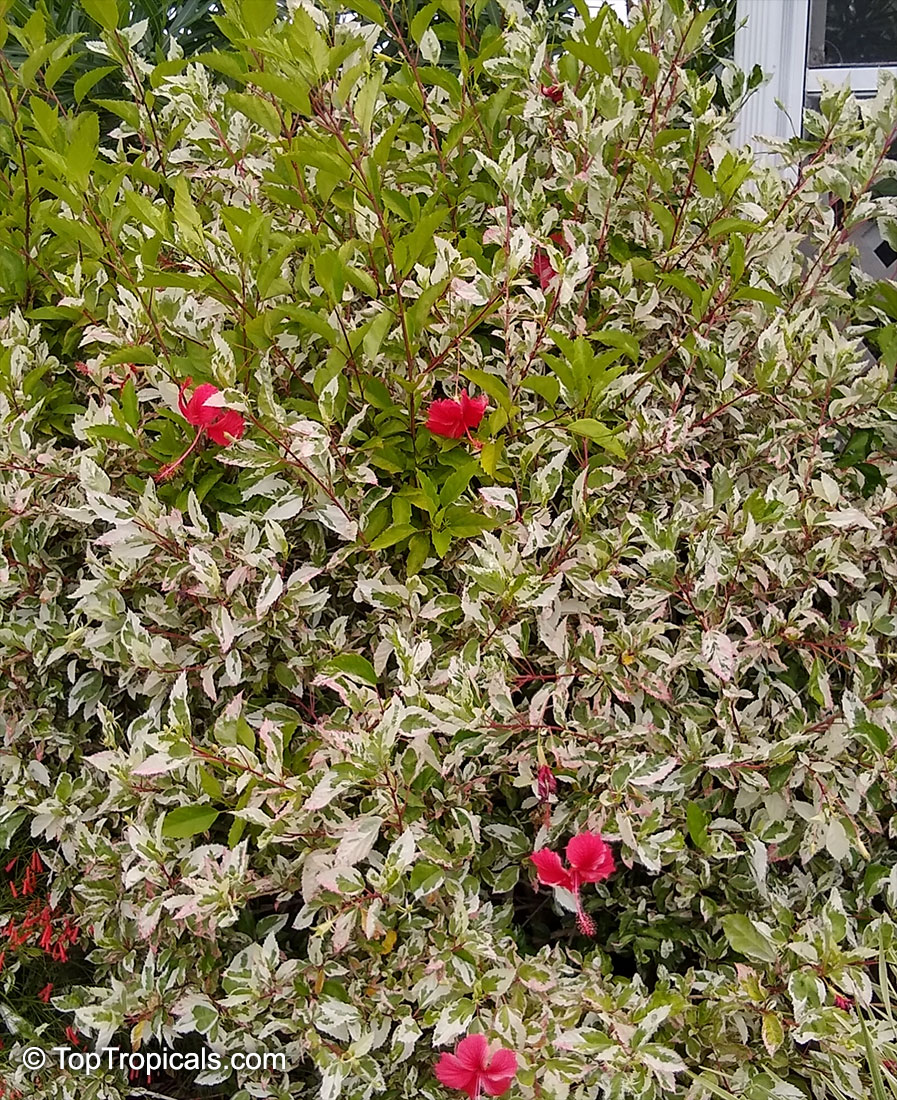
Hibiscus variegated Snow Queen.
Popular landscape bush with unusual look, red flowers over snow white variegation, very showy! Responds well to
pruning. Full sun.
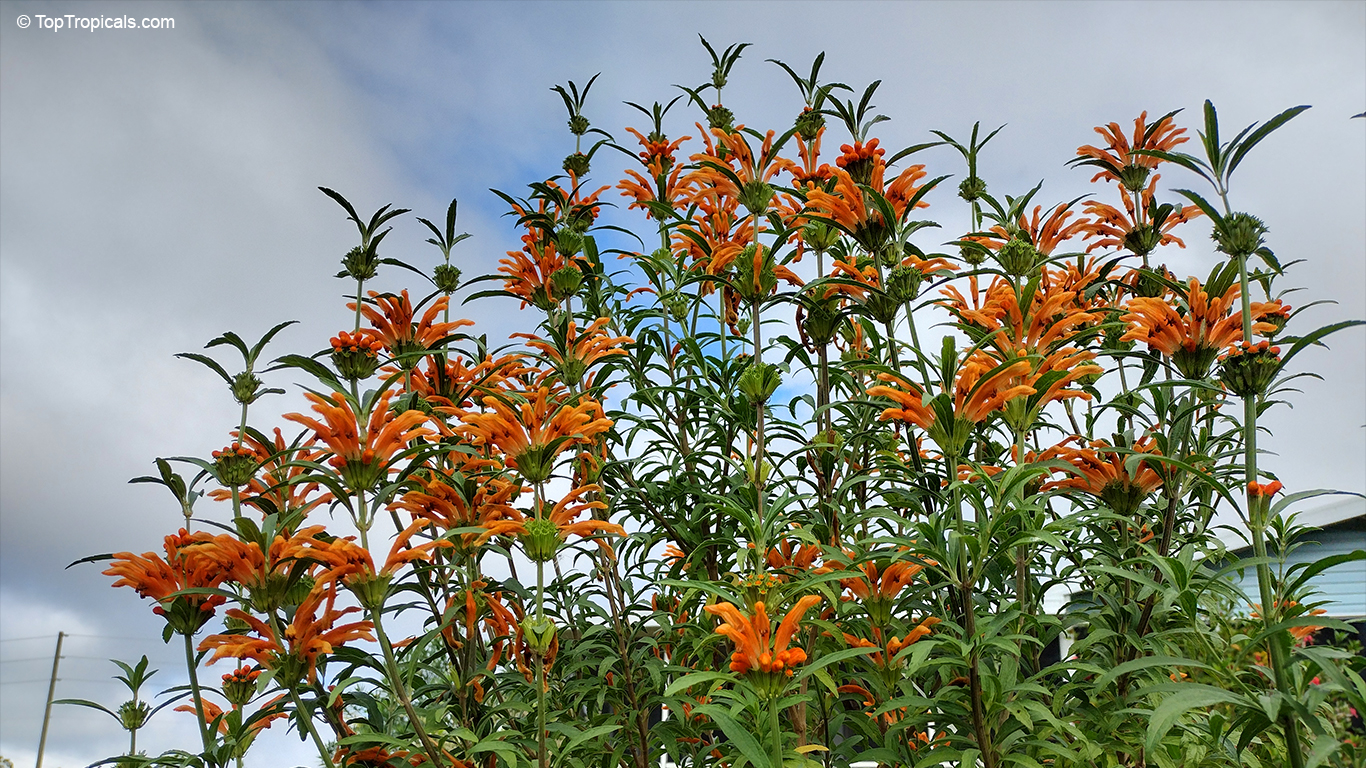
Leonotis leonurus - Lions Ears.
Winter bloomer, great for low hedges. Covered with bright orange curious flowers,
medium sized, easy to control at 3-4 ft. Full sun.
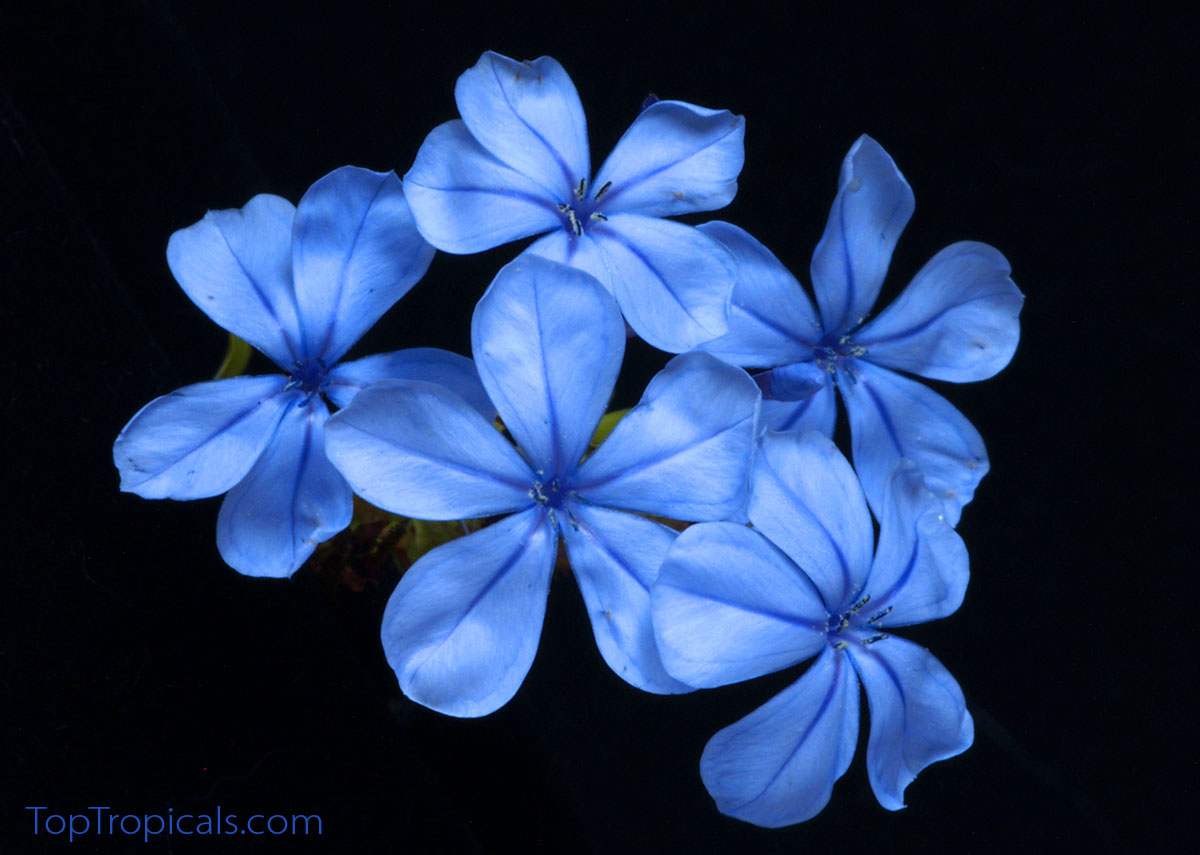
Plumbago auriculata Imperial Blue
One of the most popular Southern hedge plants, everblooming with bright blue flowers, tolerant to drought, heat, and poor soils. Can be maintained short or tall (2-6 ft).
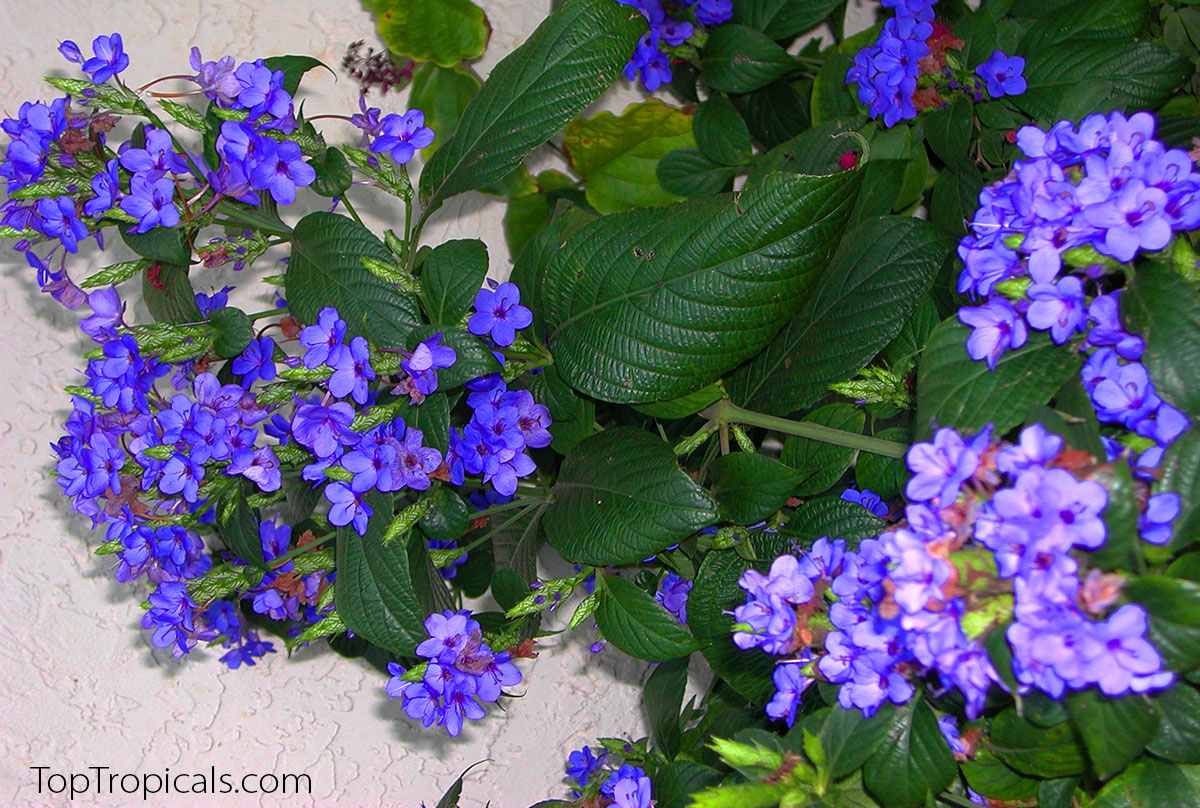
Eranthemum pulchellum - Blue Sage, Lead Flower.
Great for shady spots, winter bloomer with dark green leaves and unusual sky-blue flowers. Can be trimmed if needed. Nice and dense.
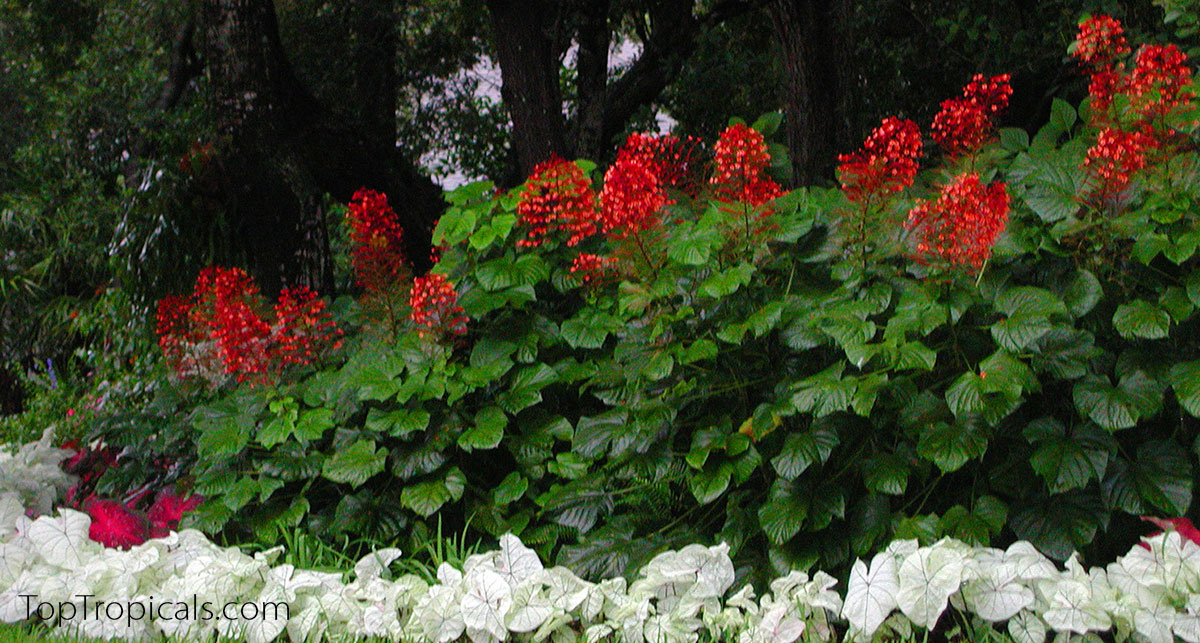
Clerodendrum paniculatum - Pagoda Flower. Happy in the sun or shade, easy plant. Loves water.
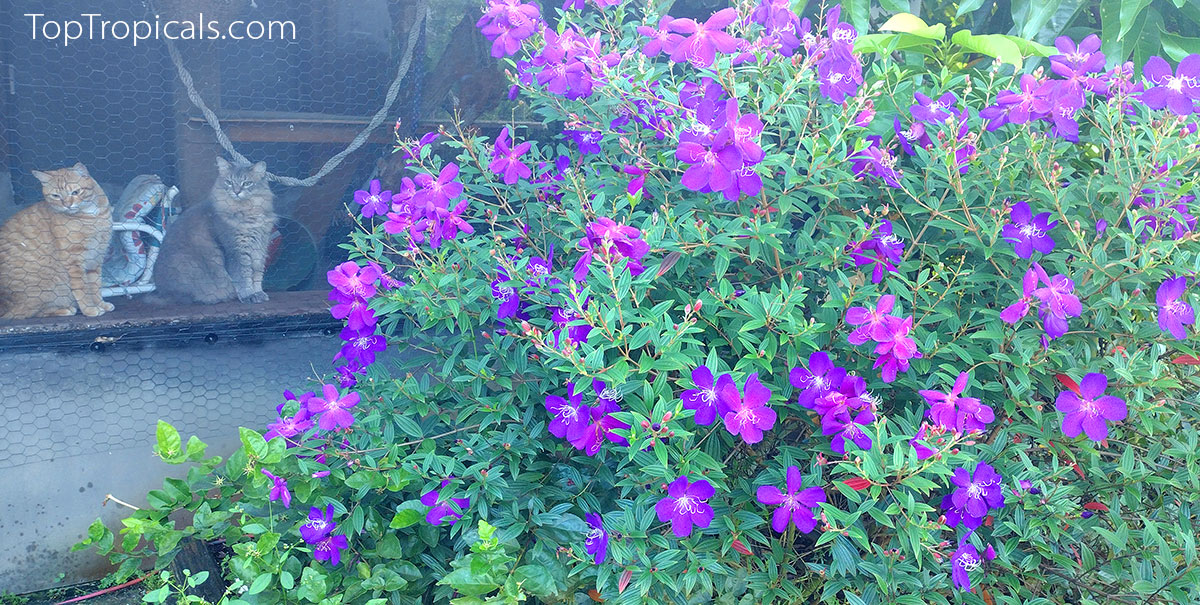
Tibouchina lepidota - Ecuador Princess, Jules Dwarf.
Sun or shade, blooms on and off throughout the year. Beautiful Purple
Princess!
Date: 1 Sep 2023
This Saturday, September 2nd: Garden Event

Kristi's Birthday Bash and Plant Market "Tropical Harvest"
September 2, 9 am - 4 pm
Join us in a celebration recognizing the central pillar of the great Top Tropicals temple - Kristi! We are excited to invite you to a special event, "Kristi's Birthday Bash and Plant Market", where we will be celebrating our beloved manager, Kristi, and showcasing a wide selection of tropical fruit trees and flowering plants.
This event will be an opportunity for you to explore our beautiful garden and discover a variety of plants for your own green oasis. We have lined up exclusive deals and sales on our exceptional plant collection, making it the perfect time to add some tropical flair to your home. Bring your friends and family, and immerse yourself in a day of gardening joy and community spirit!
Event agenda:
9 am - 4 pm: Plant Market. 30% OFF online prices. Raffle.
Gift bags - for first 25 customers with $50 order
Secret Garden: Super savings area 50% off
$2 and $5 sale racks: for local pick up only!
Event discounts valid at both locations:
Ft Myers Garden Center: 13890 Orange River, Ft Myers, FL
Sebring B-Farm: 9100 McRoy Rd, Sebring, FL
Facebook event page - Download invitation

Date: 12 Apr 2023
Colocasia vs Alocasia
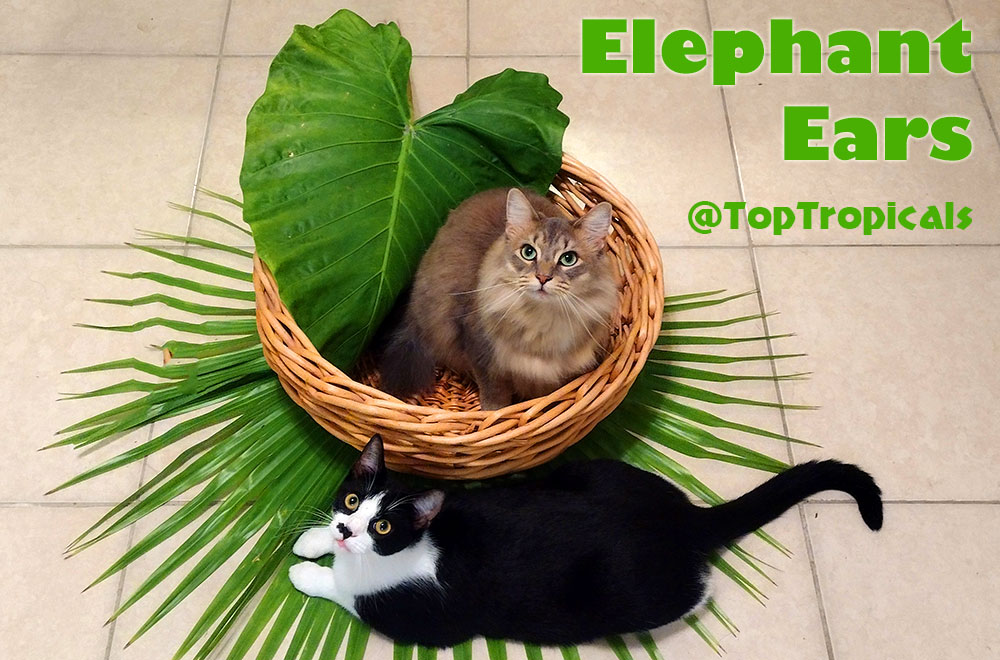
Q: What is the difference between Alocasia and Colocasia? They both are called Elephant Ears...
A: Alocasia and Colocasia are exotic tropical-looking plants with large, arrow- or heart-shaped leaves resembling elephant ears, hence the common name. They are both members of the Araceae family and are often confused with each other due to their similar appearance. The key differences between the two plants:
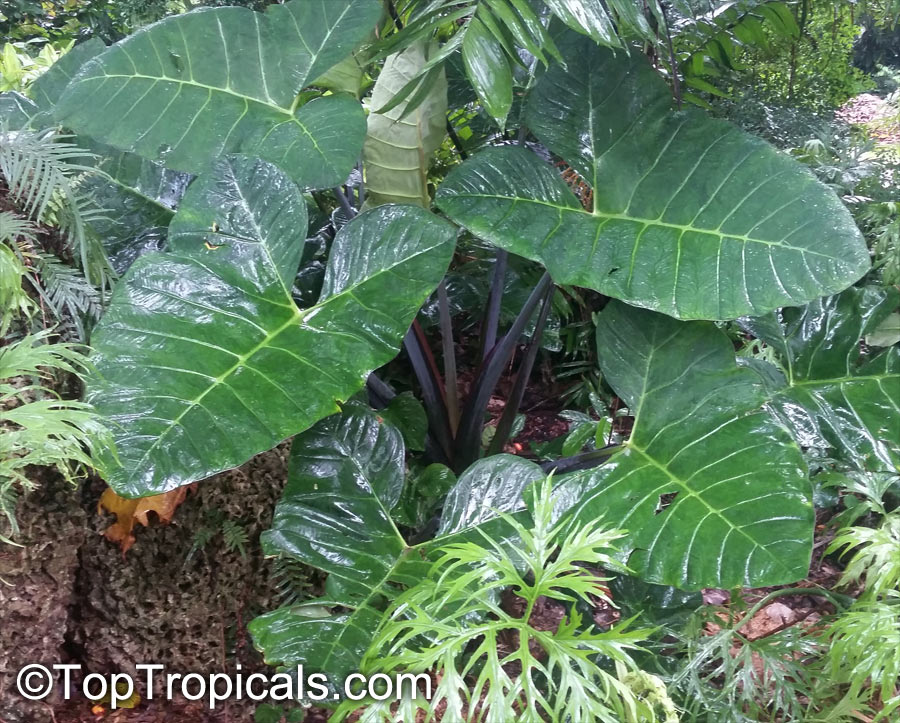
Leaf shape: The leaves of Alocasia are typically arrowhead-shaped and have a more elongated appearance. The leaves of Colocasia, on the other hand, are more heart-shaped and broader.
Leaf texture: Alocasia leaves have a smooth, glossy texture, while Colocasia leaves are typically more matte and have a slightly rough texture.
Stem color: The stems of Alocasia plants are typically green, while the stems of Colocasia plants are usually purplish, dark or almost black.
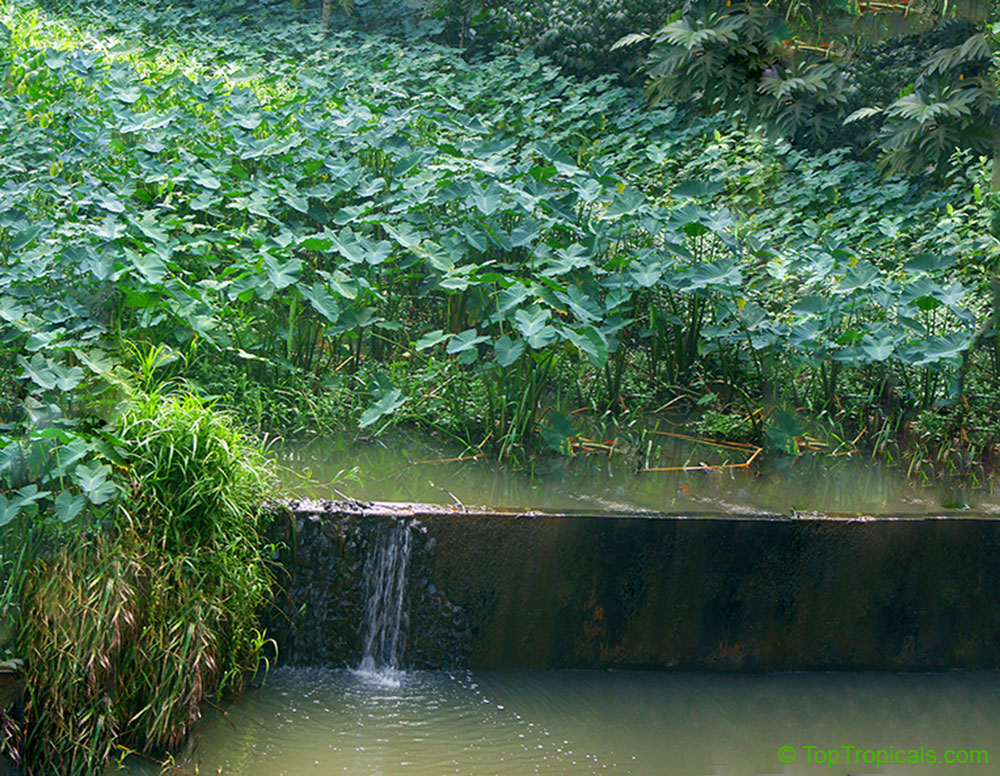
Growing conditions: Alocasia plants prefer bright, indirect light and well-draining soil, prefering to stay on a dry side, while Colocasia plants prefer partial to full shade and moist soil.
Hardiness: Colocasia plants are generally more cold-hardy than Alocasia plants and can tolerate colder temperatures. Both Alocasia and Colocasia may go dormant in Winter especially in cooler climates, and grow new leaves in Spring.
Elephant Ears are absolutely gorgeous tropical plants. They add bold texture, tropical flair, and thrive in filtered light, making it a unique and low maintenance addition to any garden, especially shaded locations.
Date: 8 Jan 2023
2023 - a year of Hope,
a year of the Cat who protects your crop
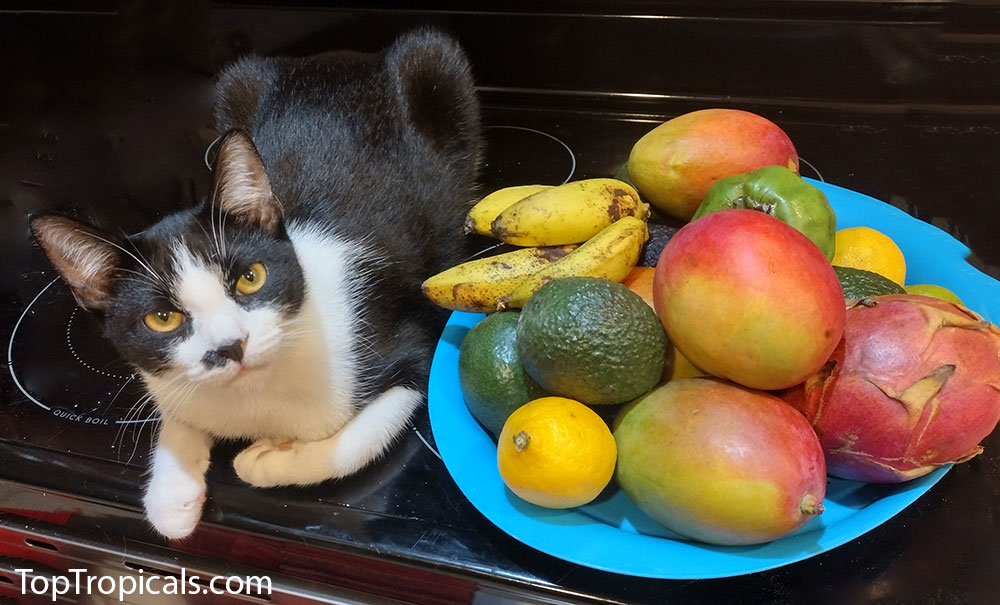
According to the Vietnamese Lunar Calendar, Year 2023 is a year of the
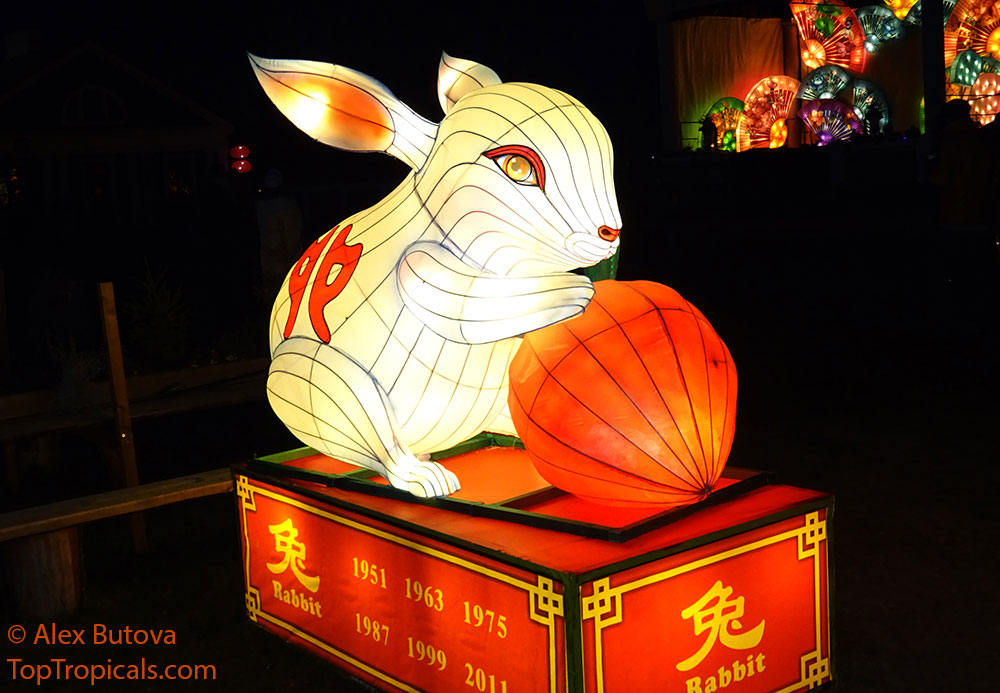
Water Cat, starting from January 22nd, 2023 - same as Chinese New Year.
While in Chinese culture it is called a Year of the Rabbit, the Cat was seen as more relevant to the daily lives of
Vietnamese farmers, who valued the cat's ability to protect their crops from rats, squirrels... or even
rabbits?
At the same time, the Vietnamese year of the Cat also symbolizes tenderness, gentleness, and kindness. The sign of Cat is a symbol of longevity,
peace, and prosperity.
2023 is predicted to be a year of hope
Date: 25 Dec 2022
Surinam Cherry Lolita and Bermuda Christmas Pie
By Alex Butova, the Witch of Herbs and Cats
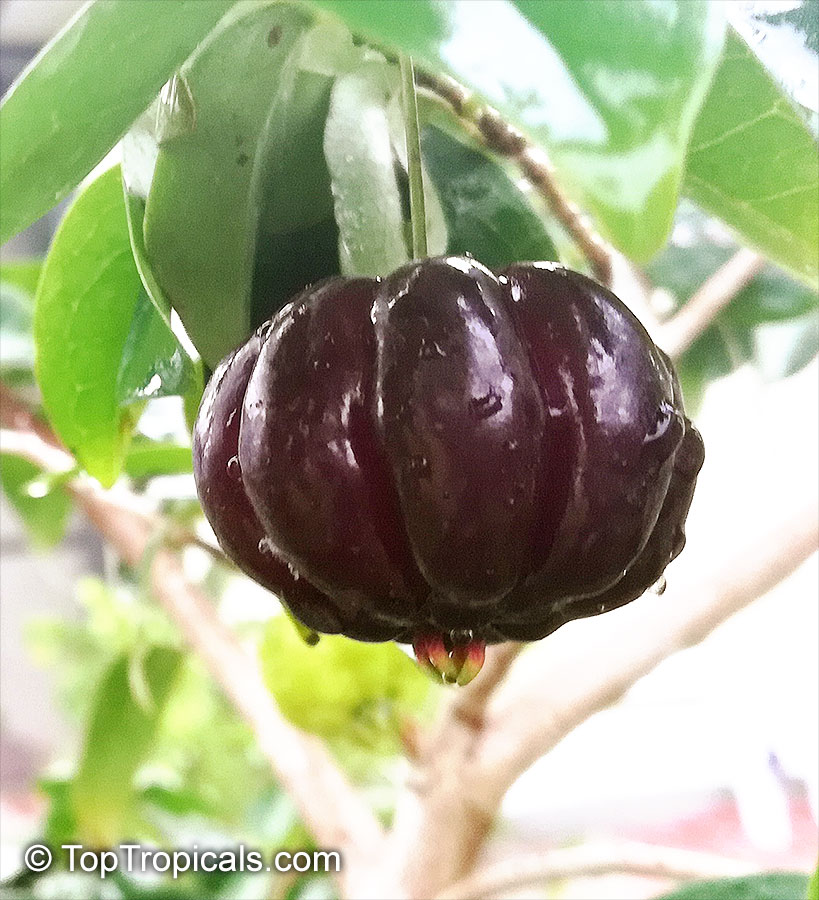
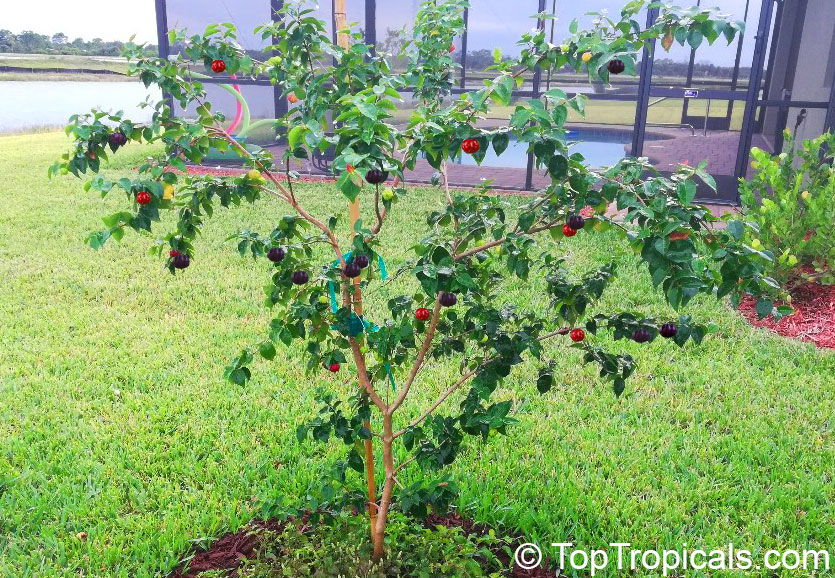
Eugenia uniflora Lolita also known as Black Surinam Cherry, is a tropical fruit tree native to South America. Black fruited Surinam Cherry starts as red and turns black as it ripens and has exceptional flavor. The plant is vigorous and ready to fruit the same year. The fruit is very sweet, without aftertaste, large 1-1.2 inch, very juicy. The fruits are being eaten fresh, and also used in jams, jellies, and pies.
One popular use of Surinam Cherry is in Christmas cherry pie - Bermuda Pie, a traditional dessert served during the holiday season. The fruit is cooked down with sugar and spices to create a thick, flavorful filling for the pie. The dark red to really black color of the fruit adds a festive touch to the dessert.
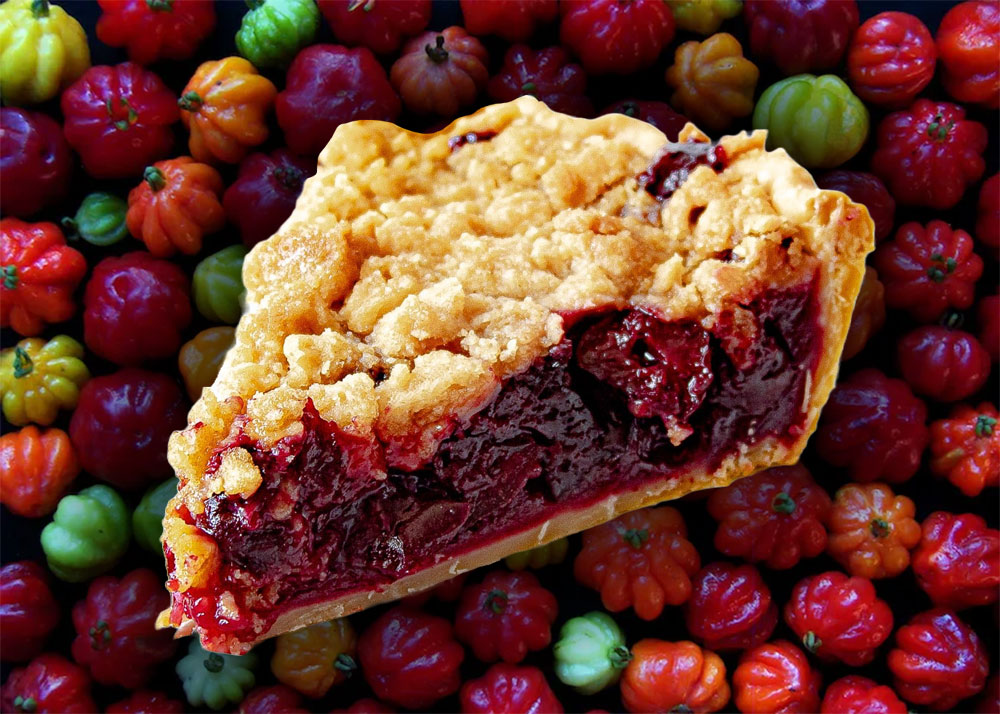
In addition to being used in culinary applications, Surinam Cherry has a number of other uses. The tree is often grown as an ornamental plant due to its attractive foliage and bright ribbed fruit. The fruit is also used in traditional medicine in some parts of South America, where it is believed to have antioxidant and anti-inflammatory properties. The pulp is a good source of calcium, and a fair source of phosphorus and iron. Its juice is fermented into wine or vinegar.
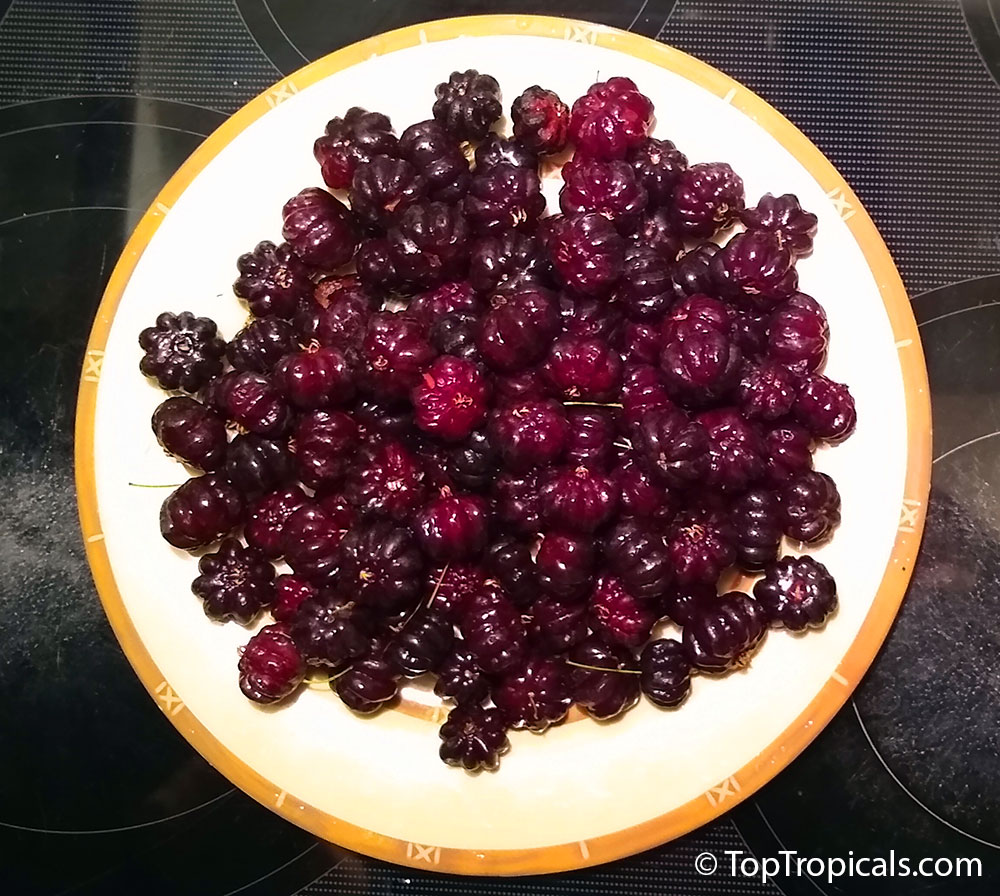
Despite its many uses, Surinam Cherry is not widely grown outside of its native range in South America. However, it is becoming increasingly popular in tropical and subtropical regions around the world, where it is prized for its attractive appearance and flavorful fruit. This tropical plant can successfully be grown in a pot indoors in the cooler zones.
See Video: