Garden Blog - Top Tropicals

Date: 21 Jan 2017

Growing a coconut palm
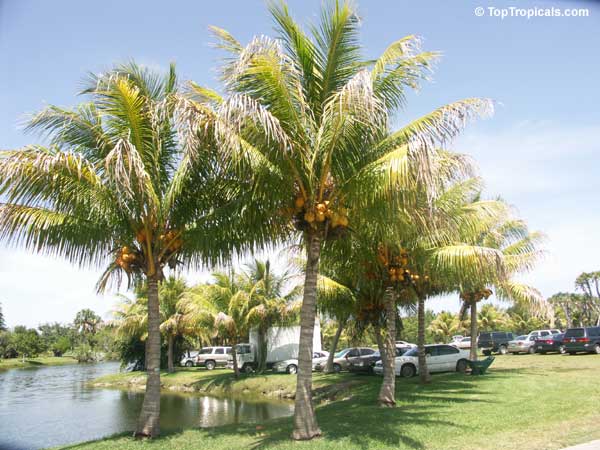
Q: I love your Facebook section "ask the Gardener"! I received a coconut palm from a neighbor four years ago. It sprouted naturally from seed. We moved it to a location where it gets morning/ early afternoon sun in my yard. It hasn't grown. No, really. I've fertilized it, water it, what gives?! It puts out new green leaves every so often to replace old brown ones, but never gets any vertical height changes. I'm stumped!

A: It could be a few things and it could also be the type of coconut you are growing. Cocos nucifera is the only type of palm tree that produces coconuts. Within this species, however, there are dozens of different varieties of coconuts. The different varieties are usually divided into two main types: tall and dwarf. If it is only getting water when it rains, it does need more water. There could also be a problem with the PH in your soil. Most garden centers will be able to test your soil and let you know what it is missing. It could also be a micro-elements deficiency. We do have a micro-elements mix you can find at Toptropicals.com. Micro-elements are not always found in regular fertilizer.

Date: 31 Dec 2016

New Video: SUNSHINE Plant Boosters

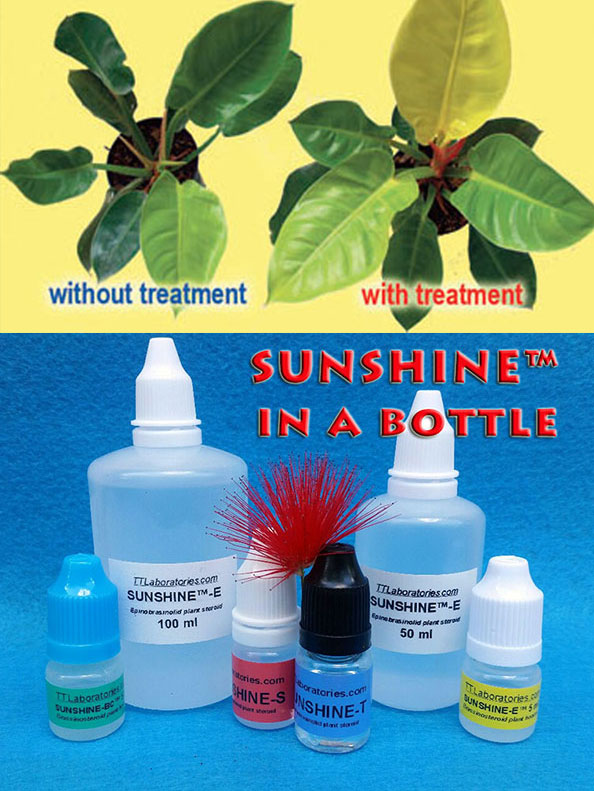
TT Laboratories presents: SUNSHINE In A Bottle!

Check out this video: SUNSHINE In A Bottle


SUNSHINE is a new generation of a plant booster, formulated specifically for tropical plants. SUNSHINE intention and direction is towards the general health of the plant and boosting its immune system; helping plant to recover from stress, increase flower and fruit production, improve cold hardiness, disease resistance, seed germination and much more!
TTLaboratories is offering the following products:
- SUNSHINE E - for general applications, stress relief and growth boosting
- SUNSHINE T (Thermo) - for better cold tolerance
- SUNSHINE BC - for bonsai and caudex
- SUNSHINE S - for seeds germination
- SUNSHINE H - for house plants
All of the SUNSHINE products come in an easy to use dropper for small to large application use.

Get some SUNSHINE!...

Stay updated with TopTropicals Videos by subscribing to our channel at YouTube.com/TopTropicals and get our latest video news of what's fruiting and blooming!

Date: 19 Dec 2016

Update on SUNSHINE in a Bottle

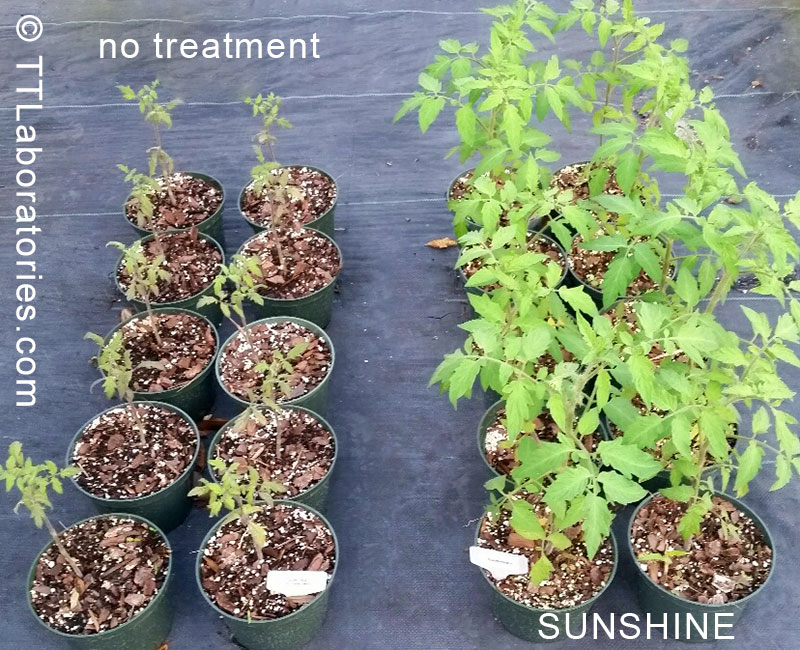
Photos of our experiments. These tomato seedlings potted 4 weeks ago, and batch on the right treated with standard recommended dose of SUNSHINEâ„¢ twice (within one week period). They are setting buds and flowers, while untreated plants (batch on the left) have much slower growth rate and are still far from flowering.
See TTLaboratories website and order SUNSHINE boosters.

Date: 15 Dec 2016

SUNSHINE in a Bottle

SUNSHINE-H - plant booster for house plants specially formulated for plants grown indoors:
- protect from insects and improve disease resistance,
- improve tolerance of indoor plants to low light, and low humidity conditions;
- maintain healthy dormancy of seasonal species and help to rapidly break dormancy in Spring.


Directions:Mix with distilled water as follows: 2.5 ml to 1 gal. Spray traditional house plants - once in 2 weeks, tropical plants overwintering indoors, including woody ornamentals and potted fruit trees - once a week, leafy herbaceous perennials - once a month.

SUNSHINE in a Bottle - effective plant stimulant from new line of plant boosters, the representative of a new generation of agricultural chemicals. Developed by TT Laboratories LLC and designed specifically for applications on tropical plants. Can be used as well on seeds, seedlings, and small vegetable plants (completely organic and safe). It is proved to be a magic growth promoter, improves cold hardiness and heat tolerance of tropical plants.
,br> See page about SUNSHINE.

Order SUNSHINE boosters.

Date: 18 Nov 2016

Happy Holiday Season!

WINTER COMING TIPS. As the weather gets cooler, many of you move your potted tropical plants indoors. Please remember:

1. Lower air humidity, lower light and short day may cause some LEAF DROP. This is normal for seasonal environment change.

2. REDICE WATERING as winter coming. Under lower light and in cooler temperature, plants won't need much water; some plants go dormant and only need minimum water. Excess water may damage roots and kill a plant in winter.

3. NO FERTILIZER in winter. Active growth stops. Let the plant to go into dormancy or simply have a rest.

4. Watch for INSECTS by inspecting leaves regularly. They may attack plants more likely in the indoor conditions.

5. Apply SUNSHINE boosters to protect your plants from cold by boosting their immune system, vogor and cold tolerance. STAY WARM!

20% off sale ending soon! Check out our large selection of plants that are easily grown in containers. This week only, 20% off!