Garden Blog - Top Tropicals

Date: 10 Oct 2016

Cold protection - winter action for your plant collection
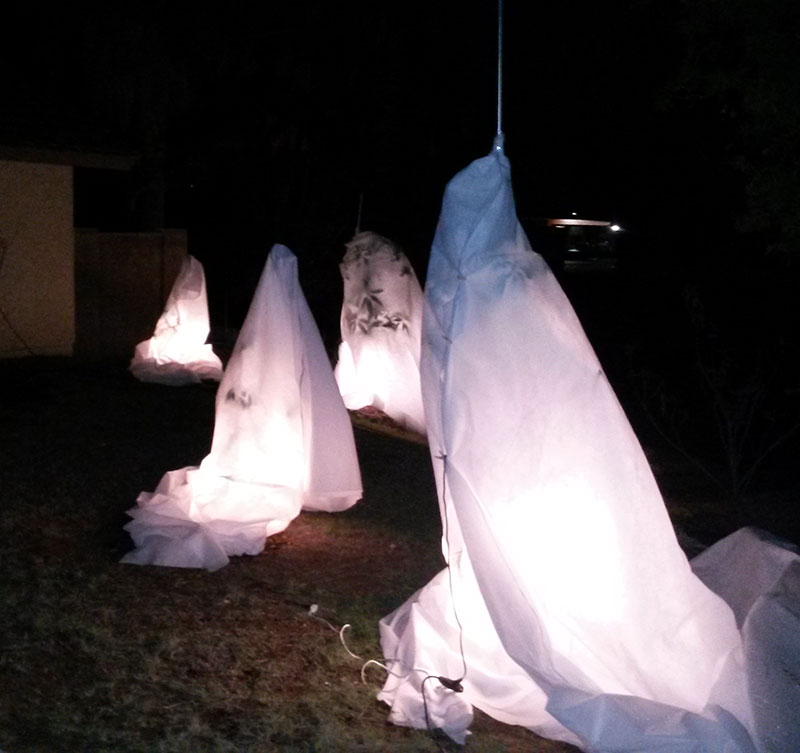
A note from our customer: Last winter was very cold here in Arizona, lower 30's. I used white synthetic sheets (called frost cloth, it is very light and yet effective) to cover my fruit trees, and kept simple light garlands on for the whole night. Sending you couple photos so you can share with others. It worked pretty well for my plants and no cold damage!

With winter approaching, it is time to take some actions to protect your rare plants from cold stress and damage.
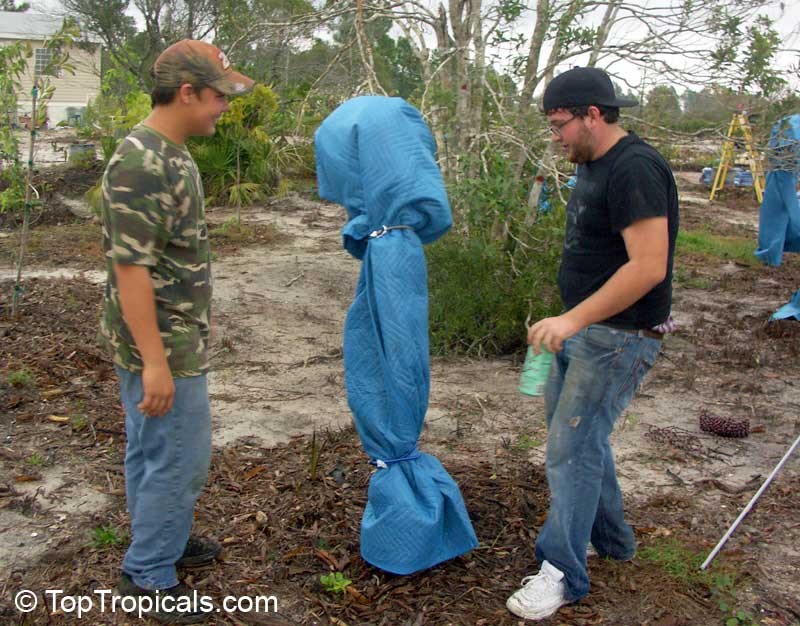
If you live in a mild climate, you still need to get ready for the cold nights. When expecting a cold night, individual plants and trees can be wrapped with sheets, or blankets, to protect them from the wind chill. Christmas lights is a good idea for an additional warm up.

For large collections of tropical plants, temporary winter greenhouse doesn't have to be expensive. An easy-assembly mobile carport from a hardware store covered with a plastic or fabric will cost you $100-200. It can fit a hundred plants or more!

If you live in area with a hard freeze, Southern exposure windowsill will work for most of the compact tropicals providing proper care. Larger collections may also move into your garage for a few cold nights, or for longer periods if the garage has a bright light source.

Factors affecting tropical plant winter survival:

1. Duration of cold period. Tropical plants can't stand long periods of cold. A few days of even upper 30's may kill a tropical plant. A few hours of frost may cause leaf drop but the plant will recover.
2. Minimum temperature - of course, the warmer the better. But see 1) - if cold is not for too long, it may be OK.
3. Wind-chill can be more dangerous than low temperatures.
4. Exposure. Southern slopes get warm during daytime and stay warm longer.
5. Protection with a house, fence, larger trees - where a "pocket" of warm air forms and stays - is beneficial.
6. Humidity. A lake or a river nearby (especially ocean) will mild the micro-climate.
7. Individual species hardiness. Don't try to grow Orchid Tree outdoors in New York.
8. Plant maturity and health. A well-established plant with developed root system has more chances to survive cold. If a plant had a good change to develop during warm season (bright light, enough water, fertilizer), it will be more cold hardy. Healthy plant can withstand lower temperature, so proper nutrition is important, including micro-element applications. Large specimens, even ultra-tropical, may survive cooler winter than they normally do in their natural habitat. The Nature provided plants with better hardiness level than it is normally used. To boost plant immune system and improve cold tolerance even more, use SUNSHINE plant boosters. SUNSHINE-T - thermo-protection booster, is specially formulated for winter protection of tropical plants. To improve cold hardiness, spray 1-2 days prior to cold with 5 ml/1 gal solution and continue applications with 2.5 ml/1 gal solution every 10-15 days throughout winter period.
9. Gradual temperature decrease is less dangerous than a sudden drop since it gives a plant a chance to adjust. One sudden freeze in December with prior warm fall may create more damage than a gradual temperature adjustment. If it starts to get cold early in the Fall, plants slow down their metabolism, and the new tender growth won't get hurt later in winter, since the plants are "expecting" the cold.
10. Do not fertilize plants during cool months. Not only because they don't need much food beyond growing season, but also because fertilizer (especially Nitrogen) encourages rapid tender growth that will be damaged by cold and this will stress the whole plant.

Stay warm!
Date: 18 Sep 2016

About Cold Protection...

Q: I have a question, if I'm in Okeechobee Florida zone 9b are there any plants that you sell that would have to be protected at all? I have a lot that I've purchased from you and don't want to lose any of them winter.

A: Sometimes it is hard to guarantee if certain plants are hardy enough in certain area. From our experience, tropical plant performance in non-tropical areas depend on many factors; a lot of times plants appear to be hardier than they are believed to be. Other times, an obviously hardy plant doesn't survive winter. So there always will be a chance of risk involved, while nice surprises are not an exception. We have been testing many tropical species throughout many years of our nursery experience. Wind protection in many cases is more important than temperature. Enclosed sections of your garden provide better chances to survive cold snaps. Generally speaking, here is the list of some plants (not complete list, just examples) that in our experience have been surviving light freezes without significant damage.

Q: I live in San Jose,CA. Got Mango Alphonso 2 yrs back and protected it for a year in a pot during winter. Last spring I planted it and during winter I put a freeze cloth to protect it but it died. How can I make sure it wont die if I buy this time plz?

A: Mango trees are tolerant only to light frost, once established. If it gets below freezing in your area for more than a few hours, and especially if you have numerous nights with frost throughout winter, we recommend to keep mango tree in a pot. This way it can be moved to protected area during cold night. The more established the tree, the more chances to survive colder temperatures.
We also use plant booster Sunshine to increase plants cold tolerance
Cold protection is a lengthy subject. You may also use propane heaters during cold nights.
Here is some more information on cold protection.
Also, we recommend to check out our magazine Tropical Treasures (about pushing the limits of tropical gardening) for a detailed article on cold protection.
These are specific articles on Zone-Pushing in different issue #s regarding dealing with cold. See downloadable issues:
(#1) Growing Tropicals in Nontropical Climate, Three Freezing Nights in Southwest Florida
(#2) Temperature drops - an alert or a rehearsal?
(#5) Dealing with cold snaps, Cold hardy beauties
(#7) When winter is around the corner, Growing exotic Cordyline in colder climate
(#8) When the weather outside is frightful
(#9) Winter champions
(#11) Ready-for-winter checklist for in-ground plants
(#13) Winter checklist
(#18) Dealing with cold damaged plants
You may also order hard copies.

If temperatures drop below freezing in your area, remember to add Heat Pack to your order!

Date: 2 Apr 2026

Skip the Egg Hunt - Start a Plant Hunt 🐰

Smokey  the  black-and-white  cat  with  glasses  sits  on  a  patio  taking 
 notes  while  Sunshine,  a  fluffy  orange  cat  wearing  bunny  ears,  holds  a  small 
 potted  mango  tree  with  light  yellow 
 flowers.
Sunshine: I went egg hunting. Found something better. Let’s grow it on the balcony. Mango-filled donuts, here I come.

Smokey: Finally. You’re thinking.

Read more about Smokey & Sunshine

Groundhog said long winter… and it sure felt like it. But now it is finally over, and balconies and patios are waking up again.

Easter is here, and with it comes that fresh start feeling - time to open the doors, bring plants back out, and start growing.

We made it through the cold. For northern gardeners, that is every year; for borderline zones, it is a reminder that freezes happen. That is exactly why growing in pots makes sense - you stay flexible.

Container growing is not just about pots - it is about choosing the right plants. The best options stay manageable, produce well, and handle being moved.

Let's look at what works. Start with plants that naturally stay compact and adapt well to containers. These are the ones that won’t outgrow your space and will reward you quickly. These are proven performers in containers - compact, productive, and easy to manage:

Simple rule: if it stays compact and handles pruning, it works in a container.

Skip the egg hunt this year - go on a plant hunt instead. Start with one or two plants this Easter - not ten. Get them established, learn how they grow, and then expand.

Container basics (keep it simple):

  • Pot size: start with 3–7 gallon, upgrade as plant grows
  • Soil: fast-draining mix (never heavy garden soil)
  • Water: soak well, then let top inch dry
  • Feeding: consistent light feeding works better than heavy doses
  • Sun: most tropicals want full sun (6+ hours)

🐣 Browse our Easter Container Collection

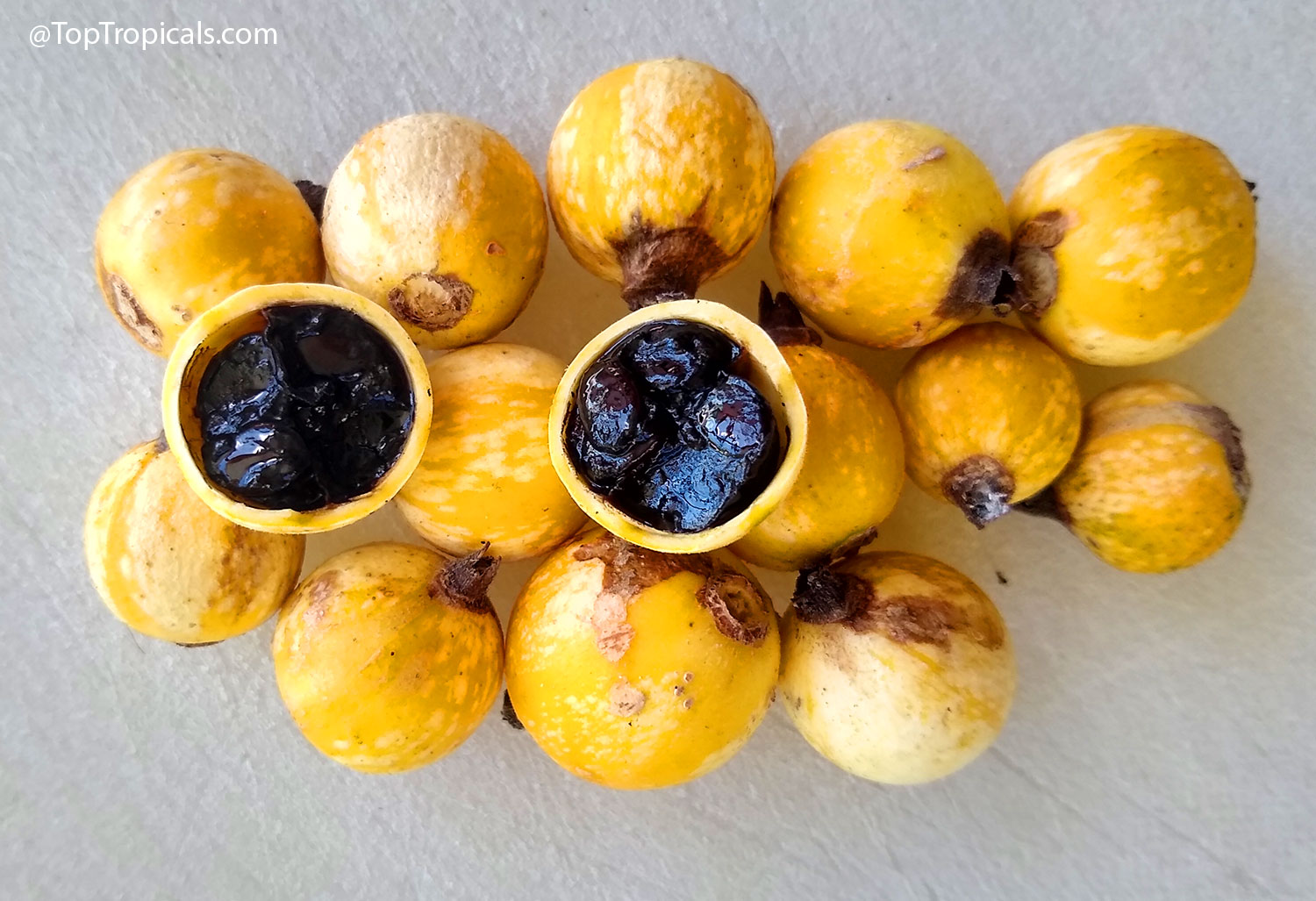
Randia  formosa  (Blackberry  Jam  Fruit)  showing  yellow  ripe  fruits,  some 
 cut  open  to  reveal  glossy  dark  pulp 
 inside.

Randia formosa - Blackberry Jam Fruit

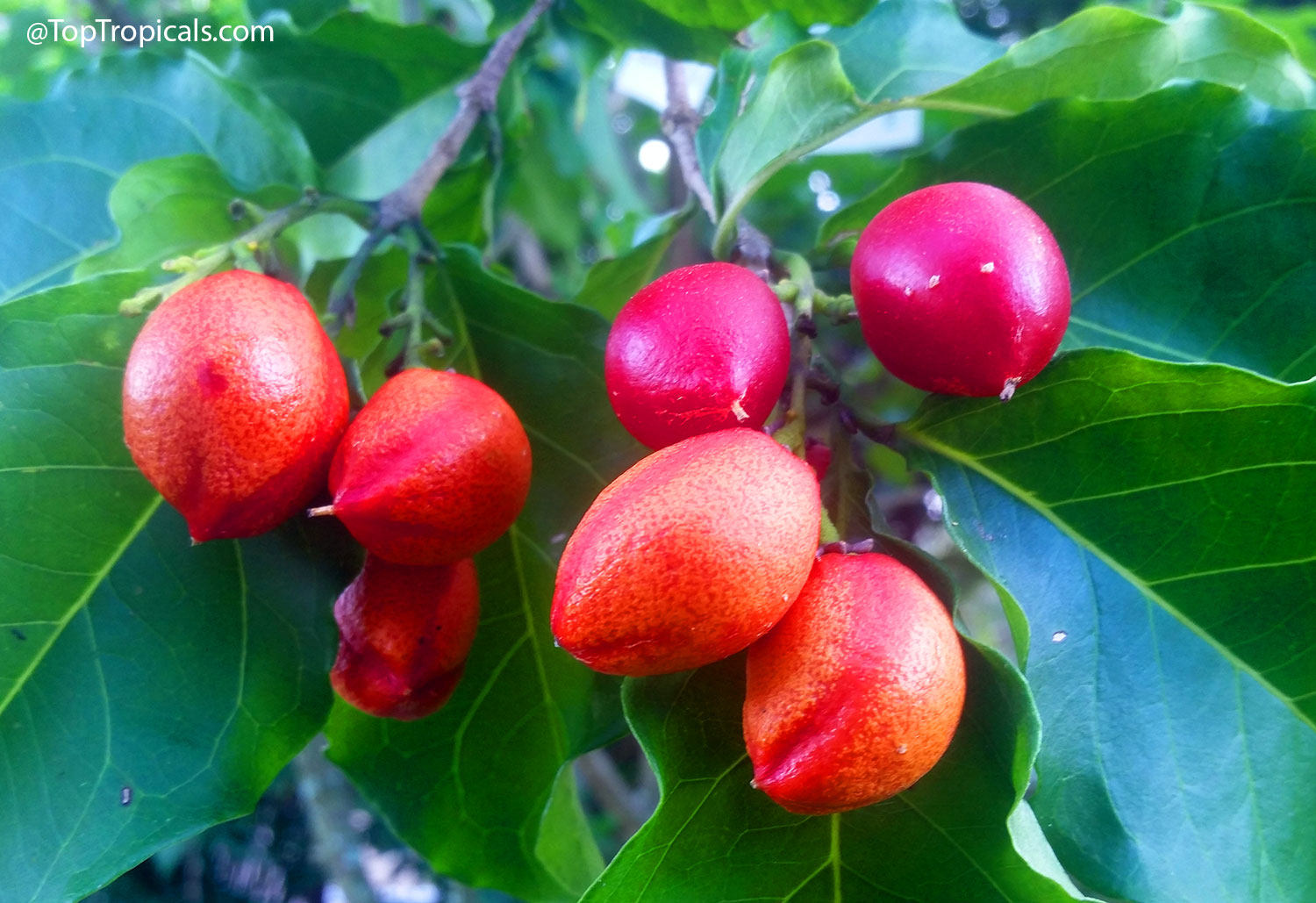
Bunchosia  argentea  (Peanut  Butter  Fruit)  showing  clusters  of  red  ripe 
 fruits  on  a  leafy 
 branch.

Bunchosia argentea - Peanut Butter Fruit

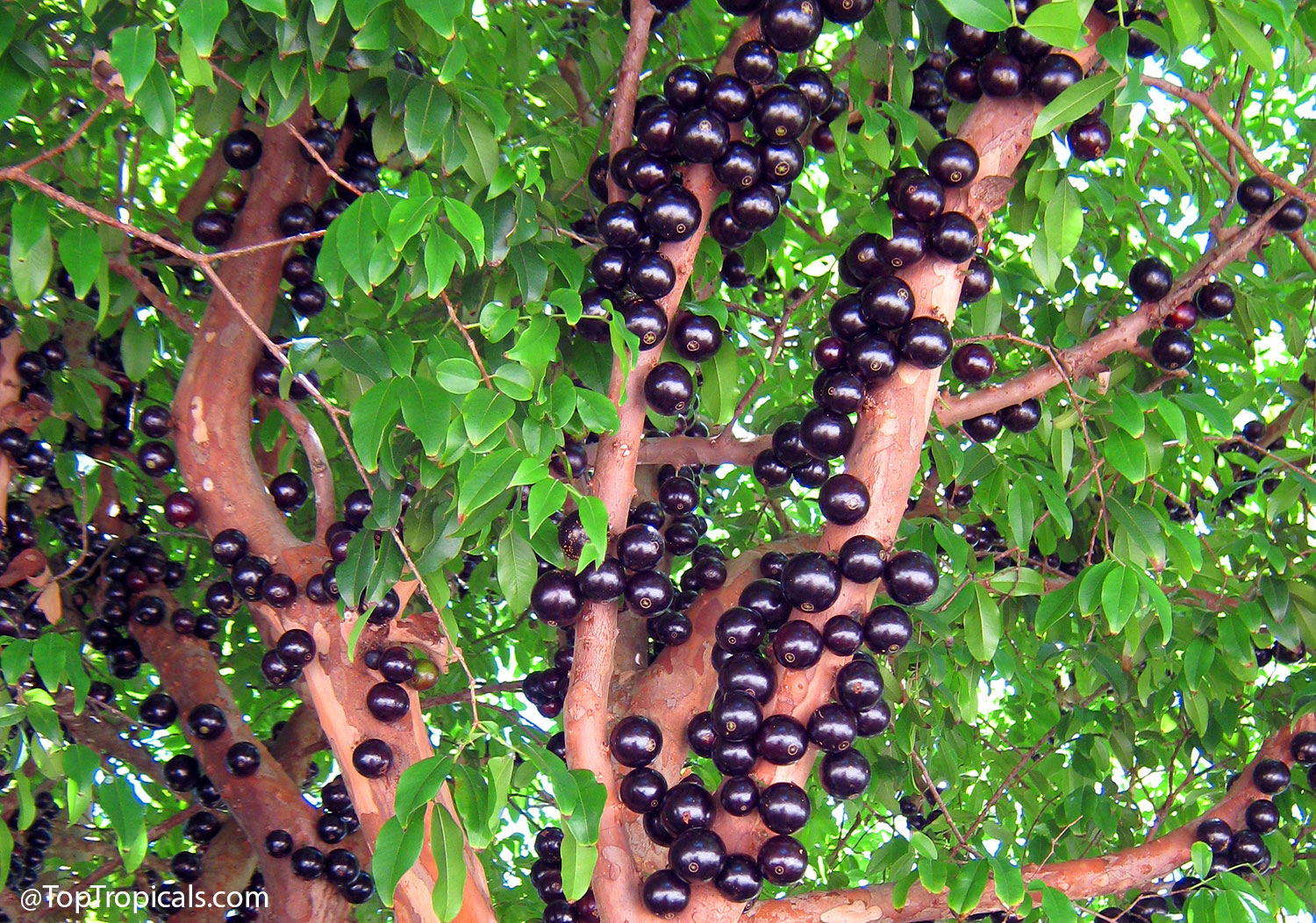
Myrciaria  cauliflora  (Jaboticaba)  tree  with  clusters  of  dark 
 purple-black  fruits  growing  directly  on  the 
 trunk.

Myrciaria cauliflora - Jaboticaba

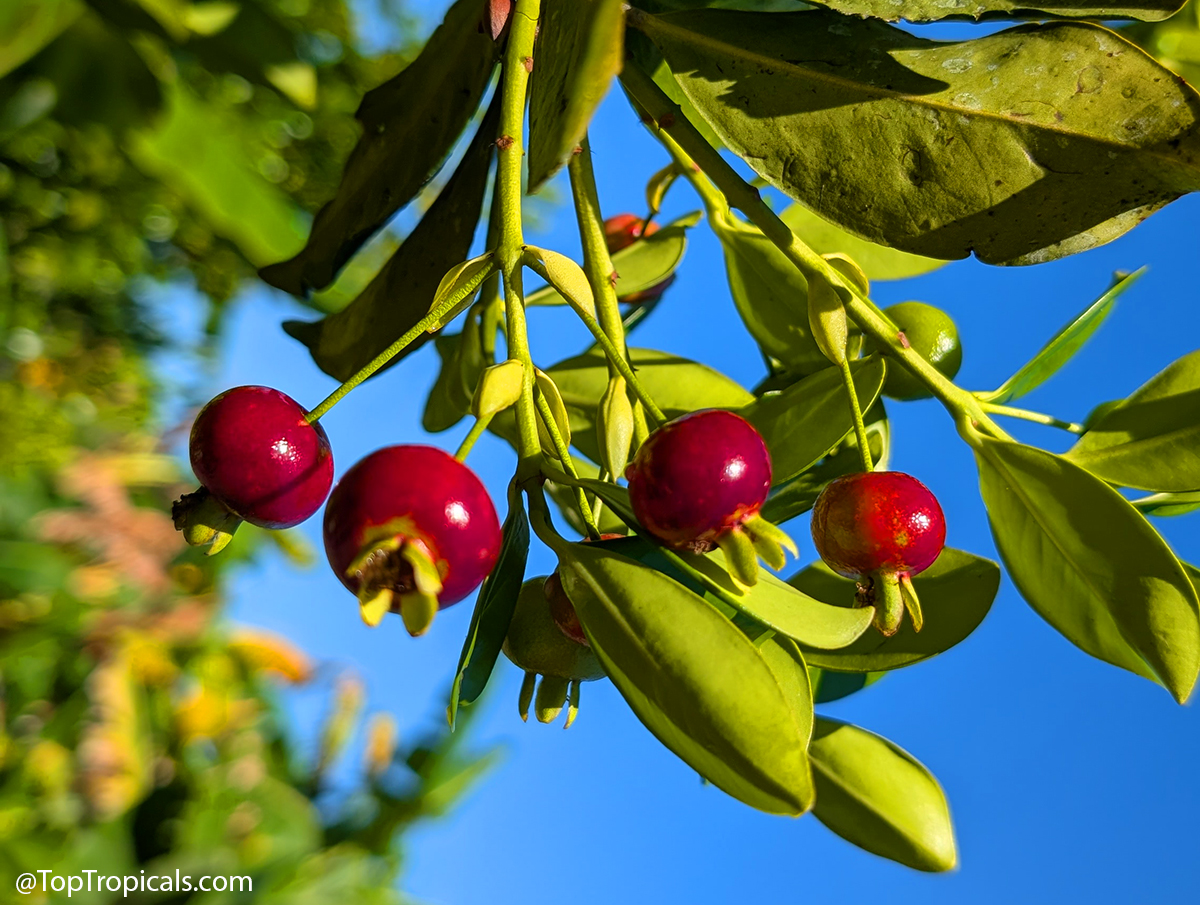
Eugenia  brasiliensis  (Grumichama)  with  red  ripe  cherries  hanging  from  a
   branch  against  blue 
 sky.

Eugenia brazilensis - Grumichama and more Eugenia Cherries

Date: 13 Apr 2026

🏖️ Aloha, Backyard Edition 🌈

Sunshine  ginger  tabby  cat  surfing  pool  wave  with  donuts  and  coffee 
 Smokey  tuxedo  cat  relaxing 
 nearby
Sunshine: Look what I can do. It all started with plumerias. Aloha, backyard edition.

Smokey: You are not just planting a tree - you are building a tropical island lifestyle around it. Not bad for staying home.

It usually starts simple. A plumeria in a pot by the patio. The flowers catch your eye first, then the scent follows you, soft but unmistakable. And that scent does something strange - it brings back places you have been, or places you wish you had. Warm evenings, ocean air, tropical vacations that stay with you long after they are over.

That is the part people do not expect. One plant changes how the space feels. But adding a few changes everything. Different colors, slightly different fragrances, layers that build on each other. It stops being a plant and becomes an atmosphere that pulls you outside without thinking.

Plumeria carries that tropical world with it. The same feeling people travel for can live right outside your door. Mix a few varieties, and your backyard starts feeling like a place you never want to leave.

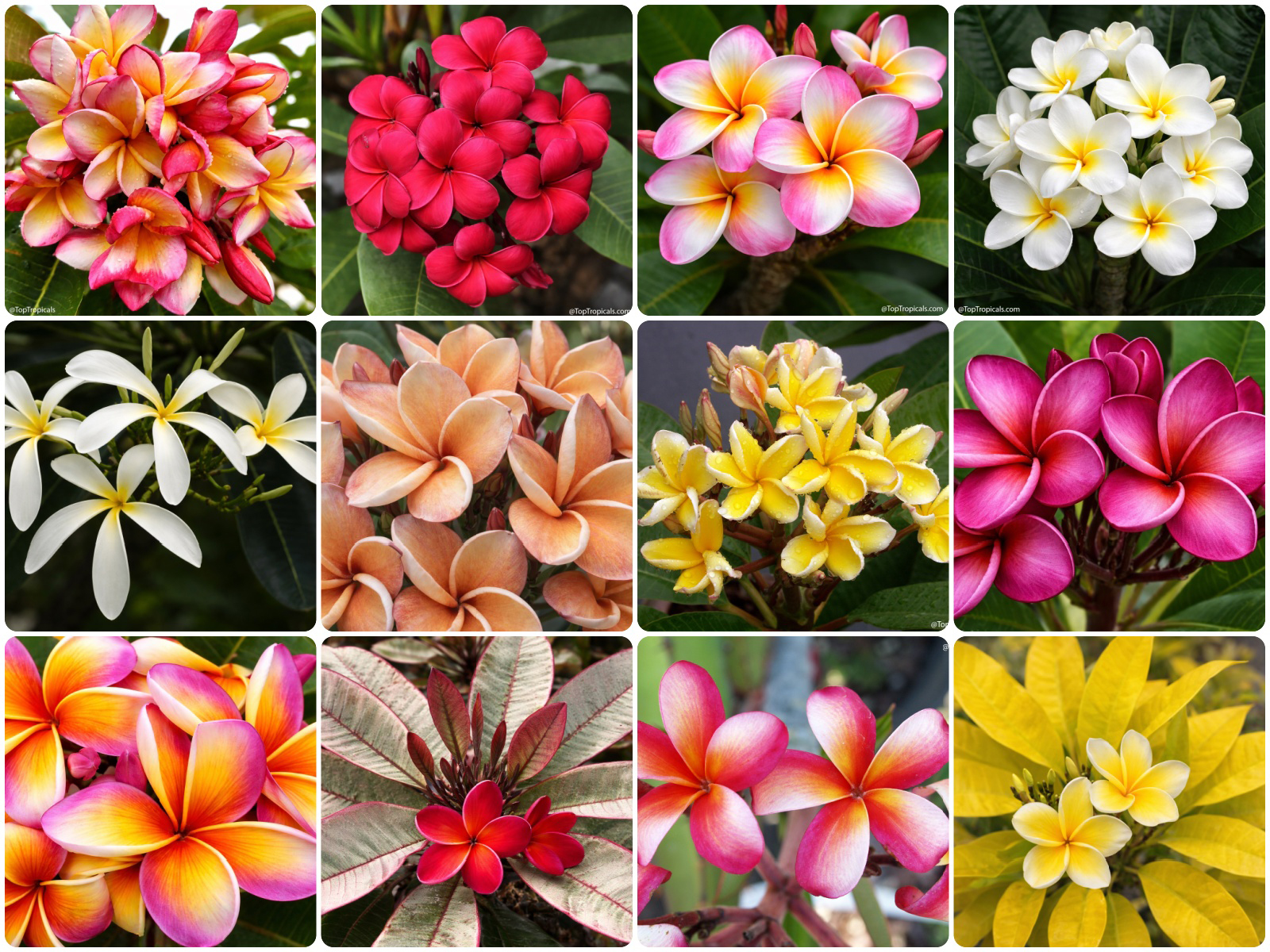
plumeria  flowers  collage  multiple  colors  red  pink  yellow  white 
 frangipani  blooms  close  up

Plumerias are one of those plants you don't just grow - you start collecting. One turns into two, then five, then suddenly you want them all!

🛒 Explore plumeria colors

Date: 22 Sep 2025

Dragon Fruit Plant Care – Tips from the Garden Expert
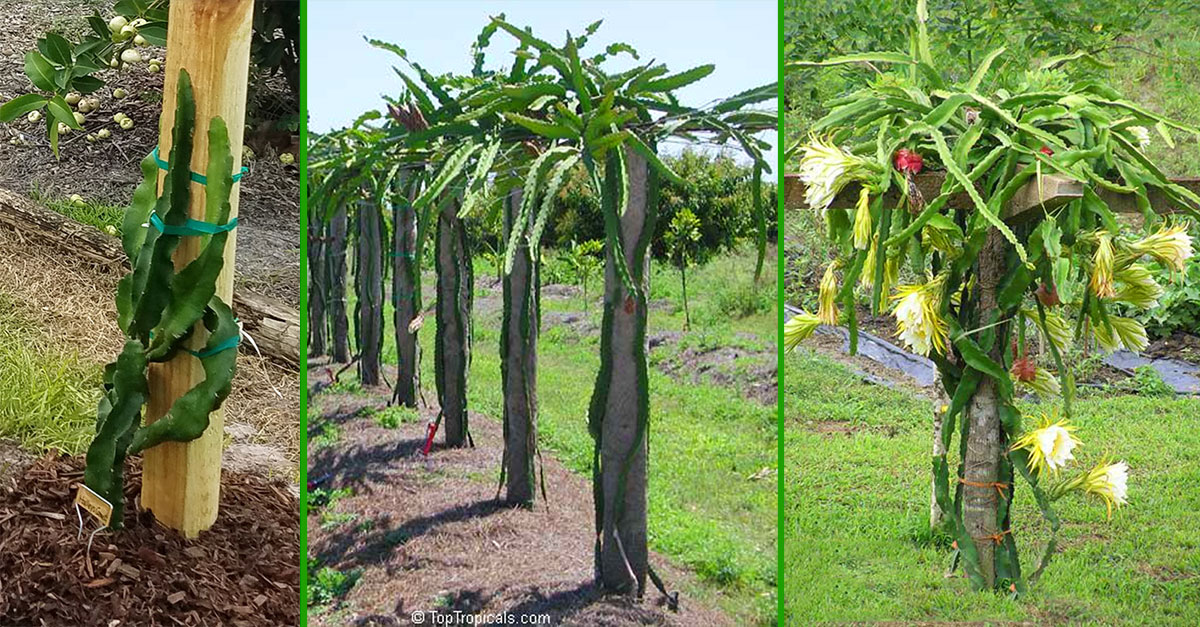
Stages  of  dragon  fruit  pitaya  plant  growth  and  trellis  support 
 system

Dragon fruit is one of those plants that look exotic but are surprisingly easy once you know the basics. Here is what works best in the garden:

  • Soil: They hate wet feet. A sandy, fast-draining soilless-mix is your friend. If water sits around the roots, rot comes fast.
  • Watering: Deep watering is better than frequent sips. Let the soil dry between waterings. In rainy season they cope well, but in pots you need to be careful.
  • Sunlight: Full sun is great, but in very hot places a touch of afternoon shade keeps them happy.
  • Support: They are natural climbers. A wooden post, concrete pole, or trellis will give them something to grab and makes harvest easier.
  • Fertilizer: Feed lightly but often. A gentle liquid like Sunshine C-Cibus liquid booster with every watering, or Green Magic controlled release fertilizer every 5-6 months. It encourages strong roots, lush growth, and lots of flowers.
  • Pruning: Trim off tangled or weak stems. This guides energy into strong branches that will flower and fruit.

Think of it as training a cactus vine into a small tree. Once it settles in, it almost takes care of itself — and pays back with fruit you can’t buy in stores.

🌱 Dragon Fruit Plant Care – Outdoors and Indoors

Outdoors: Dragon fruit thrives in USDA Zones 10–11 year-round. In warm regions like Florida, Texas, California, and Hawaii, you can grow it outside in the ground. Give it fast-draining soil, full sun with a little afternoon shade in the hottest months, and a sturdy trellis or post to climb. Deep watering with drying periods in between keeps roots healthy. A yearly pruning shapes the plant and boosts flowering.

Indoors or Patio Pots: Gardeners in cooler zones can still enjoy dragon fruit in containers. Use a large pot with sandy, well-draining mix or soilless-mix and a pole for support. Place the pot in the brightest spot — a greenhouse, sunroom, or patio that gets 6+ hours of light daily. Move pots inside when temperatures drop below 40F. Even indoors, a healthy plant can bloom and fruit if it has enough light and warmth.

❓ Dragon Fruit FAQ


How soon will a dragon fruit start producing?

Cuttings can flower and fruit in as little as 2–3 years. Seed-grown plants take longer, often 4–6 years. Large developed specimens can start flowering and fruiting within a year or even the same season.

Do I need more than one plant for pollination?

Some varieties are self-fertile, others need a second plant for cross-pollination. Even self-fertile types usually set more fruit with a partner nearby.

How big do they get?

In the ground, dragon fruit can climb 15–20 ft if you let it. With pruning and a trellis, you can keep it shaped like a small tree, 6–8 ft tall.

Can I grow it in a pot?

Yes. A large container with sandy mix or soilless-mix and a pole for climbing works well. Indoors it will need bright light or a grow lamp.

What does a dragon fruit taste like?

Sweet and juicy, like a blend of blackberry and raspberry. Varieties differ: flesh can be white, pink, deep red, or purple, wrapped in skins of red, pink, or yellow. White flesh is mild and refreshing, red flesh is sweeter, and yellow flesh is the sweetest with a honey-pineapple flavor.

What zones can I grow dragon fruit outside?

USDA Zones 10–11 are best for year-round outdoor planting. In cooler areas, grow it in containers and bring inside for winter.

How often should I water?

Deep water, then let the soil dry. Too much water causes root rot. Think “desert cactus with a taste for rain.”

Is dragon fruit easy to grow?

Yes. Pitayas grow like cactus trees on strong supports, but they are easy to care for — little water, sun or semi-shade, and they thrive.

How long do they live?

A healthy dragon fruit cactus can produce for 10 years or more with proper care.

What are the health benefits?

Dragon fruit is high in fiber, supports digestion, and is low in calories. It is rich in antioxidants and vitamin C, making it good for immunity and overall wellness. Many gardeners enjoy it as a healthy snack or in smoothies.

Explore Dragon Fruit varieties