🐈📸 Meet Onika's cats from TopTropicals PeopleCats.Garden:
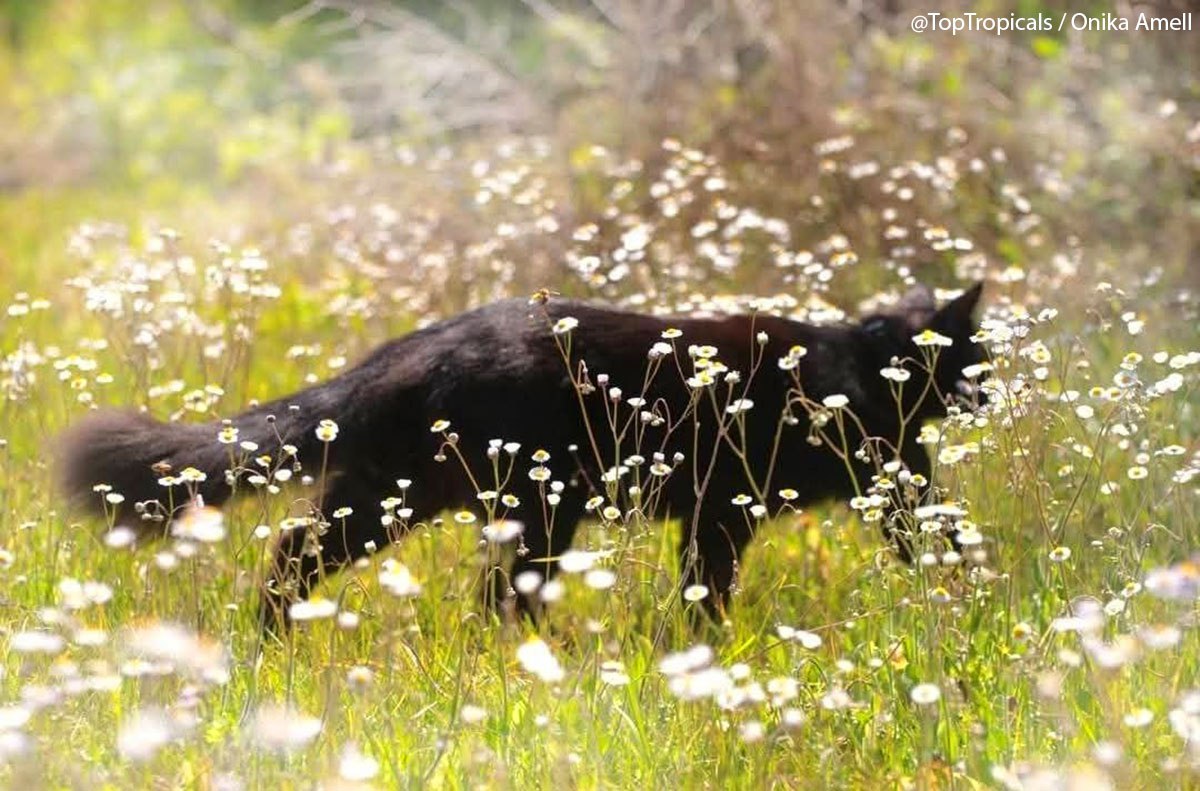
This is Donald (last name is Trump - it is what it is). Donald is patrolling the yard constantly to make sure everyone is safe.
🎩 How to grow Chinese Hat Flower - when winter colors most needed
The Holmskioldia sanguinea, better known as the Chinese Hat Flower, gets its name honestly. Each bloom looks like a tiny hat or parasol - a little tube backed by a flat, round disc. Once you notice it, you cannot unsee it!
What really makes this plant special is when it blooms. While most gardens slow down, Chinese Hat Flower kicks into gear from winter through early spring. The branches fill with flowers first, and the leaves follow later. It is one of those plants that quietly steals the show when everything else is taking a break.
More than one color
Most people know the classic red form, but there are several color varieties worth mentioning:
🔴 Red - the most common and bold 🟡 Yellow - Holmskioldia citrina, bright and cheerful, harder to find 🟠 Bronze / orange-bronze - warm tones that glow in winter light
Having different colors makes it easy to mix them or use just one as a winter focal point.
How it grows and where it works best
Chinese Hat Flower is a fast-growing, scrambling shrub. It is not stiff or formal. Think loose, graceful branches that like support. It does great when trained on:
· Trellises
· Fences
· Arbors
· Large containers with a support
· You can also let it grow as a free-form shrub and lightly prune to keep it tidy.
Care, the practical version
· Light: Full sun to light shade
· Water: Regular watering, especially while establishing
· Soil: Well-drained, not picky
· Pruning: After flowering to shape and encourage new growth
Once established, it is easygoing and forgiving.
Bonus points
· Blooms when the garden needs color most
· Attracts butterflies and hummingbirds
· Works as a flowering screen or accent plant
· Looks tropical without being high-maintenance
If you like plants that earn their space and do something interesting in winter, Chinese Hat Flower is one to keep in your garden.
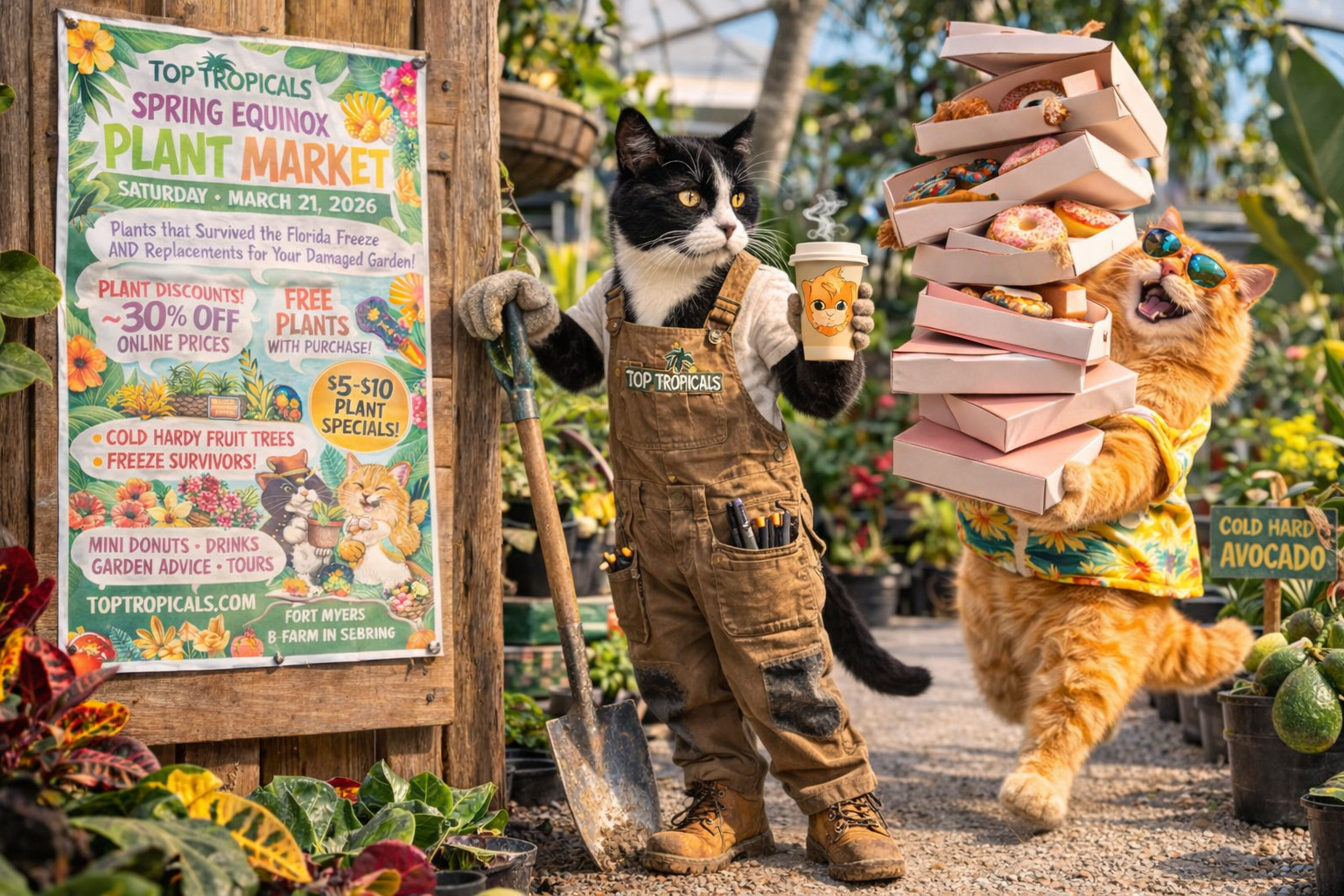
Sunshine:Smokey, hold my coffee. Donuts are coming. Big day
today.
Smokey: Under control. Try not to drop half of them.
Both: Friends, come over today.
Everything is ready for today at our Spring Equinox Plant Festival. The
garden is full and we would love to see you. Come over today and enjoy it
with us.
SEE FULL EVENT DETAILS
Date: 24 Jun 2018
Cold hardy tropical fruit trees for Luisiana
Q: I've
just moved to Louisiana and have been wondering whether it
would make sense to plant some tropical fruit trees in our
garden. Average lows in New Orleans are 41 deg F in
January and February, although we did hit 25 once with the
Arctic vortex. I'm interested in litchi, longan,
rambutans, and persimmons. Do you have varieties that can
tolerate Louisiana's temperature range? I'd love
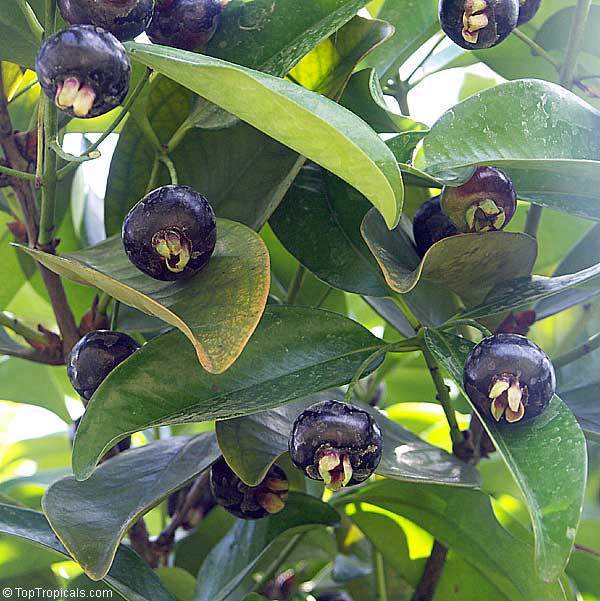
mangosteen but I don't suppose they will survive. Do you
have any suggestions on tropical fruit trees that I could
try?
A:
Average temperatures are for statistics only; it is actual
temperatures that may hurt your cold sensitive plant. This
is what you should keep in mind when starting your
tropical fruit collection:
1) Ultra-tropical plants like Rambutan can not survive
winters below 45-50F. However, they can be successfully
grown in containers in a greenhouse or moved indoors into
a sun room during cold periods.
2) Tropical plants like Litchi and Longan may take some light
frost once established. Still, for areas with freeze our
advice is - keep them in pots and move inside in case of
cold.
3) There is a number of subtropical fruit trees that are
hardy enough to take some freeze. Persimmon, Feijoa, Fig, Cattley Guava, Jujube, Kiwi, some Eugenias and others. Please
refer to our Tropical Fruit Sensitivity Chart.
4) Remember that plant's ability to survive winter depends
on several factors, not only temperature itself. Important
factors are: wind protection (chill wind kills rather than
low temperature itself), exposure, how close the tree is
planted to the house, plant maturity and its overall
strength and health. If a plant had received good
nutrients during summer, has well established root system,
planted in enclosed area protected from winds and has
plenty of bright sunlight - it has better chances to
survive than a weak plant in warmer conditions.
5) Use SUNSHINE plant boosters