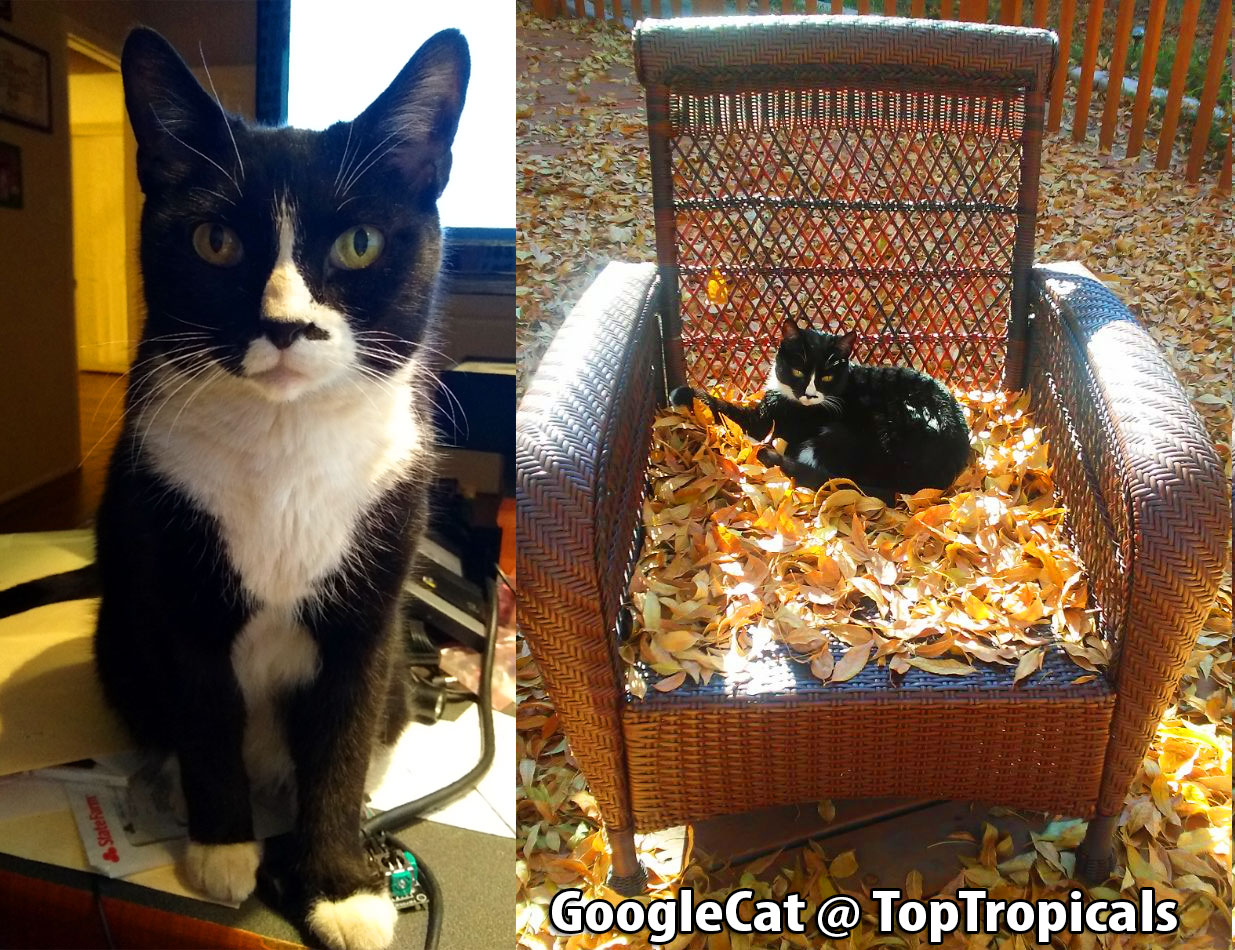
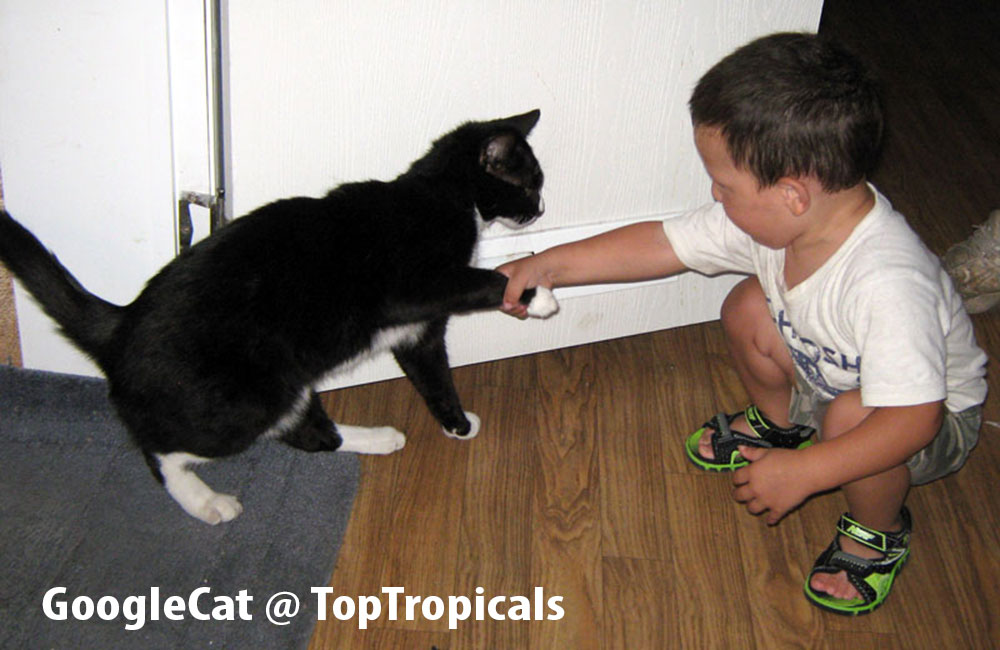
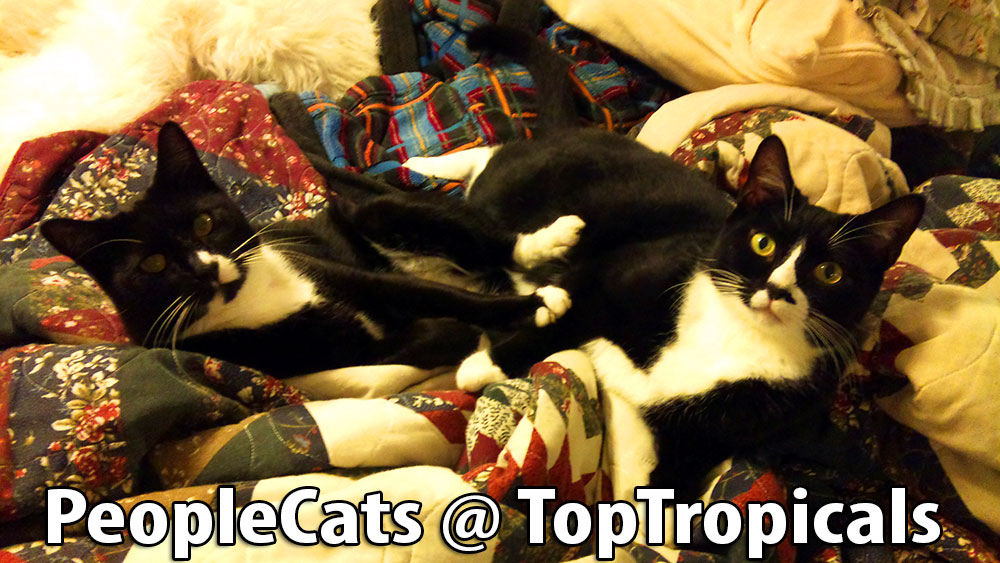
Meet PeopleCats of TopTropicals. Cat of the day: Google the Cat says Happy Fathers Day!
Google the Cat is joining Fathers Day celebration as a Founding Father
of TopTropicals (along with Jim the Founder). Google just turned 13 years old - pretty senior age
for a cat, and although he is still full of energy (and Brainpower), he spends
most of his day managing the business, setting the goals, and knowing
everything. This is Because, and this is Why - he is the Google!
TopTropicals PeopleCat Club and Zoo
Thank you for supporting us in helping PeopleCat Community! Make
your kind donation today and receive a surprise gift from us! Every little
bit helps. Thank you and God bless you and your pets!
Date: 20 May 2020
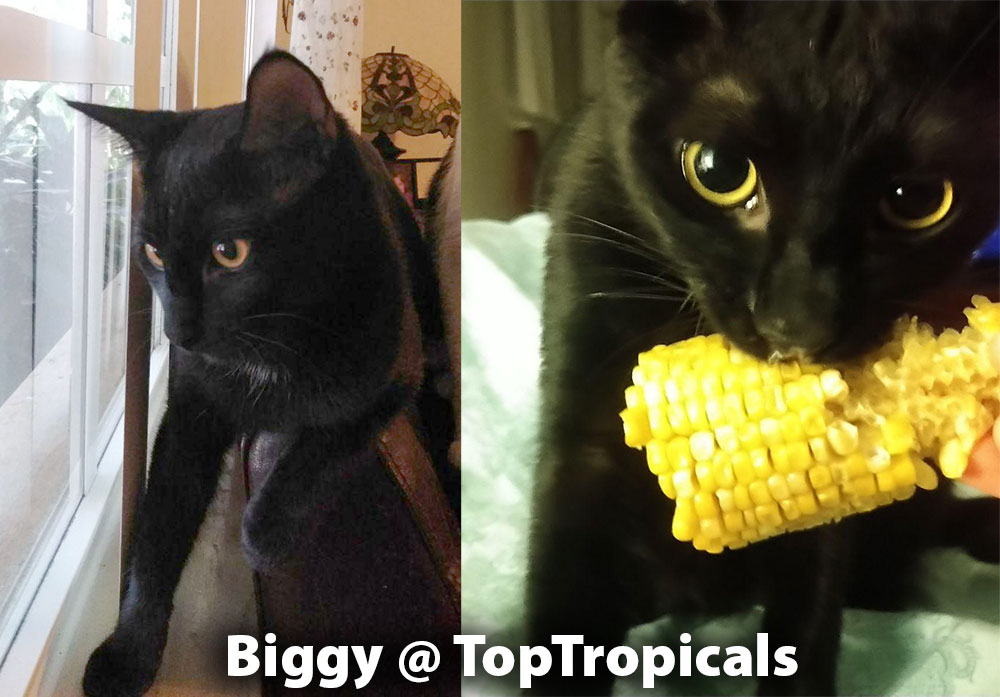
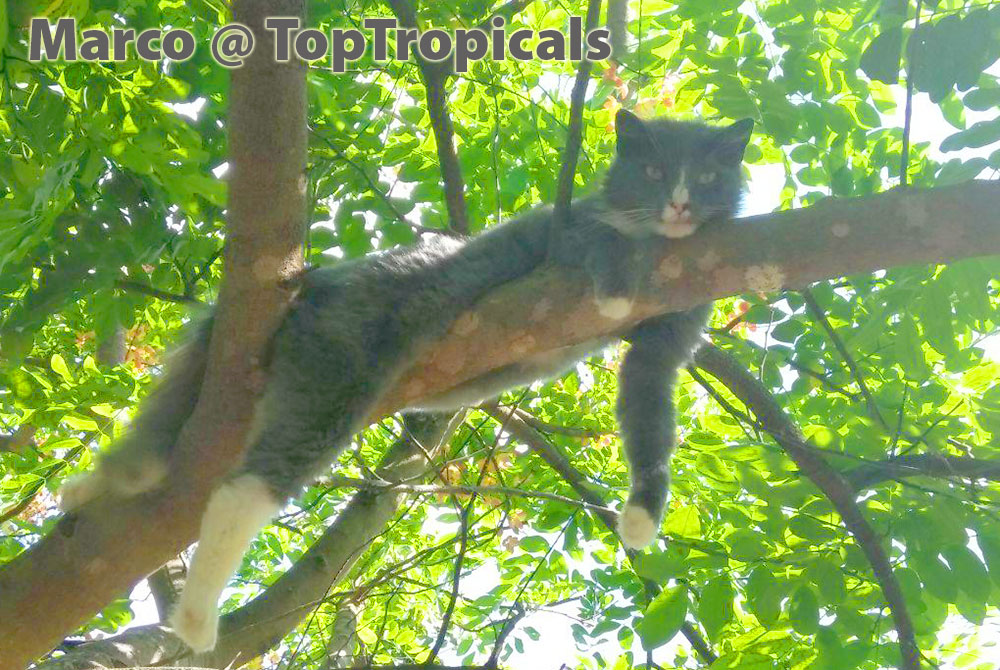
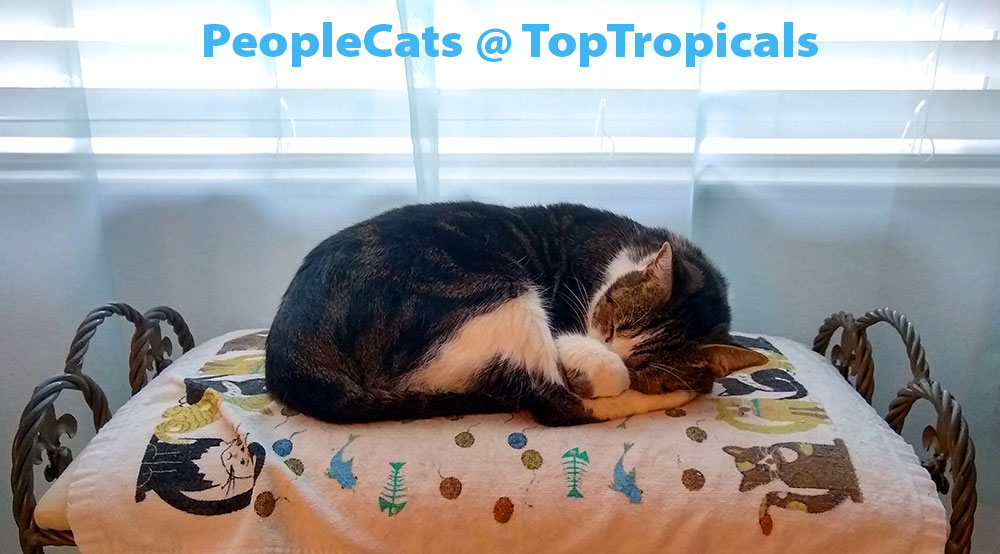
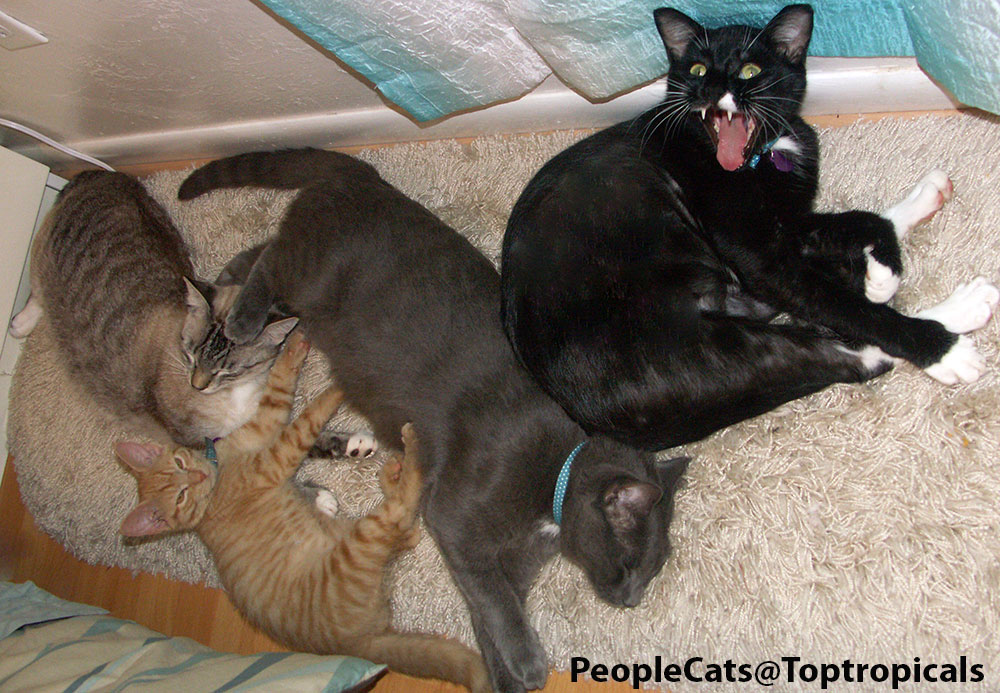
PeopleCats of TopTropicals. Cats of the day: the most unusual and weird.
Biggy and Marco won/shared today's contest of Cat of the Day for being the most
DIFFERENT. For eating corn and for sleeping in a tree like a bird!
TopTropicals PeopleCat Club
Thank you for supporting us in helping PeopleCat Community! Make
your kind donation today and receive a surprise gift from us! Every little
bit helps. Thank you and God bless you and your pets!
Date: 15 May 2020
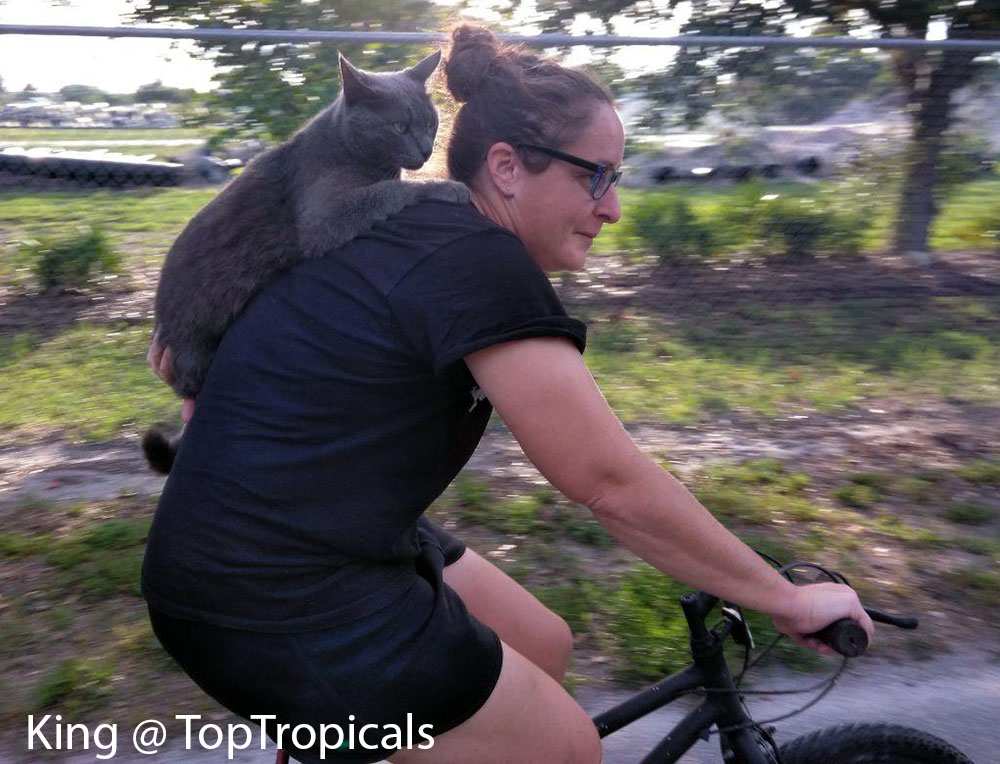
PeopleCats of TopTropicals. Cat of the day: King the Biker
King just keeps winning "Cat of the Day" honorable title! Last time
he excelled in his
traveling talents, and today is no exception. Since he was scolded for his unapproved trip to Miami, got his drivers license suspended and now is strictly prohibited from big-time traveling... he
learned how to ride a bike!
TopTropicals PeopleCat Club
Thank you for supporting us in helping PeopleCat Community! Make your kind donation today and
receive a surprise gift from us! Every little bit helps. Thank you and God bless you and your pets!
Date: 12 Apr 2020
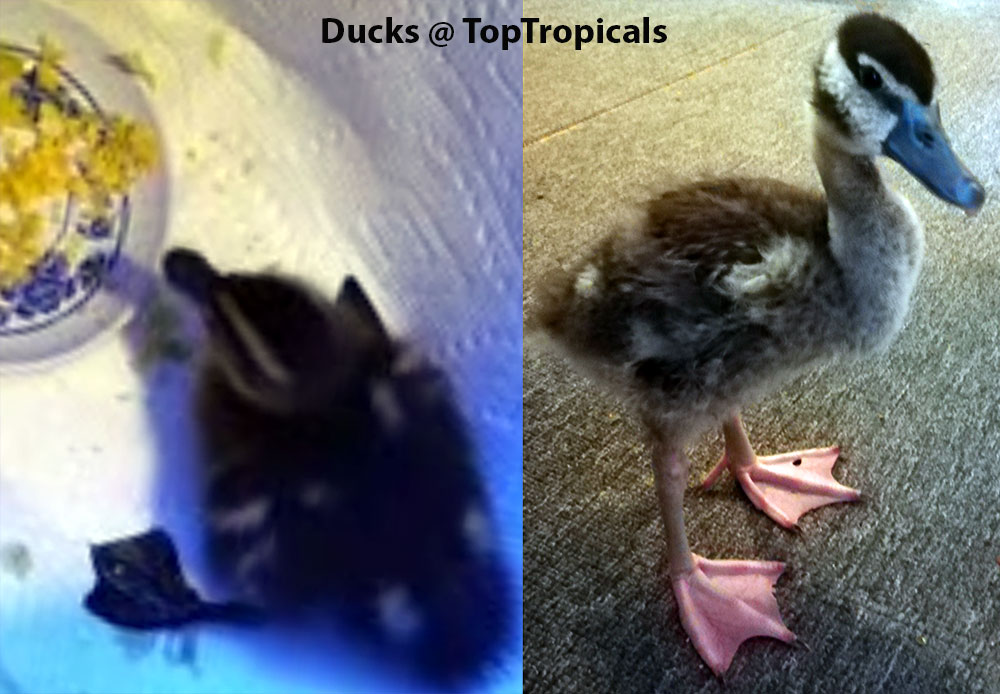
People of TopTropicals. Chic of the Day: Easter Present from Klaksa
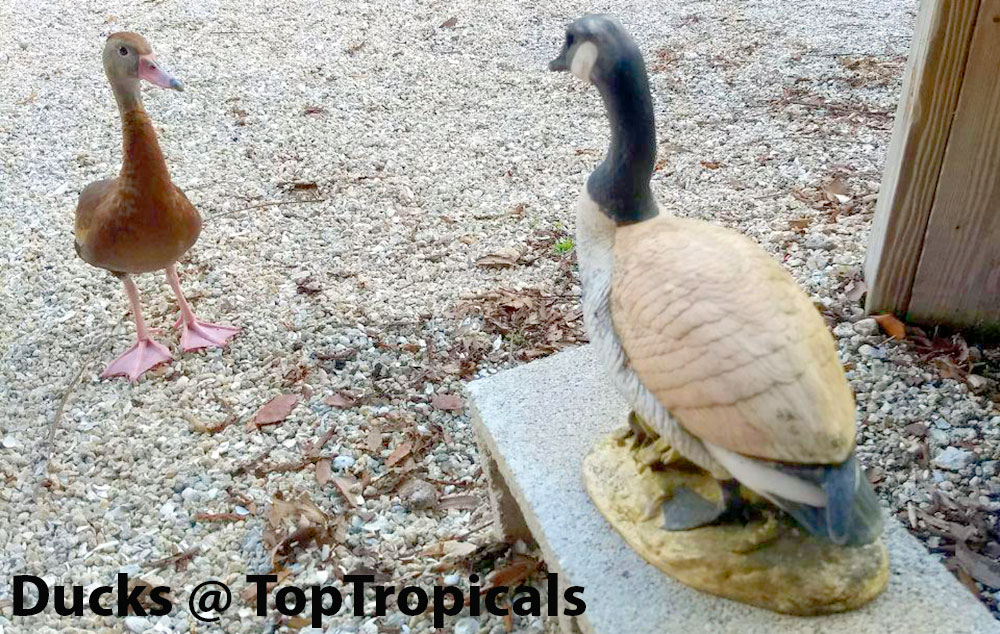
In the photo: Duck versions 2.1 and 1.0
In our last newsletter Cat of the Day was Klaksa with her hunting habits and her love for birds...
While we are still sticking to the statement that "no birds were hurt in the process so far", she brought us an Easter Present! Yes, the Present is very much alive and super hungry. Klaksa did not tell us where she got it and how can we bring it back... So we are stuck with another duck! The previous version -
Duck Dobi, has been raised by Kristi from a little chic-duckling, and
after 2 years of ruling the Cat Community in our Garden center, Dobi finally left with her
boyfriend - without saying thank you or even good-bye!
The Duck Version 2.1 has been eating and pooping happily all day. Luckily
we found a person with a duck farm, and hopefully will get this baby a good
home soon!
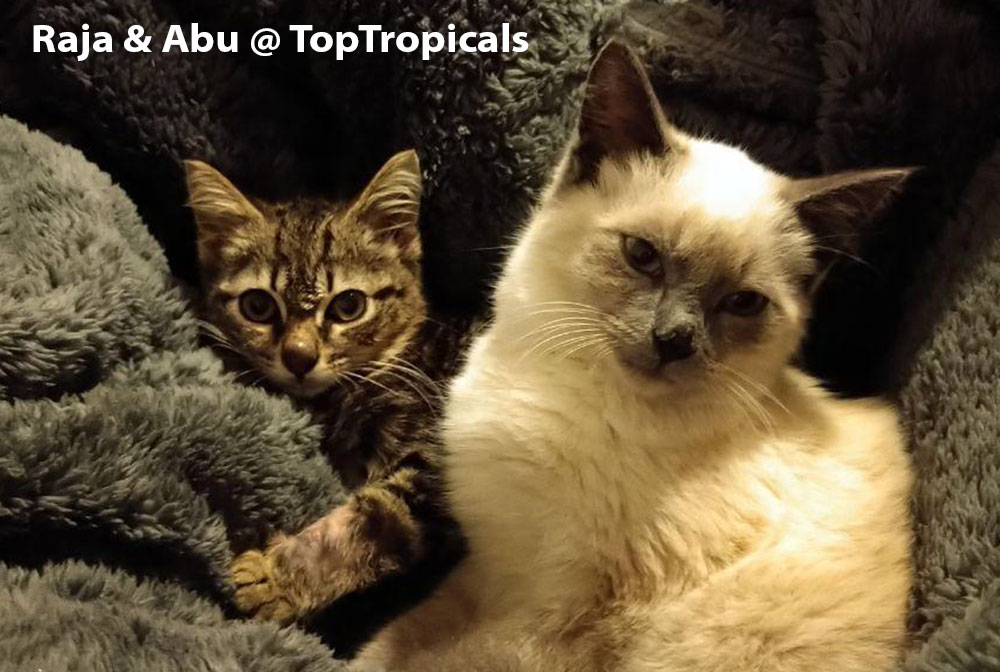
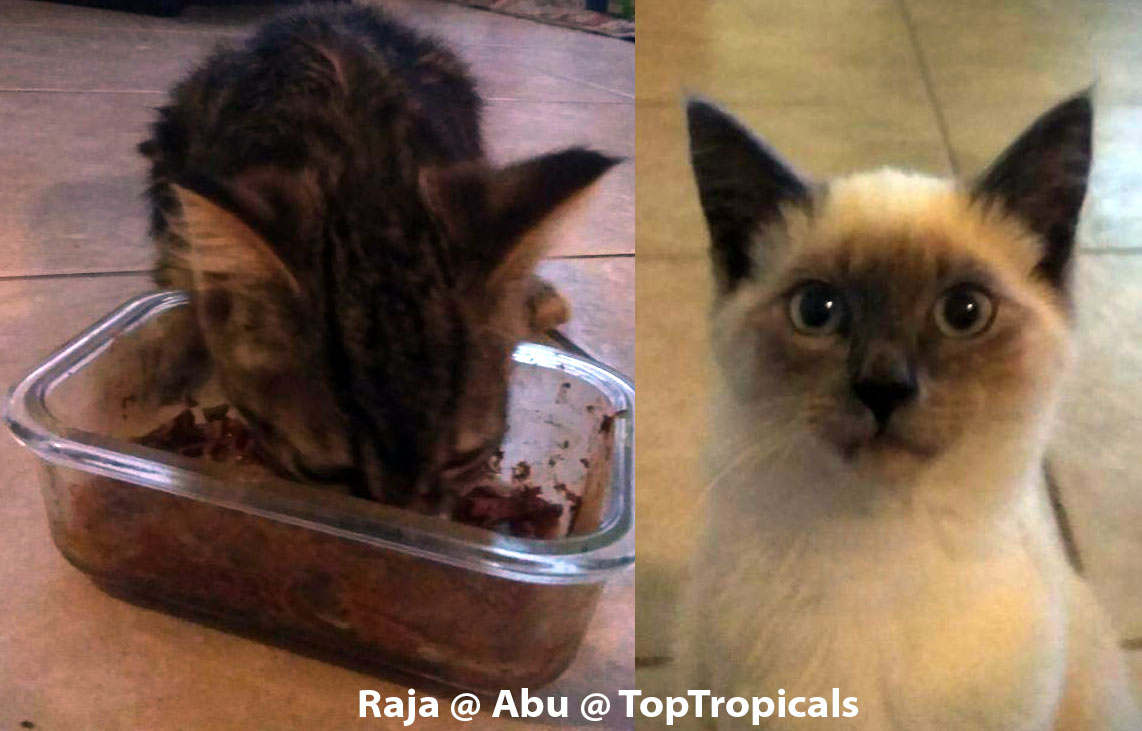
Meet PeopleCats of TopTropicals. Cats of the Day: Abu, Raja and their 9 lives.
"Every day is an opportunity to make a new happy ending." - Wise Man
Just a couple weeks ago you met Abu and his tiny sister Raja whose Mom died after a car accident, and Kristi rescued her two
little kittens. Who knew that the troubles were not over... yet. The kittens
looked very weak and undernourished, with lots of fleas and infected wounds...
Kristi took them to the vet and after intensive care they started to look
much better... until a few days ago Raja woke up with paralysis in her back
legs... while sores on Abu's paws didn't heal. Kristi rushed them both to the hospital again.
The vet said it all didn't look good... that symptoms looked like possible rabies or cat coronavirus! He said that chances are, the kittens wouldn't last long and he put them in 10 days quarantine.
Day and night we all at TopTropicals have been praying for the little
babies. Every day vet's updates got worse... it was hard to believe that after all the efforts to save them, they may be gone!
Then all the sudden, after 5 days in the hospital, a miracle happened. All
tests came out negative! And the kitties started getting better, fighting bad
infections under
doctor Bowers care. Raja got back on her feet. There is still a long way
to full recovery from their miserable experience of a street life, but
Something saved their lives! Doctors, prayers... or simply Kristi's BELIEVE that they WILL make it! She told them when she left them in the hospital: "You have to keep fighting, you are fighters." And they did. The Nurse said Raja hissed at her every time she walked by, but when Kristi came to pick her up and opened the cage, Raja rubbed her ears and just pressed her head in Kristi's hand.
Now they both at home, sweet home, taking medication and eating sooo
much!
"I just kept thinking after all they have been through this can't be the way their story ends!" - Kristi says.
Have happy and loooong lives, kitties! All 9 of them or whatever you have
saved!
TopTropicals Cat Club
Thank you everybody for supporting us in helping PeopleCats, especially local customers who leave donations in our Cat
jar in the office. If you would like to help Raja and Abu to pay their bill
for 5 day hospital stay under intensive care, you may do it directly from our
online store, by purchasing item 6464 Donation for Cats - TopTropicals Cat Club. Every little bit helps.
All donations will go to cat care, and you will receive appreciation
surprise presents from TopTropicals, including TopTropicals Cat Club bumper sticker. Thank you, and God
bless you and your pets!
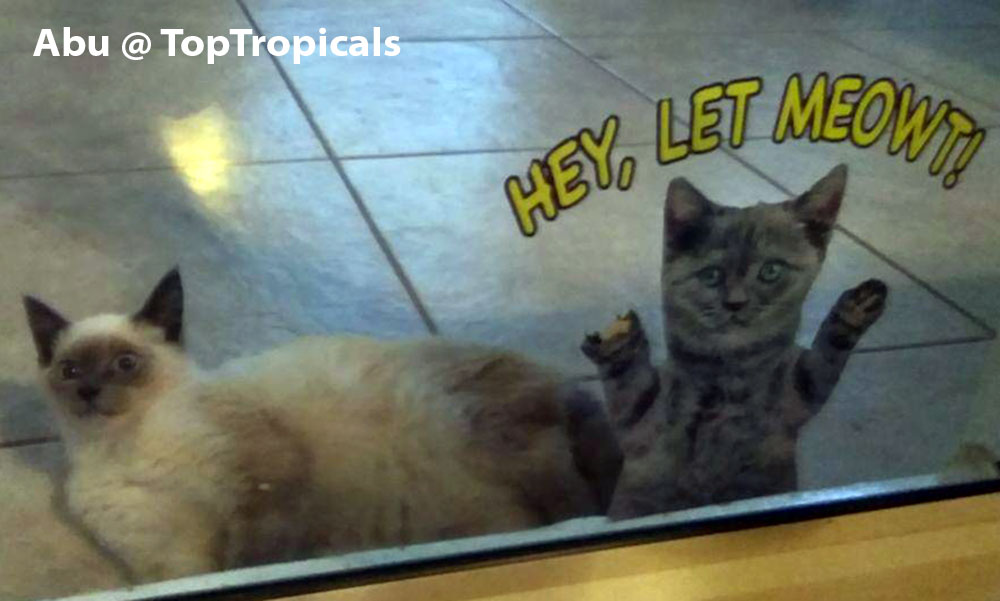
After their live threatening experience, Raja and Abu are back home
safe and sound and eating like there is no tomorrow! Now, there IS tomorrow,
kitties, you made it!