Meet PeopleCats of TopTropicals. Anna Banana's Kiki and Bandit
Everyone knows and loves our Anna Banana - the Heart of Top Tropicals
Customer Service. Today she found herself another exciting project... to build
a Cat Play Room! She sacrificed her whole living room and the whole paycheck
for that.
The girl kitty with a black face is Kiki Tails. She is a bobtail.
Bandit is a black and white boy with a white tip on a black tail. Anna Banana got
them when they were just 7 weeks old. Kiki and Bandit were born on August 26,
2019, in Buckingham, just down the street from Top Tropicals Nursery!
Call Anna Banana's direct line
239-771-8081 to say hi to Kiki and Bandit! We will follow up on these babies and soon
will update you with their new stories. Stay with us!
Attention, Contest: Cats in the Garden
Now, here is Anna Banana's million-dollar question to her favorite
customers: how do Cats and Plants go together in your garden or indoor plant
collection? Tell us how your cats help you to grow plants, with pictures! The
Winner will receive a FREE plant of $50 value! Participating stories and
photos will be featured on Top
Tropicals Facebook page.
Please use our contact form to submit your stories with pictures, with a subject "Cats
in the Garden Contest"
Q: I have a large oak in front of the house and nothing grows
under it, even grass. Can you recommend me a compact, colorful flowering shrub
that will tolerate shade location and still will bloom for me? I love fragrant
flowers, that would be nice... Also, I am a snowbird staying in Florida
mostly from Fall to Spring so I miss the flowering season! Any winter bloomers?
Or am I asking for too much?
A: There is a plant for every location and every need! Here is a
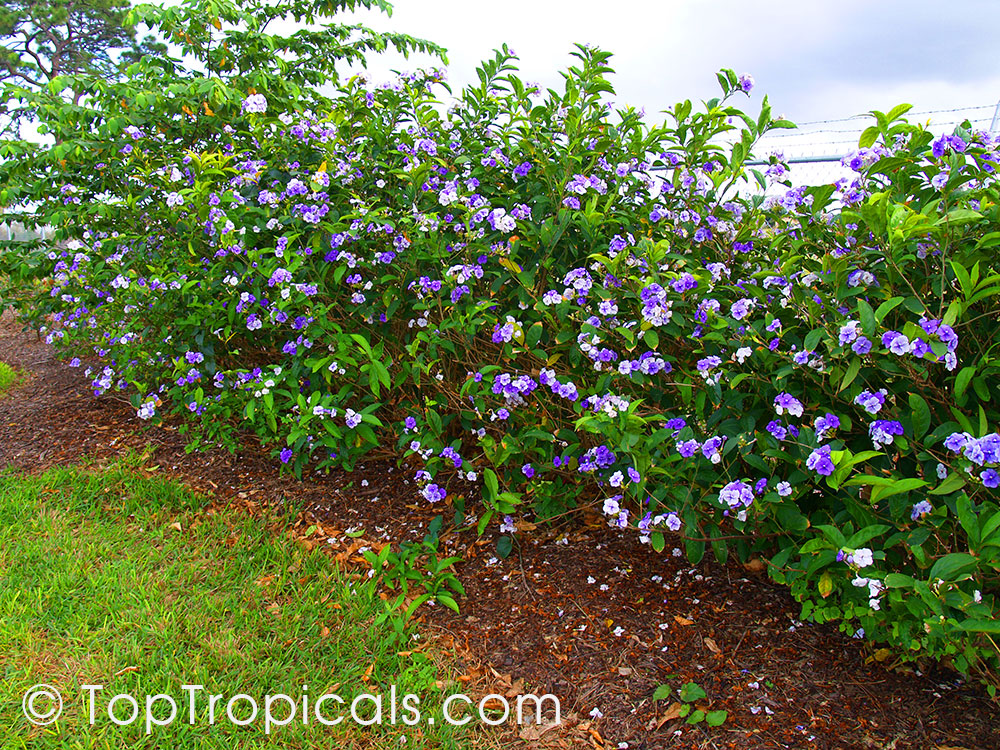
perfect plant for you, Brunfelsia grandiflora - Yesterday-Today-Tomorrow. It is a winter
bloomer and it enjoys filtered light. In fact, in full sun Brunfellsia leaves
sometimes turn yellowish, so a shade location will be perfect for it, leaves will
be healthy and dark green.
It is a beautiful specimen plant. The unusual popular name of this
medium-sized shrub becomes clear to anyone who observes it over the course of two
or three days. Its tubular fragrant flowers change from purple to lavender
and then to white over a three day period (First they open as rich
lavender-blue; then they change to pale lavender and finally to almost white before they
fall). Then all three colors can be seen on the same plant. It grows to
about 3-6 ft and does best in filtered sunlight. Blooms fall to winter.
Check out all Brunfelsias from our store - they all are shade lover and
free-flowering!
Q: I live in New Cumberland, West Virginia. I love the smell of
Night-Blooming jasmine. Is it possible to grow it in the northern panhandle of
West Virginia? Do I have to plant it every year or do I keep it in a pot and
take it inside during the winter months?
A: Technically, Night Blooming Jasmine is not a true jasmine
(those plants belong to Oleaceae, or Olive family). Night Blooming Jasmine
belongs to the Solanaceae family, also known as the Nightshade or "Potato" family
of plants. Yes, this sweet fragrant flower called Jasmine for its perfume is
related to potatoes and tomatoes!
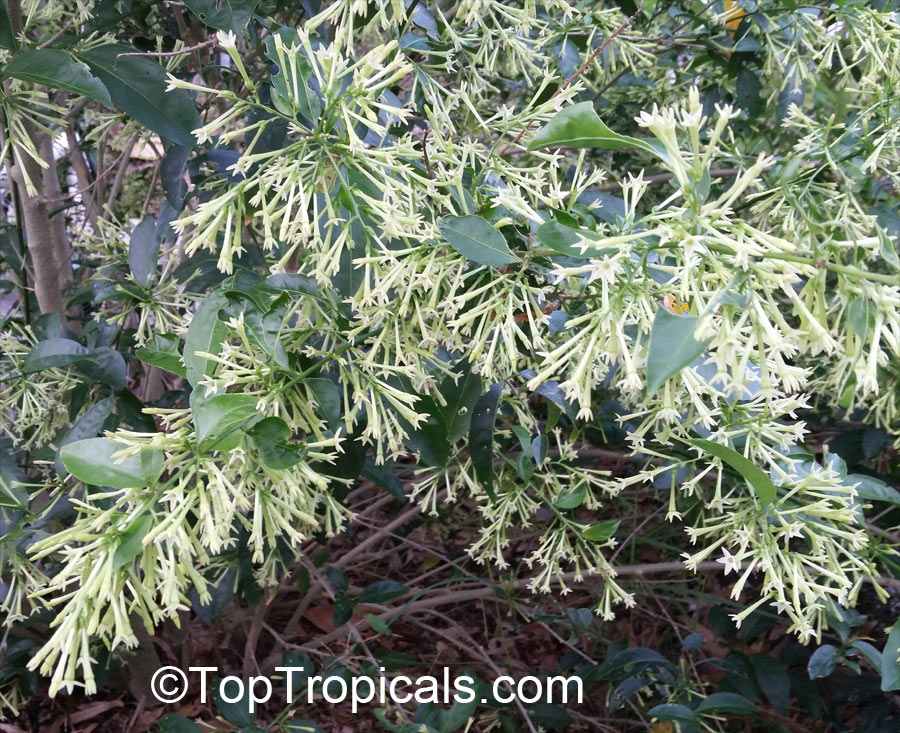
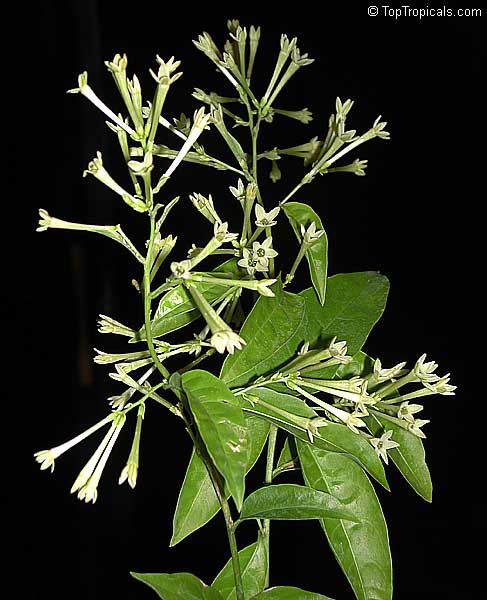
Night Blooming Jasmine - Cestrum nocturnum - is loved by many gardeners for its beautiful
fragrance at night. It is one of the most fragrant tropical evergreen shrubs
available. Cascading clusters of tiny, tubular pale yellow to white flowers open at
night and release a heavenly fragrance throughout the garden, especially on
warm summer evenings. The fragrance is much lighter during the day.
Night Blooming Jasmine is grown year-round in zones 9-11. It is at its
happiest in a sunny to a partially sunny spot in your garden in well-drained soil
but can be grown in cooler climates as a container or greenhouse plant.
You would absolutely be able to enjoy this plant during the warm months
in West Virginia, but it will most certainly not survive outside during the
winter. You will have to bring it inside. Take it outside again only once you
are confident there is no more possibility of frost. When grown indoors, be
sure to give it the sunniest, South facing window in your home. When grown in
a container, you will need to re-pot it every two to three years so it
doesn't become root-bound.
For those who are lucky to live in frost-free areas, in ideal growing
conditions outside, it can easily reach 8 feet with a spread of 5 feet. It has
a lovely informal look that can soften a more manicured garden. Add organic
matter to the planting hole when you plant to enrich the soil around the root
ball. Water well in the summer, but allow them to dry out a bit between
watering in the winter. Plant this Jasmine near pools, porches, doors, windows,
and walkways where its lovely fragrance can be enjoyed. The shrub is also an
excellent plant for privacy hedges and screens. When grown as a hedge, plant 3
feet apart.
Trim lightly after a bloom cycle to shape and then do a hard pruning in
fall or spring to control the size of this plant. Fertilize 3 times a year -
in spring, summer, and autumn - with a good quality granular fertilizer.
Night-blooming jasmine is an excellent mosquito repellent. The powerful
scent of the flowers attracts moths and bats that feed on mosquitoes and
other small insects.
The flowers of the Night Blooming jasmine are widely used in India and
other countries of South Asia for perfumery, medicinal applications and in
religious ceremonies.
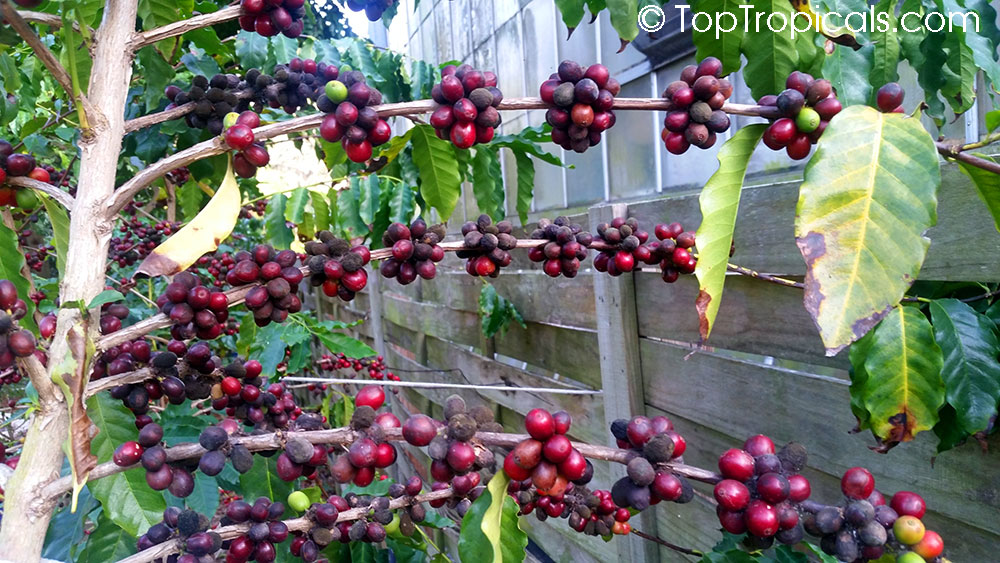
The most popular kind of coffee for commercial production, Coffea arabica, is already on the endangered species list. According to
research, Coffea arabica plant could become extinct in as little as 60
years.
Coffee requires a forest habitat for its survival. With so much
deforestation going on around the world, wild coffee species are being impacted at
an alarming rate. Coffee plants grow in very specific natural habitats, so
rising temperatures and increased rainfall brought by climate change can make
coffee impossible to grow in places the plants once thrived.
To reserve a cup of coffee for yourself and your children, plant the Coffee tree now!
Date: 3 May 2024
Best picks of
the Season
Special SALE deals - from our
horticulturist
These plants are large, developed and beautiful
NOW!
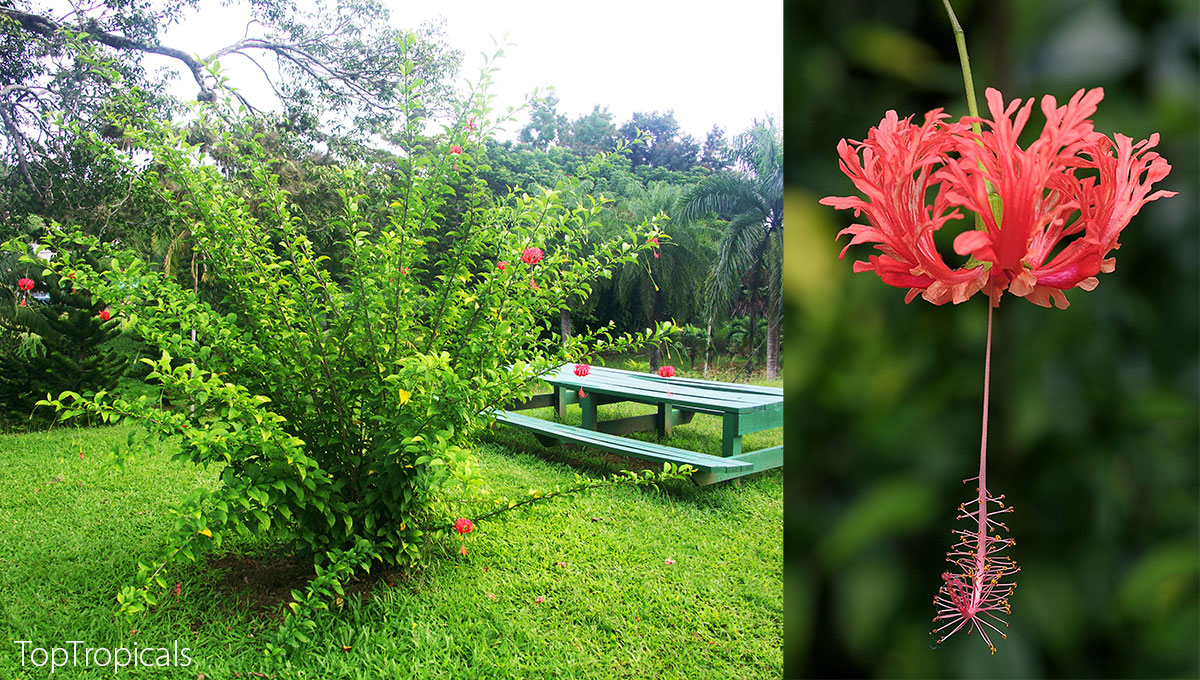
Hibiscus
schizopetalus - Coral Hibiscus. Spectacular weeping tree hibiscus, rare and hard
to find. Grows rapidly and blooms freely. Flowers look like parachutes and
can be recognized by the fringed and lacy petals which are bent backward. It
has slender and gracefully curved stems. Can be trained into a showy
standard.
Cestrum
nocturnum - Night blooming jasmine. Garden favorite - the sweetest fragrance at
night is intoxicating. One of the most famous and desirable fragrant plants.
Flowers are pale yellow to white, open at night and stay extremely fragrant
until sunrise. These flowers are widely used in India and other countries of
South Asia for perfumery, medicinal applications and in religious ceremonies.
Best location will be near driveway, window or entrance, where the magic
fragrance can be appreciated.
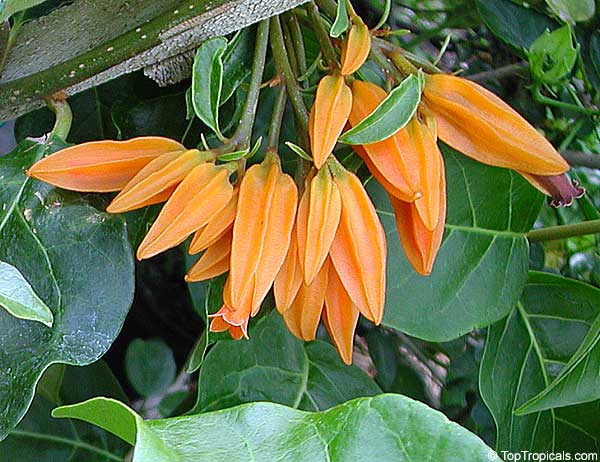
Juanulloa
aurantiaca - Gold Finger plant, Mexican Spoon Flower - this one is soooo pretty!
Unusual looking vine or shrub with yellow-orange fleshy flowers,
everblooming and a VERY fast growing. Rare, collectible plant.
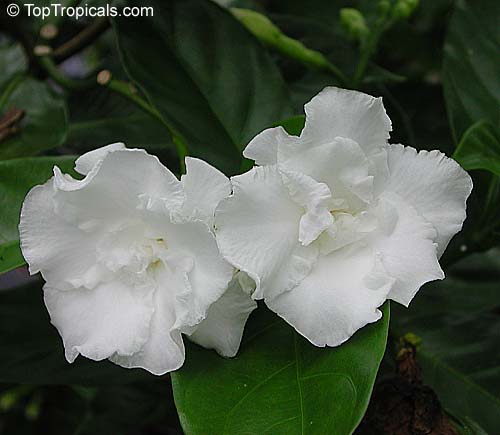
Tabernaemontana
Flore Pleno - Crape Jasmine, Carnation of India, Florida Gardenia - this
fast growing bush with waxy leaves and beautiful fragrant flowers is a must in
tropical garden. Easy to grow and free flowering, dense bush.
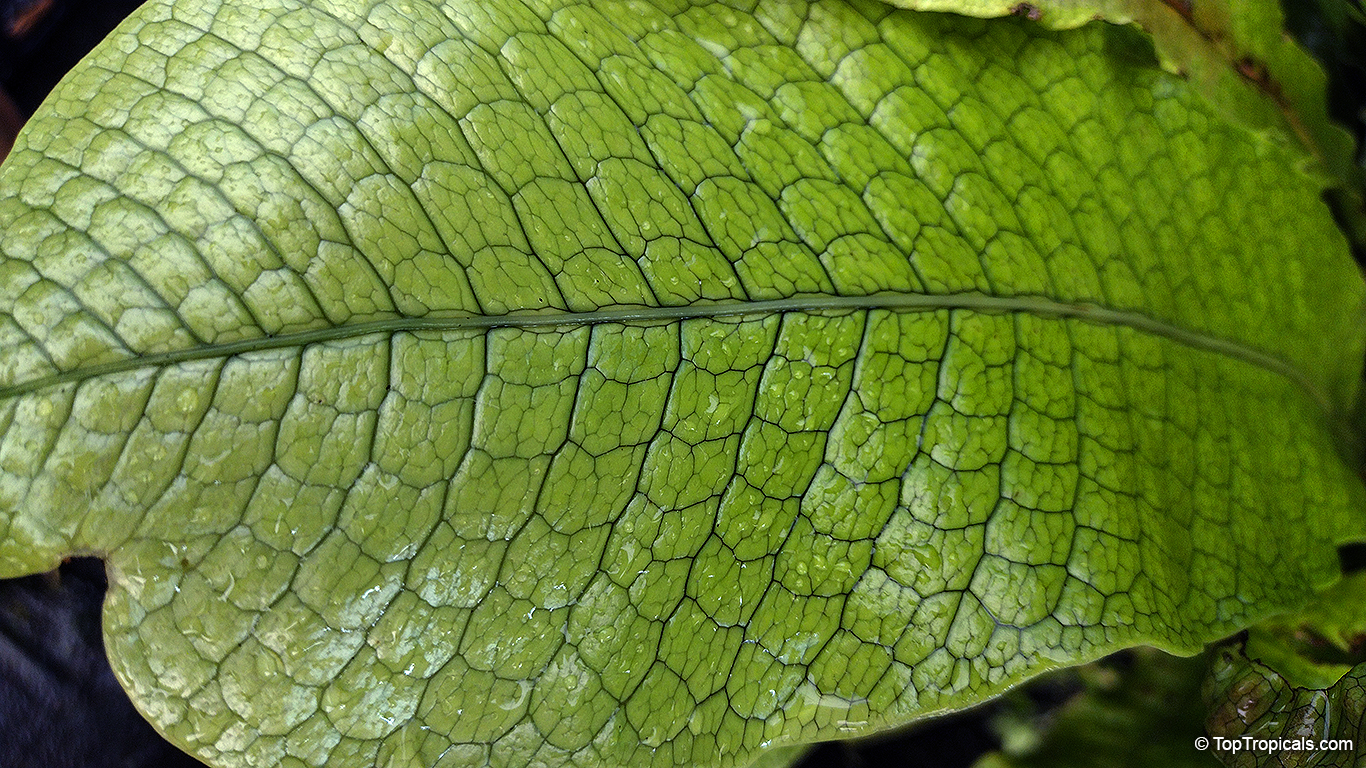
Microsorum
musifolium - Alligator Fern, Crocodile Fern from Australasia. Perfect for
shade! An epiphytic fern with cool alligator-skin looking leaves. The strikingly
shaped, light green fronds of the fern form a lovely backdrop to its stunning
stiff, leathery, dark green alligator-skin foliage. Perfect as a houseplant,
or planted under a tree. Grows to 2-3 ft in height and likes a sheltered,
semi-shaded location, no direct sunlight.