Garden Blog - Top Tropicals

Date: 22 Mar 2021

The most rewarding hardy fruit trees
Q: Recently I started working remotely and I kinda like it, no need to commute, it saves me so much time so I can have life now! My friend got me involved into growing some small houseplants but I really want to take advantage of our Florida climate and sun. I want to plant some cool fruit trees since I have a decent size yard. But I live in Florida Panhandle and we do have some occasional freeze in winter, although not for too long. But it gets very hot in summer! Are there any tropical fruit trees that will be happy here? Or should I keep everything in pots? I am excited to have my own tropical plant collection!

A: There is a perfect plant for everyone, and a perfect tree for every climate. Many tropical and especially subtropical plants can be much hardier than they are believed to be, both flowering and fruiting trees among them. You may keep the most sensitive species in pots and bring them inside for winter, while there are so many trees that will be happy in your area. Start with these that are perfect for climates with hot summers and cool winters:

1. Peaches and Plums

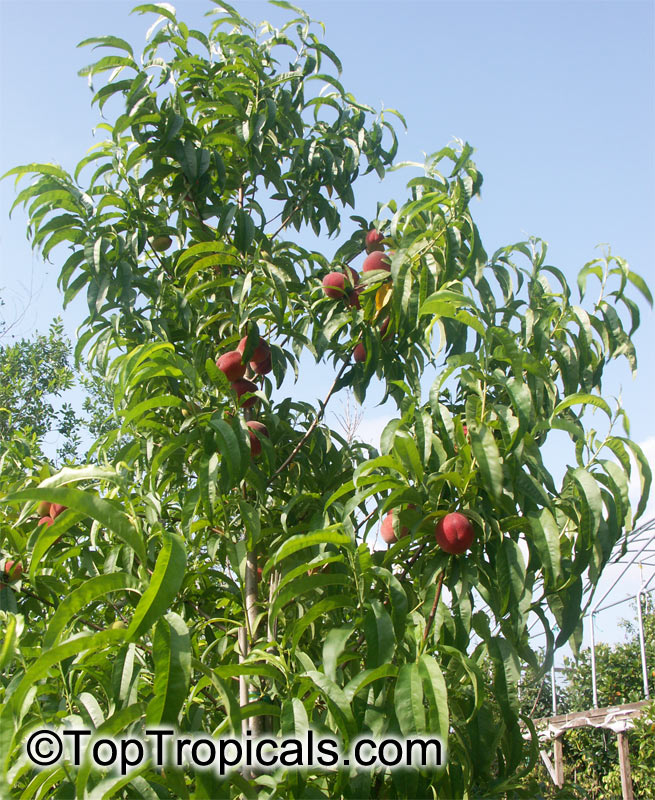
Low-chill, Heat-tolerant Peaches, Nectarines, Plums are especially selected for Florida hot summers. They produce well and do not require many "chill" hours like temperate fruit trees. They only need 150 chill hours and grow well in even in Arizona, so you know they are taking the heat.

2. Figs
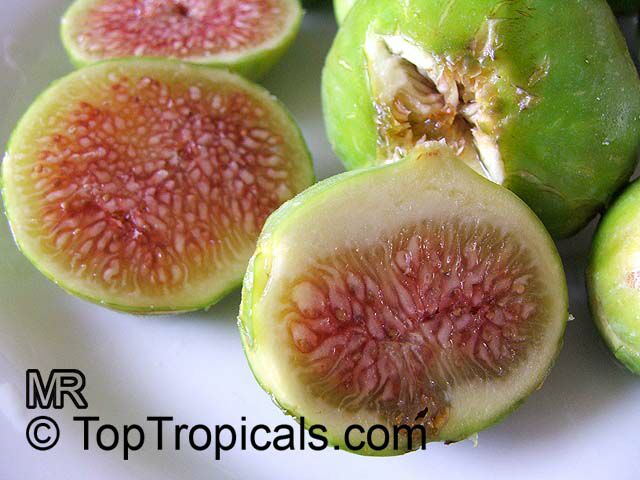
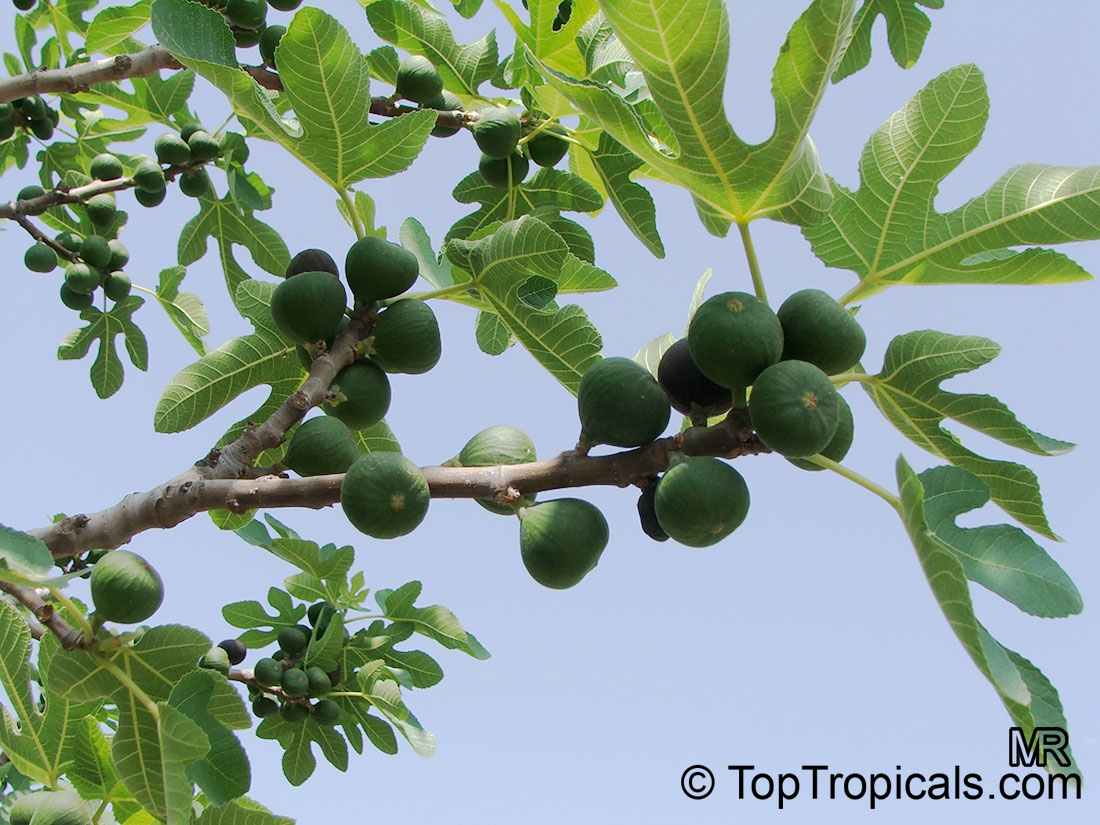
2) Fig trees - they are easy to grow, heat- and drought- resistant trees. They are prized for their delicious fruit, which can be one to three inches in length, violet, brown or black. There are even varieties with yellow fruit. Most fruits are borne from early summer to late fall on new growth, and the fruits generally mature very quickly. These trees are sensitive to frost only when actively growing, but can withstand 10F when dormant. Read more about Fig trees.

Date: 25 Apr 2026

♥️ Mother’s Day: More Than a Gift

Smokey  cat  with  glasses  showing  mango  tree  to  mother  cat  in  garden
Mom: You grew this… for me? You remembered my favorite…
Smokey: I did.
Mom: You never forget what matters. It’s beautiful.
Smokey: Not as much as you. Happy Mother’s Day.
Sunshine: You raised him right. It shows.

Some things stay with you from your mom.

A favorite fruit. A smell from the garden. The way she showed you how to care for something and stick with it.

At the time, it felt small. Later, you realize it wasn’t. It turns into something real - a tree, a habit, a way of doing things you still follow.

Mother’s Day is simply a reason to tell your mom you remember. To say thank you for what she taught you, and to show your love.

It does not have to be complicated. Just something that makes it clear you were paying attention.

If you are thinking what to give, start simple.

A fruit she loves. A plant she will enjoy watching grow. Something alive, not just something that sits on a shelf.

It does not have to be big. What matters is that it means something to her.

And maybe, years from now, it becomes one of those things that stays.

We put together a few plants that make good Mother’s Day gifts.

Fragrant flowers. Fruit trees she can enjoy year after year. Easy growers that do not require much effort.

If she has a favorite, start there. If not, pick something simple and reliable.

🛒 Shop Gift plants

Date: 11 Sep 2025

American  flag  blended  into  sky  with  clouds,  young  Acacia  farnesiana 
 tree  with  yellow  flowers  growing  upward,  and  text

September 11th remains one of the darkest days in our nation’s memory, a tragedy that touched every life in some way. More than two decades later, we may come from different places, hold different views, and see the world through different lenses — but on this day, we stand together in remembrance.

Like a young tree reaching toward the sky, we find strength in renewal. Nature reminds us that healing takes root quietly and grows over time. A branch in bloom, a sunrise after storm clouds, the steady rhythm of the seasons — all speak of life’s resilience. As we honor the lives lost, may we also honor the life that continues around us.

And we will keep remembering, together.

For us, trees and gardens are daily reminders of resilience. That’s why we grow them, and share them with others who find hope in nature. Explore our plants.

Date: 22 Oct 2025

Detailed Cassia and Bauhinia Care Guide
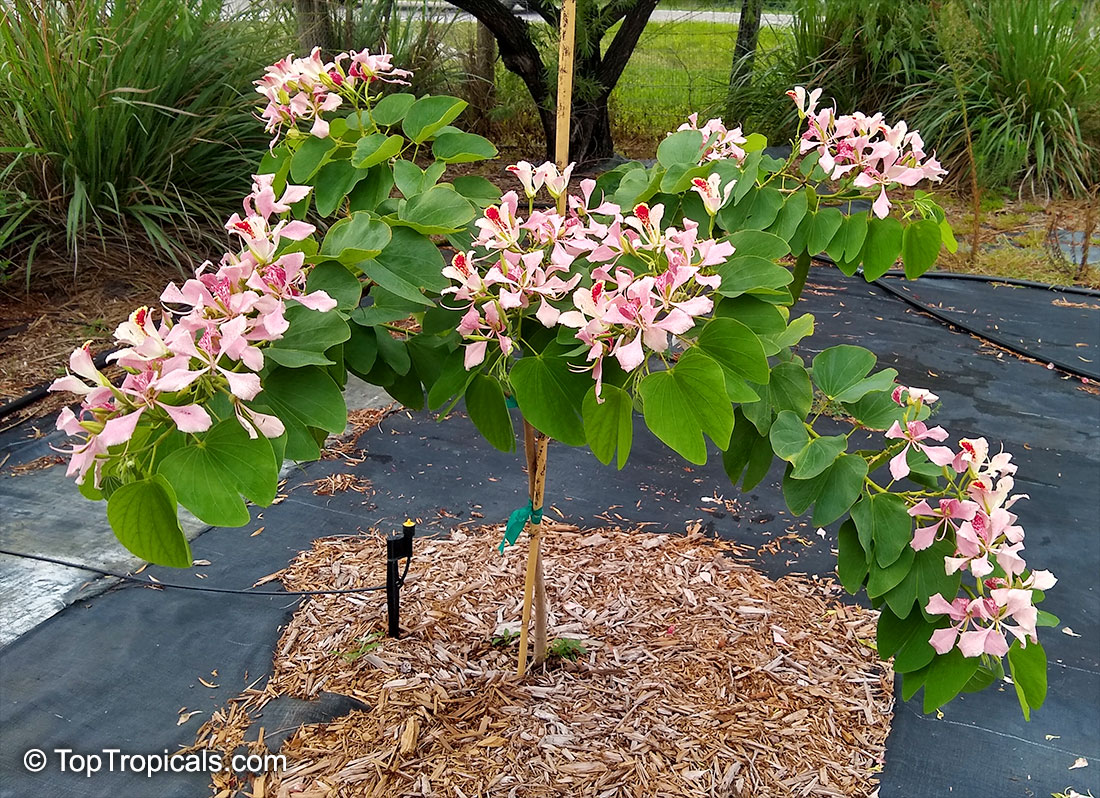
Young  Bauhinia  monandra  tree  blooming  with  clusters  of  pink  and  white 
 orchid-like  flowers,  growing  at  Top  Tropicals  nursery  with  fresh  mulch  and 
 drip  irrigation 
 setup

Outdoor Cassia and Bauhinia Care

  • Light: Both Cassia and Bauhinia need at least 6 hours of direct sunlight daily. Cassias handle intense heat; Bauhinias can take light afternoon shade.
  • Soil: Use loose, fast-draining soil. Mix equal parts garden soil, coarse sand, and compost.
  • Watering: Keep evenly moist but never soggy. Cassias tolerate dry spells once established; Bauhinias prefer steady moisture. Water when the top inch feels dry.
  • Feeding: For profuse flowering, feed with liquid Sunshine Boosters Megaflor that is safe to use with every watering, year around. You may also apply Green Magic controlled release fertilizer every 6 months. Bauhinias and Cassias respond quickly to feeding.
  • Pruning: After flowering, prune lightly to shape and remove dead tips. Cassias can be trimmed to shrub form; Bauhinias stay bushy with pinching.
  • Mulch: Add a 2-inch mulch layer around the base to conserve moisture and prevent weeds, but keep mulch off the trunk.
  • Cold protection: Most Cassias handle brief frost; some Bauhinias like B. acuminata and B. monandra must be sheltered below freezing. For cold nights, cover with frost cloth or move containers into shelter.
  • Dormancy: Outside of tropics, most Bauhinias drop leaves in winter for a short period of time, right before flowering and are called "semi-deciduous". Cassias stay evergreen.

Indoor or Porch Care (cool-climate growers)

  • Container: Choose a sturdy pot with several drainage holes, one size larger than the root ball. Unglazed clay or thick plastic pots work best for heat regulation. Use a light, well-drained mix such as professional soilless mix Abundance. Both Cassias and Bauhinias dislike soggy roots. Add a thin layer of coarse gravel at the bottom to improve drainage. Repot every 1–2 years in spring
  • Light: Brightest spot possible - south-facing window or heated sunroom. Supplement with a grow light if sunlight is weak.
  • Temperature: Keep potted trees in warm environment for best results. The optimum temperature for Cassias and Bauhinias is between 60–85 F, although many species can tolerate cooler temperatures. Avoid cold drafts and sudden drops.
  • Humidity: Average indoor humidity is fine; occasional misting keeps foliage glossy.
  • Watering: Water sparingly in winter when growth slows; allow the top inch to dry between waterings. Do not let roots sit in water.
  • Fertilizing: Feed with Sunshine Boosters Megaflor that is safe to use with every watering, year around, to maintain flowering indoors. You may also apply Green Magic controlled release fertilizer every 6 months.
  • Pest watch: Check undersides of leaves for aphids or whitefly. A light spray of neem oil or insecticidal soap clears them fast.

"Whether you crave golden summer fireworks or soft orchid blooms that last nearly all year, both Cassia and Bauhinia bring pure joy to the garden. 💖 Bring color that never quits."

Did you know: Fall is the best planting season — roots grow faster and you’ll have flowers by spring!

✔️ Fall Planting Guide

🛒 Shop Tropical Flowering trees

Date: 15 Jan 2026

When the Black Bat Lily decides to bloom

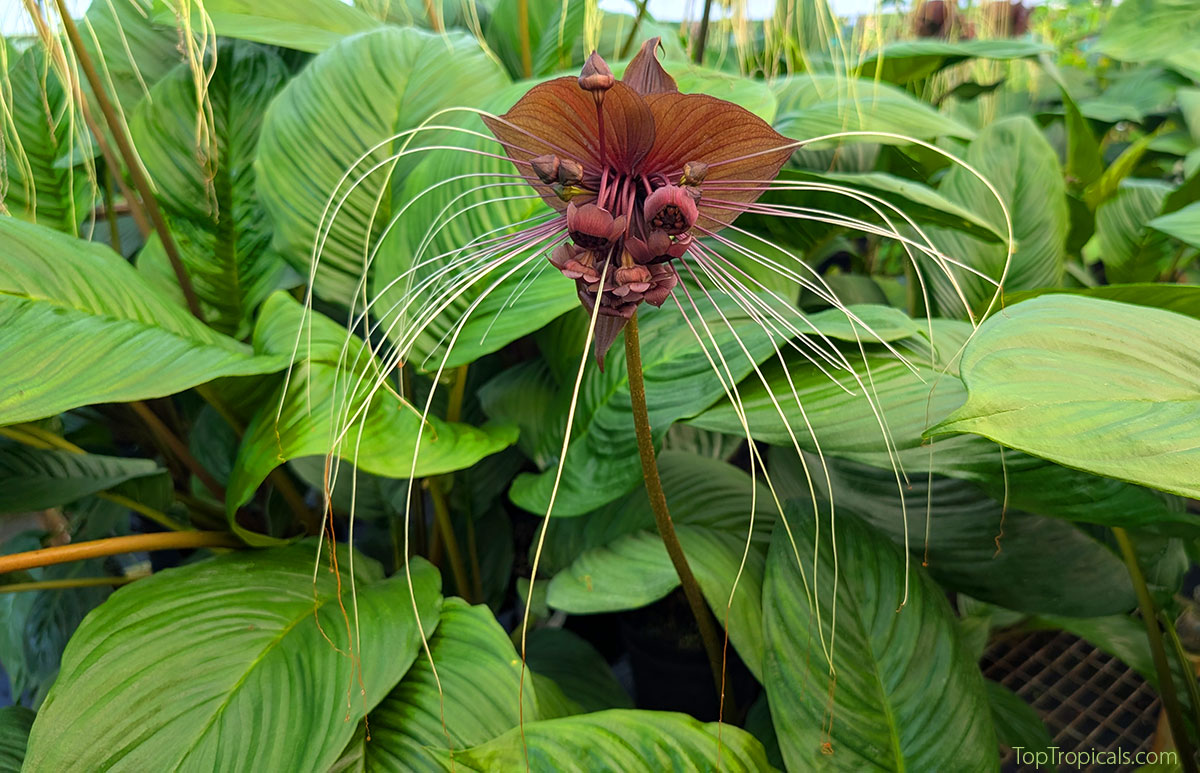
Blooming  Black  Bat  Lily  (Tacca  chantrieri)  with  dark  bat-shaped  flower 
 and  long  whisker-like  filaments  surrounded  by  green  leaves

Every so often a plant blooms and the whole greenhouse seems to slow down.

That is what happened this week with the Black Bat Lily, Tacca chantrieri. We have grown Taccas for years, but when the black ones open properly, it still feels special. The flowers are dark and quiet, almost unreal up close. They do not shout for attention. They make you lean in.

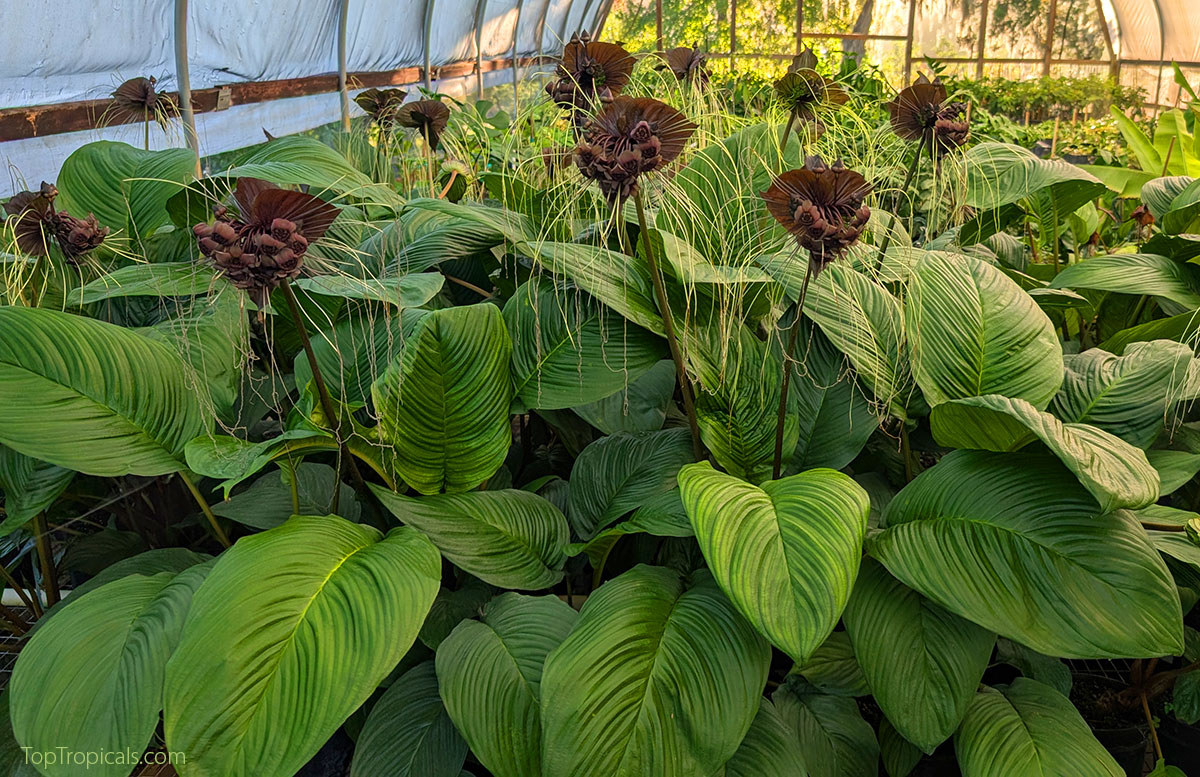
Right now, we have a lot of them blooming at the same time. If you have never seen one in person, photos only get you part of the way there. The wings are darker than you expect, and the whiskers seem to go on forever. People walk into the greenhouse, stop, stare, and usually ask the same question: "Is that real?" - Yes. It is.

Group  of  blooming  Black  Bat  Lily  plants  (Tacca  chantrieri)  with  dark 
 bat-shaped  flowers  and  long  whisker-like  filaments  in  a  greenhouse

A quick honest note, because this matters. The blooms themselves are delicate and may not travel well. That is just the nature of this plant. The plants, however, are strong, well established. With the right conditions, they bloom again. This is not a one-time trick.

Black Tacca is not a beginner houseplant, but it is also not impossible. It likes filtered light, steady warmth, and humidity. It does especially well in a greenhouse or a bright indoor spot where you already keep plants that enjoy moisture. It is the kind of plant you keep close, not one you forget in the corner.

We are offering them now simply because they are ready and looking their best. If you have been waiting for one, this is a good moment.

You can see the Black Bat Lily here: https://toptropicals.com/store/item/2345.htm

Just wanted to share something we are enjoying in the greenhouse right now. Some plants come and go. Some stay with you.

Tacca (Bat Lily) FAQ

What is Tacca?

Tacca, also known as Bat Lily or Devil Flower, is a tropical plant grown for its unusual bat-shaped flowers with long whisker-like filaments. The most popular species is Tacca chantrieri, the Black Bat Lily.

Is Tacca hard to grow?

Tacca is not a beginner plant, but it is not impossible. It does best with warmth, humidity, and filtered light. Gardeners who already grow orchids, calatheas, or other humidity-loving plants usually do well with Tacca.

Does Tacca need a greenhouse?

A greenhouse is ideal, but not required. Tacca can be grown indoors in a bright spot with indirect light and good humidity, such as near a humidifier or in a bright bathroom with a window or skylight.

Will my Tacca arrive in bloom?

Plants may be blooming in the greenhouse, but flowers are often removed before shipping because they are delicate and do not travel well. The plants are well established and capable of blooming again with proper care.

How often does Tacca bloom?

Tacca does not bloom constantly. It may take time to establish before flowering, but once settled, it can bloom seasonally and may produce multiple flowers in warm, humid conditions.

Does Tacca grow from a bulb?

Tacca grows from a rhizome, not a bulb. The rhizome stores energy and allows the plant to regrow and bloom again.

Why does Tacca have long whiskers?

The long filaments are thought to help attract pollinators such as flies by mimicking the look of decaying organic matter. While unusual, this is part of the plant's natural pollination strategy.

✍️ More about growing Tacca
🛒 Get your own Tacca plant
🎥Watch our videos about Tacca