Garden Blog - Top Tropicals

Date: 27 Feb 2020

7 secrets of a Happy Avocado Tree
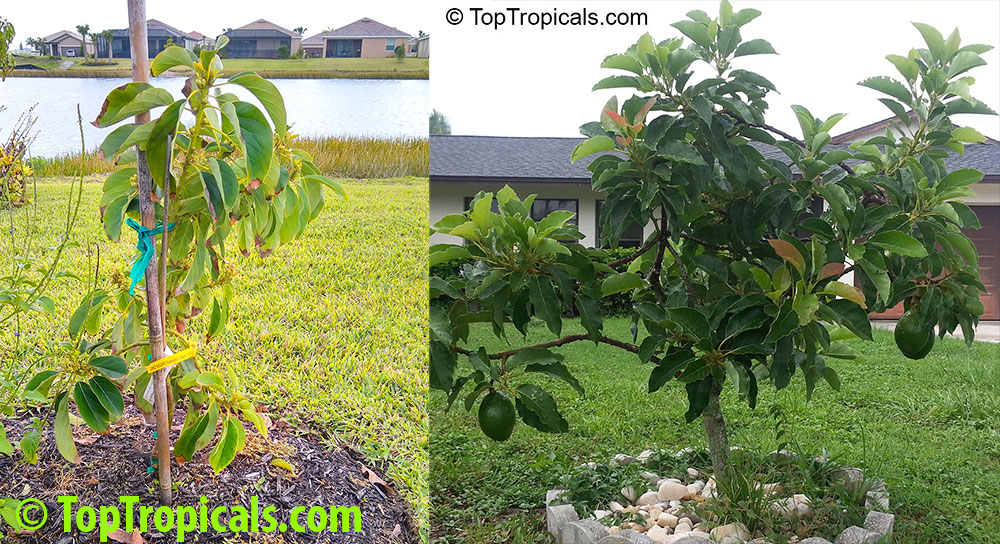
Q: I purchased an avocado tree from local garden centers three times but every time it dies on me. My neighbor has a nice tree in his yard and it grows beautifuly. I just purchased one online from you and I need to know what I was doing wrong? Are there any secrets how to make an Avocado tree happy? I have a big garden and several mango trees, but no luck with Avocado...

A: Avocado tree is famous for being such a pain to establish. But once it starts growing, it's growing! We will share a few simple tricks how to make it right.

1. Plant high and provide good drainage. Wet feet is number one reason for failing an avocado tree. It doesn't like wet soil and won't tolerate soggy conditions. Plant it in the highest spot of your yard and slightly on a "hill" (3-4" higher than the surrounding ground).
DO NOT plant Avocado tree in low spots or wet spots of your yard. Save those spots for Cannas or Black Sapote or even a Mango if you want a fruit tree there.
2. Use quality soil. Use only well-drained soil with high content of organic matter. You may add compost to existing sandy soil, or add some professional potting mix that contains pine bark and perlite. Remove rocks from the hole if you see any while digging. Dig a big hole and fill it with a good soil; compact the soil in the hole very well before setting the root ball. Reminder: plant the tree high!
3. Water regularly. After planting an Avocado tree in a nice high spot with a good drainage, start watering it... daily! Avocado likes water, although it doesn't like wet feet! Once you figure out this combination, you've got the recipe of success. Water by hand daily for the first week after planting, then twice a week for couple weeks, then once you notice new growth - you may rely on sprinklers, but keep watching the tree and don't let the soil over-dry. It must be slightly moist, but not soggy.
4. Fertilize. For such finicky tree, we suggest mild formulas of fertilizers. Dry fertilizers may burn roots, especially of a young tree. Even smart-release granulated fertilizers should be used very carefully. The best way to feed your young avocado tree - get a complete set of Sunshine Boosters Pro system. It has all necessary elements for all stages of plant development and never burns the roots. Sunshine Boosters Pro can be used with every watering - no need to guess how much and when. Besides, it is a natural fertilizer based on amino acids - exactly what you want to use on your fruit trees and other edibles!
5. Boost immune system of the tree. Apply Sunshine Epi plant hormone every 2 weeks as a foliar spray to boost immune system and metabolism of the tree and protect it from diseases. Epi makes plants (especially young plants) grow twice faster! It also enhances effect of fertilizers by increasing plant metabolism.
6. Do not prune until you see significant growth. The tree is small and can use as many leaves and branches as possible for photosynthesis and healthy metabolism. We suggest to avoid pruning for at least the first year. On the second year your tree most likely will be covered with flowers (assuming you followed fertilizer program). Let it go through the blooming stage and setting fruit; prune in Fall after fruiting is over.
7. Keep number of fruit to minimum for the first crop. Don't let the small tree exhaust itself. Keep just 2-3 fruit to develop. The next year, no need to control fruit quantity, the tree will develop as many as it can support.
P.S. If you got the tree from a mail-order, remember to establish it in a pot before planting in the ground; move gradually from shade to sun. Follow planting instructions.

Learn more about Sunshine Nutrition System - a Natural solution for your garden.

Date: 25 Nov 2019

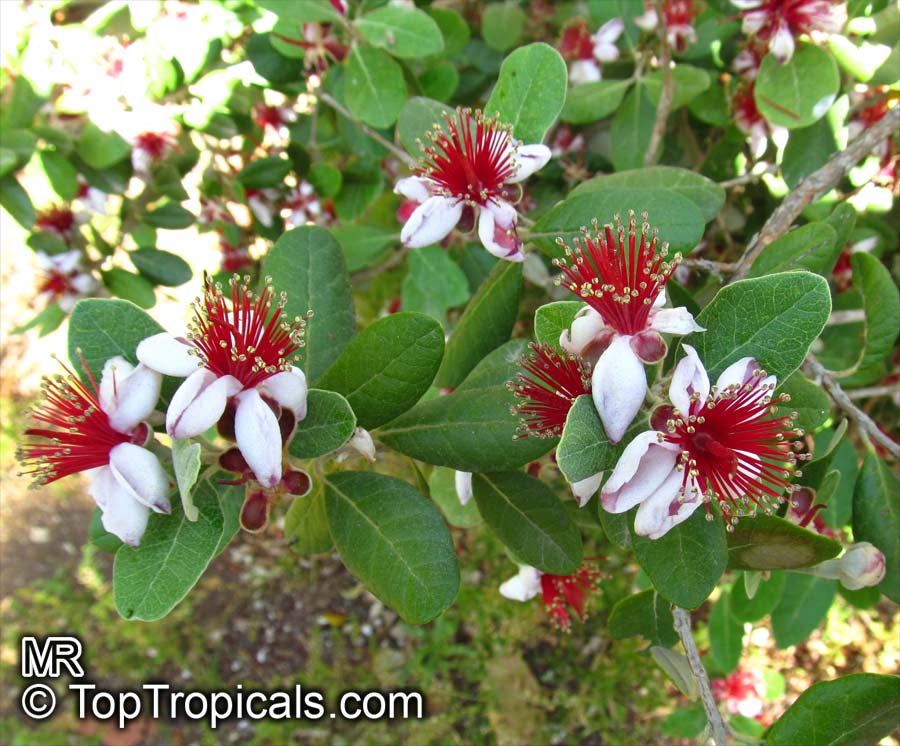
Flavor of Feijoa Superfood

by Onika Amell, tropical plant specialist

Q: What exactly is Feijoa - Pineapple Guava? Does the fruit really taste like pineapple? I am curious to know if it is easy to grow.

A: Feijoa is certainly one of the easiest fruit trees to grow as it does not require much care. It is an attractive, evergreen tree or large shrub with dark green, oval, leathery leaves. It has an abundance of uses in the garden and produces lovely edible flowers and fruit! The fruit is eaten fresh, added to smoothies or fruit salad and is also commonly used to make delicious jams and wicked chutneys. Feijoa fruit go a long way in flavor.
This plant is drought tolerant and will grow in almost any soil type. It loves full sun or partial shade and is wind resistant. A lot of gardeners like to grow it as a wind barrier for this reason. It can easily be shaped into a dense, informal hedge or screen that needs very little pruning. Because of this density, it provides excellent shelter for all kinds of wildlife. Butterflies, birds, and butterflies will all love you for growing Feijoa!
Space the plant five feet apart to create a wind barrier hedge. Heat does no not bother it at all and it will also withstand temperatures to 10 degrees F.
The plant gets its names from the delicious perfume it emits. Some folks seem the fruit taste like pineapple, with a slight minty undertone. Others feel the flavor reminds them of juicy fruit gum! The texture is described as smooth and slightly gritty - almost like a pear, but firmer.
If you prefer to grow this plant as a tree rather than a large shrub, simply remove the lower branches up to one-third of the tree's height over a period of time. The Pineapple Guava can grow up to 15 feet wide and tall. They also do really well as a container plant on patios where you can truly enjoy the lovely fragrance of the fruit. It prefers rich, organic, well-drained soil and will need light fertilization every other month in most soils.

We recommend:

Fruit Festival Plant Food - Super Crop Booster
Mango-Food - Smart Release Fruit Tree Booster
SUNSHINE-Honey - Sugar booster
SUNSHINE C-Cibus - Crop Nutrition Booster

Pretty, pink, edible flowers will wow you from May to June, followed in late summer or fall by the delicious and fragrant fruit. An interesting thing about this fruit is that you don't pick it. It falls to the ground when it is ripe. Or simply place something under your tree, like a tarp, and shake the tree. The ripe fruit will fall off. You can store the fruit in your refrigerator for up to a week. And remember! The fruit of the Feijoa is not only a very rich source of soluble dietary fiber, but also an excellent source of Vitamin C, and very rich in antioxidants. They are also low in calories. Each fruit only holds 55 calories.

Date: 18 Apr 2020

PeopleCats amid COVID-Cat-20

"It's not the size of the cat in the fight, it's the size of the fight in the cat"
- Mark Twain -

While the whole world is suffering the virus attack, cats are no exception. They do not get COVID-19, but they have their own coronavirus - a respiratory condition that may become very dangerous for them. And although cat coronavirus does not affect humans, we can transfer it to other cats through our hands/petting, shared bowls and bedding, etc.
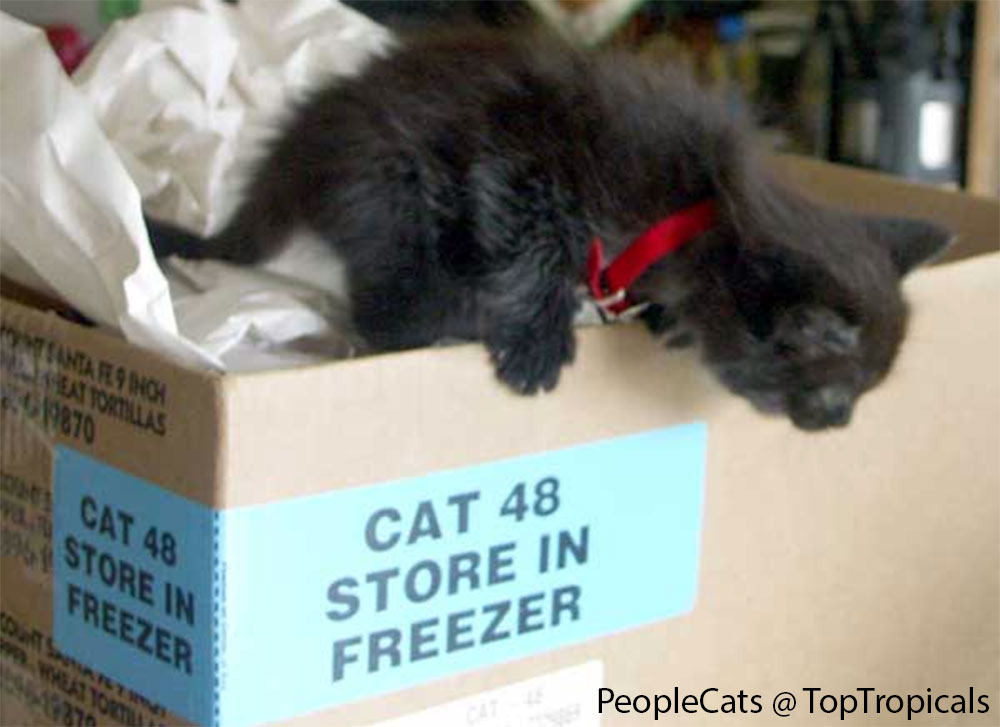
At TopTropicals, we had several cats sick with the flu and it took us a long time and long hospital bills to bring them back to health! Below we are sharing with you a few tips from our own experience that may help you fight and treat cat coronavirus, that we call "Covid-Cat-20".

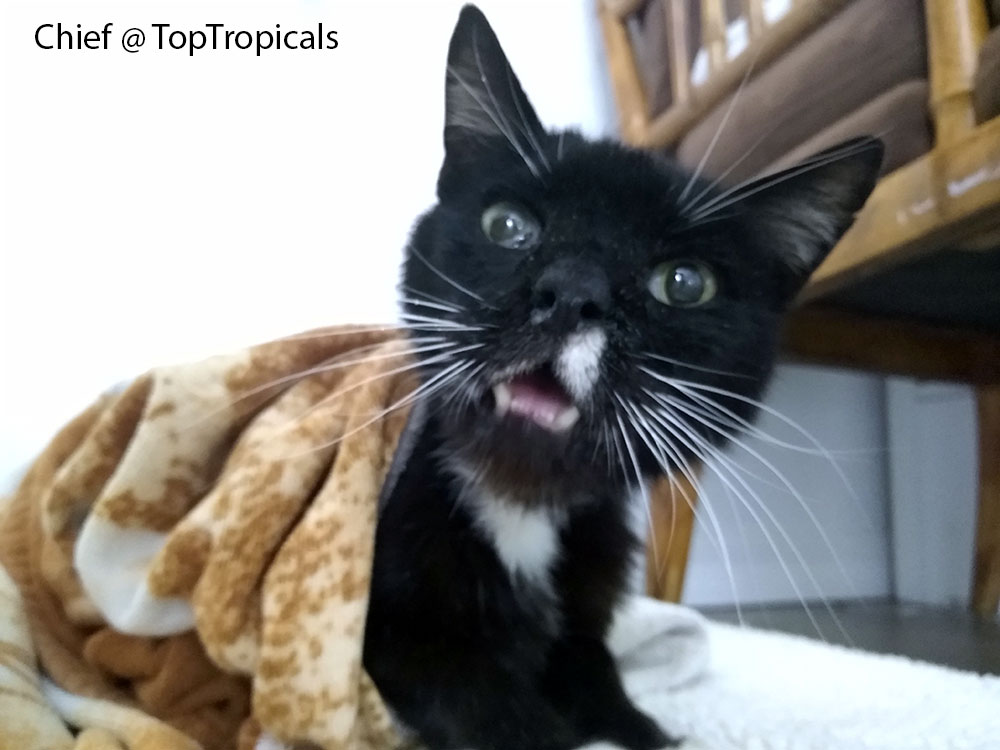
Chief is breathing through his mouth: "Stuffed nose sucks!"

How to treat Cat Coronavirus

When cats get a flu/virus/cold, they suffer congestion, sneeze and cough. Just like us humans. But for cats, stuffed nose is much worse trouble, because they can't smell food = they won't eat it! In tough cases, they won't even drink any water. Due to specifics of cat metabolism, if a cat doesn't eat and/or drink for more than a couple of days, it may become life-threatening. It is not the virus that kills a cat, it is dehydration, lack of nutrition, and possible secondary infections.

- Vet. During Covid-19 lockdown, many animal hospitals are closed, but if you are lucky to find a vet, it is wise to give the cat a long-lasting shot of antibiotic. You can't treat a virus with antibiotic, but it will prevent secondary infections (like pneumonia, etc.)
- Water is absolutely essential! Make sure your Cat drinks water. If he (she) doesn't want to drink on his own, you need to give him water with a syringe. As often as you can. Little by little. Or, ask a vet to put a "water pouch" under cat's skin. This will save the cat from dehydration.
- Food is the main key! Your cat must eat a normal size portion per day in order to fight the illness. Because he can't smell, it's possible he won't eat on his own. Offer him a smelly, soft/wet food of room temperature or slightly warmer: usually tuna works well. Get Salmon Oil and put on top of the food: it is smelly, plus a great vitamin supplement.
- Hand-feeding. If congestion is bad, even a smelly tuna may not help. Mix a spoonful of pate with some water and try to hand-feed this "soup" to the cat either using syringe, or a small spoon. Little by little. Remember, his nose is stuffed and he can't swallow and breath at the same time, so it must be tiny bites. (Wrap the entire cat tightly in a large thick towel to save yourself lots of scratching damage, leaving out just the face. Guaranteed, he won't like the procedure and you will be surprised how strong he is for a sick cat.)
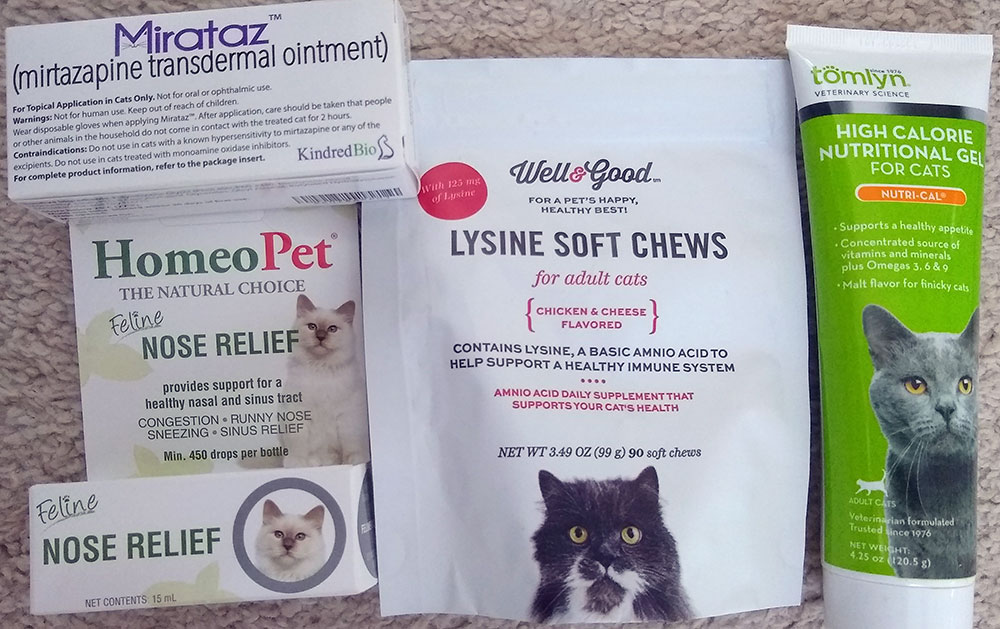
- Supplements. For an extra nutrition support, you may use Critical nutrition food and other protein supplements. Consult your vet and you may want to try the following aids: High Calorie Liquid or Gel (easier to administer), HomeoPet Nose Relief (for de-congestion), Lysine Soft Chews, and Mirataz ointment (to promote appetite).
- Rest. Keep the cat indoors, in a warm place, away from drafts. Cover with a towel to make comfy. Keep lights dimmed. Change bedding, towels, blankets at least daily to keep clean, get rid of germs and drooling accidents.
- Quarantine from other cats, the cat coronavirus is super catchy! Find that spare room. Bleach, soap, alcohol and Hand Sanitizer - are your friends now to maintain germ- and virus-free environment.
- Mild cases. Some cats have mild symptoms (we've noticed that black cats and tuxedo cats are more susceptible regardless of age). In this case, do not panic - just give them time to recover. Lots of rest, privacy, and be sure to monitor water/food intake!
- Tough cases. Most cats look lethargic when sick. At some point, if within 3-4 days you don't see improvement and the coughing continues, you need x-ray to rule out pneumonia.

Stay well and healthy, PeopleCats!

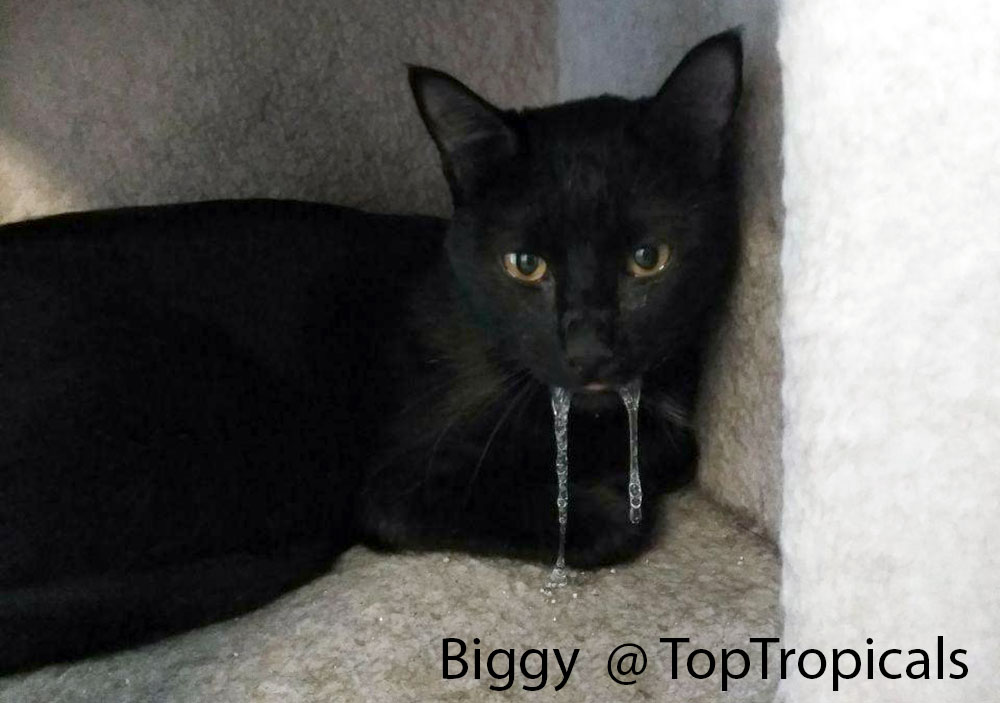
Biggy sneezed... Ooops, sorry for no mask!

TopTropicals PeopleCat Club

Thank you everybody for supporting us in helping PeopleCat Community!
Make your kind donation today and receive a surprise gift from us. Every little bit helps! Thank you and God bless you and your pets!

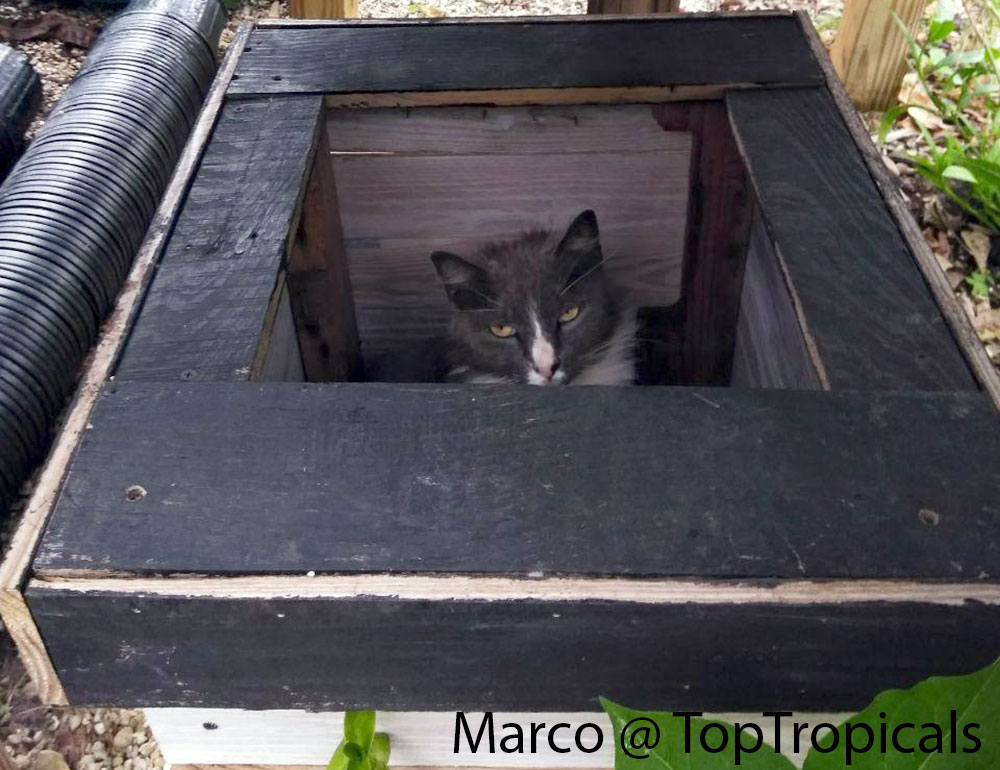
Coughing Marco is practicing Social Distancing

Date: 26 Mar 2020

PeopleCats ruling TopTropicals Kitchen. Healthy Treats for Humans

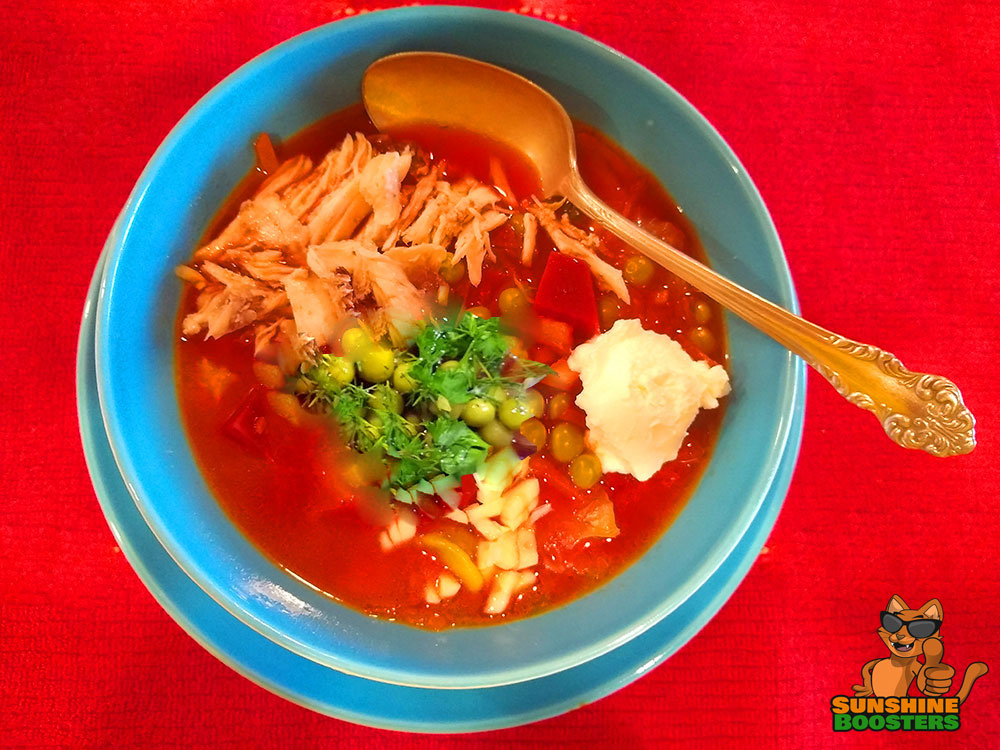
TREAT OF THE DAY: The Secret Health Booster: the Real Russian Borsh

While PeopleCats continue ruling our gardens, getting their daily treats and helping us to survive, they suggested we share some special treats for humans, besides exotic plants and plant boosters...
It is - our favorite Russian Borsh that we make for our TopTropicals International team! It is the most delicious and healthy meal ever invented, for both adults and kids. It boosts your energy, makes you feel warm, wealthy, and happy!

This soup, along with Russian Vodka, is the secret of Russians' Survival Mode - how to stay healthy, strong, tough, and resistant to any virus.

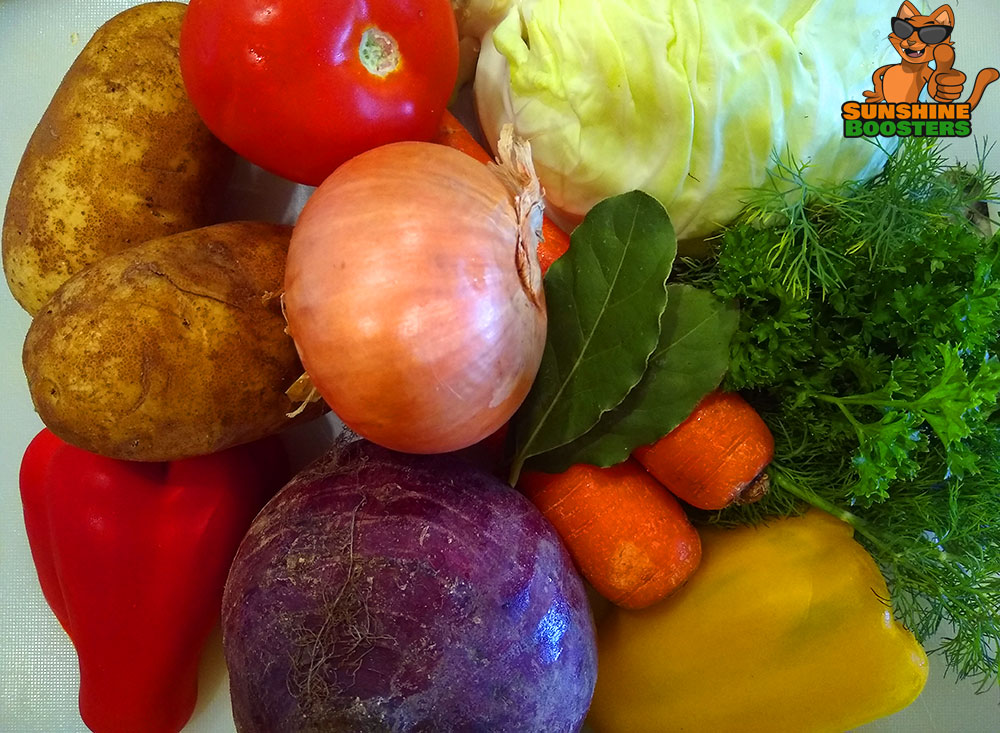
The recipe of the Real Russian Borsh involves very simple, inexpensive, and easy to find ingredients. However, making it right takes a little bit of time (which we sure have now!), since Russians like to make things complicated and from scratch... they use whole foods!
Take your time and enjoy the process - it is a part of this secret recipe. At the end, you will be rewarded with a healthy, tasty meal for the whole family for the whole week! And, it is only $2 per serving!

And remember, it is spelled Borsh (not Borscht!), according to the real Russians.

CONTINUE READING >>

Please tell us how you liked it! :)

TopTropicals PeopleCat Club

Thank you everybody for supporting us in helping PeopleCat Community! Donations accepted from our website. Thank you and God bless you and your pets!

Date: 8 Jul 2020

Meet PeopleCats of TopTropicals. Cat of the day: Russian Blue - a true Angel

Many customers ask if they can adopt one of our PeopleCats. Sorry, the answers is no, because they are not only members of our family, but also valuable employees who help us around the nursery: to grow and ship plants, work on construction projects, and even take care of property security. However, we can give some advise on what kind of cats make the most purrrfect companions.
If you are searching for a pet with a heart of an Angel, who is gentle and loving, the Russian Blue is the perfect purrson to add to your family. The Russian Blue breed comes in beautiful shades of gray, varying from a light shimmering silver to a darker, slate gray. Their short, dense coat has been the hallmark of the Russian breed for more than a century. It is a naturally occurring breed originated in the port of Arkhangelsk in Russia. They are also sometimes called ArchAngel Blues. It is believed that sailors took Russian Blues from the Archangel Isles to Great Britain and Northern Europe in the 1860s.
Throughout the history of Top Tropicals, we've had many Russian Blues, including famous Wesley, Marco, and King that are loved by everyone.

In the photo: TopTropicals editor Alex with Gosha - manager of the Puppet Kingdom, Museum of Dolls in Preili, Latvia

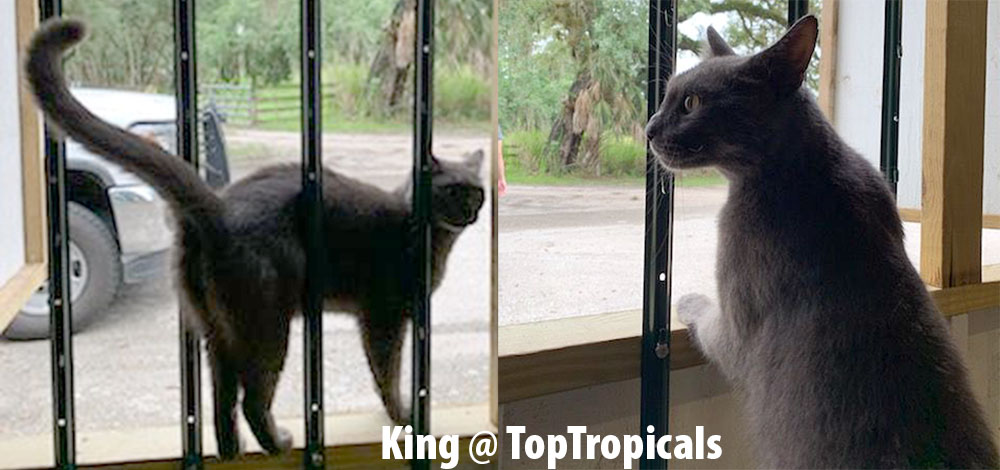
In the photo: King is checking security of the new window

TopTropicals PeopleCat Club and Zoo

Thank you for supporting us in helping PeopleCat Community!
Make your kind donation today and receive a surprise gift from us! Every little bit helps. Thank you and God bless you and your pets!