Garden Blog - Top Tropicals

Date: 16 Jun 2023

10 tips how to care of tropical garden
during hot Summer
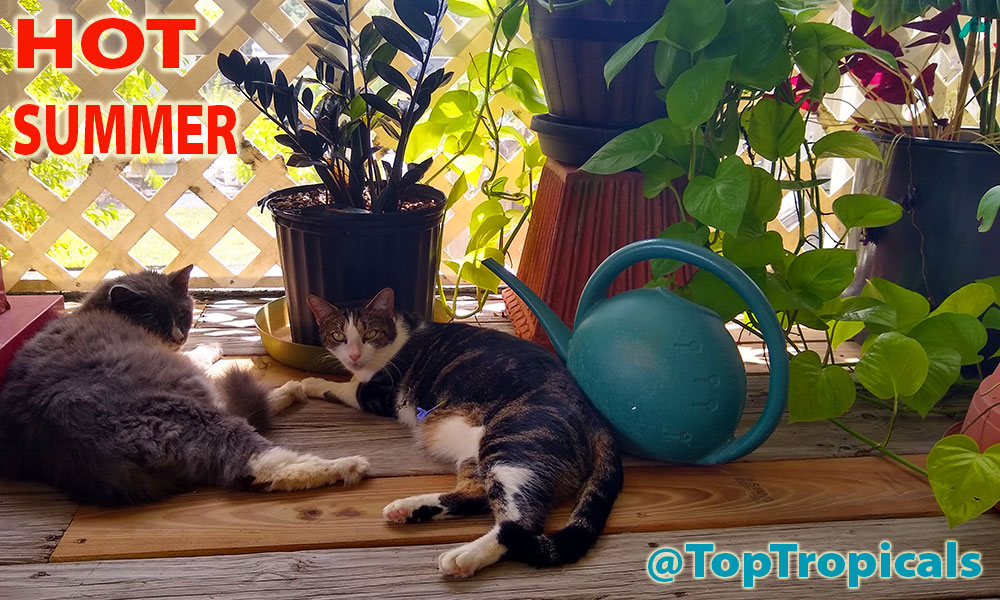
Cats  in  shade  of  tropical  plants

Q: Do you have any special recommendations how to take care of plants during hot season, to reduce heat strees?

A: Tropical plants prefer temperatures of 70-90F, except for heat-adapted desert plants. High temperatures above 90F can cause slowed metabolism and signs of stress like wilting, yellowing, and leaf drop. Hot and humid conditions attract pests and fungal diseases. To keep your plants stress-free and healthy, during Summer:

1. Monitor temperature and signs of stress.
2. Provide shade to regulate heat exposure: use shade cloth or simply a sheet of fabric as needed to protect lush foliage from burns.
3. Choose heat-tolerant plant varieties.
4. Plant in groups and levels, with trees protecting smaller shade loving plants (see companion planting).
5. Water deeply in the morning or evening to prevent evaporation.
6. Mulch to conserve moisture and regulate soil temperature.
7. Air: ensure good air circulation.
8. Trim damaged foliage and crowded branches.
9. Fertilize: use appropriate fertilization to improve plant heat tolerance. Remember, plants need lots of food during active growth period.
10. Remove weeds, pests, and diseases promptly.
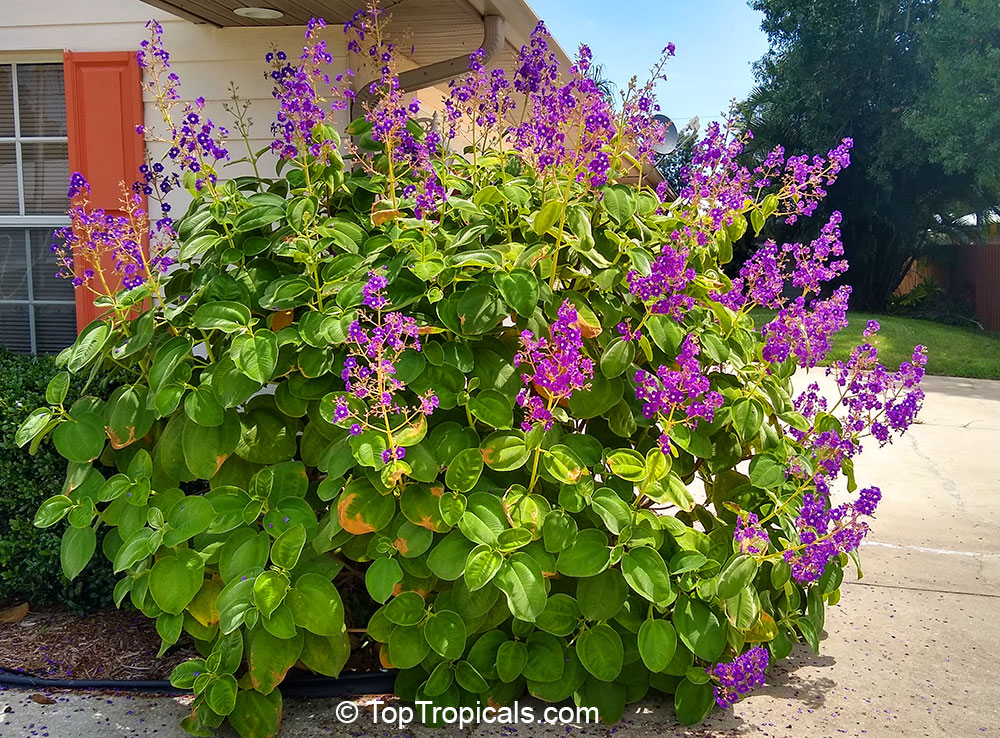
Tibouchina  multiflora  (grandifolia)  -  Glory  bush,  Quaresmeira

In the photo: Tibouchina multiflora (grandifolia) - Glory bush, Quaresmeira, one of the most impressive flowering plants for tropical gardens, with impressive, large velvet leaves and beautiful purple flowers. It blooms in both sun or shade!

Date: 24 Jul 2021

Healthy Plants: Q&A from Mr Booster

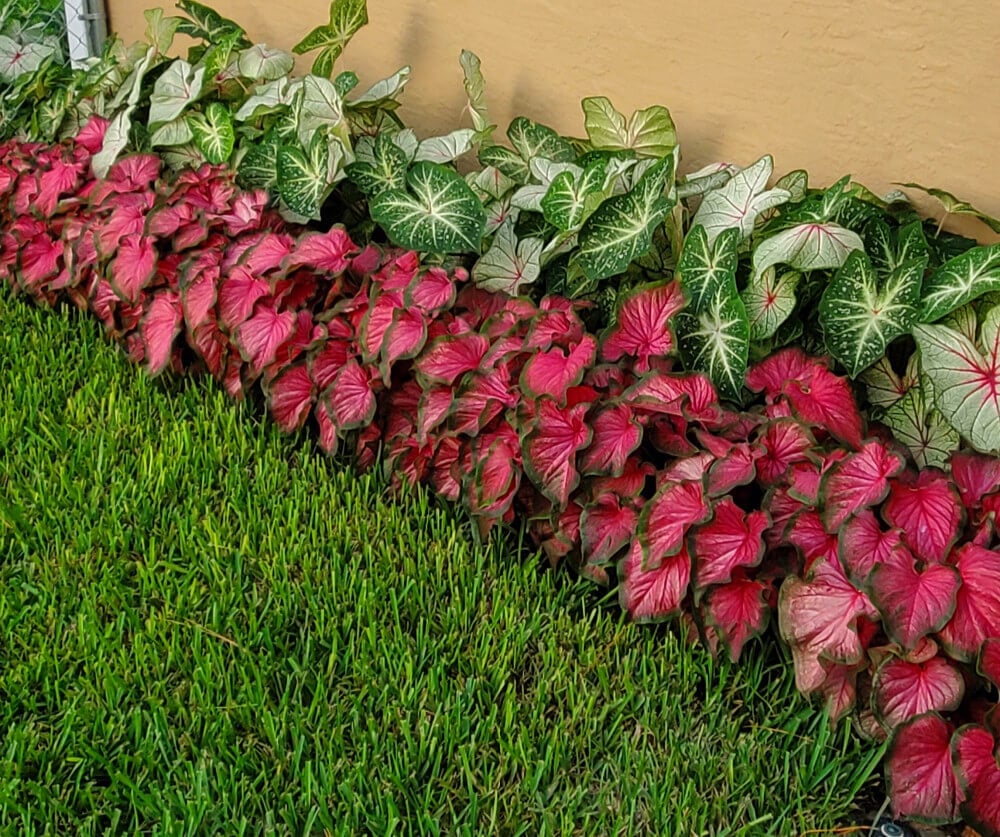
How to fertilize Caladiums and other Aroids

By Ed Jones, the Booster Guy

Q: I have a large collection of Aroid plants, different Monsteras, Philodendrons, and several unique varieties of Caladiums. I've been always told that Caladiums should not be fertilized, they don't like it. Is it so?

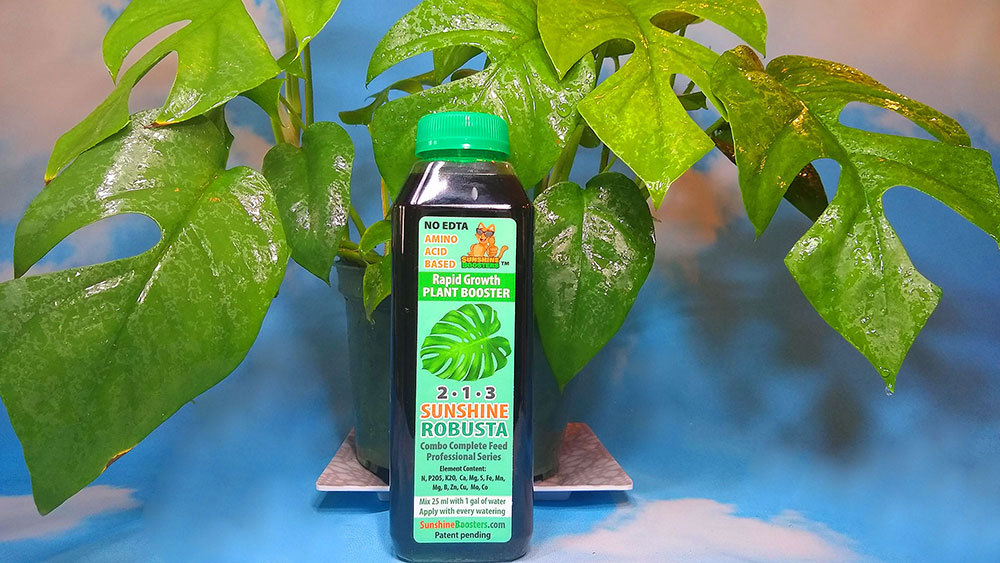
A: Caladium farmers often say that these plants don't need any additional fertilizer and that they really don't like it... The thing is, caladiums do not like DRY fertilizers, and this is why. Most Aroid plants do not like being watered too often, so dry fertilizers in combination with infrequent watering create excessive salinity for the root system. We have run some tests on the proper fertilizers for caladiums and the best results were performed after using SUNSHINE Robusta. It is amino acid based, so the delicate, large-leaved Aroid plants will not have to work quite so hard to take up the nutrients, and there will be no nutrient lock up in soil. The nutrients are readily available to these plants.
In this article, you will see some test results of caladiums fertilized with SUNSHINE Robusta vs. other brands of fertilizer, with more vigorous growth and larger leaf size occurring after use of Sunshine Robusta...

Caladiums do not have to be just an accent plant. They can also be the focus point of a garden area. It is said that as many as 98% of the world's caladium tubers come from right here in Highlands County, Florida, also home to the Sunshine Boosters manufacturing facility. It is such a big deal that they have a Caladium Festival here each summer. The fields are absolutely stunning in all of their colors. This year the festival runs this weekend, July 23 - July 25.

CONTINUE READING >>

Date: 10 Jul 2021

Healthy Plants: Q&A from Mr Booster

Pineapple Season is Here!

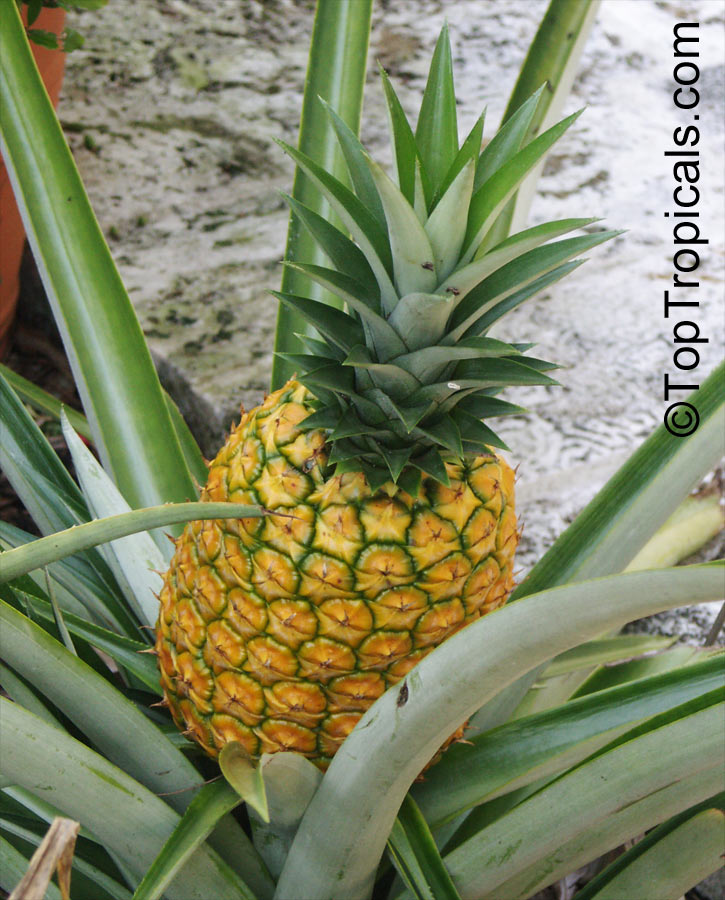
Pineapple season is here and people often ask, "how do you get them to grow?" Well, the answer is simple really. One method involves cutting the top off a pineapple, prepping it and then planting it. You can find several different ways to do this with a short Google search. Of course the easiest way is to purchase plants that have already been started. You can do that here...

CONTINUE READING >>

Date: 30 Jun 2021

Healthy Plants: Q&A from Mr Booster

Meet our new Booster Guy

Plants need food too! Our line of Complete Plant Nutrition system - Sunshine Boosters - will give your plants exactly what they need, and nothing they don't! The boosters are easy to use, and -

ON SALE NOW with FREE shipping

- as a part of our 4th of July specials!

We have a new team member to help you learn more about Sunshine Boosters and how they can make your plants grow healthy and fast.
Meet Ed Jones - our new Booster Guy! Ed will be your contact for all Sunshine Boosters questions, he will help you with fertilizer product selection and ordering.

Soon we will introduce some new fun stuff... including: new advanced formulas, and cool electronics for ultimate control of your plant collections, gardens, greenhouses, and groves... Stay connected!

MORE ABOUT ED >>

Meet Ed's serious Booster People: Roxy and Delilah

Date: 18 May 2021

Healthy Plants: Q&A from Mr Booster

Healthy Heliconia Leaves?

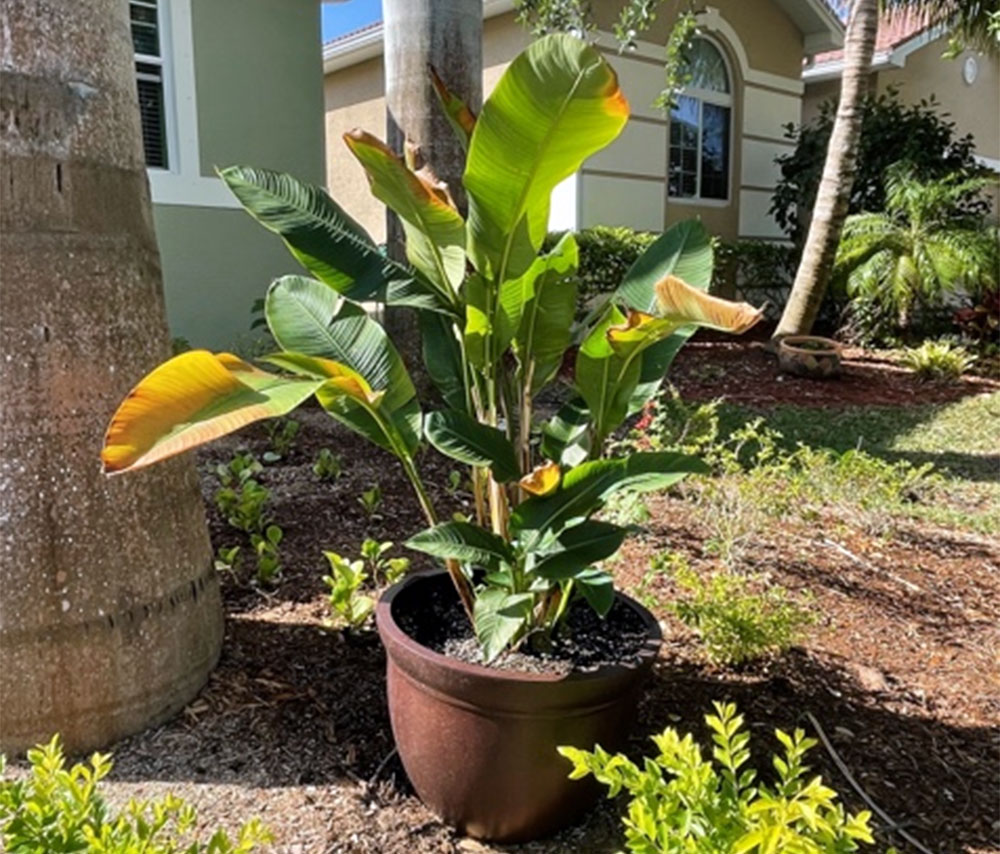
Q: I purchased a heliconia from you a couple months ago. The new growth seems to be doing fairly well, however some of the larger leaves are discoloring around the edges then drying up. It's potted in a large pot with potting soil with 3 holes in the bottom to help with drainage in partial sun under a Royal Palm facing northwest. I'm here in Ft Myers. I was previously watering it every other day with your rapid growth fertilizer 1 tbsp per gallon but I have cut that back to once or twice a week. Please let me know your thoughts.

A: Heliconias and Gingers tend to develop dry leaves if grown in pots, especially ceramic or clay pots, because soil in such pots dries out too fast. These dry leaves are not caused by fertilizer, and you can see lots of new healthy green growth. The plant overall seem to be healthy. Continue fertilizing it with liquid Sunshine Robusta that is great for all wide-leaf tropical species, promotes green, lush foliage, and do not use any additional dry fertilizers!
Another suggestion, try to move the plant in more shady spot. Right now it sits in pretty bright light, this may be OK for established plants in the ground, but potted heliconias are very sensitive to hot sun. They get leaf burn easily.