Date: 31 Aug 2025
🌿 The Jungle Cactus with a secret life
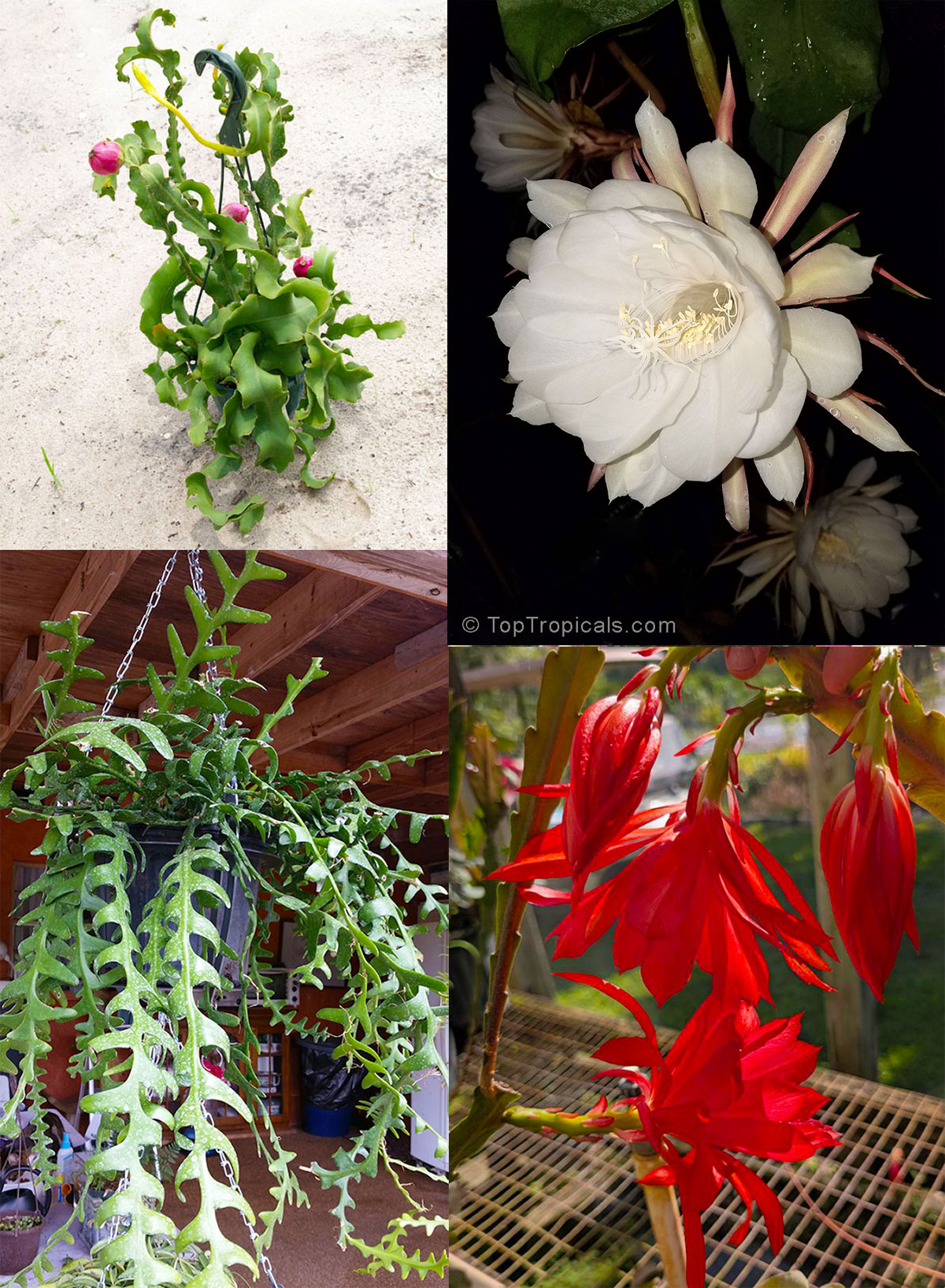
Jungle cactus collage: top left Epiphyllum guatemalense Monstrosa (Curly Locks Orchid Cactus), top right Epiphyllum oxypetalum (Queen of the Night), bottom left Cryptocereus anthonyanus (Zig-Zag Cactus), and bottom right Disocactus ackermanni (Red Orchid Cactus)
Most people picture cactus as desert plants: hot sun, sharp spines, dry sand. But that’s only half the story. There’s another branch of the family that lives in the shade of rainforests. These are the jungle cacti — epiphyte plants that climb trees, trail from branches, and throw out flowers so big and showy they look closer to orchids than to cactus blooms.
See one up close and it’s a surprise. The stems can be flat, zig-zagged, or even curly. Some trail like ferns, others pile into a shaggy basket. And when the flowers open — often at night — they’re wide, fragrant, and gone by morning. It’s no wonder gardeners like them from a first sight.
✔️ Jungle Cactus Q&A
Aren’t all cacti desert plants?
Not these. Jungle cacti are epiphytes and grow in rainforests, clinging to trees and catching rain. They never touch desert sand.
What kind of light do they need?
Outdoors, filtered sun under a tree works best. Indoors, give them bright but indirect light — east or north windows are usually safe. Direct summer sun can scorch the stems, whether inside or out.
How much water is safe?
They take more water than desert cactus but still hate wet feet. Outdoors, a rain shower is fine if the pot drains fast. Indoors, water when the top inch of soil feels dry. Always use a loose mix like Adenium mix so roots get some air.
Do they bloom indoors?
Yes. In fact, many bloom better inside where conditions are steady. They set buds when a little root-bound, and cooler nights help. Outdoors in frost-free zones, flowers come with seasonal shifts. Indoors, expect surprise buds after a cool spell by the window.
Best way to display them?
Hanging baskets show off trailing stems both inside and out. Shallow pots work well on shelves or ledges indoors. In warm climates, they can even be tied to a tree branch outside — exactly how they grow in the wild.
Extra note on indoor vs. outdoor care?
Indoors, watch for dry heated air in winter — they like a bit of humidity. A tray of pebbles and water under the pot helps. Outdoors, protect from heavy midday sun and bring them in if nights dip below the mid 30s F.
Jungle cacti are easy to keep and full of surprises. Whether trailing from a basket or blooming after dark, they prove that not every cactus belongs in the desert.
Date: 31 Aug 2025
 Happy Labor Day!
Labor Day cats Smokey & Sunny enjoy BBQ in fruit
garden
Labor Day is a good reminder that gardening is work, but it is the kind of work that gives back. Digging, hauling, trimming, watering — it all counts as labor, and it all makes life better. Take a little time this weekend to enjoy what has already grown, even if the next project is waiting right around the corner.
Celebrate the holiday with blooms and savings — 15% off orders $100+ this Labor Day, excluding S&H. Expires Exp. 09-03-2025
LABORDAY25
Date: 24 Aug 2025
 Adenium care
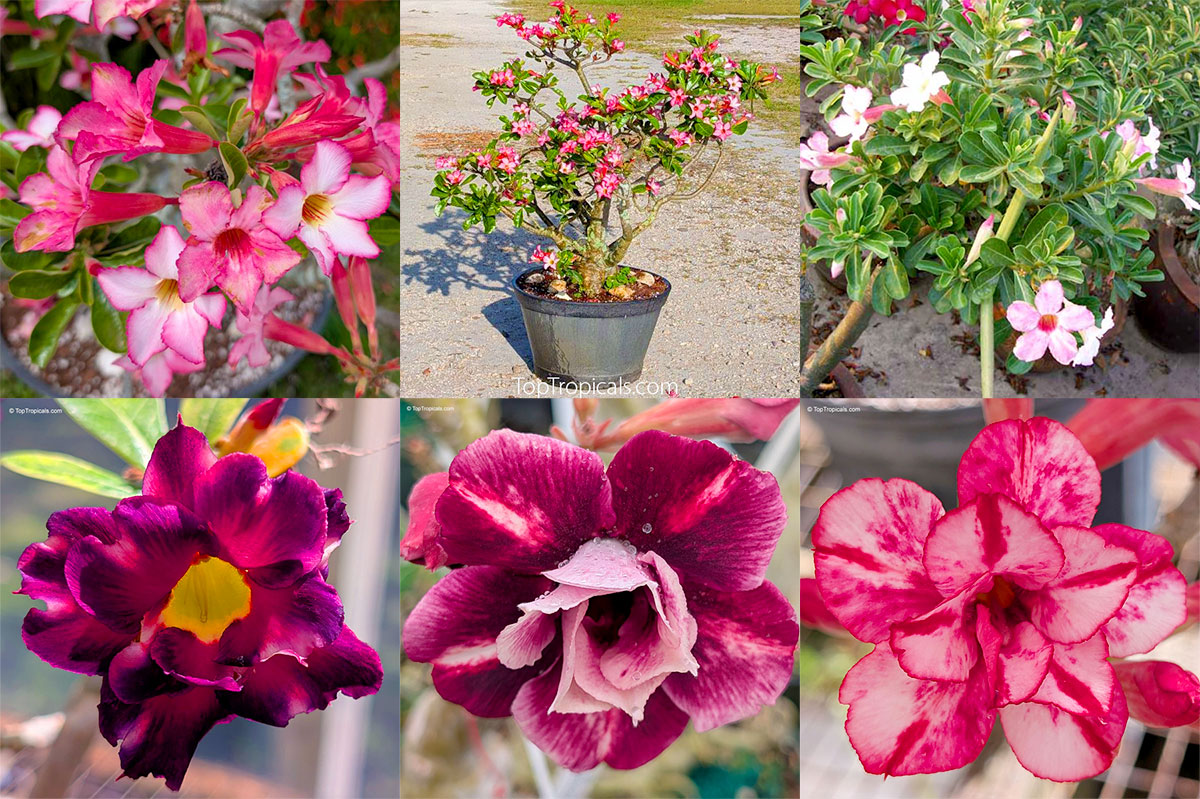
Care for adeniums is simple once you understand what they like. Think of them as half succulent, half tropical shrub. Keep their roots dry but never bone-dry, give them sun, and feed them during the warm months. Do that, and they will reward you with fat trunks and nonstop flowers.
- Soil and pot: Use a gritty, fast-draining Adenium Soilless Mix. Shallow wide pots work best — they let the caudex spread and show off its shape like a bonsai.
- Watering: Water in the morning. Let the surface dry before watering again. Never let pots sit in saucers of water.
- Foliage: Keep leaves dry. Wet leaves invite rot and fungus.
- Fertilizer: During active growth, feed with Sunshine Megaflor liquid fertilizer (flower booster); it promotes swollen trunk and sets flower buds.
- Light: Give them bright light year-round. Full sun in mild climates; filtered light if your summers are scorching.
- Winter rest: Cut water back when days shorten and let the plant rest. Dormancy is normal.
- Repotting trick: Each time you repot, lift the plant a bit so the crown roots peek above the soil. This encourages bigger caudex.
Desert roses are made for containers, easy enough for a beginner but rewarding enough for a collector.
Date: 24 Aug 2025
🌸 Exotic Adeniums Hot Deal
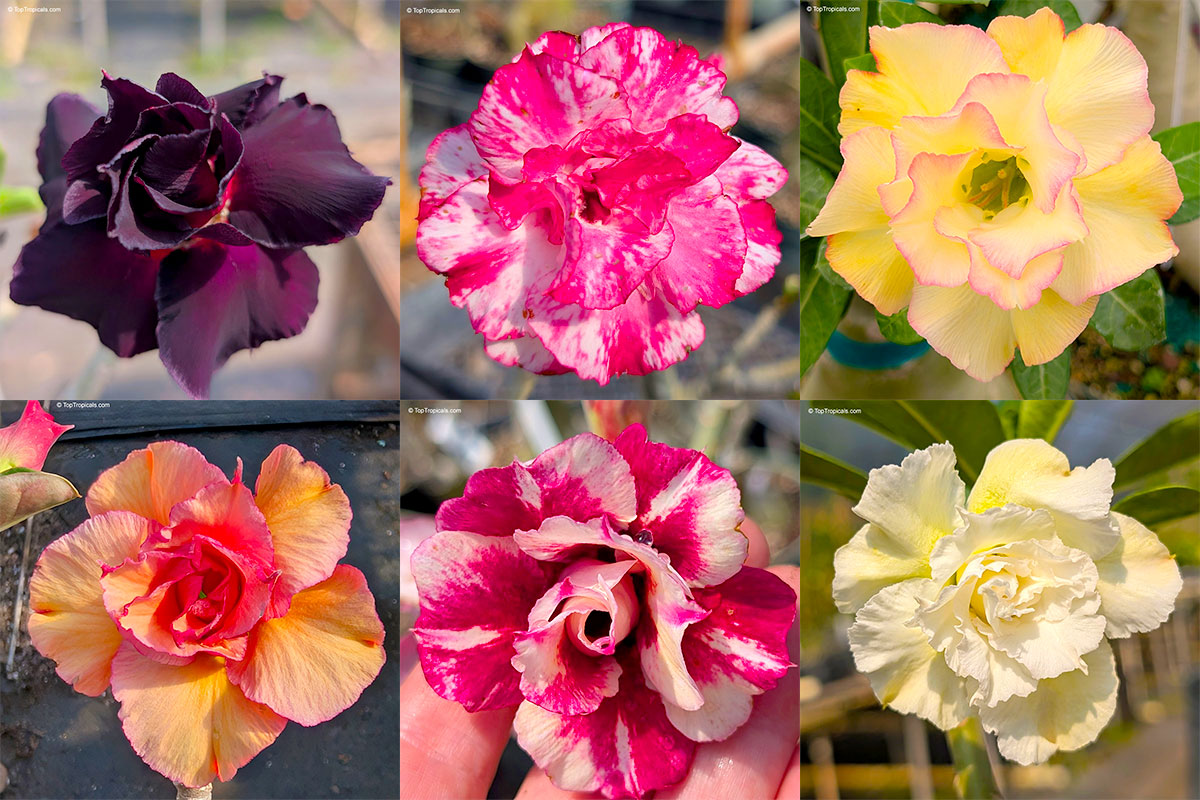
Colorful adenium hybrids in bloom at Top Tropicals
Desert roses (Adeniums) are not really roses at all. They are cousins of the plumeria, but gardeners prize them for that swollen base more than for the leaves. Want a little trick? Each time you repot, lift the plant slightly so the crown roots peek above the soil. Over time the base swells into odd shapes. Some look like bottles, others like bonsai elephants. That is half the fun of growing them.
At Top Tropicals we only sell grafted plants. Why? Because seed-grown plants do not keep flower color true, but they are the only ones that form the swollen caudex. With grafting you get the best of both worlds: reliable flower colors from named hybrids and the sculptural trunk from seedling rootstock. You can make hundreds of exotic colors. Tempting, isn’t it? Take advantage of this hot sale offer and and collect them all!
Use the code below to save 15% on any adenium:
ADENIUM15
No min order. Exp. 8-31-25
Read Garden Blog about Adeniums
Date: 21 Aug 2025
💖 Featured Variety: Lolita Surinam Cherry
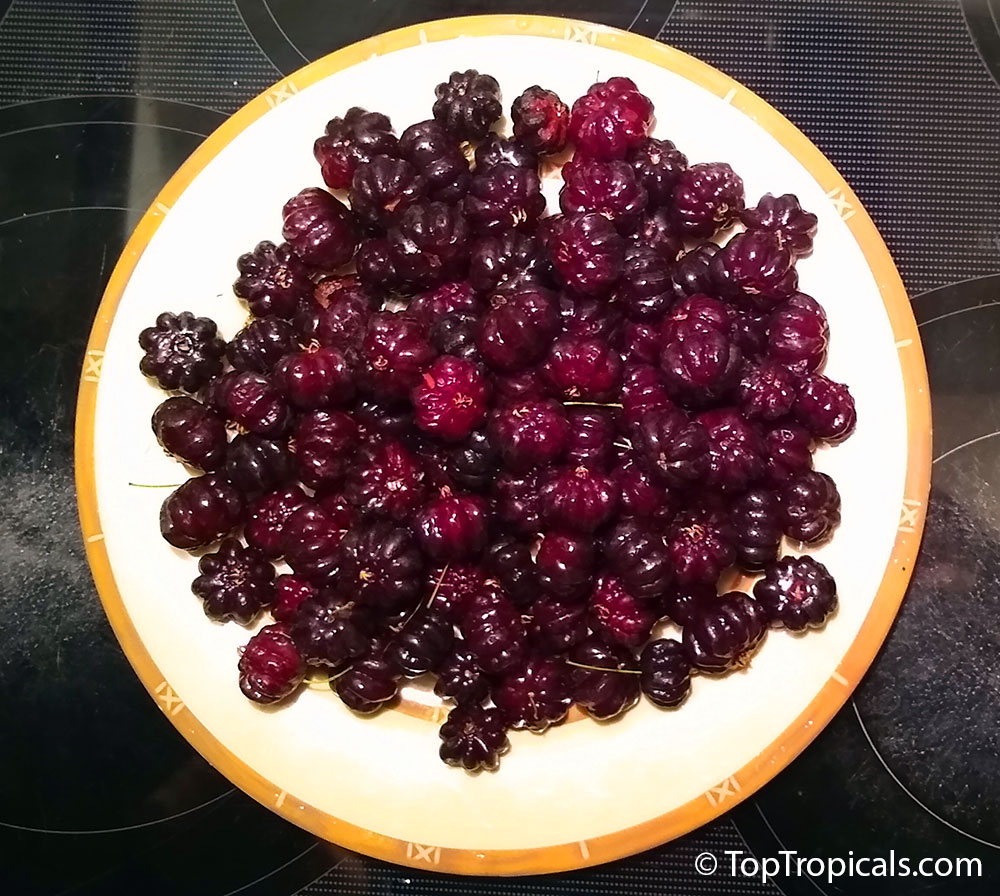
The Lolita is a special form of Surinam cherry. Fruits ripen nearly black, turning sweet and rich without the resinous bite of the common red type. The taste is often compared to a mix of grape and cherry with a tropical twist.
- Fruit Season: Mainly spring into early summer, often with a smaller second crop in fall
- Plant Size: Usually 6–8 ft in the ground, 4–5 ft in containers
- Container Friendly: Thrives in larger pots, stays compact with pruning
- Pollination: Self-fruiting — no partner tree needed
Health Benefits
- High vitamin C content for immunity and skin health
- Antioxidants that help reduce inflammation
- Fiber to support digestion
- A versatile kitchen fruit — eaten fresh, made into jams, sauces, or desserts