Garden Blog - Top Tropicals

Date: 23 Oct 2022

What is Akee fruit?

One of the most bizarre looking, yet useful...
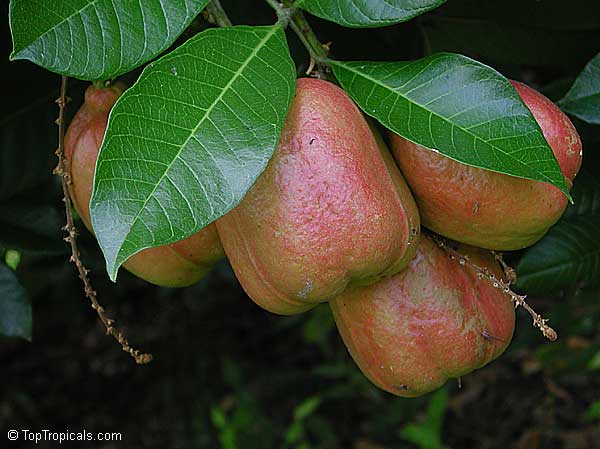
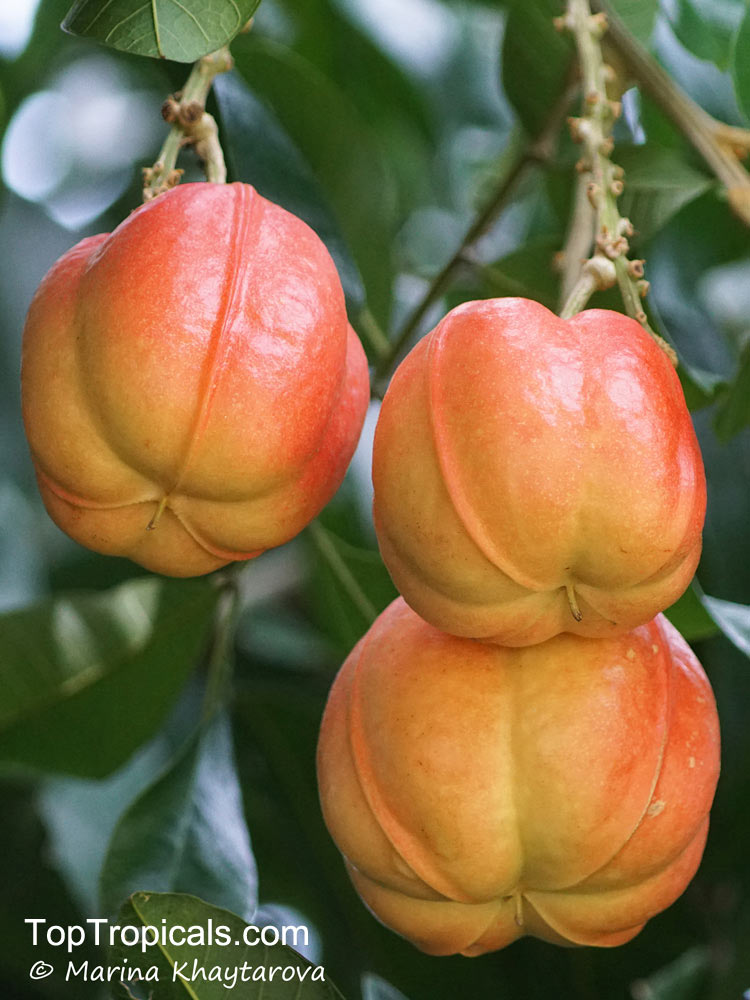
Akee  fruit  on  the  branch  with  leaves

Email from our Florida customer:

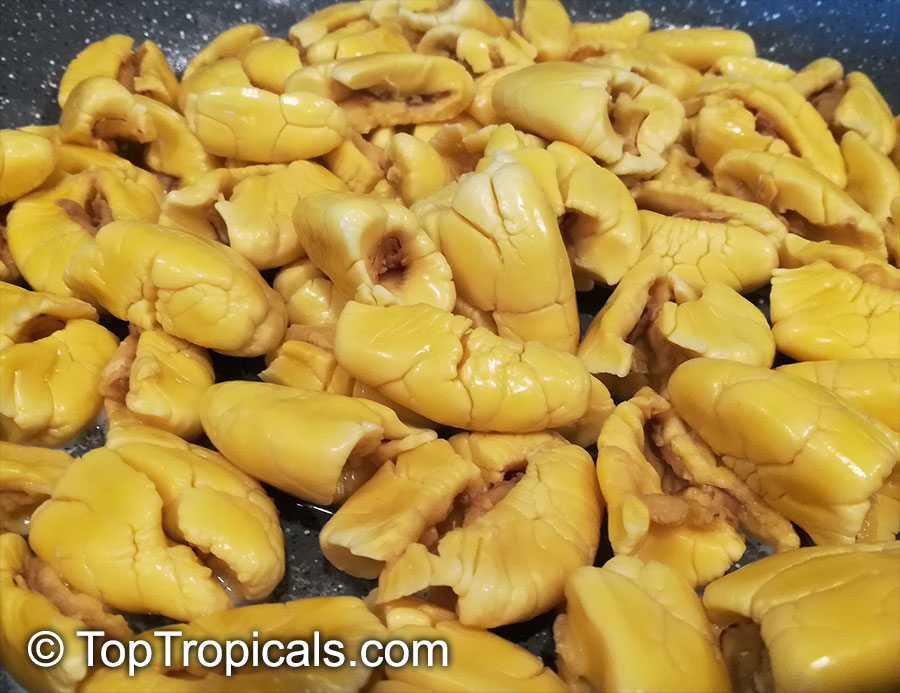
I got an Akee tree from you last year for my tropical fruit garden collection and honestly didn't know much about what it was. This year it started growing real fast and branched out. In spring it was flowering like crazy and now I have about 20 bright coral fruit hanging off the tree that look like Christmas decorations. They are extremely showy and can be seen from far away, I have neighbors stopping by asking what kind of tree it is. I finally did more research on it and found a recipe how to cook the fruit. Only a few had ripened and opened so far, but I already had a chance to try the meal. Cooked the arils and fried in a pan with some butter. What a delicious surprise! To my taste, it is like a mix of potatoes and eggs. Just through in some bacon and it will make a complete breakfast! One of the coolest fruit I've tasted. Just wanted to share this with you.

About Akee (Blighia sapida)

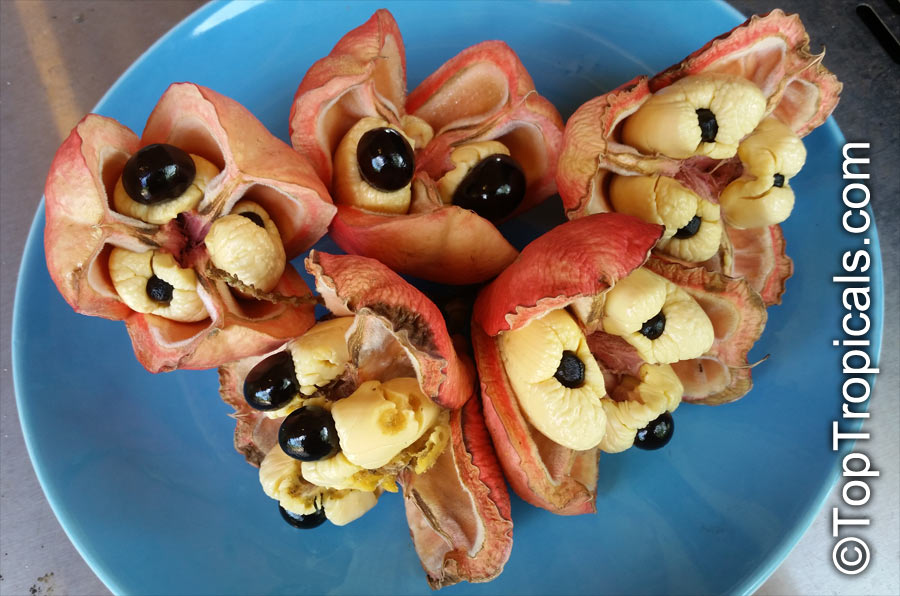
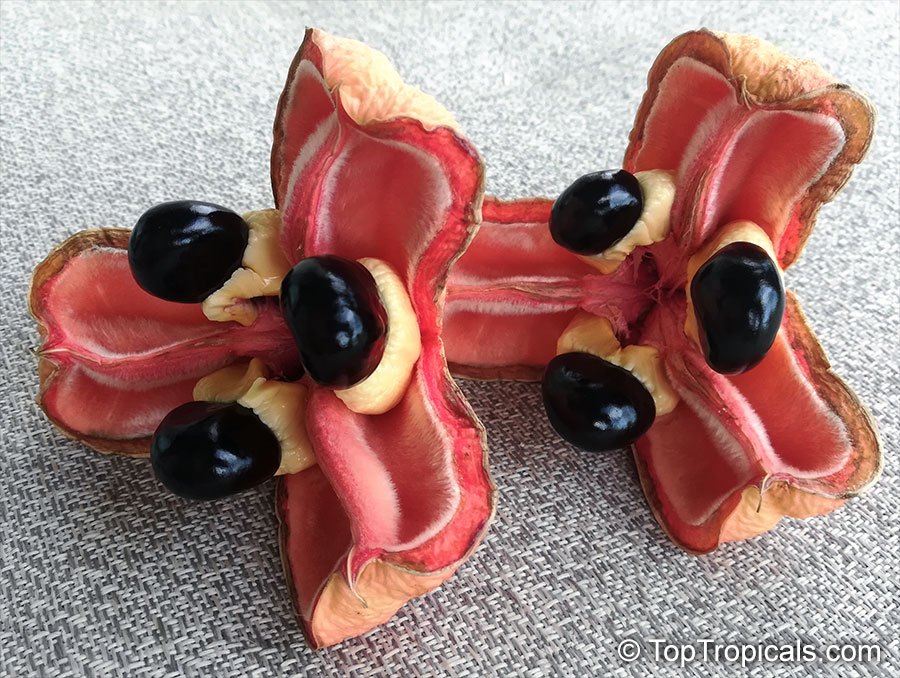
This showy fruit, a close relative of Lychee, Longan, and Rambutan, is a National fruit of Jamaica. It is indeed very exciting one, and what is also important, the tree is easy in cultivation, fast growing and can be maintained compact. I it is not bugsy or picky about soil/water conditions, and is relatively cold tolerant for being a tropical tree. You can find delicious akee meals only in Jamaican restaurants. But no need to search for it - grow your own tree, it can't be easier. It will start fruiting for you the next season, you don't have to wait long. Sometimes it fruits twice a year! However, remember, the fruit is used as a vegetable, and is not eaten raw. It must be picked after the fruit has opened naturally so the flesh is fully exposed to light. When the fruit has "yawned", discard the seeds (or better plant them to grow more trees - to share with your friends!). The arils, while still fresh and firm, are best parboiled in salted water or milk and then lightly fried in butter. Then they are really delicious!
Read more about this tree...
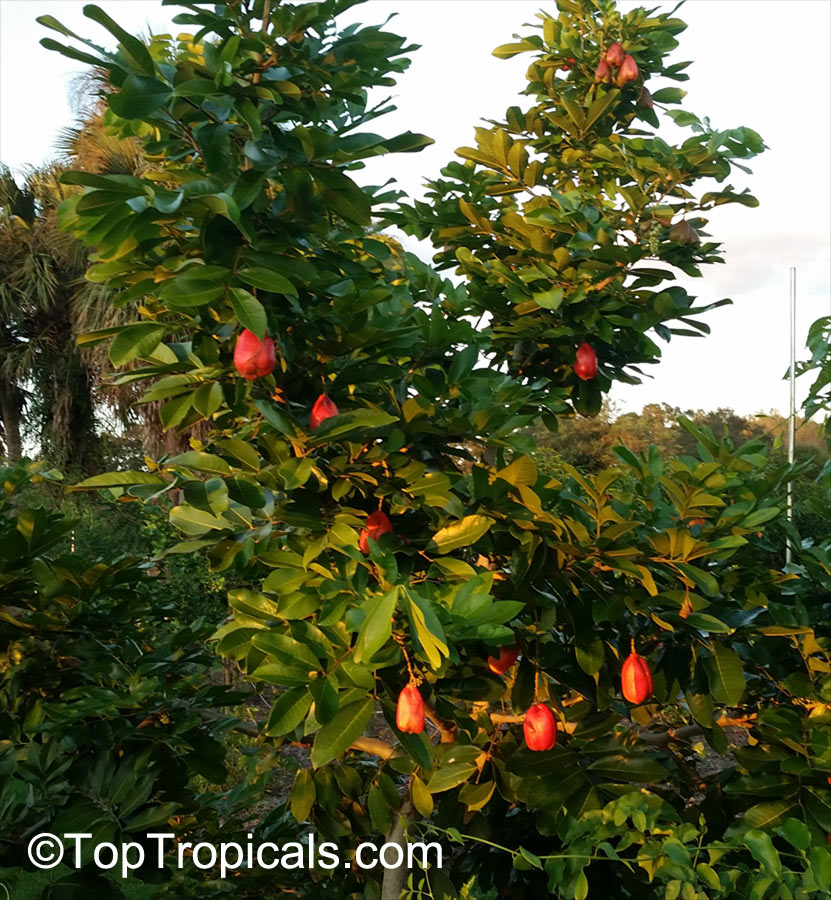
Akee  tree

Akee  fruit

Akee  fruit  with  pulp  and  seeds  on  a  plate

Date: 17 Jun 2022

New Video: What to do when your mango tree freezes?

...It's a happy warm Summer and we hate to think about cold weather. However, when buying a tropical Mango tree, be ready to protect it when winter comes!
In this video we explain how to properly take care of your mango tree after a freeze or frost. We give you step by step directions to ensure your tree has the best chance for survival.....

Subscribe to our Channel:

Stay updated with TopTropicals Videos by subscribing to our channel at YouTube.com/TopTropicals and get our latest video news of what is fruiting and blooming!

Date: 29 May 2022

New Video:
Akee - Jamaica's National Fruit

In this video we talk about growing your own Akee tree so you can have delicious Jamaican meals without going to a Jamaican restaurant!
Akee is a rare fruit tree that is hard to find. It is a National fruit of Jamaica and delicious when fried! The tree is easy in cultivation, fast growing and can be maintained compact. It is relatively cold tolerant for being a tropical tree. It will start fruiting for you the next season, you don't have to wait long. Sometimes it fruits twice a year!..

Akee  fruit

Subscribe to our Channel:

Stay updated with TopTropicals Videos by subscribing to our channel at YouTube.com/TopTropicals and get our latest video news of what is fruiting and blooming!

Date: 16 Jan 2022

Easy Sunday Morning Deals: Dwarf Guava Hawaiian Rainbow

Saving on your favorite plants is Easy.
Easy like Sunday Morning...


..."A ' ohe loa i ka hana a ke aloha.
Distance is ignored by love..."
- Toni Polancy -


It's time for our favorite day and another Easy stroll through Top Tropicals Garden with savings of

50% and MORE!

Put a little Aloha in your garden....
Two Exotics from Paradise

It may be cold where you are, so take a trip with us to the Hawaiian Islands. Tropical breezes, soothing ocean waves and an unbeatable selection of tropical plant treasures...
This week we bring the Aloha to you. A guava that will bring a taste of the Islands and a spectacular variety of Majestic Taro.

Dwarf Guava Hawaiian Rainbow

- Ready to fruit this year! -

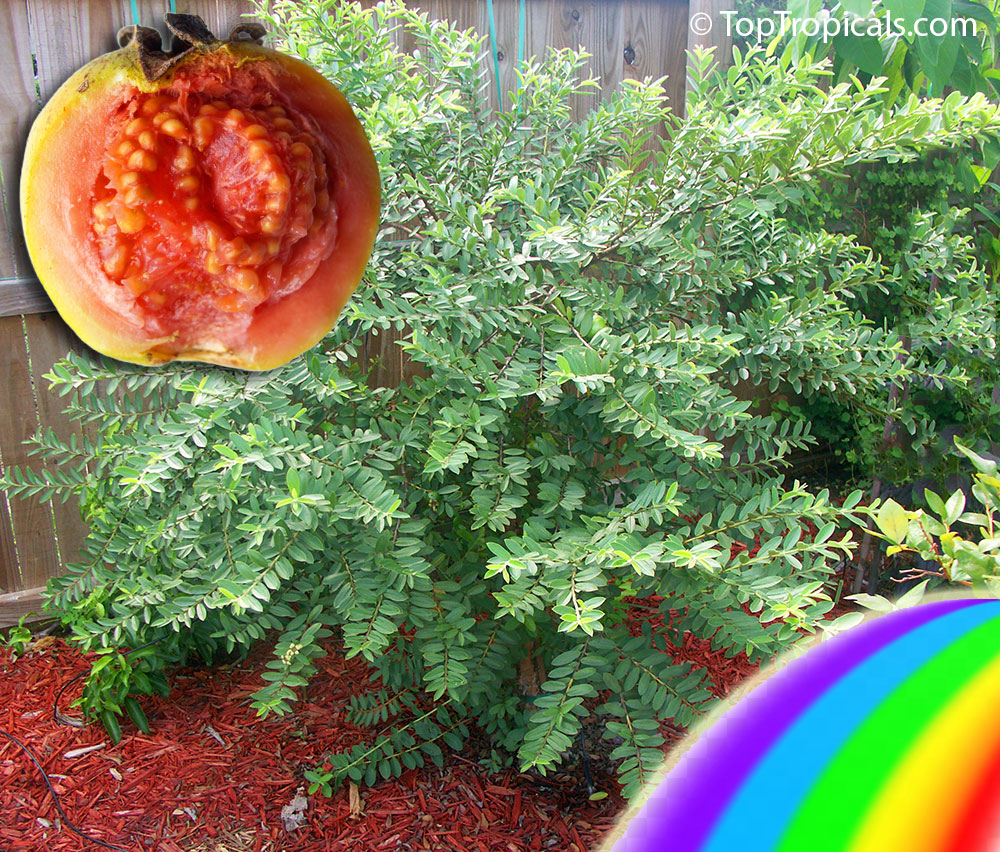
This is a very small version of the favorite aromatic Guava - Hawaiian Rainbow Nana. It grows only up to 5-6 ft tall, perfect for limited space. It can be grown in a pot and fruits heavily almost year around. The flesh is sweet, aromatic, and varies from white to yellow to pink.

Colocasia Diamond Head

- Large Developed plants! -

Diamond Head is a spectacular variety of Taro is named after the volcanic cone on the Hawaiian island of Oahu - both the cone and plant are black and lustrous! Mature plants form a well-behaved clump and reach 3 to 4 feet tall, with leaves up to 2 feet wide! A must for black plant fanatics. Grows more compact that other Colocasias and no two leaves are the same!

Colocasia Diamond Head, regularly $42.95,
is on Easy Sunday sale for only $21.48

Dwarf Guava Hawaiian Rainbow, regularly $52.95,
is on Easy Sunday Sale for only $26.48.

Combine the two for maximum Aloha and save even more:

only $42.95 for both - one plant comes FREE!

Remember, the Easy Sunday Deal expires on Monday January 17th.

Date: 17 Sep 2021

Hibiscus: TopTropicals' first plant

- September 2001 @ TopTropicals -

Q: I wonder how you started your plant business and what was your first plant?

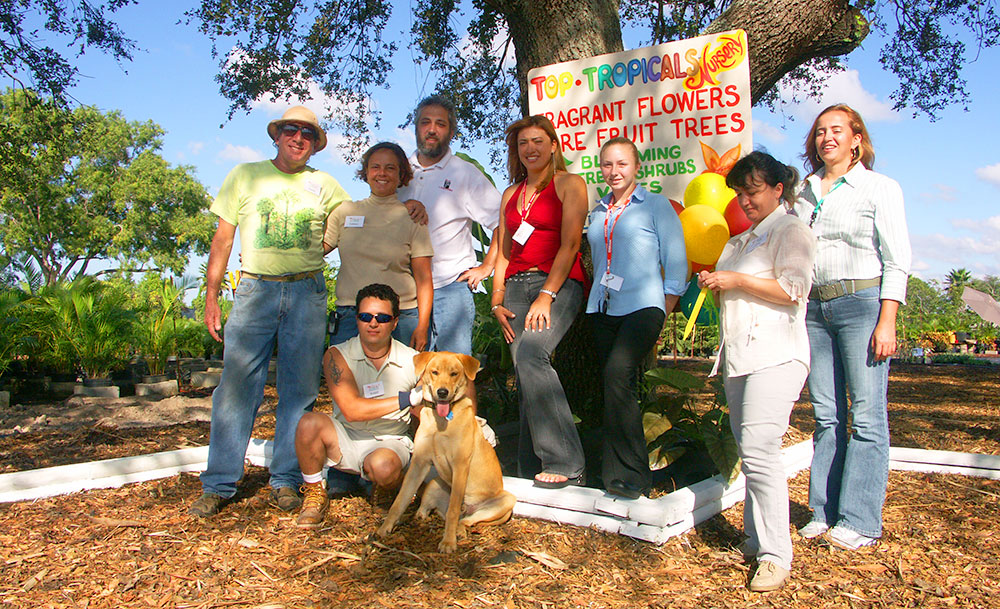
A: It was 20 years ago this month that we started Top Tropicals Project. No idea where it was going or how to even get "there", just started with the idea of sharing these wonderful creatures we call plants with anyone and everyone who felt the same way.

Believe it or not, the first plant at TopTropicals was a hibiscus. Right before we opened our plant nursery in Florida, we ran into a place called Winn Soldani's FANCY HIBISCUS. The variety of colors inspired us to start our own tropical plant business. We asked the owner Winn Soldani: what plants do you suggest us to grow in Florida? His answer was, "Your plant will find you". Very soon we discovered jasmines, then perfume trees and fruit trees - all those became our specialty. Then very quickly TopTropicals.com turned into a large Plant Mall where you can find every tropical plant you can think of!
But at TopTropicals we still grow hibiscus!

- September 2004 @ TopTropicals -

Hibiscus Plus

Hibiscus is a wonderful plant, considering there are thousands of hybrids with color palettes you can only imagine. Especially interesting are those rare and useful species, yet very easy to grow, such as:
- Salad Hibiscus - Hibiscus furcellatus - yes, used in salads
- Coral Hibiscus with crazy pendant flowers - Hibiscus schizopetalus
- African Cranberry hibiscus that is used for making teas and salads - Hibiscus acetocella
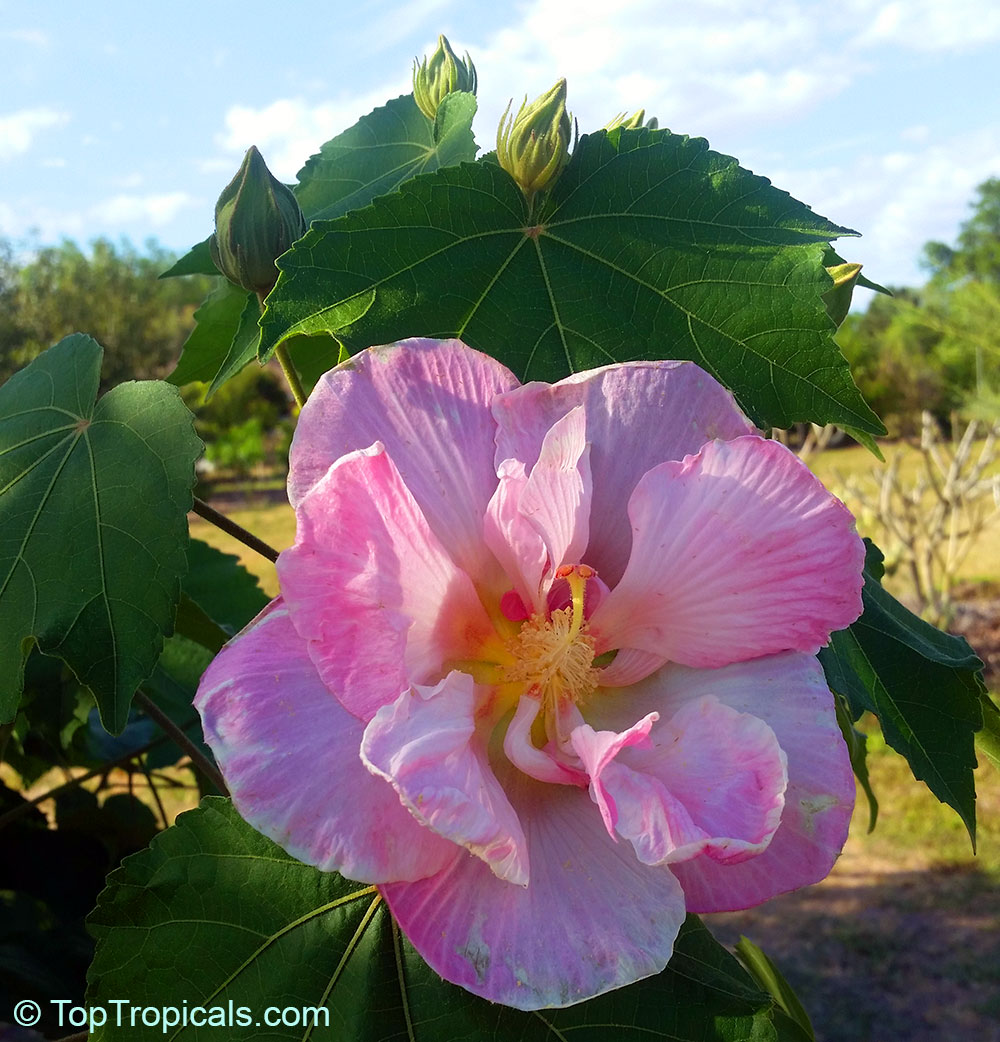
- Cotton Candy Hibiscus mutabilis - the flower changes color, opens as white and turns into bright pink within 3 days, like Yesterday-Today-Tomorrow

Photo above: Hibiscus mutabilis Cotton Candy

Care of Hibiscus and other flowering tropicals

"If your plant isn't flowering, feed it."
- Winn Soldani, Fancy Hibiscus -

Among gardeners, Hibiscus plants have a reputation to have couple maintenance issues:
1) they can get bugsy (because they must be so tasty!)
2) they can get leggy, especially fancy grafted cultivars, and after a while they don't look as perfect as when they came from a nursery.

4 tips for healthy and pretty hibiscus plant

1. Full sun. Essential for profuse flowering and keeps away diseases.
2. Pruning. Keep it pruned and it will get bushy and produce more blooms.
3. Well-drained soil. Hibiscus likes regular watering but hates wet feet.
4. Nutrition program. Hibiscus plants are heavy feeders. But keep in mind that if you just keep pushing granulated plant food, you can over-fertilize the plant. Excessive salts will accumulate in soil and you will end up with a sickly looking plant.

Keys to balanced plant food and bloom booster

1) Use liquid fertilizer, preferably amino acid based, it won't create nutrients lock up
2) Fertilize on regular basis, it's better dilute concentration and add food with every watering
3) Always add micro-elements - they are essential for plant health

If you do this part right, the result will be:
- healthy, green plants, like they just came from a nursery
- reliable blooming circle
- better cold tolerance and disease resistance. Remember that a strong plant will be less stressed and less "bugged" by bugs!

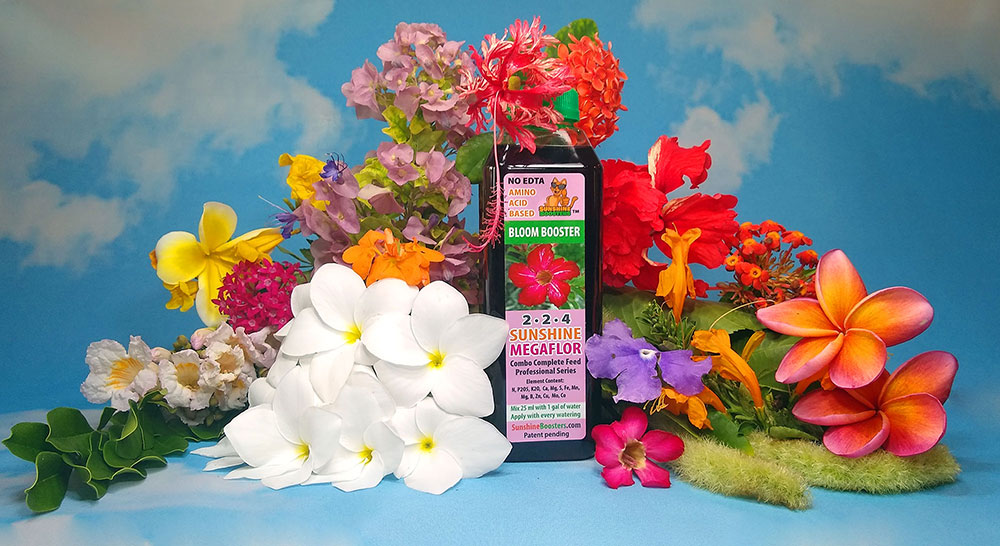
We always suggest Sunshine Boosters - scientifically balanced liquid fertilizers that are amino acid based = they are natural and organic, can be used for both flowers and edibles, and what's most important - year around. They are safe to use virtually with every watering.

This is all you need for healthy plants and lots of flowers!