Garden Blog - Top Tropicals

Date: 28 Dec 2020

Healthy Plants: Q&A from Mr Booster

How to grow a happy Red Jade Vine?
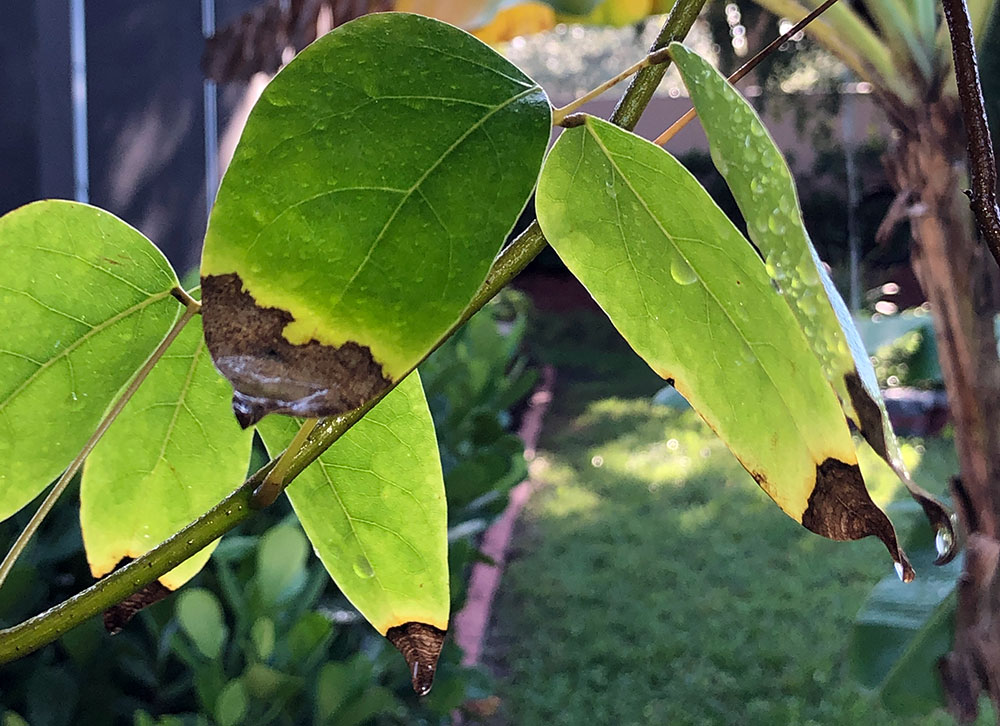
Q: My Red Jade Vine has the leaf tips turning brown. I water this plant four times a week and I am using a half a teaspoon of miracle grow bloom booster 15-30-15 per 2 gallons, every two weeks. In the beginning I had to water this plant off city water in South Fort Myers. Over the last two months I picked up a dechlorinator buggy plus threw that on my hose and I've been watering it with that but it didn't seem to make a difference. I put this plant in the ground last September. It has three shoots that run into the top of the tree, so it is growing but leaves seem to drop off down low at the base of the vine and the brown tipping running into the top of the plant. But not the newest shoot its leaves are solid green all the way at the top. Thanks for any advice.
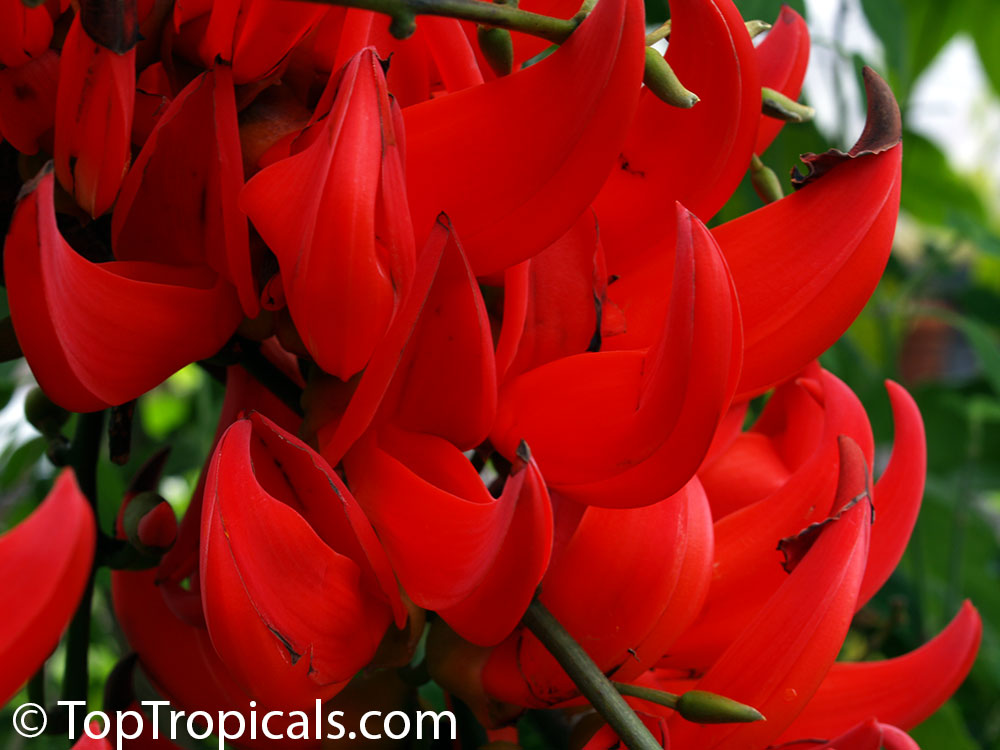
A: Mucuna benettii - Red Jade vine - is not the easiest plant to grow, and we are glad your vine is growing well. For those who love this plant but not ready to face all challenges, we recommend its cousin - Camptosema grandiflora - Dwarf Red Jade Vine, which is much hardier and easier plant.
We looked at the photos and these are our thoughts.

1) The top of the plant with green fresh leaves definitely indicates that the plant is generally healthy and vigorous.
2) Dry tips of the old leaves may indicate excess salts in soil, in combination with the summer heat that it went through. Based on your feeding program description, that fertilizer may create a problem. Water soluble traditional fertilizers are EDTA-chelated which often causes nutrients lock up in soil and leaf drop. Try to stay away from that fertilizer for a month and let the rains and/or irrigation water flush the soil for a couple of weeks.
3) Red Jade vine is a very sensitive species. Normally, during hot season it is safe to use traditional fertilizers, especially slow-release granulated. However, with this plant we recommend you to switch to more delicate formula and use only liquid fertilizer.
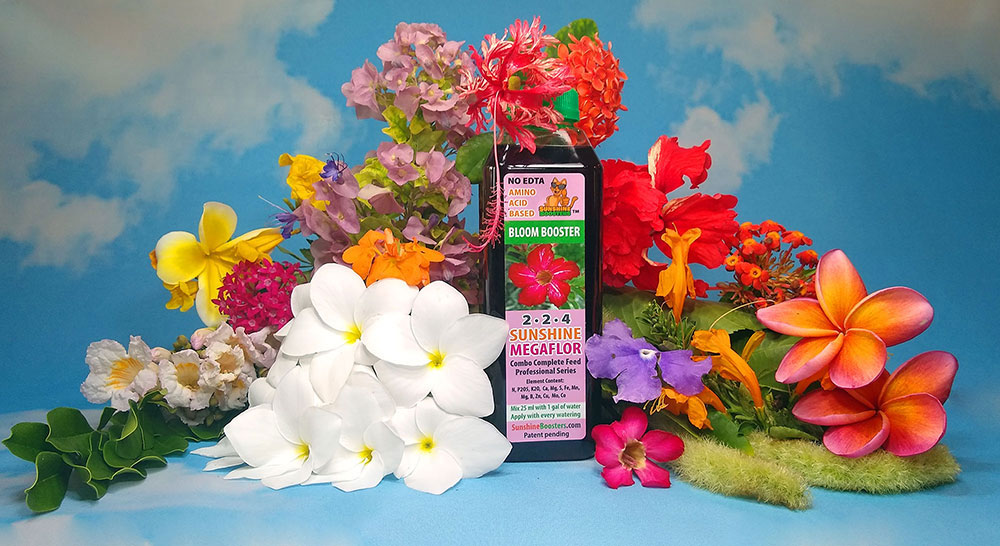
SUNSHINE Megaflor - Bloom Nutrition Booster will be the best. It is safe to use it as frequent as with every watering! It is amino-acid based, and will be totally consumed by the plant without nutrient lockup.
4) Another cause of dry leaf tips may be micro-element deficiency.
Megaflor booster already has all necessary micro-nutrients in it, plus you may apply some extra: SUNSHINE Superfood.
5) You may continue using regular water for watering (including city water) as long as you use amino-acid based plant food and supplements: they improve soil acidity (what tropical plants like is acidic soil, and Florida soils are alkaline). Additionally, to improve soil acidity which can be critical for this Mucuna species, you may add 1"layer of pure peat moss on top of the soil around the plant. Please keep us in loop how the plant is doing. It is pretty rare species in cultivation and we will be happy to help you to keep it thriving.
Date: 22 Dec 2020

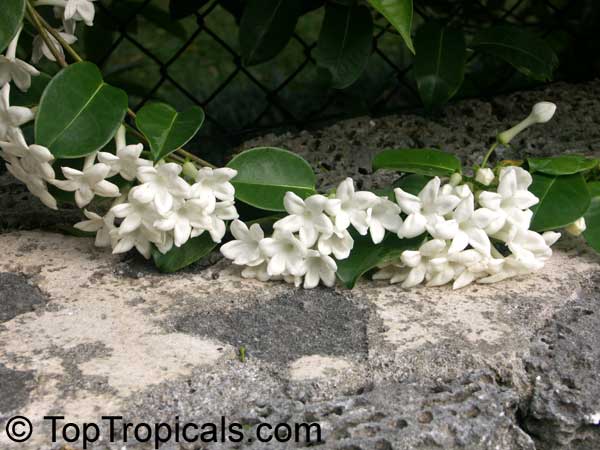
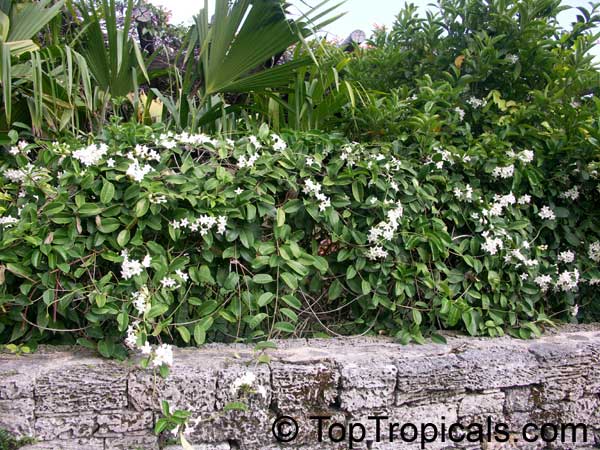
Growing Stephanotis and cold protection

Q: I bought from you 3 plants Stephanotis How do I protect them from this low temperature now? I live in Ft Myers Beach.

A: In Ft Myers Beach, you have frost-free winters. You don't have to worry about cold protection for the Stephanotis. It is pretty cold hardy plant in spite of being a true tropical (it enjoys Hawaii environment for example). From our own experience, Stephanotis can even take a light frost for a short period of time without any damage.
You can keep this plant either in a pot or plant in the ground in a nice sunny location for more profuse flowering. It can climb a tree, a fence, or a pagoda.
However, keep in mind that during cool weather you need to reduce amount of watering. Wet + cold is a bad combination for plants. Water again only when the soil gets slightly dry. In summer time, extra water is not critical because it evaporates quickly with high temperatures.

Date: 10 Oct 2020

Healthy Plants: Q&A from Mr Booster

How to keep bugs away naturally?

Q: I started moving my tropical plant collection indoors as it's getting colder... And all of a sudden, I noticed bugs on leaves! I know for sure all my plants were bug-free when I kept the pots outside in my lanai. What happened? And how can I keep them clean and healthy without using any harsh chemicals? I have many edibles and herbs that I use in my cooking and prefer to stay away from insecticides. Any suggestions?

A: It is very common when healthy looking plants, once moved indoors for the winter, get insect infestations. The main reason is change of environment that puts a plant into stress and makes it susceptible to parasites and diseases. Just think about what a plant is missing, a whole combination of necessary conditions that provided a good life:
- Bring light -> light level reduced, so beneficial UV spectrum is gone
- Air circulation -> less wind = more bugs thriving
- Warm temperature -> from upper 80's in summer to 70's in your AC room
- Air humidity -> although humid air is believed to be causing some issues (for example fungus), however, reducing humidity overall puts a plant into stress and makes it more vulnerable.

Many gardener prefer to avoid chemicals, especially when it comes to treating edible plants and indoor collections. The solution to your problems is - Organic Solution!

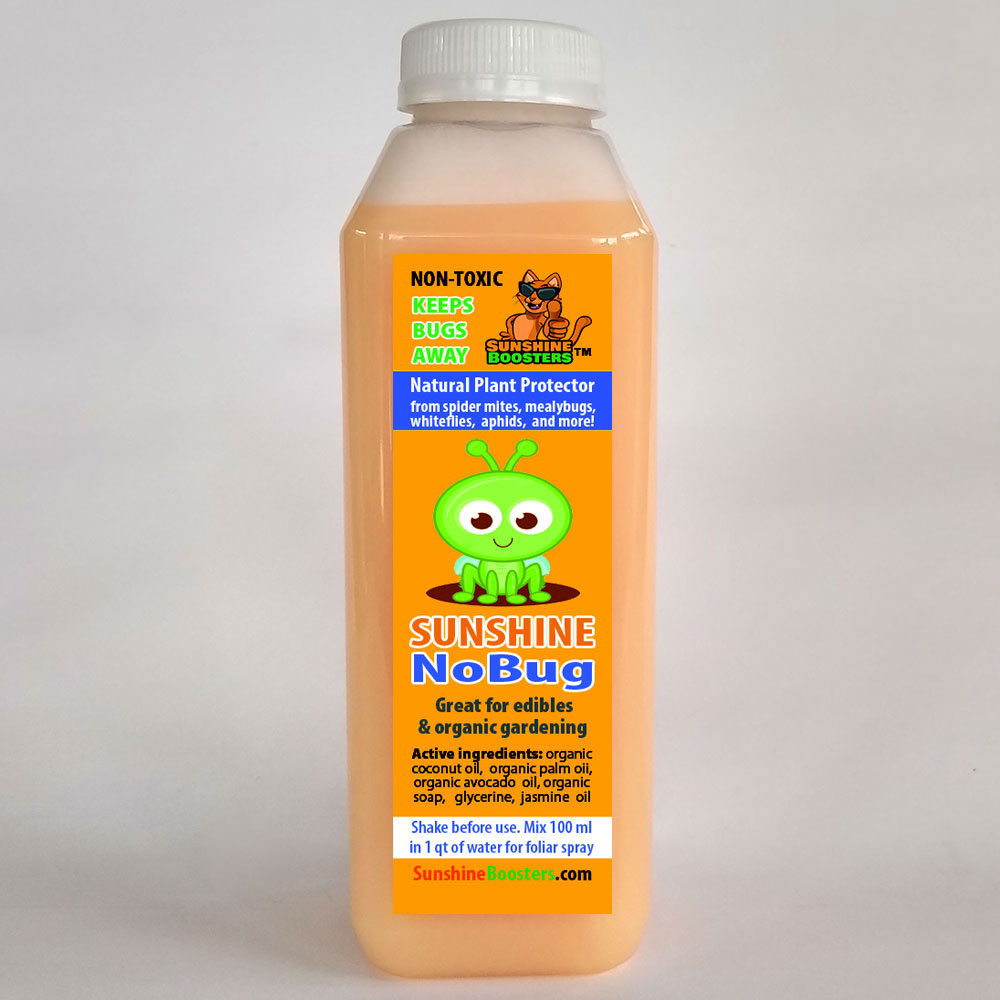
SUNSHINE NoBug - Natural Plant Protector.
Shampoo for Plants - for both indoors and garden

SUNSHINE NoBug - is a natural solution to keep your plants healthy and bug-free without harsh chemicals. It is great for organic gardening and edibles, eco-safe and non-toxic for humans and pets. It kills, repels and prevents: spider-mites, mealybugs, whiteflies, aphids and many more. No wait time required - spray and play! And it smells like jasmine, forget stinky insecticides!
How does it work? Just look at these ingredients: Kosher Glycerine, Organic Coconut Oil, Organic Palm Oil, Oat Protein, Organic Soap, Horticultural Oil, Jasmine Oil, Water. Yum! But bugs hate it - they suffocate in it! This is why your plants will have NO BUGS with NoBug, that's it!

Directions are simple:

- Mix 100 ml (3-4 oz) with 1 qt (32 oz) of water, or 500 ml (16 oz) in 1 gal of water - for larger applications
- Spray foliage to drip point, including underneath leaves.
- Repeat the treatment in 7 days.
- As a preventive care, spray leaves once a month to keep insects away.
- You may use a paper towel saturated with this solution to wipe the leaves and remove residue from insects.
- Store at room temperature.

This poor Pepper plant was tossed into garbage can by a neighbor... it looked hopeless, infested with mealybugs. We saved it with NoBug ! In 2 days it perked up, and after 4 weeks its healthy and fruiting!

Date: 20 Aug 2020

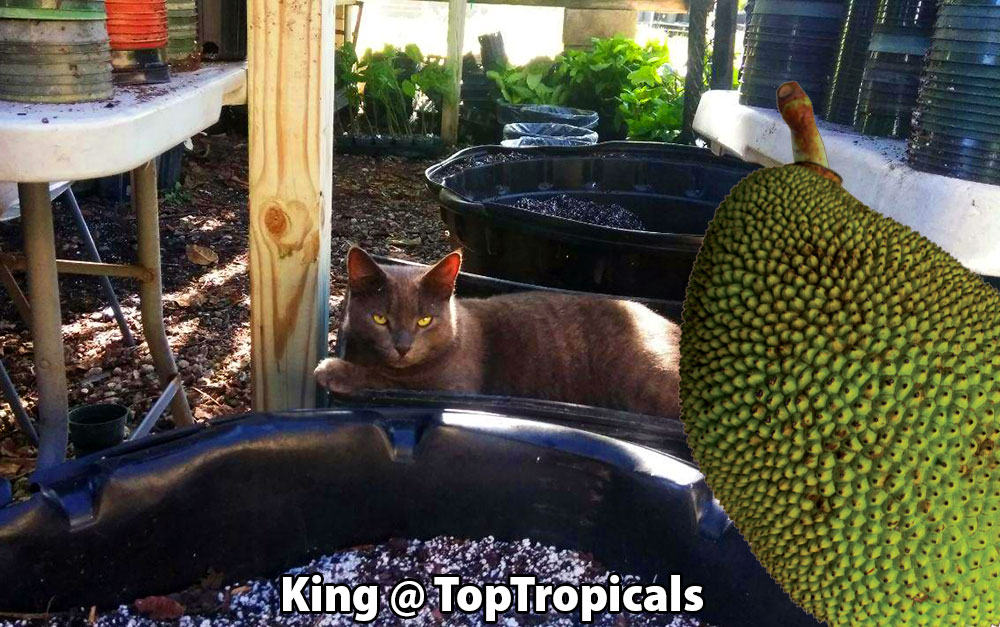
PeopleCats of TopTropicals. Cat of The Month: Greenhouse King

King continues being on top of the poll... thanks to his adventurous nature. This Purrrson just loves to travel! He likes driving and biking. How many times we pulled him out of customer's car or delivery truck!
Sure thing, he just did it again, joining contractor's team. Luckily he was noticed hiding in the back of the truck before the driver hit the highway!

ATTENTION VISITORS!

We are reminding you, please check your vehicles for cats before you leave!

On a bright side, King has been very helpful, helping to plant newly arrived plant shipment from Thailand.
For those of you who has been waiting for rare plants, after a long delay due to airlines lockdown, we finally got lots of rare stuff and it will be ready for shipping soon.
Please make sure to add to your wish-list these coming-soon rare plants, this is the only way we can ensure you will get notified when they are available for sale, on first come first serve basis.
These are limited quantities, high demand plants!
Don't miss your dream plant! Just click on "Notify me when available" and add your email to waiting list.

Limited quantities - will be ready soon
(planted with King's help)

- Amherstia nobilis - Pride of Burma
- Artabotrys siamensis - Climbing Ylang-Ylang
- Barringtonia acutangula - Indian Putat
- Barringtonia asiatica - Fish Poison Tree
- Bauhinia aureifolia - Fragrant Gold Leaf Orchid Vine
- Brownea ariza - Rose of Venezuela
- Brownea grandiceps - Scarlet Flame Bean
- Cananga fruticosa - Dwarf Ylang-Ylang
- Couroupita guianensis - Cannonball Tree
- Cyrtostachys lakka - Lipstick Palm, Red Sealing Wax
- Desmos chinensis - Ylang Ylang Shrub
- Dillenia philippinensis - Katmon, Philippines Elephant Apple
- Garcinia mangostana - Mangosteen
- Ixora congesta Thai Flame
- Melodorum fruticosum - Hot Lips Ylang-Ylang
- Monstera variegata Thai Constellation (available now for pick up only)
- Gustavia augusta - Heaven Lotus
- Posoqueria longiflora - Needle Flower Tree
- Rauwenhoffia, Melodorum siamensis
- Saraca declinata - Red Saraca
- Terminalia catappa - Tropical Almond
- Vallaris glabra - Bread Flower
- Wrightia vietnamensis - Dwarf

TopTropicals PeopleCat Club and Zoo

Thank you for supporting us in helping PeopleCat Community!
Make your kind donation today and receive a surprise gift from us! Every little bit helps. Thank you and God bless you and your pets!

Date: 7 Aug 2020

Healthy Plant Food

Q&A from Mr Booster

Plant food for a Star Fruit

Q: I have 2 Starfruit plants from you. One on the left is B10 has a lot of flowers but no fruit is developing. On the rite is Kenjeng. This one has no flowers at all. Both plants are growing very well. Plenty of sun and water. I am located in Boynton Beach Florida. So what to do?

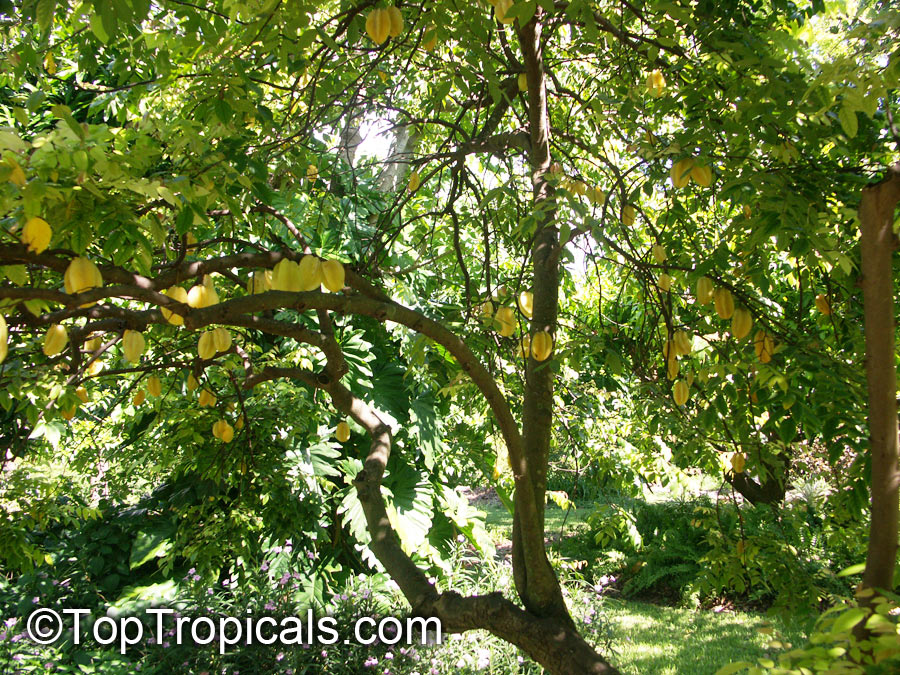
A: Your trees on the pictures look very healthy, congratulations with a great care!
Starfruit, as well as other grafted fruit trees (like mango, avocado, etc) usually flower/fruit easily and readily while in pots in the nursery. Sometimes, once planted in the ground, they may reduce flowering or even stop flowering. What happened?
The answer is simple. In pots, we fertilize them on regular basis. In our nursery, we have fertilizer injector inline with irrigation system that dozes plant food with EVERY watering. In other nurseries, they may also use slow-release fertilizers, but it is still a regular routine to provide plant food to potted plants.
In the ground, especially in Florida poor soils, fruit trees may stop flowering or delay fruiting due to lack of nutrients, or dis-balance of elements in the ground. Without fertilizer, a tree may take extra time to develop bigger root system to reach out for necessary elements, and eventually will start fruiting anyway.
But we want it to fruit soon! The only way to fix the problem is to provide fertilizer on regular basis for a young tree. It is especially important during hot summer months when plant metabolism is fast due to high temperatures, plus nutrients may get washed away with frequent summer rains (like we have in Florida) even if you've added some fertilizer at time of planting.

You can use smart release fertilizer once a month during hot season, this one or similar:
Mango-Food - Smart Release Fruit Tree Booster.

But the most effective way to get a tropical tree to flowering and fruiting, is frequent applications of liquid fertilizer. We use Sunshine Boosters with every watering on our plants. They work great even on hard cases and weak plants, and you see the difference in a matter of weeks, sometimes even days.
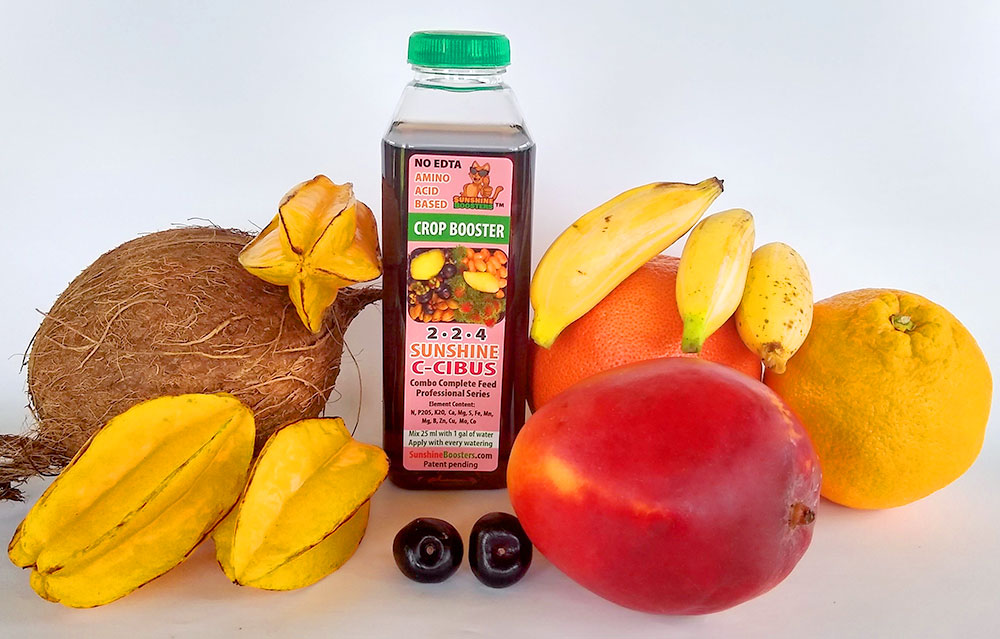
We recommend the following fertilizer that contains all necessary elements for young fruit trees: SUNSHINE C-Cibus - Crop Nutrition Booster

SUNSHINE C-Cibus - Crop Nutrition Booster from Garden Series, or Combo Total Feed Collection - all nutrients in just one bottle, for fruit trees and edibles.