Garden Blog - Top Tropicals

Date: 4 Oct 2020

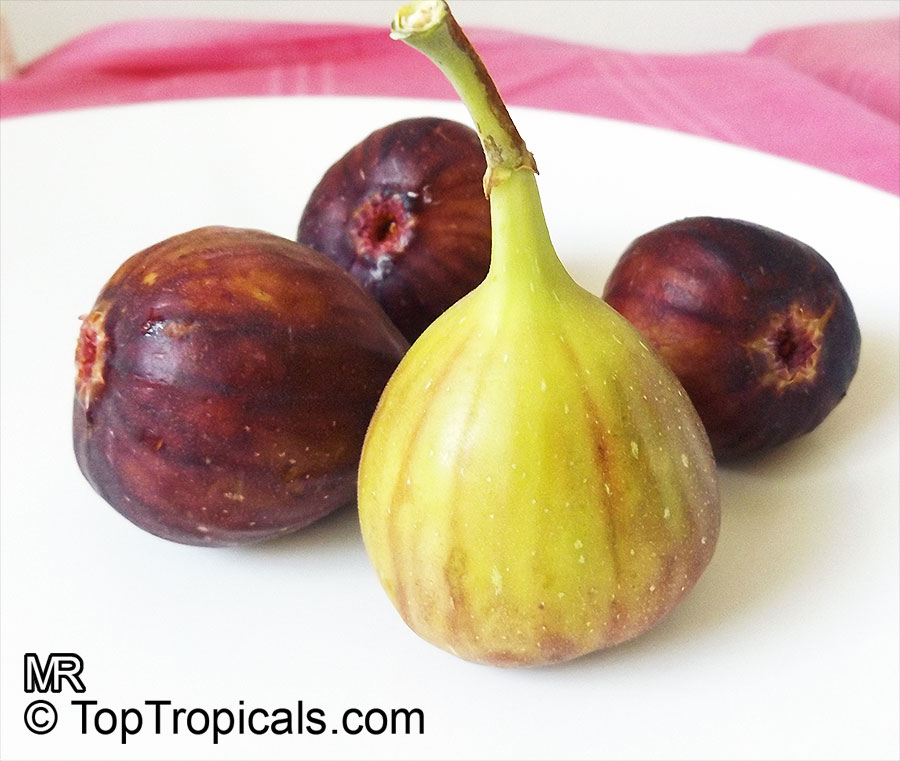
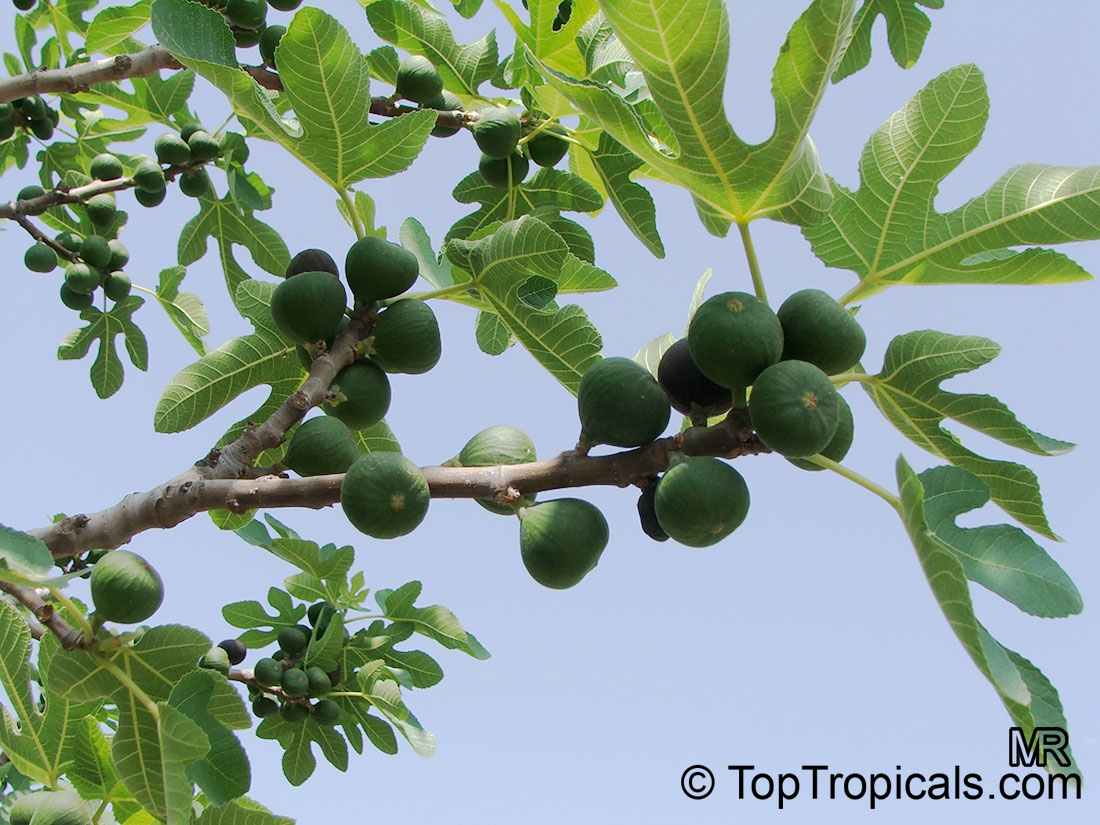
What fig trees are good for Florida?

Q: My baby fig tree was sprayed by the lawn people with weed killer :( Any ideas? Also what figs do you have available to grow here in Florida?

A: Unfortunately once a plant is affected by a herbicide, there is not much you can do about it. If you don't rinse the chemical within a few seconds, it gets into the plant internal system and nothing can be done to save the plant. The tree may remain green for a few days up to a week, but then gradually dies back. If your fig tree wasn't rinsed immediately after herbicide spray, it is probably too late.
If you want to replace it with a new one, here is a few suggestions of our favorite fig varieties which are great producers and grow well in Florida heat:

Brown Turkey Fig - our favorite!
Black Mission Fig
Beers Black Fig
Texas Everbearing Fig
Magnolia Fig
LSU Purple Fig
Olympian Fig
Texas Blue Giant Fig
See full list of Fig Trees.

Make sure to get appropriate plant food for your fig tree so it develops faster for you and gets well-established before winter: SUNSHINE C-Cibus - Crop Nutrition Booster from Garden Series, or Combo Total Feed Collection - all nutrients in just one bottle, for fruit trees and edibles.

Date: 17 Sep 2020

Healthy Plant Food: Q&A from Mr Booster

How to make pineapples fruit?

Q: I have purchased a Sugar Loaf Pineapple from you a few months ago, it is growing well and producing little babies around the main plant! I am so excited to have my own Pineapple plantation! How soon will they fruit and is there anything I can do to make them fruit faster? Can I give extra fertilizer just like I do for other garden plants?

A: It takes a year or two until a pineapple plant gains enough energy to be ready to fruit. However the total time depends on growing conditions and availability of all necessary nutrients.
Pineapples, like all other plants from Bromeliaceae family require very delicate fertilizer; traditional fertilizers, if overdosed, can harm Bromeliads and even kill them. At the same time, Pineapples require extra Magnesium for good production, and not every fertilizer has it, or contains it in well-accessible compounds / proper proportions.
Sunshine Ananas Booster is a scientifically formulated, mild fertilizer, designed especially for tender Bromeliads, containing Magnesium just in perfect concentration. Its amino-acid based ingredients are natural and work perfectly for edibles and organic gardens. Just follow the label instructions and speed up the fruit production 3-4 times!

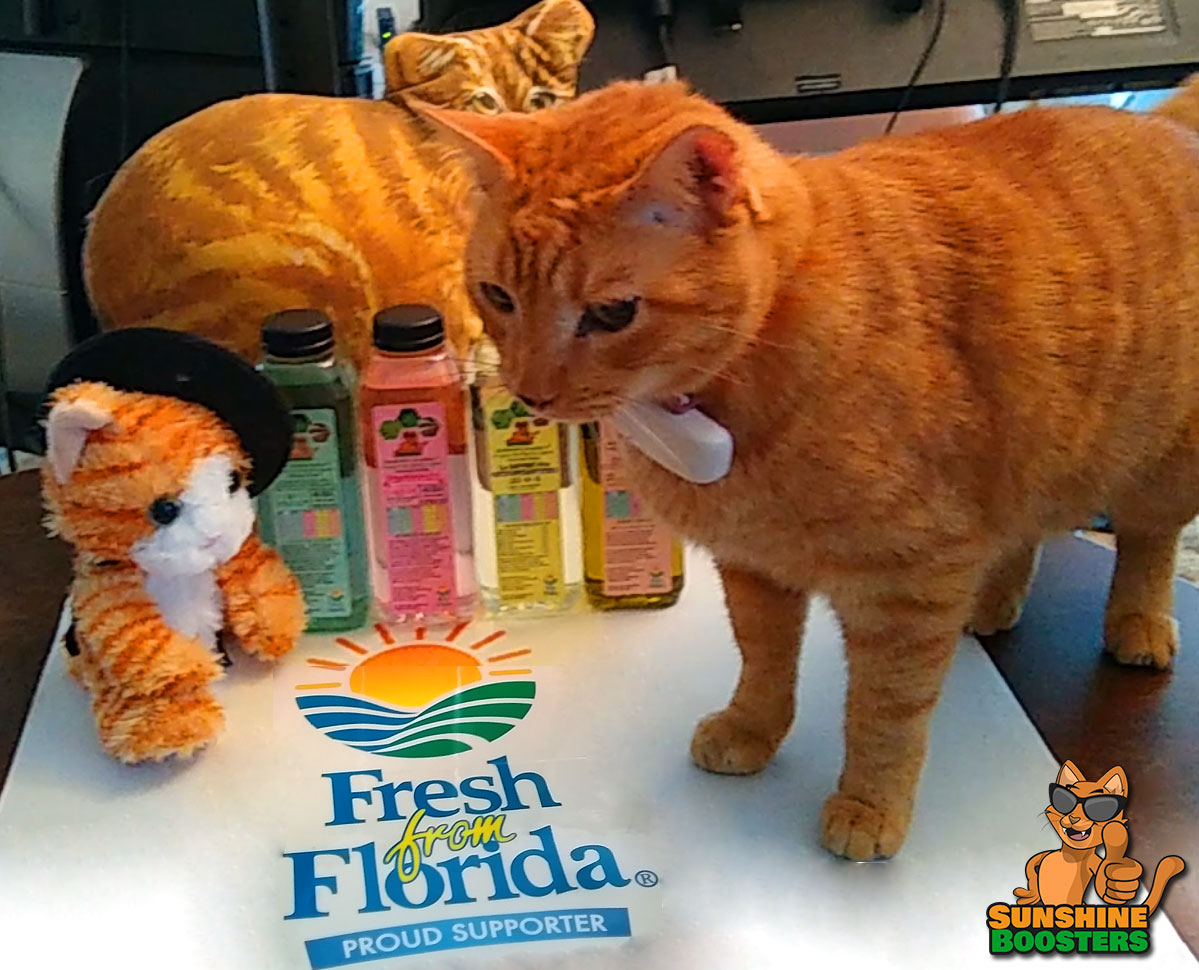
In the photo: Mr B checking his Sunshine Boosters inventory before shipping to his Good Customers.

Date: 12 Apr 2020

People of TopTropicals. Chic of the Day: Easter Present from Klaksa

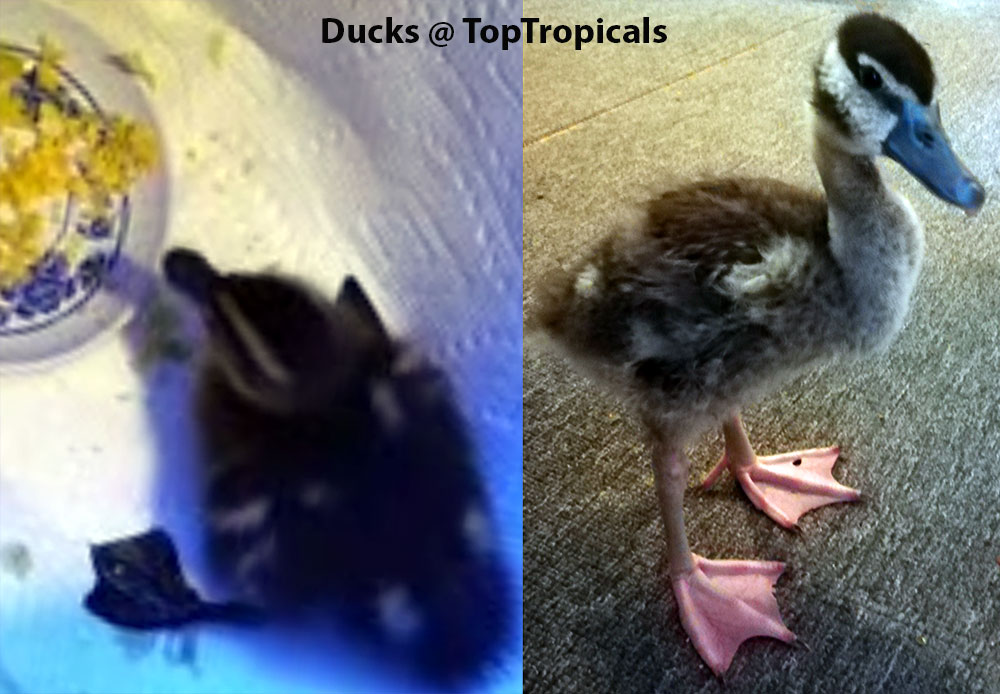
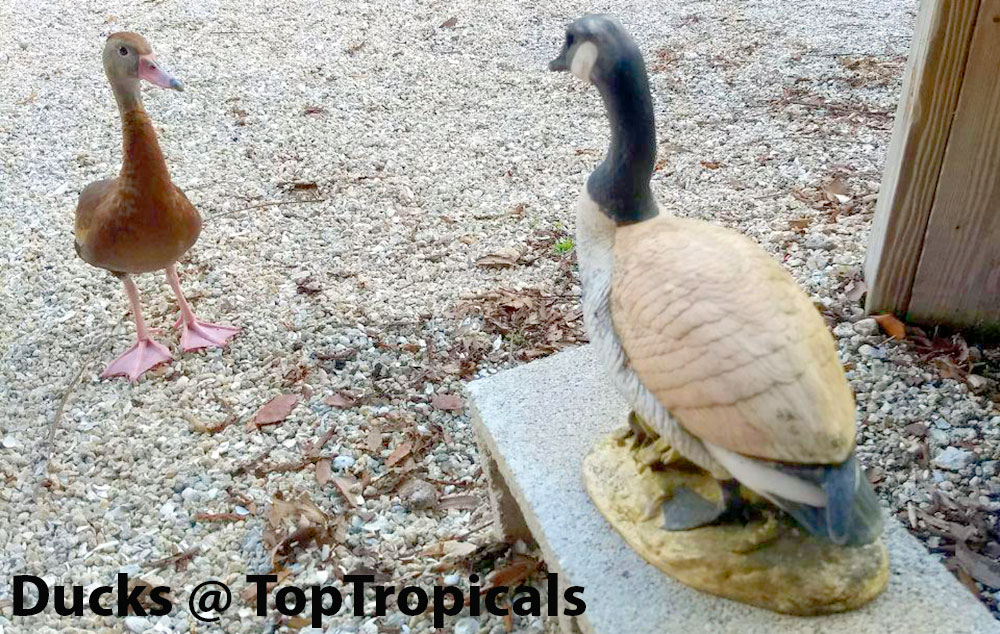
In the photo: Duck versions 2.1 and 1.0

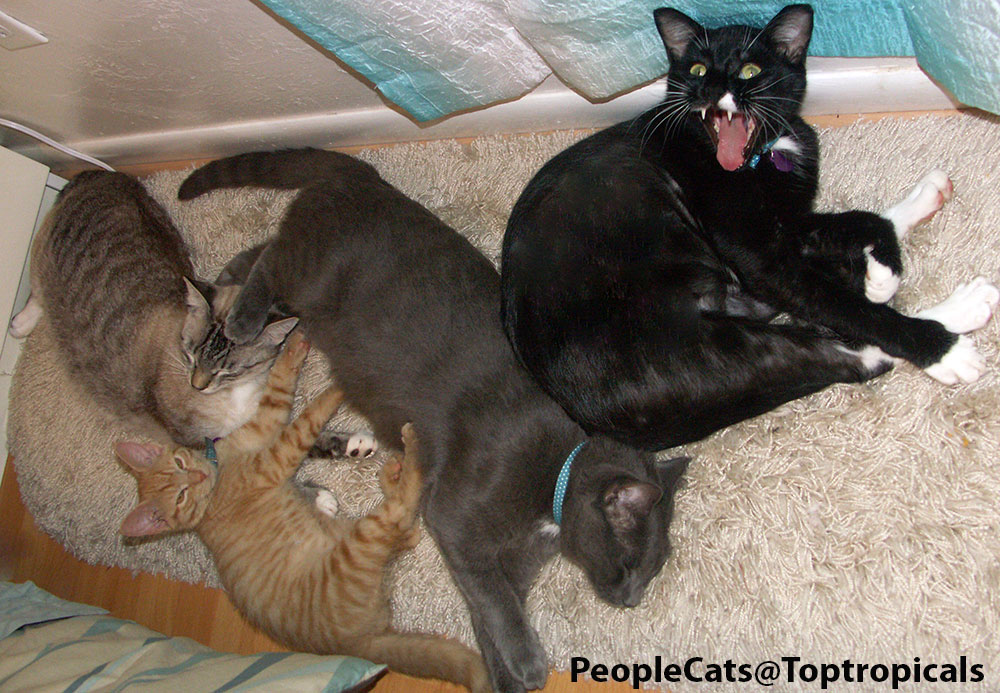
In our last newsletter Cat of the Day was Klaksa with her hunting habits and her love for birds...
While we are still sticking to the statement that "no birds were hurt in the process so far", she brought us an Easter Present! Yes, the Present is very much alive and super hungry. Klaksa did not tell us where she got it and how can we bring it back... So we are stuck with another duck! The previous version - Duck Dobi, has been raised by Kristi from a little chic-duckling, and after 2 years of ruling the Cat Community in our Garden center, Dobi finally left with her boyfriend - without saying thank you or even good-bye!
The Duck Version 2.1 has been eating and pooping happily all day. Luckily we found a person with a duck farm, and hopefully will get this baby a good home soon!

In the photo: Duck Dobi

TopTropicals PeopleCat Club

Thank you everybody for supporting us in helping PeopleCat Community!
Make your kind donation today and receive a surprise gift from us. Thank you and God bless you and your pets!

Date: 25 Jun 2019

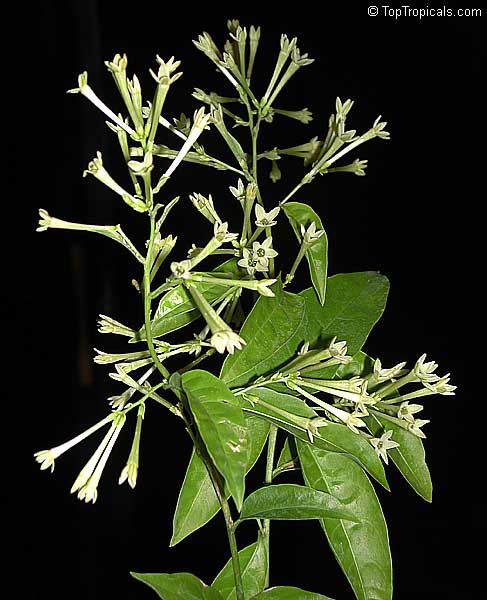
True love of Night Blooming Jasmine
By Onika Amell, tropical plant specialist

Q: I live in New Cumberland, West Virginia. I love the smell of Night-Blooming jasmine. Is it possible to grow it in the northern panhandle of West Virginia? Do I have to plant it every year or do I keep it in a pot and take it inside during the winter months?

A: Technically, Night Blooming Jasmine is not a true jasmine (those plants belong to Oleaceae, or Olive family). Night Blooming Jasmine belongs to the Solanaceae family, also known as the Nightshade or "Potato" family of plants. Yes, this sweet fragrant flower called Jasmine for its perfume is related to potatoes and tomatoes!
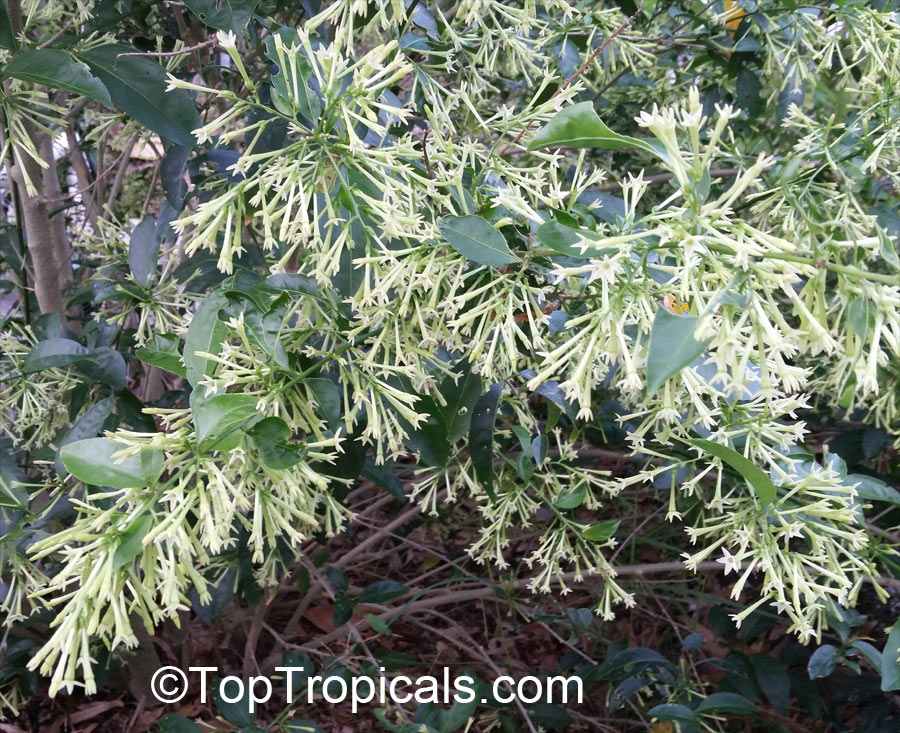
Night Blooming Jasmine - Cestrum nocturnum - is loved by many gardeners for its beautiful fragrance at night. It is one of the most fragrant tropical evergreen shrubs available. Cascading clusters of tiny, tubular pale yellow to white flowers open at night and release a heavenly fragrance throughout the garden, especially on warm summer evenings. The fragrance is much lighter during the day. Night Blooming Jasmine is grown year-round in zones 9-11. It is at its happiest in a sunny to a partially sunny spot in your garden in well-drained soil but can be grown in cooler climates as a container or greenhouse plant.
You would absolutely be able to enjoy this plant during the warm months in West Virginia, but it will most certainly not survive outside during the winter. You will have to bring it inside. Take it outside again only once you are confident there is no more possibility of frost. When grown indoors, be sure to give it the sunniest, South facing window in your home. When grown in a container, you will need to re-pot it every two to three years so it doesn't become root-bound.
For those who are lucky to live in frost-free areas, in ideal growing conditions outside, it can easily reach 8 feet with a spread of 5 feet. It has a lovely informal look that can soften a more manicured garden. Add organic matter to the planting hole when you plant to enrich the soil around the root ball. Water well in the summer, but allow them to dry out a bit between watering in the winter. Plant this Jasmine near pools, porches, doors, windows, and walkways where its lovely fragrance can be enjoyed. The shrub is also an excellent plant for privacy hedges and screens. When grown as a hedge, plant 3 feet apart.
Trim lightly after a bloom cycle to shape and then do a hard pruning in fall or spring to control the size of this plant. Fertilize 3 times a year - in spring, summer, and autumn - with a good quality granular fertilizer.

Recommended fertilizers:

Pink N Good Daily Plant Food - Flower Booster
Tropical Allure - Smart-Release Booster

Interesting facts:

Night-blooming jasmine is an excellent mosquito repellent. The powerful scent of the flowers attracts moths and bats that feed on mosquitoes and other small insects.
The flowers of the Night Blooming jasmine are widely used in India and other countries of South Asia for perfumery, medicinal applications and in religious ceremonies.

Limited time special offer:
Instant $5 off Night Blooming Jasmine

Date: 21 Jun 2019

The Flower of Gold

By Onika Amell, tropical plant specialist

Q: I am concentrating on adding more fragrance to my garden. I've had great success growing gardenias and I have many different varieties, but their flowers are all white, and I would like to add some colors to my garden too. Are there any gardenias available in different colors? I live in Waipio Acres, Hawaii.

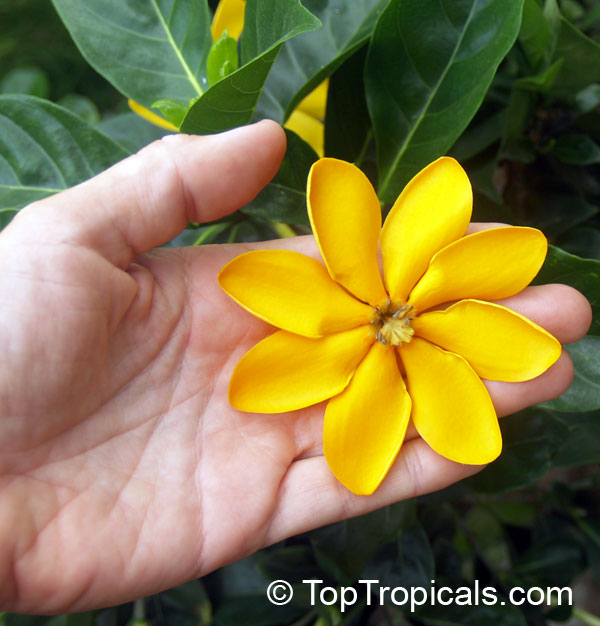
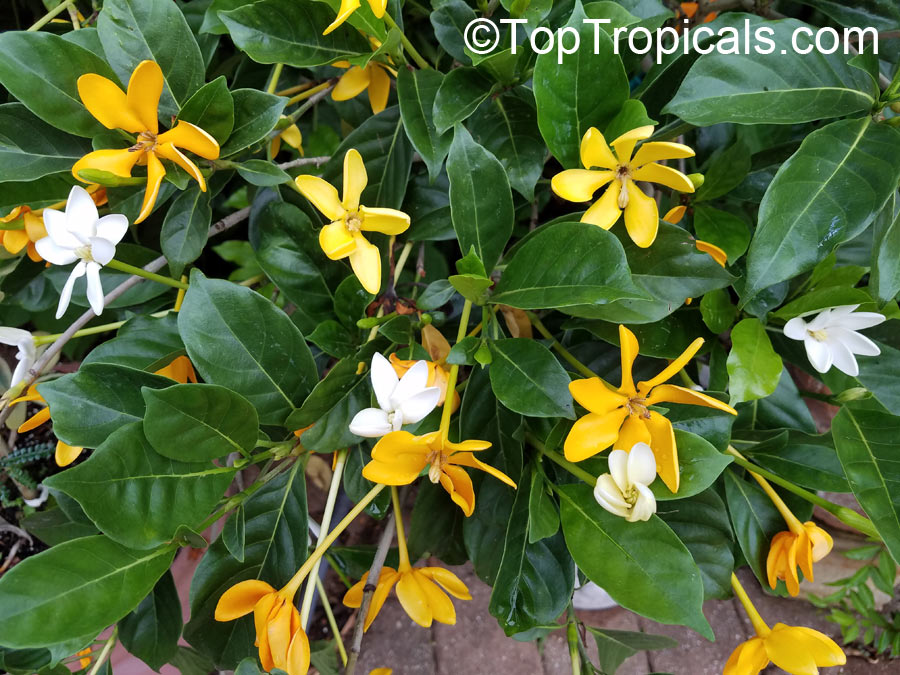
A: Meet the very rare and highly fragrant, tropical Gardenia tubifera Kula or Golden gardenia. Kula flowers change color as they mature, which is a unique feature! Kula flowers start out as cream, then change to yellow and finally to a beautiful gold. In addition to the spectacular flowers, this gardenia also has beautiful, leathery, deep green foliage.
This is a slow-growing and compact plant. Like all the other members in the Gardenia family, the Golden gardenia will do best in an acidic, well-drained, and fertile soil. It will appreciate a good deal of direct sunlight but will be very happy if provided with midday and afternoon shade. As with with gardenias, the more sunlight the more flowers.
It will eventually grow into a rounded shrub if left unpruned, but also can be trained into a small tree, maintainable to a height of under 7-8 feet. Blooms will appear from spring onward. Prune after flowering, this will encourage more flowers in a few months.
Gardeners living in colder areas, do not fret. Gardenias make perfect container plants and can be grown indoors in colder climates. Just be sure to provide high light when bringing them indoors.
The fragrance and changing colors of a Gardenia Kula is unforgettable. They are most fragrant near sunset and during early evening hours. Plant them near walks and patios where their lovely fragrance can be enjoyed.
This rare tropical Gardenia is sure to be a conversation piece in any garden. Great collector's plant!

Recommended fertilizers:
Pink N Good Daily Plant Food - Flower Booster
Tropical Allure - Smart-Release Booster

Limited time special offer:
Instant $5 OFF Golden Gardenia!